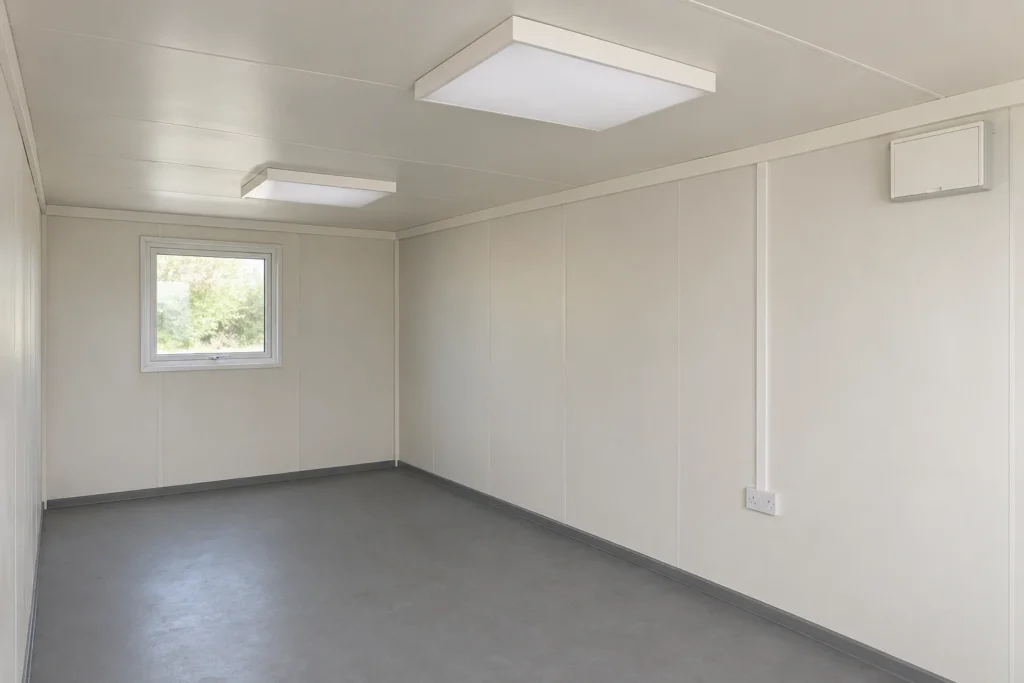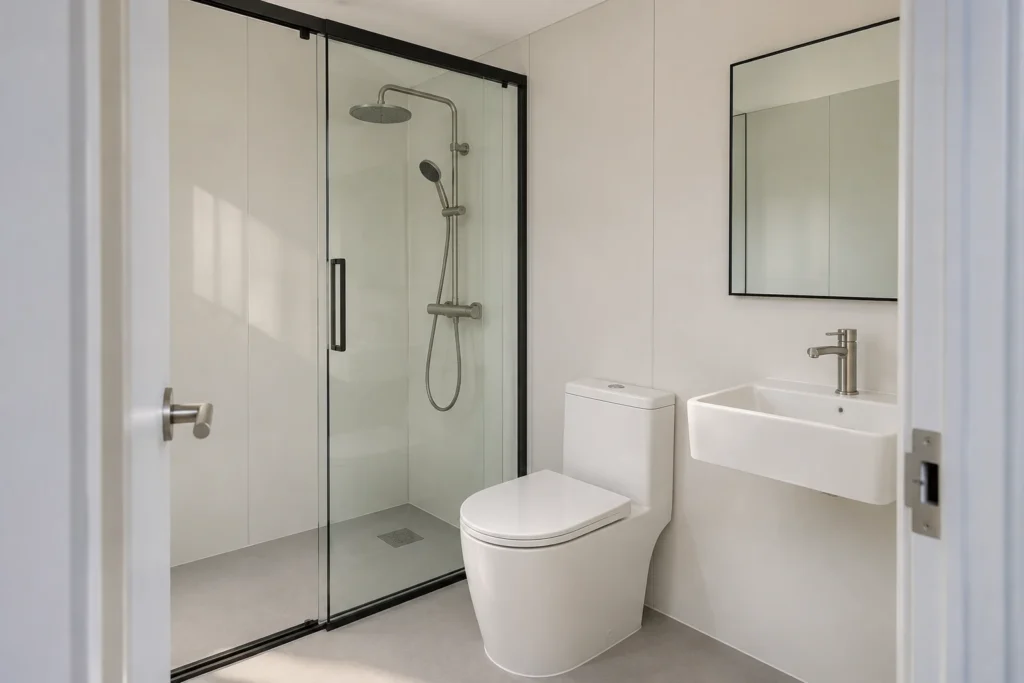
Not automatically. A domestic macerator should only be considered when its exact intended use matches the bathroom’s users, fixtures and operating pattern. A pump that works for one household bathroom is not, by that fact, suitable for a shared modular block. Conversely, “shared” alone does not tell you whether the use is domestic, public or heavy commercial.
Before accepting a pumped-bathroom proposal, identify the model and the complete fixture arrangement. “Macerator included” leaves too much undecided.
Start with the users, not the cabin size
A small building can serve frequent visitors; a larger building can serve a limited, known group. Give the supplier the expected users, access arrangements and busy periods rather than only the module dimensions.
For a concrete example, Grundfos’ SOLOLIFT2 WC-1, WC-3 and CWC-3 safety instructions, English GB edition 08.2026, limit those products to domestic use and a limited number of users, excluding public and heavy commercial or industrial use. That limitation belongs to those models. It is not a statement that every macerator is domestic-only.
For combined portable bathroom layouts, settle the intended use before freezing the toilet and service layout. Where a proposed model’s instructions exclude the actual application, a compact enclosure or an attractive price does not resolve the mismatch.
Distinguish the equipment being offered
A toilet macerator, a greywater pump and a multi-fixture sewage lifting station are not interchangeable items. The distinctions affect which fixtures can connect, how the room is arranged and what the building package must accommodate.
| Proposed equipment | What distinguishes it | What the buyer needs to establish |
|---|---|---|
| Domestic WC macerator | Intended-user and application limits apply to the exact model | Whether the actual users and operating pattern fall within those limits |
| Matched toilet and grinder system | The specified pan and pump can form one system | Which bowl, tank and pump combination the manufacturer requires |
| Bathroom greywater pump | A greywater-only unit does not handle a toilet | The permitted fixture list for the selected model |
| Multi-fixture sewage lifting station | A different equipment scope from an individual WC assembly | A proposal assessed for the connected fixtures, use pattern and actual installation |
Saniflo’s US Sanibest Pro page illustrates the matched-system issue: it specifies its own rear-discharge toilet and a bowl, tank and grinder combination. Choosing an ordinary toilet first and adding “a pump” later can leave an unresolved compatibility problem.
The same manufacturer describes its US Sanicubic 2 as a system for several bathrooms and fixtures. This is a category example, not a recommendation or a capacity assessment for your block. A commercial product description does not establish suitability for every shared building.
A shower inlet still affects the layout
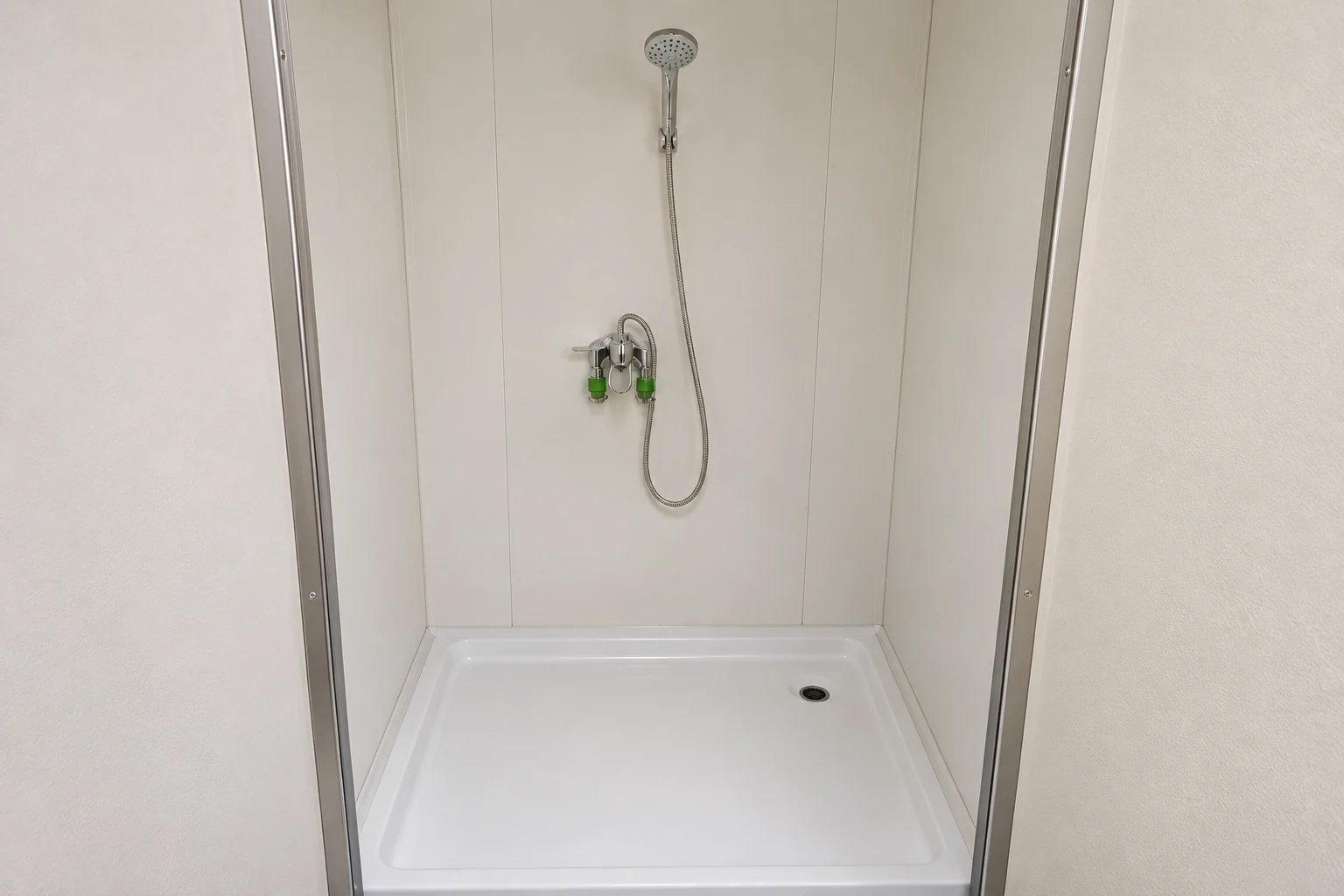
Pumping waste onward does not remove every gravity-fed connection inside the bathroom. The cited Sanibest Pro and Sanicubic 2 pages retain fixture-to-pump inlet and level requirements. A shower tray, its drain and the pump inlet therefore need to be considered together before approving the floor arrangement.
If the order combines toilets with a portable shower unit, show both sets of fixtures in the proposal. Do not assume a shower-waste pump can take toilet waste: Saniflo’s US FAQ explicitly distinguishes greywater pumps from toilet pumps.
Keep the equipment location accessible for the required servicing. The bathroom maintenance-access guide helps identify access that needs to survive the finished layout; the selected pump’s instructions determine its actual service provisions.
Ask what happens when pumping stops
Saniflo’s US FAQ says not to use the toilet or other fixtures connected to its pump during a power loss. For a shared block, identify which facilities become unavailable and who will respond.
An alarm reports a condition. A second pump provides a different operating arrangement. An independent power supply addresses a different dependency again. None of those labels, on its own, proves uninterrupted bathroom service. Ask what is actually included and assessed, rather than treating “dual pump” as an outage plan.
간단한 FAQ
Does a small number of users automatically make a domestic model suitable?
No. User numbers are one part of the model’s intended use. The application, permitted fixtures and other stated conditions still have to match. Describe the actual arrangement to the manufacturer or responsible designer instead of assigning a domestic label from headcount alone.
Does a high advertised lift mean it can serve the whole block?
No. A headline lift figure does not establish the permitted application, connected-fixture duty or the complete installation’s performance. Request an assessment of the proposed arrangement; this guide does not size a pump or set a universal fixture limit.
Prepare a bathroom enquiry that can be assessed
Send the destination, user profile, expected busy periods and fixture layout. If a pump is proposed, include its exact model, intended-use documentation, matched toilet requirements, equipment location and outage arrangements. The building utility-planning guide can help coordinate those interfaces with the rest of the order.
Separate the building fixtures from any pump, controls, local installation and commissioning. Use the supply-scope checklist to compare what each offer actually includes. PQSE’s published bathroom options do not, by themselves, establish a supplied pump package; make that an explicit question in the enquiry.