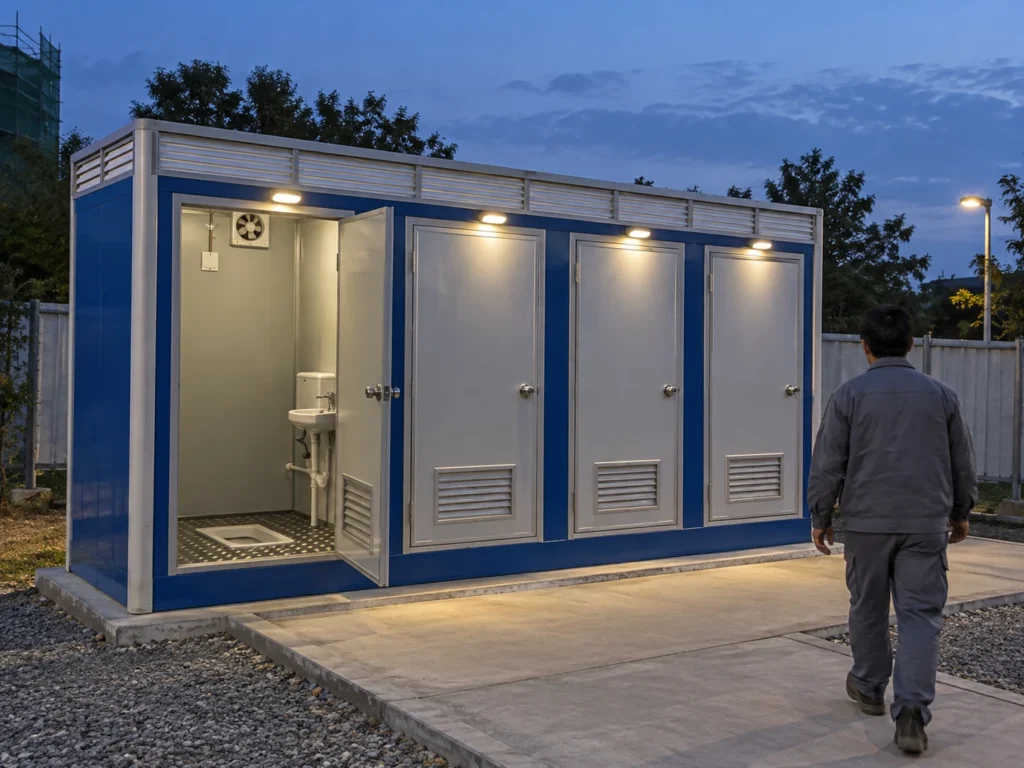
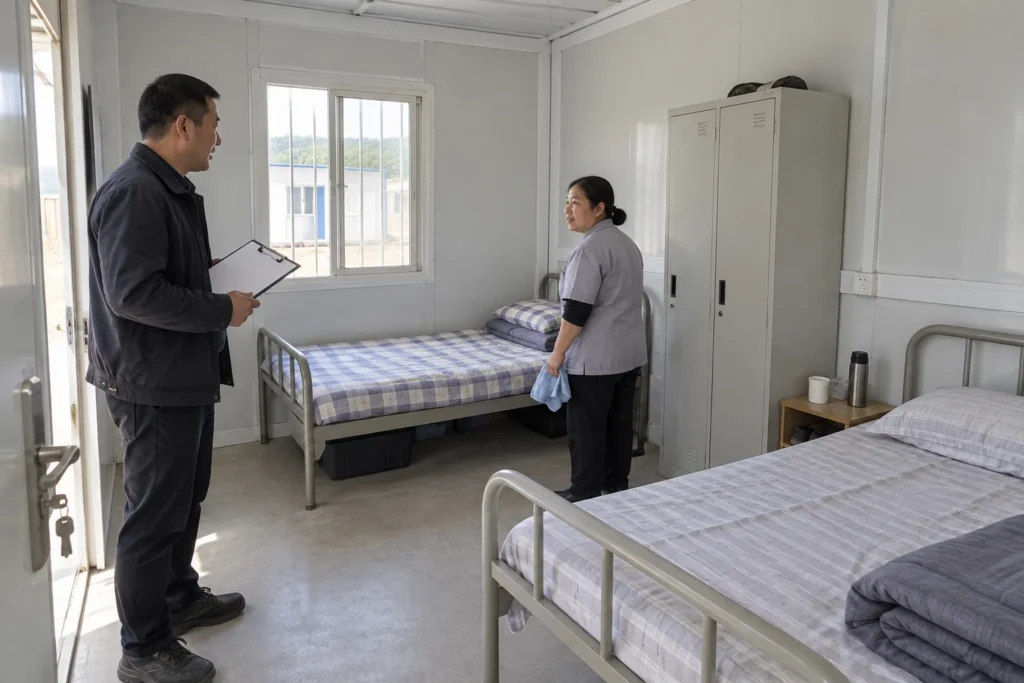
Keep used workwear out of sleeping rooms by giving it an agreed destination before the accommodation doorway. The purchasing brief should identify where boots come off, where used protective equipment is stored or handed over, and where a worker retrieves clean clothing. Choose the storage and changing arrangement around the actual workwear, site assessment and handling responsibilities. A bedroom wardrobe should not become the unplanned answer to every item brought back from work.
This guide addresses that boundary for a mining-camp buyer and operator. It does not assume every muddy boot carries a hazardous contaminant, and it does not design a chemical cleaning or exposure-control system. The useful starting point is an ordinary end-of-shift journey with recognizable objects and destinations. Follow those objects through the proposed arrangement, then ask what the supplier provides and what the operating team still has to organize.
Follow the workwear before choosing the room
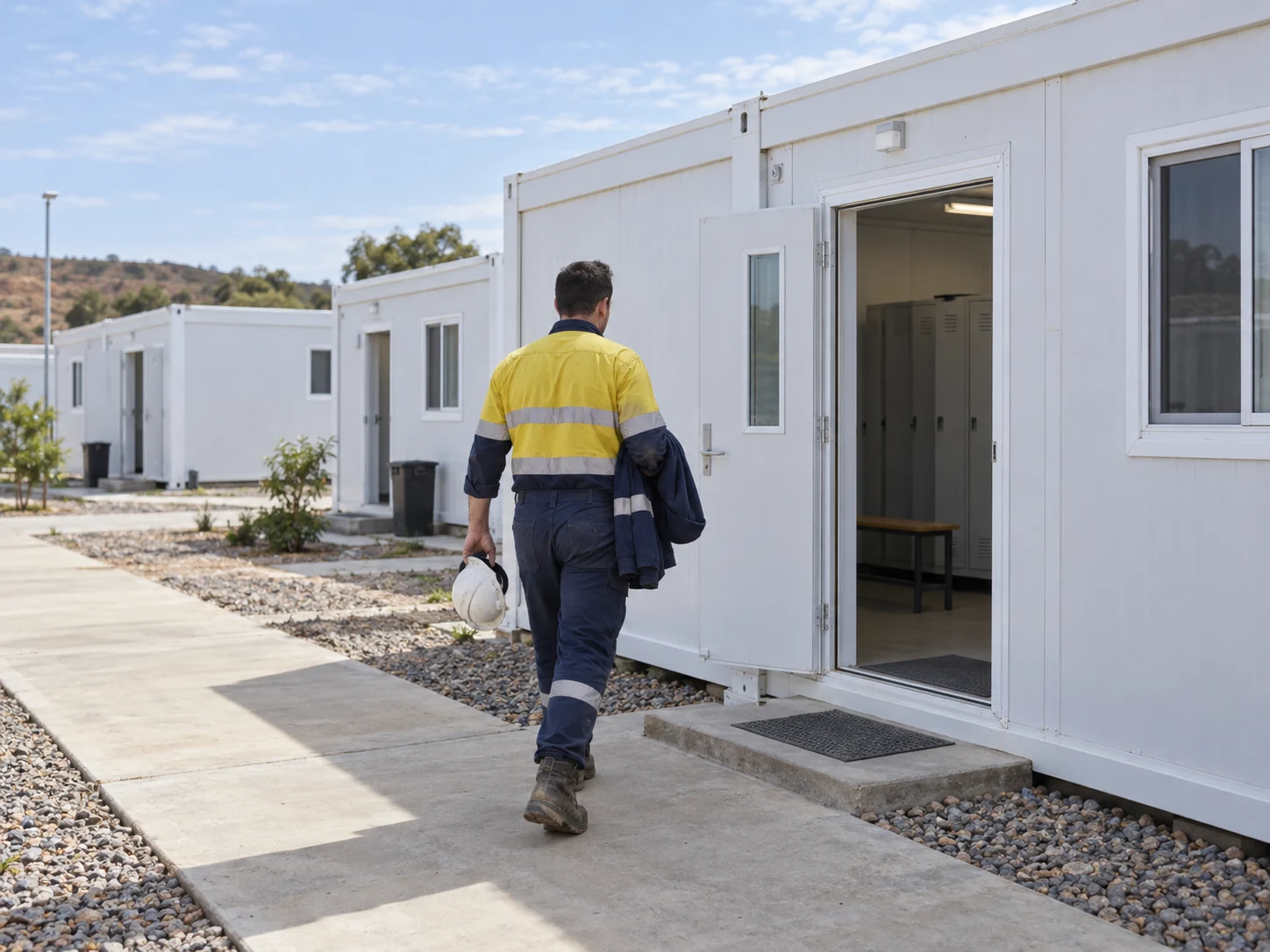
Begin with what a worker actually carries back: boots, a jacket, helmet, gloves and any task-specific protective equipment. Show where each item leaves the work route and where the person continues toward accommodation. A useful sketch follows the objects as well as the person, so a locker count does not conceal a missing changing or handover point.
Ask the operator to describe a normal return, a late return and a return with an item that cannot be put back into use. These are different planning cases even when the resident is assigned the same bed. Mark the destination for every item rather than allowing a general note such as “store personal gear” to cover work clothing, clean clothing and items awaiting a decision.
Für Modulare Unterkünfte für Bergbaucamps, the boundary may sit near the work departure point, a transport arrival or a separate changing building. Its location is a project decision. Draw the actual walking connection to the sleeping units, including the point at which people obtain their everyday footwear. A changing room that exists only as an optional quotation item cannot be treated as an available stop on that route.
Include the reverse journey. A worker returning for the next shift must be able to identify the correct gear without searching through another person’s belongings or retrieving it from a sleeping room. That reverse check often exposes an ownership gap: someone has accepted the used item, but nobody has agreed how it becomes available again. Record the gap before comparing building packages.
Describe the condition instead of calling everything dirty
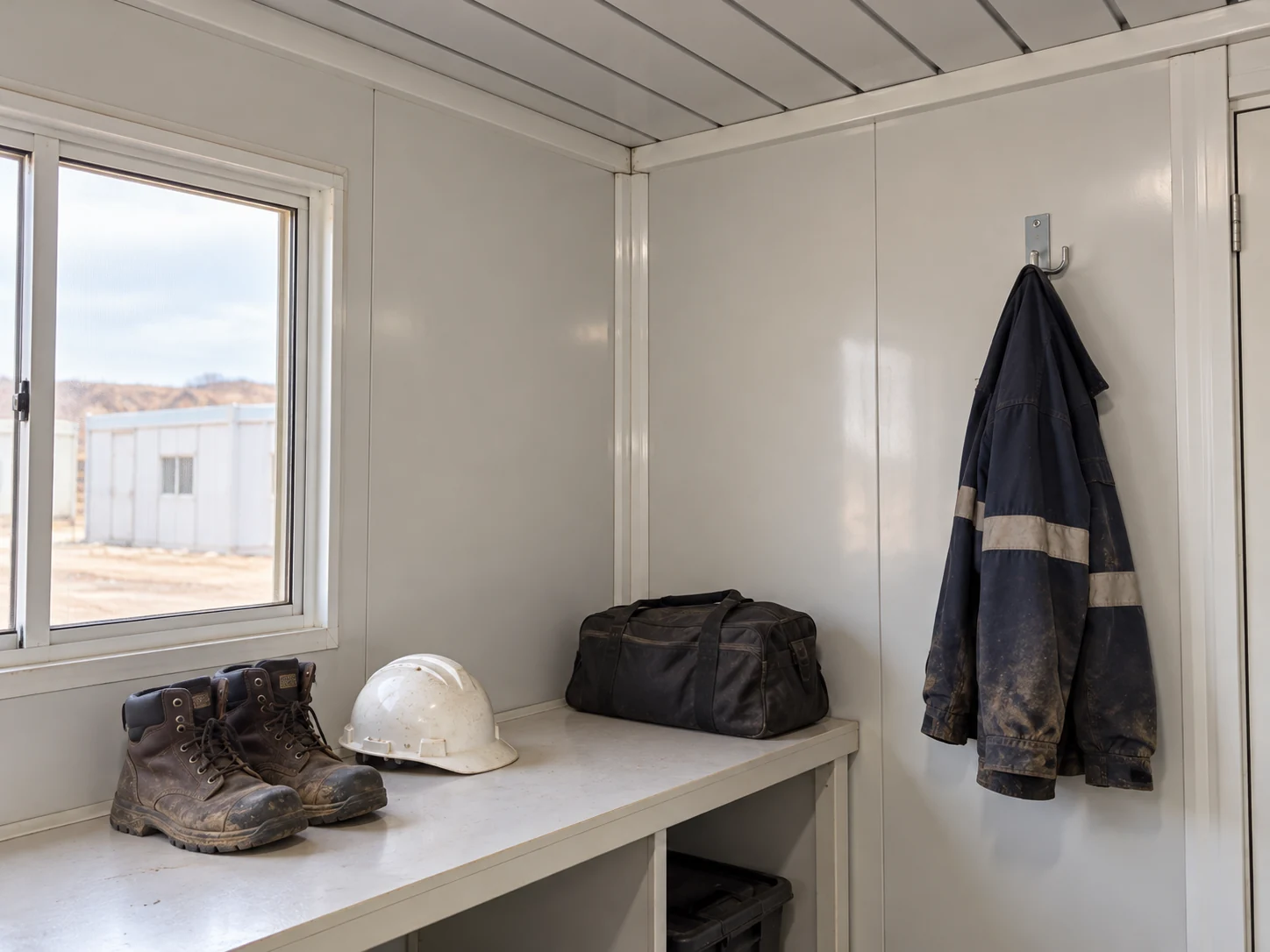
Ordinary wet soil, an identified occupational contaminant and damaged protective equipment require different decisions. Record the condition that the site team has actually observed or assessed; do not let the word “dirty” stand in for that assessment. The storage proposal needs a destination for known conditions and a way to hold unresolved items for the responsible person’s review.
Use an item inventory that can be amended when duties or equipment change. A weatherproof coat used outdoors, a task-specific garment and everyday clothing may look similar on a furniture schedule while belonging to different handling arrangements. State who supplies the instructions for each item. Do not infer a suitable cleaning method or a safe storage destination from appearance alone.
Das archived MSHA mercury-hazards toolbox describes separate clean and dirty locker areas connected through showers for a mercury-specific hygiene facility. That is a bounded example of how an identified hazard changes the arrangement. It is neither a current universal mine rule nor a reason to copy mercury-specific construction, washing or ventilation instructions into a general camp brief.
Keep the table below as an editorial inventory aid, not a hazard classification. The site’s responsible team must supply the actual findings and instructions. Where those are unresolved, show the dependency in the quotation brief. An empty field should remain visibly unresolved rather than becoming a supplier assumption that later determines the room’s use without the operator noticing.
| Item and known state | Destination to identify | Eine Entscheidung steht noch aus. |
|---|---|---|
| Boots with ordinary wet soil | Agreed boot-change/storage point | Cleaning owner and return arrangement |
| PPE with an identified contaminant | Site-approved holding or service destination | Applicable handling instruction and responsible specialist |
| Wet clothing without an identified contaminant | Agreed changing/storage provision | Equipment-specific drying and reissue instructions |
| Clean everyday clothing | Receiving-side storage | Access and separation from used gear |
| Damaged or unresolved equipment | Designated review destination | Who decides repair, replacement or release |
Give the boot change somewhere to happen
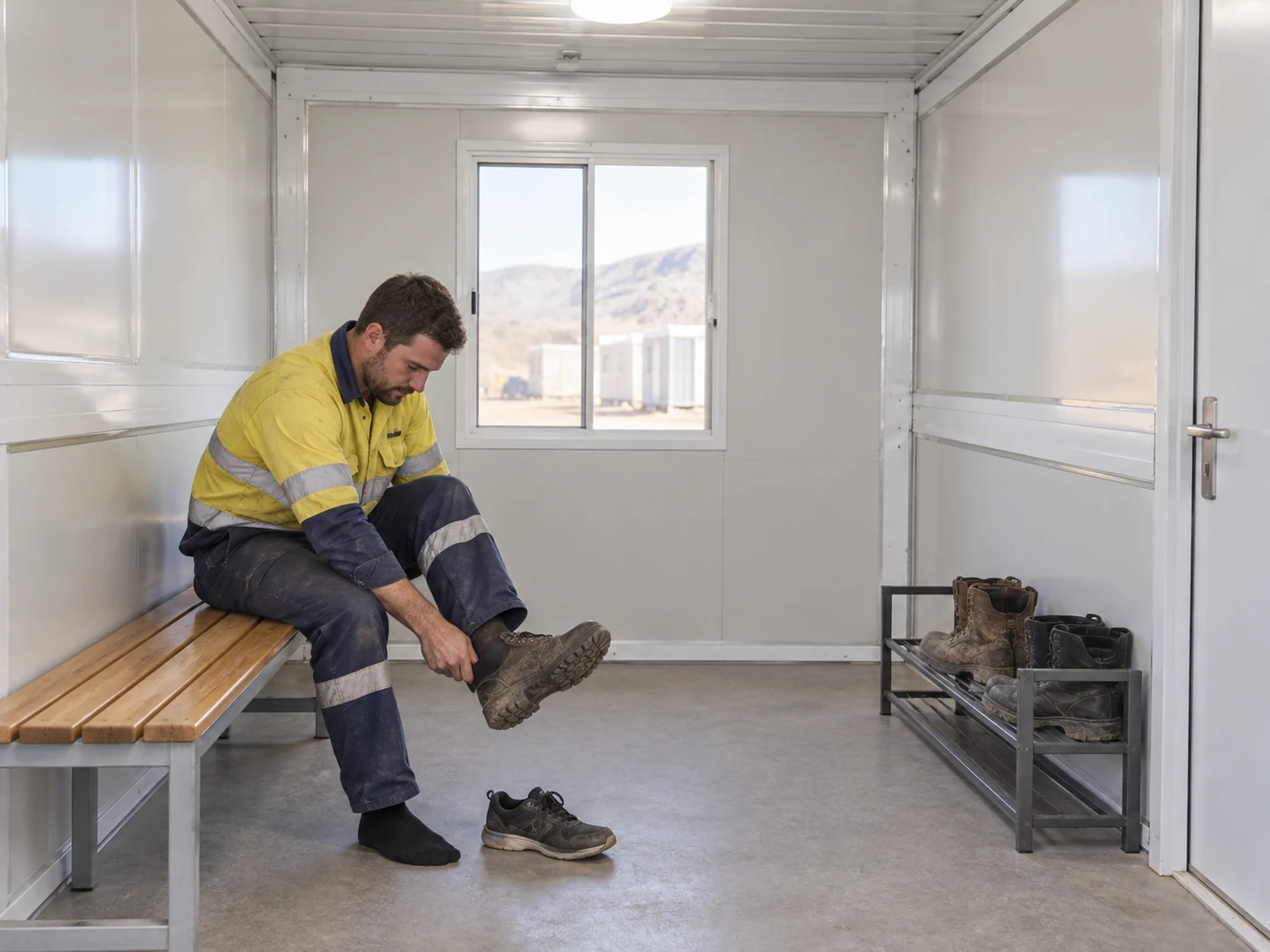
A rack answers where boots sit; it does not answer where a person changes footwear. Show the seat, the boots being removed, the footwear being put on and the space used to reach both. That complete moment is more informative than a rack photographed in an empty room or a furniture symbol placed beside a door.
Check retrieval with the furniture in place
Review the proposal with the intended bench and rack positions shown together. Ask whether a user can retrieve the allocated pair without moving somebody else’s equipment, and where a visitor waits while the seat is occupied. These are layout questions to be resolved against the actual users and local requirements; this article supplies no universal bench length, aisle width or boot-rack spacing.
Für einen vorgeschlagenen detachable container-house module, obtain the actual room and fit-out drawing rather than assuming the product category fixes the internal arrangement. Confirm whether the quotation includes the bench, rack, fixings and finishes under discussion. A photographed empty shell cannot establish the capacity of a furnished changing area or the suitability of an added furniture attachment.
Consider what happens when footwear is temporarily unavailable. The operator needs an agreed response that does not involve borrowing another person’s equipment or bringing stored boots back into a bedroom by default. Show the location of any operator-provided replacement provision separately from the normal rack. Keep these operational assumptions attached to the furnished plan so later substitutions can be reviewed against the same use case.
Match the separation to the assessed task
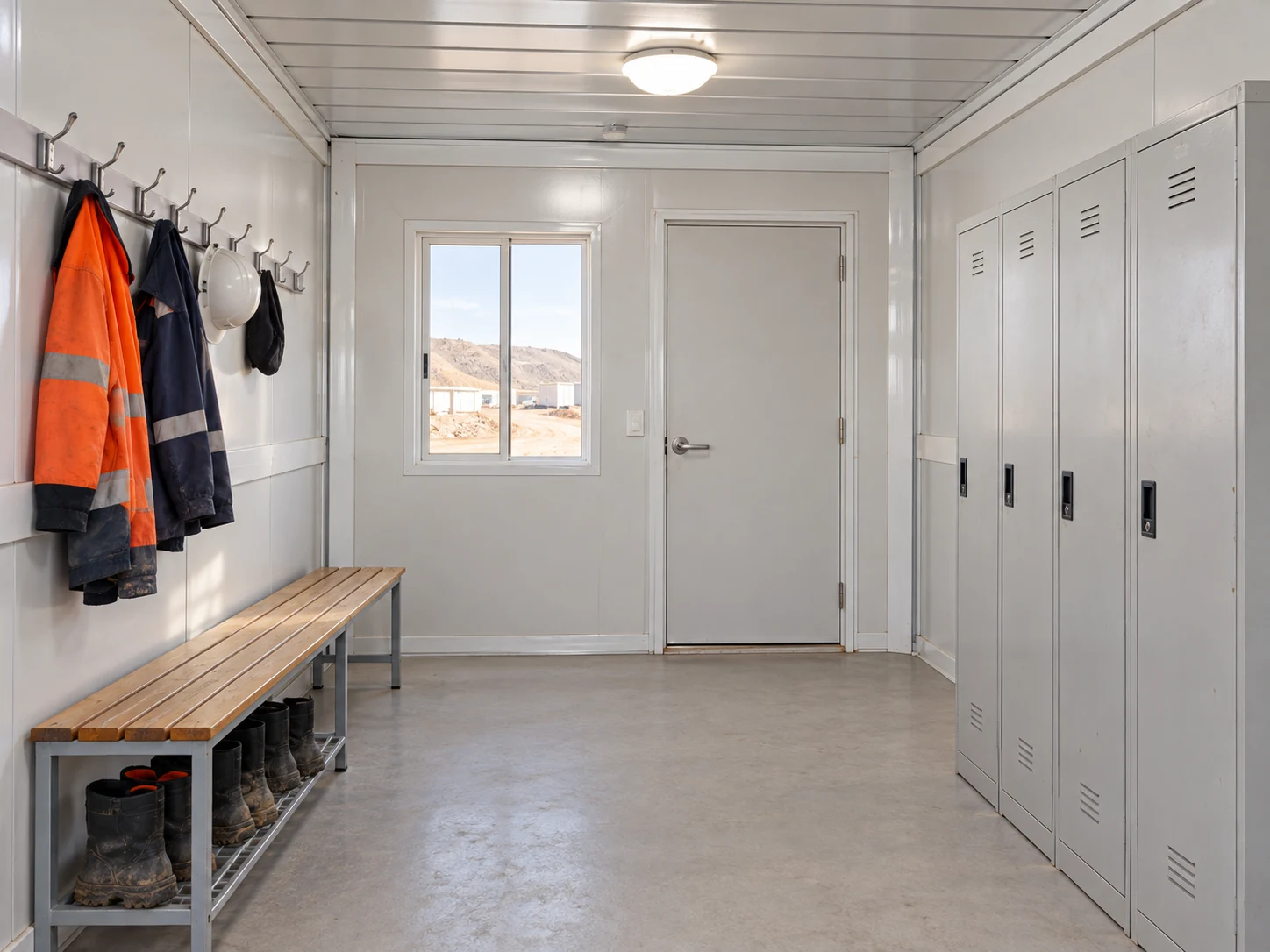
Choose a threshold bay, a separate changing room or a project-specified hygiene facility because it addresses a defined task. A larger building is not automatically a better boundary, and two differently coloured lockers do not establish an exposure-control system. Ask what is being separated, how people and items move between destinations, and which competent party approves the proposed arrangement.
OSHA 1910.141 concerns US permanent places of employment. Its change-room requirement is triggered when a particular standard requires protective clothing because of possible toxic-material contamination; it calls for separate storage for street and protective clothing. Establish the applicable jurisdiction and trigger. This conditional requirement must not be presented as automatic law for every mine or camp, including sites under MSHA jurisdiction.
Compare proposed arrangements using the same item journey and unresolved conditions. A threshold bay may serve an agreed footwear-change task without answering garment custody. A separate room gives the buyer another defined location but still needs its contents and access arrangements specified. A specialist hygiene facility has dependencies that a general accommodation quotation should not quietly claim to resolve.
When comparing a prefab K house proposal with another building form, request the relevant configuration and approved project information. Compare the scope of the proposed changing function, furniture and interfaces before discussing price differences. Do not transfer another manufacturer’s locker capacity, weather performance or hazard-control claims to PQSE, or treat a building name as confirmation that a workwear process has been designed.
| Anordnung | Question it addresses | Unresolved interface |
|---|---|---|
| Threshold bay | Where footwear changes | Used garments and service custody |
| Separate changing module | Where people and clothing meet | Contents, access and onward route |
| Project-specified hygiene facility | Where an assessed process operates | Specialist approval and operating responsibilities |
Protect the clean-clothing destination from accidental reuse
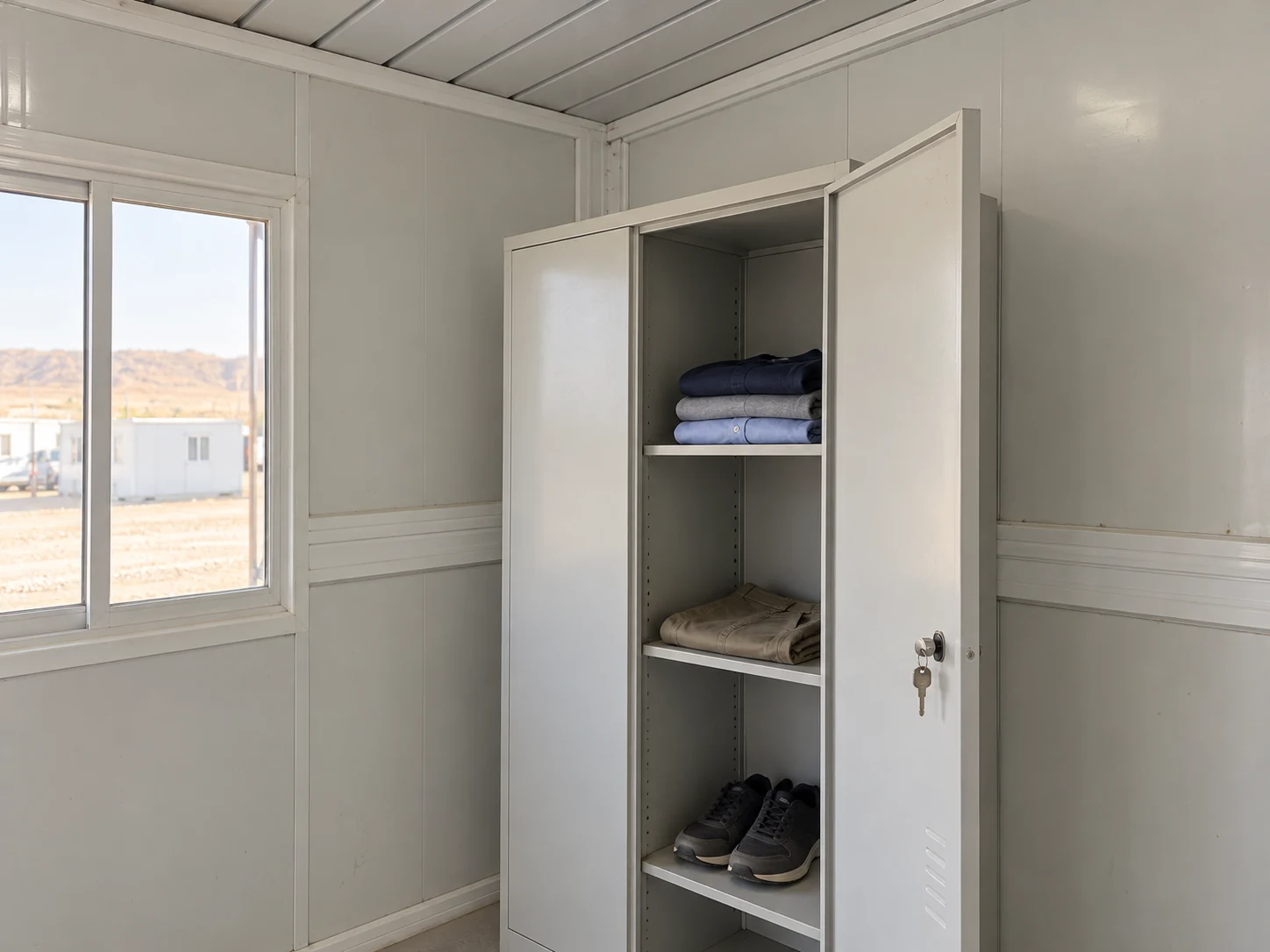
Give clean everyday clothing an identifiable receiving-side destination. It should remain recognizable when the user returns, when a rack is full and when a replacement garment arrives. A spare hook chosen during a busy handover should not silently change that destination. Review who opens the storage, who cleans it and how the operator notices that its intended use has changed.
CDC/NIOSH guidance on take-home exposures explains that occupational chemicals can travel on clothing and shoes. It recommends changing before leaving work and keeping dirty work clothing separate from clean clothing. The guidance addresses chemical exposures; it does not establish that all camp mud is toxic or that a particular locker prevents transfer. Apply the site assessment rather than a visual guess.
On the furnishing schedule, distinguish clean-clothing storage from the place where used protective equipment waits. Include who owns each item and when the destination is available. The distinction must survive routine service: a cleaner or delivery worker needs to know where a returned item belongs without relying on its colour, the nearest open locker or the resident being present to explain it.
Review the interface with the worker accommodation arrangement. Residents should not need to create additional workwear stores inside bedrooms because the changing provision is inaccessible when their shift ends. Record opening and access arrangements as operator responsibilities to confirm. Where clean clothing is personally supplied, the purchaser must still describe where it waits and how that destination fits the proposed return route.
Agree who receives the gear and who returns it

A collection point is incomplete until somebody accepts responsibility for the item after collection. Show the operator’s handover to the approved service provider and the separate return to the agreed destination. Keep the item’s identity and status with that handover. A container leaving the room does not establish that the garment will return ready for the next permitted use.
Keep a return decision separate from a collection record
Ask the operator which service it actually contracts and which items that provider accepts. Record exclusions, unresolved equipment instructions and the person who answers a disputed return. This is a procurement responsibility map, not a recommendation to package, transport or clean a particular contaminant. Where specialist handling is needed, obtain the appropriate instruction before deciding on containers or collection furniture.
Describe how a returned item becomes identifiable to its user. A delivery note can record arrival without answering whether the correct gear has been returned, whether an outstanding issue remains or whether it belongs in clean-clothing storage. Let the responsible parties define the evidence they need for reissue. The accommodation supplier should state clearly which parts of that operating process are outside its offer.
Check an interrupted service as well as the normal handover. If collection is delayed or an item returns with an unresolved condition, the plan needs an authorized destination that does not displace clean clothing or block the changing task. Name who reviews that exception and who tells the resident what to do next. Avoid promising a service turnaround that neither the operator nor provider has agreed.
Let people change without using the bedroom as the changing room
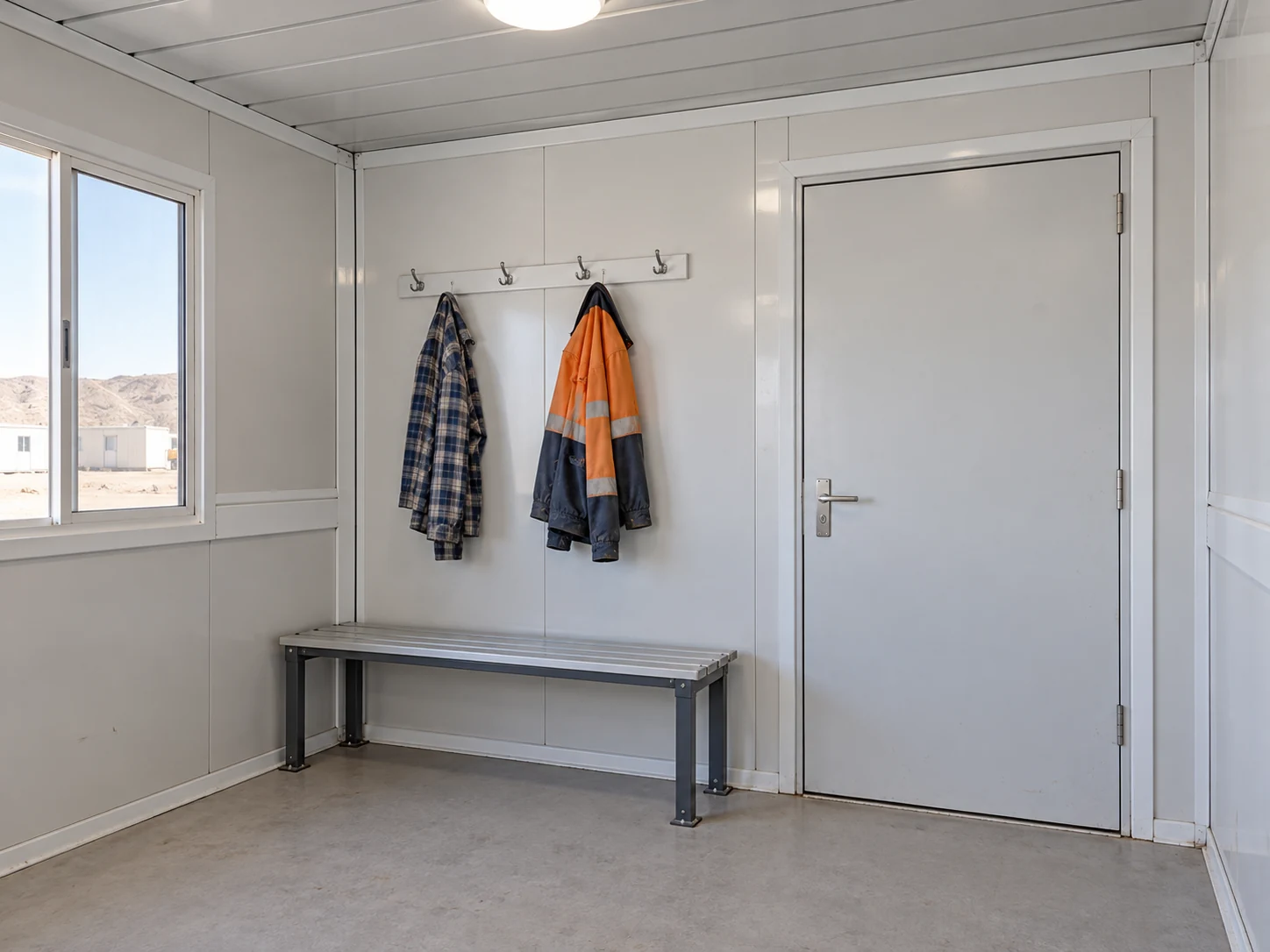
Changing involves personal space as well as storage. Show where a person places clean clothing, changes and continues toward accommodation without carrying used workwear through the sleeping area. Include privacy and access questions in that review. A locker wall does not show whether the proposed facility works for the people expected to use it or for their actual attendance pattern.
In its UK construction-welfare context, HSE’s changing-room guidance discusses separate changing arrangements, seating, drying where needed, secure belongings and keeping contaminated protective equipment apart from everyday clothing. These are scoped construction-welfare points, not worldwide mining law or proof of product approval. The actual project team must confirm the requirements for its users and jurisdiction.
Read the furnished changing plan as a sequence of actions. Ask where clothing is put while a person changes, how the user retrieves it and what is visible from an open entrance. Consider people arriving alone as well as an ordinary group return. The proposed arrangement should answer these questions in words and drawings; a marketing image of lockers provides only a partial view.
If the scheme includes a portable bathroom module, identify precisely how it connects to the changing and storage provision. Do not assume that supplying a washing facility also supplies a suitable workwear process, personal storage or every intervening interface. Keep those scopes separate in the quotation, then have the appropriate parties review how the supplied functions work together.
Treat wet clothing as its own equipment question
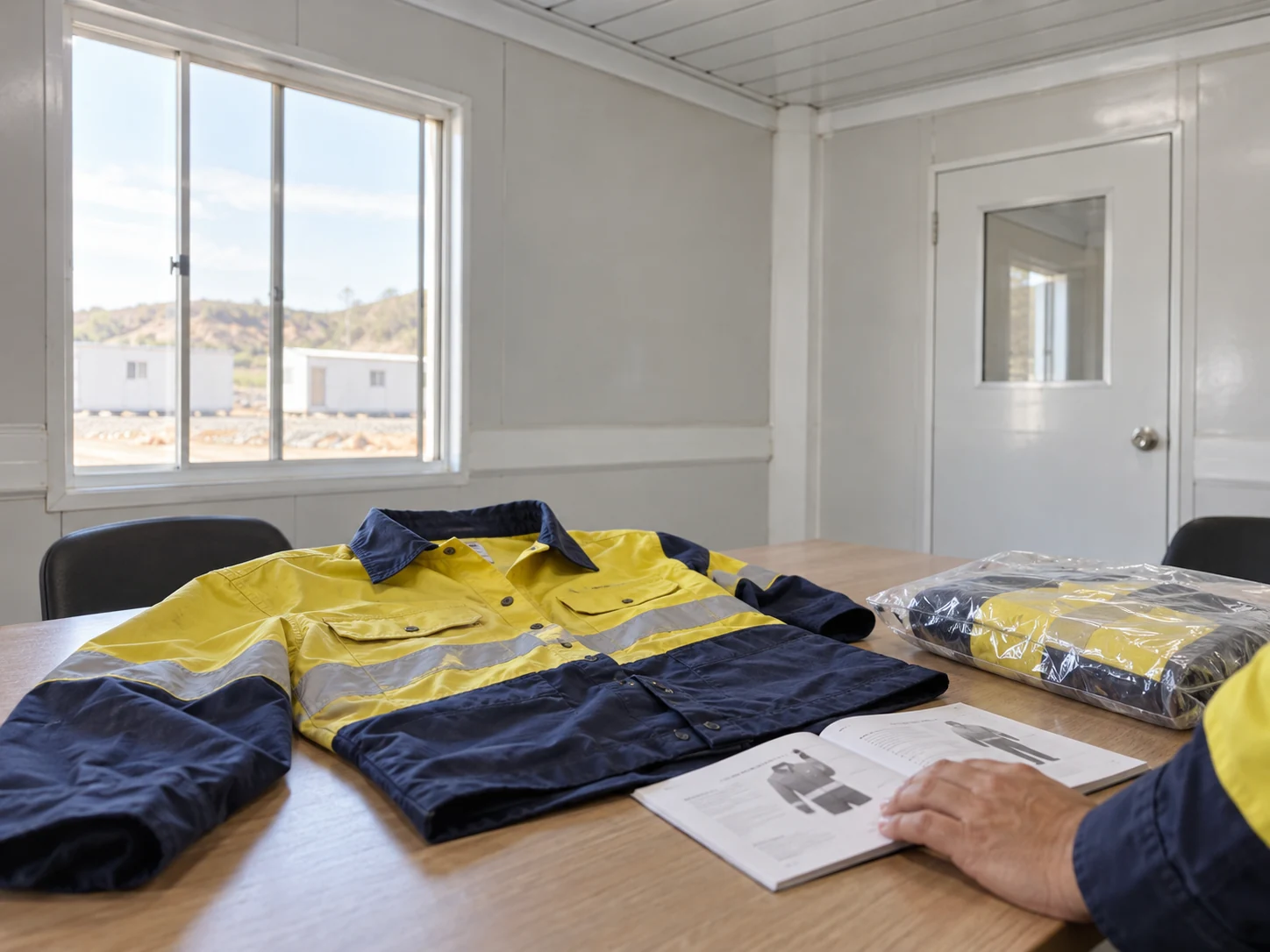
Wet clothing creates a reissue question even when the site has identified no chemical contamination. State which garments become wet, who provides them and what instructions govern their care. Then ask the proposed equipment or service provider to explain its actual scope. An ordinary storage cabinet should not be relabelled a drying facility because there is a socket nearby.
OSHA 1910.141(f), within that standard’s stated scope, addresses employer-provided work clothing that becomes wet or is washed between shifts, requiring provision for it to be dry before reuse. It supplies no general dryer setting for this project.
Keep the garment instructions, equipment proposal and responsible service together. Ask who confirms compatibility and who acts when an item is unavailable; do not invent a drying temperature, time or heat source to fill an unanswered quotation field. Wetness, damage and an identified contaminant are separate conditions to review. Solving one does not establish that all three have been addressed.
Any equipment provision should be coordinated with the actual modular-building utility brief. List the requested equipment and its documented dependencies for the competent project team, rather than adding an improvised connection to the accommodation scope. The operator also needs to know whether the proposed provision is available when the returned items need it. This article does not size laundry machines, design ventilation or approve electrical installation.
Before acceptance, compare the supplied instructions with the accepted equipment schedule and clarify omissions. A building handover and a garment-service handover can occur separately. Record who confirms the unresolved interface and when that confirmation is required. Do not let the completion of an empty room become an automatic statement that every planned workwear function is operating.
Draw the cleaning access and the full-rack case
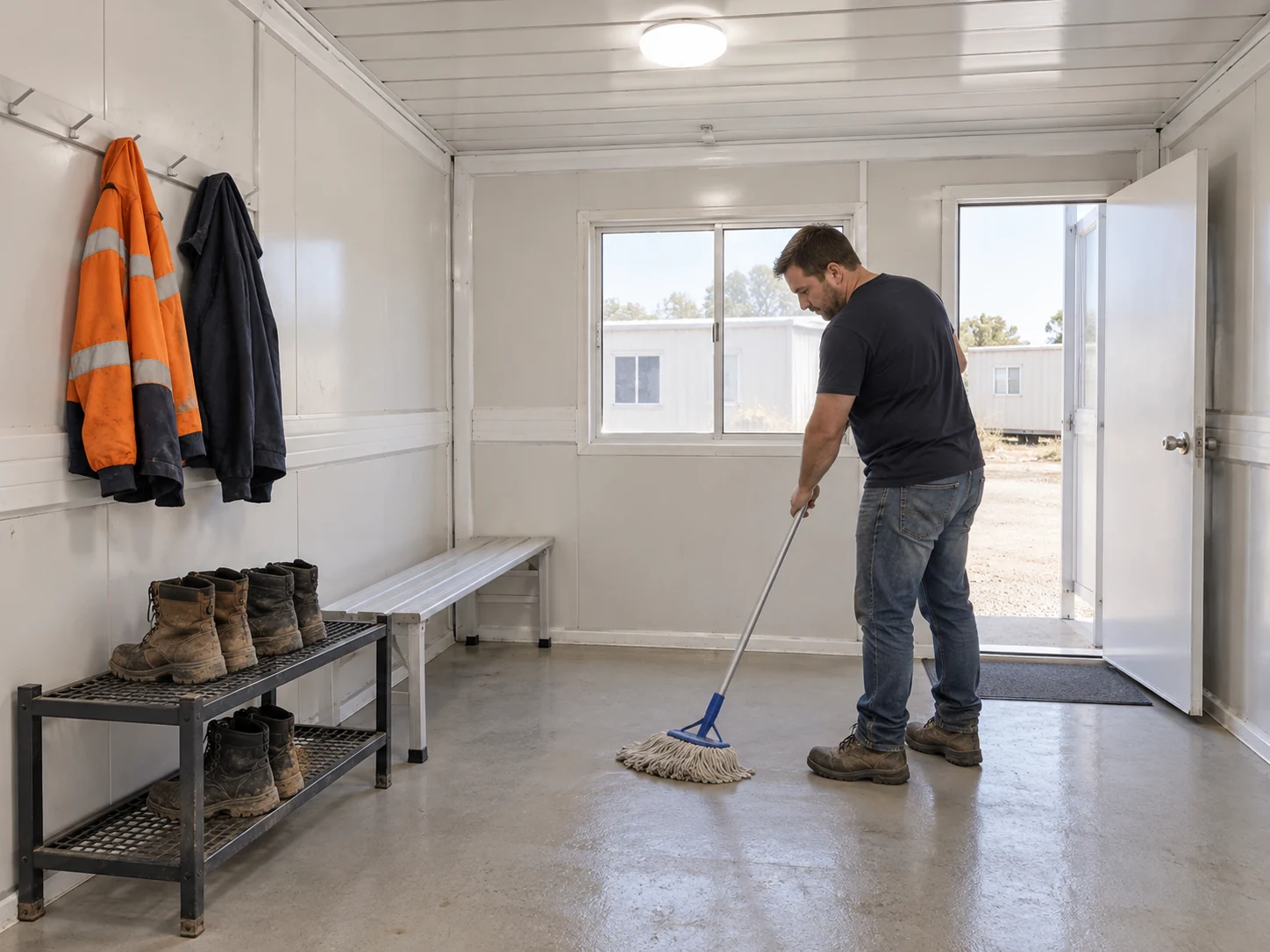
Review a furnished changing area with racks in use, rather than only with the room empty. Show how the responsible cleaner reaches the floor and the furniture, and where items go while their normal location is unavailable. The full-rack case should have an agreed response. A corridor or a bedroom floor is not a meaningful overflow plan simply because space appears available.
Ask for the proposed furniture and finish information alongside the operator’s cleaning method and equipment instructions. The buyer needs to know what can be moved, what must stay installed and who checks any change. This is a compatibility and responsibility review; it is not a chemical-cleaning recipe. Where the method is unresolved, record it before accepting a finish solely because its catalogue calls it easy to clean.
Define the overflow trigger in terms the operator can recognize: an assigned location unavailable, a returned item awaiting review, or a rack unable to receive the next agreed collection. The response should identify a responsible person and a permitted destination. It should not depend on a worker finding another hook, stacking boots beside a bed or moving clean clothing into an unspecified cupboard.
Keep the bedroom furniture plan separate. The Checkliste für die Unterkunft im Arbeiterlager provides a broader planning context; the workwear brief should explain what remains outside the sleeping-room arrangement. When a rack or collection point changes, review the affected journey again. A minor furniture substitution may alter where people stand or put belongings even though the building’s external dimensions remain unchanged.
Purchase the boundary as a complete operating scope
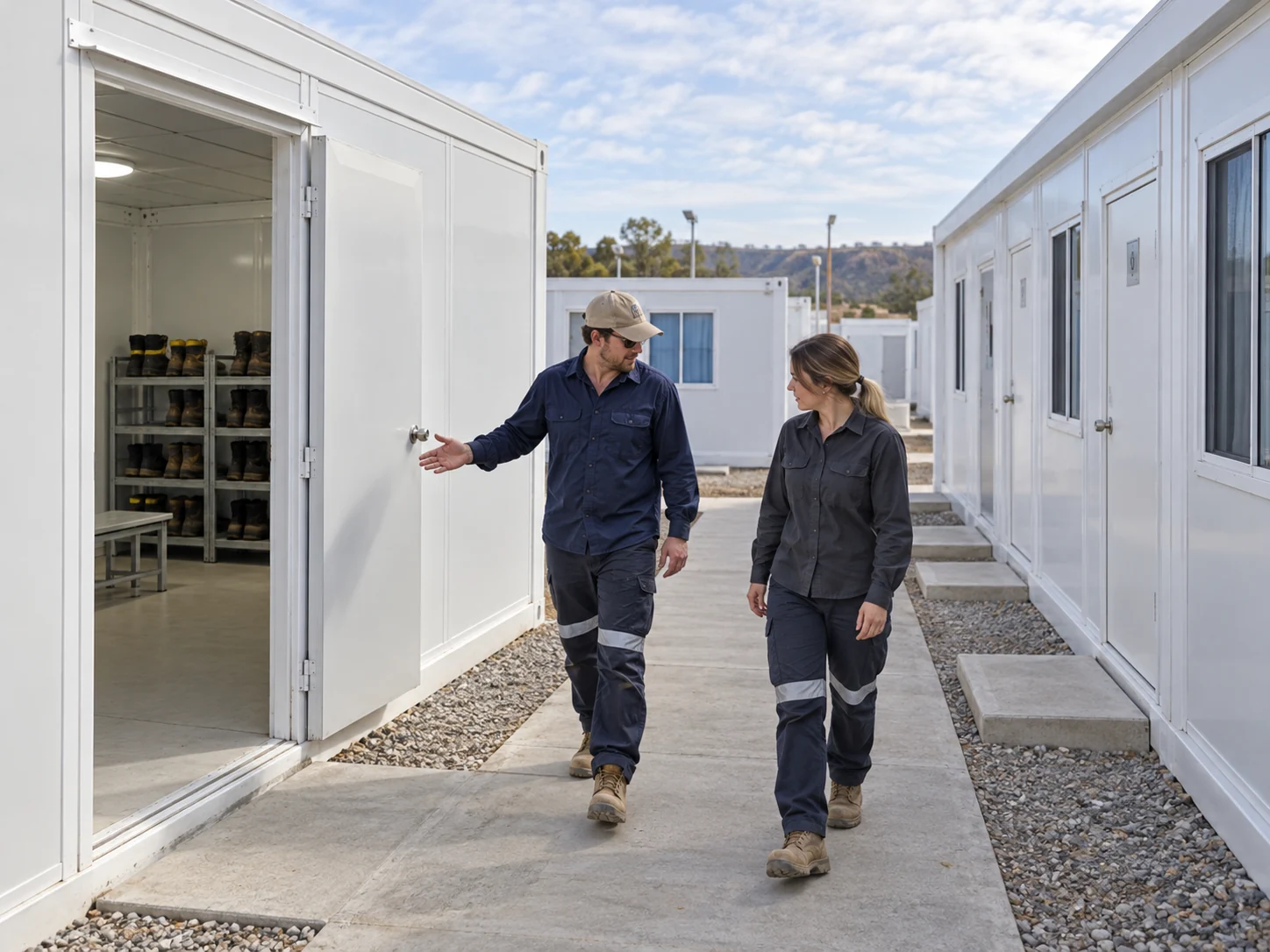
Send suppliers the item inventory, the proposed routes and the responsibilities still awaiting confirmation. Ask each offer to identify the room, furniture, instructions and interfaces it actually includes. Compare replies against that common brief. This makes a missing workwear function visible before the purchaser treats several complete-looking packages as a complete accommodation arrangement.
Retain open decisions after the walkthrough
Use a walkthrough with ordinary representative items to check the agreed route, storage destinations and access. It can reveal an unanswered furniture or operating question; it cannot prove chemical removal or replace required technical assessment. Have the responsible parties state what other evidence they need. Record whether the accepted configuration matches the proposal, rather than accepting a demonstration of whichever furniture happened to be available.
Keep a short closeout record for missing instructions, unavailable services and changed equipment. Each entry should identify the issue, the party responsible and what is required before the affected function is accepted. The overall building can have a different completion status from a particular workwear provision. That distinction prevents an accommodation handover document from quietly approving a specialist function nobody has reviewed.
Give the operator the accepted drawing and equipment list, not only the final commercial invoice. When duties, garments or service arrangements change, those records provide a starting point for the next review. The goal is a usable, owned boundary between workwear and sleeping accommodation. A larger rack, a new label or another module is useful only when it resolves a specific part of that boundary and its responsibilities.
| Zu lieferndes Ergebnis | Operator check | Responsibility or dependency |
|---|---|---|
| Item/state inventory | Actual gear and unresolved conditions are identified | Site assessment owner and relevant equipment instructions |
| Furnished changing drawing | Boots, clothing, seating and onward route are shown | Buyer, building supplier and fit-out provider |
| Gear-service handover | Collection, return and exception destinations are agreed | Operator and approved service provider |
| Cleaning/maintenance scope | Furniture access and compatible methods are clarified | Operator, furniture provider and relevant specialist |
| Acceptance/open-item record | Outstanding functions retain an owner and evidence request | Responsible party for each unaccepted interface |
Fragen des Käufers
Can a boot rack in each bedroom solve the workwear problem?
It provides a place to put boots, but it does not establish the intended workwear boundary. Review where the wearer changes footwear, where used garments wait, where clean clothing stays and who deals with unresolved items. If the site has approved a particular arrangement, retain that decision with the actual room plan and instructions. Otherwise, do not turn spare bedroom floor space into an assumed storage provision. Discuss a destination before the sleeping-room route and show the user’s complete journey through it. Compare the furnished proposal with that journey, including a full rack or unavailable assigned location. Choose furniture after those responsibilities and destinations are clear.
Does every mining camp need the same clean-and-dirty locker arrangement?
No universal arrangement follows from the camp label alone. Establish the actual workwear, tasks, users, applicable jurisdiction and site findings, then ask the responsible parties to define the required separation and handling. An ordinary footwear-change point and a specialist hygiene facility can address very different problems. Avoid treating a generic drawing, a locker colour or another site’s photograph as approval for your project. Ask the supplier to identify what it offers and the operator to identify what must happen between those supplied functions. If a necessary assessment or instruction is missing, keep the corresponding decision unresolved instead of selecting furniture as a substitute for it.
What should accompany a request for a workwear-storage quotation?
Provide the item/state inventory, user and attendance description, proposed return and departure routes, furnished room sketch and known gear-service arrangements. Identify clean-clothing storage, used-gear destinations and any unresolved specialist instructions. Request a clear list of rooms, furniture, equipment information, installation dependencies, inclusions and exclusions. Ask who supplies the missing information and who verifies the combined arrangement. Include access, cleaning and unavailable-location scenarios so the offer answers an operating question as well as a space request. Agree what the walkthrough can confirm and what needs separate technical evidence. Keep those records with the accepted configuration for the operator’s later changes.
Quellen und Umfang
- CDC/NIOSH — About Take-Home Exposures. Page dated2024-04-03; occupational chemical-transfer guidance, not a camp-specific storage specification.
- OSHA — 1910.141 Sanitation. US permanent workplace scope; conditional change-room and clothing-drying provisions. Project jurisdiction must be confirmed.
- HSE — Construction welfare: Changing, eating and rest areas. UK construction welfare; updated2024-10-31. No universal mining requirement or product approval inferred.
- MSHA archive — Controlling Mercury Hazards In Gold Mining. Archived mercury-specific hygiene example; issue date unverified. No generic engineering recipe or current-regulation claim.
Prepared for PQSE House as a research-based purchasing guide using the named originals and independent planning analysis. The photographs are newly generated illustrative scenes guided by genuine structural references; they do not document a verified PQSE workwear-storage project or an assessed exposure-control installation. No personal site experience, measured removal result, human professional review or independent endorsement of PQSE is claimed. Confirm the applicable jurisdiction, equipment instructions and project responsibilities before relying on a proposed arrangement.