Cool a tiny house by limiting heat entering the room, using outdoor air when it is cooler and suitable, and adding air conditioning where the climate or occupancy requires it. A fan can improve comfort, but it does not remove heat in the way an air conditioner does. Opening every window during a hot, humid afternoon may make the room harder to cool.
For a container house on wheels, plan the cooling around the actual panel construction, windows, room layout and site power. A compact floor plan does not establish the right equipment capacity.
Start with the heat entering the room
Notice when the room becomes uncomfortable. Strong afternoon sun through one window calls for a different first response from a bedroom that stays warm behind a closed door.
Shade sun-exposed glazing where practical, and use suitable window coverings before the room overheats. Include the roof, panel joints and openings in the discussion rather than choosing an air conditioner around floor area alone. The 컨테이너 하우스 단열 가이드 explains why a panel label does not describe the complete enclosure.
| 확인되는 사항 | Useful first action | 추가로 확인이 필요한 사항 |
|---|---|---|
| Sun falls directly through a window | Reduce solar gain with suitable shading or coverings | Opening operation, daylight and the actual sun exposure |
| The room cools after sunset | Use cooler outdoor air when conditions allow | Humidity, outdoor air quality and a usable airflow path |
| Nights remain hot and humid | Assess mechanical cooling and moisture control | Room load, equipment operation and drainage |
| One room stays hot with its door closed | Review how cooling reaches that room | Indoor-unit positions, distribution and controls |
| The room feels cool but clammy | Check moisture sources and equipment operation | Sizing, cycling, ventilation and any separate moisture problem |
The U.S. Department of Energy's home cooling guidance combines enclosure improvements, shading and appropriate cooling methods. It does not make ventilation a solution for every climate.
Use windows and fans when they help
When outdoor air is cooler and suitable, an inlet and an outlet can help remove stored indoor heat. If the air outside is hotter, opening windows can introduce more heat. Humidity, smoke, dust and security may also limit when windows can remain open.
A circulating fan moves air around occupants; a window ventilation arrangement exchanges air. PNNL's passive cooling guide explains these different roles. Neither should be treated as a guarantee of safe indoor conditions during extreme heat. Follow local heat-safety advice and arrange suitable cooling when passive measures are insufficient.
Keep cooling and fresh air as separate requirements. A recirculating indoor unit does not, by its appearance alone, establish an outdoor-air supply. Our container home ventilation guide covers that separate function.
Match air conditioning to the room
A ductless split system may suit a planned installation; a room air conditioner may suit a compatible opening or a more limited arrangement. Select the equipment with the room's cooling requirement, local climate and installation constraints in view. A portable unit still needs the manufacturer's exhaust and condensate arrangements; it is not a way to avoid those requirements.
Do not automatically choose the largest unit that fits the budget. ENERGY STAR's room air-conditioner guidance explains that oversized equipment can cool a space before removing enough moisture. Have the proposed capacity assessed for the actual enclosure, glazing, occupancy and heat-producing equipment.
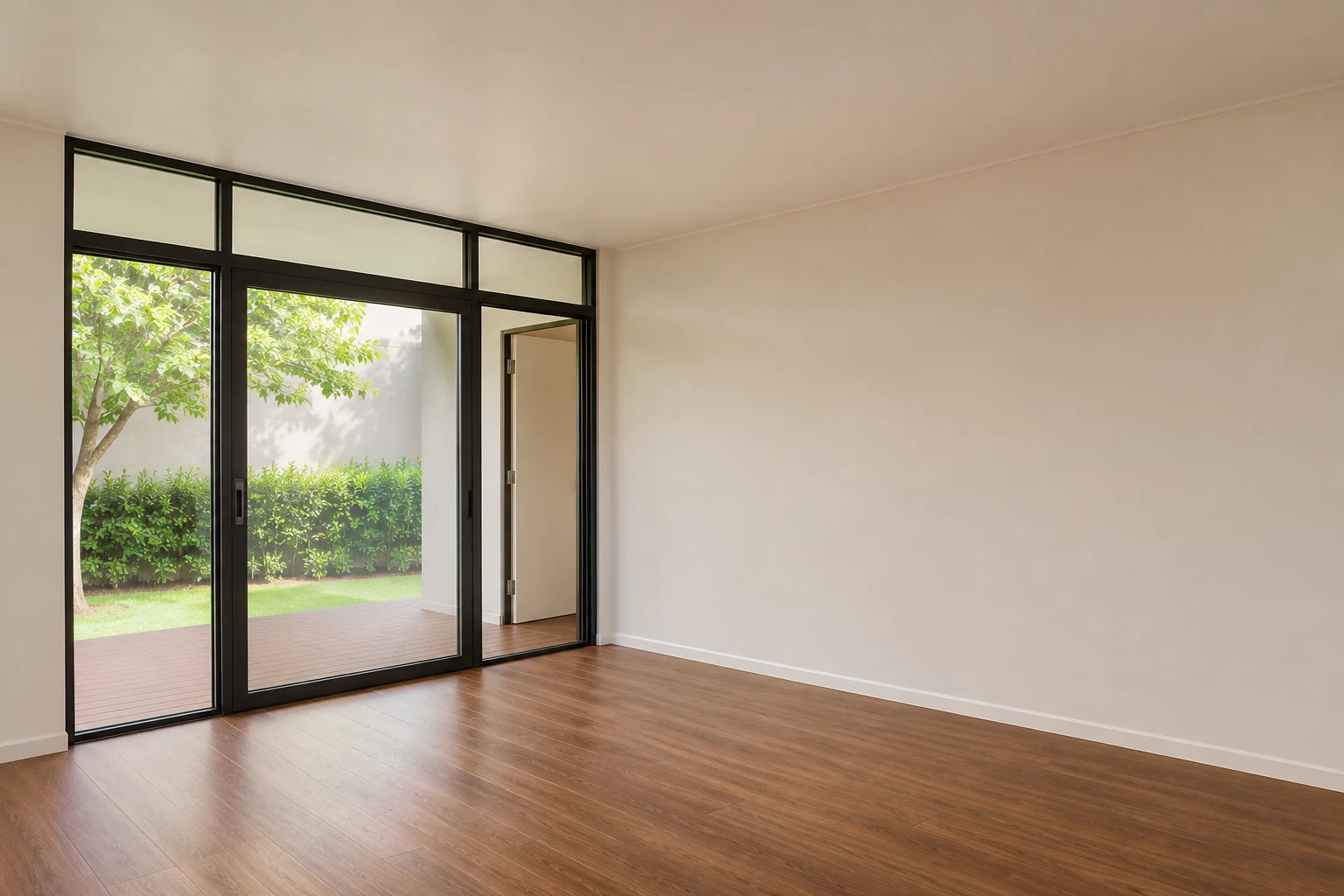
Show the indoor equipment, doors and furniture on the same plan. Keep the required air paths and maintenance access clear. A unit serving the living area should not be assumed to cool a separate bedroom equally when its door is closed.
Include power, drainage and humidity
Ask what the factory provides and what the site installer completes. Resolve the supply voltage and frequency, available electrical capacity, equipment positions, condensate route and weatherproof service connections before finishes are fixed. The electrical planning guide helps organize the building-side questions without prescribing a circuit size.
If moisture persists, do not assume a lower thermostat setting fixes its cause. Leaks, humid outdoor air and indoor moisture sources need different responses. The condensation diagnosis guide helps distinguish that investigation from simply buying more cooling capacity.
자주 묻는 질문
Can I cool a tiny house without air conditioning?
Sometimes, particularly where shading and cooler outdoor air can control the heat. Hot, humid conditions or warm nights can limit that approach. Plan for the destination and occupancy rather than assuming a small room will stay comfortable naturally.
Can the heating system also provide cooling?
Some heat pumps provide both. Check the selected model and its cooling performance; a heater or an indoor grille alone does not establish that capability.
Should windows stay open while the air conditioner runs?
Normally, uncontrolled open windows add to the cooling load. Provide the planned fresh-air system separately and follow the equipment and building design, rather than using a continuously open window as a substitute.
Prepare a cooling enquiry
Send PQSE the destination, intended summer use, room layout, window arrangement and available site power. State whether you want equipment included or building provisions for a locally selected system. This allows the cooling arrangement and building quotation to be discussed together.