To move a tiny house, agree the movement method and carrier first, then prepare the room, disconnect its services and make the receiving site ready. The road journey is only one part of the job. A deck left attached, an obstructed entrance or an unfinished utility connection at the destination can stop the relocation even when transport has been booked.
This guide covers preparation for a completed small room. If you are still choosing a container house on wheels, define the intended moves in the original room-and-chassis brief. Wheels alone do not establish permission or suitability for a road journey.
1. Agree what the mover will actually do
Describe the start and finish locations, current room configuration and proposed travel condition. Ask whether the room will move on its own chassis or be carried on the transporter’s equipment. Loading, unloading and final positioning need an explicit owner in either case.
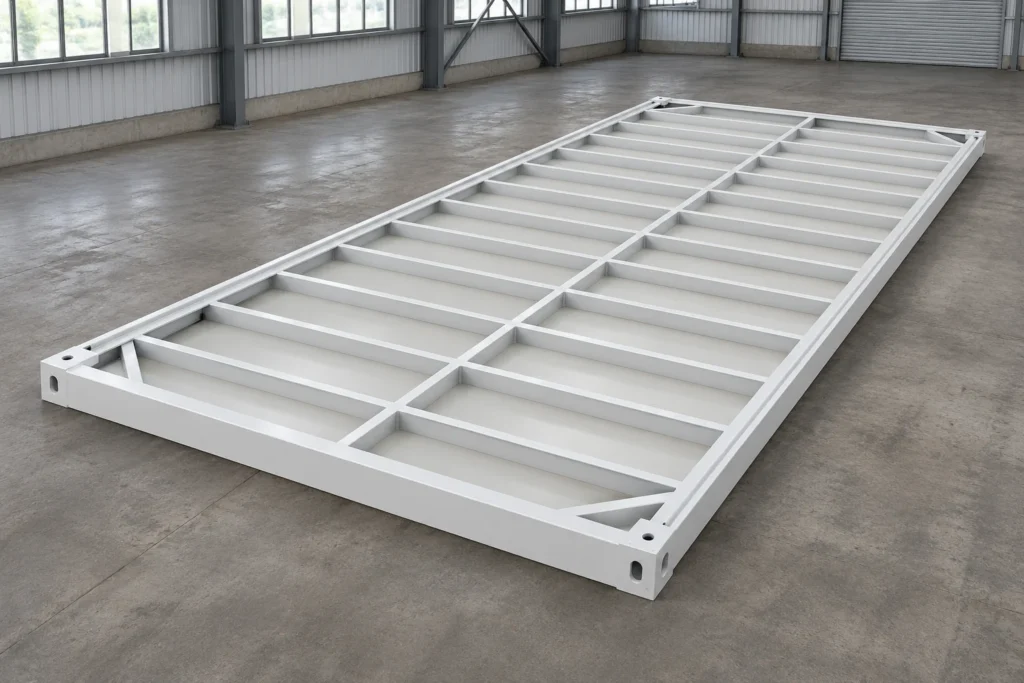
Use the wheeled-house towing checks to resolve the transport evidence and equipment questions. Once the actual method is agreed, turn the mover’s requirements into a departure plan. Do not substitute an empty-frame demonstration for the handling instructions for a furnished room.
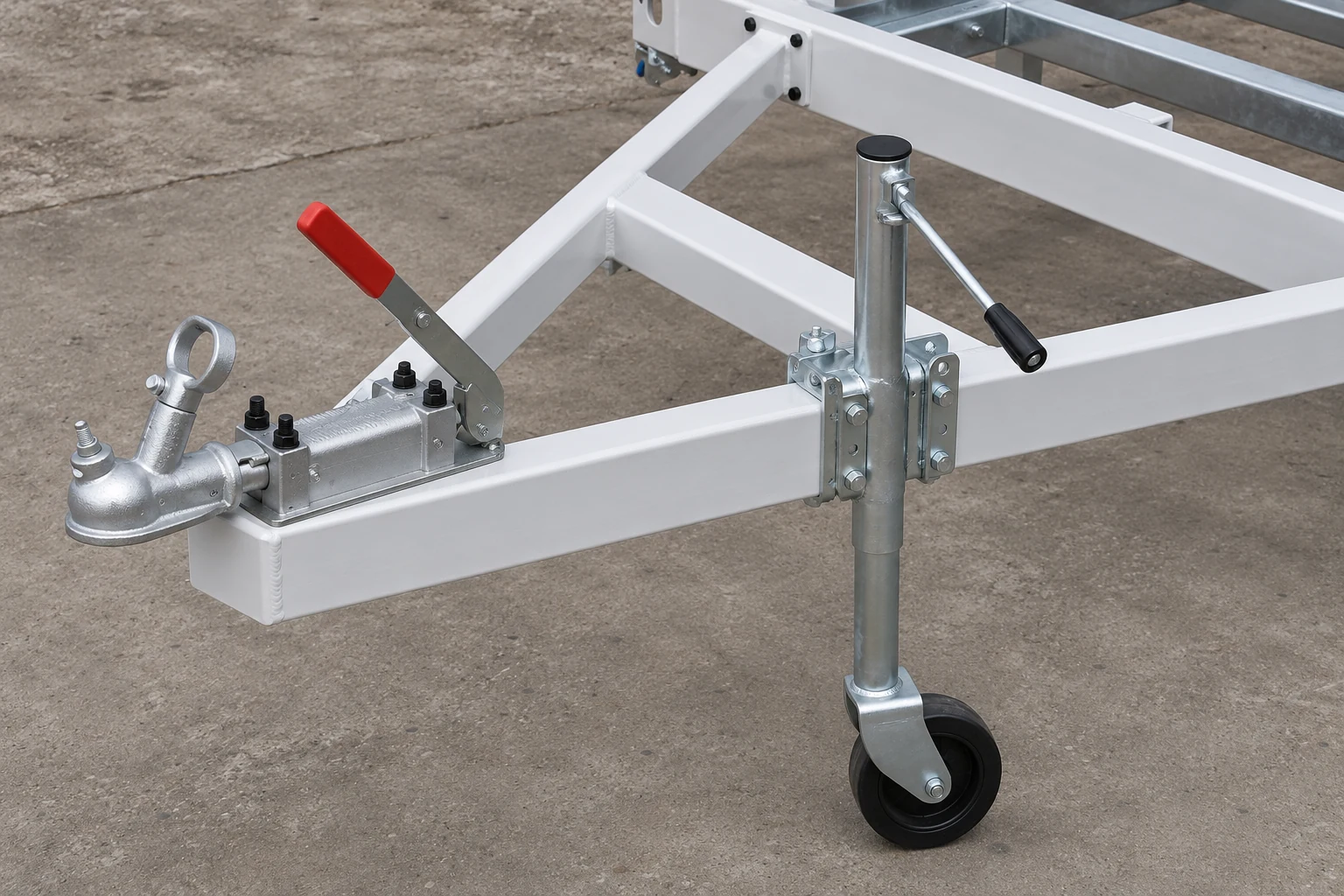
The carrier needs information about the completed package, not just a photograph of a coupling. Provide the available chassis and equipment records, dimensions and travel-state weight information. Keep that condition consistent with the dry-versus-loaded weight review; do not change carried tanks, equipment or contents after the movement assessment without telling the responsible provider.
2. Clear a usable route at both ends
Walk the departure and arrival routes with the mover before the day of travel. Look at the gate, turns, overhead obstructions, ground conditions and the space needed to position the room. The shortest route on a map may still be unsuitable for the actual vehicle and load.
Tiny House Basics’ account of moving its own house describes repeated trouble with branches around the access route, including at the destination. It is one owner’s experience, but illustrates why checking the public road alone leaves a practical gap.
Agree who arranges any permitted clearance work. Do not handle overhead utilities or assume branches, fences and neighboring property can simply be removed. The responsible carrier should decide whether the access and conditions suit the proposed move.
Separate things that travel from things that belong to the plot. Steps, decks, external stores and a site-built or removable skirt may need different treatment. Have a plan for dismantling, packing, transporting and reinstalling each item that is coming along.
3. Prepare the room and its connections
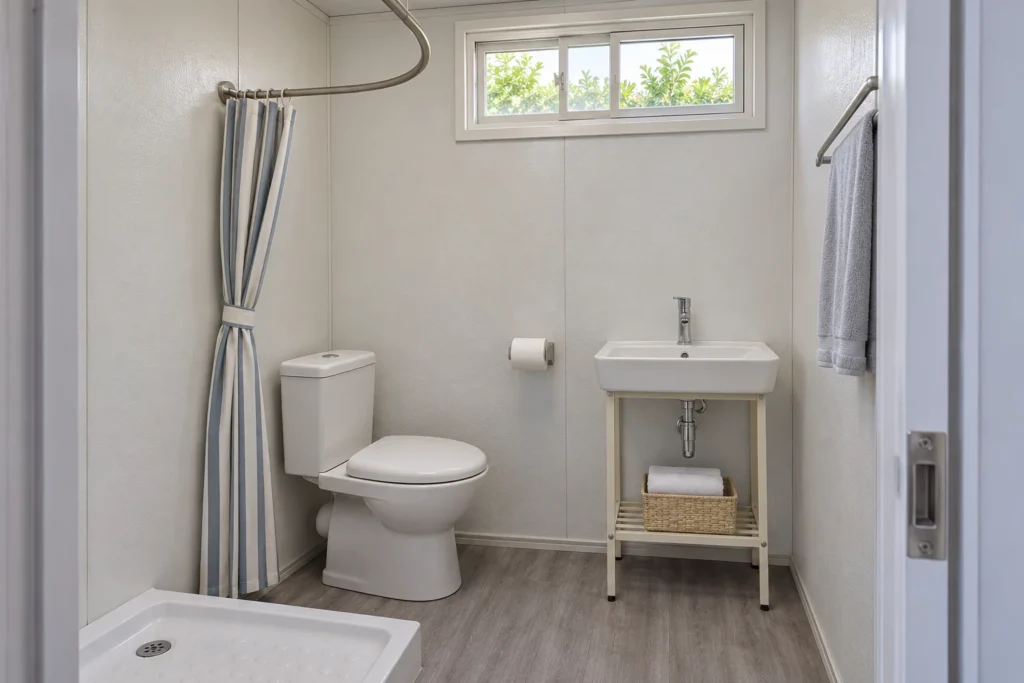
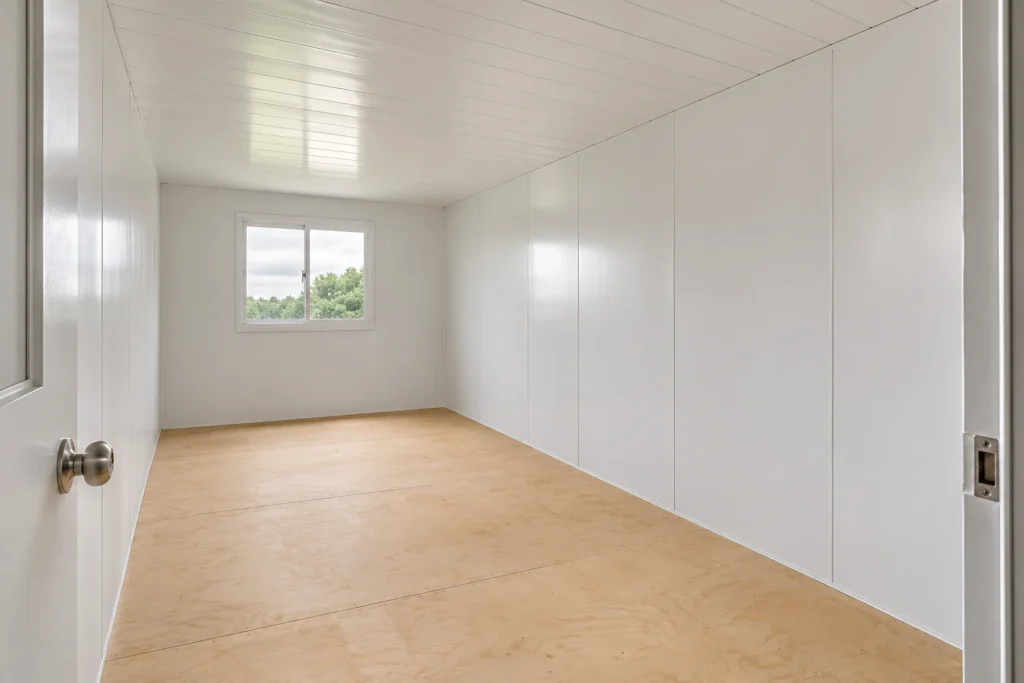
Remove loose and fragile belongings or pack them for the agreed transport arrangement. Secure doors, drawers and any equipment according to the applicable instructions. Tell the mover about items that remain inside, particularly anything that changes the assessed load or could move during the journey.
NOAH’s moving-preparation guidance covers outside belongings, removable additions, interior storage and hookups. Apply those preparation categories to your room; its example trailer arrangements are not a universal loading or jacking procedure.
Arrange competent service providers to isolate and disconnect the relevant utilities. Water and waste connections, electrical supplies and any gas equipment need the appropriate procedures. Protect the disconnected interfaces for transport. Follow the selected equipment’s draining or shutdown instructions rather than assuming an empty freshwater tank means the whole system is ready.
The modular utility planning guide helps identify the interfaces and responsibilities. Write down who restores them after positioning, as well as who disconnects them before departure.
| 단계 | Practical work to assign | What must be clear before proceeding |
|---|---|---|
| Departure site | Clear access and deal with decks, steps and other attachments | The room and carrier have a usable route out |
| Room preparation | Pack loose items and secure the agreed remaining contents | The travel condition matches the movement plan |
| 설비 | Isolate, disconnect and protect the relevant interfaces | Connections will not remain live, attached or trailing during movement |
| Transport | Confirm handling, route, equipment and applicable permissions | The carrier accepts the identified room and scope |
| 도착 | Prepare positioning, support and utility completion | Named parties can make the room usable at the new site |
4. Inspect at handover and after arrival
Record the room’s visible condition with the carrier before departure, including existing damage and any items carried separately. Agree the delivery location, what counts as completed positioning and how a problem will be reported.
At arrival, compare the visible condition before concealing or reconnecting affected areas. Have the responsible installers complete the support and service checks required for that configuration. Arrival at the plot is not the same as release for occupation or use.
자주 묻는 질문
Can a tiny house without wheels be relocated?
Possibly, but it needs a handling and transport plan for its actual structure and condition. Do not add wheels or copy a trailer procedure. Ask the building supplier and a suitable specialist whether relocation is feasible and what preparation it requires.
How much does a move cost?
Obtain a quote for the route, load, access, handling and site work. Ask which permits, escorts, insurance arrangements, waiting time and final positioning are included. Another owner’s price or a rate per mile cannot describe your complete move.
Can I leave the furniture inside?
Ask the carrier which contents may remain and how they must be secured. Their weight and position belong in the travel assessment. Items that cannot be safely retained need separate packing and transport.
Plan the next move before choosing the room
For a new order, tell PQSE where the room will be used, how frequently it may relocate, the required layout and fitted equipment, and whether public-road movement is proposed. Ask for the available handling and chassis information against that configuration. Give the local carrier and site installers the same brief so preparation does not fall between suppliers.