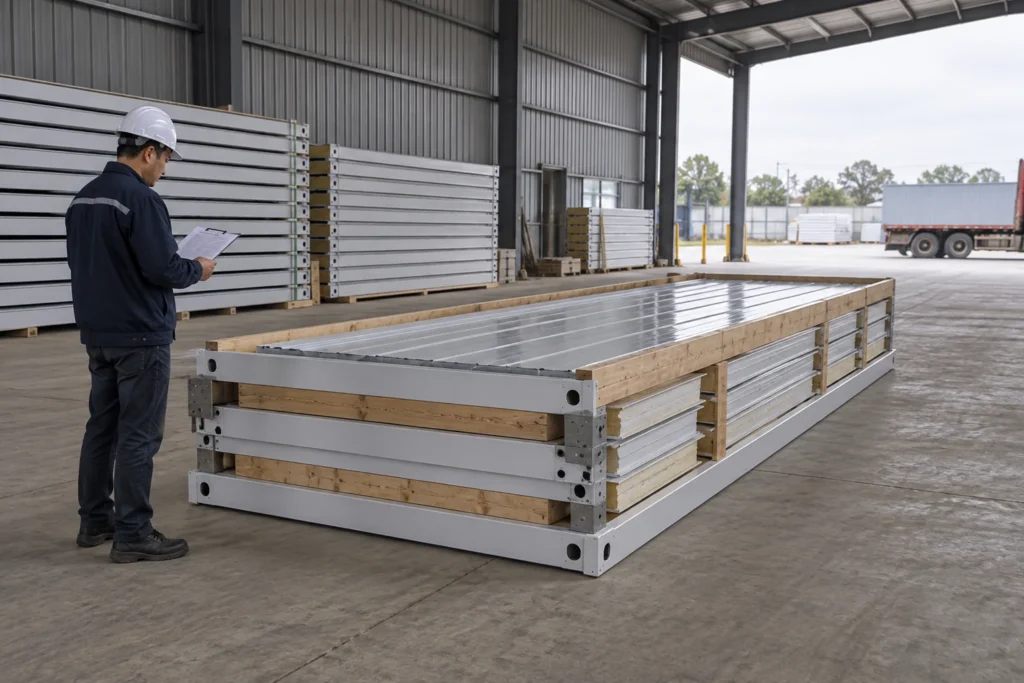
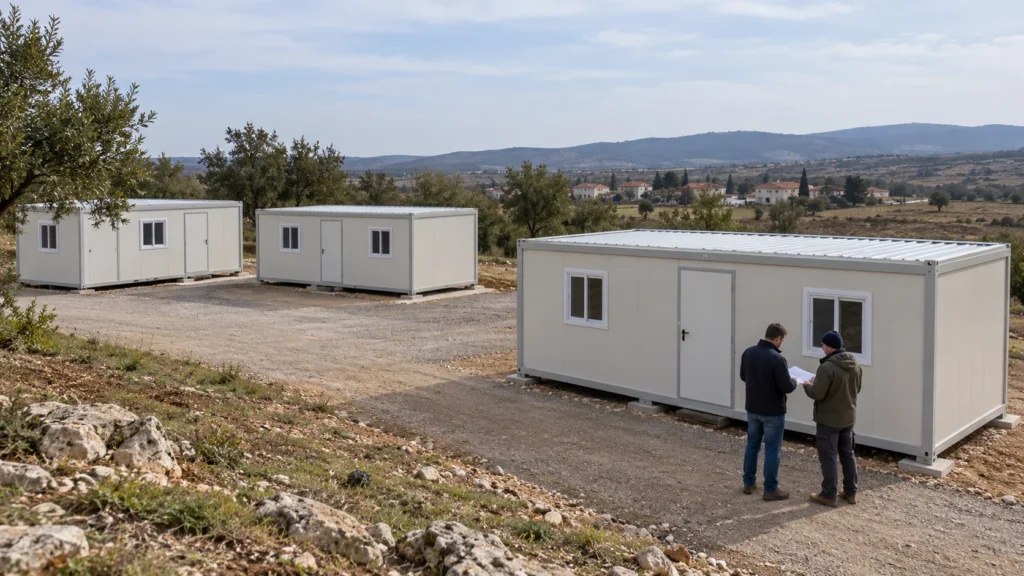
Use the drawing set that the responsible project party has authorized for the particular work and location, then replace its obsolete working copies wherever crews actually obtain information. A newer PDF, a forwarded screenshot or a changed revision letter does not, by itself, establish permission to build. For a purpose-manufactured flat-pack container house, the buyer should agree who issues site information, how a replacement reaches each crew and how uncertainty is escalated before affected work continues.
The difficult part often begins after an approved document reaches the site. One supervisor has the replacement in an email; another crew carries yesterday's print; a phone still opens a downloaded attachment. This guide addresses that distribution gap. It assumes the technical design and contractual responsibilities are established elsewhere. It does not provide assembly instructions, authorize a structural modification or declare a project compliant. Its purpose is to make the information used at the workface traceable to an identified release.
Find the places where crews obtain their instructions
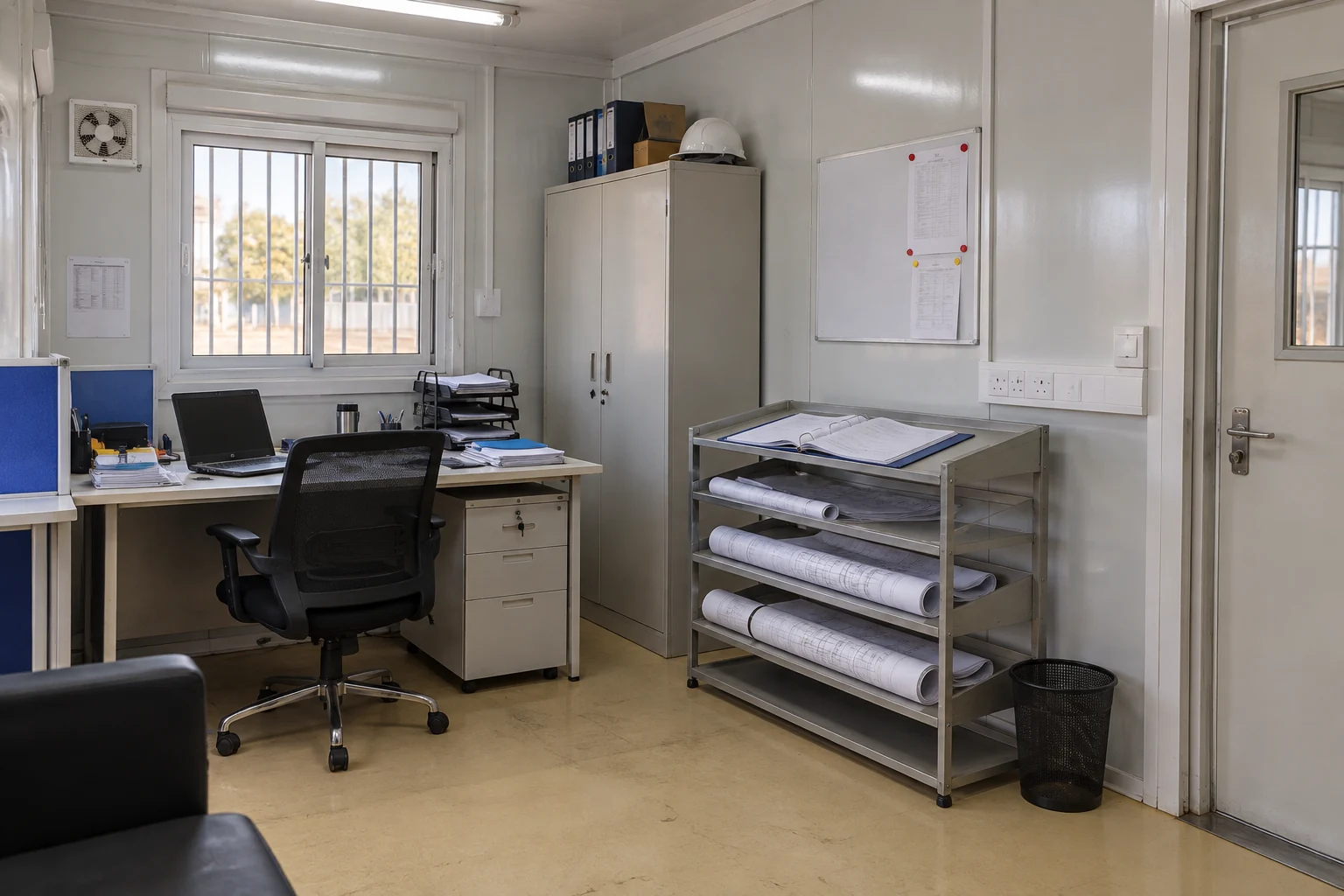
Start with the working locations, rather than a list of email recipients. Walk through the site office, the drawing rack, the supervisor's folder and the device used beside the module. Ask each responsible person to open the document they would use for the next task. The answer identifies a copy to control, not a person's ability to remember a change.
Include informal routes. A photograph of a drawing pinned to a wall may become the document someone forwards to a subcontractor. A printed detail can remain inside a tool case after its parent sheet has changed. An attachment saved for a previous visit may open automatically from a phone's recent-files list. None of these situations proves that the work is wrong; each shows why a master folder alone cannot describe the information available to the crew.
Keep the initial survey proportionate. Identify the locations, the person responsible for each working set and the route used when a replacement arrives. Do not collect private phone contents or demand unrelated files. For a small project, a short copy register may be enough. For several crews or phased buildings, record the work area and trade as well, because one replacement may concern a shared interface without changing every room.
The coordination room itself can affect the routine. A construction site office used for project coordination needs a practical place to review a complete sheet, retain the current issue and separate historical material. Establish these functions before deciding that another document platform will solve the problem.
Read the revision and the permitted use separately
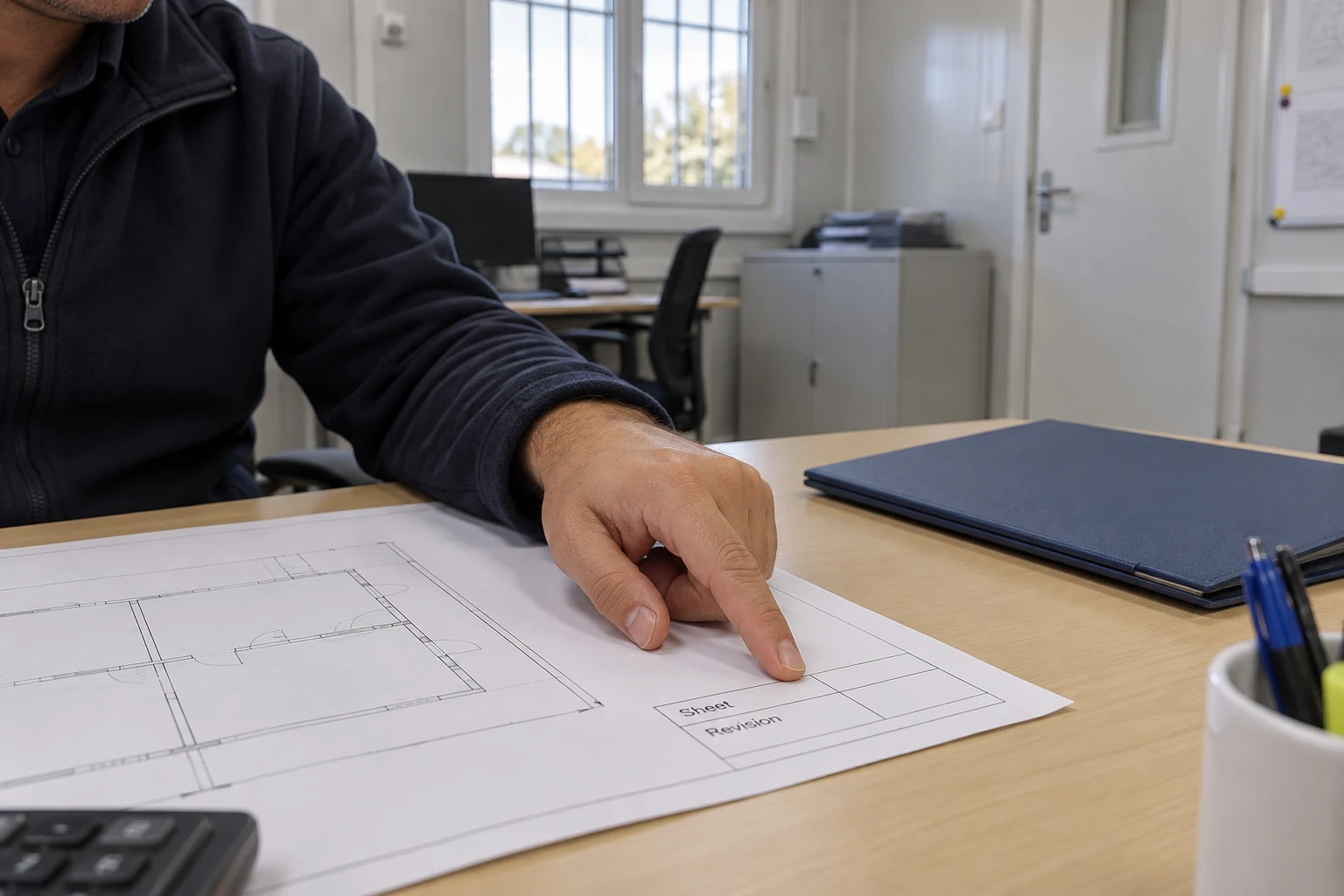
Check the sheet identifier, revision, release status and applicable area together. A file can be the latest version and still be issued only for review. Likewise, a formally accepted document may relate to a particular stage rather than the task now proposed. Ask for the project's written meaning of its codes instead of interpreting a familiar-looking label from another job.
Use status as a separate check
O UK BIM Framework's September 2020 Guidance Part C distinguishes revision metadata from permitted-use status. Its UK examples include S3 for review and comment, and An for information accepted for the stage represented by n. These are source-specific examples, not a universal coding scheme or permission to construct a PQSE building. The actual project's information standard and release procedure govern its working copies.
For the site register, retain the status exactly as issued and add a plain-language explanation supplied by the responsible party. Avoid renaming a file 'approved' because an email sounds positive. Where the release does not identify the affected location or activity clearly, request clarification through the agreed channel. Record that question against the sheet so another supervisor does not independently decide that the same uncertainty has disappeared.
A revision sequence also needs its own rule. Letters, numbers and dates may be ordered differently between disciplines. Sorting filenames alphabetically is therefore an unreliable substitute for an issue list. Compare against the identified release record, including its exclusions, rather than guessing that the largest number is the correct site instruction.
| Source example | Meaning in that guidance | Site-copy question |
|---|---|---|
| S1 | Coordination use | Is a separate construction release required? |
| S2 | Information use | What activity does the actual release permit? |
| S3 | Review and comment | Where is the response and subsequent authorized issue? |
| Um | Accepted for the stage represented by n | Does that stage and location cover this task? |
Preserve the sheet's identity when it leaves the office
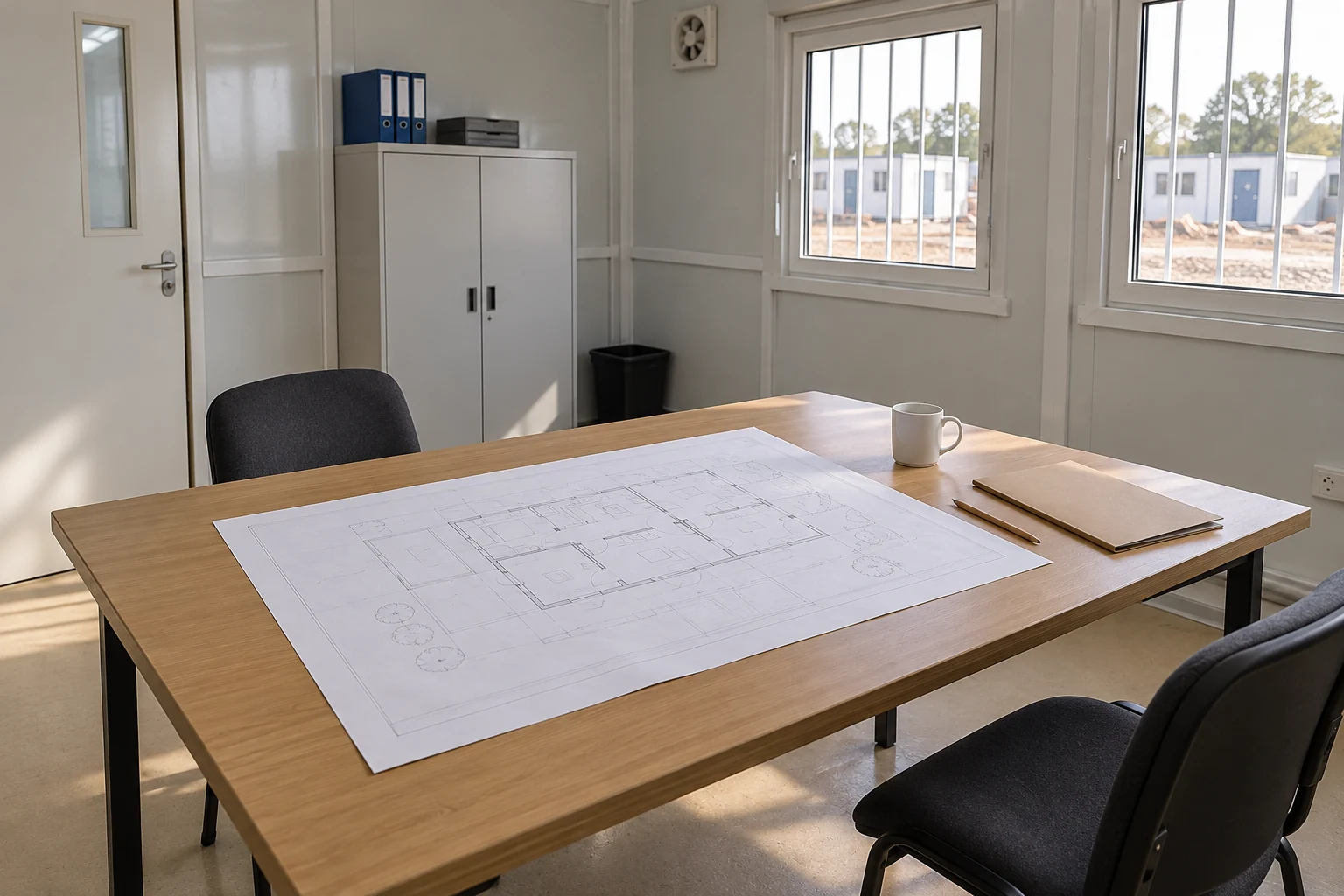
A readable detail without its title block can be difficult to trace. When a crew needs a smaller print or an electronic extract, preserve a route back to the complete issued sheet and its release record. The extract should not become an independent instruction whose origin can only be reconstructed from someone else's memory.
The August 2026 UFGS 01 33 00 Submittal Procedures, a US federal guide specification, distinguishes SD-02 shop drawings from SD-03 product data. The former can illustrate project work and coordination; the latter describes product characteristics. That distinction helps explain why a catalogue image and a project installation sheet serve different purposes. It does not make the federal submittal procedure part of another buyer's contract.
Ask how the issuer wants extracts handled. A detail reference, parent-sheet identifier and revision can accompany an approved extract without changing its technical content. If a print is too small to read, obtain an appropriate rendition rather than relying on a zoomed photograph with missing notes. Do not infer dimensions from a resized image or replace an unreadable value with a measurement taken from the page.
Keep this separate from the broader flat-pack assembly scope and acceptance responsibilities. Knowing who performs assembly does not establish which particular detail that party should use. The delivery arrangement should explain how the supplied documentation is matched to the ordered configuration and how a site recipient can request a complete, legible copy.
Make replacement a recorded action

Treat a drawing replacement as a small, identifiable site action. Record the document being introduced, the document it supersedes and the working locations affected. Assign someone to confirm completion. A message sent to a group is useful notification, but the buyer still needs to know whether the active paper or offline set was actually changed.
A copy register does not need to record every individual page consultation. Its purpose is to identify controlled working sets and the people who maintain them. Include enough information to distinguish two folders with the same informal name. 'Installation folder' is ambiguous if one belongs to the plumbing crew and another to the room-fit-out team. Add the work area or set identifier and the responsible recipient.
For each replacement, keep the issuer's transmittal and a brief receipt confirming the intended set was updated. If an old print cannot be found, record that fact and the action taken to prevent its continued use. Do not write 'all copies withdrawn' when the search only covered the office rack. An honest incomplete entry gives the next supervisor a specific issue to resolve.
The following fields are an editorial planning aid. They are not an ISO form, a mandatory PQSE procedure or an approval record for the building. Adapt them to the agreement and the number of working sets. Keep access practical for the people who must update the record; a sophisticated register that the site cannot open offers little help at shift change.
| Campo | O que gravar | What it helps resolve |
|---|---|---|
| Release reference | Issuer, sheet ID, revision, status and applicable scope | Which source authorized this copy |
| Working set | Location, area or trade, and responsible recipient | Where a replacement must reach |
| Superseded copy | Previous sheet or set being withdrawn | What should leave active use |
| Completion receipt | Who replaced it, when, and any unlocated copies | Whether distribution is complete |
| Open issue | Question, affected task and responsible decision-maker | Why a copy or area remains on hold |
Remove obsolete prints from active working sets
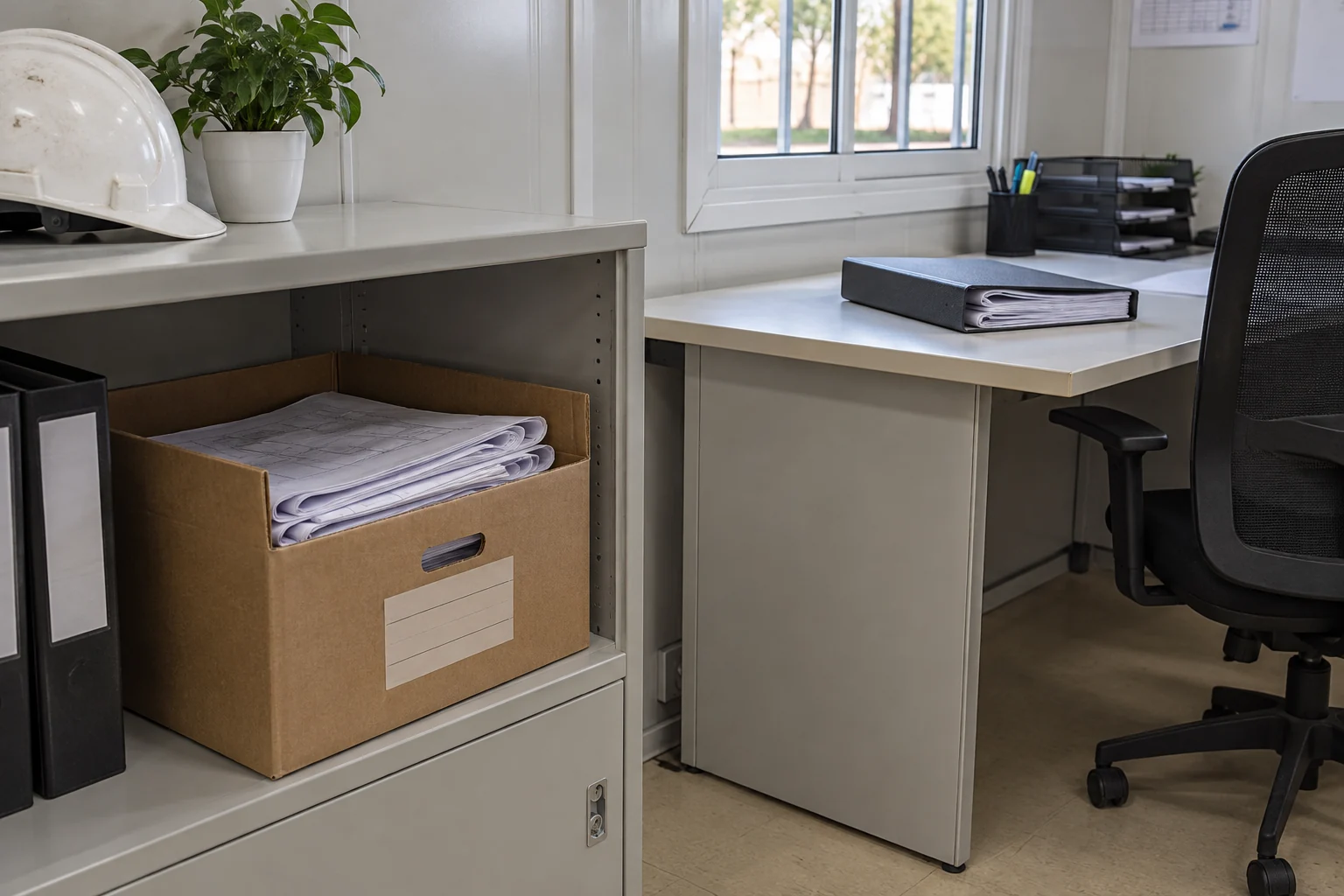
Replace the full affected sheet in its working set rather than leaving a new page loosely beside the old one. Check the drawing rack, site notice area and the folder taken to the module. Retain superseded information in the agreed historical record, clearly outside the active working set, so traceability and day-to-day use do not conflict.
An old print can be valuable evidence of what was issued previously. Keeping that history is different from leaving the print where someone could reasonably select it for today's work. Agree the archive location and marking method with the document owner. Do not destroy contractual records or a crew's observation notes simply to make the current folder look clean. The historical material should retain its identity and purpose.
Watch for mixed sets. A cover page may show the new issue while unchanged and superseded sheets are interleaved inside. A recipient could then assume the whole folder is current. Compare its sheet list with the replacement instruction, retaining unchanged sheets only where the issuer's procedure permits. Record any missing pages instead of silently treating a partly replaced set as complete.
On accommodation projects, the same room layout may appear in several blocks. A replacement for one block should not automatically replace all similar-looking sheets. A worker accommodation development with repeated rooms needs room or block identifiers that remain understandable to the crews. Similar appearance does not establish identical interfaces, release status or installation instructions.
Check downloaded files as well as online links

Ask the supervisor to open the drawing through the route used at the workface. The route may be a downloaded PDF, a messaging attachment or an application that caches files for offline use. Checking a live link on an office computer does not show which copy a phone will display where the connection is intermittent.
Agree how offline working sets are refreshed and how the recipient confirms the replacement. The test is practical: can the responsible person identify the sheet, revision and release scope on the actual device without relying on a remembered filename? If a saved copy cannot be distinguished from a replacement, change the distribution arrangement through the document owner rather than renaming files ad hoc on every phone.
A QR code or shortcut can point to the intended source, but it is only a route to information. Its continued usefulness depends on the destination and the site's connection. Record what happens when the route is unavailable. A crew should have an agreed escalation or controlled offline set, not be left to choose whichever attachment loads first. Do not promise that one application automatically eliminates obsolete copies.
Consider language, screen size and the ability to open all required pages. A screenshot of the changed corner might conceal a general note on another sheet. If a translated explanation is supplied, identify its parent release and whether it is explanatory or formally issued. Resolve technical meaning with the responsible party; a convenient translation does not independently approve an alteration.
Keep site questions separate from authorized changes
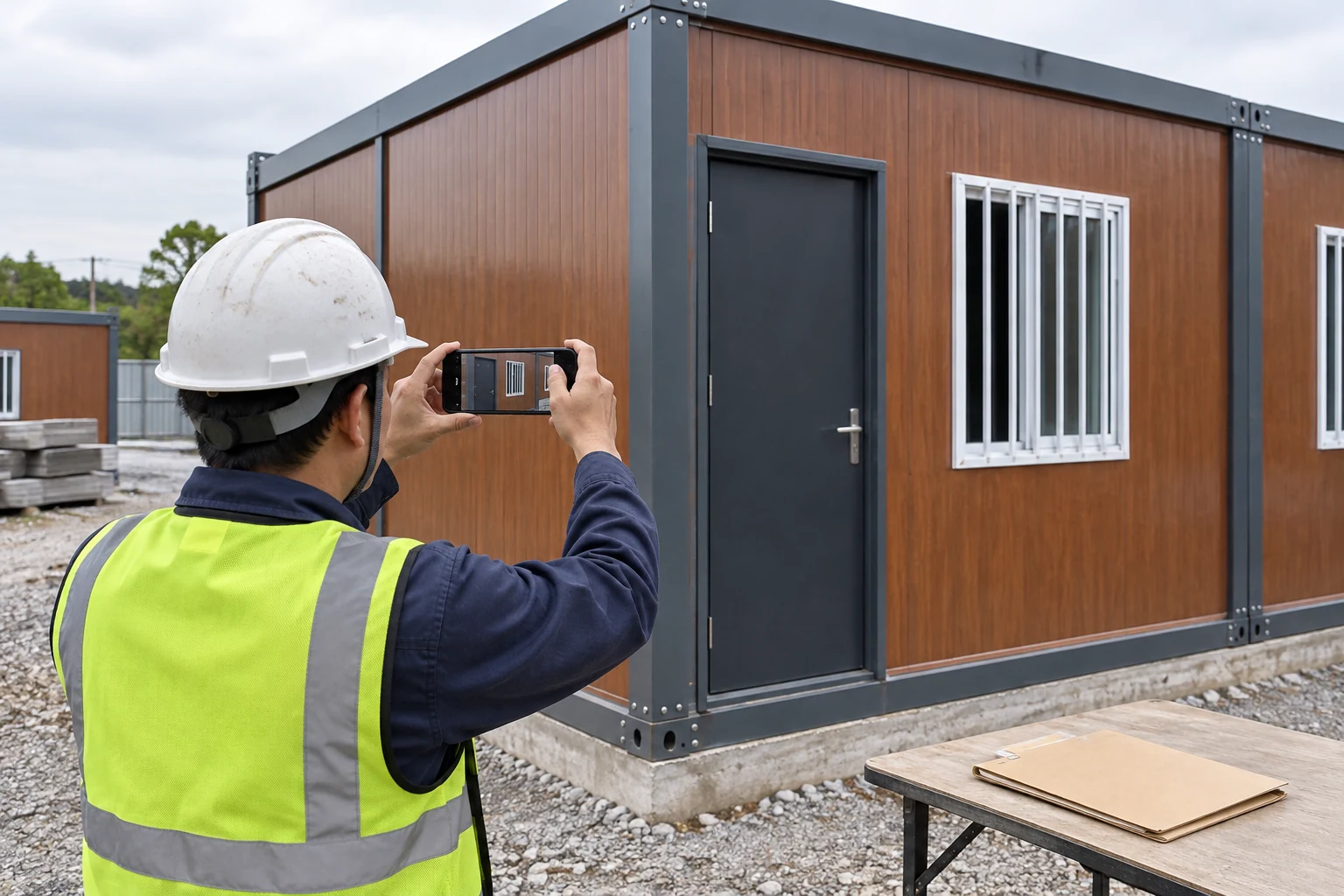
When a drawing and the observed site condition appear inconsistent, preserve the question and its location. Include the sheet reference and the task affected. A phone conversation can help identify the issue quickly, but the resulting instruction needs to enter the agreed release route. Avoid allowing an unresolved annotation to become the next crew's assumed design.
Log the response before changing a working set
Em sua configuration-management discussion, NASA connects document identification with records of proposed changes and their disposition. This is a general systems-management example from a different sector, not a flat-pack installation standard. For a site-copy process, its relevant distinction is between an identified question, a decision and the information subsequently released to represent that decision.
Record the response's scope: which sheet or detail it affects, which area it concerns and whether a revised drawing will follow. If the answer depends on another discipline, retain that condition. A reply about a room partition should not be treated as permission to change an associated support or service connection. Obtain the required project-specific engineering or professional decision before adopting a consequential technical change.
The site's copy coordinator can distribute an authorized revision, but should not be asked to become its designer by editing dimensions or construction notes. The earlier requirements and controlled design-change process remains the place for changing the agreed product or layout. Here, the concern is how the resulting site instruction reaches the people using it.
Describe a partial-area release without implying more
A site may receive information for one area while another remains unresolved. Identify the permitted area and activity explicitly, together with the interfaces that still need a decision. The crew should not have to infer permission from a coloured mark or from the fact that an adjacent room has already been completed.
Ask the issuing party to describe partial releases using the same location references that appear in the working documents. A block identifier on a transmittal is helpful only if the crew can match it to the site and the relevant sheet. Keep excluded work visible. Avoid broad informal labels such as 'ground floor clear' where only a limited room-fit-out activity has been released.
Service interfaces make this distinction particularly useful. A room can have an accepted furniture arrangement while its external drainage or electrical connection still needs separate information. The building and site utility-interface planning should identify the responsible parties. A partial document release does not replace those technical decisions or authorize a connection merely because the building shell is available.
The examples below illustrate how to state a boundary; they describe no actual PQSE project. The responsible project parties determine the real release wording and whether work may proceed. Use their decision, not this example table, to govern the activity. Where an unclear boundary could affect safety, installation or compliance, obtain clarification before the affected work continues.
| Illustrative scope | Information to identify | Limite a manter |
|---|---|---|
| One block's room fit-out | Block and room IDs, specific released sheets and work | Adjacent blocks and shared interfaces remain separately defined |
| A reviewed doorway detail | Parent sheet, revision and affected doorway | No implied change to structure or other openings |
| A revised service interface | Discipline response and connected drawing references | Other approvals and connection tasks are not assumed |
| Work awaiting clarification | Question reference, affected location and decision owner | The unanswered task is not marked released |
Include the working set in crew handovers
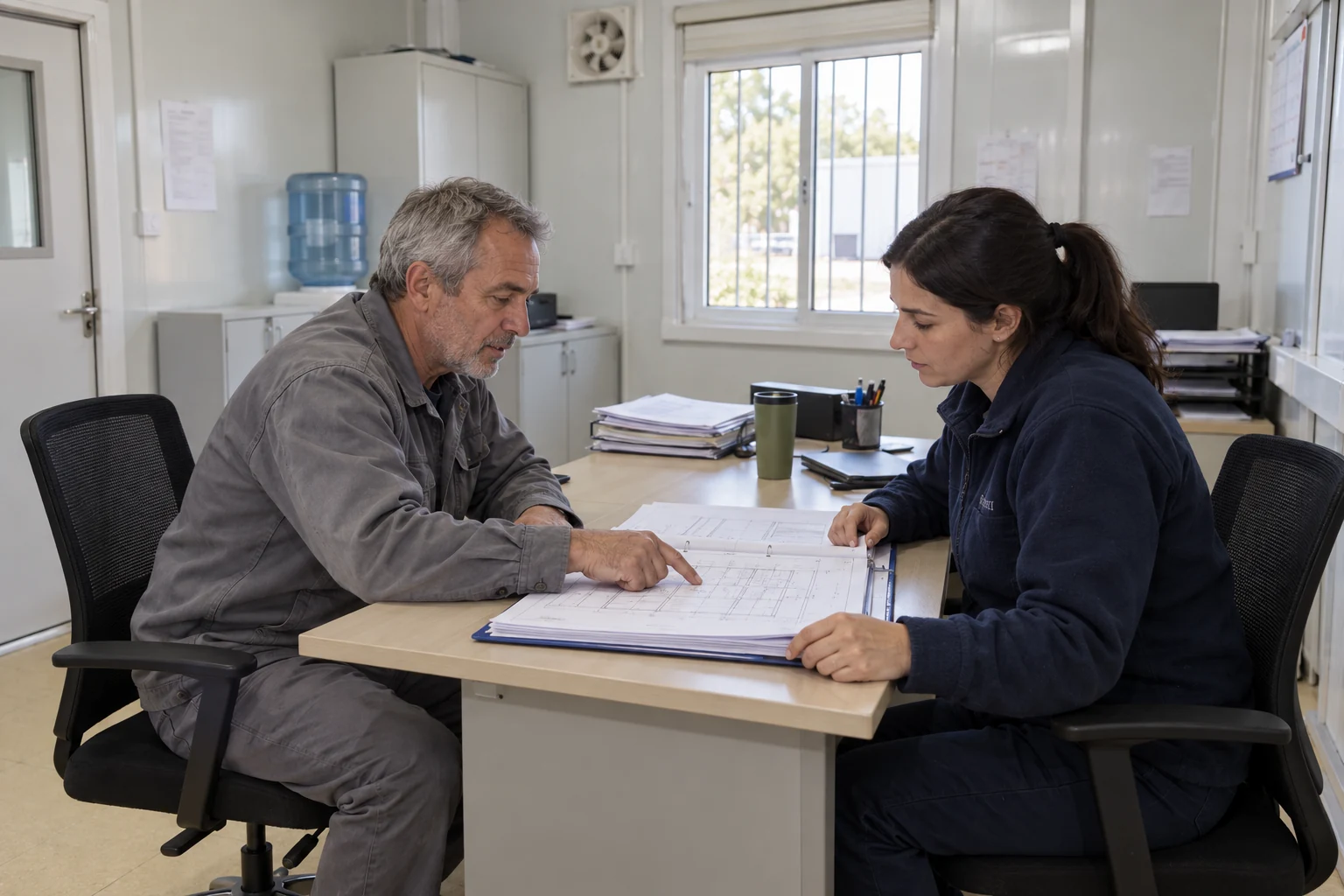
At a crew or shift change, review the document set alongside the work completed and the questions still open. The incoming supervisor should be able to identify the active release without depending on the outgoing person's phone. Confirm which replacements reached the working locations and which areas remain outside the released scope.
A handover note should distinguish completed distribution from a replacement still being circulated. Otherwise the next crew may repeat the same search, or assume that another team has updated the rack. Keep the note linked to the copy register and the issuer's release. A compact summary is useful when it preserves these references; copying every drawing note into the summary creates another version to maintain.
Review a changed interface with the parties who will actually use it. A supervisor may understand a replacement while a specialist trade still holds a separate detail from the previous issue. The objective is not to make every worker memorize every change. It is to provide an identifiable working source, a clear task boundary and a route for asking the next question.
Use a small real-world check before calling the distribution routine complete. Select an affected working location and ask its responsible recipient to produce the active copy and explain its scope. Record any mismatch and correct the copy route. This demonstrates the particular distribution check performed; it does not constitute an engineering inspection or prove that the installed building meets its design.
Hand over a record that can be understood later
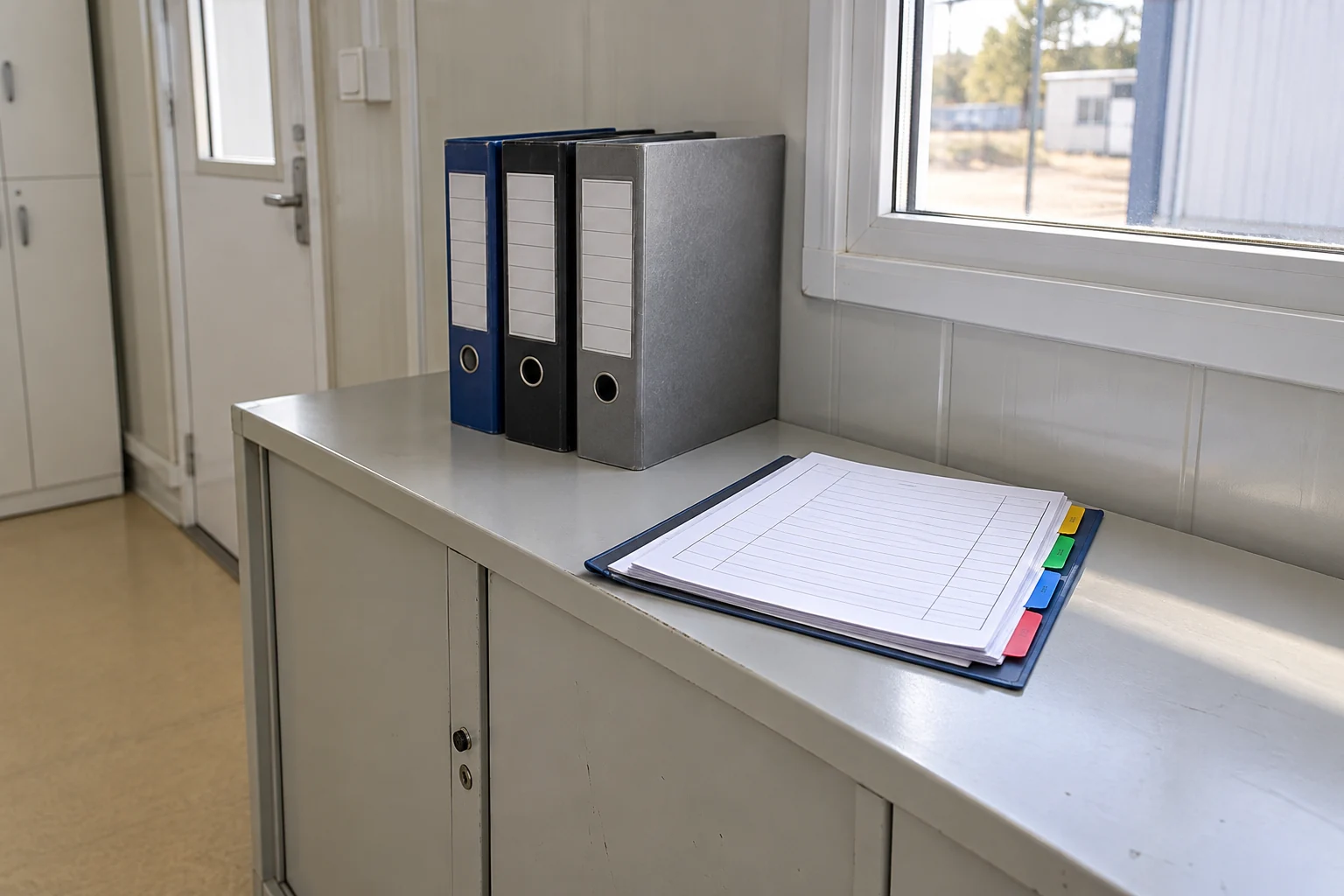
At project handover, distinguish the information used to direct work from the record of what was actually completed. Identify outstanding revisions, site observations and responses that still need incorporation. A folder called 'final' is difficult to use when its contents combine current sheets, historical prints and unresolved annotations without an explanatory index.
O HSE's UK client guide for CDM 2015 describes providing project information, communicating during the work and keeping relevant health-and-safety information for later activities. Its legal framework is UK-specific. The broader purchasing implication is to agree the handover information and its responsible owner early, rather than expecting an unlabelled bundle of drawings to explain itself after the site team leaves.
Ask which documents record the installed condition, which retain historical decisions and which remain subject to an outstanding action. A marked-up sheet may record an observation that has not been technically reviewed. Keep that distinction visible until the appropriate party resolves it. Do not relabel unverified mark-ups as approved as-built information because the handover date has arrived.
Link the record to the documented inspection and acceptance checks actually performed. The information set should allow the later operator to find the relevant configuration and unresolved items, without implying tests or approvals that never occurred. For a procurement enquiry, describe the number of working crews, anticipated offline use, phased areas and the required handover format so document-distribution responsibilities can be included in the order discussion.
Perguntas do comprador
Does the most recent file date prove that a drawing is approved?
No. A date can identify when a file was saved, exported or downloaded without explaining its permitted use. Check the sheet identifier, revision and status against the issuer's release and the scope of the proposed task. Where a document is being reviewed, preserve that purpose until the responsible party issues the required decision. The site's procedure should explain how recipients identify the authorized working set. It should also describe what to do when two copies appear inconsistent, rather than leaving the supervisor to choose a file based on its timestamp.
Can a small project control drawings without purchasing a new platform?
Possibly. The useful test is whether the actual working copies are identifiable, replacements reach their responsible recipients and obsolete information leaves active use. A proportionate register and an agreed issue route may support a small site. More crews, locations or offline devices can require a different arrangement. Choose tools around the workflow and access conditions. A shared folder does not by itself show that every printed or downloaded copy has been replaced, while a complicated application can also fail if the people using it cannot obtain the current information.
Should superseded drawings and annotated prints be deleted?
Separate them from active working sets while retaining the historical records required by the actual project agreement. Superseded information may explain previous decisions, and annotations can preserve observations needing a response. Keep their identity, status and purpose clear in the agreed archive. Do not destroy evidence or alter contractual records simply to remove an old working copy. The issuer and responsible project parties should define retention and withdrawal. The site coordinator's record should state what was replaced and what remains unlocated or unresolved.
What should be confirmed with the supplier before placing the order?
Confirm the supplied drawing and document scope, configuration identification, issue route, replacement procedure, language and file format, and the party responsible for responding to site questions. Explain how many working crews and phased areas will use the information, and whether they need controlled offline copies. Ask how supplier information connects to site-specific drawings and other disciplines, and which handover records are included. Keep design approval, document distribution and the building's technical acceptance as distinct responsibilities. An agreement about sending PDFs is incomplete if nobody has responsibility for withdrawing the old working copies.
Fontes e escopo
- UK BIM Framework, Guidance Part C, Edition 1, September 2020. Sections 2, 5 and 6; UK information-management examples, not a site-specific construction release.
- UFGS 01 33 00, Submittal Procedures, August 2026. Sections 1.1 and 1.2.1; US federal submittal definitions, not automatically another project's contract terms.
- NASA Systems Engineering Handbook, section 6.5 Configuration Management. General identification and change-record principles; no aerospace procedure imposed on a building project.
- HSE, Need Building Work Done? INDG411. UK client information, coordination and later-use records under CDM 2015.
Prepared for PQSE House as a research-based purchasing guide with independently developed site-copy examples. Source-specific codes retain their stated date and jurisdiction. The new photographs are illustrative scenes constructed from genuine original workplace and modular-building references; they are not records of an installed PQSE project or approved construction documents. No measured revision-error reduction, human professional review or independent endorsement of PQSE is claimed. Obtain the actual project's release, technical decisions and retention requirements from the responsible parties.