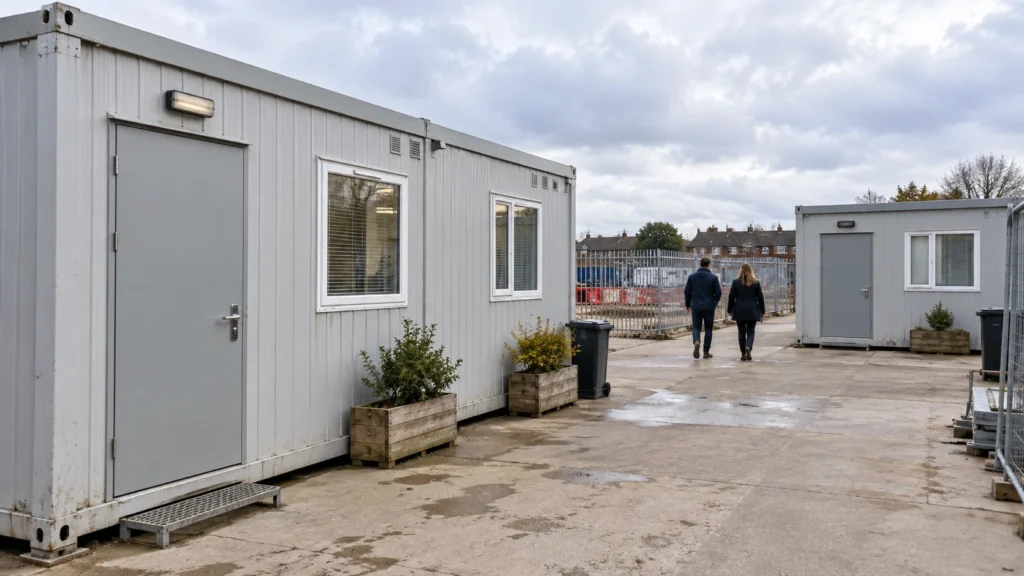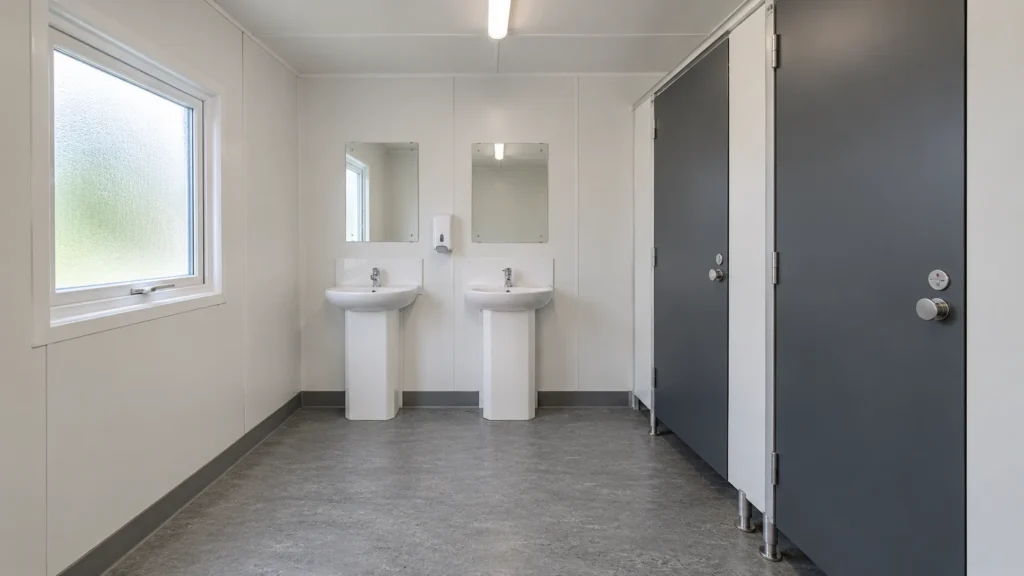
A portable toilet can be clean, supplied with water and recently pumped out while its sanitary-product bin has no collection service. The gap is easy to miss because a quotation may use one broad word, “servicing,” for several different jobs. Before ordering, identify the solid hygiene waste, the liquid holding-tank contents, the person responsible for each collection and the receiving route. A bin in the cubicle is only the start of a sanitary-waste disposal plan.
The practical answer is to buy a complete handover arrangement rather than an unspecified promise to keep the toilets clean. Confirm where users dispose of products, what the contractor removes, what remains on site between visits and what happens when access or collection fails. Those decisions influence the room layout and service access as well as the operating contract. The following approach applies to procurement and operation planning; the England examples are clearly identified and must not be exported as local rules for every destination.
Start with the waste leaving the toilet, not the name of the service
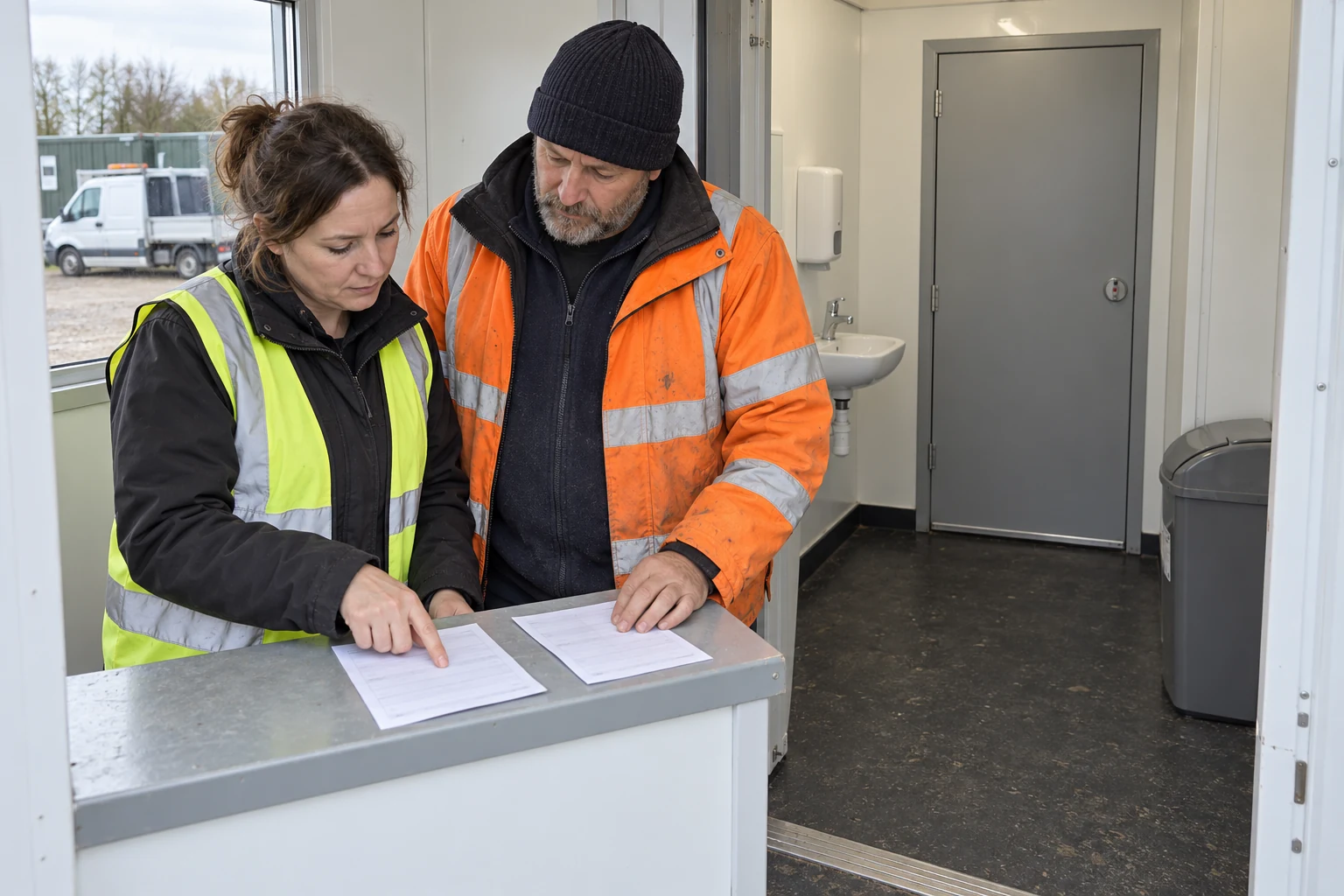
Ask the site operator to describe the materials expected in each container. Used period products, ordinary packaging, cleaning materials and WC effluent do not become one interchangeable stream because they originate in the same building. Origin also matters: a welfare toilet serving an ordinary workplace is different from a facility collecting material from clinical treatment. Do not assume the contents are non-hazardous when their use or contamination is uncertain.
For a portable toilet procurement package, put these streams beside the fixture schedule. The building supplier needs to know the disposal points and physical interfaces. The waste contractor needs a description it can classify and accept. The operator needs to know what its staff may do. A drawing, a waste description and a service scope should refer to the same locations.
Use a simple identifier for each cubicle or collection point so a missed service can be reported without confusion. Record who confirms the classification and where unresolved questions go. The table below is a starting structure for that conversation, not a list of universally assigned waste codes.
One useful procurement check is to follow a single proposed collection from beginning to end. Ask what the worker takes into the cubicle, what leaves it and what document or record follows the material. If the explanation stops at “the bin is emptied,” the missing destination, containment or ownership still needs an answer. Resolve that gap before comparing quotations as equivalent services.
| Material or situation | Question to resolve | What the order should distinguish |
|---|---|---|
| Routine solid hygiene products | What are the origin, contamination assumptions and locally accepted classification? | Contained cubicle collection and the agreed onward route |
| WC holding-tank contents | What liquid, additives and other contents will the receiving facility accept? | Tank removal, transfer interface and receiving destination |
| Packaging and general refuse | Can it enter the site’s ordinary commercial-waste stream? | Its own container and collection arrangements |
| Sharps or potentially infectious material | Who must assess the material and control the response? | A separate competent response; no automatic inclusion in routine bin exchange |
Make the disposal point usable inside the private space
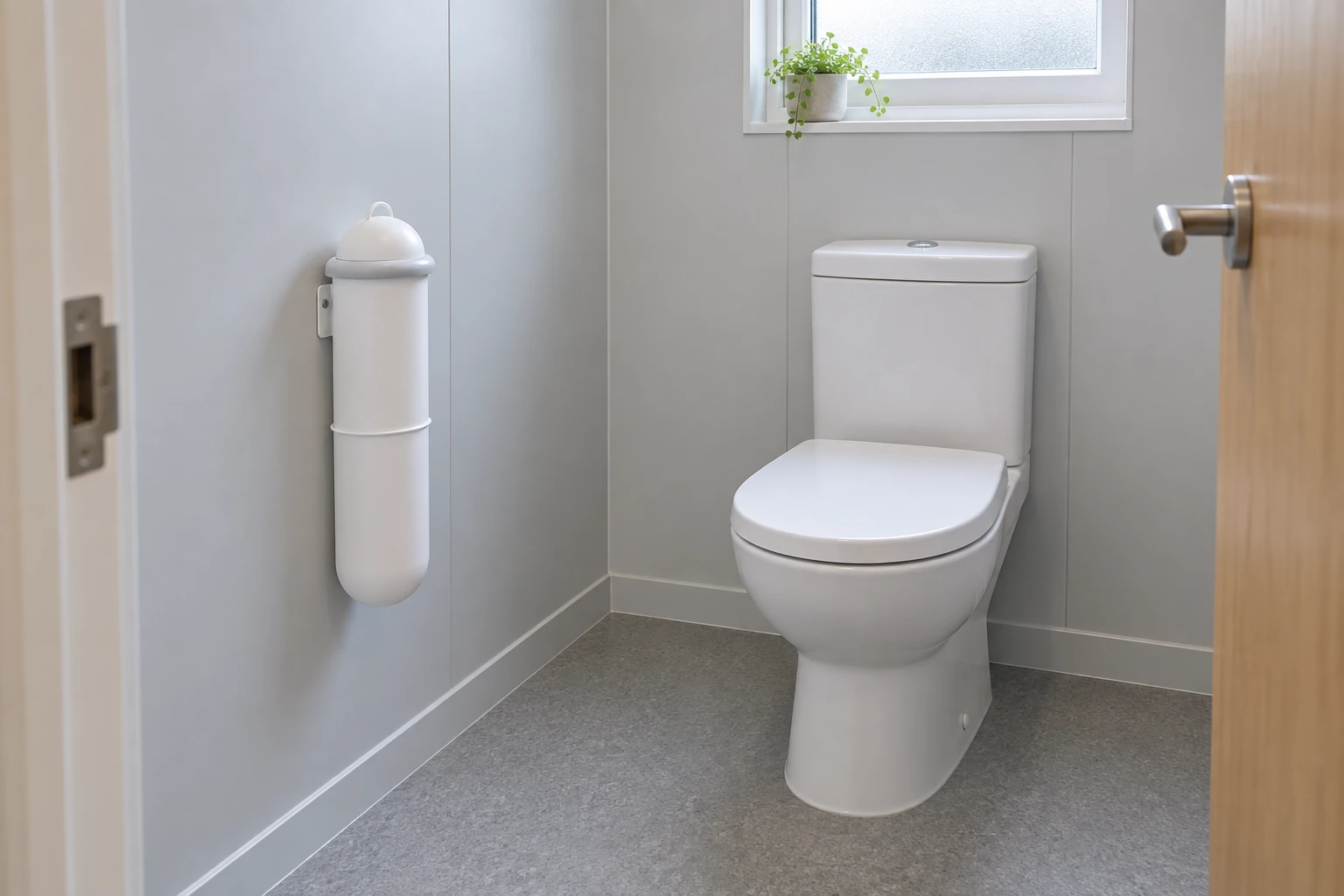
A disposal unit should be considered while arranging the cubicle, rather than squeezed into the remaining floor space after installation. Check how someone reaches it, how the door moves and whether the unit interferes with the normal use of the toilet. Also check how the service worker accesses it. A position that looks neat on an empty drawing may be awkward once a user, cleaning equipment or replacement container is present.
For covered workplaces in Great Britain, HSE’s toilet and washing-facility guidance includes a place for female workers to dispose of sanitary dressings. It does not specify a universal bin size or service interval. The physical provision and the collection contract therefore need separate confirmation.
In a combined portable bathroom, consider the toilet and shower functions together without combining their waste tasks. Check the disposal point on the actual room layout, including any required accessible use. Do not infer adequate clearance from a product photograph. Ask the responsible designer and operator to verify the selected arrangement against the destination’s requirements.
Include a realistic service condition in the layout review. A worker may need to withdraw the selected unit while the door is open, then leave the cubicle ready for its next user. Check that the method does not depend on moving permanent fittings or leaving a container in the circulation route. Where a privacy screen, lock or access restriction is involved, agree how service is authorised.
Keep the tank visit separate from the sanitary-bin visit

Pumping a holding tank removes a different material through a different interface. It does not demonstrate that the solid hygiene bin was emptied or exchanged. Equally, a signed bin-service visit does not establish that the tank has usable capacity for the next shift. If one contractor undertakes both jobs, require separate completion information for each rather than one ambiguous tick beside the toilet block.
Confirm the expected liquid contents, additives and receiving arrangements with the tank-service contractor. A receiving site’s published acceptance list is specific to that service; it is not a universal permission for every tank or mixture. The Thames Water tankered-waste service, for example, separately identifies portable-toilet liquid waste and septic-tank sludge. The distinction illustrates why the actual source and contents need confirmation.
The solid disposal point also helps prevent an inappropriate flush route. Thames Water’s August 2026 Reading Festival advice keeps sanitary products and wet wipes out of the flush stream. That operational message does not assign every non-flush item the same legal classification. Provide clear user instructions that match the selected toilet system and the actual waste arrangements.
Understand what a quantity rule measures
England’s Environment Agency guidance sets a segregation trigger for municipal offensive waste: more than 7 kg or more than one bag in a collection period. Preserve the alternative conditions and the collection-period basis. Neither number tells the operator when a cubicle bin is full, what size bag to buy or how often a contractor should visit. Healthcare offensive waste is addressed separately.
The classification guidance considers origin and contents. Ask the contractor to resolve the project’s actual stream and any uncertain boundary. Do not turn the wording into an invented exemption at exact equality. A site’s practical collection needs may arise before any quantity threshold is reached.
Build frequency around actual usage, containment and the agreed service conditions. Record an initial basis, observe the installed operation and arrange an authorised review when users, shifts or conditions change. A quote based on one staffing pattern may no longer fit an expanding workforce. The official numbers below serve different purposes and should remain a scoped table, rather than a chart suggesting that kilograms, bags and years are comparable capacity measures.
Keep the review practical: note which points need attention before the planned visit, whether the same locations repeatedly generate exception reports and whether a visit leaves every unit ready for use. Those observations can support a discussion about the arrangement without opening or weighing waste to improvise a test. The operator and contractor should agree what can be observed safely and how it will be reported.
| Official figure | Applies to | Condition or limit |
|---|---|---|
| More than 7 kg OR more than 1 bag per collection period | Municipal offensive-waste segregation | Not a tank rule, safe fill allowance or healthcare-waste threshold |
| 2 years | Keeping non-hazardous waste transfer-note copies | Both parties retain the required record |
| Up to 1 year | A season ticket covering repeated transfers | The current holder, carrier and waste type remain the same |
| 2 years after the last transfer | Keeping a season ticket and its separate schedule | The schedule records the covered transfers; validity is distinct from retention |
Specify what physically moves during service
Compare liner exchange and whole-container exchange
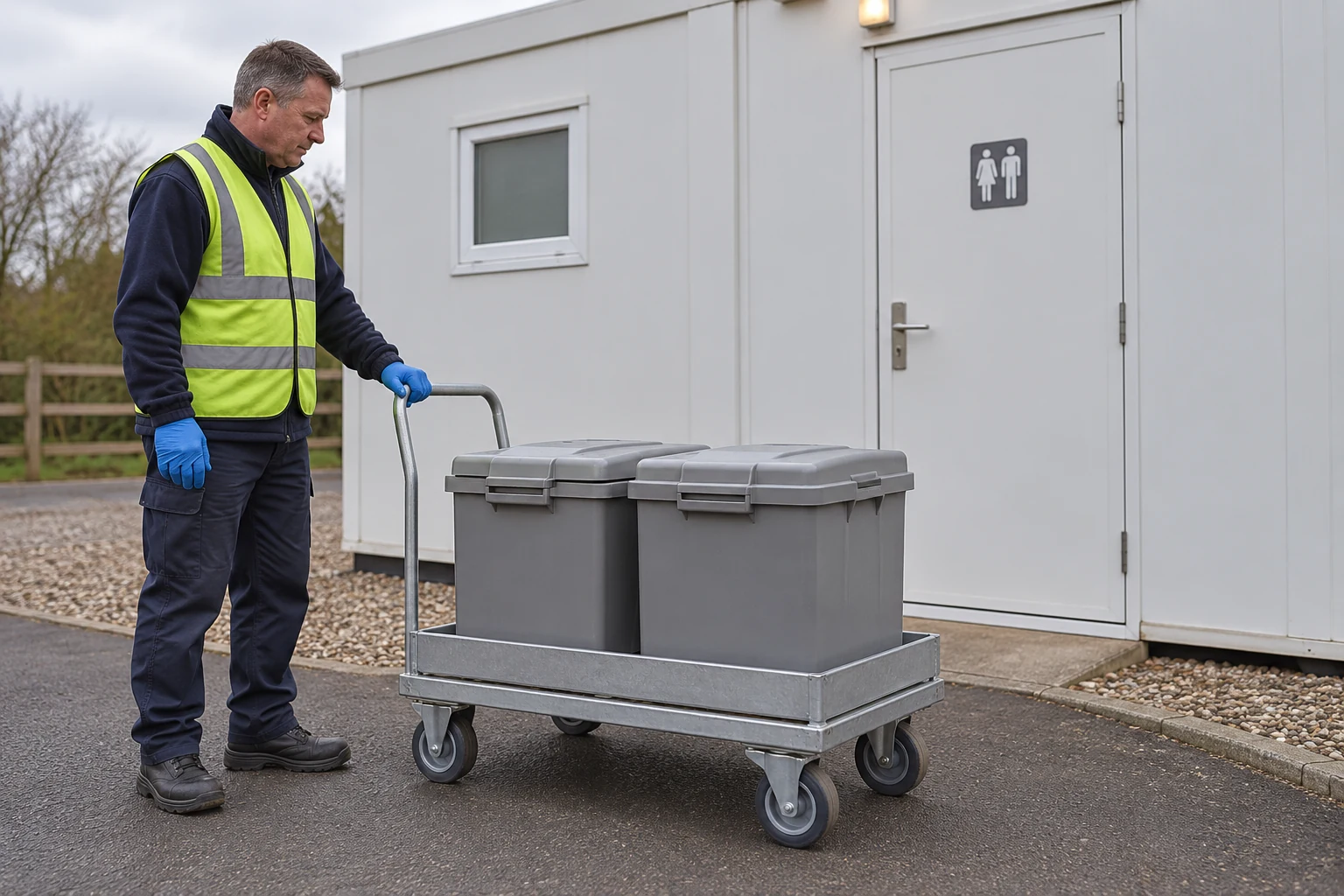
Two service proposals can promise disposal while involving different movements inside the building. Under a liner-exchange arrangement, a designated liner is removed and replaced while the outer unit remains. Under a whole-container exchange arrangement, the container is taken away and a replacement is fitted. The details depend on the provider and selected equipment; neither phrase alone explains cleaning responsibilities or handling controls.
Controlled Services describes both models, and SaniPod’s service-company material shows product-specific service arrangements. These are useful comparisons of available operating approaches, not proof that either is offered locally or compatible with every cubicle. Ask the actual provider to demonstrate its proposed contained exchange without exposing waste.
Write down who cleans the retained housing, who supplies replacements and how a damaged or unusable unit is reported. Include the return route for used containers where relevant. Avoid deciding on a low quoted visit price until these responsibilities are visible. An omitted task is still work someone must perform.
Compare quotations by their inclusions rather than by visit price alone. Check replacement liners or units, collection from every identified point, agreed cleaning work, transfer information, access failures and exceptional call-outs. If one offer excludes these tasks, show the exclusion beside the price. A broad word such as “hygiene” should not conceal the difference between supplying equipment and providing the ongoing service.
| Proposed model | Movement to plan | Questions for the contractor |
|---|---|---|
| Liner exchange | Contained liner leaves; replacement liner enters; housing stays | Who cleans the housing and confirms the replacement fits? |
| Whole-container exchange | Used container leaves; serviced replacement enters | How are identification, return handling and damaged-unit replacement controlled? |
| Holding-tank service | Liquid moves through the approved service interface | What is accepted, where is it received and how is completion recorded separately? |
Resolve the interval between the cubicle and the vehicle
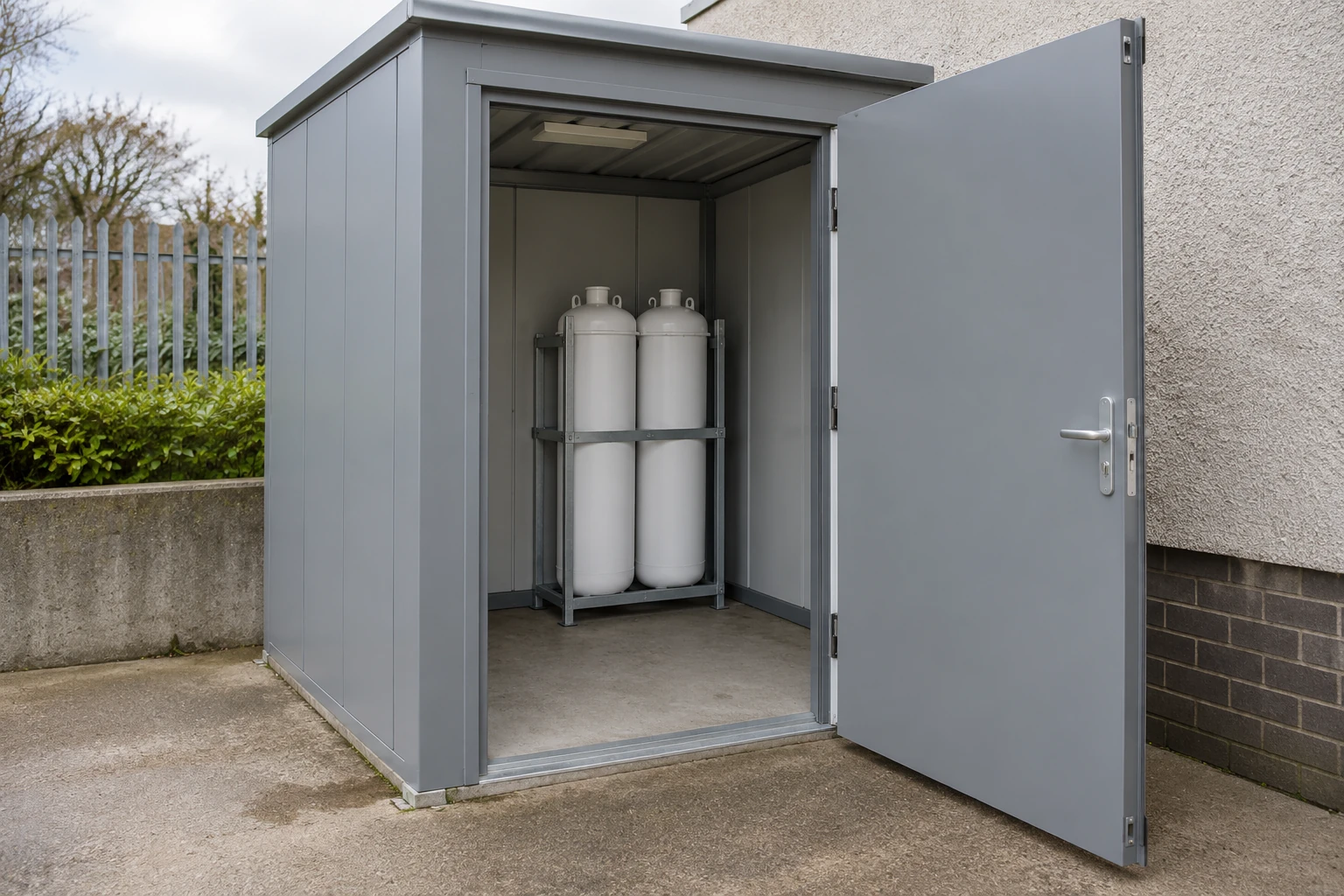
If collected material waits on site before transport, define that holding point and its owner. It should not emerge informally in a corridor because the service vehicle arrived late. Check containment, identification, access control and the response to a damaged container. Confirm whether the contractor removes the material immediately or whether the operator accepts a storage task under the agreed arrangement.
England’s business-waste storage guidance addresses secure containment, appropriate containers and preventing waste escaping. The source does not supply a universal holding-room dimension or collection period. Put the local requirements into the project brief and keep clean replacements distinguishable from collected material.
Walk the route before approving the layout
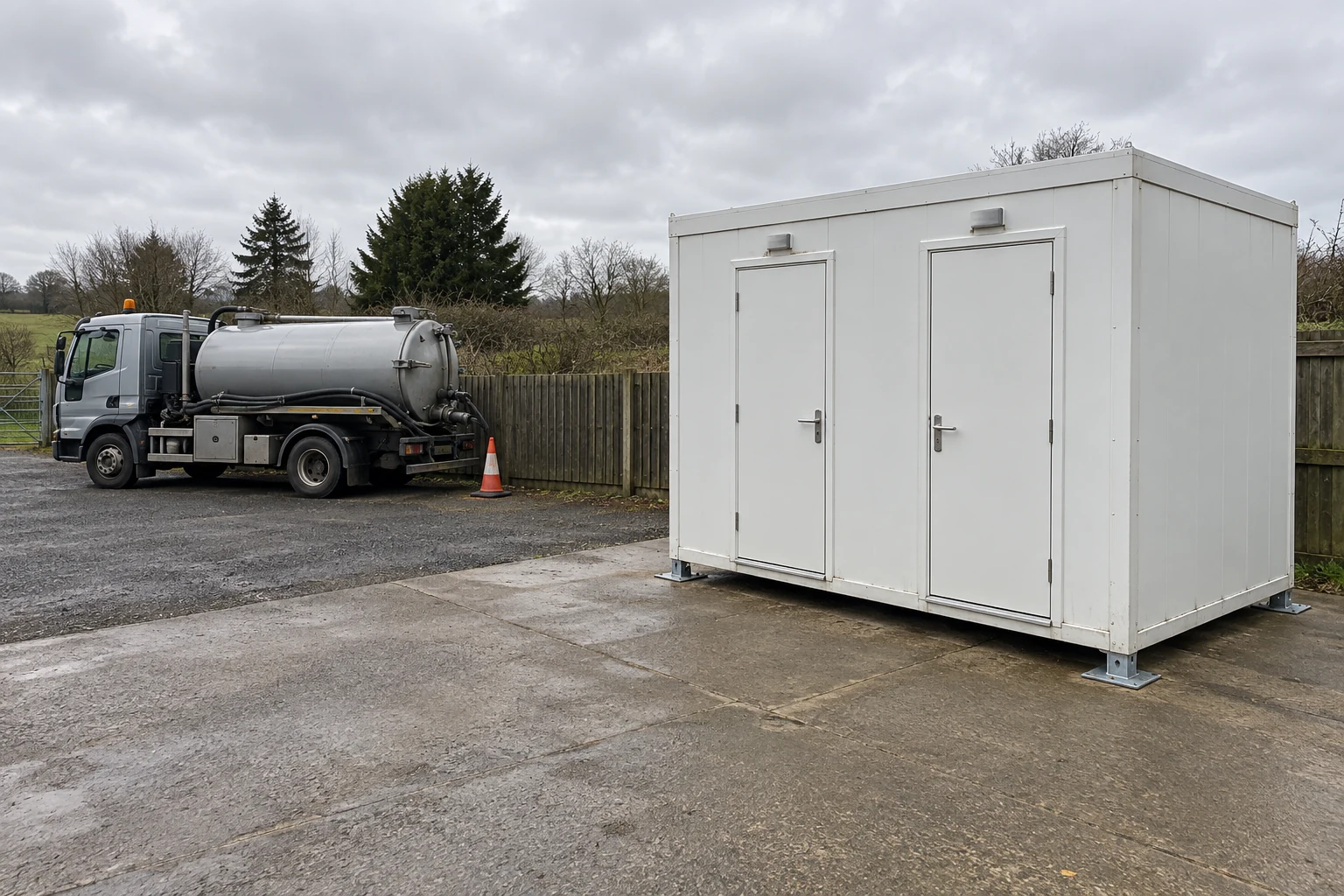
A collection route begins at the cubicle, not at the site gate. Walk it with the proposed service equipment in mind: through the door, past other occupied facilities, to any holding point and finally to the vehicle. Note gates, changes of level, locked areas and the times when the route is busiest. Photographs can help a contractor understand a constraint, but cannot establish an approved clearance or handling method.
For construction-site office and welfare planning, vehicle arrivals may conflict with deliveries or shift changes. Agree who provides access and where the service activity takes place. A contractor needs to review the actual vehicle and equipment arrangement; do not assume a hose can reach, a cart can pass or a collection vehicle can wait wherever convenient.
Compare the route against the selected portable sanitation arrangement before freezing the order. A different disposal position or service entry may be easier to resolve at the layout stage than after adjacent buildings are occupied. The objective is a workable controlled route, with its limitations recorded.
Review temporary changes as well as the opening-day route. A stored pallet, temporary fence or parked delivery vehicle can remove an access condition the contractor relied on. Name who keeps the agreed route available and who informs the service provider when it changes. Do not treat the original drawing as proof that today’s route remains usable.
Keep room cleaning and waste collection identifiable
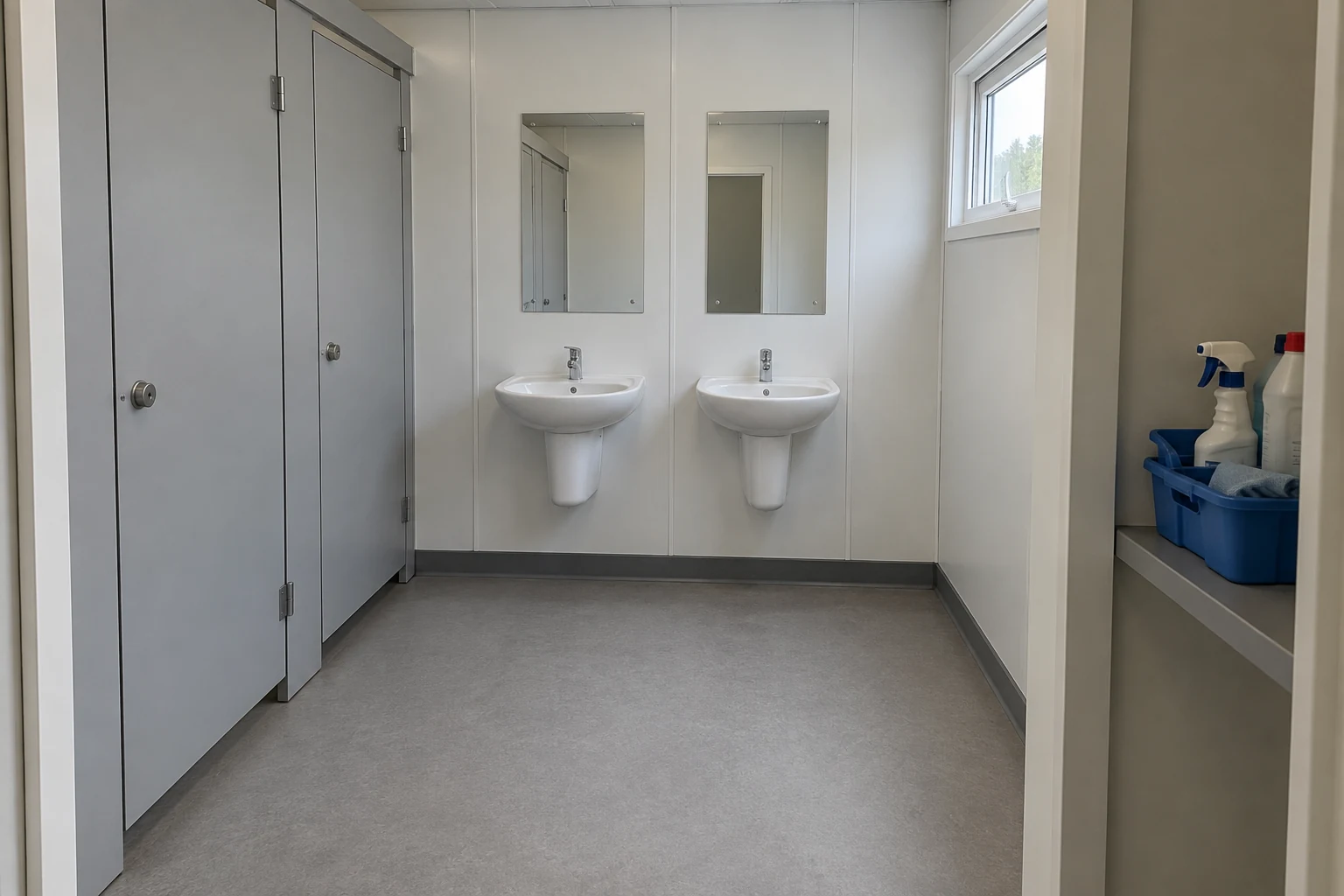
Cleaning a room and transferring waste are related operations, but their completion should be distinguishable. Ask whether the cleaner is also the trained person performing the agreed collection, or whether the waste contractor attends separately. Allocate the tasks explicitly so one team does not assume the other has serviced a unit. Do not ask unassigned staff to improvise handling when they find an overdue collection.
Where portable shower facilities share the circulation area, account for wet cleaning, clean supplies and people entering or leaving the showers. Keep the planned waste movements from obstructing ordinary use. The applicable procedures and protective equipment must come from the responsible operator and contractor, rather than being inferred from an illustrative service photograph.
A visit record can separate room cleaning, bin exchange, consumable replacement and tank service. Each item should have a meaningful completion condition. “Attended site” is not enough when a locked door prevented access to half the disposal points.
Consider a partial visit explicitly. If one room is inaccessible while the rest of the block is serviced, record the affected identifier, the reason and the next action. Do not mark the entire building complete merely because most of the work was done. This gives the operator a specific remaining task and helps the following shift distinguish a new issue from an unresolved earlier one.
Check the handover beyond the site gate
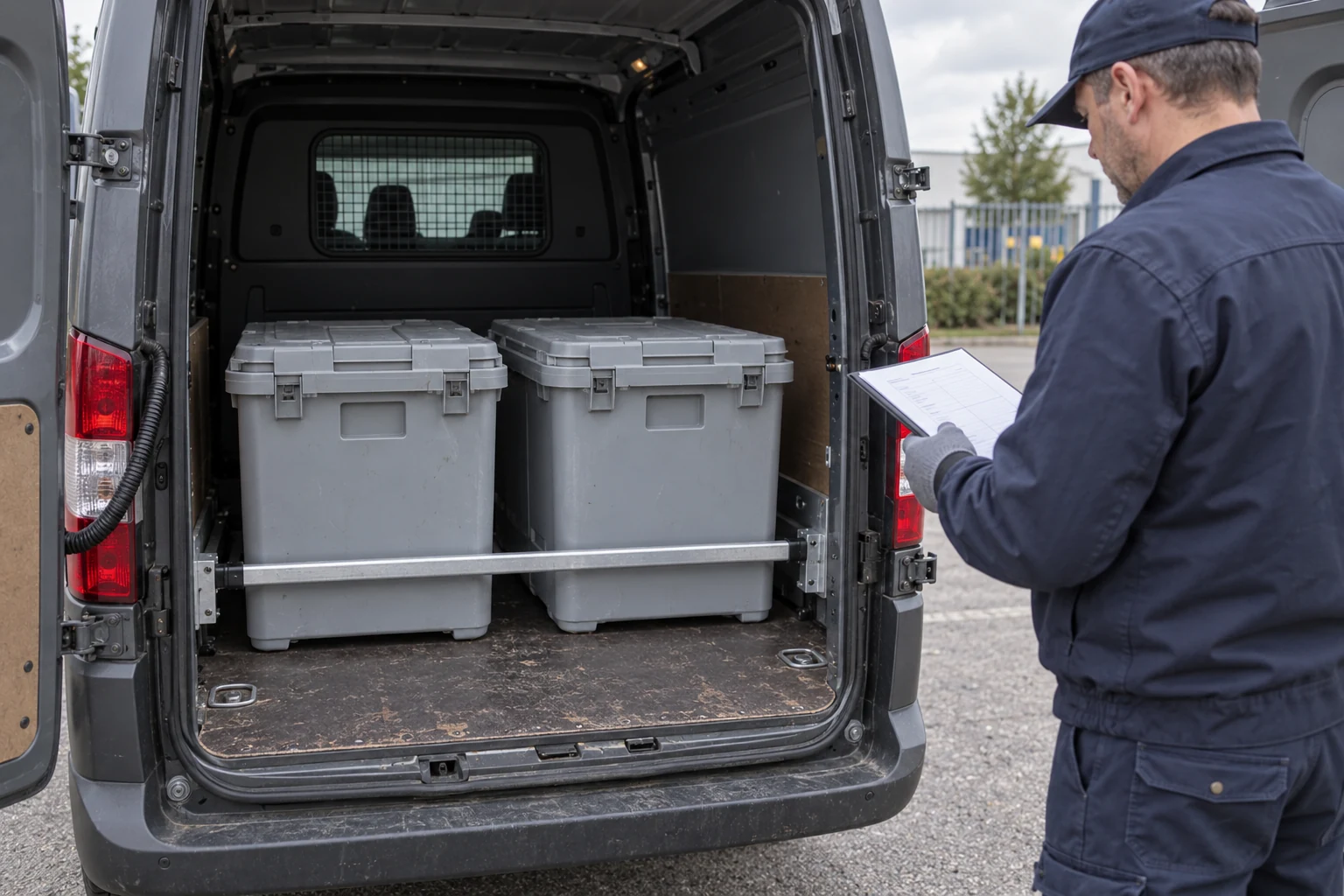
Confirm the carrier and receiving route before signing the service order. A carrier check alone does not establish that every destination accepts the actual material. Ask who retains the required transfer information and who investigates a discrepancy between the service record and the collected quantities. If the contractor uses another party, establish how that handover is covered.
For non-hazardous transfers in the England example, GOV.UK’s transfer-note guidance permits an equivalent document, such as an invoice, if it contains the required information. Payment alone is insufficient. A season ticket needs the specified continuity and a separate schedule; a year’s validity is not a year’s permission to postpone collection.
Use the table as a responsibility discussion, then put the agreed answers into the order and operating records. It does not approve a treatment process or replace the destination’s waste requirements. The England business-waste responsibilities page also directs readers to separate rules in the other UK jurisdictions.
| Handover | Agreement to record | Completion question |
|---|---|---|
| User to disposal point | Clear intended use and an accessible, usable position | Can the intended user use it without an unresolved layout conflict? |
| Cubicle to service worker | Named task, unit identification and exchange method | Was this particular unit serviced and ready for use? |
| Collection to holding point | Containment, location and responsible holder, if used | Where is the material now and who controls it? |
| Site to carrier | Actual stream, carrier check and appropriate transfer record | Does the record describe the material that left? |
| Carrier to receiver | Confirmed acceptance route and discrepancy response | Who confirms the agreed onward handover and follows up exceptions? |
Plan for a missed visit before the first missed visit
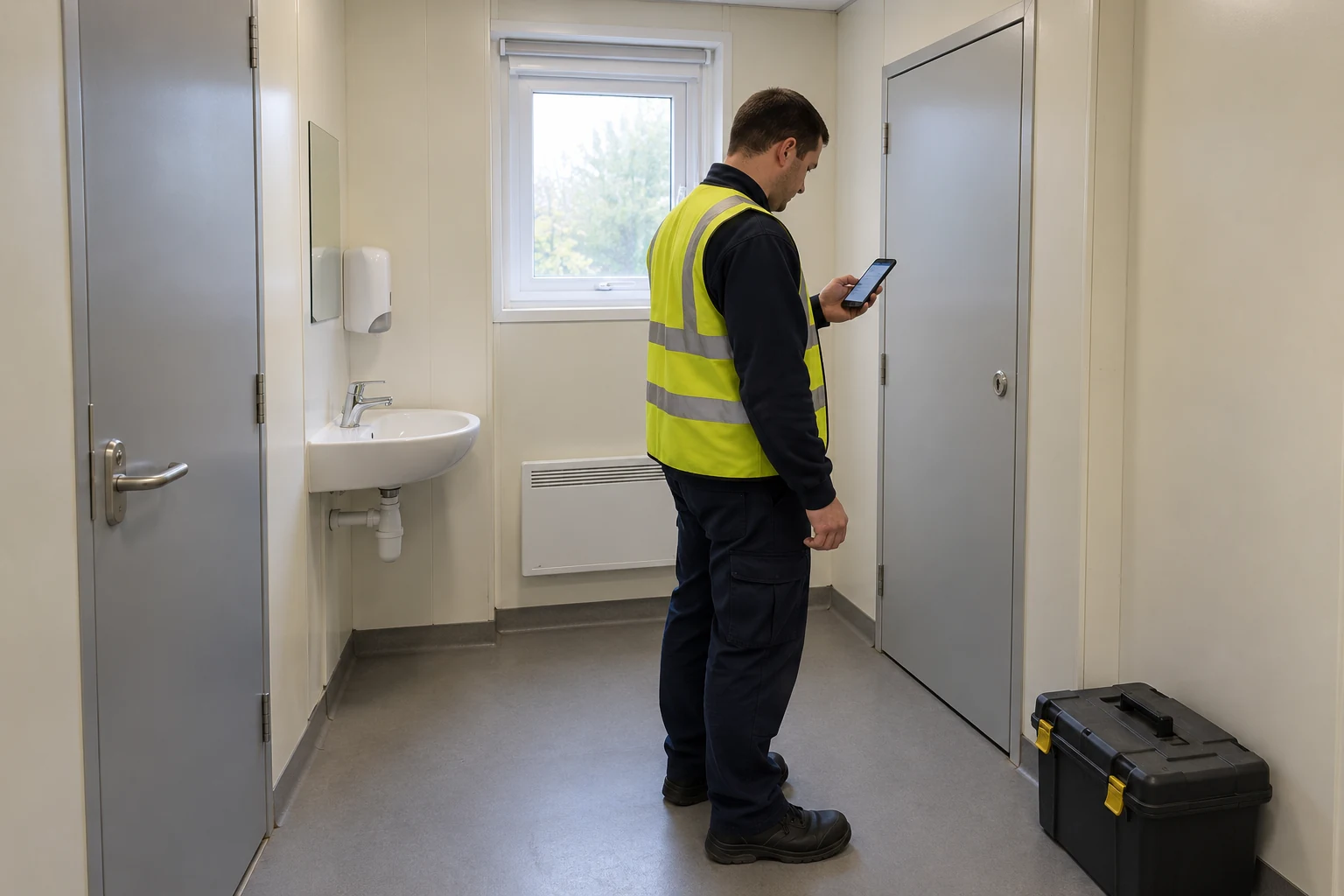
Define whom the operator calls when collection does not occur, what information the contractor needs and who decides on temporary restrictions. Record whether a backup contractor or replacement unit is actually available. An assumed emergency response is not a contractual service. Avoid treating temporary storage as unlimited spare capacity or directing staff to transfer contents into an unapproved container.
At a remote mining camp, access, weather and travel may complicate a recovery visit. Obtain a response suited to the real route and location. Do not import a supplier’s urban service promise into a remote-site order. Identify the trigger for escalating an unresolved condition before the next group of users arrives.
A damaged closure, loss of containment or unexpected material needs its own response, not just an earlier routine appointment. Preserve the distinction between reporting a condition and diagnosing or handling it. The authorised people should assess the problem and determine the appropriate controls. Record any change to the arrangement so the next shift does not inherit an undocumented workaround.
After the disruption, close the loop with the operator rather than assuming a replacement delivery solved everything. Confirm the affected location, the restored service and any outstanding condition. If the cause was access rather than equipment, check that the access problem has been addressed. Otherwise a new container can arrive while the same unresolved constraint prevents the next collection.
Commission the service as part of the facility
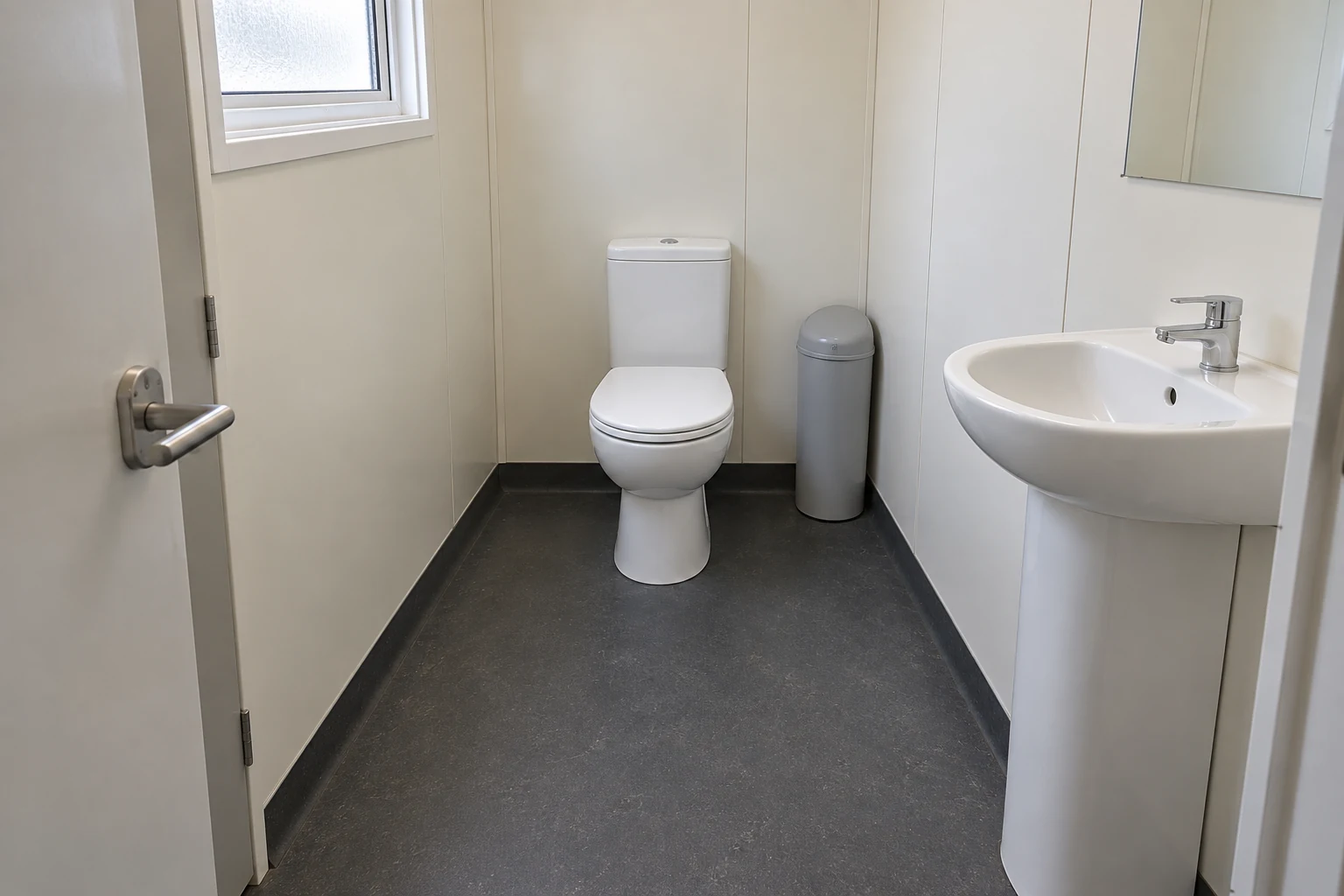
Before occupation, review the installed disposal points with the operator and the service provider. Confirm identifiers, room access, the proposed exchange, replacement supplies and the onward route. Resolve any difference between the drawing, delivered unit and contract. A disposal container supplied with the building should not be mistaken for a commissioned collection service.
In worker-camp accommodation, usage continues outside a single daytime shift. Base the operating arrangement on the actual resident and visitor pattern. Name the person receiving exception reports and reviewing the frequency basis. An increase in occupancy or a change in service access should prompt a review of the agreement rather than silent improvisation.
The final acceptance conversation should include the people who will operate the facility, not only the buyer who placed the order. Confirm they can identify the points, find the contact details, recognise a service exception and obtain the relevant record. Keep those instructions available through staff changes. A complete contract that nobody on the next shift can interpret still leaves a practical gap.
For a procurement discussion, provide the destination, planned user groups, toilet layout, service-access information and proposed contractor scope. Mark classification or receiving-route questions as unresolved until the responsible party confirms them. PQSE can discuss the building and layout brief against the information supplied; the waste collection and local acceptance arrangements must be explicitly agreed with the relevant service parties.
Questions to settle before accepting the quotation
Does tank pumping include sanitary-bin servicing?
Only if the contract explicitly includes it. They are separate tasks involving different materials and interfaces. Require a record showing which disposal points were serviced as well as the tank work. A clean-looking room or vehicle visit is not proof that both tasks were completed.
Does the England one-bag figure set the bin allowance?
No. It appears in a municipal offensive-waste segregation rule on a collection-period basis, with an alternative weight trigger. It does not specify a safe cubicle fill level, standard bag volume or collection interval. Have the contractor confirm the actual stream and service conditions.
Can staff place the liner in general refuse?
Do not assume so. The classification, origin, contents and agreed local route must be resolved first. Unexpected sharps or potentially infectious material require a separate competent response. The ordinary service scope should clearly state what staff are authorised to do and where questions must be reported.
Does an invoice prove that the waste route is complete?
An invoice may serve as a transfer record in the England non-hazardous example when it contains all required information. That does not make every payment receipt sufficient, or prove every later handover. Confirm the carrier, intended receiver, applicable records and responsibility for following up exceptions.
Who decides what happens after a missed collection?
The order should name that person and the agreed escalation route. Specify the information to report, any confirmed backup service and who can authorise temporary restrictions. Do not leave a cleaner or shift supervisor to invent a waste-handling workaround because the contractor could not gain access.
Sources and application boundaries
The linked Environment Agency, GOV.UK and HSE materials support the stated England or Great Britain examples. Thames Water supports its named utility and receiving-service context. The named commercial providers illustrate service-model distinctions; their equipment, availability and performance are not PQSE specifications. Layout and handover suggestions are editorial planning guidance, to be confirmed for the selected facility and destination. Illustrative photographs do not establish classification, safe work methods or receiving permission.