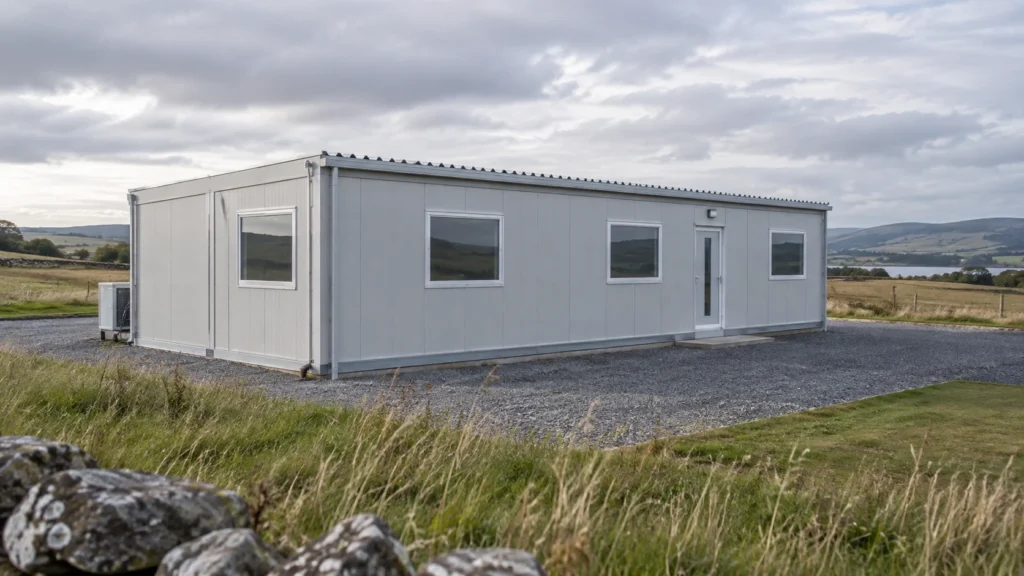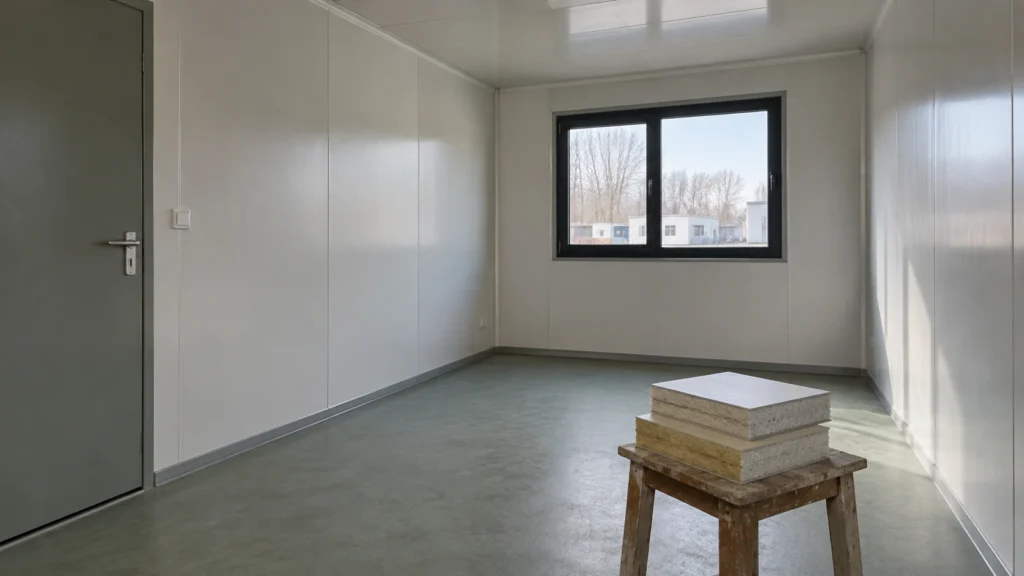
There is no single reliable lifespan for every container house. The useful life of an installed building depends on its actual system, environment, condition, use and maintenance history. Buyers should evaluate the evidence behind a service-life claim and establish a care plan for the specific components, rather than treat a headline number as a guarantee.
A maintenance plan makes that evaluation more practical. It records the building at handover, identifies what needs attention, assigns suitable people to the work and checks whether repairs solved the underlying problem. For an operator managing several units, consistent records also reveal whether an issue is isolated or recurring across the same component or location.
This guide focuses on planning inspections and managing findings for prefab container houses. It is not a repair procedure or an assessment of a particular building’s structural condition. Product instructions, qualified assessment and the requirements of the actual location determine the appropriate technical work.
How should a buyer interpret a container house lifespan claim?
Start by asking what the number describes. A claimed design life, a component warranty and the time an owner expects to keep a building are different concepts. A warranty may apply to a named product or performance condition with specific terms. It does not automatically describe the useful life of every assembly, service and finish in the installed building.
Ask for the assumptions behind the claim: the selected structure and enclosure, the exposure conditions, intended use, maintenance requirements and the relevant evidence. If the number appears beside a generic photograph with no identifiable model or technical basis, it is not enough for a project decision. Request information tied to the proposed configuration and destination.
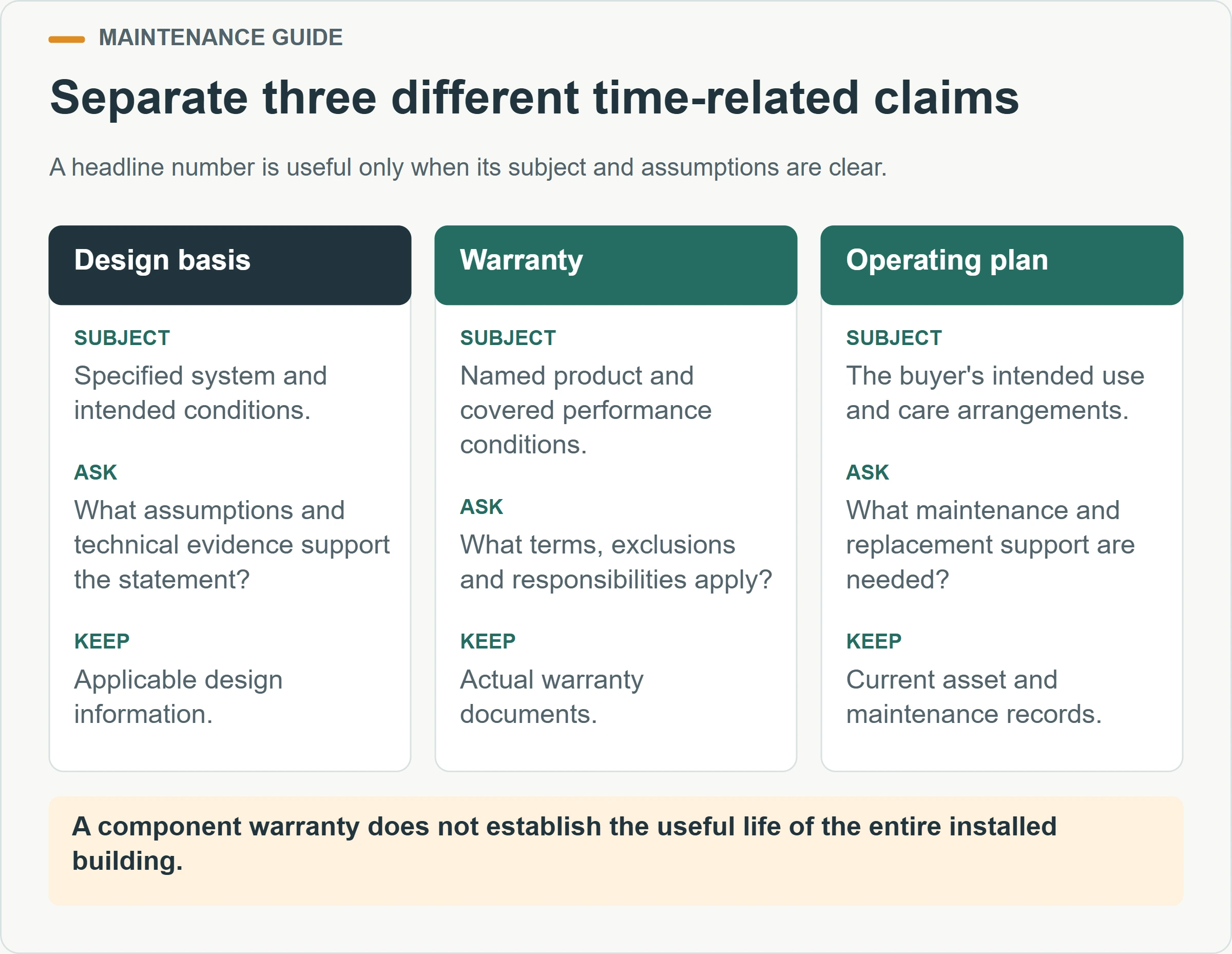
Consider the building as a collection of components with different care and replacement needs. A door fitting can need attention while the surrounding panel remains serviceable. A seal or equipment item can be replaced without replacing the whole building. Conversely, a recently refreshed interior does not establish that concealed or structural components are in acceptable condition.
For procurement, keep the intended period of use visible in the brief. Tell the supplier whether the building will operate continuously, sit unoccupied for periods or move between locations. Ask what records and maintenance information support that plan. The answer should help the buyer manage the building over time, not simply repeat a longer advertised lifespan.
What should be recorded when the building is handed over?
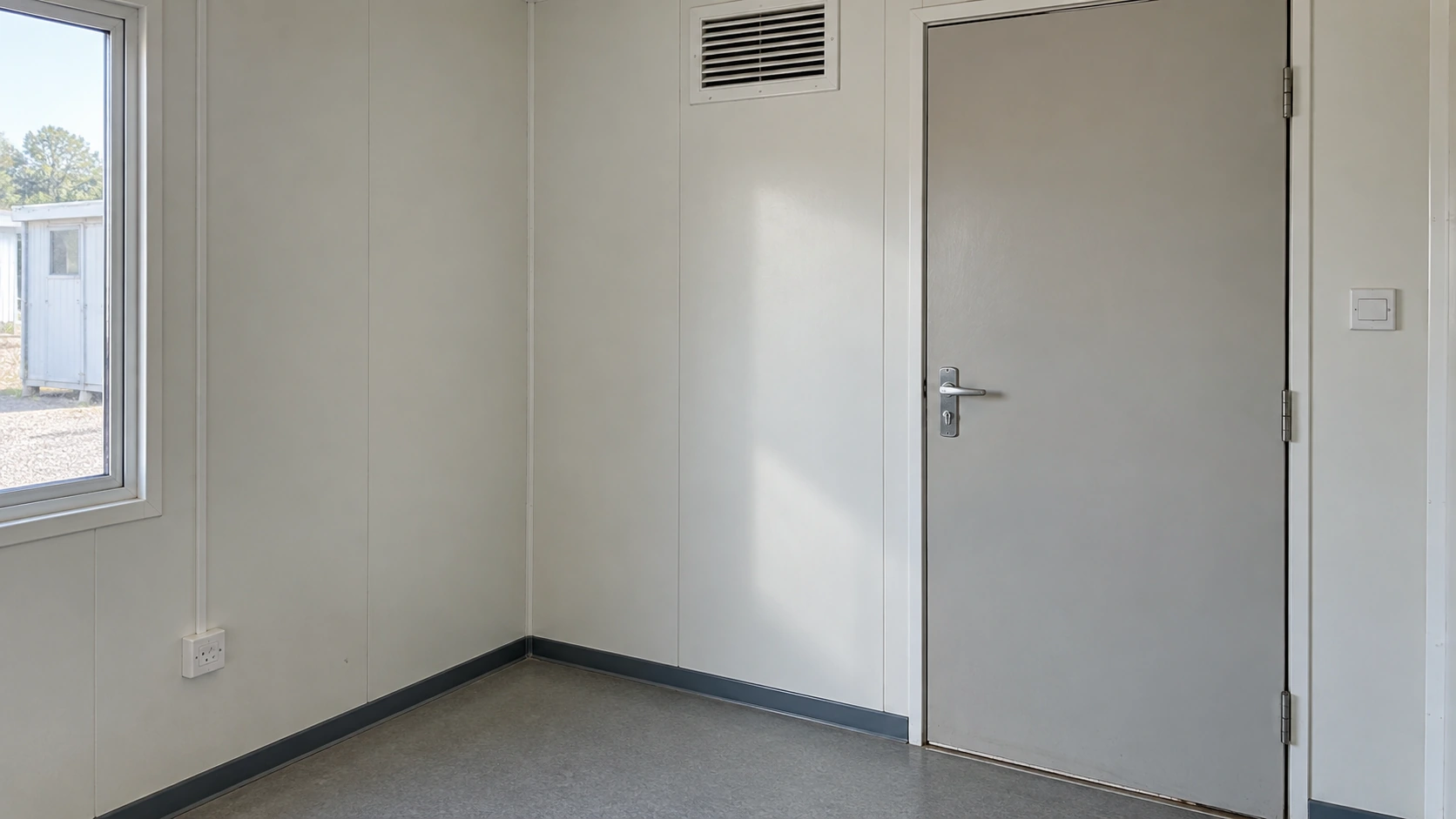
Create a baseline record while the installed configuration is still clear to the project team. Identify each unit and its location, retain the accepted drawings and record the selected materials, finishes and equipment. Keep the relevant installation, inspection and commissioning information with the operating instructions. This establishes what future observations will be compared against.
Photographs are more useful when their location and purpose are consistent. Record the same elevation, connection or room feature from a view that can be repeated. Include an overview for orientation and a closer view where needed. A collection of unlabelled close-ups may show a mark clearly but leave the next maintenance team unsure which unit or surface it belongs to.
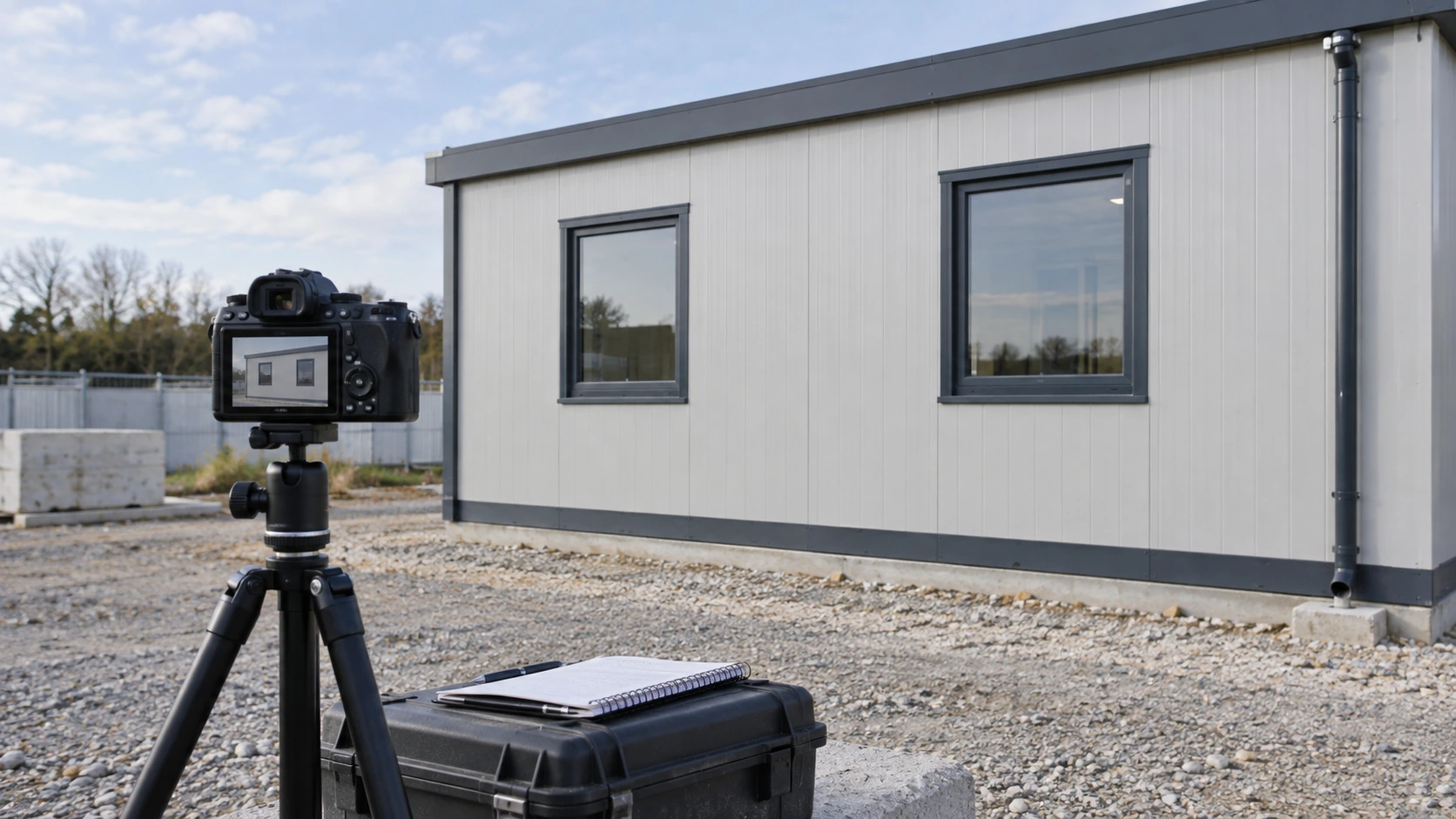
Assign responsibility for updating the record. A contractor who changes a component should identify what was fitted and why, including the applicable product information. The operator should keep the current configuration available to the next contractor. Otherwise, maintenance decisions may be based on the original order even after parts, services or room uses have changed.
| Baseline information | What to retain | Why it helps later |
|---|---|---|
| Building identity | Unit reference, location and current layout | Connects a finding to the correct building |
| Materials and components | Selected product references and finishes | Supports compatible maintenance and replacement |
| Installation condition | Relevant acceptance records and photographs | Provides a comparison point for later changes |
| Service systems | Equipment schedules and operating information | Identifies responsible trades and service requirements |
| Open items | Assigned action, status and closure evidence | Prevents unfinished work from disappearing at handover |
Keep warranty and service contacts alongside the technical information, but separate their purpose. A warranty claim process explains how to report a possible covered issue. It does not replace the operator’s responsibility to respond to a current problem or establish that an unsafe condition can remain in use while a claim is reviewed.
How can an inspection plan respond to the actual exposure?
Build the routine around the manufacturer’s instructions, applicable obligations and the building’s observed condition. The relevant frequency can differ between components and locations. A sheltered interior fitting, an external joint and equipment in a busy washroom do not necessarily need the same attention. Record the basis for each task instead of selecting one interval for the entire building.
Use operating events as additional review triggers. A change in occupancy, a reported leak, nearby construction work or relocation can justify checking the affected systems outside the routine schedule. The responsible team should determine the scope of that review. An event-based check complements planned maintenance; it does not replace it.
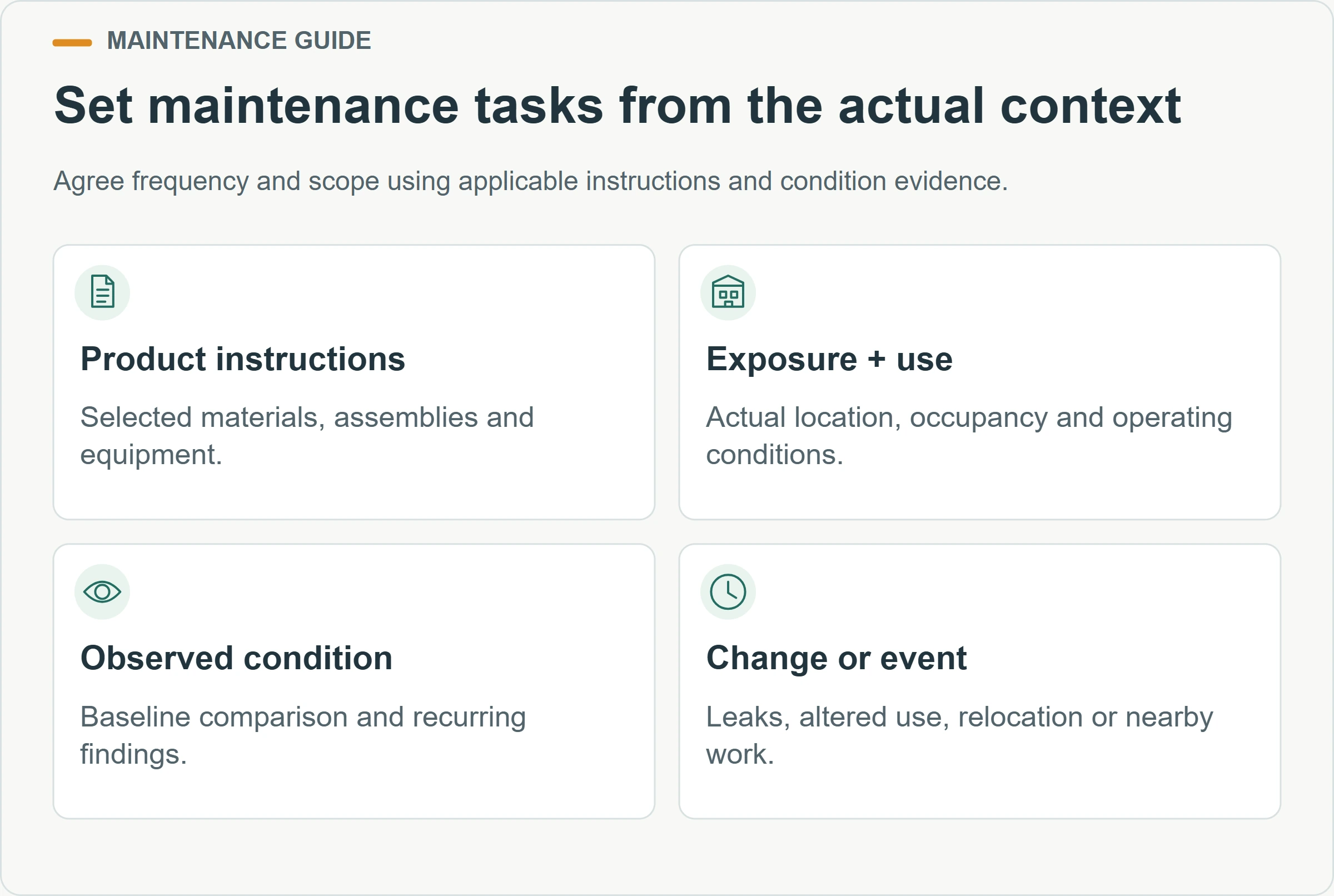
For a group of units, keep the observations comparable. Use the same component names and condition descriptions so the operator can identify patterns. If one room reports a recurring problem while similar rooms do not, compare the exposure, use and installation history. If the same issue appears across several units, raise the wider pattern with the responsible technical team.
Who should carry out the work?
Match the task to the required competence and access arrangements. An occupant can report a visible stain or a door that has become difficult to operate. That observation is different from a technical diagnosis, electrical work, structural assessment or work at height. State when the report needs a qualified person and who arranges that response.
The UK HSE guidance on roof work stresses planning, competence and safe access, including the risks of fragile surfaces. A maintenance checklist is not permission to walk on a roof. Arrange appropriate inspection and work methods for the actual building, and do not assume that a sheeted surface can support a person.
How should water marks and recurring dampness be investigated?
Treat a water mark as an observation that needs a cause, not as a diagnosis by itself. Record where it appears, when it was first noticed, whether it changes after rain or service use, and what nearby work has occurred. These details help the responsible investigator distinguish possible entry routes and plan the next checks.
In a hypothetical room, a stain appears below a window after some rainy periods. That pattern provides a useful clue, but it does not establish that the visible window joint is the only possible source. The investigation should consider the relevant enclosure interfaces and recorded conditions. Applying a new bead of sealant to the nearest visible edge without identifying the cause can leave the original problem unresolved.
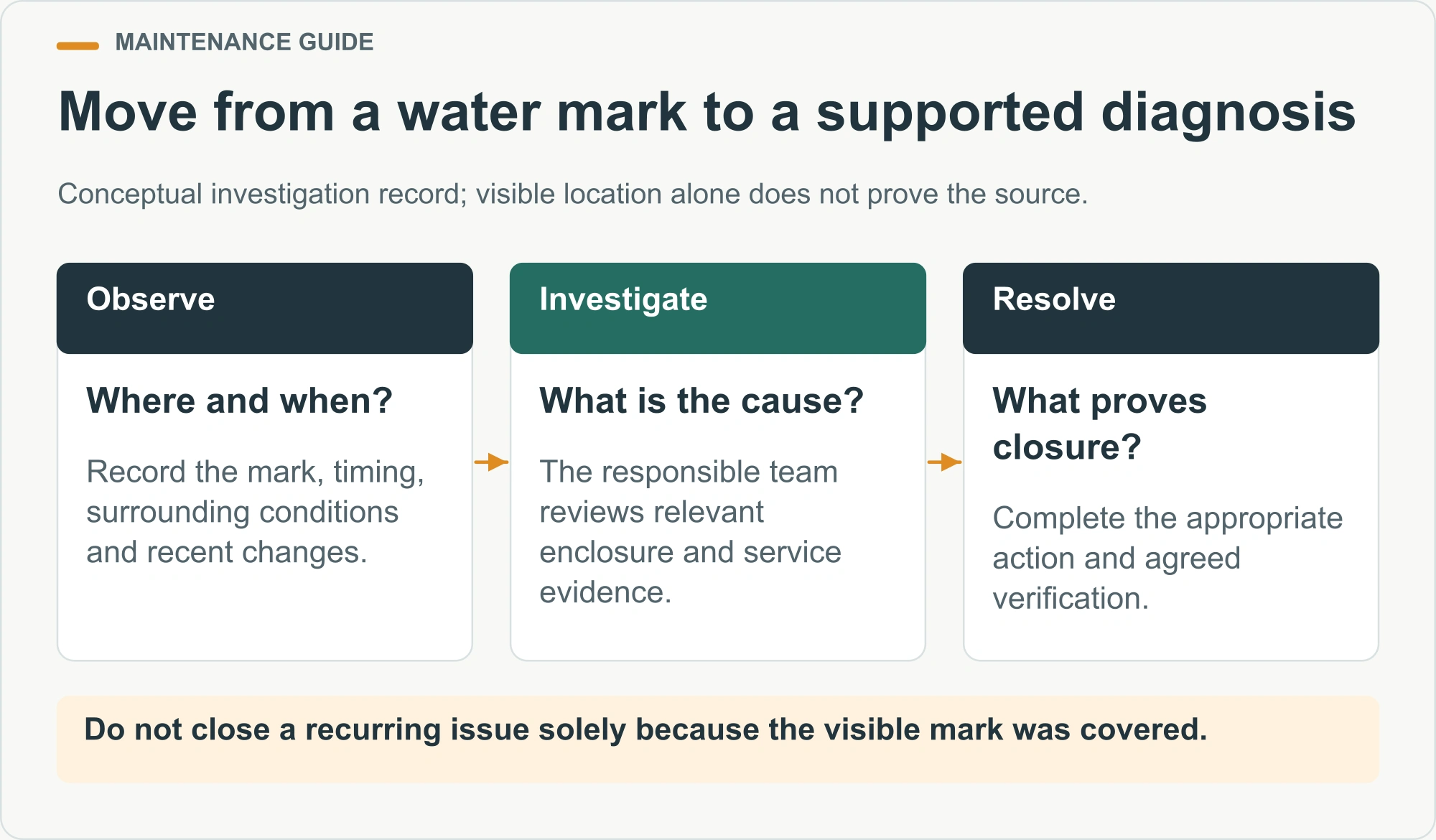
Different moisture sources call for different responses. Rain entry, a plumbing leak and condensation are not interchangeable descriptions. Record the observed evidence and let the responsible person determine the cause and scope. If access to concealed areas is needed, plan that work appropriately and document what is found rather than removing finishes without a clear purpose.
The US EPA’s guide to mold and moisture emphasizes fixing the water problem as well as addressing mold, and advises experienced professional help for suspected hidden mold. For a building operator, the relevant lesson is to avoid closing a moisture-related issue solely because the visible surface has been cleaned or covered. The underlying condition and appropriate remediation still need to be resolved.
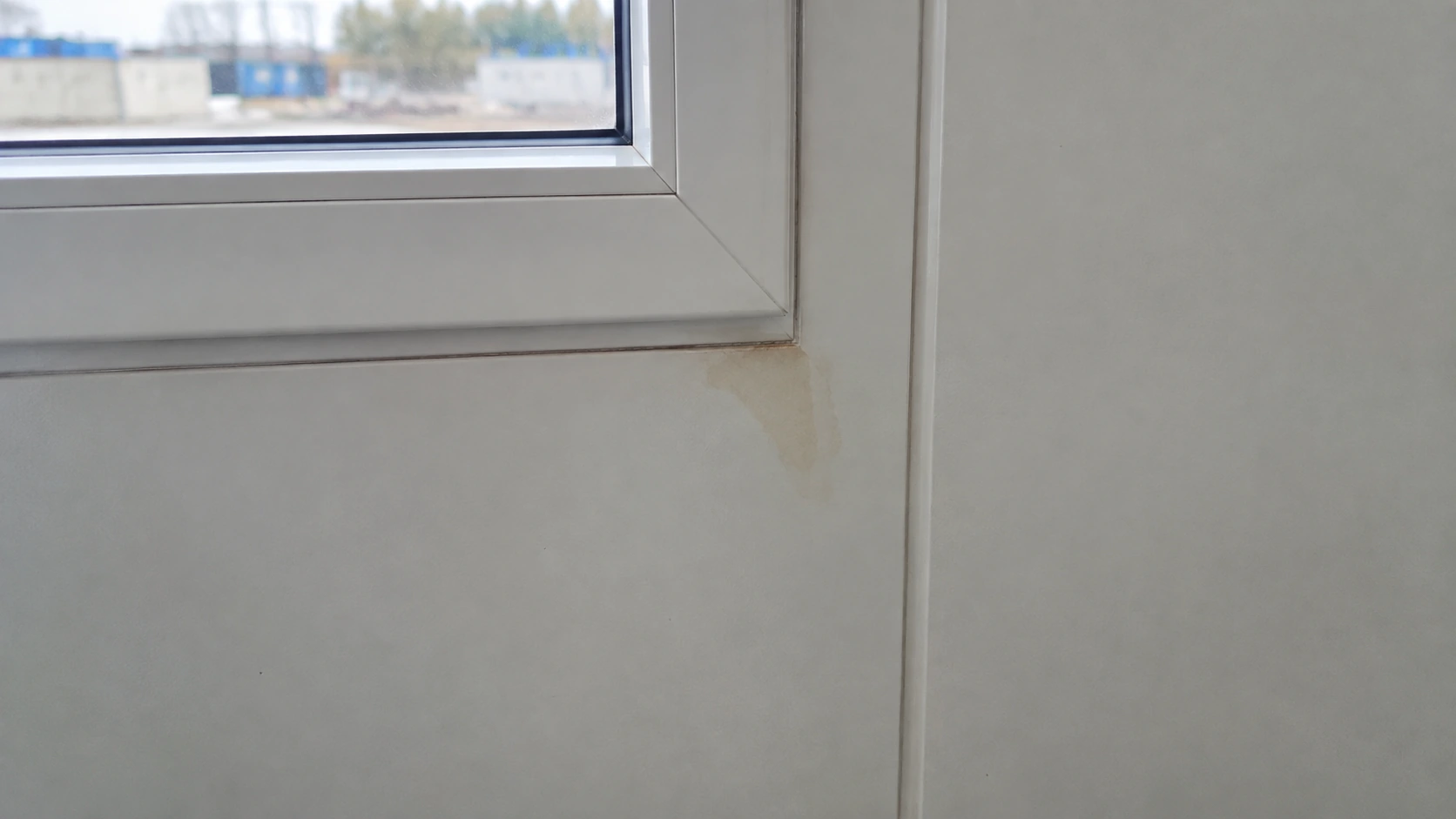
Keep the response proportionate to the finding and the applicable requirements. Where there is a potential electrical, structural or other immediate safety concern, follow the site’s procedures for restricting use and obtaining qualified assistance. A routine maintenance appointment should not become the default response to every kind of defect merely because it entered the same reporting system.
What should coating and metal-surface observations establish?
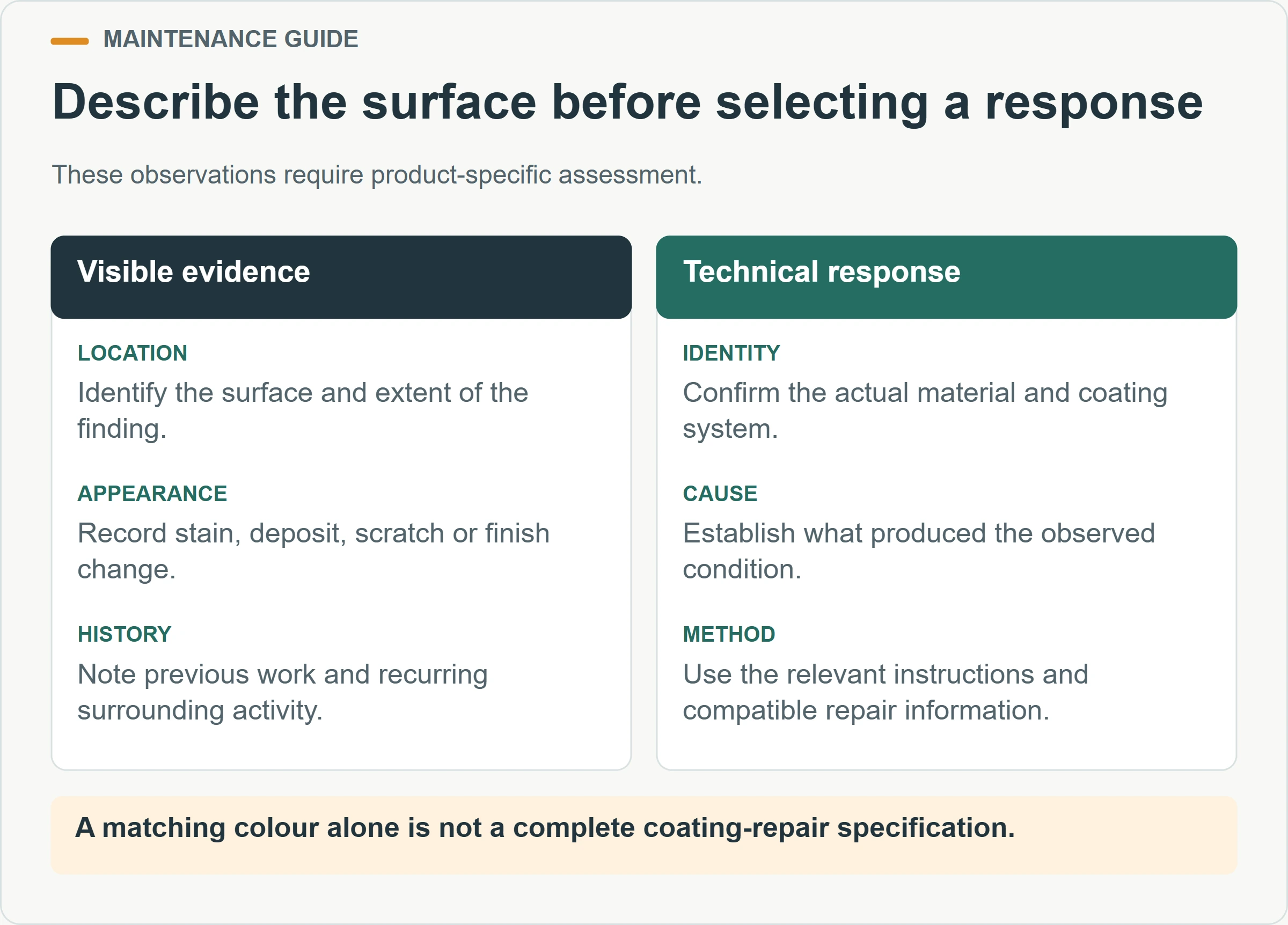
Record the location, extent and appearance of a mark before deciding what it means. A stain, a scratch, a deposit and a loss of protective finish are different observations. Identify the actual material and coating system so the responsible specialist can select a suitable response. Avoid treating every discoloured area as identical corrosion damage or applying a generic repair product to every surface.
In its roofing inspection and maintenance guidance, LYSAGHT distinguishes metallic deposits from breakdown of the coating and directs readers to the relevant product guidance. That distinction belongs to its coated-steel context; it does not establish which material a PQSE order contains. It illustrates why the cause and product identity should be checked before choosing a cleaning or restoration method.
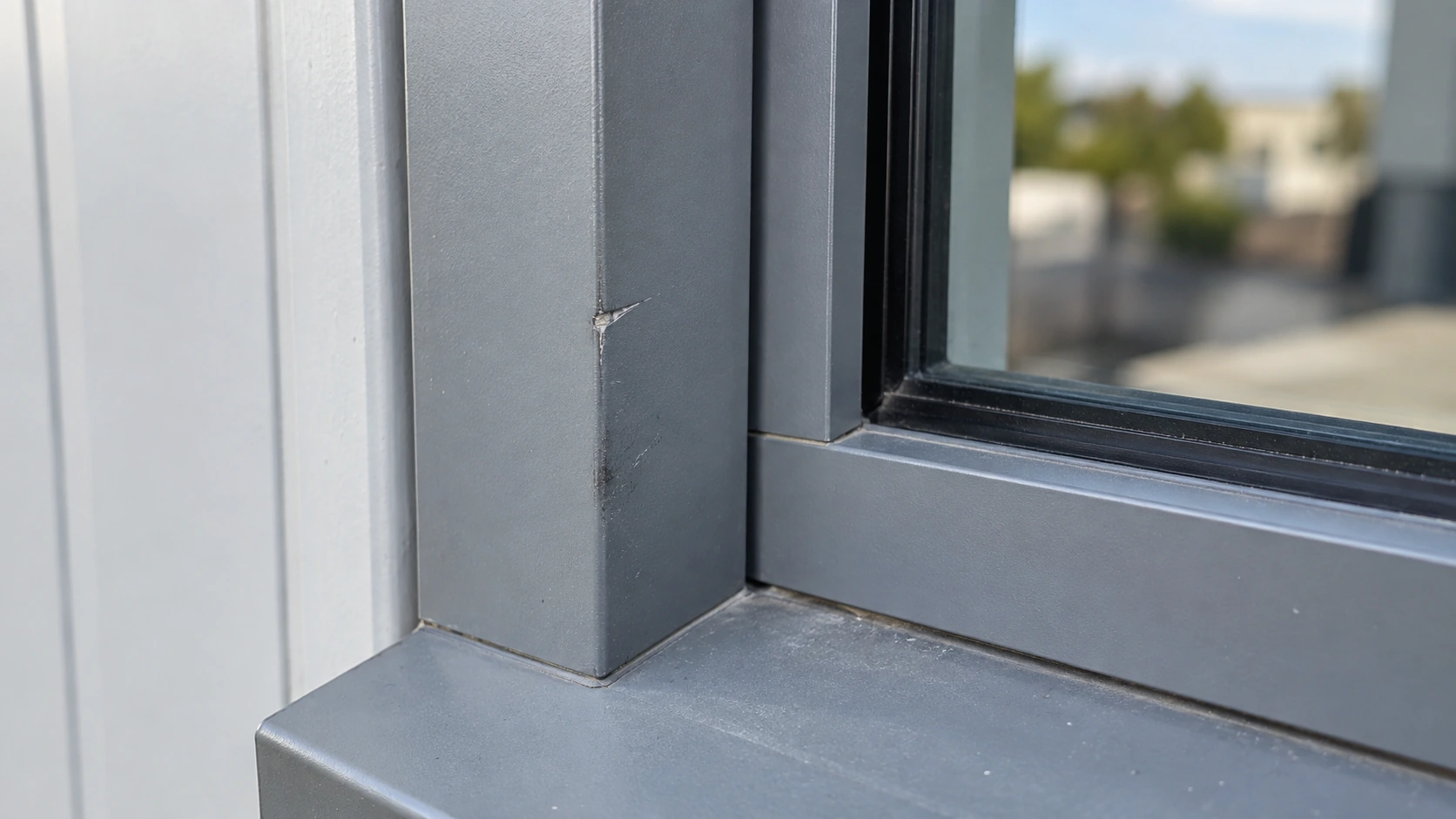
Ask the supplier for the correct care information for the delivered finish. Cleaning agents, preparation, repair materials and application conditions should follow the appropriate instructions and specialist advice. Record any approved repair specification with the work order. A colour match alone is not a complete compatibility check for a protective coating repair.
Look for the circumstances surrounding a recurring finding. Has a surface been repeatedly scraped by equipment? Does another fitting introduce contact or runoff that was not part of the original arrangement? Has an accessory been added or a drainage path changed? These questions help the team investigate why damage returns rather than repeatedly treating the same visible area without changing its cause.
How should doors, joints and service equipment enter the register?
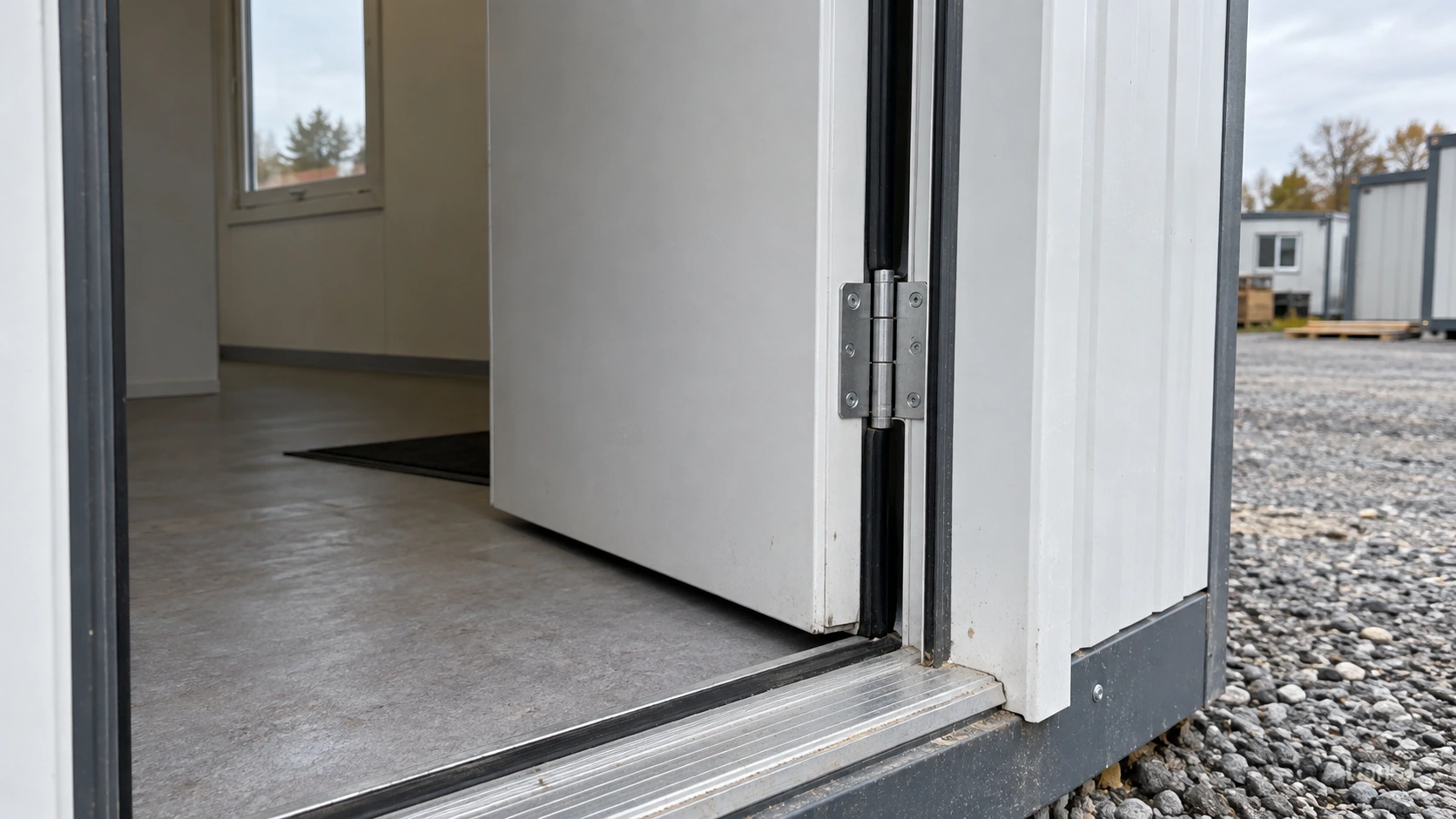
Describe function as well as appearance. For a door or window, record a change in operation, the location of an observed seal issue or the relevant hardware condition. Keep the observation specific enough for the technician to reproduce it. Avoid jumping from difficult operation directly to a conclusion about the entire building without appropriate assessment.
For joints and interfaces, identify the two assemblies being connected and the current detail. Record any previous repair and the material used. The next person needs to know whether they are seeing the original installation or a later intervention. Where the joint is part of a system with specific performance requirements, repairs should follow the relevant technical information.
Service equipment needs its own maintenance requirements and qualified support. Retain model information and the relevant instructions, including tasks performed by the operator and those reserved for competent service personnel. Coordinate access, isolation and return to use under the appropriate procedures. A building maintenance log should help the right trade act; it should not become an improvised technical manual.
| Observed issue | Useful description | What should happen next |
|---|---|---|
| Door operation changes | Unit, opening, movement affected and when observed | Assigned technician investigates and records findings |
| Joint condition changes | Interface location, visible condition and repair history | Relevant detail and compatible repair method reviewed |
| Repeated water mark | Location, timing, weather or service-use relationship | Cause investigated before a repair is closed |
| Equipment fault | Model, symptoms and safe reporting information | Responsible service team follows applicable procedures |
| Surface damage | Material identity, location and surrounding activity | Cause and product-specific response established |
How should a change of use affect the maintenance plan?
Review the affected systems when a room’s function changes. Converting an office into a washroom, adding equipment or increasing use intensity can introduce different service, moisture and wear conditions. The proposed change also needs any required design and approval review. Updating a room label in the asset list does not resolve those technical questions.
When is a repair actually complete?
A repair is complete when the agreed work has been carried out, the relevant checks are satisfactory and the responsible person has recorded the outcome. A purchased replacement, a contractor visit or a photograph of fresh finish is evidence of activity. It is not necessarily evidence that the original issue has been resolved.
Use a short but complete sequence: observation, assessment, action, verification and closure. If the check reveals that the problem persists, return the record to investigation and keep it open. Record the next action and accountable person so the issue cannot disappear simply because one work order has been invoiced.
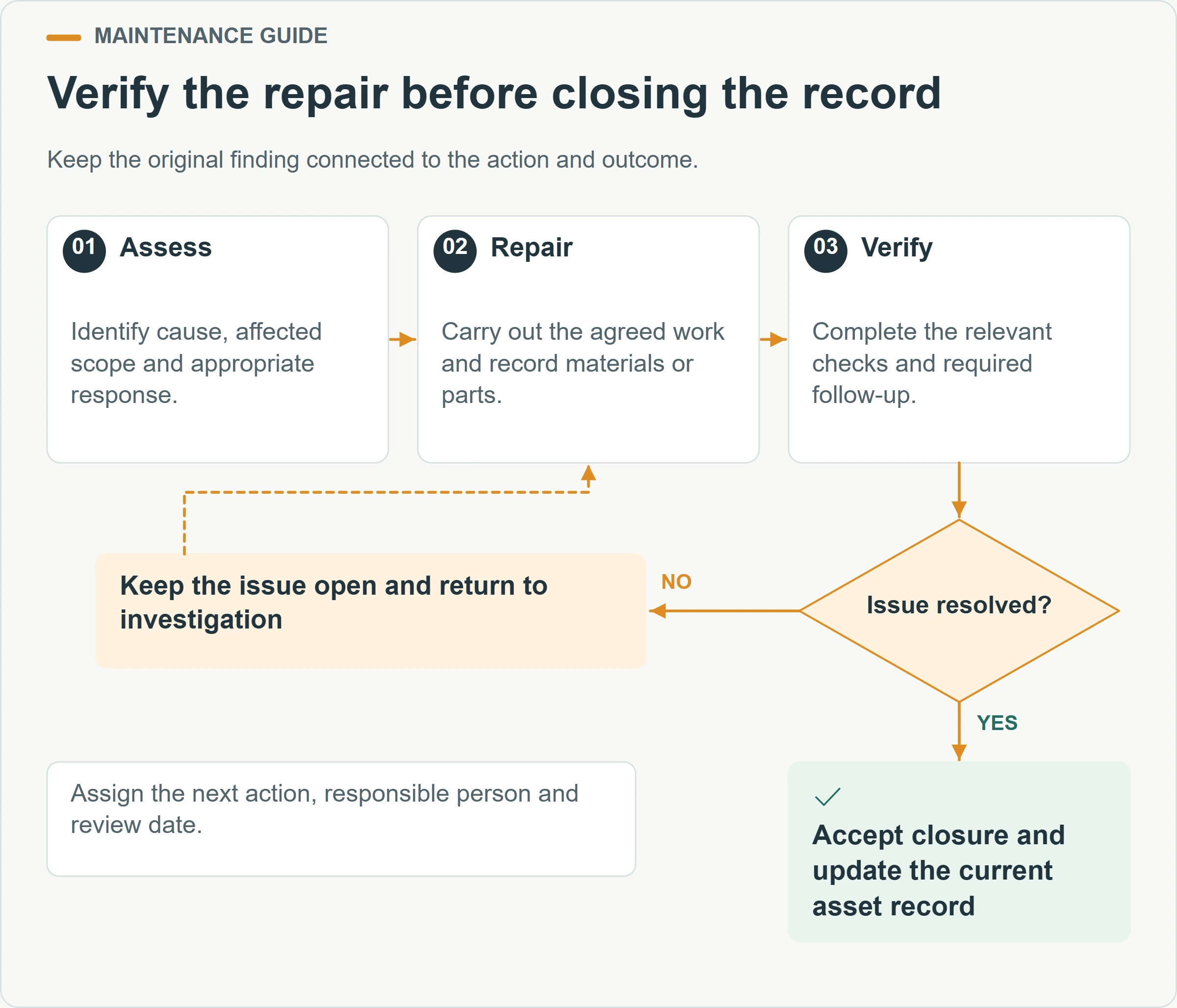
For a hypothetical recurring leak, the completion record should describe the confirmed cause, affected components, approved repair and the verification undertaken. Where a later observation is part of the agreed verification, give it a due date and owner. The interval and method should come from the actual repair plan rather than a universal rule copied into every maintenance record.
| Repair record field | Minimum useful content |
|---|---|
| Finding | Location, component and observed condition |
| Assessment | Identified cause, scope and responsible reviewer |
| Action | Work performed, materials and relevant instruction |
| Verification | Check performed, result and any required follow-up |
| Closure | Acceptance, date, owner and current component information |
Keep before-and-after information connected. If a part was replaced, retain its new reference and the applicable maintenance instructions. If a drawing or setting changed, update the relevant current record. This prevents the next inspection from treating the repair as an unexplained difference from the original building information.
Use the accumulated records when planning resources. Separate recurring routine work from one-off repairs and proposed component replacement. Identify parts or specialist services that need advance arrangement, and keep their expected availability visible to the operator. A maintenance budget based on the actual asset history can support a more realistic programme than an identical allowance applied to every unit regardless of condition or use.
What information should buyers request before ordering?
Request maintenance information as part of the proposed building scope, not only after a fault appears. Ask which instructions apply to the structure, enclosure, finishes, openings and selected equipment. Clarify replacement-part identification, access requirements and the route for technical questions. This helps the buyer judge whether the planned operating team can support the proposed system.
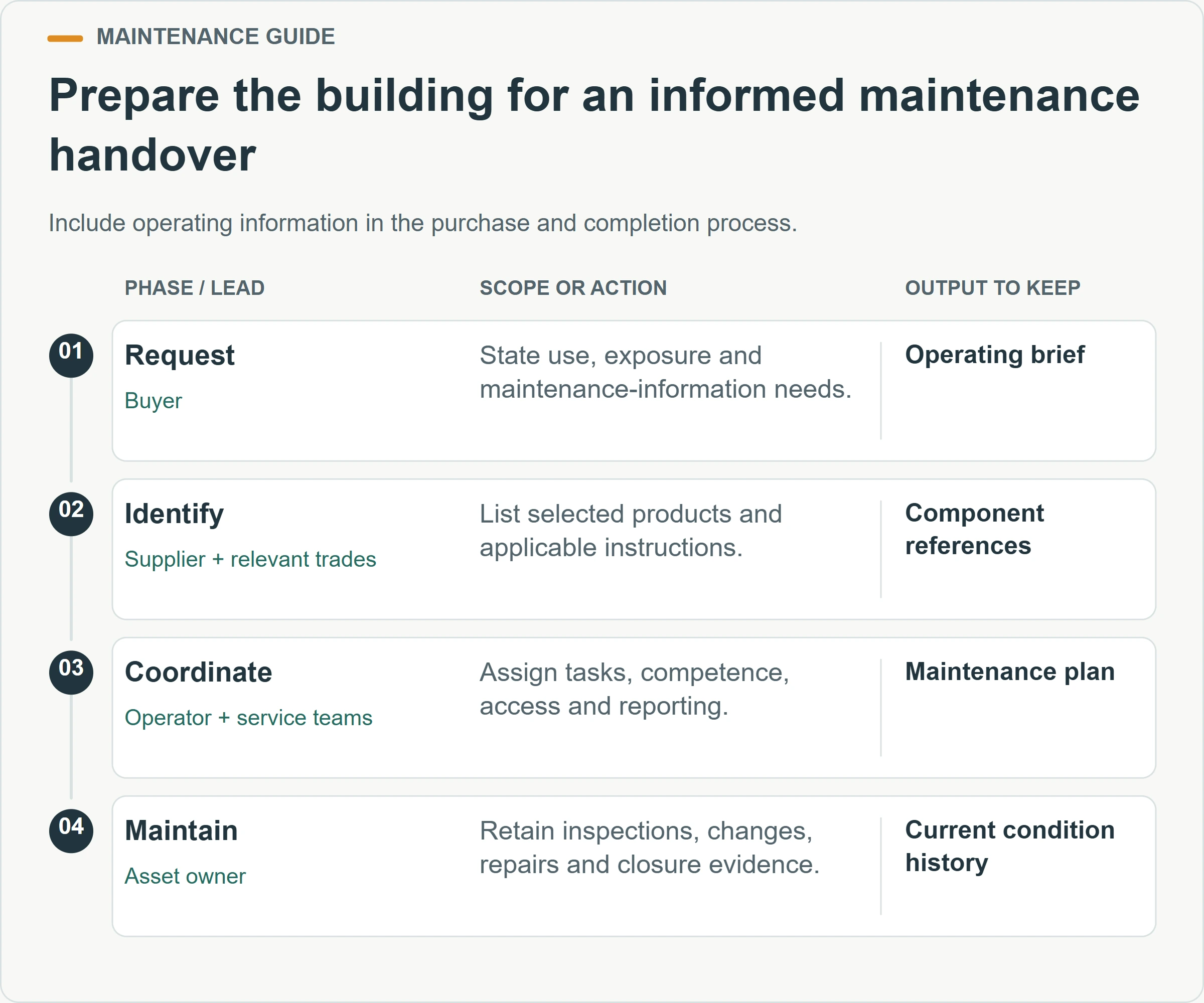
Explain the destination exposure and intended use accurately. Describe whether the building will be continuously occupied, intermittently used or moved later, and identify any known project conditions that affect the brief. Ask the supplier to state the assumptions behind its material proposal and service-life discussion. Keep unresolved conditions visible for the relevant technical review.
Does a longer warranty prove a longer building lifespan?
No. Compare the warranty’s subject, covered conditions, exclusions and responsibilities with the actual product and use. A finish warranty, an equipment warranty and a structural design statement answer different questions. Keep those documents distinct and seek clarification where a claim does not identify its scope. This makes comparisons more useful than ranking proposals by the largest number of years shown.
Can a well-maintained unit automatically move to another site?
No. Maintenance records provide useful evidence about condition and changes, but relocation introduces its own handling, site, installation and approval questions. Ask for the selected system’s applicable information and arrange the necessary assessment. Preserve the record through the move so the destination team understands the unit being received and the work required before its next use.
For a new order, start with the PQSE container house range and a clear operating brief. For an existing unit, prepare its identification, current drawings and a concise description of the concern. Good information helps the relevant team discuss condition and maintenance without relying on a generic lifespan promise.
Discuss container house maintenance information
Maintenance record — open the checklist
Copy these headings into your project brief. Add your own information and mark unresolved items for review.
| Record | Information to add |
|---|---|
| Identify the finding | Unit, location, component, date and observed condition |
| Assign assessment | Responsible person, applicable instructions and next action |
| Record the work | Cause, work completed, materials and document reference |
| Verify and close | Check result, closure date and required follow-up |