
A coastal contractor in Vietnam needed staff accommodation with a repairable building envelope and reliable site connections. PQSE House was responsible for the modular-building work. The brief joined protection and inspectable fixings with drainage, ventilation and foundation interfaces. For a comparable purchase, those priorities should become identifiable parts, coordinated drawings and a maintenance plan that the operator can actually use.
The envelope is the collection of walls, roof, openings and junctions that separates occupied rooms from their surroundings. A repairable envelope needs more than a replaceable panel: the buyer needs to know how that panel is identified, reached and connected to neighboring parts. Begin with the intended staff use and the destination conditions before selecting a finish or accepting a durability statement.
The eight images on this page are assembly-yard, exterior, component and drawing references. They support discussion of choices and interfaces; they are not Vietnam site photographs or approved project drawings. These first views show modular rooms and stored parts in an enclosed work yard, offering a way to discuss access around adjoining rooms.
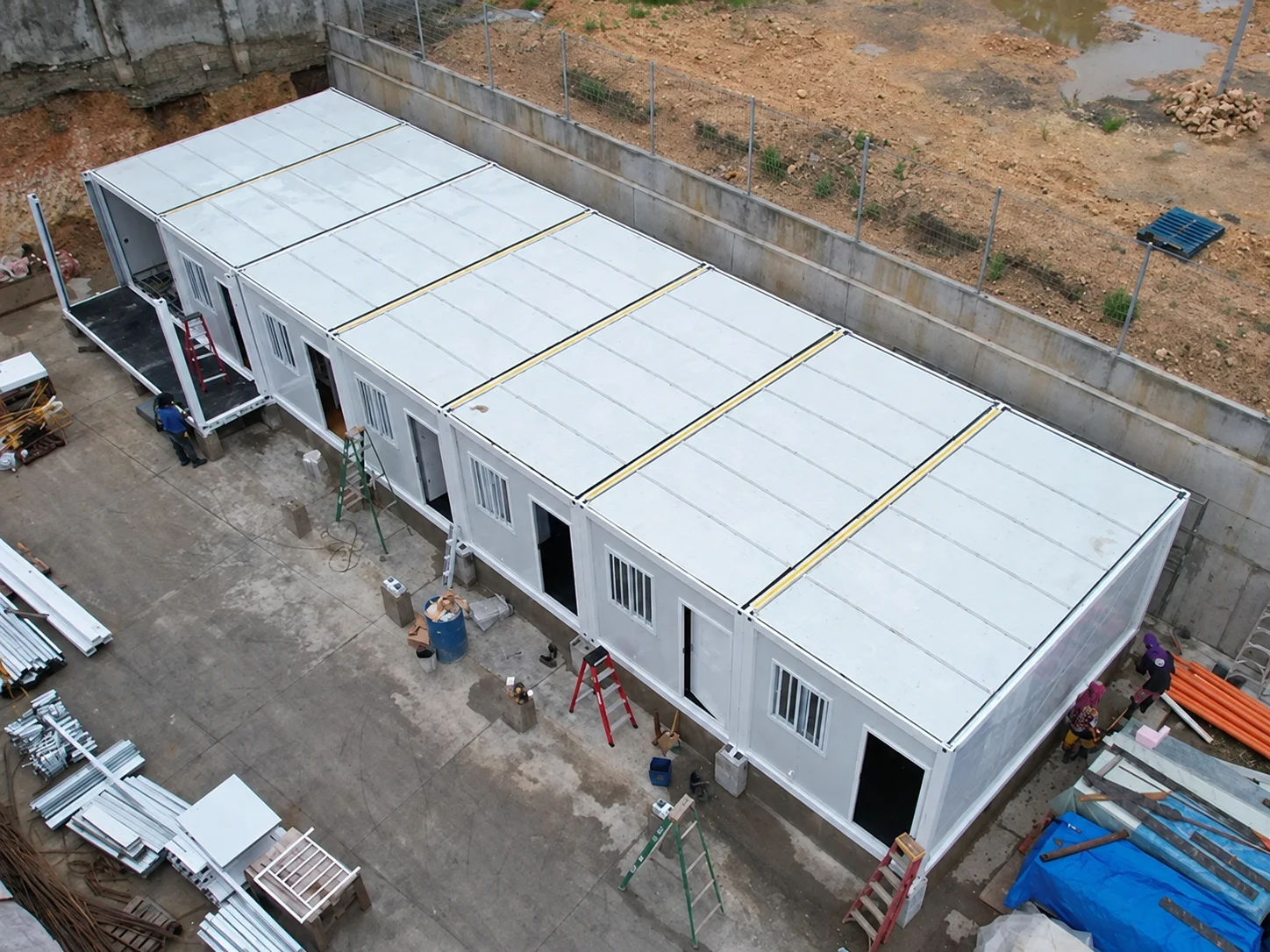
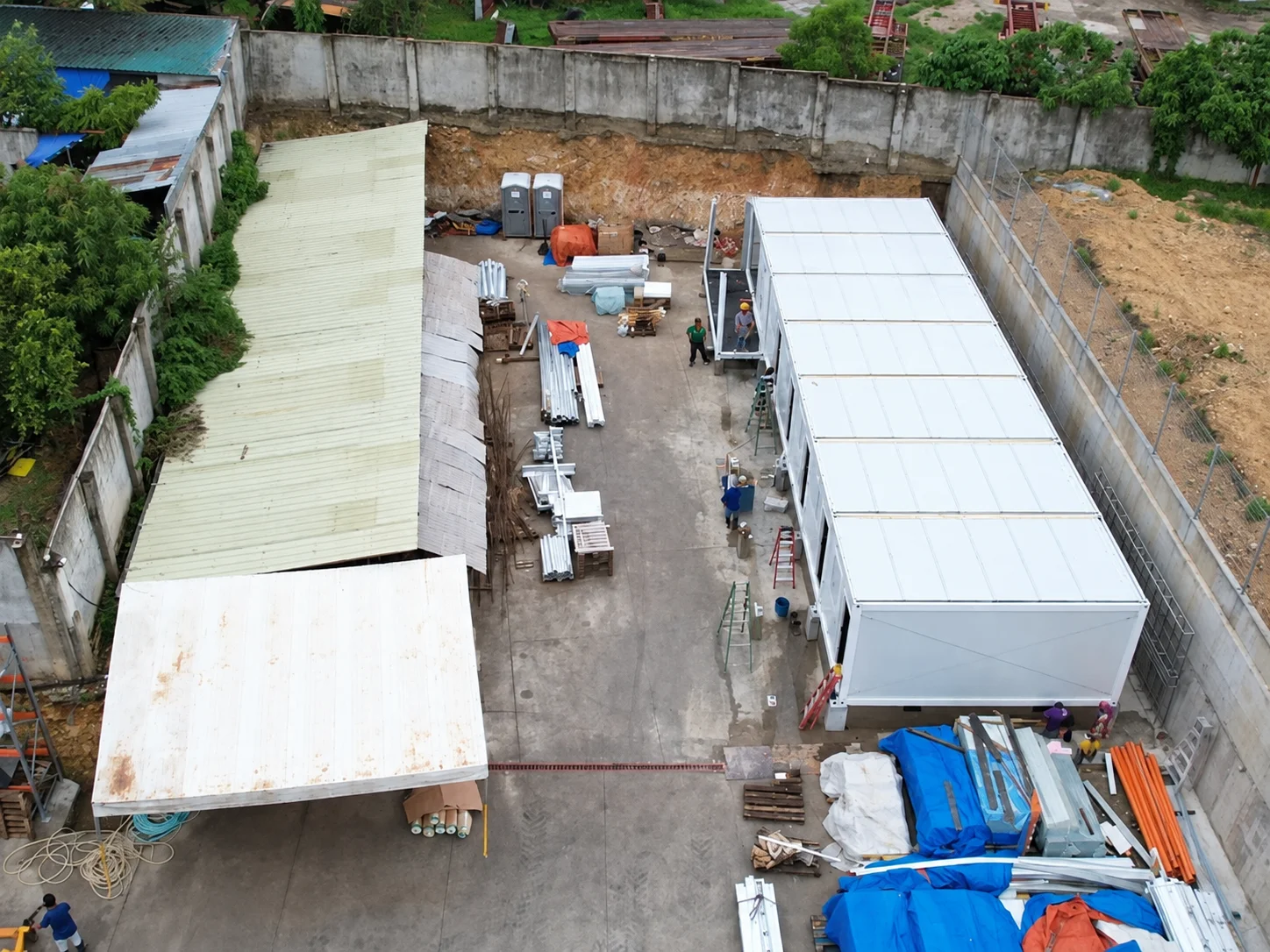
Describe the exposure before choosing the protection
Give the supplier the proposed position of the accommodation, the orientation of exposed faces and information about surrounding activities. A coastal location does not describe every surface equally. Record where buildings or roof projections provide shelter, where deposits have been observed nearby, and which parts will remain accessible once rooms and external services are in place.
The American Galvanizers Association’s discussion of galvanized steel in different environments identifies sea spray, wind, pollutants and the duration of wet conditions as influences on atmospheric corrosion. It concerns after-fabrication hot-dip galvanizing. That context supports collecting exposure information; it does not assign a coating, exposure category or service life to this Vietnam brief.
Ask the supplier to name the protection proposed for each part of the building. Wall sheets, structural members, trims and fasteners may have different material descriptions and care instructions. A general word such as “galvanized” does not identify the complete package. Request a schedule that ties the actual component to its supplier information and intended location.
| Input to provide | Record to request | Decision it informs |
|---|---|---|
| Building position and orientation | Identified site drawing and proposed component locations | Which surfaces and junctions need an exposure review |
| Shelter and nearby activities | Actual coating supplier’s suitability information | Whether the proposed system fits the stated conditions |
| Accessible and concealed areas | Inspection and replacement access details | What can be checked after installation |
| Available maintenance resources | Applicable care instructions and replacement support | Whether the operator can maintain the selected package |
| Changed destination conditions | Revised design and supplier assessment | Whether the existing selection needs reconsideration |
These are information requests for a new order. They do not record measurements taken at the Vietnam site. Where a supplier offers a performance figure, ask which component, test or exposure assumptions it describes. Have the appropriate project advisers consider applicability before making it part of the purchase specification. Keep any unresolved assumptions visible in the quotation.
Specify the connected parts of the envelope
A material schedule becomes useful when it follows the junctions. Identify the wall or roof surface, the fixing through it, the washer or sealing element and the adjacent trim. Ask who confirms that the proposed combination is suitable for the intended application. Choosing each item separately can leave the connection itself undefined.
BlueScope’s TB16 fastener selection bulletin, June 2026, Revision 15, demonstrates this product-specific approach. It distinguishes compatible fasteners for its different coated products and discusses washers and exposure. Its Australian product and standards context is retained here; its tables do not establish Vietnam design values or identify materials supplied by PQSE.
A stronger-sounding metal name is not enough to settle compatibility. Ask for the actual suppliers’ written confirmation for the combination being quoted. The answer should refer to the chosen sheet, accessory, fixing and application, rather than a general promise about stainless steel or corrosion resistance. Keep that information with the approved material revision.
This exterior reference shows a blue pitched roof, white walls, walkways and stairs. It makes several exposed junctions visible at once. The picture helps identify questions for the supplier, while the actual component schedule must establish materials and protection.
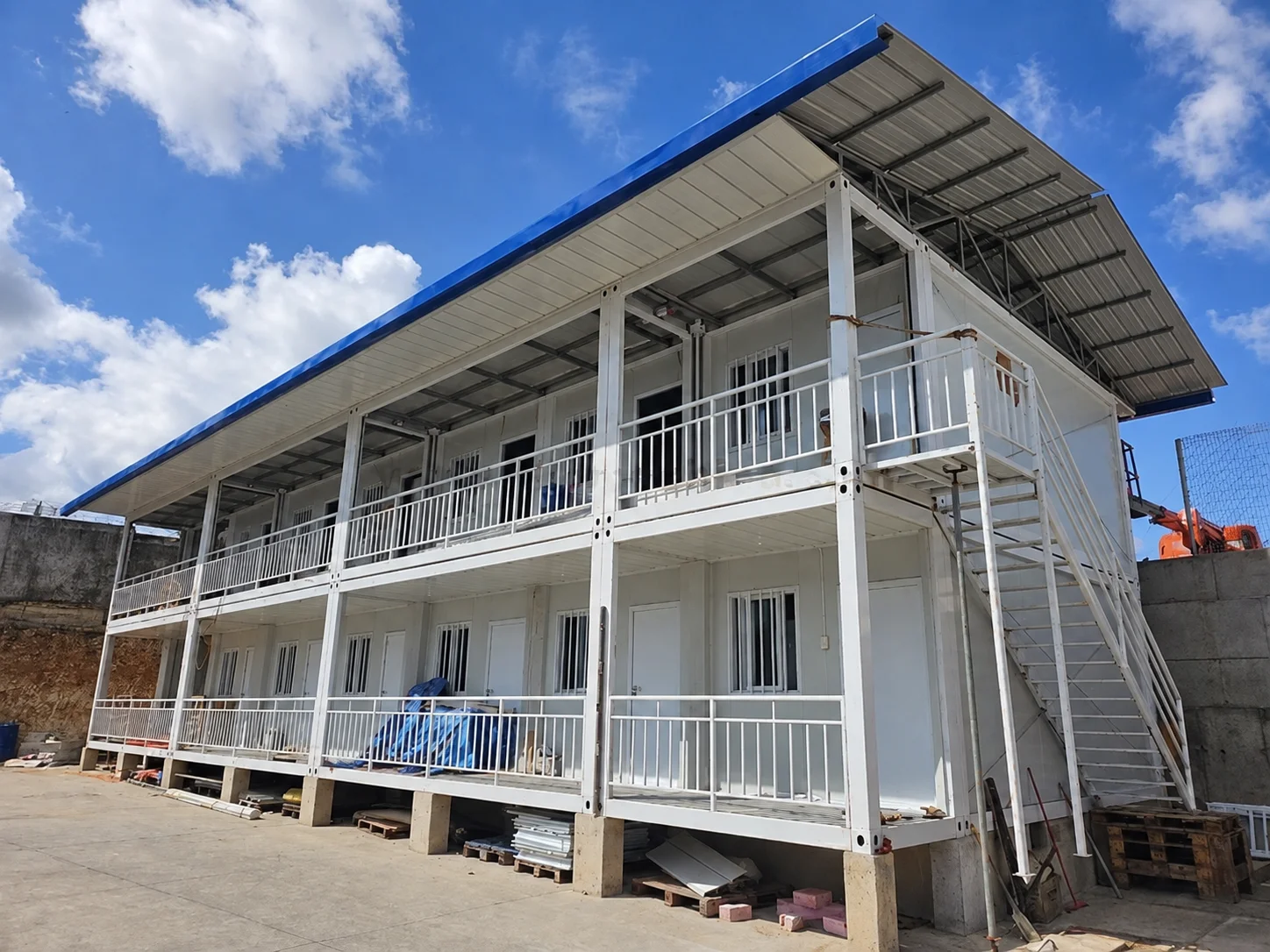
If a flat pack container house package is considered, review the selected frame and panel schedule beside the intended room arrangement. The product’s illustrated alternatives provide a starting point for comparison. The order documents still need to name the chosen package, its connected accessories and the work required at the destination.
Keep alternatives distinguishable during procurement. When a supplier substitutes a fixing, trim or coating system, request the updated component information and the affected drawing revision. An agreed appearance does not automatically approve a different concealed component. The buyer and destination team should be able to find which combination was accepted without reconstructing it from emails.
Define what a repair would involve
Ask the supplier to describe the boundary of a replaceable part. A wall sheet might be accessible from outside, while a neighboring trim, service penetration or interior finish affects the work. The important buying question is which parts must be disturbed and how their functions will be restored. Request that information for the selected assembly rather than assuming every modular system repairs the same way.
Part identification matters before a fault occurs. A replacement description should connect the location, drawing reference, component identity and finish to the supply record. A photograph can help locate a part, but appearance alone may not distinguish otherwise similar materials. Agree how the operator requests a replacement and how the supplier checks that it matches the current building configuration.
| Item under discussion | Adjacent information needed | Replacement record |
|---|---|---|
| Wall panel | Trims, openings, fixings and any service penetration | Component identity, finish and affected drawing detail |
| Roof sheet or edge piece | Joints, drainage features and associated sealing elements | Actual supplier’s compatible replacement information |
| Fixing and washer | Connected materials and installation detail | Approved combination and supplier reference |
| Opening accessory | Wall junction, access and surrounding finish | Part identity and restoration requirements |
| Service penetration | Equipment owner, envelope detail and completion responsibility | Current configuration and accepted revision |
The component collage below shows frames, channels, tubes and connections as reference material. It is useful for discussing where several parts meet. It does not reveal coating chemistry, member ratings or a repair procedure approved for the Vietnam accommodation.
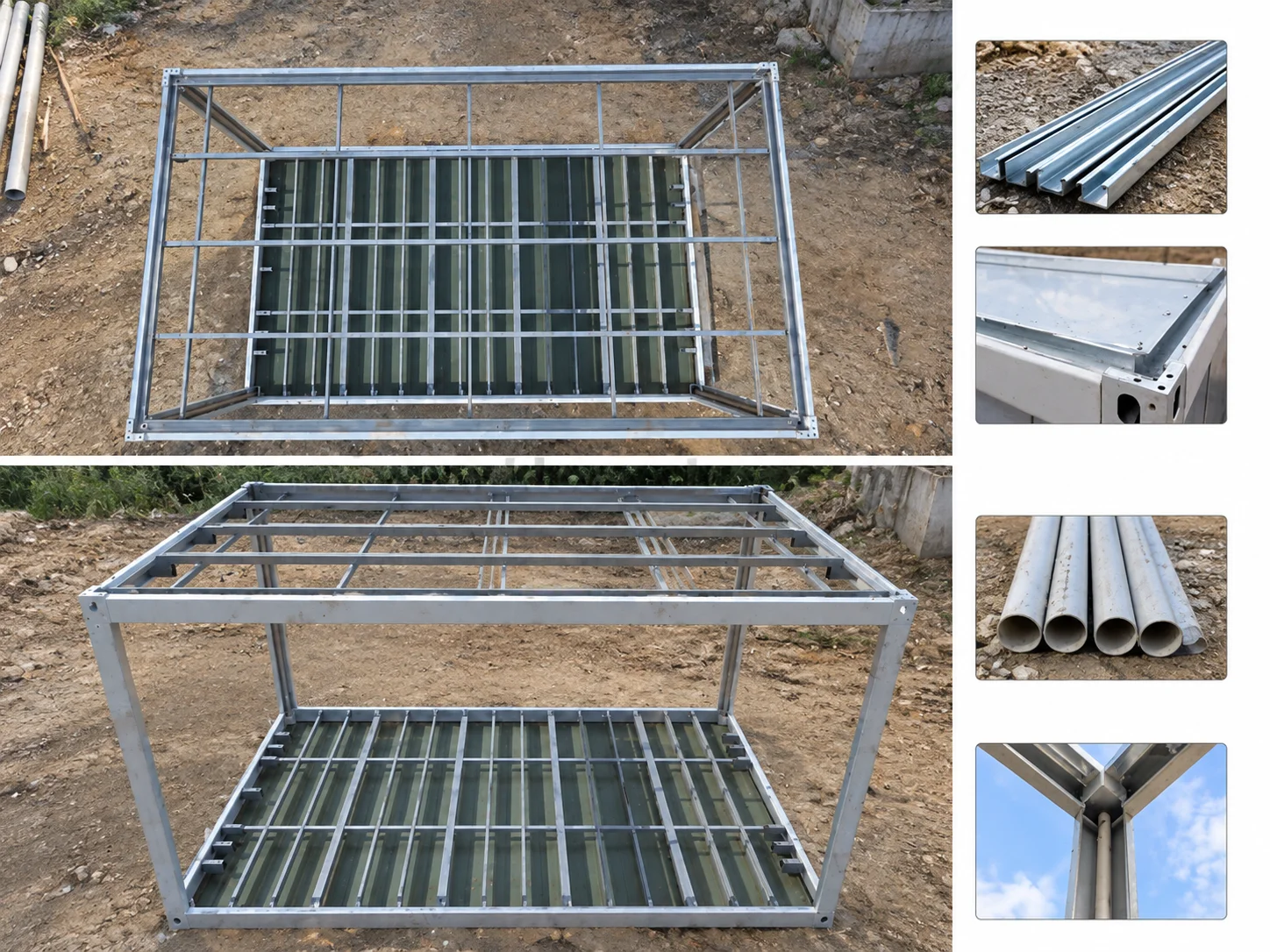
Ask how the maintenance team will reach the relevant area after occupation. Furniture, service equipment and external additions can affect access that looked straightforward on an empty drawing. Have the layout and envelope reviewers consider the same configuration. Where replacement would interrupt occupied rooms, include that interruption in the operator’s planning discussion.
The Thailand staff-building case explores the relationship between a preferred exterior, openings and inspectable junctions. It provides a useful comparison for defining the scope of a finish. Its photographs and brief do not establish the cladding system, protection or repair access of the Vietnam project.
Review water routes together with openings
Request project-specific roof and wall details showing the intended path of water. A view of a roof shape does not show all the junctions beneath it. Ask how roof edges, wall transitions, door thresholds and service openings relate to the surrounding site. The supplier and local designers need the same proposed levels and component positions when reviewing those interfaces.
The drawing below illustrates a pitched-roof layout and elevations. Its printed dimensions belong to that reference, rather than a Vietnam order schedule. Use it to identify the kinds of views needed for a review: the overall arrangement and the details where the envelope changes direction or meets another element. Select the drawing to inspect the original at full size.
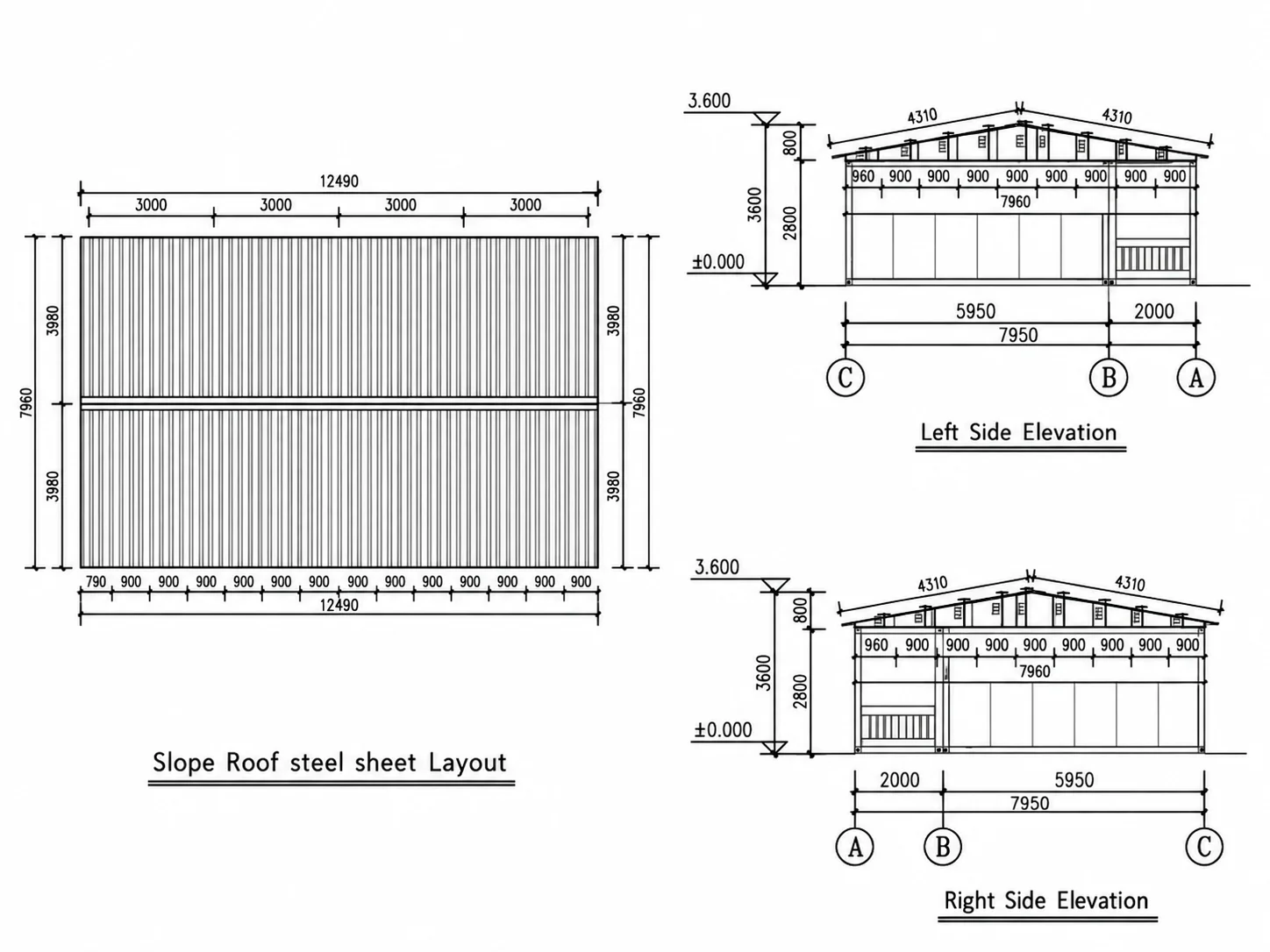
Describe which work is included in the building package and which work belongs to the site team. A supplied roof or drainage accessory does not establish where water will go after leaving it. Ask the destination designer to coordinate the receiving route with surrounding ground, paths and service positions. This is a request for an approved arrangement, not a drainage design supplied by this article.
Ventilation and weather details also need a shared review. Identify the occupied rooms and any wet areas in the accommodation proposal, then ask the responsible designers to explain the selected ventilation approach and its envelope interfaces. Keep access for cleaning and equipment replacement in that discussion. No airflow rate or room performance can be inferred from an exterior photograph.
Review revised openings when equipment or room use changes. A new service entry may affect a previously agreed wall detail, and a relocated fitting may need different access. The room-layout and service-interface guide offers related questions for coordinating those decisions with drawings. Record the final configuration rather than leaving the envelope reviewer with an earlier layout.
Make sheltered surfaces part of the care discussion
The maintenance brief should identify surfaces the operator can see and surfaces that are sheltered or harder to reach. Ask the actual material supplier which conditions affect care and what information the operator should retain. A roof projection can change access and exposure for nearby parts; it should appear in the maintenance discussion as well as the elevation.
BlueScope’s TB04 maintenance bulletin, January 2021, Revision 11, distinguishes rain-washed surfaces from sheltered “unwashed areas” on its coated-steel products. It also discusses adjacent accessories and fasteners. This is a manufacturer example of why maintenance instructions need to fit the material and location, rather than evidence that its products were supplied here.
Obtain the instructions for the package actually ordered. The cleaning frequencies and procedures in that Australian bulletin are not adopted as PQSE rules. The operator needs the relevant supplier’s method, restrictions and contact route, coordinated with local conditions and available resources. Avoid promising an easily maintained building until those responsibilities and practical arrangements have been reviewed.
The next two exterior references show roof edges and circulation from other viewpoints. They help the buyer consider where a person would need access for inspection or maintenance. They do not document a completed inspection, an occupied building or an agreed maintenance route at the Vietnam site.
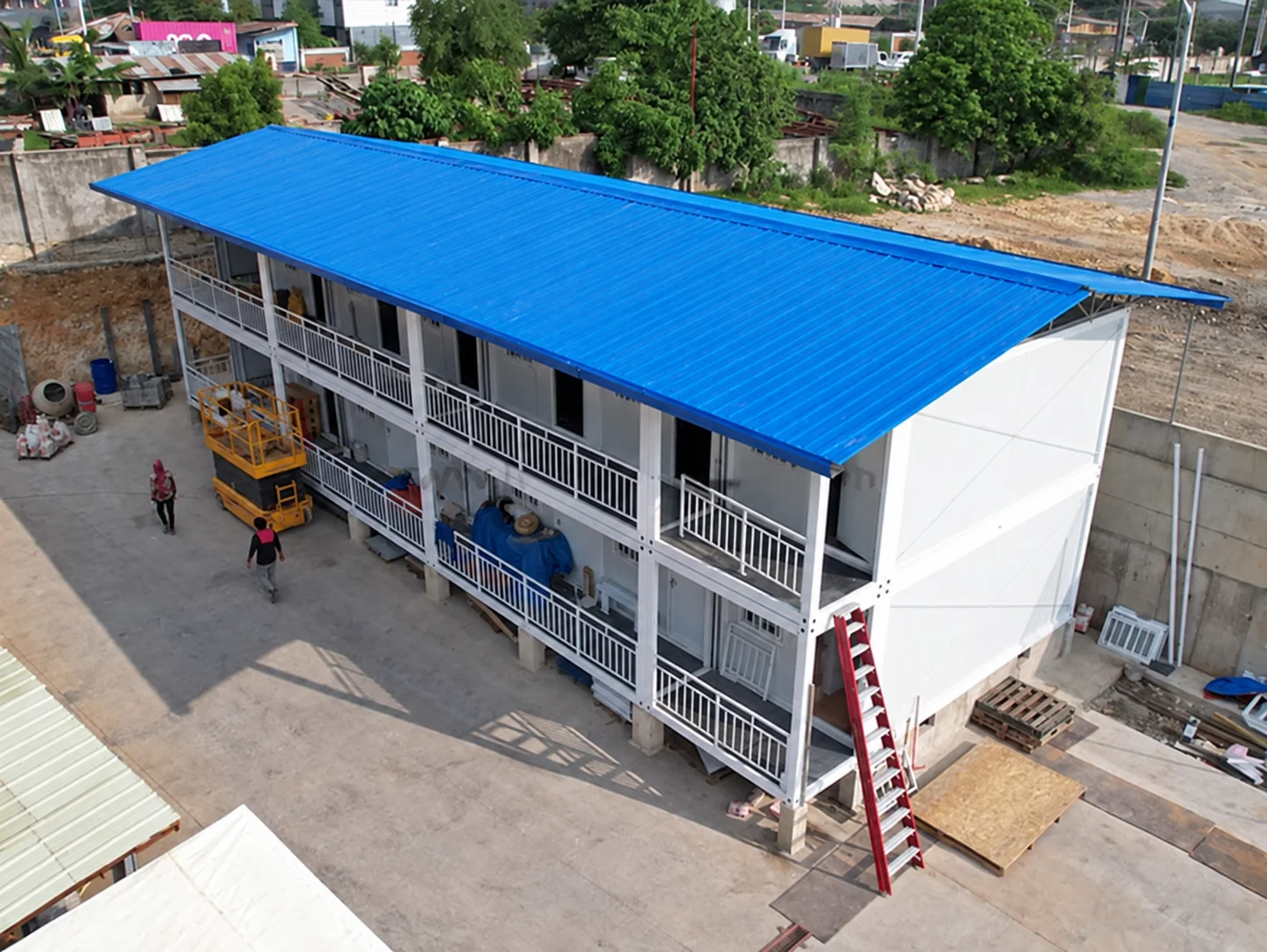
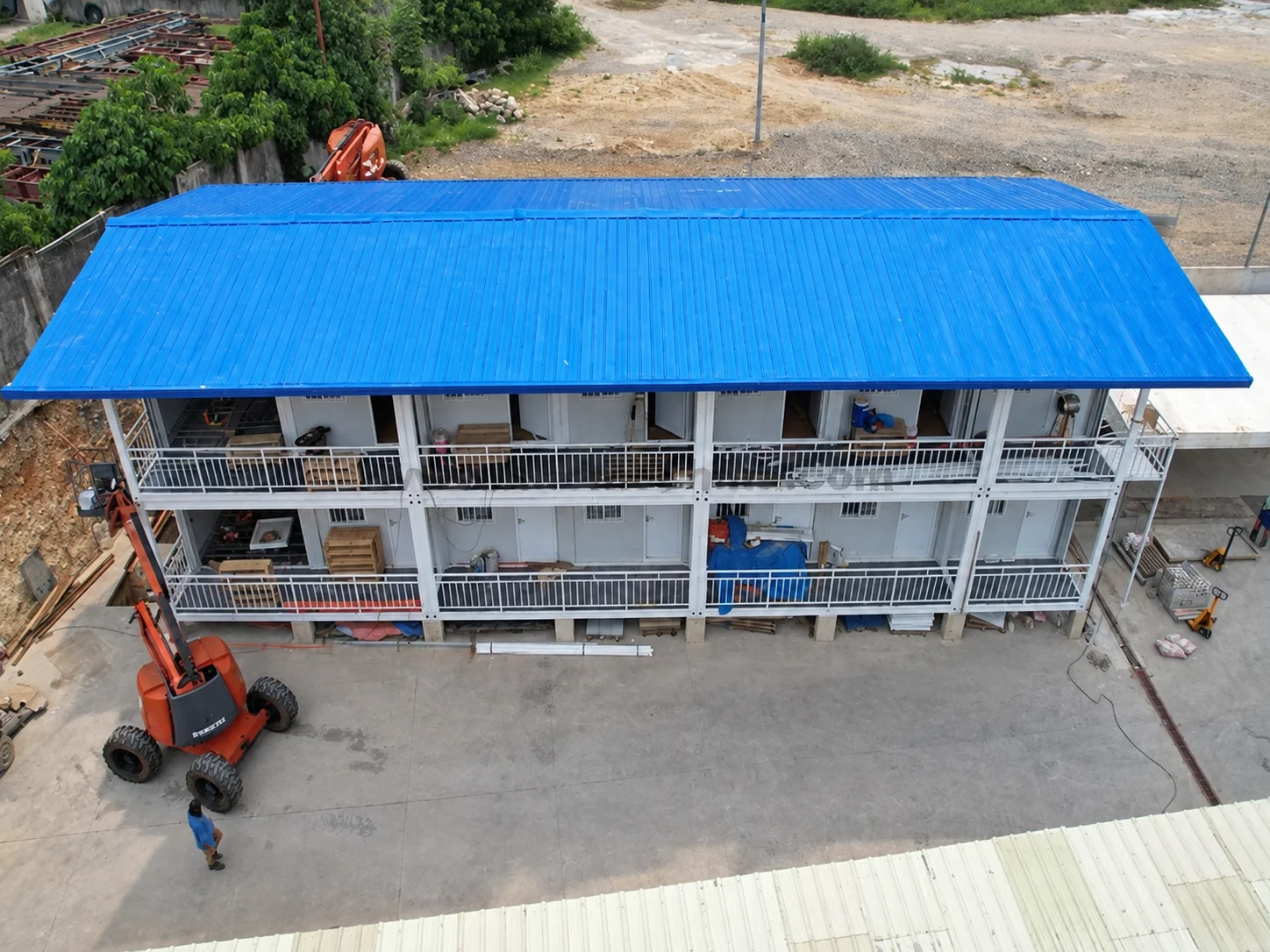
Our container-house maintenance guide discusses identifying the delivered material, retaining observations and connecting a reported condition to an assessment. Use that approach to organize information for the supplier. A visible mark should be described with its location and context; the photograph alone should not be treated as a diagnosis or permission to apply a repair product.
Retain the condition and configuration at handover
Discuss receiving records before dispatch so that the buyer, carrier and destination team understand what needs to be identified. The record should relate the delivered package to the accepted component schedule and drawings. It can also identify parts traveling separately and work awaiting completion. Receiving the consignment and accepting the accommodation for its intended use are separate decisions.
When a condition needs attention, retain enough context for the appropriate person to assess it. Record the affected part, location, visible condition and relevant supply reference. Do not turn a general appearance check into a claim that coating thickness, weather performance or concealed assembly has been verified. Those questions require the applicable evidence and assessment.
| Observation or change | Information to retain | Confirmation to obtain |
|---|---|---|
| Mark on a delivered surface | Part location, photographs and material reference | Assessment and appropriate response from the responsible supplier |
| Accessory supplied separately | Package identity and affected drawing detail | Who completes and checks the remaining interface |
| Replacement item proposed | Current part identity and substitute information | Compatibility and accepted revision |
| New service opening requested | Equipment requirement and location in the current layout | Coordinated envelope and destination review |
| Work recorded as complete | Action taken, responsible party and revised information | Required verification and closure of the original issue |
This proposed record is a buying and handover framework, not a report of work completed in Vietnam. Agree who assesses an issue, who can approve a substitute and how the operator receives the updated information. An unanswered question should retain an owner and a decision route instead of disappearing when the package changes hands.
Keep completion records connected to the issue they resolve. A delivery note may identify that an item arrived; it may not establish that an affected junction was restored or accepted. Request the information appropriate to the actual work and its agreed responsibility. The operator should receive the current configuration and applicable care instructions together.
Fit maintenance access to staff routines
Share the intended room functions, occupancy arrangements and staff routines when discussing the envelope. Sleeping rooms, shared facilities and service work can place different demands on circulation. The buyer should identify when rooms are occupied and which routes must remain available, so that proposed maintenance access can be considered alongside ordinary use.
The worker accommodation planning page joins bedrooms with shared daily facilities and destination responsibilities. It is relevant when the coastal building forms part of a wider accommodation plan. Use the actual room list and available services to decide which facilities the proposed package includes and which rely on separate local arrangements.
Our Oman site-welfare case offers a comparison of room functions and service circulation around a workforce brief. The comparison helps expose interfaces between a building and the operation it serves. It does not transfer that case’s room arrangement, kitchen scope or reference pictures into Vietnam accommodation.
The final yard image shows wheeled cabins as another configuration reference. It is retained for comparing how an alternative building form changes placement and connection questions. Visible wheels or an open door do not establish that the coastal accommodation was towable, or that a sanitation package was included.
View the alternative wheeled-cabin yard reference
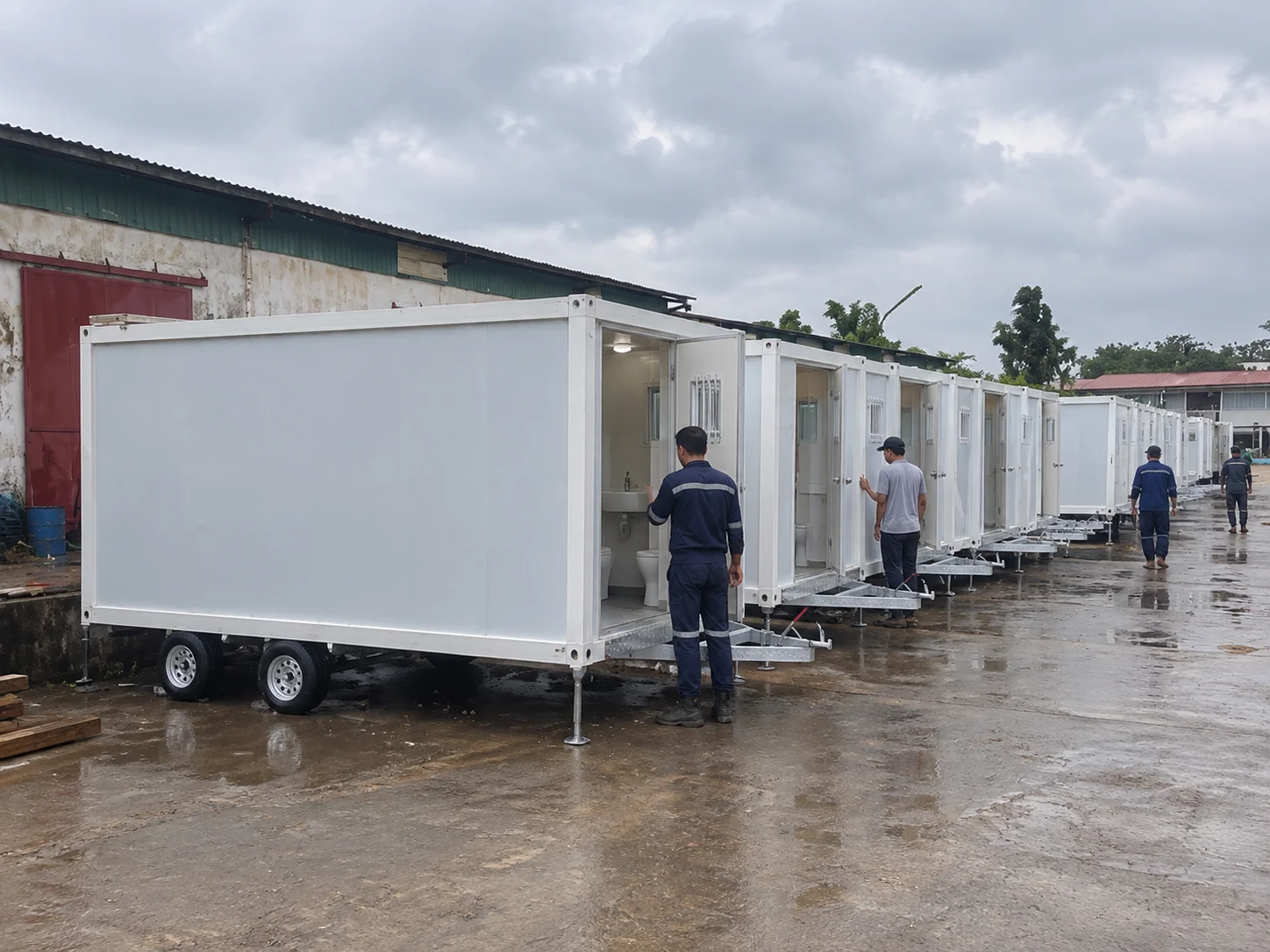
Agree how the operator reports a fault and obtains current part information after occupation. Where cleaning, external services or access equipment come from other parties, identify those responsibilities in the handover information. A clear contact route should connect a reported condition to the appropriate supply or destination task, rather than requiring residents to decide its technical cause.
Compare an identified envelope package
Send suppliers the same room brief, destination information and expected division of work. Ask each quotation to identify materials, connected accessories, drawings, care information and replacement support. Where an alternative differs, have the supplier explain the affected interfaces. This produces a comparison of defined packages rather than a comparison of adjectives about durability.
The manufacturing design and handoff guide explains how accepted requirements and changes become identifiable production information. For a coastal order, use that approach to retain the selected component combination and destination responsibilities. A preferred reference photograph should lead to an agreed design record; it should not become the entire specification.
Keep availability and repair support specific. Ask which component information will accompany the package, how replacements will be identified and what the supplier needs to evaluate a future request. Any stocking or delivery commitment should appear in the actual commercial agreement. This brief does not establish replacement lead times or parts held locally.
The useful outcome for a comparable buyer is a coordinated proposal that the supplier, local designers and operator can all interpret. The Vietnam brief establishes the need for repairable staff accommodation. The next procurement decision depends on the actual exposure review, accepted assembly and site interfaces, with applicable performance and approval questions resolved through their own documents.
Sources and project evidence
- American Galvanizers Association, Performance of Galvanized Steel in Different Environments, September 12, 2012: after-fabrication hot-dip galvanizing and exposure inputs; no project rate or lifetime adopted.
- BlueScope TB04, Maintenance of exterior BlueScope coated steel products, January 2021, Revision 11: named-product maintenance example; its intervals and cleaning procedures are not a PQSE specification.
- BlueScope TB16, Fasteners for roofing, walling and accessory products – selection guide, June 2026, Revision 15: Australian product-specific compatibility guidance, not a Vietnam approval or supplied fastener schedule.
The application and PQSE role come from the owner-confirmed project brief. All eight images remain reference material. The tables are editorial procurement frameworks; no field test, completed repair, independent certification or human engineering review is represented.
Planning coastal staff accommodation? Share the room brief, destination conditions and proposed maintenance responsibilities with PQSE House.
Discuss your coastal accommodation brief