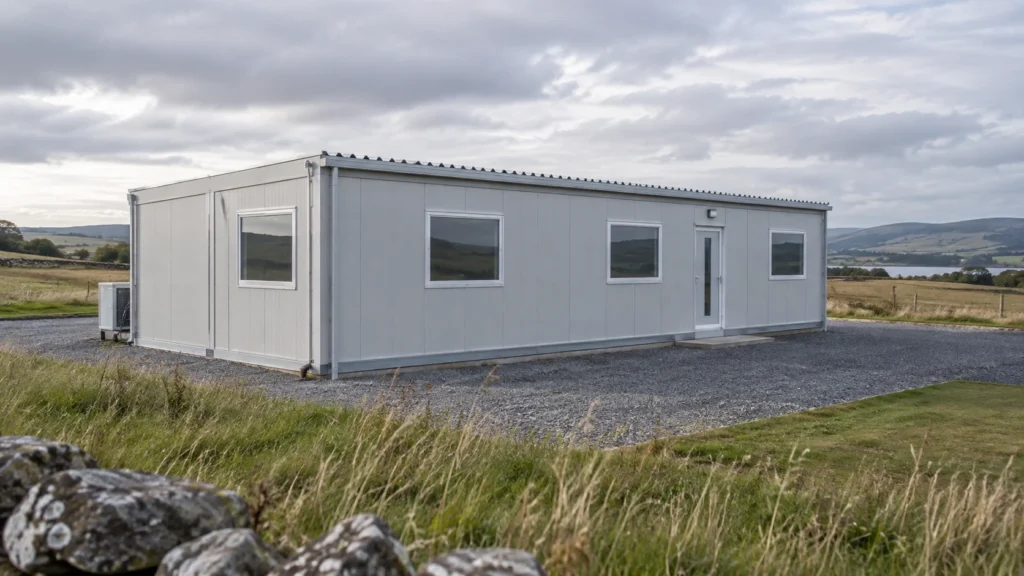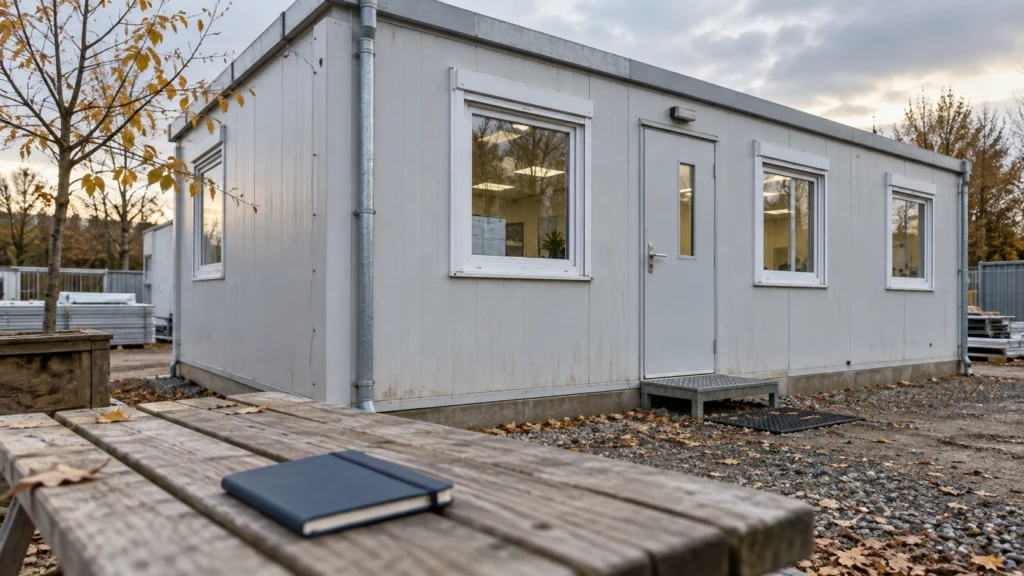
Portable toilet winter planning should begin with the functions that people must still be able to use: the toilet, suitable washing, access and continuing waste removal. A treatment for one holding tank cannot establish that an entire facility will remain usable. Identify the installed configuration, distinguish continued operation from storage, and agree who responds when weather interrupts the service. When comparing portable sanitation configurations for a project, ask for a winter arrangement covering the complete supplied facility and its site connections, rather than accepting a temperature number without its conditions.
Choose the operating state before asking for winterisation
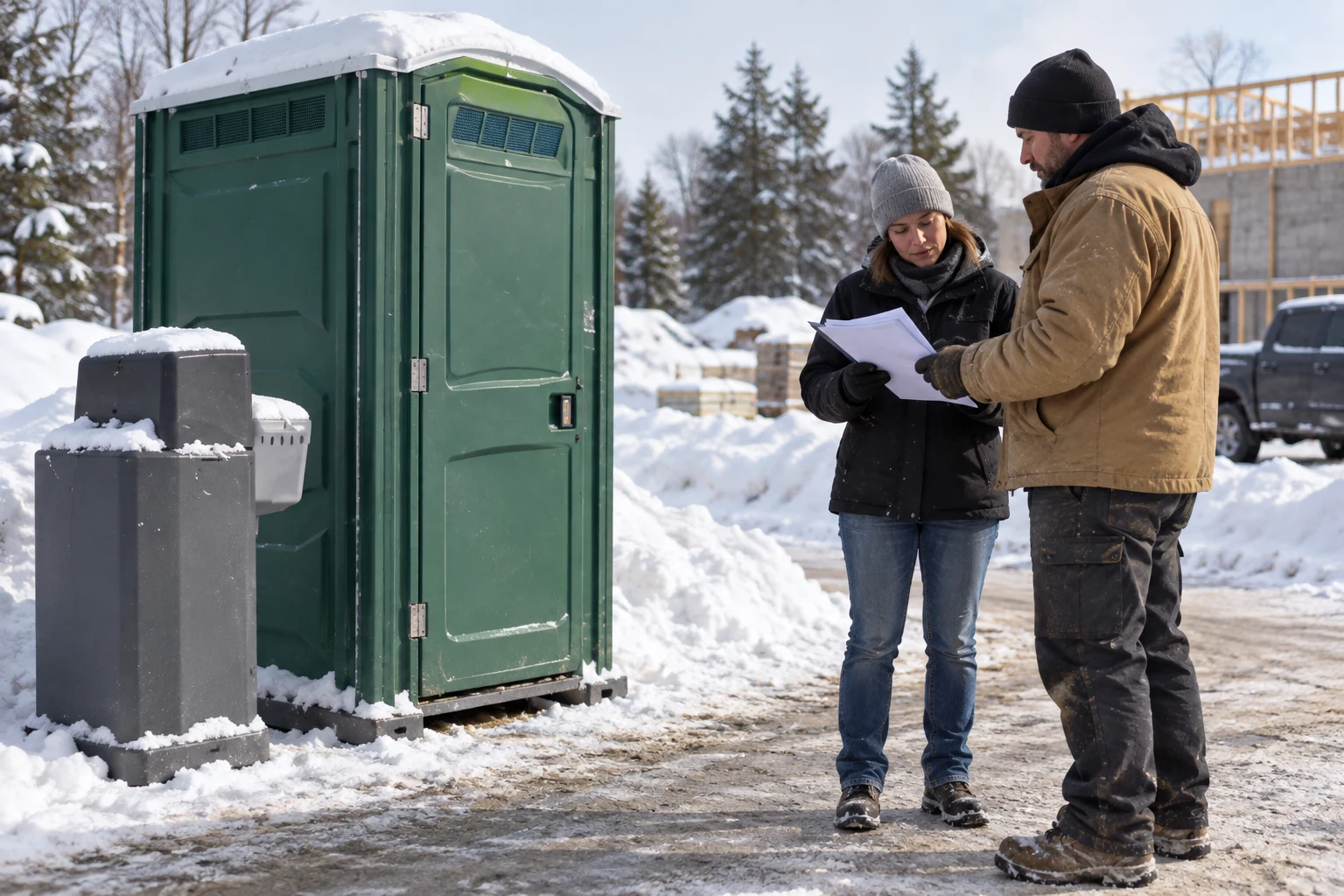
A toilet serving an active night shift presents a different question from a unit being put away until spring. The first needs continuing welfare and a service route; the second needs a documented withdrawal and storage arrangement. Describing both as “winterised” hides the difference. Put the intended state beside each facility identifier, including any units available only as standby. A standby unit also needs a readiness decision before people are directed to it.
Set the brief around actual users and hours. Record which shifts continue, whether the site closes for holidays, who remains during shutdown and where people can go if one facility is unavailable. In worker camp accommodation with continuing residential use, the end of the working shift does not end sanitation demand. An unattended weekend and an occupied weekend therefore need different arrangements, even when the building and weather forecast are identical.
State what people will still need
Define the usable outcome before discussing equipment changes. “Maintain winter service” should say which facilities remain available, what washing is provided, how cleaning continues and how exceptions are communicated. Do not assume that keeping a waste tank pumpable resolves a frozen water supply or an inaccessible entrance. This outcome gives the supplier and site manager a shared basis for confirming their respective responsibilities.
Revisit the brief when the operating pattern changes. Bringing another shift onto the site, moving accommodation or opening a remote work area can alter the demand and access even without a new weather forecast. Record the changed assumption and ask which parts of the agreed arrangement need review. The original winter proposal should not quietly become approval for a different occupancy pattern.
Separate the liquid functions in the actual installation
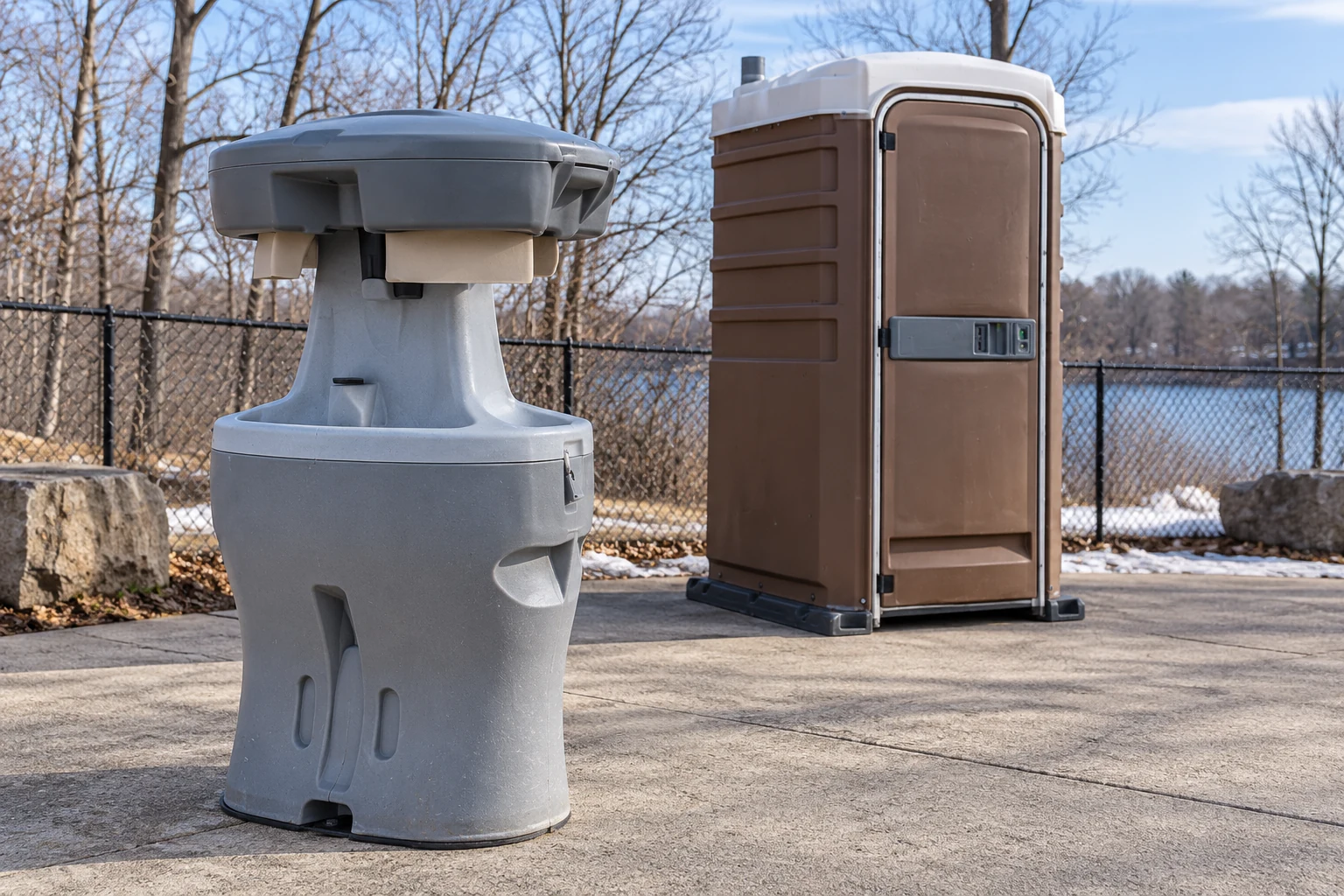
A facility may have fresh water, a flushing supply, handwashing water, collected wastewater and a discharge connection. Their relationships depend on the selected equipment. Do not infer a shared supply from two fixtures being in the same room. Conversely, separate exterior fittings do not prove that their waste is collected separately. Request a configuration record identifying the relevant components and where each liquid comes from and goes.
For a portable bathroom with several sanitary functions, agree the boundary between the delivered unit and connections arranged on site. The water heater, external supply, drainage route and holding arrangement may involve different parties. Ask each party to identify its scope in the same record. This makes an uncovered interface visible before cold weather turns it into a dispute.
Confirm the model before the treatment
Use the model and supplied configuration when discussing portable toilet requirements for a project order. A chemical collection unit and a toilet with a separate fresh flushing supply cannot be treated as equivalent merely because both are portable. Ask the supplier to name the applicable instructions; do not transfer a winter procedure from another manufacturer’s model to an unidentified installation.
Keep that configuration record current when equipment is substituted. For example, replacing a standalone wash station with washing inside a bathroom changes the questions about supply, wastewater and responsibility. This is an illustrative procurement change, not a claim about a particular installation. The useful record is the one that describes what is now present, including connections that another contractor has modified.
| Function | Configuration to identify | Confirmation needed |
|---|---|---|
| Toilet collection | Actual collection or holding arrangement | Serviceability and accepted removal method |
| Flushing | Fresh supply, recirculating arrangement or other specified system | Applicable operating limits and provider responsibility |
| Handwashing | Water source, heating if provided and wastewater destination | Suitable washing remains available during use |
| Site supply | Connections outside the supplied unit | Who confirms and maintains the winter arrangement |
| Waste transfer | Collection point, carrier and receiving facility | Access and acceptance for the actual waste |
Use actual air temperature in the equipment brief

A forecast’s “feels like” temperature describes human exposure; it is not a measured temperature inside a toilet tank. The US National Weather Service explains that wind chill applies to people and animals. Wind can make an inanimate object cool more quickly toward the actual air temperature. Using the human index as a liquid temperature would give the supplier the wrong input for an equipment discussion.
Keep the forecast location, actual air-temperature forecast, timing and relevant exposure conditions together. A daytime visit can miss the conditions during an occupied overnight shift. Ask how the provider evaluates the installed arrangement under the expected weather, including interruptions to whatever services it depends on. The record should describe the assumptions being assessed, not claim that one forecast establishes every component’s temperature.
Keep equipment and human exposure decisions distinct
The correction does not make wind irrelevant. People walking to facilities, cleaners and service staff still face cold and changing access conditions. Assign responsibility for updating their site arrangements separately from the equipment assessment. If the weather changes after a supplier’s review, circulate the revised conditions and seek confirmation; do not silently retain an approval based on a different forecast or operating pattern.
Read a freezing-point table in its exact context
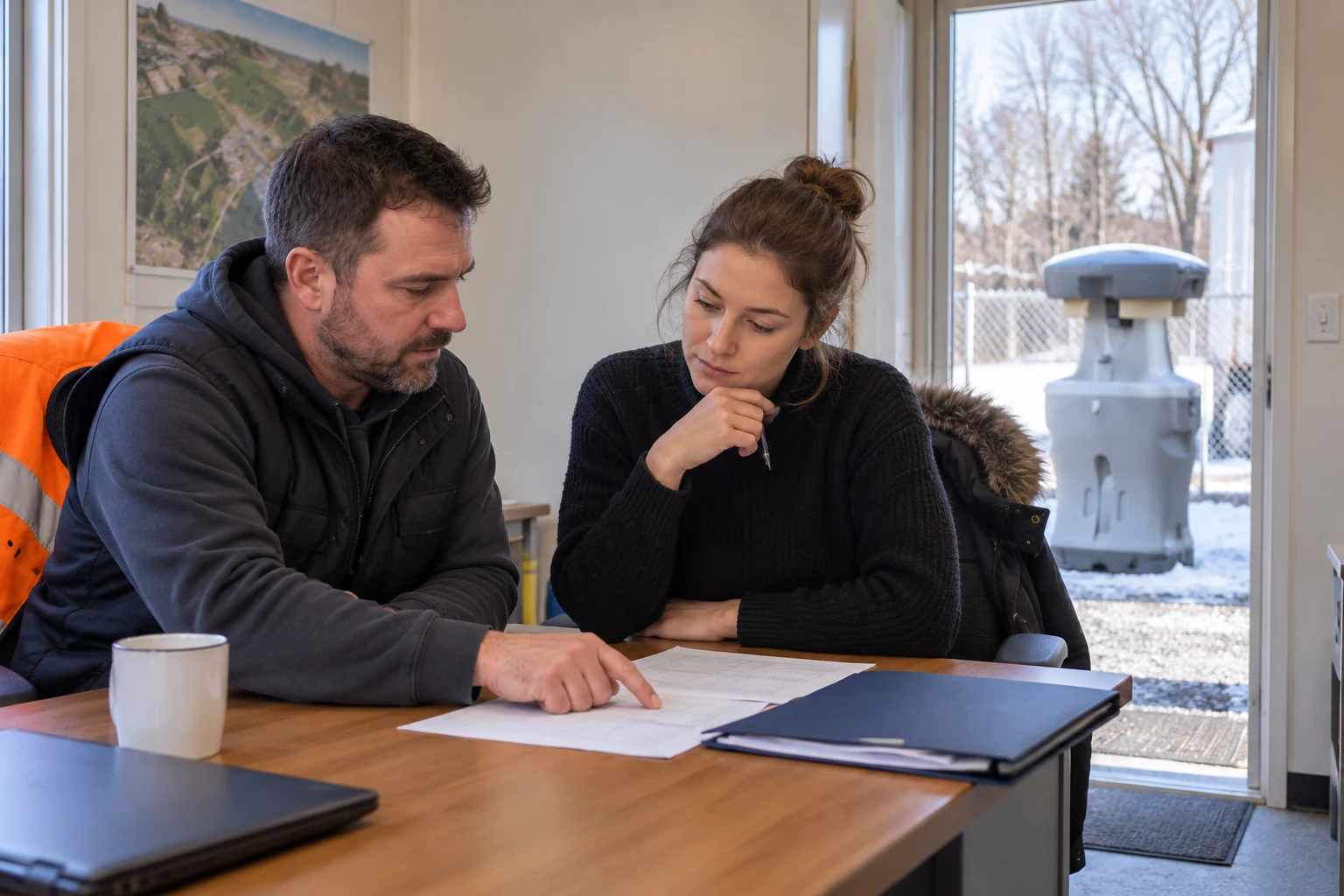
Satellite Industries publishes a FreezeGuard pre-charge table with magnesium chloride mass in 5-gal water and reported freezing points. The data below preserve that supplier’s units and setup. They are not a PolyJohn table, an independent experiment, a PQSE product rating or instructions for treating an unidentified tank. Package weight is also different from an application quantity.
The page does not disclose a test method, exposure duration, gallon convention or validation under waste dilution. It does not establish protection for separate fresh-water or washing components. Before relying on a product claim, obtain the applicable instructions and confirmation for the actual equipment and use. Do not interpolate the rows into a recipe or extend the lowest point into a whole-facility operating promise.
| MgCl₂ mass in the supplier’s setup, lb | Reported freezing point, °F |
|---|---|
| 0 | 32 |
| 5 | 20 |
| 10 | 7 |
| 13.3 | 0 |
| 15.5 | −20 |
| 20 | −28 |
| 25 | −32 |
Ask about the conditions the table does not cover
The procurement question is whether the proposed arrangement covers the installed system throughout its intended use. Record unresolved conditions explicitly and ask the responsible provider to resolve them. A missing confirmation is a decision still to be made, rather than a temperature allowance that the buyer should invent.
Preserve usable handwashing alongside toilet service
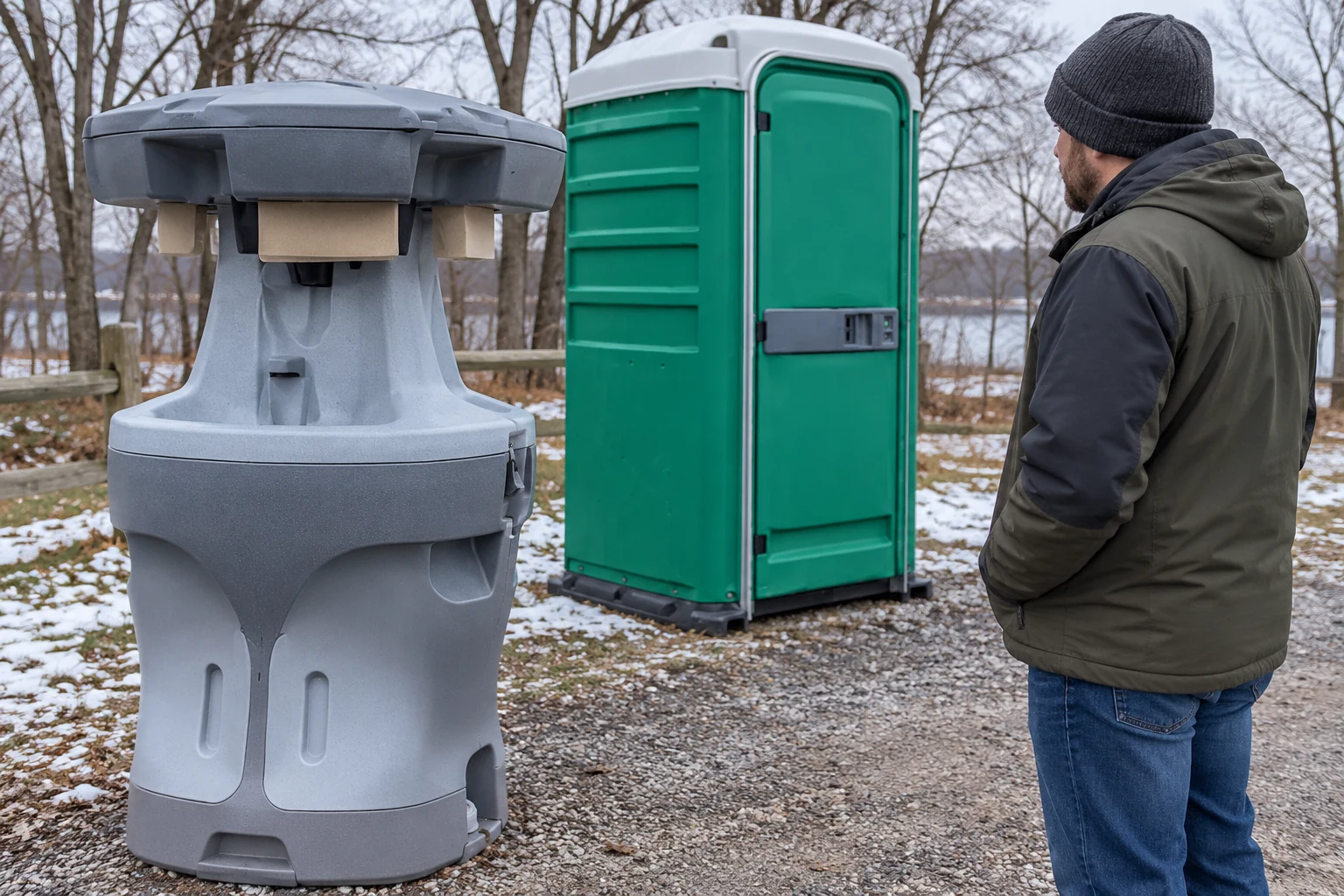
For construction welfare in Great Britain, HSE guidance describes appropriate washing facilities with clean hot and cold, or warm, running water, suitable cleaning and drying provisions. It also explains why a small sink and sanitizer can be inadequate without suitable washing nearby. These requirements retain their construction and regional scope; a vendor’s winter practice does not automatically satisfy them elsewhere.
Check the washing arrangement that people will actually use. Does the route remain accessible, can the relevant users wash adequately, and are water, cleaning and drying provisions maintained? If the washing function becomes unavailable, the remaining toilet must not be described as complete welfare provision simply because its collection tank still works. The site needs an agreed alternative or a change in use.
If the brief also includes portable shower facilities for a camp or project, confirm their own supply, heating, drainage and operating arrangements. A decision concerning the toilet tank does not approve the shower installation. Identify which facilities are necessary for the work and occupancy, then agree how any interruption changes the site’s available provision.
Confirm the selected winter arrangement without improvising it
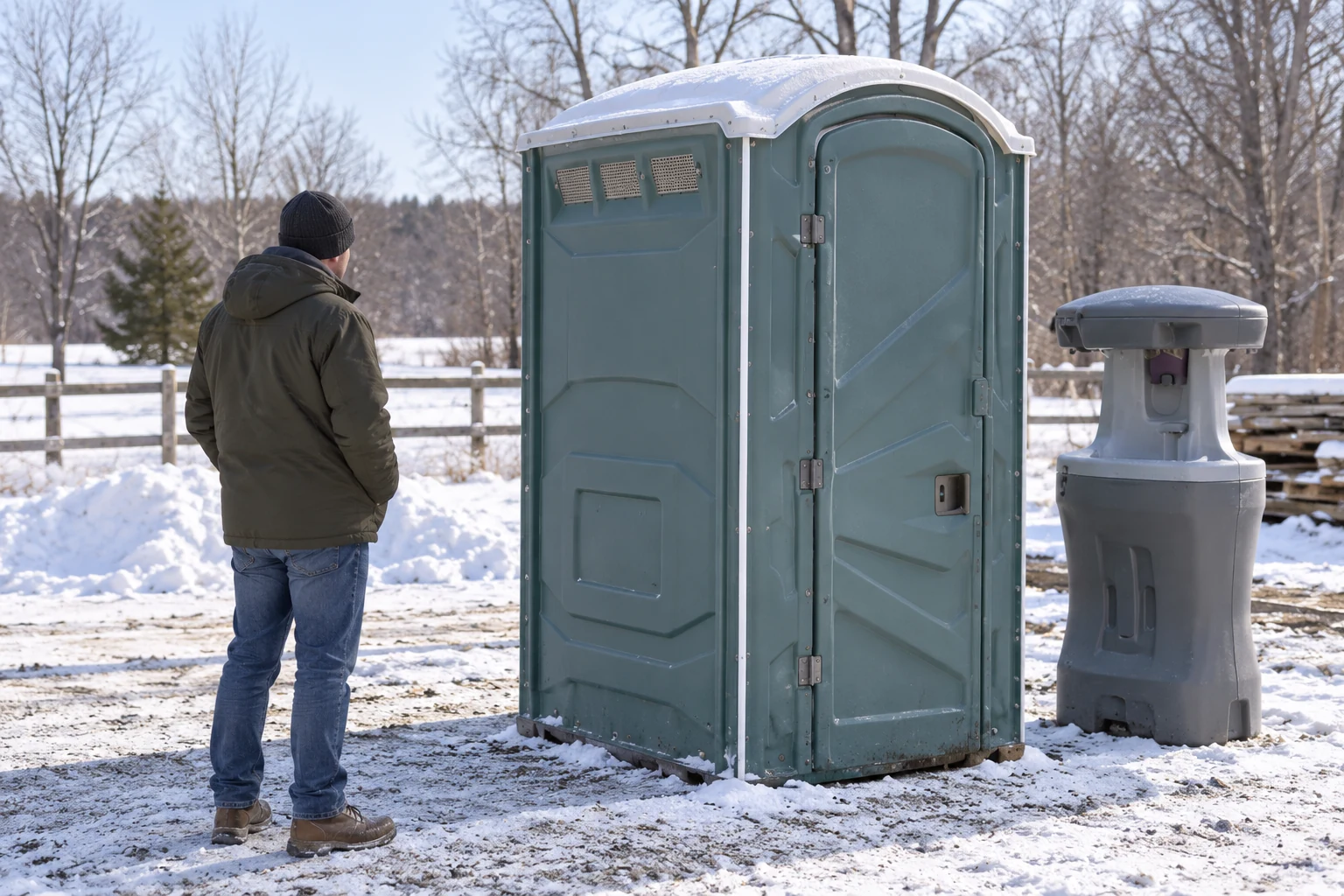
Ask the supplier what its winter proposal includes, what the site must supply and what operating assumptions remain. A quoted winter service may concern only toilet collection; another arrangement may include facilities and site services under separate contracts. Read the inclusions against the function record rather than relying on the word “winterisation” as a complete specification.
Manufacturer instructions and the responsible provider should govern technical work. A general article cannot authorise chemical mixing, temporary heaters, changes to ventilation or a sequence for draining unfamiliar equipment. Where a proposed change affects more than one party’s scope, confirm the revised arrangement with those parties before treating it as approved. Keep visible exterior observations separate from conclusions about concealed plumbing.
Make the commercial scope equally clear. Ask whether the proposal includes routine service, additional attendance, temporary replacement, relocation and storage preparation, and how changed conditions affect the agreed work. Compare these inclusions before comparing totals. A lower quote for tank service alone is not evidence that it supplies the same continuing welfare arrangement as a proposal covering additional facilities and responsibilities.
Obtain the actual chemical documents and waste confirmation
The FreezeGuard page offers an SDS request; that is not the same as having reviewed the current SDS for a selected product. For covered US workplaces, OSHA’s Hazard Communication standard addresses labels, accessible safety data sheets and employee information and training, subject to its applicability. Obtain the relevant documents and assign the handling responsibility. Separately confirm acceptance with the actual waste-receiving arrangement. An SDS is not a discharge permit or a promise that any receiving facility accepts the treated waste.
Keep the service approach available as the site changes
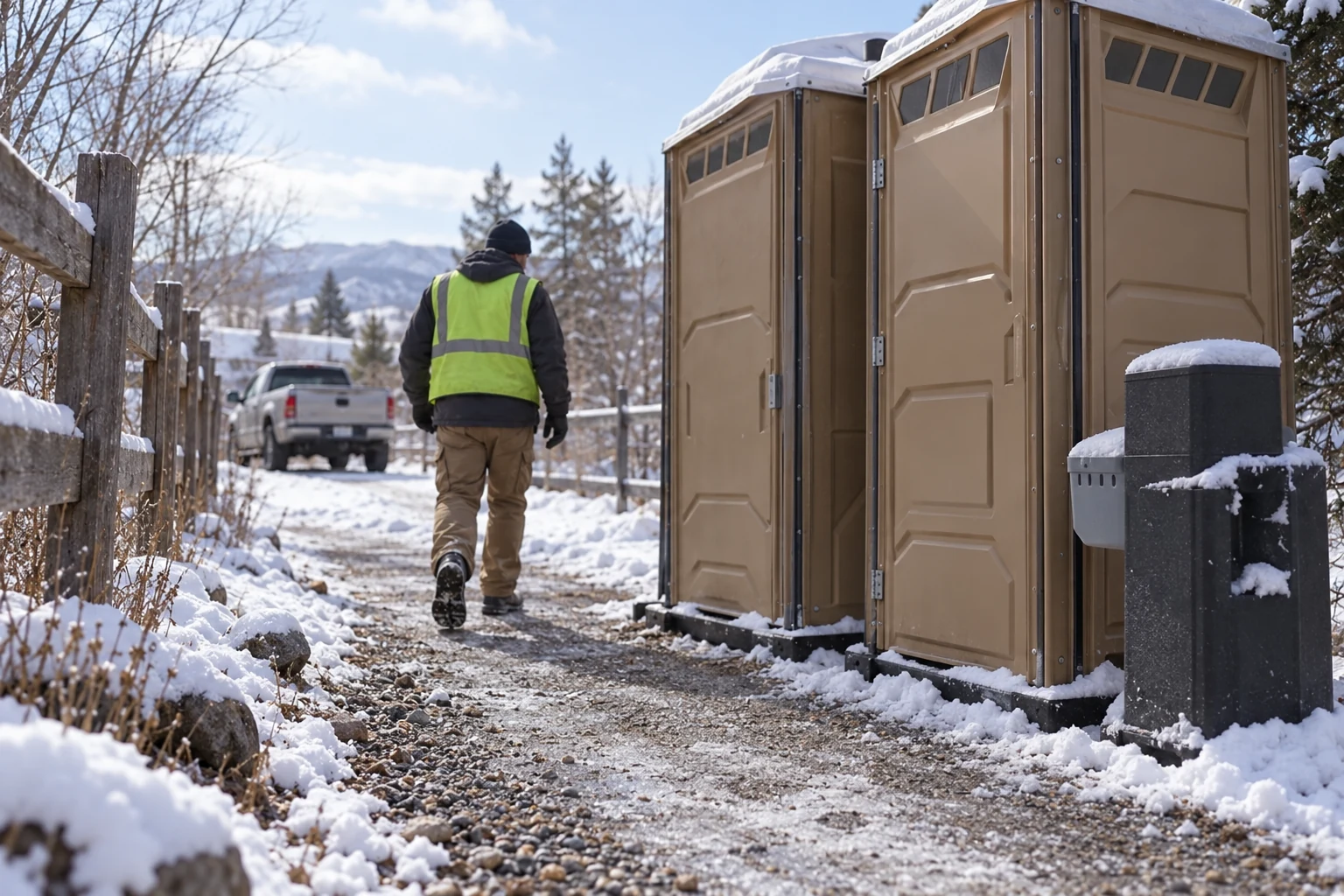
The service provider needs to assess the actual approach, stopping location and equipment access; a photograph of an open gate does not establish that a visit can be completed. Identify the route agreed with that provider and who maintains it as weather and site activities change. Snow clearance must not become a reason to pile material in front of the facility or at a previously agreed service location.
Coordinate the welfare route with the operating site. In a construction site office arrangement, deliveries, parked vehicles and changing work areas can affect both the service approach and the route used by staff. A relocation or altered entrance should trigger another access discussion. Keep an updated location record so a replacement driver is not sent to an obsolete stopping point.
Allocate the decision when conditions are unsuitable. The site can report conditions and undertake its agreed preparations, while the provider must make its own operational assessment. Do not pressure a driver to complete a visit because a calendar says it is due. A contact route and contingency are more useful than an unsupported assurance that snow will never interrupt collection.
Record the service that was completed, not only the visit
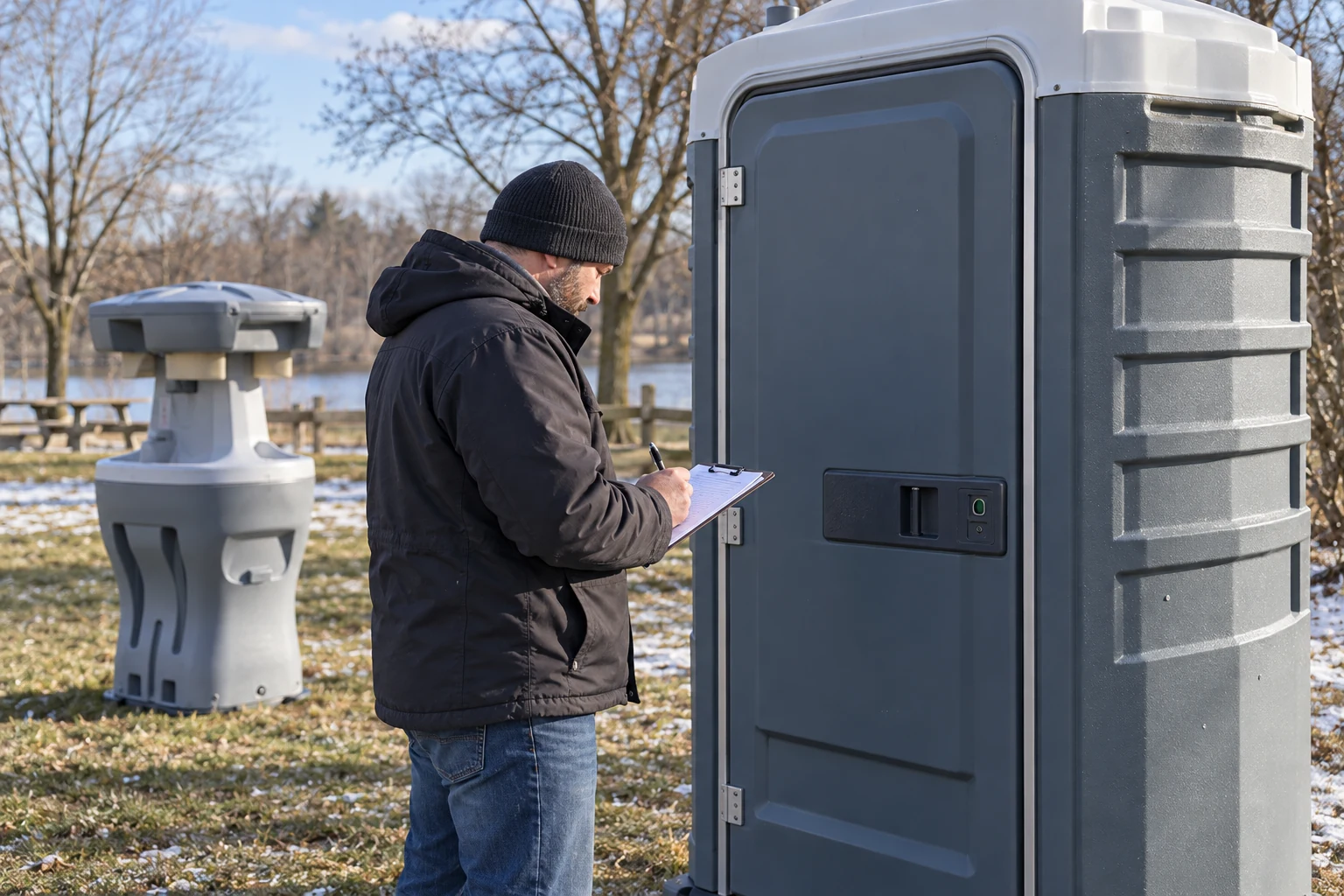
A visit is an event; completed service is a set of outcomes. Specify what the provider reports after attending, including tasks that could not be completed. This prevents “driver attended” from being interpreted as evidence that every toilet, washing function and consumable was restored. The site should know which exceptions need its action and which remain with the provider.
HSE describes weekly chemical-toilet servicing as a usual hire-contract pattern, with more frequent service or additional units potentially needed depending on use. That is not a universal winter interval. Agree the actual service scope and review triggers with the provider, accounting for occupancy and observed conditions. Do not use an unchanged weekly booking as evidence of remaining capacity after an interruption.
| Record item | What to state | What it does not prove |
|---|---|---|
| Attendance | Facility identifiers, date and visit result | All contracted tasks were completed |
| Collection task | Completed task or actual restriction | Washing or supply functions are available |
| Cleaning and consumables | Actual work and outstanding items | The next shift’s conditions will remain unchanged |
| Exceptions | Responsible party and agreed follow-up | A new attendance time is guaranteed |
Identify partly serviced facilities individually
If several units share a booking, tie the result to each identifier. A hypothetical visit might restore two facilities while leaving another unavailable; reporting the whole location as serviced would hide that difference. Record the restricted facility and communicate the available alternative. Do not infer remaining usable capacity from the fraction of the booking that was completed.
A change of service provider also needs a handover. Give the incoming provider the actual configuration and current restrictions, then confirm its accepted work and access arrangements. Do not treat the former provider’s winter proposal as the incoming team’s procedure. Keep the previous service result available so the new booking starts from a known condition rather than an assumed full reset.
Give a missed visit an operational response
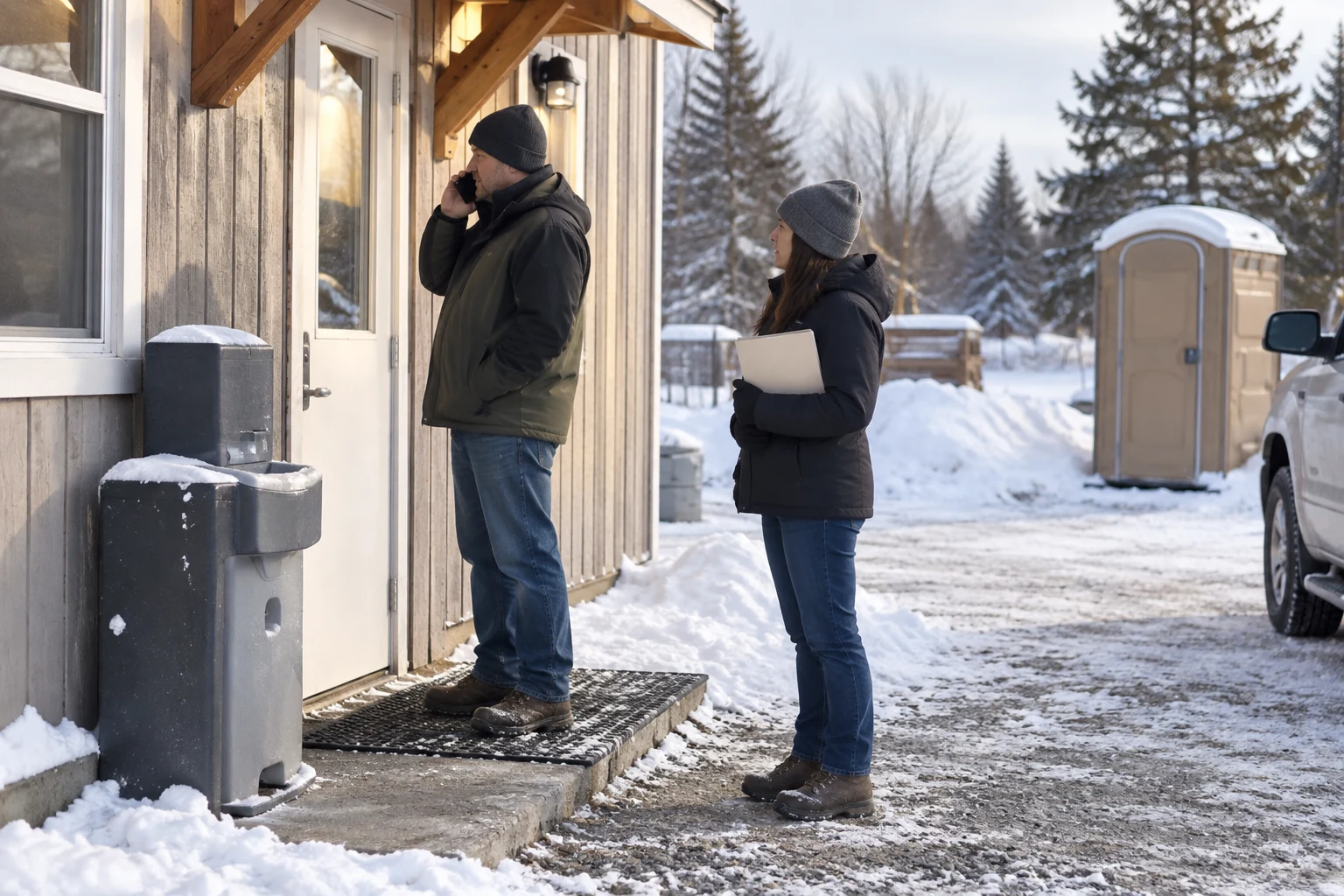
In its account dated 3 November 2021, PortaPros describes communicating and rescheduling service when winter roads are unsafe. This is a named provider’s historical account, not a current universal policy or a PQSE service commitment. Its useful lesson for procurement is to make the communication and alternative provision explicit before an interruption occurs.
Agree who receives a cancellation, who reviews current facilities and who decides the available alternative. An expected later visit is not present service. The review should consider the actual usable facilities and occupancy, rather than assume that an extra day or shift is acceptable. If provision is inadequate, escalate the operating decision to the responsible site manager.
Remote mining camp accommodation needs particular attention to the dependency on access and waste transfer. Ask what alternatives are realistically available at that location, who can authorise them and what lead times remain uncertain. A replacement arrangement only helps if it can reach the site and meet the actual need. Keep proposed options distinct from confirmed availability.
Track service access and facility condition separately during the interruption. Roads may become passable while a particular unit remains unavailable; conversely, facilities may still work while collection cannot reach them. Resolving one condition does not close the other. Ask for an updated attendance decision and an updated welfare decision, then record how the two affect the current operating plan.
Separate storage from continued use
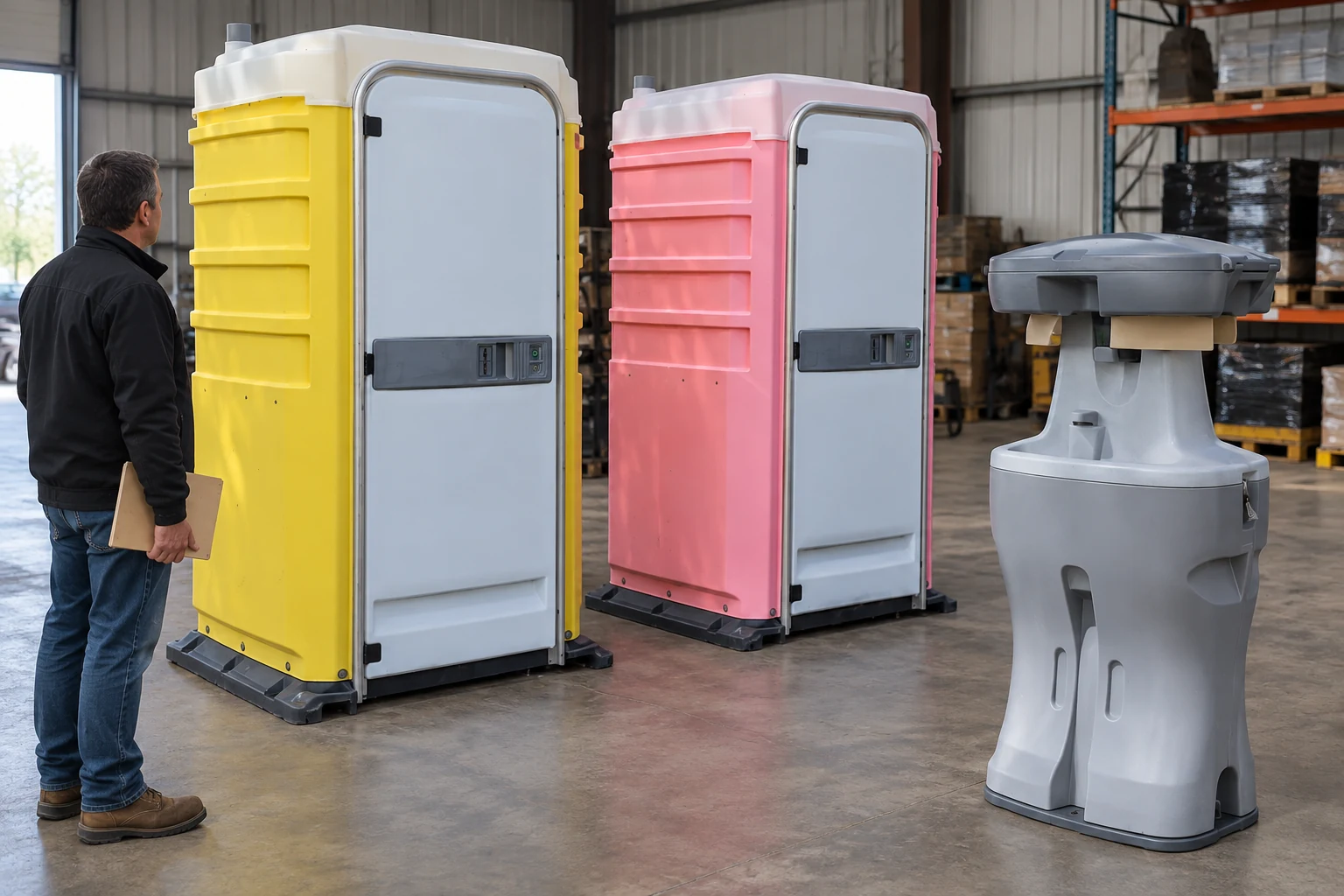
Taking a facility out of service changes its purpose. The plan should identify the shutdown boundary, the party performing the applicable preparation and how the unit is marked as unavailable. Storage does not provide welfare for remaining personnel. Check whether cleaners, security staff or maintenance workers still need another facility after the main workforce leaves.
Obtain the selected model’s storage instructions instead of inventing a universal drain sequence. Record what preparation was completed and what remains required before restoration. If equipment moves to another site, send the state record with it. Otherwise, the receiving team may interpret an ordinary exterior as evidence that the unit is ready to use, although its services have deliberately been withdrawn.
A partial shutdown needs the same clarity. Removing one group of facilities while retaining another can change the access, service booking and washing provision for those still occupied. Identify the boundary at facility level rather than label the whole camp “closed.” Ask the provider to confirm any continuing dependencies for retained equipment and record who maintains them during the reduced operation.
| State | Decision to document | Handover requirement |
|---|---|---|
| Continued use | Required welfare functions and supporting service | Confirmed scope, contacts and exception response |
| Standby | Whether it is presently usable or needs preparation | Readiness conditions before directing users to it |
| Withdrawn or stored | Applicable model preparation and unavailable status | Completed work and outstanding restoration conditions |
| Restoration | Checks needed for the actual installation | Documented release and continuing responsibilities |
Release the facility after checking the actual condition
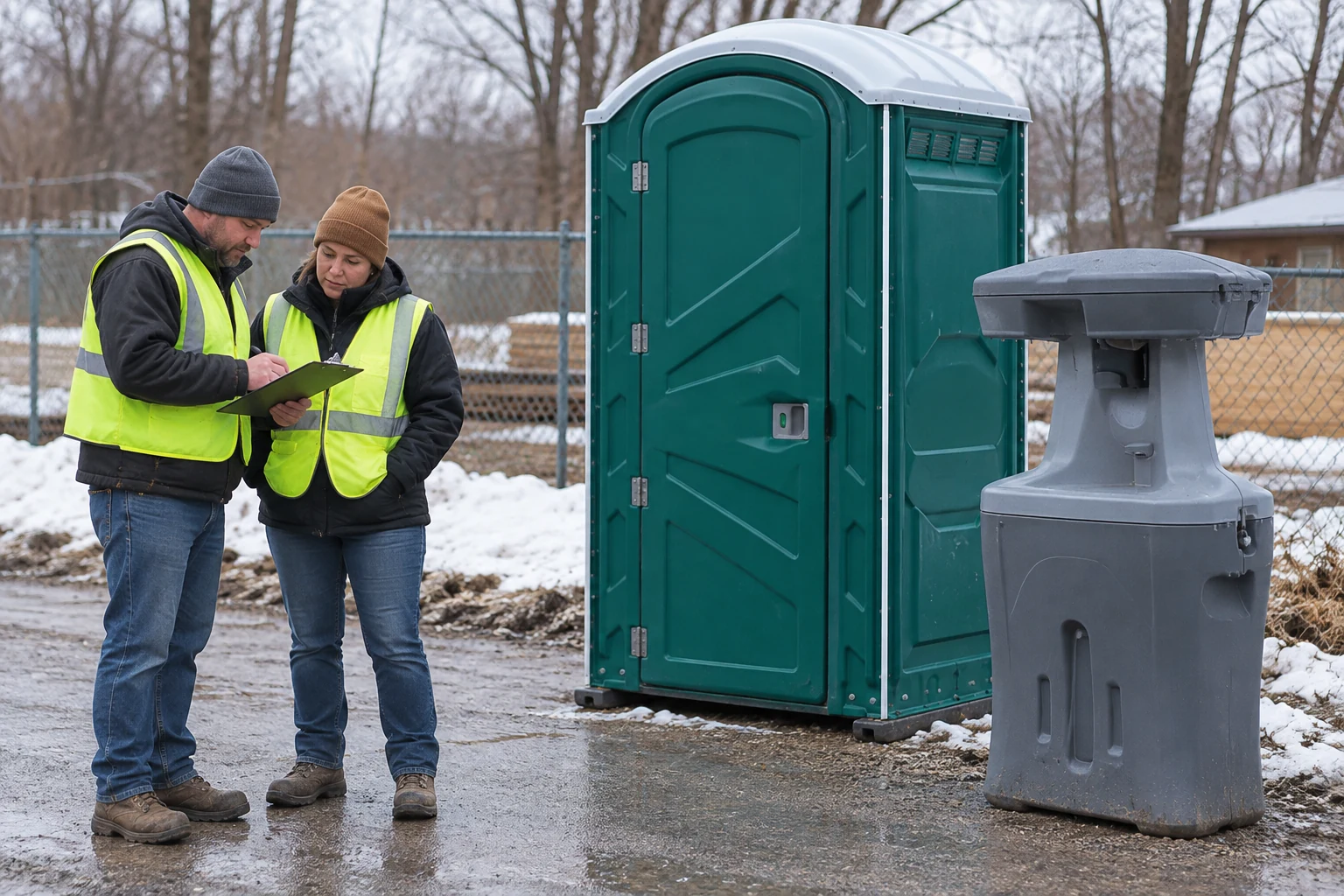
A warmer forecast is not a completed return-to-use check. Have the responsible provider review the equipment according to its applicable instructions, addressing any recorded damage, withdrawal or restriction. The site should confirm the functions it is accepting, the available washing and access, and the continuing collection arrangement. Do not direct users back solely because a previous cancellation has disappeared from the calendar.
Keep the review specific to the facility. If one component has been restored while another remains restricted, record that distinction and the consequence for use. Replacement equipment also needs its own configuration and handover; the removed unit’s approval does not transfer automatically. This is especially relevant when a temporary alternative has different water or waste arrangements from the original facility.
Carry the decision into the next shift
Close the communication loop with the people who control occupancy and cleaning. State which facilities are available, what remains outstanding and who is monitoring the next change. A supplier’s completed technical task and the site’s decision to make a facility available are related but distinct records. Keeping both visible prevents a partial repair from becoming an assumed full reopening.
Questions buyers ask about winter toilet service
Does a treated tank establish that the whole facility is usable?
No. Confirm the selected tank arrangement and separately establish the required flushing, washing, access and waste-transfer functions. A treatment claim retains its product and setup conditions. It does not prove that independent supplies or site connections are protected, or that the facility meets the actual users’ needs.
What should happen when the service provider cannot attend?
Use the agreed contact and exception procedure, review the provision that is actually usable and confirm an appropriate alternative. Record uncertainties about the next visit. Do not invent an acceptable extension from a standard booking interval or assume that an unconfirmed replacement will arrive in time.
What information supports a useful winter enquiry?
Provide facility identifiers and configurations, location, occupied shifts, site-service boundaries, expected weather, existing service scope and foreseeable access restrictions. Include the washing requirement and any intended shutdown. Ask for inclusions, exclusions, applicable documents and assigned responses; identify unresolved matters before making the arrangement an order commitment.
Sources and applicability
This guide uses supplier data as bounded external evidence and public guidance within its stated scope. The tables describing responsibilities are editorial planning aids, not measured performance or technical procedures. No PQSE temperature rating, chemical approval, customer case or uninterrupted-service guarantee is established by these sources.
- Satellite Industries FreezeGuard: original supplier pre-charge entries; undisclosed test and through-use conditions remain unresolved.
- National Weather Service wind-chill explanation: human exposure index and its distinction from equipment temperatures.
- HSE construction welfare guidance: washing and servicing context in Great Britain.
- OSHA Hazard Communication: applicable US workplace chemical documentation and training.
- PortaPros winter service account: dated external operational example, published in 2021.