Container house customization works best when a buyer’s operating requirements are translated into a coordinated, identifiable production design. Agree what stays standard, what changes, who reviews each interface and which revision is authorized for manufacture. A rendering, a finish sample and a production drawing answer different questions; none should silently replace the others.
Customization can help a building serve a particular team, site or commercial identity. The challenge is keeping the desired result connected to a buildable proposal as choices accumulate. A relocated window, revised bathroom or different equipment package may involve more than the item visible in the sales image.
This guide presents a buyer’s document and decision workflow. It is suitable for discussing a project with the supplier and appointed designers, but it does not establish engineering acceptance or a universal PQSE customization catalogue. Availability, technical requirements and commercial effects must be confirmed for the actual order.
Define the customization scope and decision owners
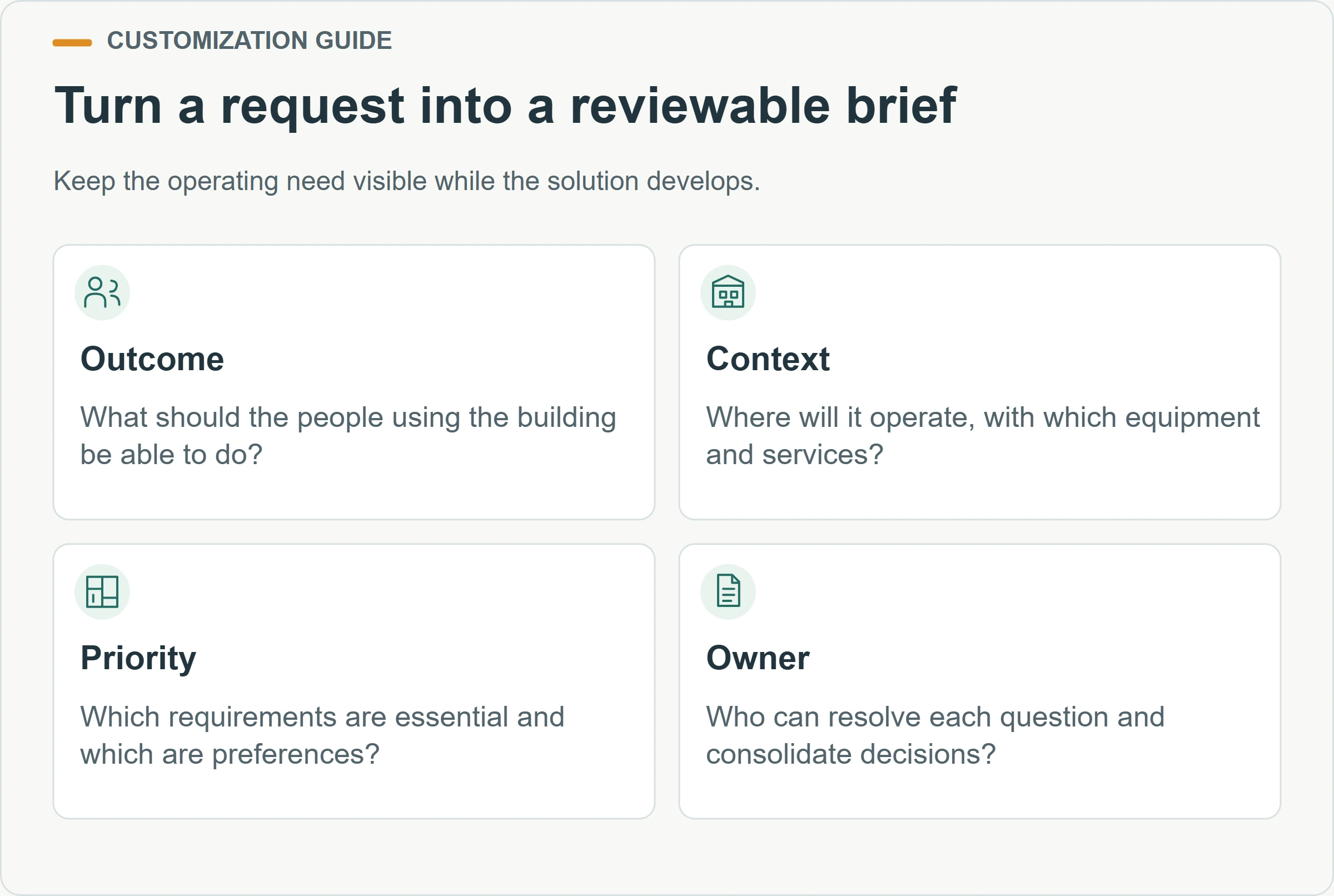
What should a customization brief contain?
Start with what the people using the building need to do. Identify intended use, location, duration, users, furniture, equipment, utilities and any relevant operating constraints. State which information is confirmed and which remains an assumption. A supplier can respond more accurately to a visible uncertainty than to a missing requirement discovered after production begins.
Separate an essential outcome from a preferred solution. An office manager may need a clear view of arriving deliveries; a particular window position is one possible response. Presenting the operational need lets the team consider alternatives when the preferred arrangement conflicts with furniture, services or the proposed building system.
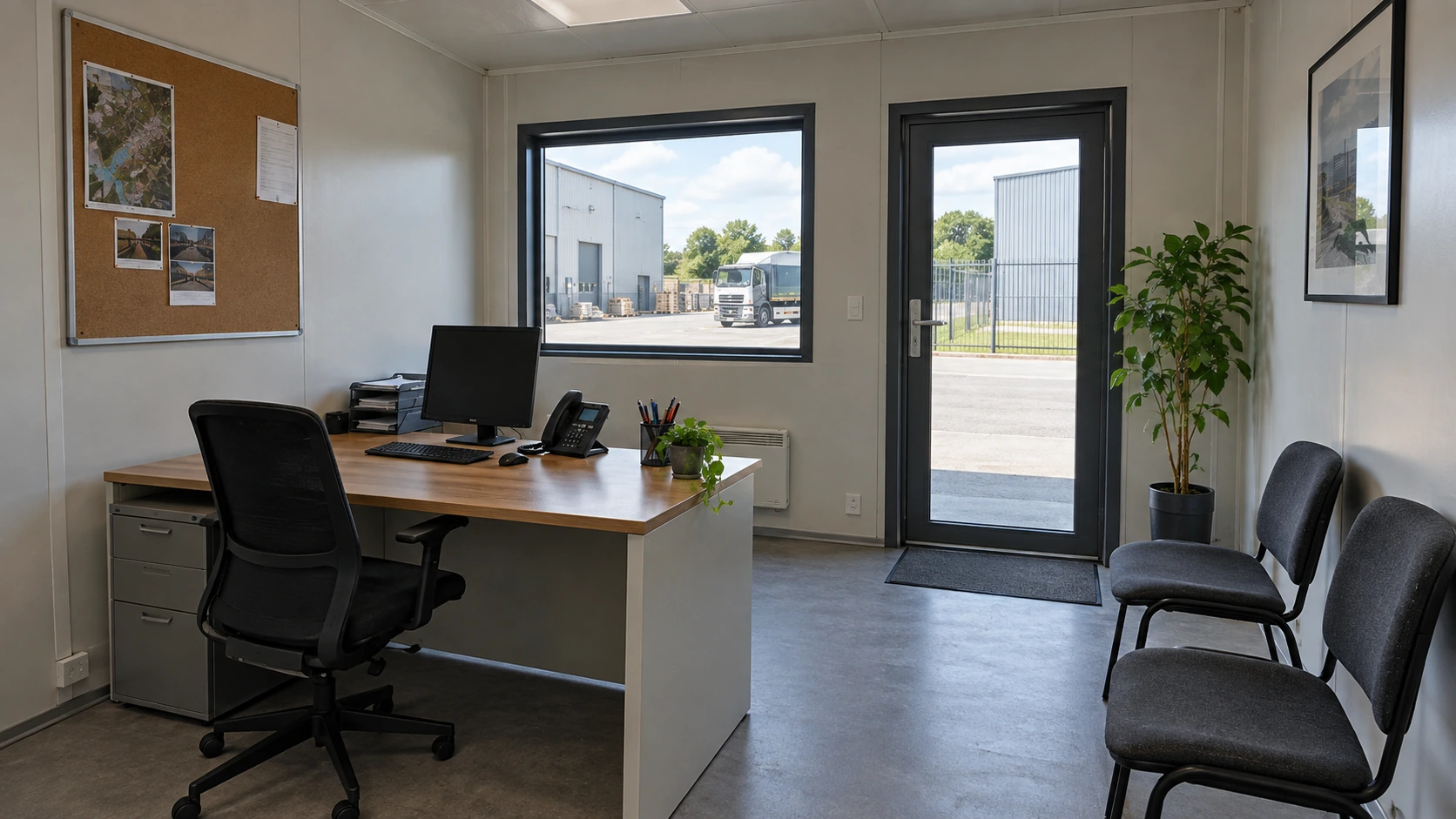
Attach a furnished sketch where possible. Mark the important working positions and relationships rather than sending an empty rectangle with a room label. Include equipment references and any destination requirements already identified by the project team. The sketch is an input for discussion, not a substitute for coordinated drawings or local professional review.
Give each requirement an owner who can answer questions. Facilities staff may own maintenance access, operations may own room use, and a brand representative may own finish choices. Nominate one person to consolidate comments so the supplier does not receive contradictory instructions from several conversations without a clear decision.
Which changes belong within a standard configuration?
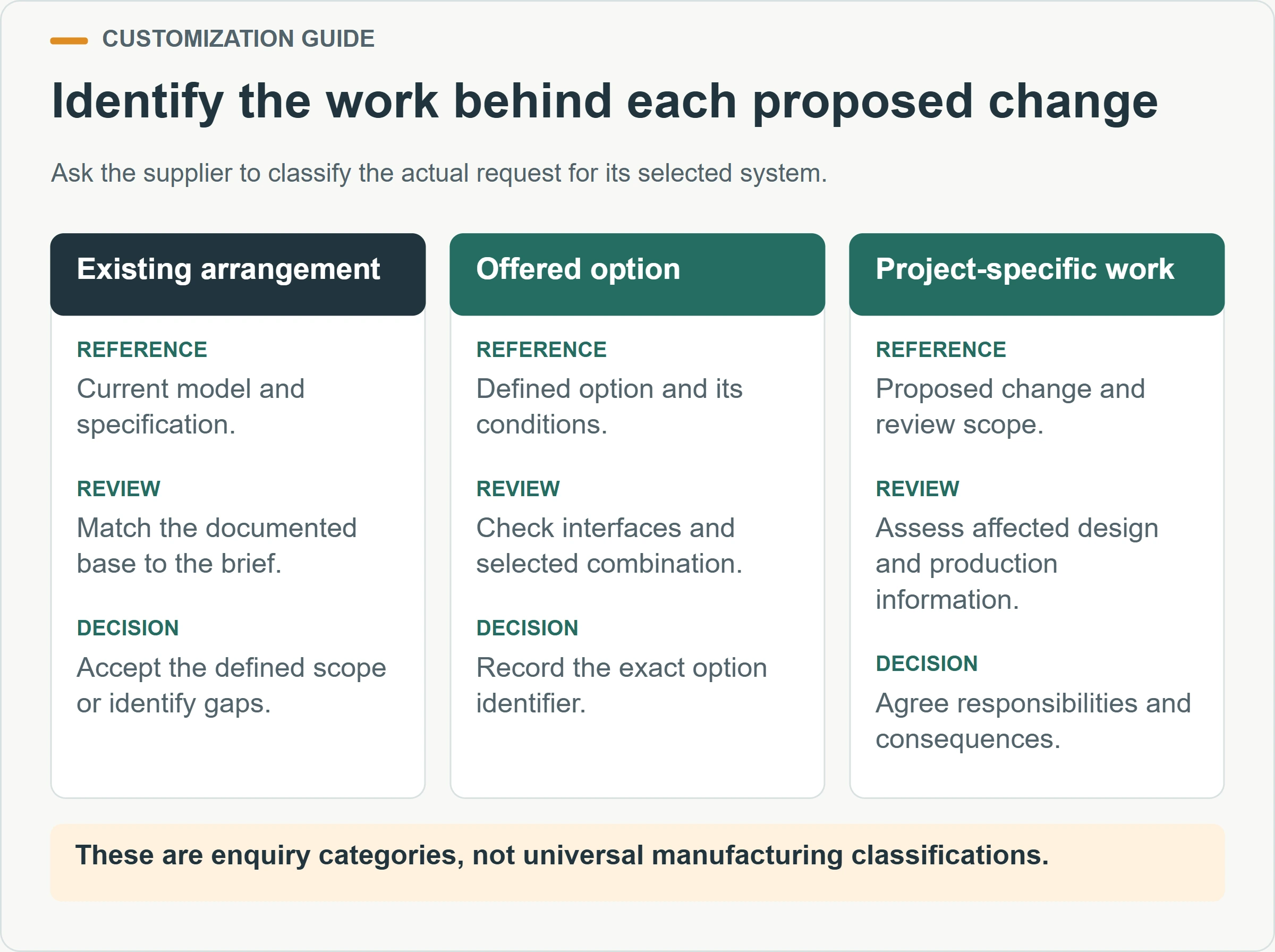
Ask the supplier to distinguish an existing standard arrangement, an offered configuration option and a change requiring additional design work. These are useful enquiry categories, not universal industry definitions. The same requested feature may fall into different categories for different product families, factories or destinations.
An offered finish option may already have a defined specification and procurement route. A different opening arrangement may need coordinated review of several drawings. A new combination of modules may require broader project design. The important question is what work and evidence are required for the particular change, rather than whether the brochure calls the product customizable.

| Enquiry category | What the buyer should establish | Useful confirmation |
|---|---|---|
| Existing arrangement | Does the documented base model meet the actual brief? | Model reference and current specification |
| Offered option | What choices are already defined for that system? | Option identifier, scope and applicable conditions |
| Project-specific change | What additional design and coordination are required? | Review scope, responsible parties and affected documents |
| Unresolved request | What information is missing before feasibility can be assessed? | Open question, owner and decision date |
Do not assume a small visual change has a small commercial effect. Equally, do not assume every variation requires a completely new building system. Request an explanation tied to the selected product. A useful response identifies the affected work, any remaining uncertainty and what the supplier needs to confirm the proposal.
How should OEM and ODM responsibilities be described?
OEM and ODM labels are used in manufacturing discussions, but the label alone is an incomplete project brief. Ask who provides the base product design, who develops project changes, who prepares production information and who manufactures the agreed scope. Then identify how the buyer’s appointed professionals and destination contractors participate.
For an order based on the buyer’s drawings, clarify whether the supplier is being asked to manufacture exactly that defined scope or also to develop and coordinate missing details. For a supplier-based design, clarify which options are established and which require further project work. Either arrangement still needs an explicit boundary between factory supply and destination responsibilities.
Branding should have its own clear scope. Identify logos, colours, labels, packaging and any customer-facing documents to be supplied, together with the references used for approval. Commercial agreements should address the parties’ rights and responsibilities; an article cannot determine ownership, permitted reuse or contractual liability from an OEM or ODM acronym.
Who is allowed to release a change?
Agree the decision route before several stakeholders begin commenting. A salesperson can collect a request, a technical reviewer can assess it, and an authorized customer representative can confirm the commercial choice. These actions are different. The project needs a record showing who completed each applicable step and which version resulted.
Avoid using a chat reaction or an isolated marked-up image as the only release record. Keep informal discussion available for context, but consolidate the final instruction into the agreed document system. If a comment remains ambiguous, identify it as open rather than guessing what the customer intended.
Approve changes before production release
What happens when a buyer asks to move an opening?
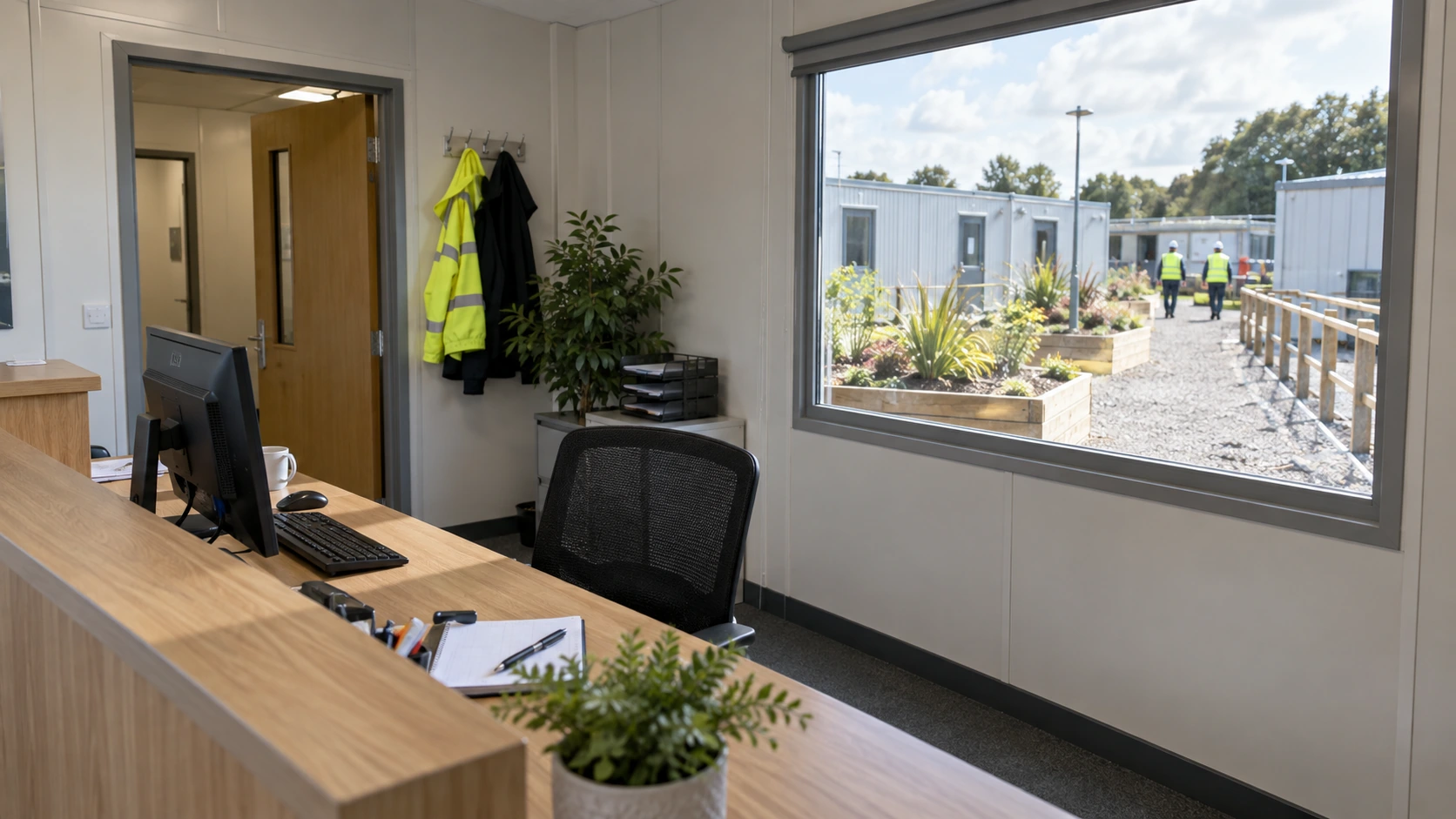
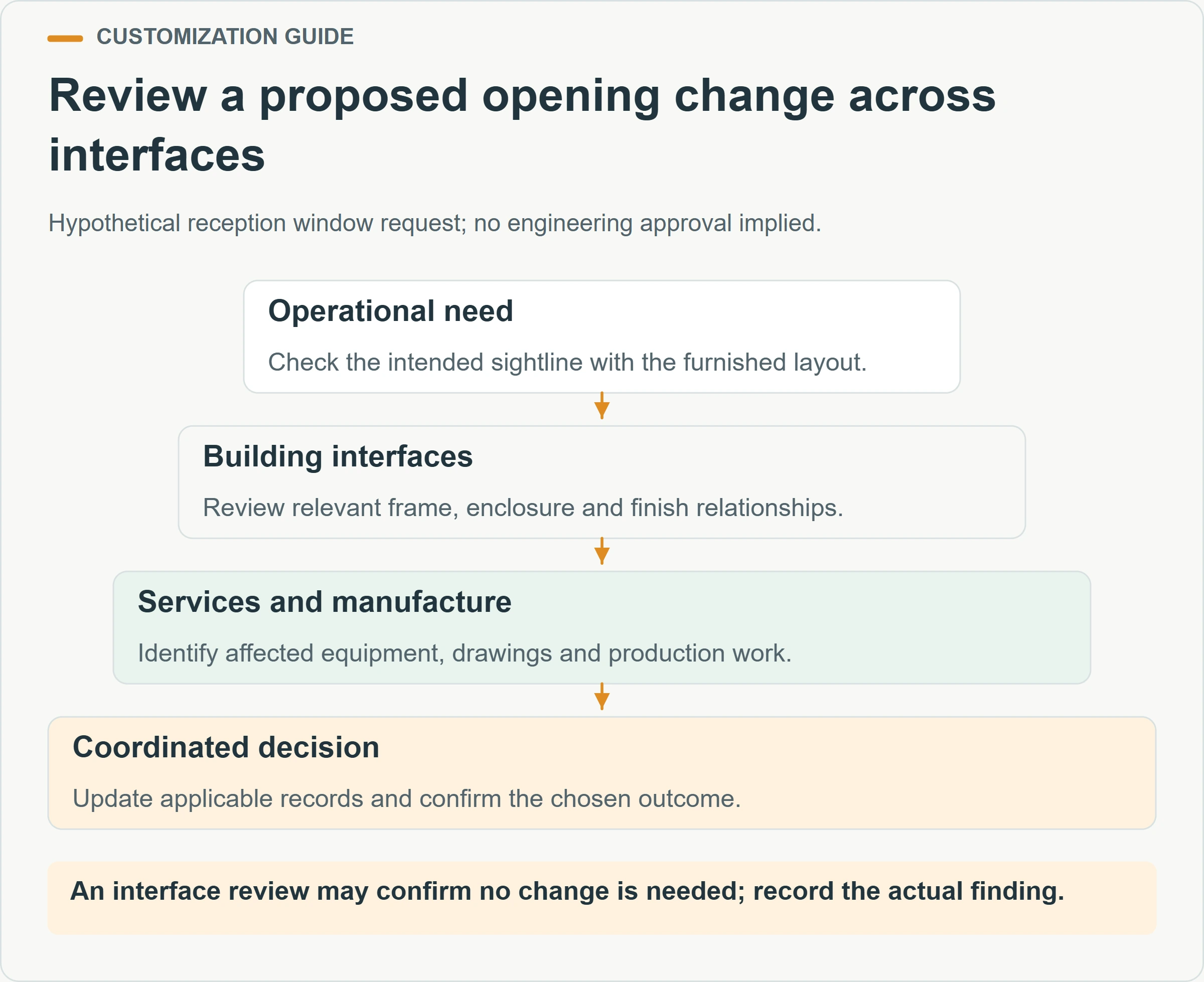
Consider a hypothetical office order in which the buyer asks to move a window toward a reception desk. The desired outcome is improved visibility. Begin by recording that outcome and the proposed location on the current furnished layout. Do not start by assuming that the request is approved or technically equivalent to the original arrangement.
The relevant reviewers can then identify possible effects on the frame, enclosure, adjacent finishes, electrical locations and manufacture. Some checks may confirm no change is required; others may identify revised details or an alternative position. The review should record that distinction rather than treating every possible interface as an automatic redesign.
After an option is selected, update the affected documents together. The plan, elevation, opening schedule and related specifications should describe the same selected arrangement. If a revised illustration is issued while the production drawing remains unchanged, the project has two competing descriptions of what is being purchased.
Compare the updated proposal with the original operational need. Does the new position provide the intended view when the actual desk and equipment are present? Has another important requirement been compromised? This final functional check keeps the process focused on the buyer’s work rather than treating a completed drawing revision as the only measure of success.
How should finishes and samples be approved?
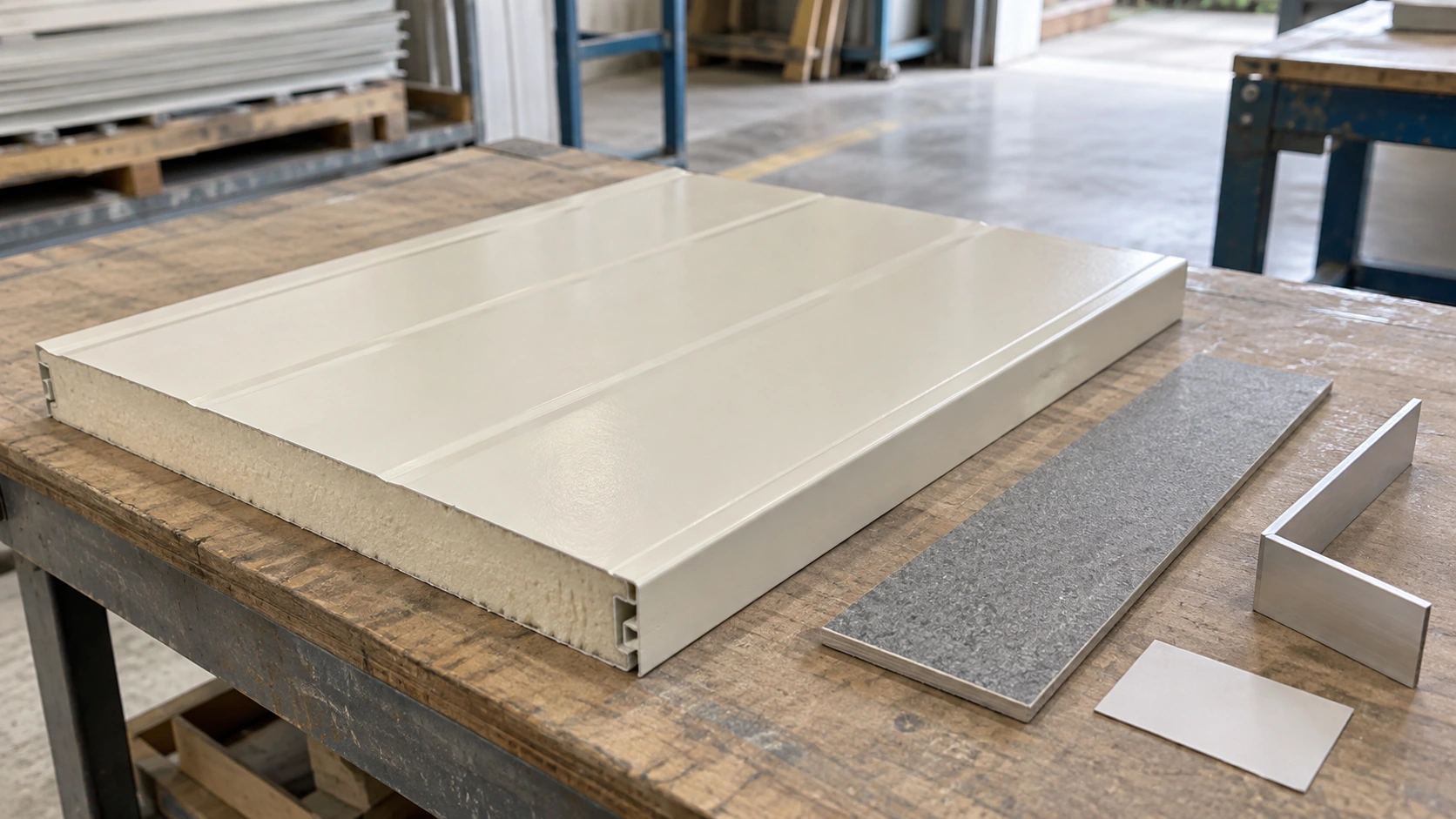
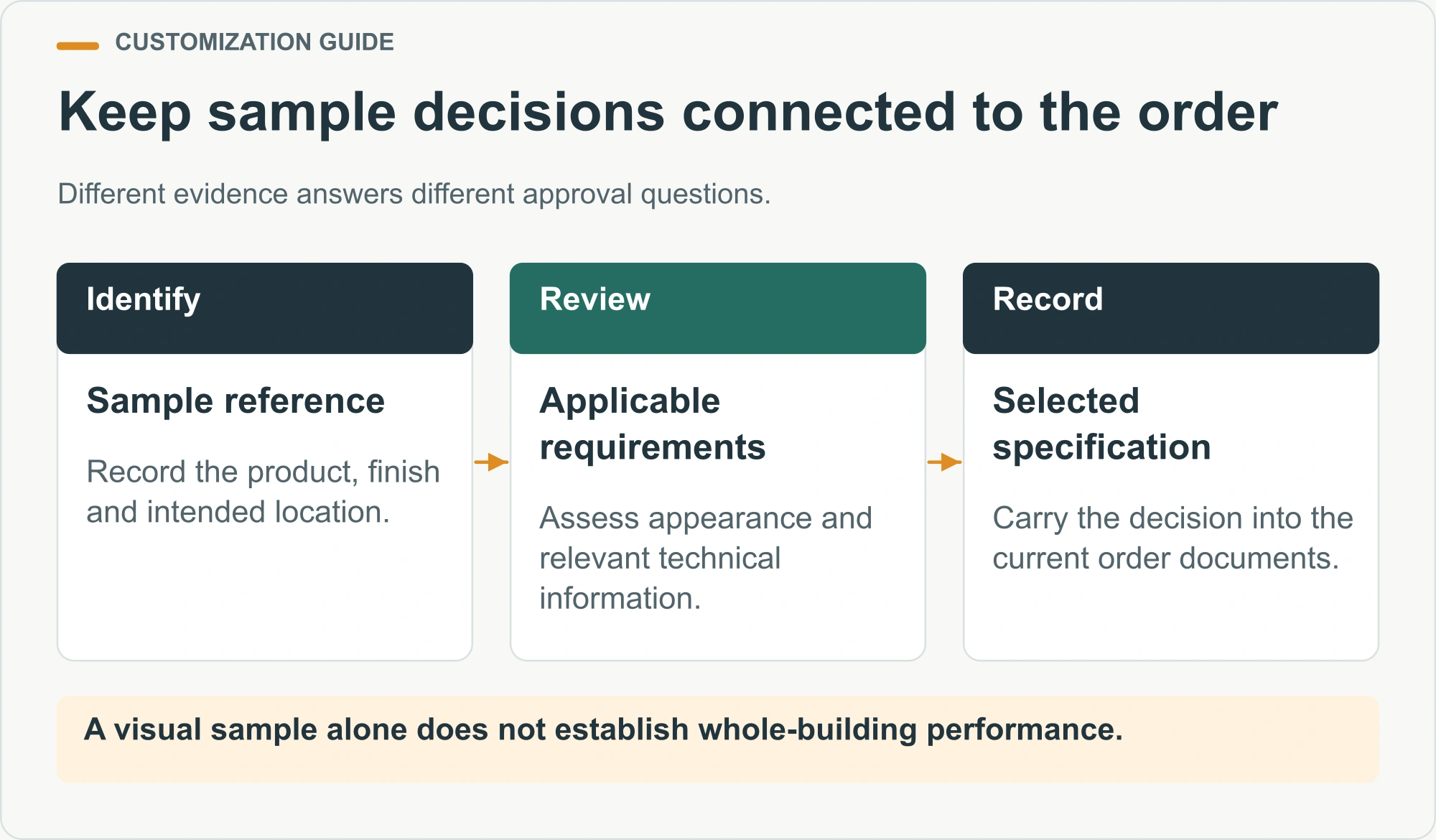
Identify each sample by product reference, finish, colour and the part of the building where it applies. A photograph on a screen can support discussion, but it should not be the only reference when appearance matters. Ask how the proposed sample relates to the actual ordered material and what variation or substitution process needs to be agreed.
Keep appearance, technical requirements and maintenance information connected. A finish selected for a public reception area may have different use conditions from a concealed service location. The responsible team should review the relevant material information for the actual application. A visually attractive sample does not by itself demonstrate every performance requirement of the completed assembly.
| Review item | What it helps establish | What it does not establish alone |
|---|---|---|
| Finish sample | Selected appearance and identifiable material reference | Whole-building performance or every installation detail |
| Furnished rendering | Intended visual arrangement and relationships | Exact production dimensions or acceptance of hidden interfaces |
| Technical data | Stated properties and conditions for the identified product | Suitability of every different assembly or destination |
| Prototype or mock-up | Agreed aspects of a representative arrangement | Automatic acceptance of unexamined production changes |
Record sample decisions alongside the specification revision. If a preferred item becomes unavailable, the proposed replacement needs a traceable comparison and an authorized decision. A similar colour name is not enough to establish that all relevant characteristics are equivalent. Make the effect on appearance, technical review and delivery visible before accepting a substitution.
When is a mock-up useful?
A mock-up is useful when it answers a specific unresolved question about the proposed arrangement. Define what will be examined, who will attend and how findings will be recorded. Depending on the scope, the review may concern furniture relationships, finish transitions, service access or the coordination of repeated room elements.
In Modular by Design, Kris Droszcz of Rebel DFMA discusses early manufacturing coordination and the value of using mock-ups for technical questions as well as appearance. That industry perspective supports planning the purpose of a review in advance. It does not mean every small order needs the same prototype programme or that a visual sample proves production readiness.
What should a design freeze actually record?
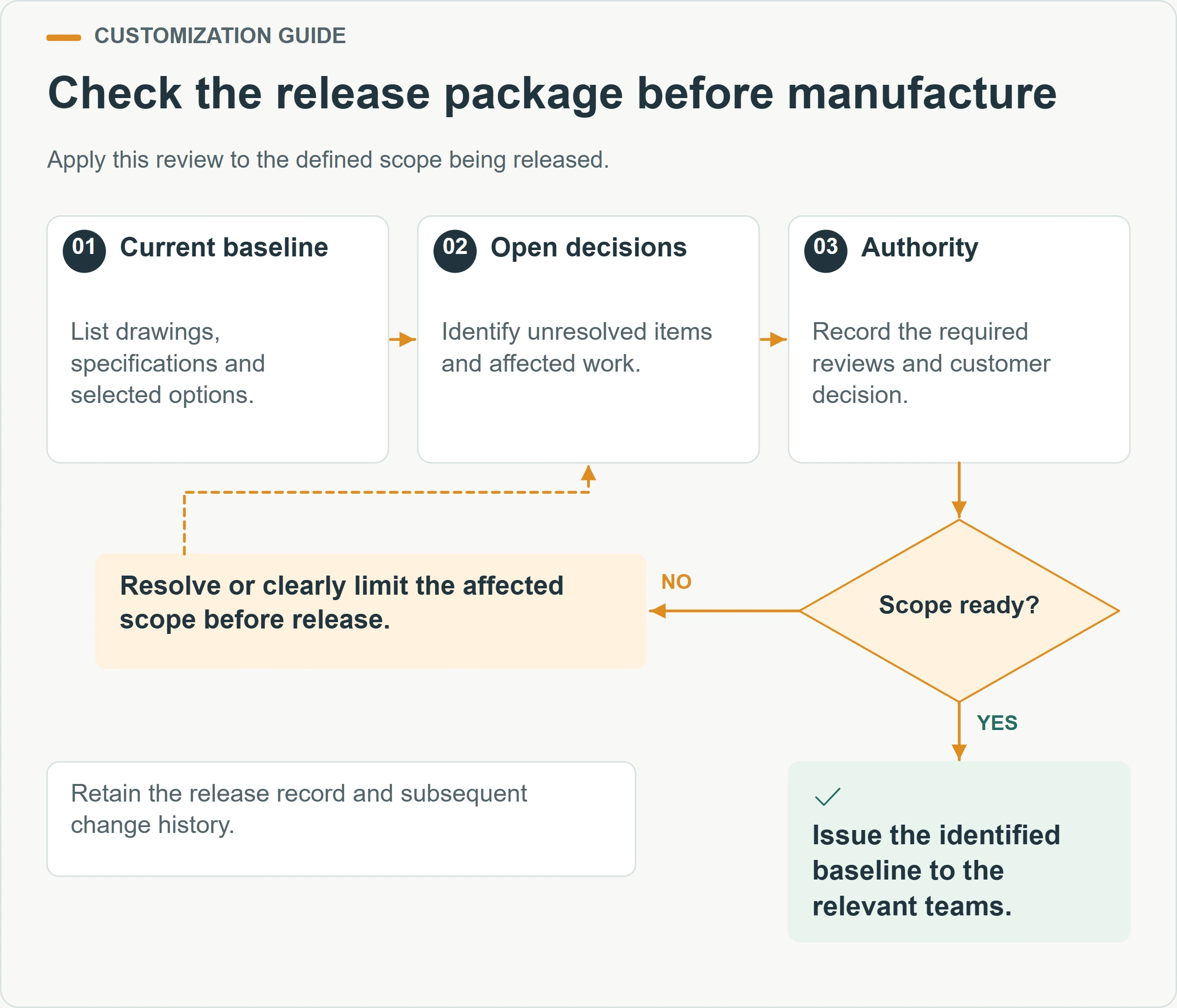
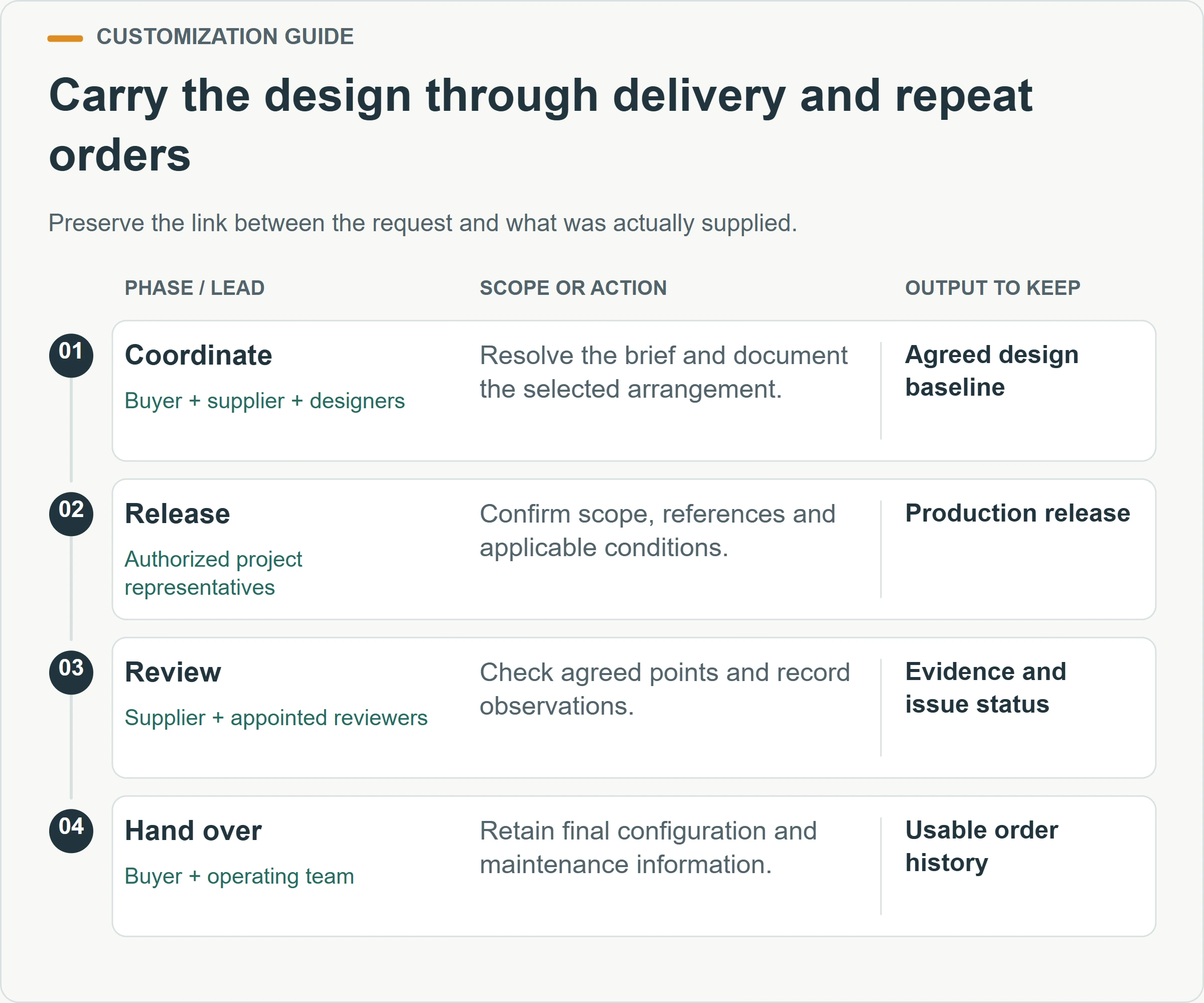
A design freeze should identify the agreed baseline for a defined scope and the process for handling later changes. It is more useful than a vague statement that drawings are approved. List the current documents, unresolved items, authorized decisions and any conditions governing release. Different scopes may have different release points, but those boundaries must be clear.
The Modular Building Institute quotes architect Nick Gomez describing how “up-front decision-making and design freezes are critical” to modular construction processes. His comments relate design decisions to factory scheduling and affected drawings. For a buyer, the practical lesson is to resolve decisions while the team can still coordinate their effects deliberately.
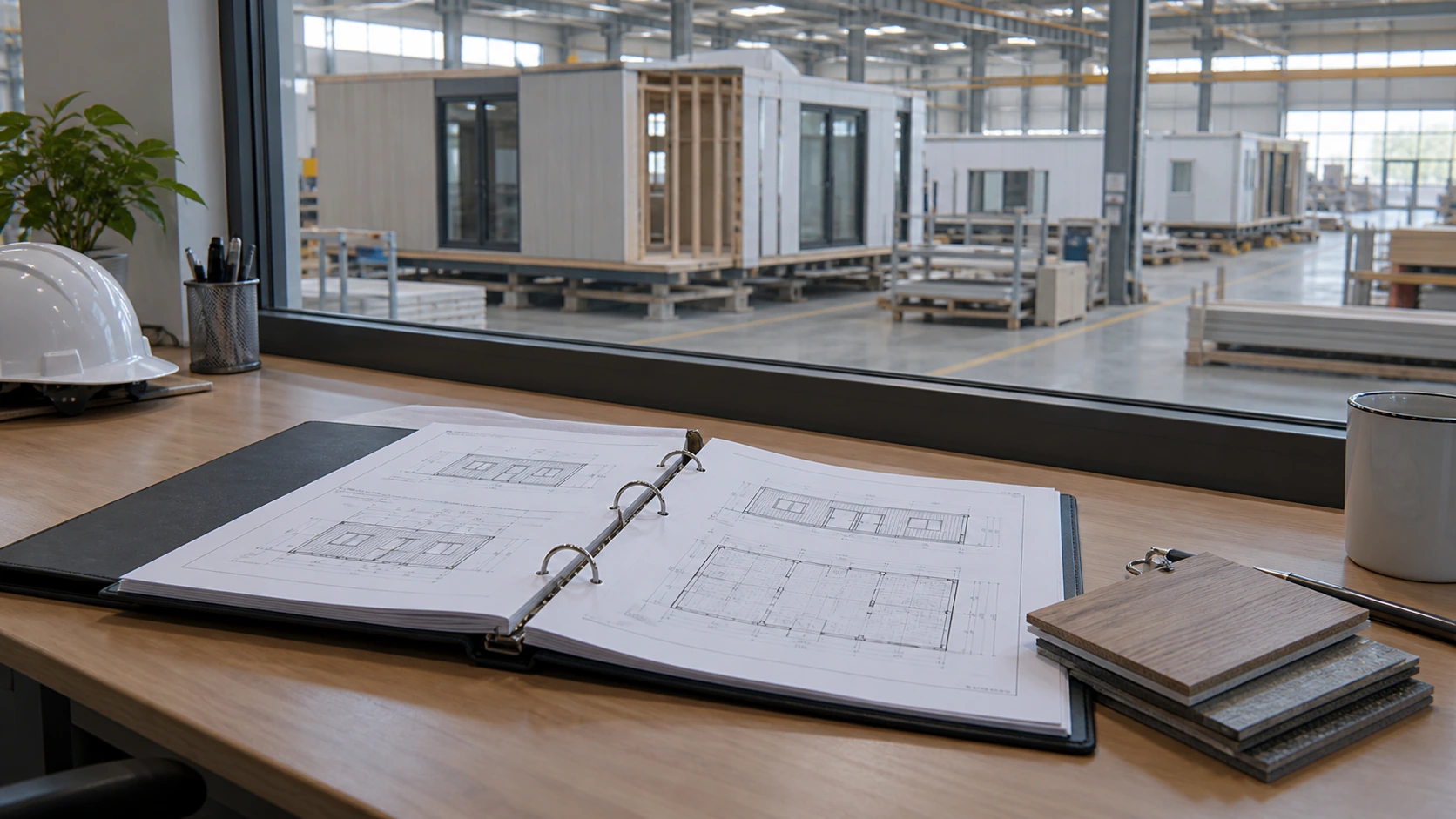
Ask which documents the factory will actually use. The list may include production drawings, a component schedule, finish references and project-specific instructions, depending on the order. Check that their identifiers agree with the customer-facing proposal. A release package should make the current version easy to identify without searching through the entire email history.
Keep unresolved items visible even if another part of the order proceeds. State whether an open item prevents release of the affected work, what information is missing and who owns the decision. Do not let a broad approval conceal an assumption about equipment, an interface or a destination requirement that has not been reviewed.
How should changes after release be handled?
A late request should enter the agreed change process with a clear reason and reference to the current baseline. Ask which work has already been ordered, manufactured or completed and which documents would need revision. The assessment should distinguish the proposed benefit from its technical, commercial and scheduling consequences.
Request a written response before assuming the revised instruction can be absorbed into the existing order. The response may accept the change, propose an alternative, identify additional review or explain why the current production state limits the options. The actual outcome depends on the project; no general guide can promise a free change or a fixed delay.
| Change record field | Example of useful information |
|---|---|
| Request and reason | Move the proposed opening to improve the reception sightline |
| Baseline | Current drawing and specification identifiers |
| Review scope | Interfaces and documents requiring assessment |
| Consequences | Confirmed scope, cost and schedule effects, plus unresolved questions |
| Decision | Authorized acceptance, rejection or selected alternative |
| Implementation | Revised identifiers and confirmation that affected teams received them |
Withdraw superseded working copies through the agreed document procedure. Retain the history, but make obsolete instructions visibly distinct from current production information. A clear change log helps the buyer understand why the finished building differs from an early concept and helps the factory avoid implementing incompatible versions of the same request.
Verify delivery and prepare the next order
How do you check that the delivered scope matches the design?
Agree the review points before production and identify the evidence expected for each. The buyer should know which aspects can be reviewed through drawings or records, which require representative samples and which depend on completed work. Inspection arrangements should be proportionate to the scope and should not be invented after shipment as an undefined demand.
Use the released specification to organize checks. Record observations by room, component or interface, with photographs and document references where useful. A general statement that quality looks good is difficult to compare with an agreed requirement. A specific observation can be assessed, assigned and closed without losing its connection to the order.
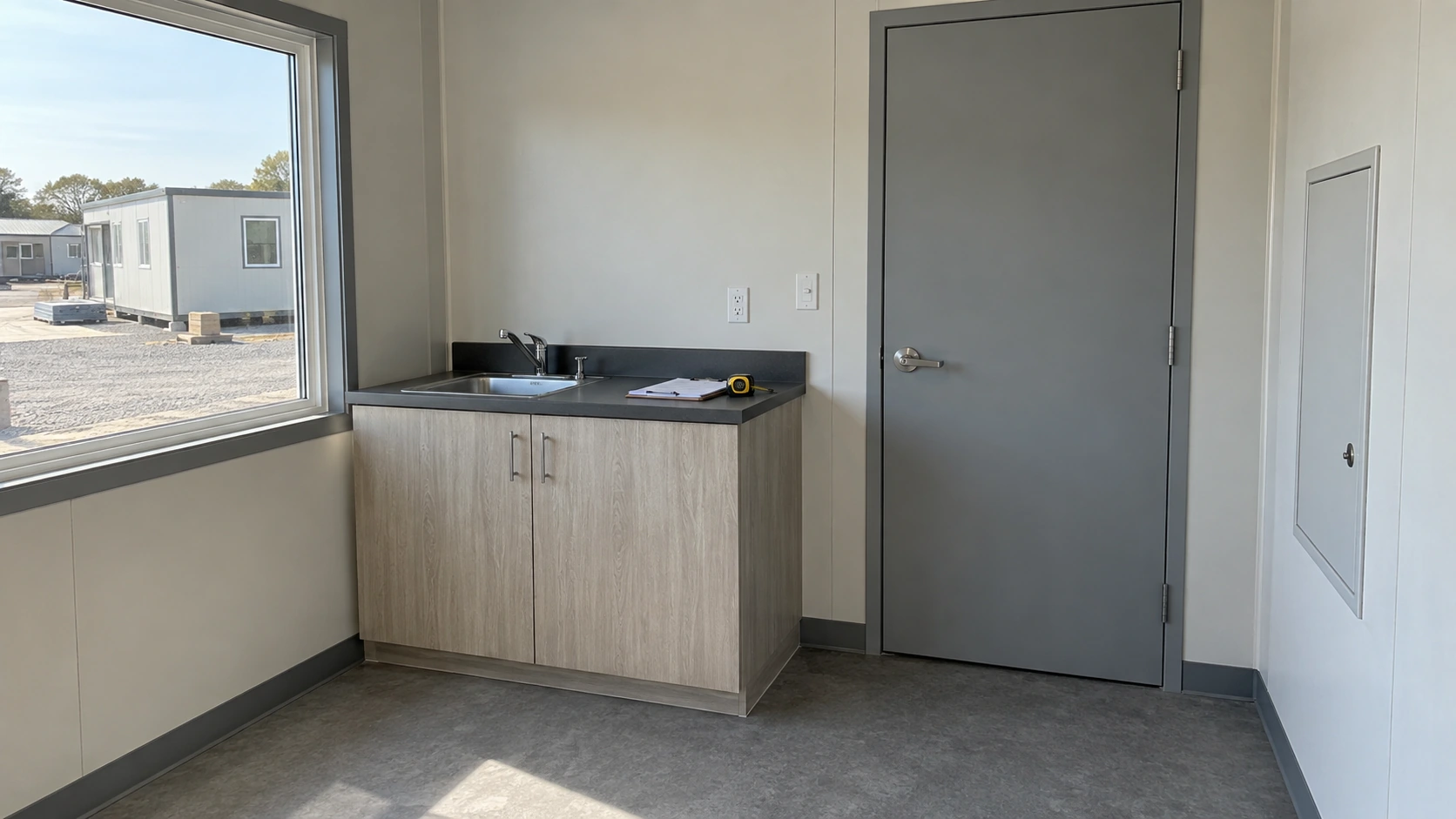
At handover, retain the final agreed configuration, relevant operating information and a record of accepted changes. Identify any remaining site work or open action. The future operator needs to know what was installed, which items differ from the base model and where to find the appropriate information when maintenance or replacement is required.
For repeat orders, review the previous configuration deliberately instead of copying its name alone. Confirm whether the site, use, destination requirements or available components have changed. A controlled repeat design can preserve useful consistency while still exposing the differences that need attention in the new project.
Consider a buyer ordering the same reception module for several locations. The visual identity may remain consistent while entrance orientation, utility connection positions and the local installation scope differ. Keep a common base reference and a separate location-specific schedule so those differences do not disappear inside a repeated model name. Before each release, reconcile the schedule with the drawings for that destination. This approach also makes later service enquiries easier: the operator can identify the relevant location and configuration without assuming that a replacement part or drawing from another site is automatically applicable.
Frequently asked questions about container house customization
Can every part of a container house be customized?
Availability depends on the product system, project requirements and supplier’s agreed scope. Ask which options are already defined and which require additional development. An unrestricted promise of customization is less useful than a proposal showing feasibility, responsibilities, evidence and the effects of the requested changes.
Is a rendering enough to approve production?
A rendering can help communicate appearance and room relationships. It should be coordinated with the applicable drawings, specifications and other release documents. Identify what the rendering is intended to approve and avoid treating details omitted from it as automatically included or technically resolved.
Does a design freeze mean changes are impossible?
It establishes a baseline and a controlled way to evaluate later requests. Whether a change can be accepted depends on the production state and its consequences. Record the assessment and authorized decision, then update the affected information before the changed work proceeds.
What should I send with a customization enquiry?
Send the intended use, location, furnished layout, equipment needs, important finish references and available destination requirements. Mark priorities and unresolved questions. This gives the team a practical starting point for distinguishing the base product from the project-specific work still needed.
Prepare a brief that can become a production decision
Review PQSE’s container house range to identify a starting product family, then describe the outcome your project needs. Include the people who will operate and maintain the space in the review. Their requirements are easiest to coordinate when they are visible before the design is released.
Discuss your customization brief with PQSE