A modular classroom should be furnished with desk and chair pairs chosen for the learners who will use them, then checked in the room arrangement the school intends to operate. Buying a lower chair alone does not establish that it works with an existing table. Start with a representative furniture sample, identify its dimensions and adjustment method, and let the responsible school team observe a normal learning task before placing the full order.
This is a procurement problem with several owners. The room supplier may deliver the building, another company may supply the furniture, and teaching staff will manage the daily arrangement. The brief must connect those responsibilities. This guide concerns a purpose-built modular classroom and its loose furniture. It is a research-based decision guide, not a medical assessment, a universal furniture standard or confirmation of a school's permitted occupancy. The dimensions below retain the scope of their original source.
Describe the learners before counting identical places
An empty room can make identical furniture look like the simplest choice. Ask the school which groups will actually use it, whether they share the room at different times, and who can identify learners needing a different arrangement. That conversation belongs before the quantity schedule is frozen.
Separate the initial class from the intended service life. A room used by a single group this term may later host younger pupils, an after-school activity or adult meetings. The buyer does not need to predict every future use, but should identify the changes already contemplated. Otherwise an inexpensive uniform order may make the next assignment unnecessarily difficult. Record which uses are included and which remain outside the current furniture brief.
Use the school's normal, appropriate process to describe the group. Procurement staff need an understandable size distribution and relevant requirements, not a public list of named children's measurements. Keep personal information with the school and share only what the supplier needs to propose suitable options. Where individual support requirements are involved, the responsible school professional should define the arrangement rather than asking a furniture seller to infer it from an age label.
A room count is also distinct from a furniture count. Spare seats, teacher positions and specialist places should be named separately so they cannot quietly consume the planned student allocation. When comparing flat-pack classroom modules with another construction approach, use the same agreed teaching brief. A building-format change does not automatically settle the size, ownership or suitability of the desks inside it.
Treat the chair and working surface as a pair
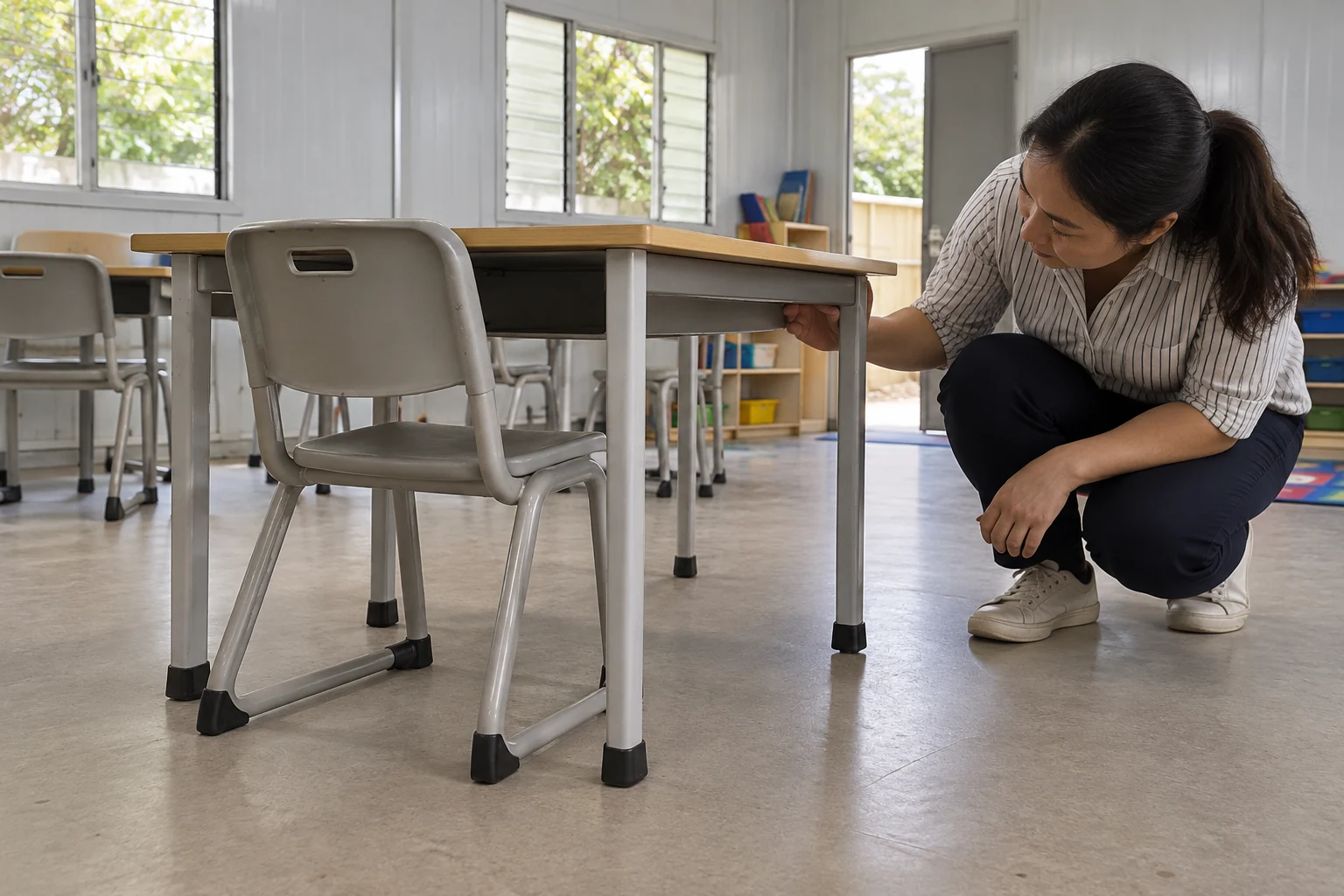
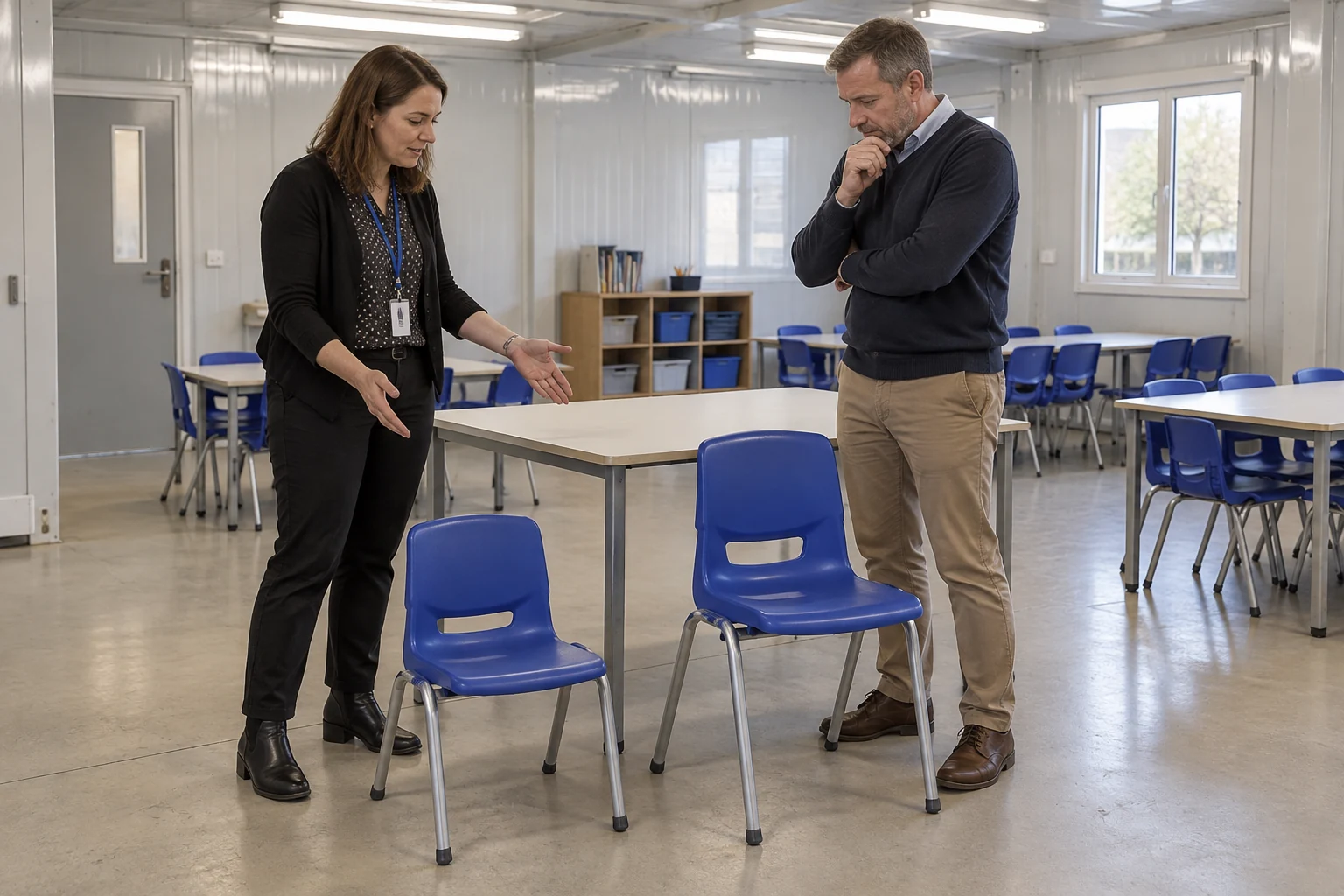
Place the proposed chair under the actual sample table. Look at the underside, not only the top height printed in a listing. A frame, drawer or apron can occupy space that a simple height number does not describe. The sample should represent the furniture that will be delivered.
The Hong Kong Operation Manual for Pre-primary Institutions, section 2.1.3, discusses back support, feet resting comfortably on the floor, knee clearance and a table low enough for comfortable work. Appendix 4 supplies the suggested average dimensions transcribed below. These are references for that pre-primary context, not universal acceptance limits, a medical prescription or PQSE furniture specifications.
Do not combine a chair from one illustrated guide with a table from another without checking the resulting pair. Even where two tops have the same advertised height, the supporting frame can differ. Ask the actual furniture supplier to identify the compatible chair and table models, their adjustment ranges where relevant, and the information needed to confirm their use for this group. Mark a substitution as a new pair to review.
Keep the source table beside its limitation. An average for an age band cannot describe every individual in the band or the geometry of a different product. The buyer's practical next step is to obtain the proposed samples and inspect them with the school. It is not to turn the table into a pass certificate. No numerical clearance or body-fit threshold is invented here; project-specific requirements must be confirmed by the appropriate responsible parties.
| Source age group | Average table height | Average seat height | Average seat depth |
|---|---|---|---|
| 2–4 years | 510 mm | 230 mm | 270 mm |
| 4–6 years | 530 mm | 250 mm | 270 mm |
Read the proposed model's sizing guide
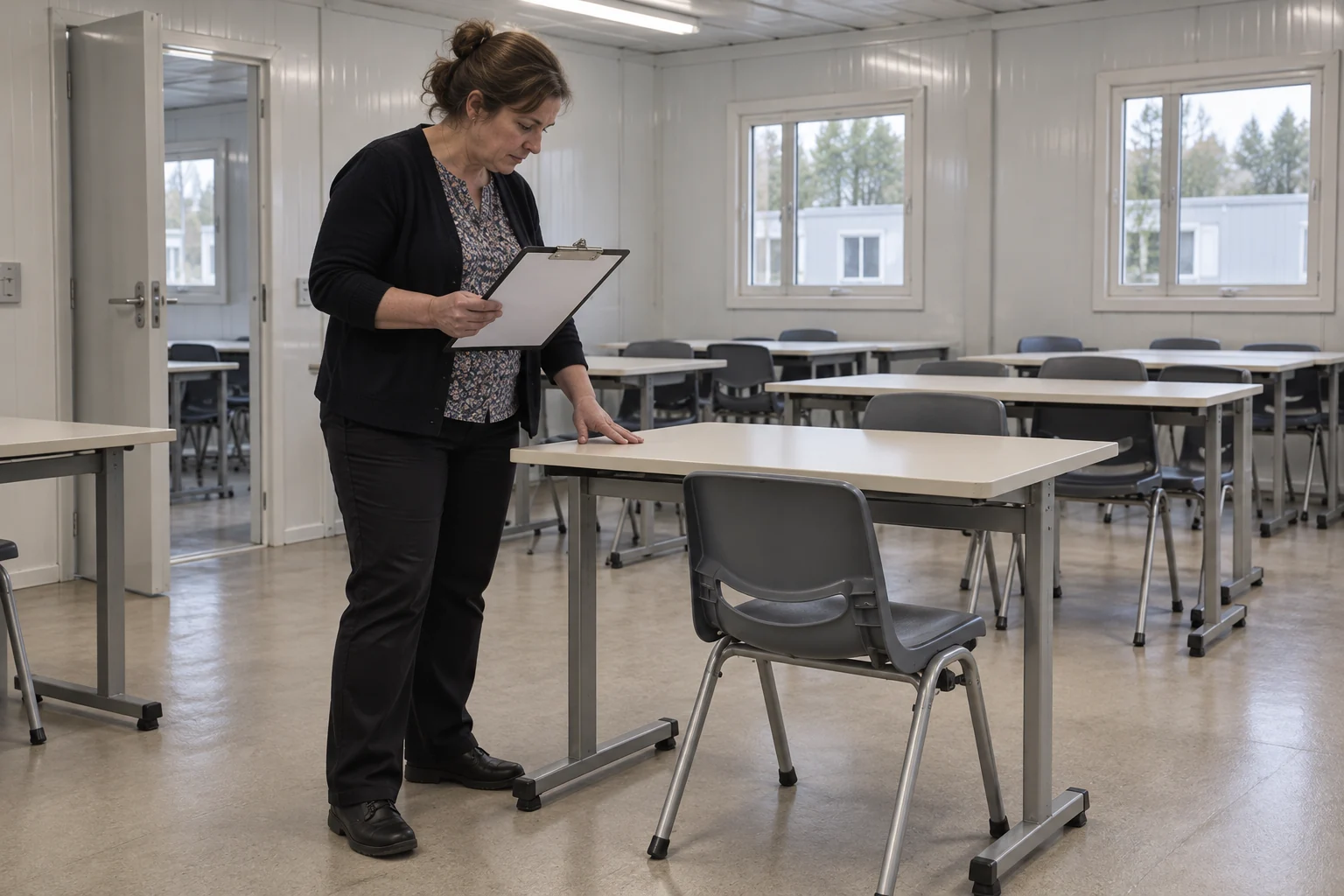
Put the supplier's model information next to the sample, including the actual identifiers of the chair and table. A catalogue photograph with no model reference cannot be reliably matched to a later shipment. Ask how the suggested pair was chosen for the school's brief.
Keep references separate when their scopes differ
Furnware's Bodyfurn sizing guidance links its chair sizes to student-height bands rather than year level alone and shows corresponding table heights. It is useful as an example of model-specific pairing information. Its values belong to that manufacturer's range; they are not evidence that PQSE supplies those products or that another chair with a similar label has the same fit.
Ask a different supplier for its own equivalent information instead of borrowing the Bodyfurn labels. Clarify what a size code identifies, whether the table recommendation assumes a particular chair, and whether optional glides, arms or accessories alter the assembled arrangement. The answer may be a dimensional drawing, a product sheet or a sample specification. A confident verbal statement without a traceable model leaves the buyer unable to verify a substitution.
If the source documents disagree, preserve the disagreement long enough to understand it. Age bands, height bands, national context and product geometry may not be comparable. Procurement does not improve by averaging unrelated numbers. Select the applicable requirements for this project with the school and its advisers, then ask the supplier to demonstrate how its proposed combination addresses them. Record the version of the documents used, because a later catalogue may describe a changed item.
Try a complete learning task with representative samples
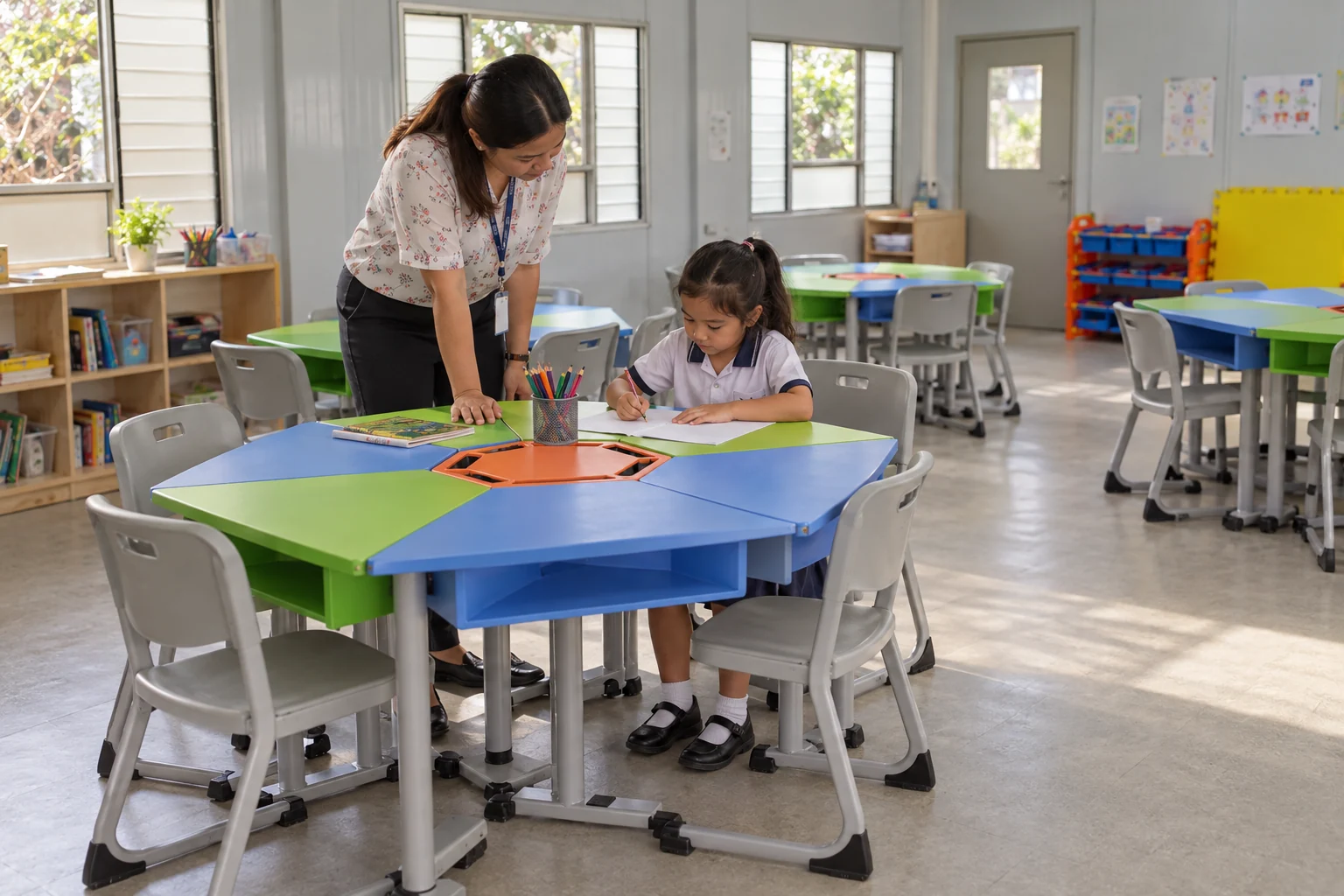
Arrange a supervised trial using the proposed pair and an ordinary activity the room will support. The school can observe reaching the work, sitting back, moving the chair and getting up. Keep the purpose narrow: identify questions and compare options before the full purchase.
A trial is more informative when the sample is assembled exactly as proposed. Confirm the feet or glides, tabletop position and any adjustable components. A showroom item with different legs or an extra cushion should not stand in for the ordered configuration unless the difference is explicit. If a support accessory is required, include it in the trial and in the quotation rather than leaving it to an unnamed person after delivery.
Let the school choose the participants and supervision arrangements. A buyer can record furniture identifiers, the task and the concerns raised without recording unnecessary personal details. Note what somebody actually observed rather than declaring an ergonomic result. For example, the school might request another sample because the current combination makes the chosen activity awkward. The response is to clarify or change the proposal, not to attach a medical explanation the trial cannot establish.
Agree what will happen after the trial. Some questions can be answered by a drawing; others require a revised sample or specialist input. Avoid marking every observation as passed merely because the furniture looks tidy in the room. The record should distinguish accepted items, unresolved points and the person responsible for each decision. It should also say whether the selected sample is retained so the delivered items can later be compared with it.
| Review point | Record from the trial | Follow-up before ordering |
|---|---|---|
| Proposed pair | Chair and table identifiers; assembled configuration | Confirm the same models in the quotation |
| Learning activity | Task tried and concerns raised by the school | Resolve the concern or trial another pair |
| Adjustment | Setting and person authorised to change it | Request the model's instructions |
| Decision | Accepted, unresolved or needs specialist review | Name the responsible decision-maker |
Plan how furniture changes between groups
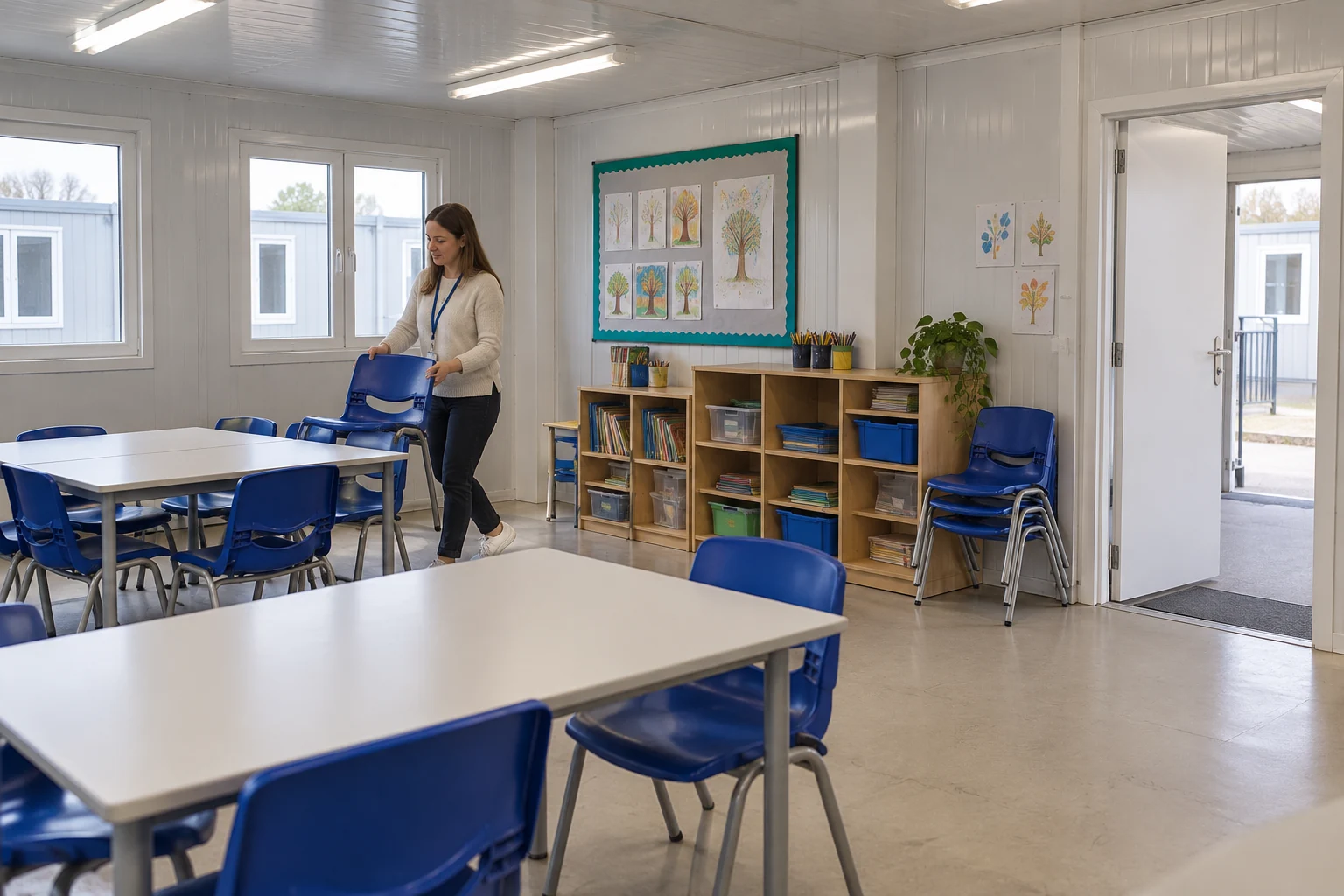
A room used by different groups needs an operating plan as well as a size schedule. Decide where alternative furniture waits, who changes the arrangement and how the selected pair remains recognisable. Colour can assist identification, but the model record should remain the reliable reference.
Compare fixed-size options with adjustable furniture in terms of the work the school will actually perform. Adjustable does not mean automatically self-adjusting. Someone still needs the instructions, access to any required tool and a way to confirm the setting. Fixed-size alternatives require somewhere to store them and a practical exchange routine. Neither choice removes the need to check the complete arrangement with the school's requirements.
Walk through a transition using an ordinary sequence: the first group leaves, staff reset the room, and the next activity begins. Include furniture waiting to be moved, not only the final neat layout. If alternative chairs accumulate beside the doorway, the selected daily plan is incomplete. Ask how the room is restored after an occasional adult meeting so pupils do not inherit an unintended configuration.
A temporary change should not erase the accepted arrangement. Keep a simple room-specific record of the selected pairs and any permitted alternatives. If a substitute is proposed because of availability, ask whether it changes the sample decision or the furniture footprint. Do not silently exchange a model solely because its colour resembles the original. Review the change with the school and update the order or operating record before treating it as equivalent.
Draw the furniture in the assembled room
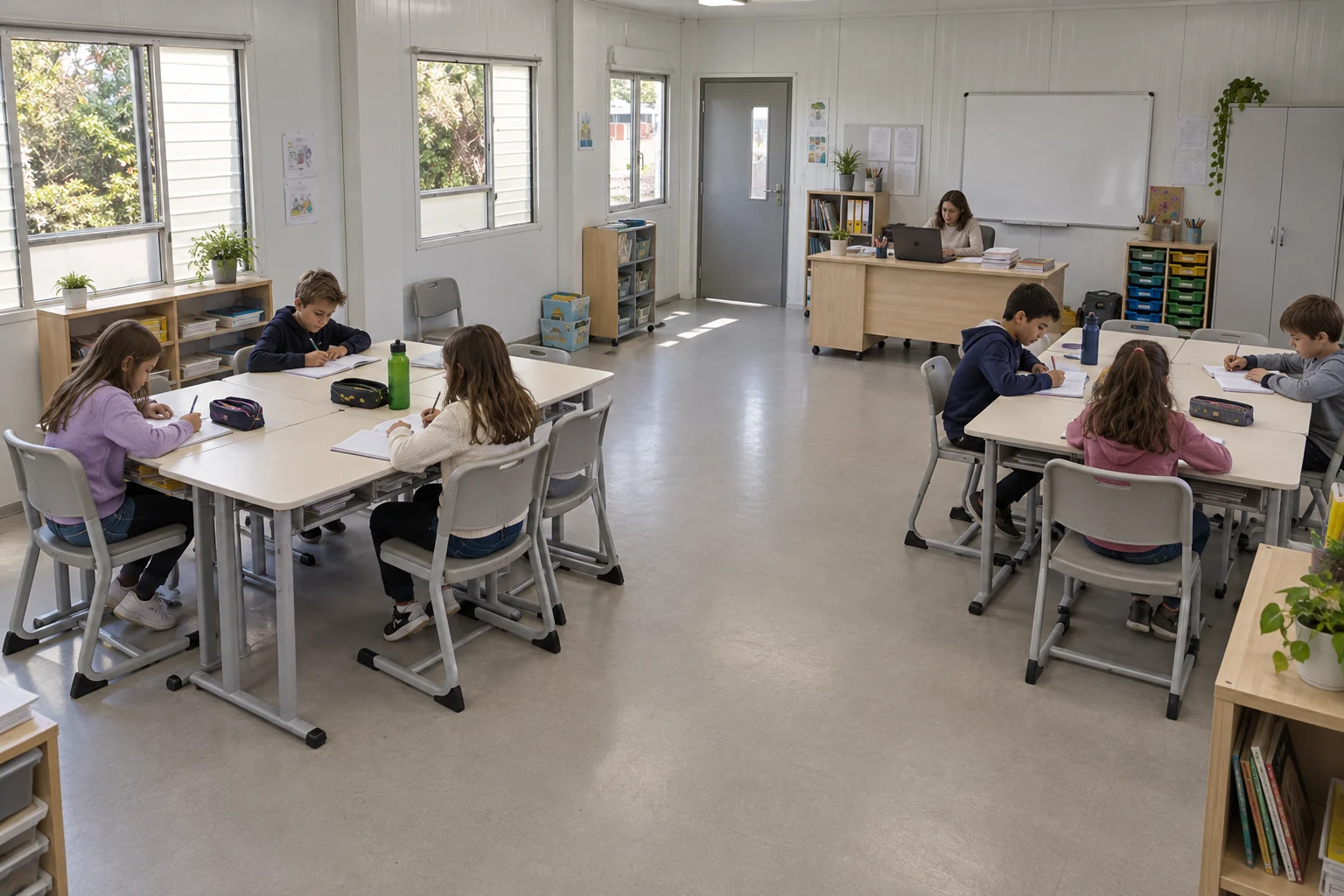
Use the final room drawing to place desks, chairs and the teacher's work position. Show the furniture dimensions and the room features that influence placement. The plan should represent the finished module, with its real doors, openings, columns and service points.
Distinguish a desk's stored footprint from the space used during an activity. A chair may be under the table in a presentation drawing but pulled back during normal use. Show the school how the arrangement changes when people sit, stand and move between positions. Required movement and access provisions must be established for the actual project; a furniture sketch is not a substitute for approval by the relevant local parties.
Coordinate the interface rather than guessing it from a generic module photograph. Joined rooms can have internal elements or service locations that matter to a furniture arrangement. Obtain the project drawing and identify what is confirmed, what remains subject to design and who owns the furniture layout. The detachable container-house format is one building option to discuss, but does not establish a specific classroom opening or furniture allowance.
Keep furniture decisions connected to the teaching task. A group-table arrangement and individual rows distribute working positions differently. The school should explain the activity and supervision pattern it wants, then review the proposed arrangement with the room team. A buyer should resist accepting a larger place count merely because smaller furniture fits on paper. Suitability of furniture, permitted occupancy and the room's complete operating arrangement remain separate decisions.
Confirm which furniture crosses the delivery opening
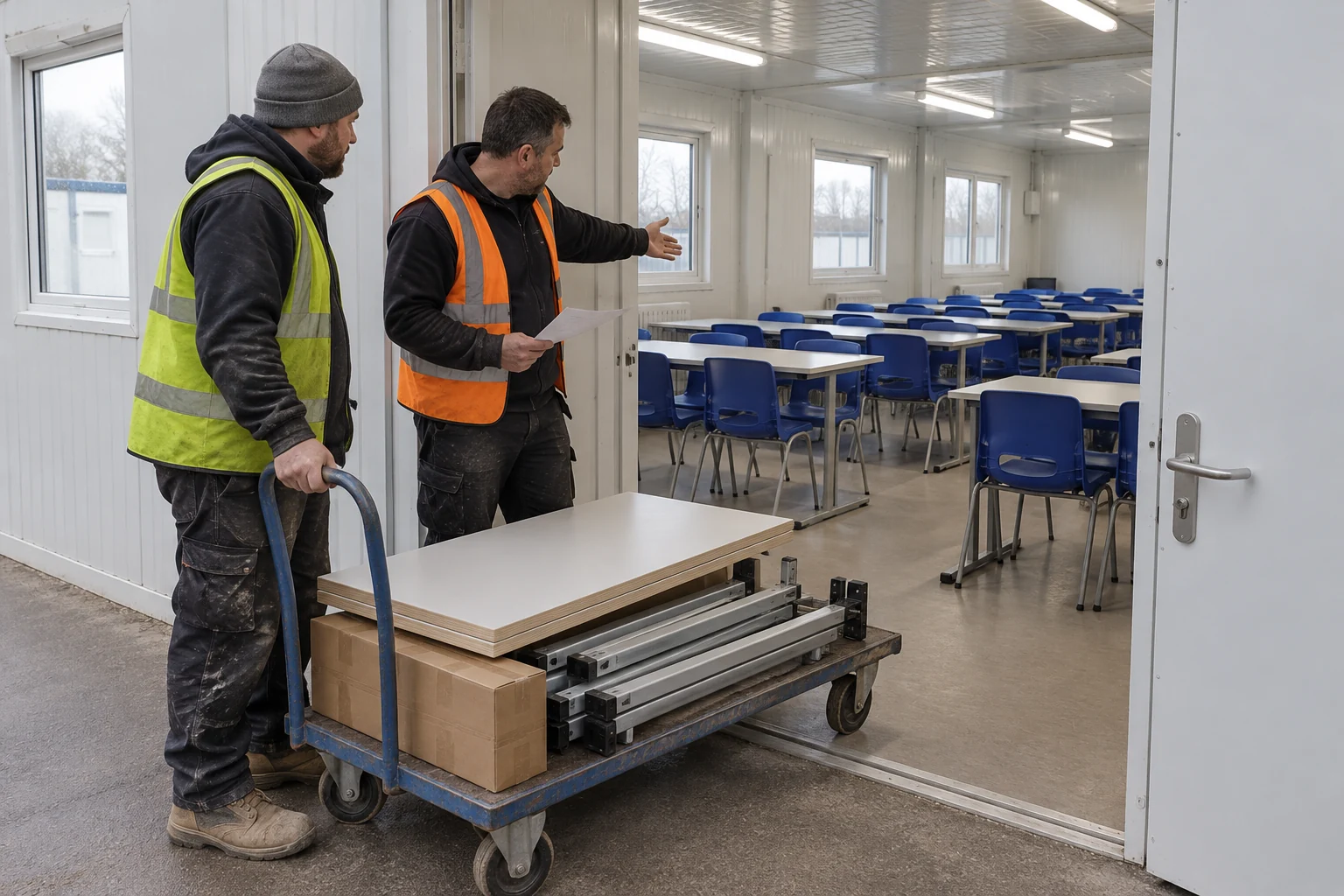
Ask whether furniture arrives assembled, packed flat or in separate components. Compare the delivery plan with the real access route and room opening. A table shown inside a rendering may still need an assembly location and a responsible installer before it can be used.
List the route from unloading to final placement. Include any waiting area, doorway turn and internal passage where the actual packaged or assembled item must move. The furniture supplier should provide the relevant dimensions and handling information. The room team should identify the openings and site conditions it is supplying. If the route is unconfirmed, keep that point visible in the quotation rather than promising that delivery to the site means delivery into the classroom.
Separate assembly from final checks. Someone may assemble the desks while another party verifies that they match the accepted samples and intended settings. Ask who supplies tools, removes packaging and deals with damaged or incomplete components. The programme should provide a usable place to compare the delivered furniture with its identifiers before distributing it across multiple rooms. These are suggested procurement responsibilities, not statements about an included PQSE service.
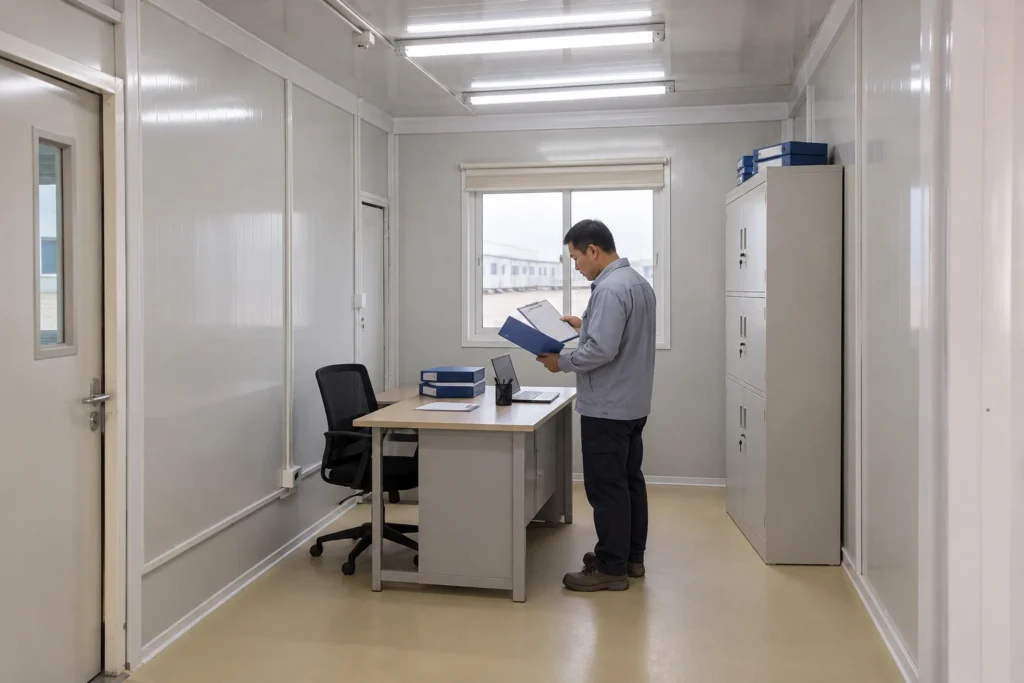
Confirm the working arrangement of any office used for school administration alongside the teaching rooms. A separate container office can have a different furniture brief and adult work pattern. Keep its desks and chairs distinct in the delivery schedule so an apparently interchangeable item does not end up in the pupil allocation. Clear destination labels reduce ambiguity; they do not replace a physical and documentary check.
Keep the accepted pair traceable during use
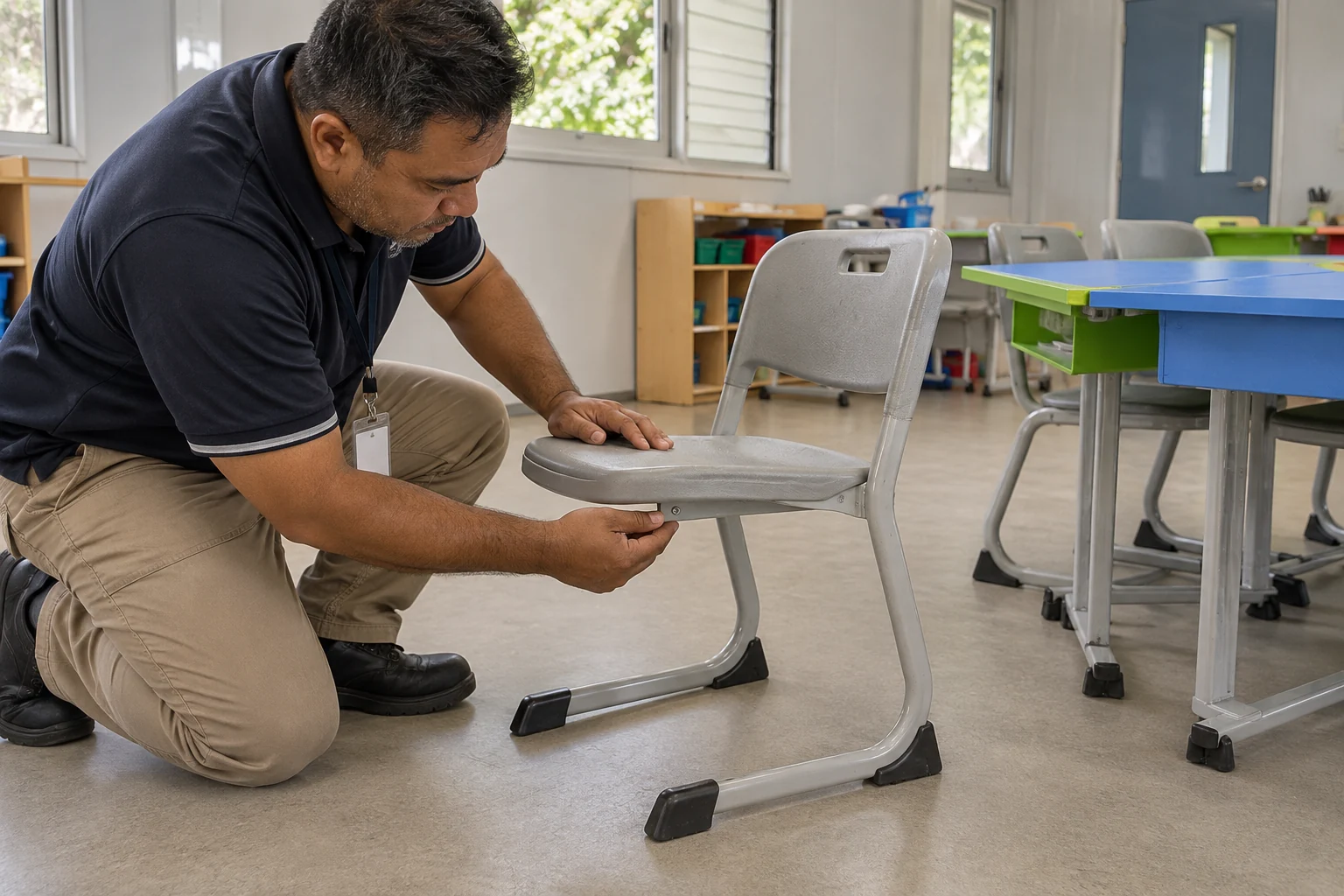
Retain the model information and instructions where the person responsible for the furniture can find them. When a chair, glide or table part needs attention, compare the proposed replacement with the accepted configuration. A repair should not quietly create an unreviewed pair.
Define an ordinary reporting route for loose, damaged or questionable furniture. Staff need to know whom to notify and how an item awaiting review is kept out of the working allocation. Follow the actual manufacturer's care and assembly instructions; do not invent cleaning chemicals, fixing torque or maintenance intervals for an unspecified product. This guide supplies no performance guarantee based on the appearance of a photographed chair.
Review the furniture brief when the learners or room use changes. A new group can alter the questions that were settled by the earlier sample trial. Recheck only the affected decisions, retaining the original record rather than starting from a vague memory of the initial purchase. Moving a room to another site can also change its furniture delivery and operating arrangements, even if the desk and chair models remain the same.
Where the same building is considered for another purpose, prepare a fresh use-specific brief. Furniture planning for modular emergency accommodation, for example, should follow the actual residents and operating organisation. A classroom furniture decision cannot establish suitability for that use. The link helps a buyer discuss a different project context, rather than treating one room arrangement as a universal answer.
Make the quotation identify the pair and the responsible parties

The final furniture schedule should state the selected models, quantities, proposed settings or sizes and the evidence used to accept them. Match it to the room revision. Ask each supplier to identify what its price includes and what someone else must provide.
Separate the room package from the loose furniture package even when one commercial proposal covers both. Name the interfaces: final openings, furniture dimensions, sample provision, assembly, placement and acceptance. A single total does not show whether an unresolved desk-and-chair fit question has actually been addressed. Where a sample is still awaited, preserve that condition rather than converting the quotation into unconditional acceptance.
Compare offers on the same task and scope. One option might include assembled furniture placed in the rooms while another covers packed items delivered to a site. Differences in that scope can explain a price difference without establishing that either item performs better. No prices or cost savings are invented here. Ask for the exclusions and substitute-model procedure, then compare what the school must arrange to make each offer usable.
Keep the decision owner visible. Teaching staff can describe the activity; a furniture manufacturer can explain its model; the room team can confirm its drawings. Project approval and specialist requirements belong to the responsible local parties. The buyer's role is to make the gaps explicit and obtain answers in the order documents. That approach creates a traceable decision without pretending the supplier alone can approve every aspect of a functioning school.
| Interface | Information to obtain | Decision to name |
|---|---|---|
| Learners and activities | School brief and representative sample requirements | Who accepts the proposed pair |
| Room and access | Current assembled-room drawing and delivery route | Who confirms opening and placement interfaces |
| Furniture supply | Model, quantity, instructions and substitution conditions | Who supplies and assembles each item |
| Handover | Comparison with samples and unresolved items | Who records acceptance and follow-up |
Accept the furnished room rather than the place count alone
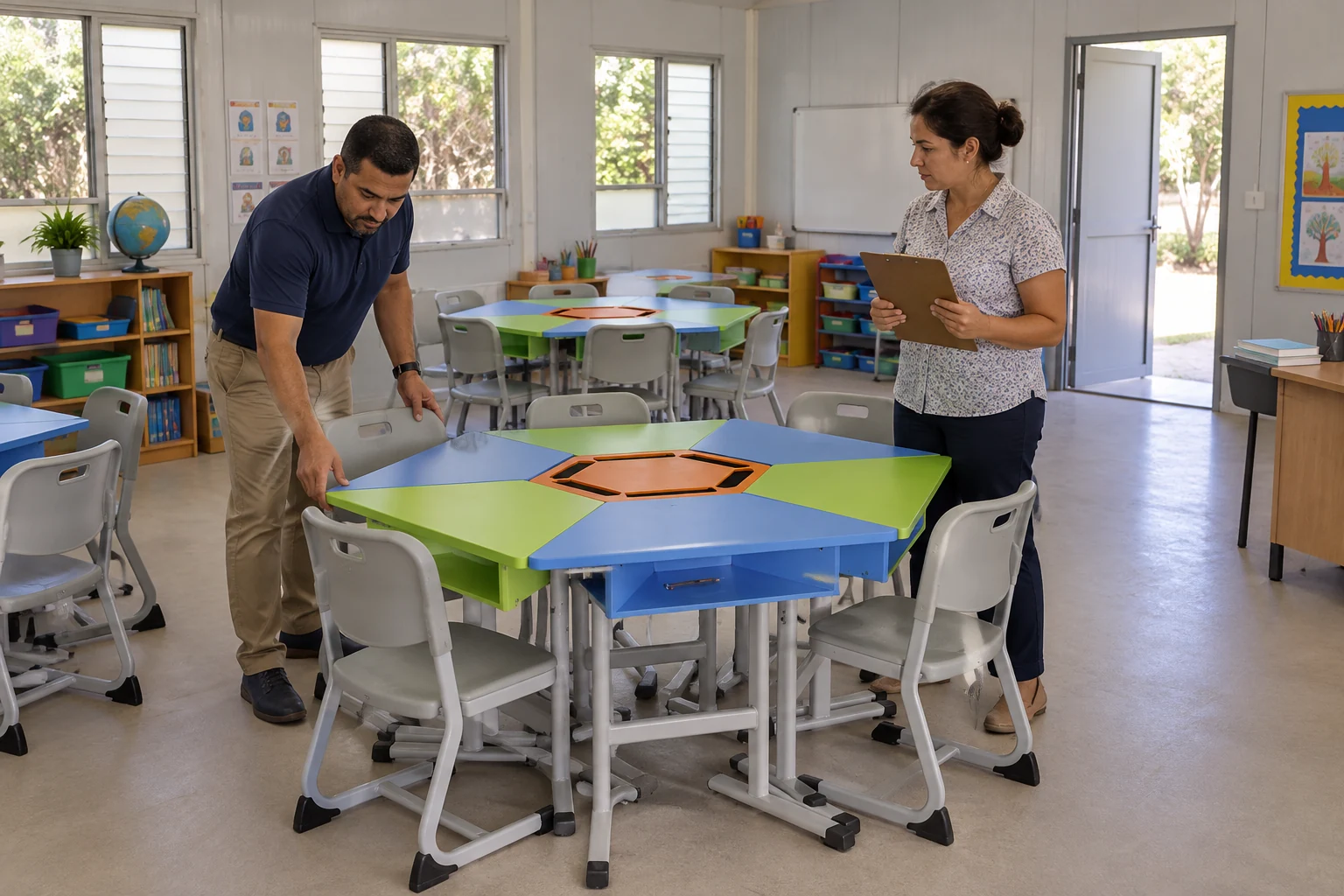
At handover, compare the actual desks and chairs with the agreed schedule and retained sample information. Check the intended layout with the school representative. Record unresolved differences before the room enters the ordinary furniture allocation, including any substituted model or incomplete component.
Start with identifiers and configuration, then review the arrangement. A correct item count can conceal a mixed delivery of sizes or a table model that differs from the trial. Use the supplier's own markings and documentation instead of estimating dimensions from a photograph. Where the installed arrangement differs from the accepted drawing, identify the reason and ask the responsible team to resolve it.
Leave a usable record with the operator. It should connect the furniture models, room revision, instructions and decisions still awaiting follow-up. Retain the source documents separately from editorial suggestions so a later employee can distinguish a manufacturer instruction from a project preference. The record should be concise enough to use when an item is replaced, not an extensive binder nobody can locate.
The decision is complete when the school understands the selected pairs, the intended arrangement and the responsibilities for changes. If those points remain uncertain, another identical set of chairs will not solve the underlying question. Bring the current room sketch, learner-group brief and proposed furniture information when discussing the project with PQSE House. Those materials help define a useful proposal while leaving unresolved suitability and local requirements visible.
Buyer questions
Can one chair size serve the whole classroom?
It may suit a particular agreed group, but an age label or identical colour does not establish that conclusion. Ask the school to describe the learners and review representative samples with their proposed tables. If the room serves different groups, include the exchange or adjustment arrangements in the brief. Do not claim universal fit from a catalogue photograph.
Do adjustable desks remove the need for a sample?
No. The sample allows the school to review the actual assembled pair and adjustment method. Confirm the proposed model, instructions and person who will set it. Adjustable components may help accommodate a planned change, but the buyer still needs to establish whether the furniture and operating routine address this project's requirements.
What should accompany a request for a modular classroom quotation?
Send the destination, intended learners and activities, number of rooms, current layout, target date and proposed furniture information. Identify sample decisions and unresolved requirements. Explain whether the request covers the building, loose furniture, delivery, assembly and final placement. Contact PQSE House with the classroom brief to discuss the project scope.
Sources and scope
- Hong Kong Operation Manual for Pre-primary Institutions. Section 2.1.3 and Appendix 4; scoped advice and suggested average furniture dimensions, checked 11 October 2026.
- Furnware Bodyfurn FAQ sizing table. Manufacturer-specific example of height-based model pairing, checked 11 October 2026; no PQSE affiliation or universal standard claimed.
PQSE House prepared this research-based procurement guide with AI-assisted source checking, drafting and independent illustrative photography. Furniture trials and scope records here are editorial planning suggestions, not a reported PQSE school case, medical assessment or local approval. Newly generated photographs use genuine modular-room originals as structural references and do not depict a verified project. Applicable requirements, actual product instructions and the school's responsible advisers govern the final decision.