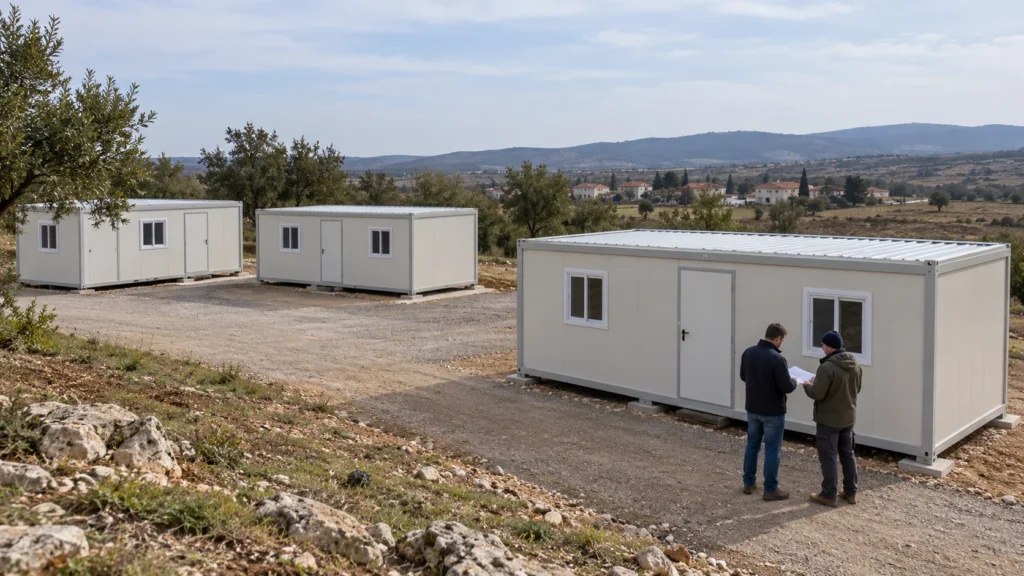
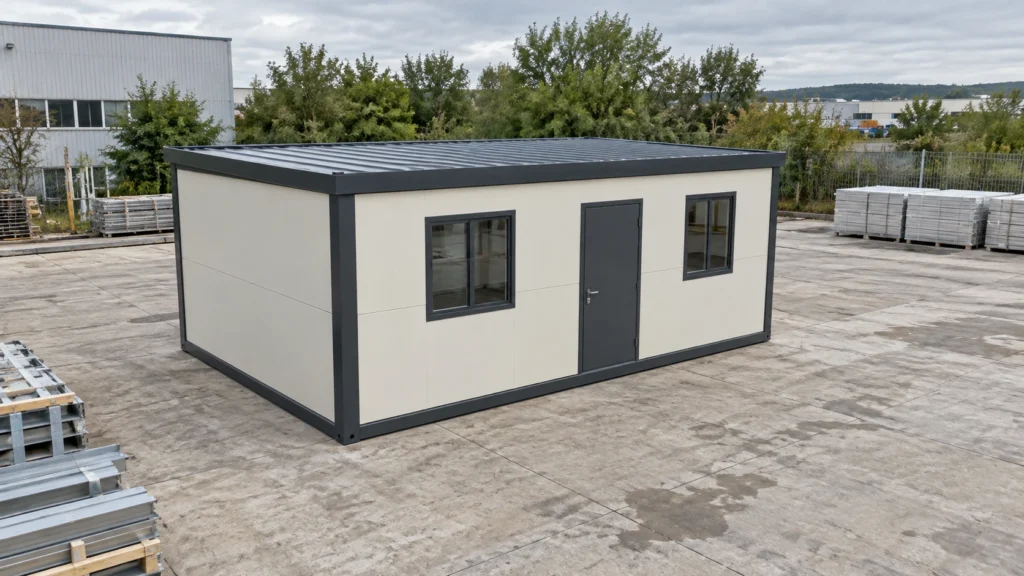
If a flat-pack container kit arrives before its site is ready, treat the waiting period as a separate part of the project. Agree the storage method with the supplier for the actual components and packaging, preserve package identification, separate items that need different conditions, and recheck the kit before installation begins. A shipping package is not automatically a long-term outdoor storage system. Nor does an intact wrapper prove that the material inside is dry or ready to assemble.
The difficult moment is often the second week rather than the delivery day. Foundations are still being reviewed, another contractor needs the laydown area, and someone opens a bundle to find a connector. Nothing dramatic happens, yet the link between the packing list and the physical parts starts to weaken. This guide examines that interval. It concerns purpose-built flat-pack building kits, rather than converting an old freight container, and gives buyers a way to allocate storage responsibility without inventing a universal storage life.
Define the waiting period before booking delivery
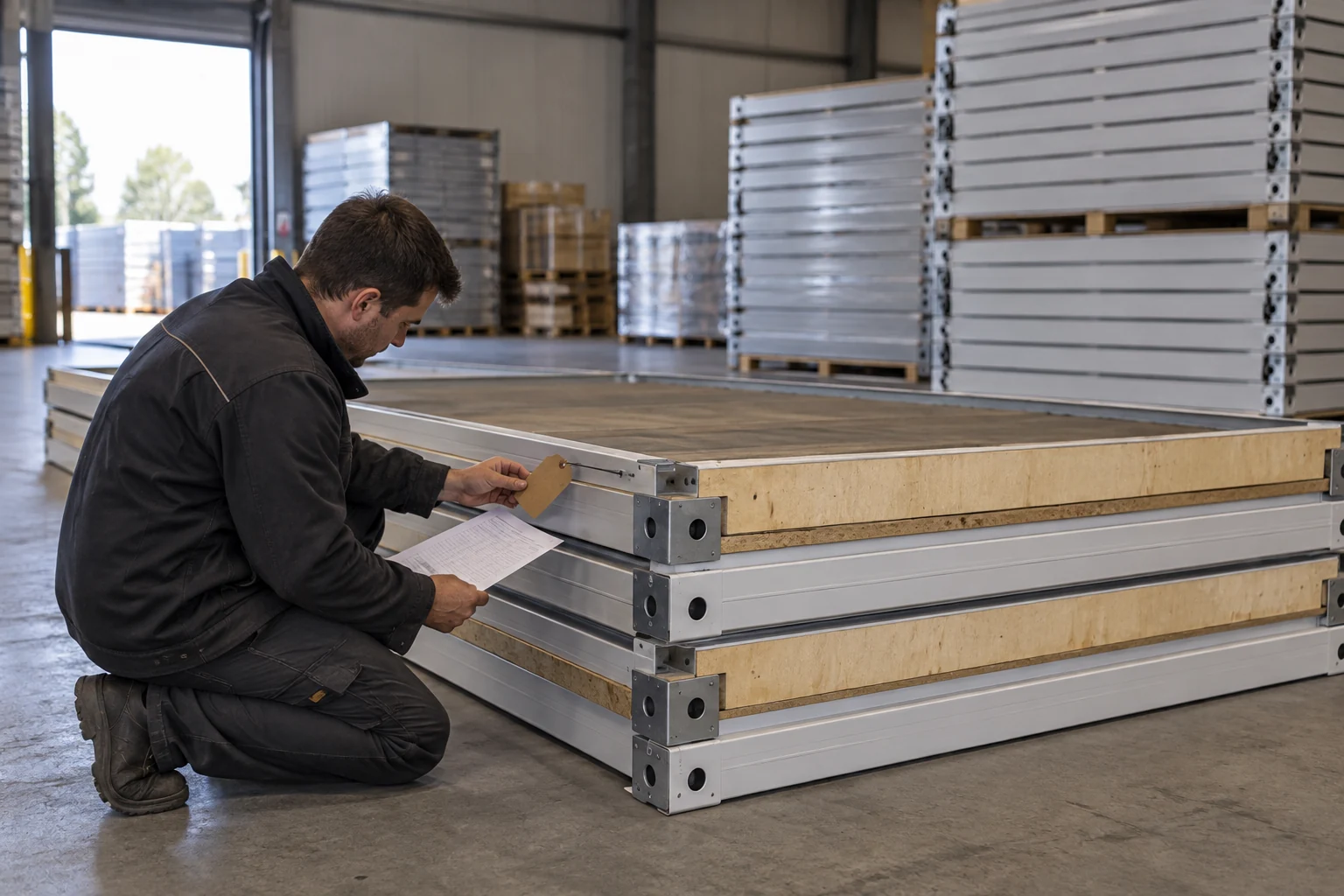
Write down where the kit will wait, who controls the area and what will trigger its release. An expected installation date is useful, but a named decision owner is more useful when that date moves. Make the storage arrangement part of the delivery plan rather than an informal promise to find space later.
Start with the purchased configuration. A building kit can include structural cassettes, wall panels, glazing, doors, fixings, joint materials and separately packaged services. These do not necessarily share one handling method. Ask for the packing list and storage instructions before dispatch, including the identity of items supplied locally. For the enclosure and assembly boundaries, compare the proposed order with the flat-pack container house assembly scope; a storage plan cannot protect an item that everyone assumes somebody else has supplied.
State the expected delay as a range and identify the uncertainty behind it. Is the constraint an incomplete foundation, a permit decision, a missing installer or limited crane access? These cause different changes. A delayed foundation may leave every package waiting. A phased accommodation project may need one group released while the rest remains protected. Consider whether later dispatch, phased deliveries or an agreed off-site store would reduce exposure, and compare the whole cost rather than the apparent convenience of receiving everything early.
Do not describe any of these options as universally cheapest. Storage charges, extra handling, access restrictions and contractual responsibility depend on the actual route and order. Ask the transporter what happens if unloading cannot proceed. A clear decision made before departure is easier to manage than a truck waiting outside an unprepared site.
Keep package identity connected to room and component identity
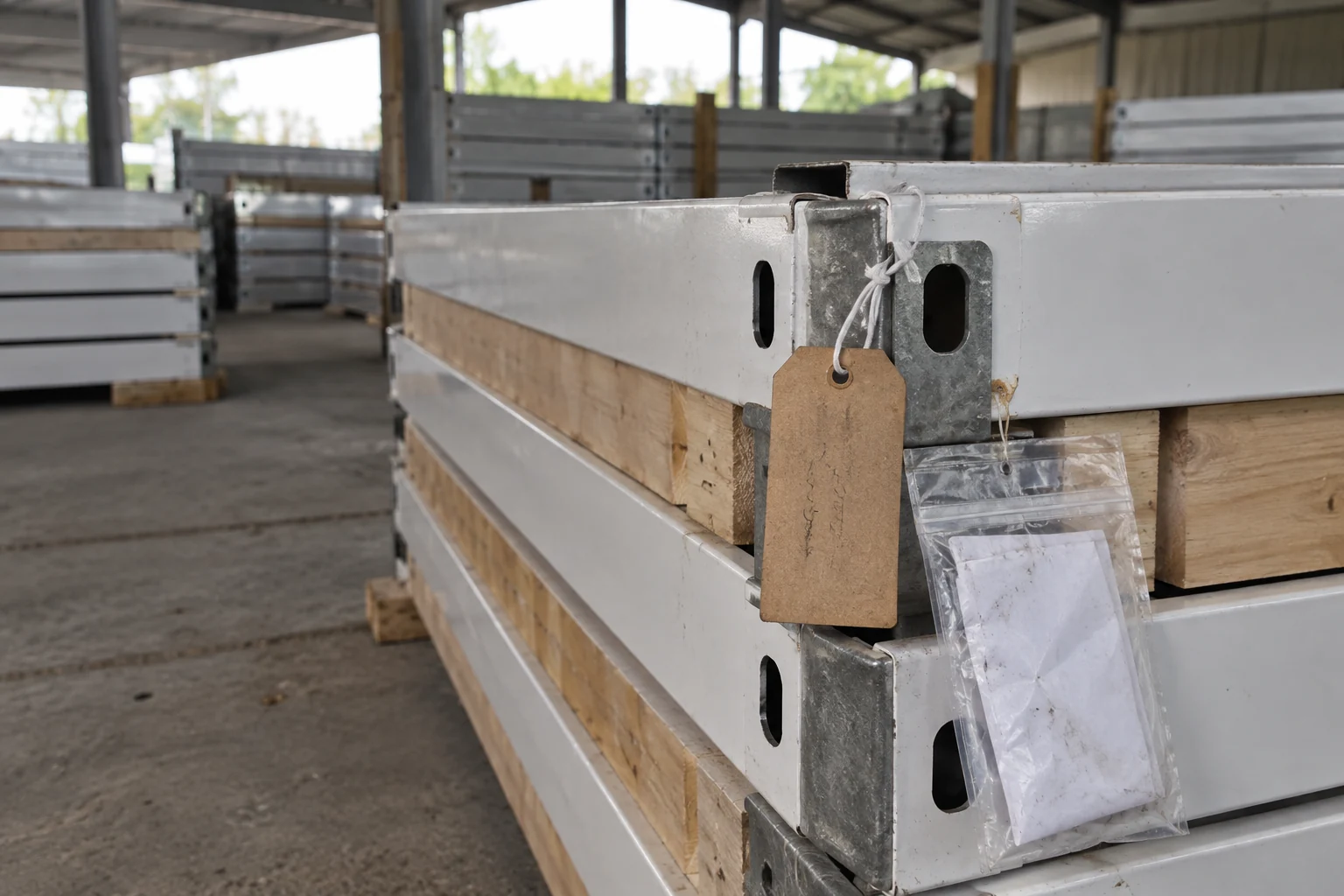
A package label should remain useful after the wrapper is removed. Preserve a second record in the project files, and connect each package to the supplier's component identifiers. Record a location change when it happens; memory becomes unreliable when several similar white panels and grey frame parts are waiting together.
Avoid replacing the supplier's references with site nicknames. An installer might call a bundle the north-office kit while the supplier knows it by an order, package and component code. Keep both descriptions, with a documented relationship between them. If the room arrangement changes, update that relationship rather than altering the manufacturing identity. This also helps separate a genuinely missing item from one issued to another work area.
The record does not need to be a complicated software system. A controlled spreadsheet or printed register can work if it names the custodian and stays current. Include received quantity, visible condition, package identifier, storage location, inspection record and any opened contents. Keep original paperwork dry and accessible. Photograph labels before moving or opening packages, and make sure the image is actually readable rather than merely proving that a phone was used.
For buyers coordinating several buildings, the container house kit inclusions guide helps identify which items belong in the order reconciliation. Use it to prepare questions, then resolve the answers against the signed order. A generic checklist does not supersede the packing list for the actual consignment.
Choose a storage area that remains usable when work changes
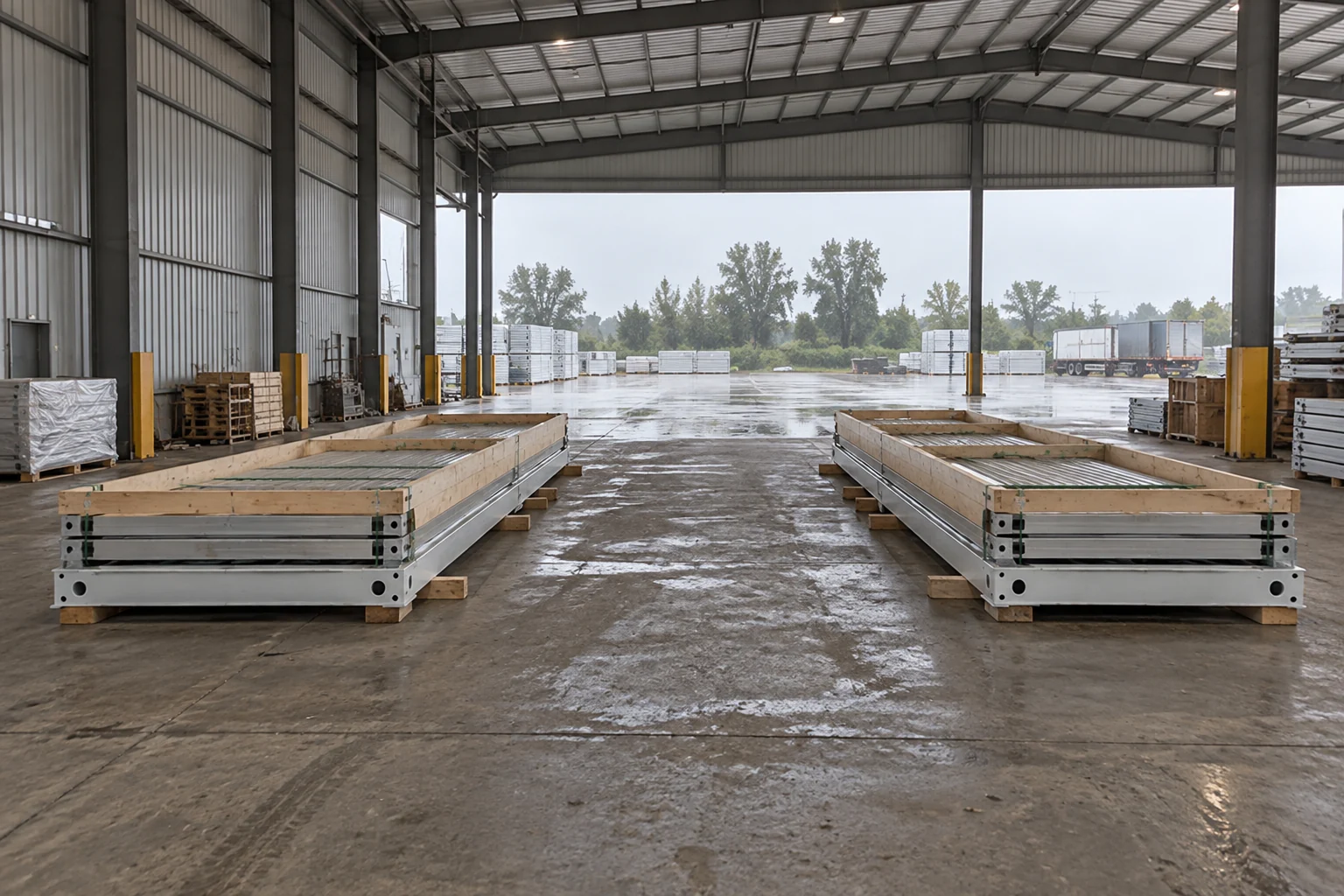
A convenient empty corner can become a poor store when the next trade arrives. Review drainage, ground condition, access for the specified handling equipment and the work planned around it. Establish who can authorize a relocation. The supports, contact points and any permitted stacking must come from the component or package instructions and a competent assessment of the site. A photograph of another factory's tall stack is not a stacking approval for your kit.
Think through the movement out of storage as well as the movement into it. A package that fits through a gate on arrival may be trapped behind later fencing, temporary utilities or other deliveries. Keep the planned handling route available. Protect pedestrians from vehicle movements, and avoid locating a store where normal access depends on somebody temporarily moving a heavy bundle. The container house loading and shipping guide is useful for coordinating the transport handover, but local unloading and storage arrangements still need their own confirmation.
For United States construction work, OSHA 1926.250 addresses stable storage, load limits, clear aisles and segregation of incompatible materials. It also has particular indoor restrictions around floor openings and unfinished exterior walls. Those provisions must be read within their construction-site scope; they are not universal outdoor separation distances for container kits. Ask the responsible site professional which local requirements apply to the actual store.
Split the kit into storage conditions, not merely delivery groups
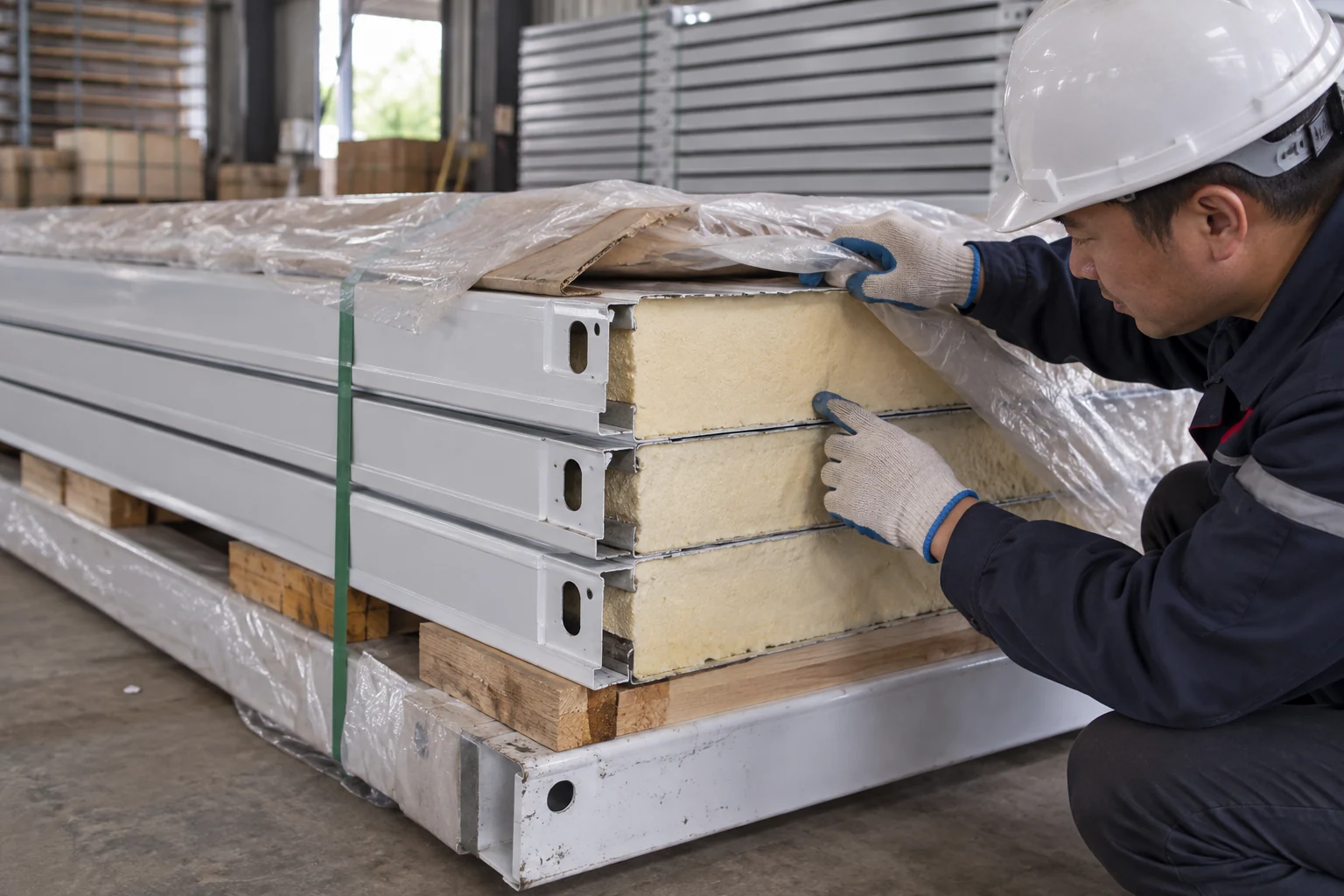
A single delivery can need several storage locations. Long panel bundles, fragile glazing, small connectors and consumables create different protection and access questions. Grouping everything by truckload is convenient for receiving, but it should not override the instructions for each component. Keep the identifiers linked when items are separated.
Use the following planning table to ask who controls each condition. It deliberately avoids invented support spacings, maximum stack heights and storage temperatures. These are order-specific fields to obtain, not values that a general blog can safely fill. If an instruction is missing or ambiguous, record the issue and ask the supplier before improvising a method that might damage the item or affect the installation sequence.
A separate store for accessories is only helpful if installers can find the correct package later. Record its new location and keep matched parts together according to their identification. Do not assume that visually similar connectors are interchangeable. A replacement item should be reconciled to the current drawings and supplier confirmation, rather than accepted merely because it fits into the same box.
| Component group | Condition to confirm | Record needed before release |
|---|---|---|
| Roof and floor cassettes | Permitted bearing points, handling and stacking | Package ID, support instructions and relocation history |
| Insulated wall panels | Packaging, moisture protection and approved handling | Panel identification, opening record and condition observations |
| Doors and glazing | Protected rack or package arrangement and access | Matched frame ID and visible damage record |
| Connectors and fixings | Separation, complete counts and corrosion protection | Part code, issue/return quantity and approved substitutions |
| Sealants and joint materials | Manufacturer's temperature limits and shelf life | Batch, product data sheet and storage history |
| Services supplied separately | Individual electrical or plumbing component instructions | Model, sealed package condition and responsible installer |
Distinguish weather protection from trapped-moisture protection
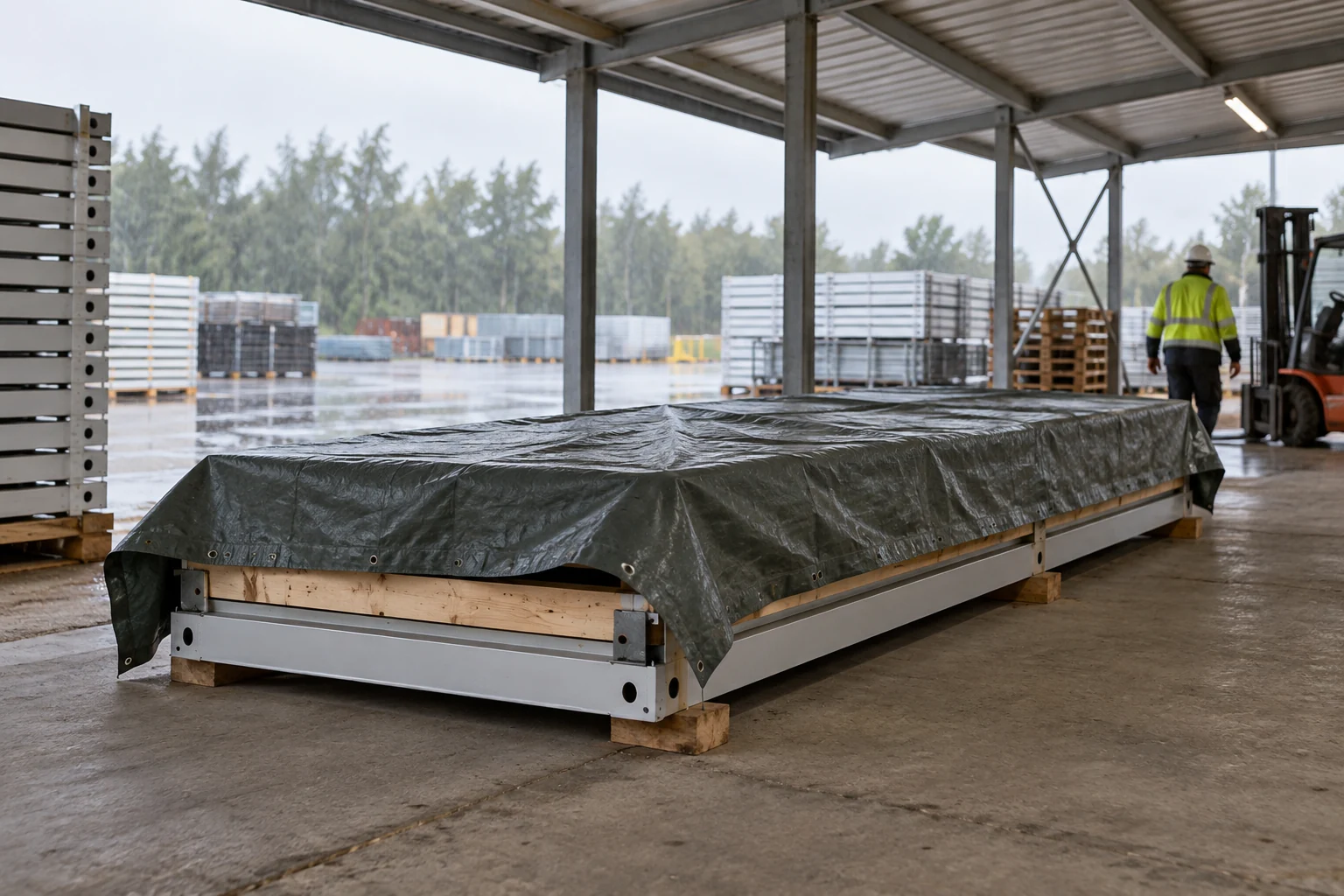
Putting another sheet over a bundle does not settle the moisture question. Water can enter through damaged packaging, and moisture can remain between surfaces. Ask how the actual packing system provides protection, drainage and ventilation. Any change to a wrapper needs to follow the instructions for that supplied material.
Two primary manufacturer publications show why instructions must stay attached to their products. Metl-Span's panel and sealant storage guide divides its guidance into periods around two and four months and changes the precautions for longer storage. The Kingspan insulated-panel installation guide specifies its own long-term arrangement and protective-film removal deadlines. These are manufacturer examples for identified panel systems, not a storage specification or warranty period for a PQSE flat-pack kit.
The practical procurement lesson is to request an instruction that describes both the material and its delivery packaging. Ask whether the expected delay changes the method, which observations require intervention, and who is authorized to open or re-cover a package. If the answer is simply keep it covered, ask what that means when a covered package becomes wet. Do not cut wrapping or remove film because another manufacturer's guide describes doing so for a different product.
| Primary source | Published value | What the buyer must not infer |
|---|---|---|
| Metl-Span storage guide, pages 1–2 | Short-term: less than 2 months; long-term: 2–4 months; extended: more than 4 months; checks before installing material stored 4 months or more | These guide categories do not define a PQSE kit's permissible exposure or shelf life. |
| Kingspan Installation Guide, printed page 6 | Protective film removed within 4 weeks after assembly and within 10 weeks after delivery | Both conditions concern the guide's panels; they are not a universal deadline for every wrapper or coating. |
Record a condition change before deciding what it means
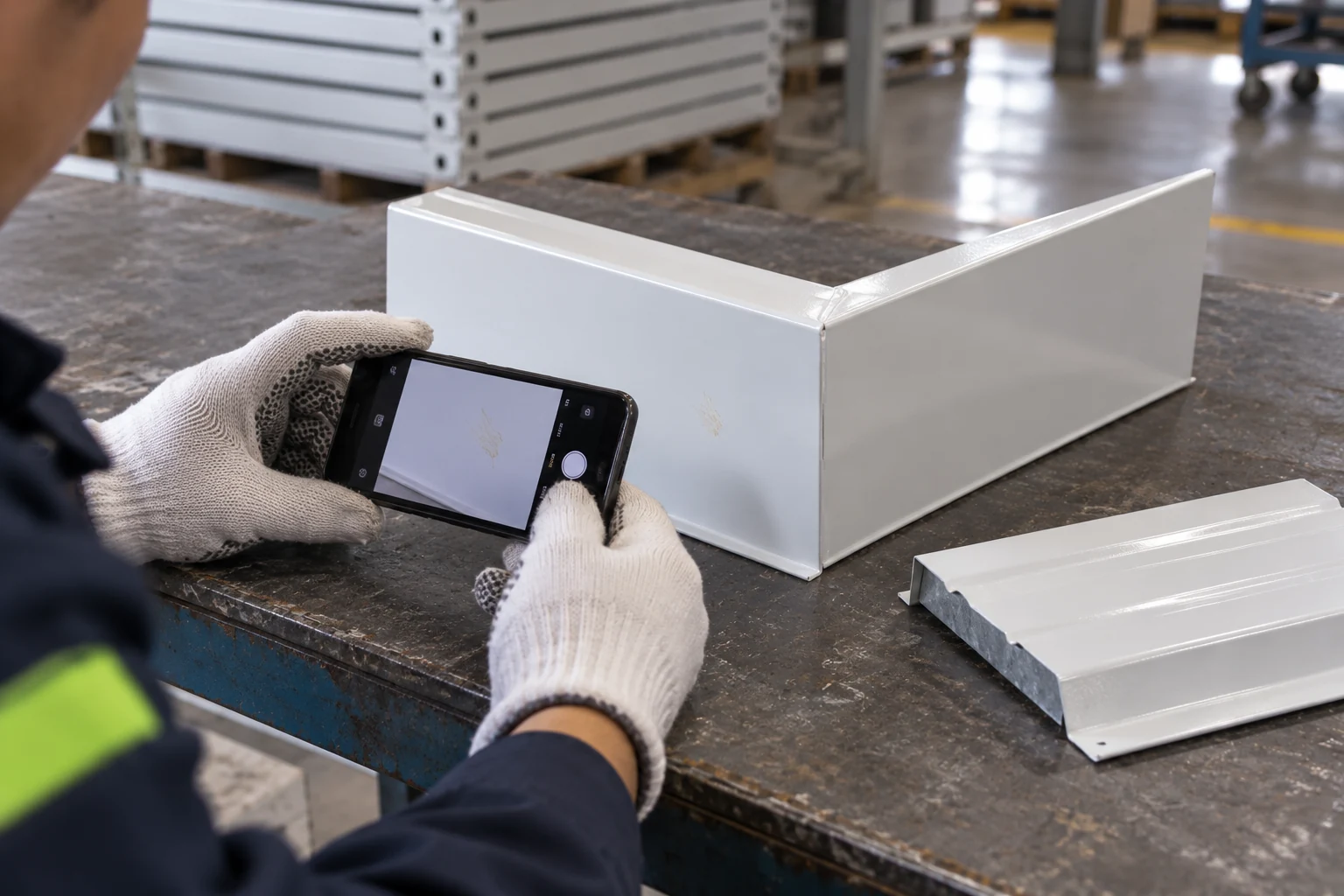
A receipt photograph and a later observation answer different questions. The first records what was visible at handover. The second records what changed while the kit was under somebody's control. Keep them connected through the package identity, inspection date, location and observer. Photograph an affected area closely, include context showing the component, and describe what can actually be seen. Avoid assigning a cause from a photograph alone.
For its insulated metal panels, Metl-Span describes wet-storage damage and identifies surface signs that can develop when moisture remains between stacked faces. That explanation supports a careful moisture investigation for those materials; it does not establish the cause or repair method for a mark on another manufacturer's panel. Preserve the condition and ask the supplier to assess the identified part. Do not repaint, sand or conceal a mark before the parties have agreed how to record and resolve it.
Separate acceptance from diagnosis. A receiver may be able to report a damaged wrapper without being qualified to approve the enclosed panel. Similarly, a dry external surface does not demonstrate that every concealed interface is dry. The inspection scope, permitted opening and release decision should be agreed. Where a specialist assessment is required, keep the item on hold and document the reason rather than allowing schedule pressure to turn an unanswered question into acceptance.
Use the container house quality-control checkpoints to coordinate the broader evidence needed at purchasing and delivery stages. Add storage observations to that record instead of creating an unrelated collection of phone pictures.
Give consumables their own storage and expiry record
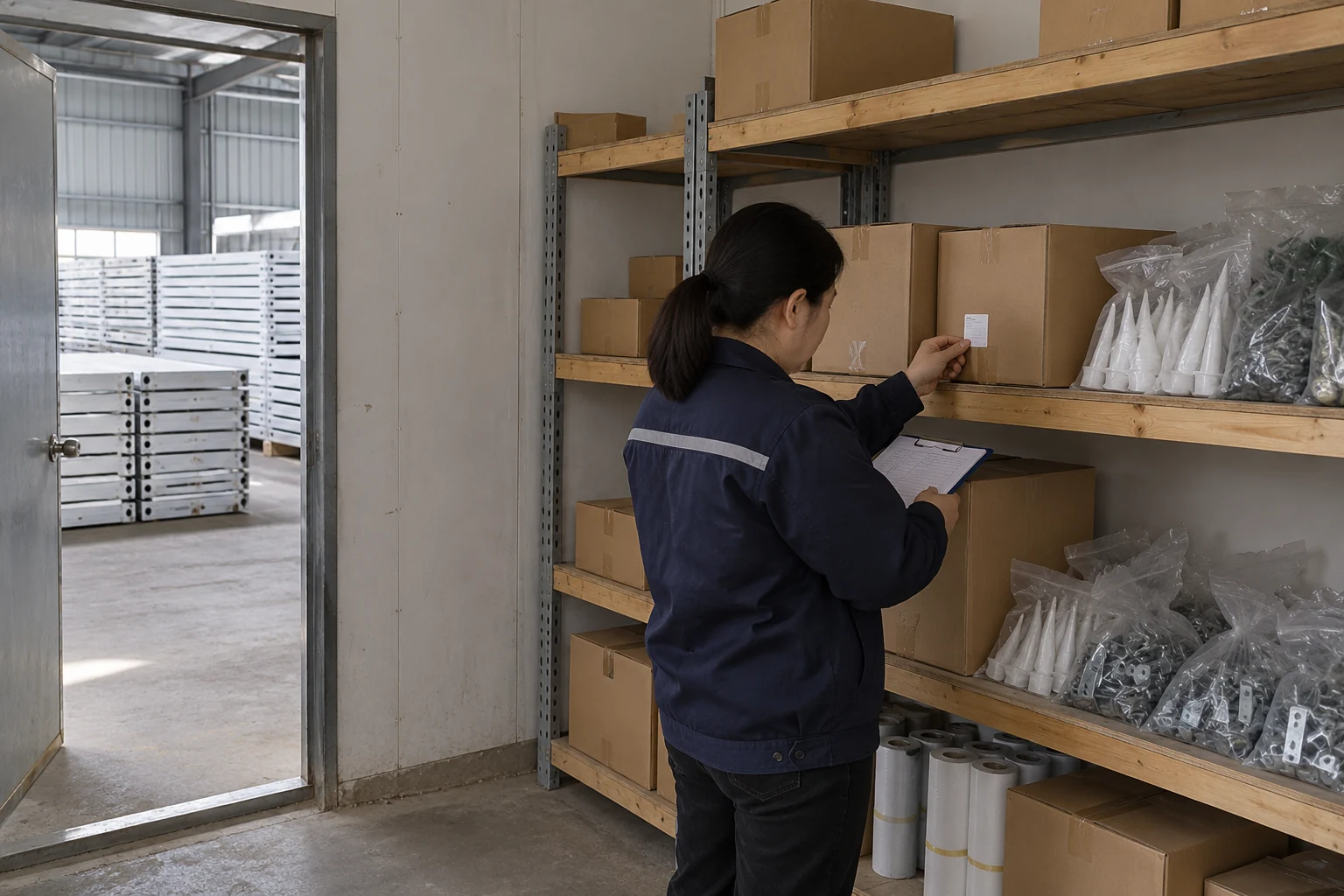
A complete connector count does not establish that the joint material remains suitable. Keep the product identity, batch information and applicable data sheet with sealants and other consumables. Confirm their required storage conditions and shelf life from the supplied product's manufacturer. A generic room-temperature instruction may leave an important question unanswered.
Plan for the conditions the store actually experiences. A metal shed can have different daytime conditions from an office where the delivery paperwork is kept. If temperature control or monitoring is required, agree how it will be maintained and what happens after an excursion. Do not infer storage suitability from the fact that a carton is unopened. Equally, do not invent a universal temperature band when the particular product data sheet has not been identified.
Arrange stock so that an installer can check the correct product and batch without searching through mixed, partially used cartons. Record when cartons move between the controlled store and work areas. Products returned from a work area need a decision about continued suitability, especially when their prior exposure is uncertain. Mark that uncertainty explicitly; writing good on the box is not a substitute for the manufacturer's criteria.
If the project delay extends beyond a product's usable period, purchasing replacement consumables may be a distinct action from replacing structural parts. Ask who buys them, whether the replacement is the specified material and how the revision reaches the installer. Resolve that before assembly begins so that a last-minute substitution is not silently incorporated into the building.
Control opened packages and returned parts
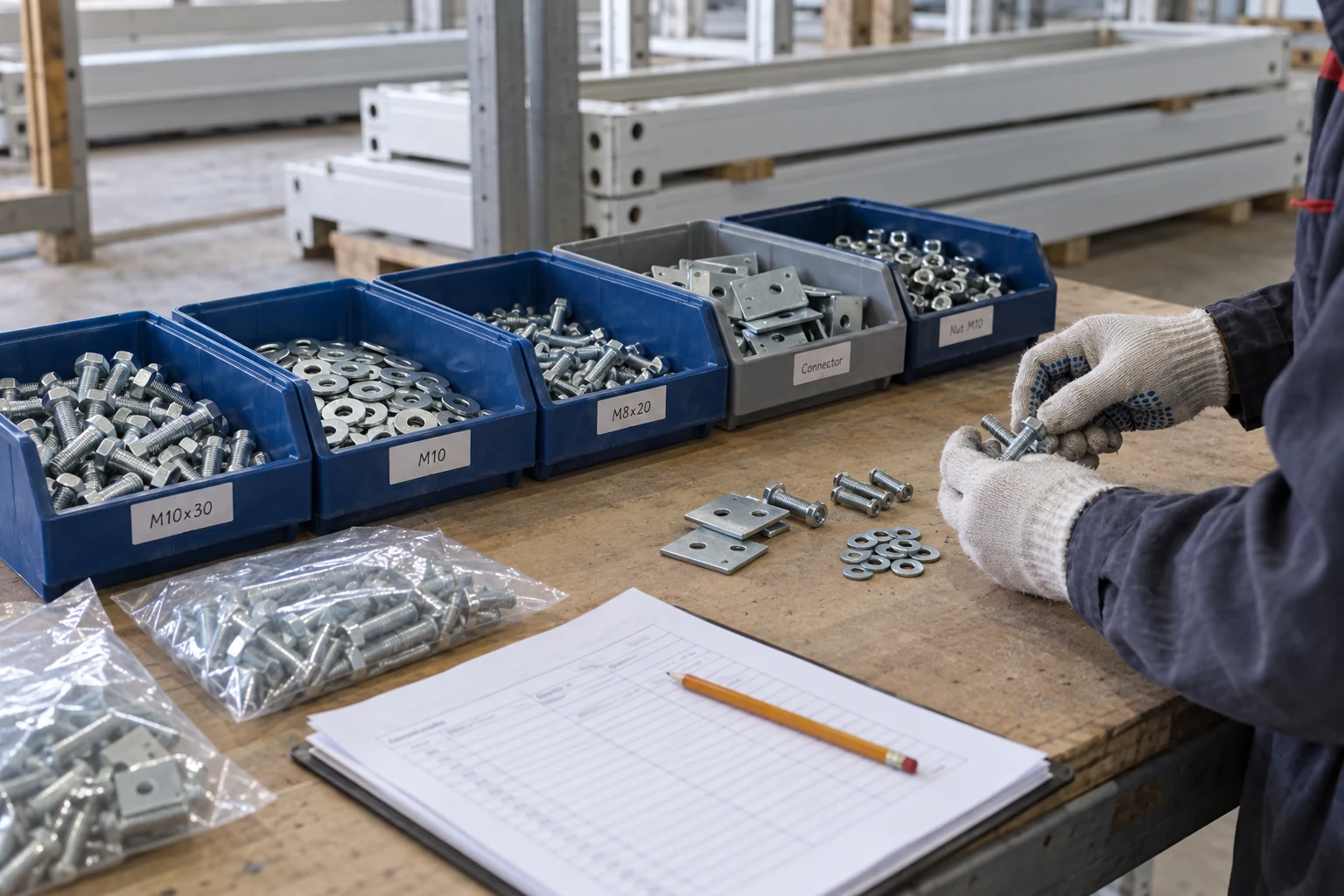
Opening a kit changes the inventory state even when assembly has not started. Name the person who can issue parts, record what leaves the store and keep returns identifiable. This is especially useful when one installer borrows a few fixings for a trial assembly and another team later expects a complete package.
Use component codes and quantities rather than descriptions such as small bolts or spare brackets. Ask the supplier which components are supplied as spares and which are required for the intended assembly. A surplus-looking bag can have a specific use later in the sequence. Keep substitutions, losses and returns visible in the record. If a bag has been split, identify its remaining contents and preserve the original connection to the package list.
Protect the drawing revision as well as the physical inventory. Parts issued for an earlier arrangement may not correspond to an approved change. The stores record should identify the instruction against which a part was released, while the installation supervisor controls the construction sequence. These functions can be simple on a small project, but they should not disappear because the same person performs both tasks.
For phased construction-site office projects, identify which rooms are genuinely ready for release rather than distributing components across the entire site. That makes shortages and condition holds easier to resolve before a partly assembled building waits for a misplaced item.
Separate a hold from a rejected consignment
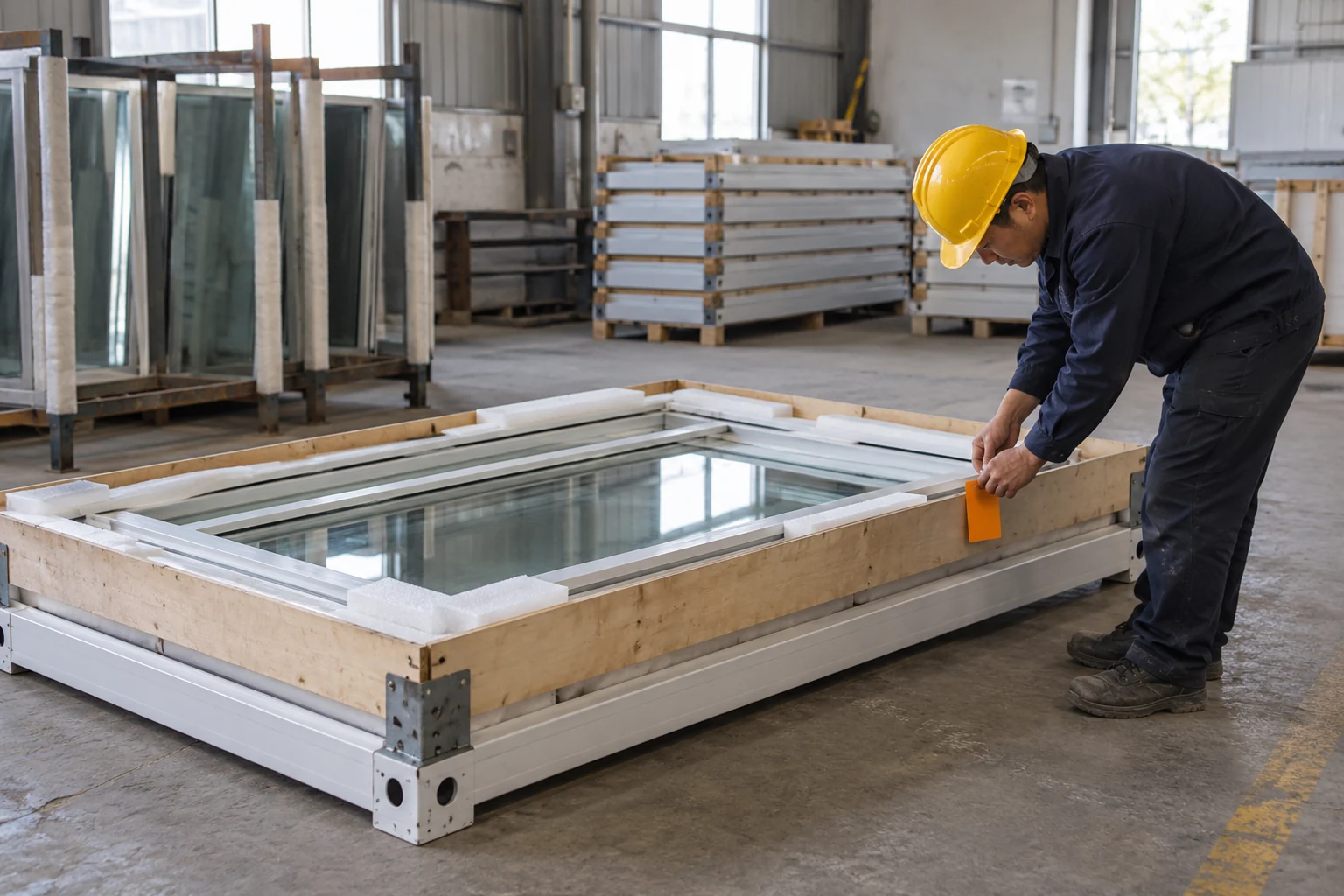
An item can be awaiting information without the entire delivery being rejected. Use a clear hold status with a reason, owner and next action. Physically protect the item while the question is resolved, and ensure that the installation team cannot mistake an unresolved package for released stock.
Define who can remove the hold. A damaged label might require an identity confirmation. A surface mark might require a supplier assessment. An uncertain support arrangement might require a competent handling review. These are different tasks; one person's signature does not necessarily resolve all of them. Specify the evidence needed rather than leaving a vague instruction to check before use.
Do not merge all held components into an anonymous pile. Preserve their individual references and keep the reason with the records. If an item is replaced, document where the replacement belongs and what happens to the original. If the decision is to use the item, retain the relevant authorization and any installation condition. This allows the supervisor to explain the decision later without relying on a verbal recollection.
A hold can affect assembly readiness differently from physical quantity. A complete room kit with an unresolved glazing issue may not be ready for its planned sequence. Ask the installer what can proceed safely under the approved method and what must wait. The answer should not be guessed by a stores clerk trying to clear space.
Revisit the plan when the delay or site conditions change
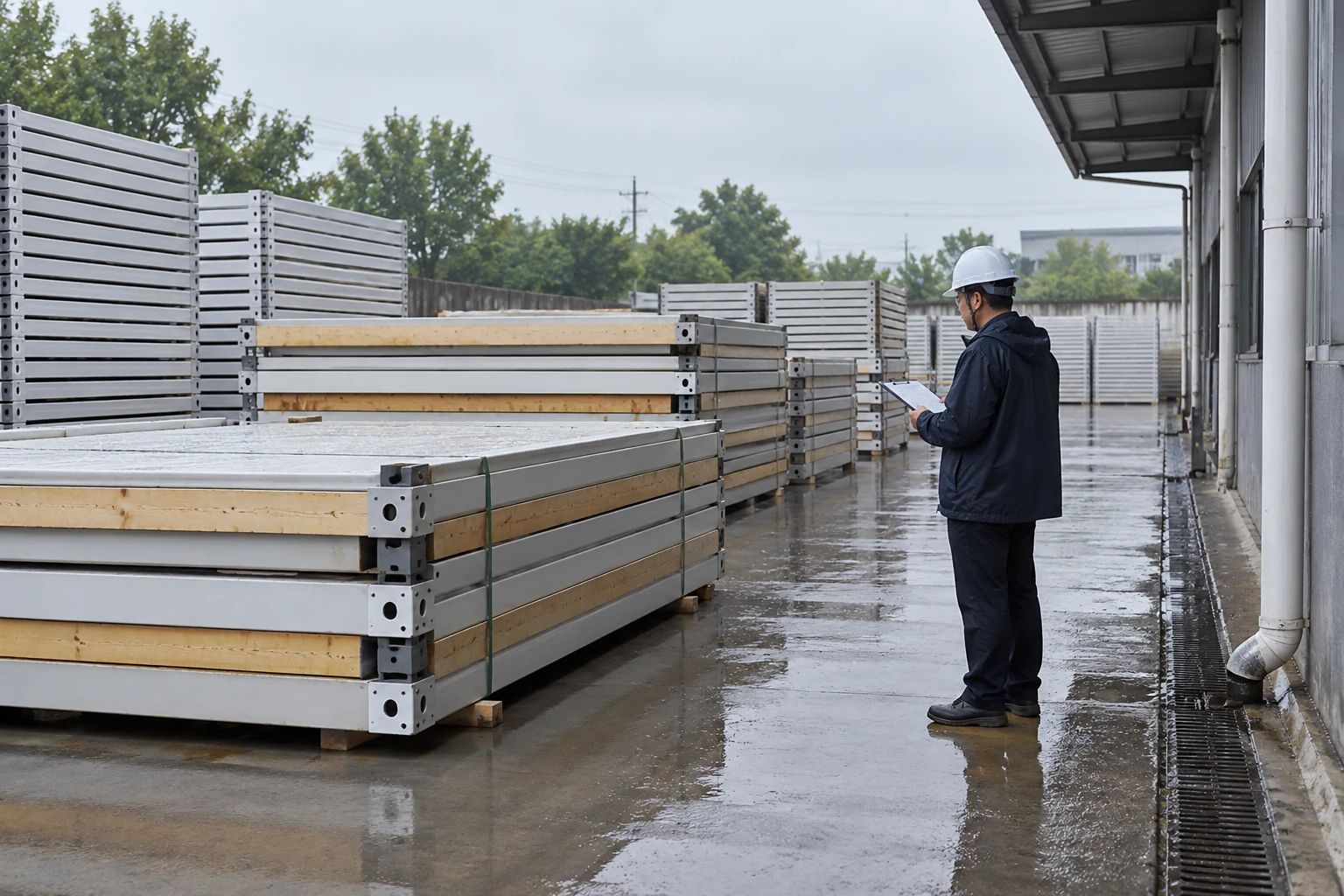
The storage plan needs a review point when the installation date changes materially, packaging is opened or the storage location moves. Include weather events and nearby work where they could change the condition. A useful inspection frequency comes from the exposure and product instructions; daily, weekly or after rain is not automatically sufficient for every kit. Agree the triggers and responsible person instead of copying a frequency from an unrelated project.
Record whether the storage method remains appropriate for the new waiting period. A temporary covered location may no longer be suitable for a longer delay, and moving to an indoor store can introduce handling and access questions. Reconcile the location change to the inventory and condition records. Keep both the decision and the actual completed move visible; approving relocation is not proof that it happened correctly.
For worker-camp accommodation delivered in phases, review the effect on room groups and opening plans. Releasing a group early can consume parts or access space needed by a later group. State what remains reserved, what has been issued and which packages are still awaiting acceptance. The schedule should refer to that actual readiness rather than only to the date a truck arrived.
Make installation release a documented handover

Before moving the kit into the assembly sequence, reconcile its identity, quantity, condition and consumables with the current order and installation instructions. A signed delivery note alone cannot answer what happened during storage. The release record should state what is ready, what remains on hold and who accepts that boundary.
Walk through the first assembly stage with the installation lead. Confirm access, the relevant package locations and the availability of the specified handling arrangement. Check that unresolved substitutions and condition questions have not disappeared from the register. If a package is only partly released, identify exactly which components are included and how the remaining contents will be protected. This prevents the installation crew from treating a partial decision as approval for everything.
Ask for a project-specific storage and handover arrangement when requesting a flat-pack quotation. Send the expected delay, storage location, climate exposure, delivery phases and site access constraints. The PQSE flat-pack container house product page provides the product starting point; the actual order should resolve the detailed instructions and responsibilities. Do not assume that a photograph or a general article supplies a missing specification.
A good release is concise but traceable. It points back to the current package list, records outstanding issues and identifies the receiving installer. Keep the evidence where the project team can retrieve it after assembly starts. That is how a waiting period becomes a controlled handover rather than a gap between delivery and construction.
| Review area | Evidence to check | If unresolved |
|---|---|---|
| Identity and quantity | Current package list, counts and issue/return record | Identify affected component and reconcile before release |
| Condition | Receipt record, later observations and agreed assessment | Hold affected item; request the appropriate decision |
| Storage method | Applicable instructions and actual relocation/exposure record | Reassess suitability rather than relying on the initial plan |
| Consumables | Specified product, batch, expiry and conditions | Confirm suitability or obtain approved replacement |
| Installation interface | Current drawings, access and competent handling plan | State the work boundary and what must wait |
Buyer questions
Can an unopened flat-pack kit be left outdoors until the installer arrives?
Do not assume so. Obtain the supplied package and component storage instructions, assess the site's exposure and agree the expected waiting period. Unopened packaging may protect material during transport without being intended for indefinite outdoor storage. If an outdoor arrangement is proposed, resolve drainage, supports, security, inspection and the response to damaged or wet packaging before receiving the kit.
Is there one maximum storage period for every flat-pack container kit?
This guide does not establish one. Materials, coatings, packaging and consumables can have different instructions. Manufacturer periods quoted in the table apply to the named panel systems, not every kit. Request the applicable limits and review requirements for the actual order, and revisit them when a project delay changes.
What should be included in the supplier inquiry?
Provide the kit configuration, proposed delivery and installation dates, possible delay, storage location, weather exposure and any phased release. Ask for component-specific handling and storage instructions, package identifiers, consumable data sheets, inspection requirements and the responsibility for advice after a condition change. Include access and relocation constraints rather than sending only a room quantity.
Sources and scope
- Metl-Span: Storage Guide, Short, Long, & Extended Term Storage of Metal Panels & Sealants, pages 1–2. Primary manufacturer guidance for its insulated panels and sealants; not a PQSE specification.
- Kingspan: Installation Guide, Insulated Panels, printed page 6. Primary instructions for the identified panel systems, including product-specific film deadlines.
- OSHA: 1926.250, General requirements for storage. United States construction material-storage requirements; local applicability must be determined.
The photographs are newly generated illustrations of planning situations, not records of a PQSE project or approval of a particular storage arrangement.