Start by identifying the installed window and insect-screen assembly. Obtain its applicable removal and care instructions, establish suitable access, then separate cleaning from repair or replacement. A dirty mesh, a sticking sash and a damaged retaining clip require different decisions. Pulling harder or buying a screen with similar outside dimensions can create a second problem without solving the first.
For a folding container house, the building type does not identify every opening fitted to the order. A room can have a window, an optional screen, external bars and several other fittings that serve different purposes. Confirm the actual combination before treating a photograph or a familiar household window as an instruction sheet.
This guide helps procurement and operating teams define the task, collect useful observations and request compatible parts. It does not authorise dismantling an unknown assembly. The project’s window information, operating procedures and responsible technical reviewer determine the work. Public manufacturer guidance below illustrates particular systems; it is not proof that those brands or configurations are supplied with a PQSE order.
Identify the assembly before choosing the task

Begin with a photograph that shows the whole opening, its location and the components being discussed. The person answering a parts enquiry should be able to tell which room and window it concerns. Add closer views of relevant fittings, while keeping the overview that connects them to the assembly.
Record the room reference, window position, available manufacturer or component identifiers and the current configuration. If the order drawings specify an option, compare that record with what was actually fitted. An unverified description such as standard window does not tell a caretaker whether the mesh slides, lifts out, hinges or is fixed in place.
Keep the sash, insect mesh, retaining frame, glazing and external fittings distinct in the enquiry. A photo of bars across an opening is not evidence of a mesh specification. Ask which components are supplied together and which are separately replaceable. If no identifier is visible, send the evidence to the responsible supplier instead of inventing a model name.
When discussing the folding container house configuration, request opening information tied to the proposed order. For an existing building, identify subsequent changes as well as original details. A replaced latch or locally added screen can make the delivered specification an incomplete guide to the assembly now being maintained.
| Record | Useful evidence | Question it should resolve |
|---|---|---|
| Location | Room reference and whole-opening photograph | Which assembly needs attention? |
| Window identity | Applicable drawing and visible product reference | Which instructions cover the fitted unit? |
| Screen arrangement | Frame, mesh and retaining fittings shown separately | Is this component removable or replaceable? |
| Changed parts | Current fitting and available alteration record | Does the original order still describe it? |
| Reported concern | Specific symptom and when observed | Is the next task cleaning, assessment or replacement? |
Separate a dirty screen from a window fault
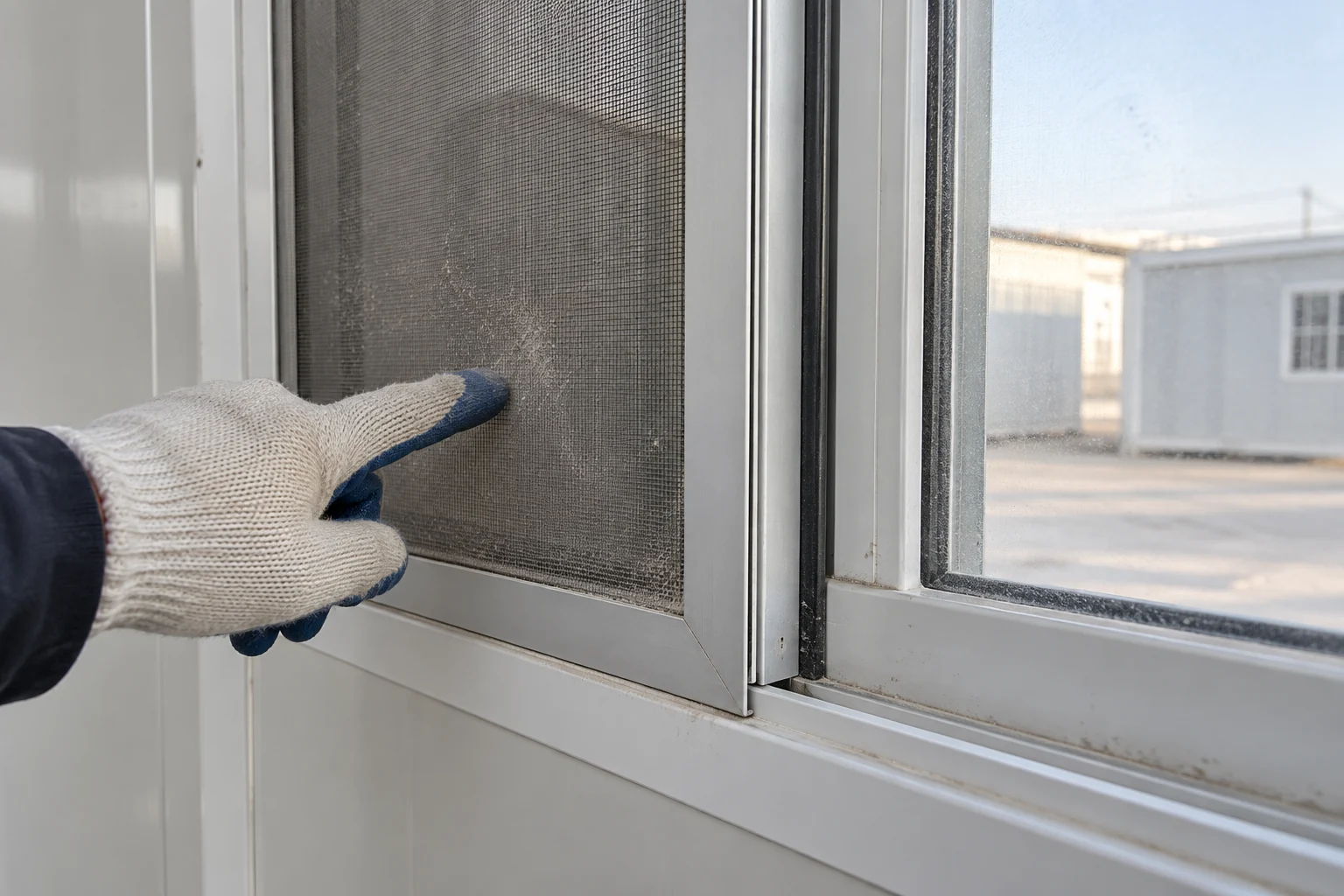
Describe what is happening before selecting a product or tool. Dust on the mesh is a cleaning observation. A frame that will not remain seated, a sash that catches and a mark whose location is unclear need their own records. Combining them under window cleaning can hide an unresolved fault.
Ask the user to point out the affected surface and the circumstances of the observation. Does the concern appear while the sash moves, while it is closed, or when a screen is being handled? Describe that event without forcing a diagnosis. A short account connected to the correct opening is more useful than a list of suspected replacement parts.
Keep the first task proportionate. If a routine cleaning proposal encounters a damaged fitting or unfamiliar release mechanism, stop that part of the task and obtain the appropriate assessment. Do not quietly expand the cleaner’s scope into adjustments or repairs simply because the worker is already beside the window with equipment available.
For example, in a hypothetical room, an occupant reports insects and a dusty screen. Cleaning addresses the visible deposit; it does not establish where insects are entering. Record any observed gap separately and ask the responsible reviewer what needs checking. Avoid promising that a cleaner mesh will resolve an entry route that has not been identified.
For newly received units, compare the current observation with the folding house delivery-inspection record. That can show whether a concern was recorded before use or arose later. It cannot, by itself, establish the cause. Preserve the difference between an observation, a technical finding and the action approved in response.
Plan access around the actual opening
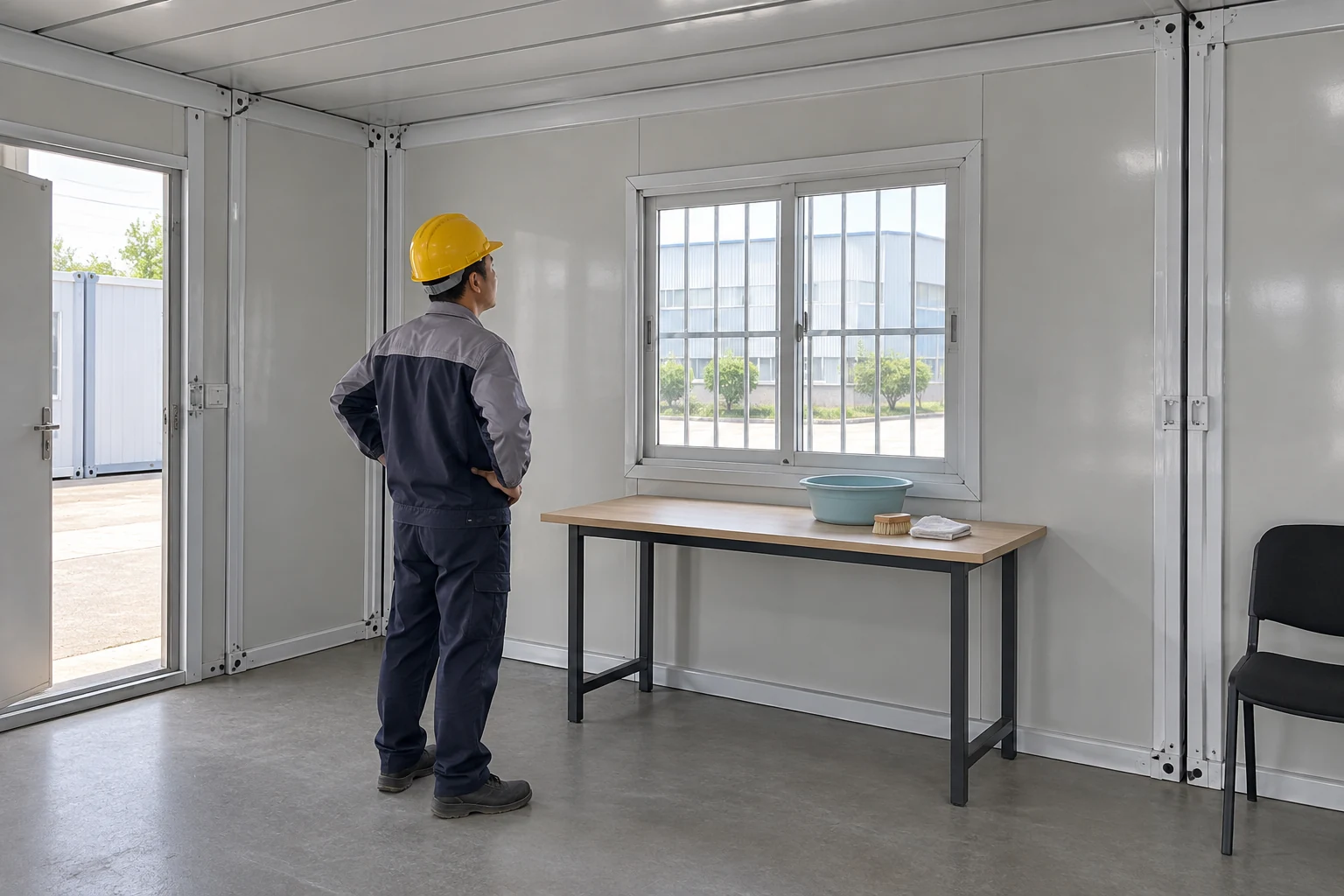
Check where the task can be performed before agreeing to remove anything. Consider the working position, the screen’s destination and the effect on the room while the opening is unavailable. A clear indoor table may help with handling, but it does not establish safe access to an exterior surface.
The operator should identify who assesses access and which tasks the assigned person can undertake. Keep occupants, furniture and everyday activities in that discussion. Moving an item out of the way for cleaning is different from arranging work that needs specialist access. An instruction for another window type does not settle either question.
Screens also have a limited purpose. The US Consumer Product Safety Commission’s window-fall guidance warns that insect screens must not be relied on to prevent children from falling through windows. Treat that as a clear safety boundary; the applicable guards, opening controls and emergency arrangements require the project’s own review.
If the unit has recently been erected or moved, confirm its accepted condition before adding window work to the programme. The folding house setup guide addresses the building’s installation and handover sequence. Cleaning access is a separate task that should follow the relevant acceptance and operating arrangements, rather than become an improvised extension of erection.
Confirm how this screen releases
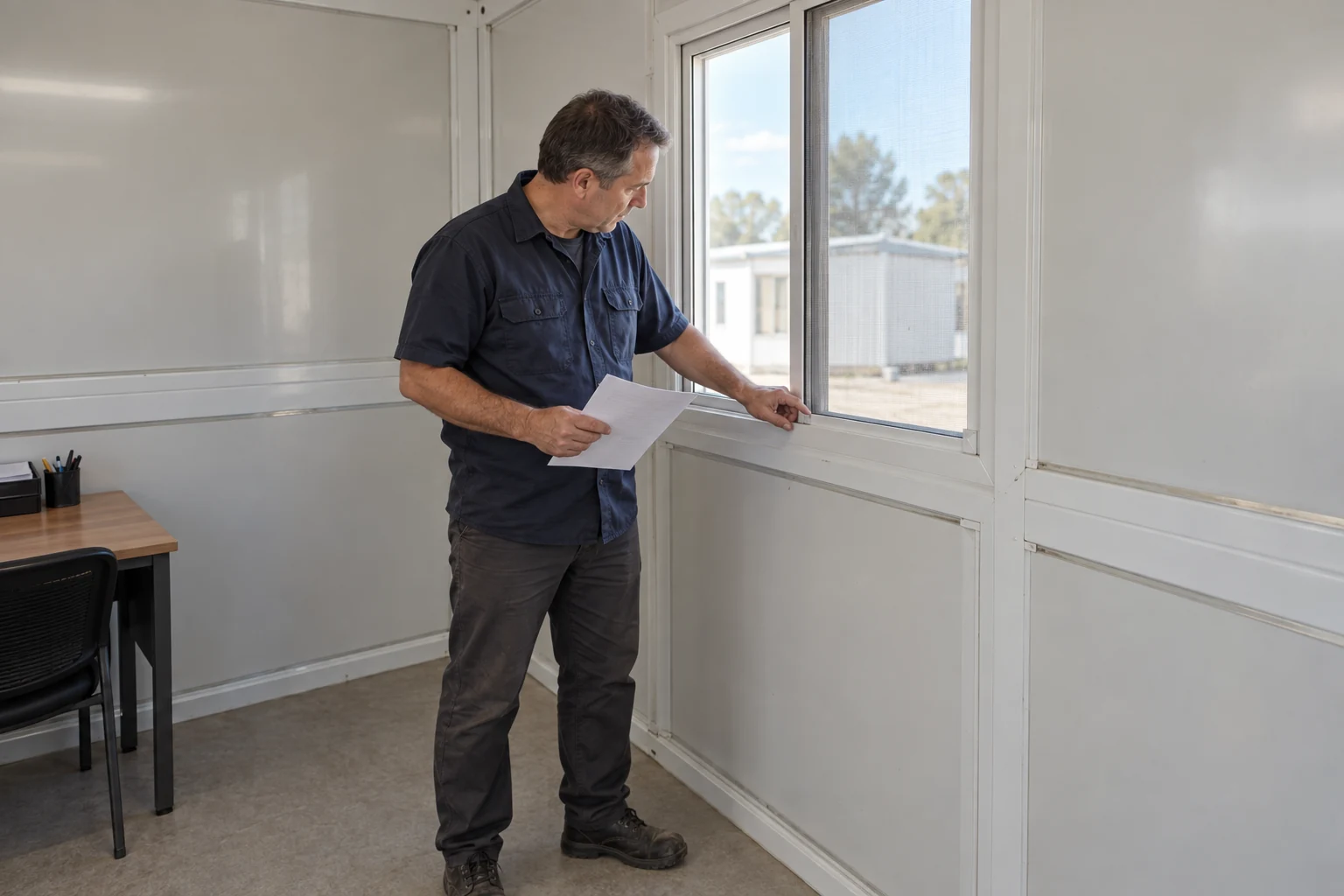
A screen that feels tight is a reason to identify its retention method, not a reason to increase force. Obtain the fitted assembly’s instructions and check whether they require a particular sash position, tool or competent installer. Keep the relevant document available to the person carrying out the task.
A 24 September 2026 Reddit discussion about an older aluminium window describes this uncertainty: the owner saw bottom pull tabs but feared damaging a tight screen. It concerns one existing household assembly, not a folding house. Its useful question is how to identify a release method before acting; its replies do not establish a transferable PQSE procedure.
In its own screen removal and storage guidance, Andersen directs users to the installation information for their particular insect screen. That model-specific approach matters here. A demonstration involving a different retaining system cannot confirm that the clips or frame in front of the operator should move the same way.
Give an unanswered release question a named owner and a next step. Provide orientation photographs, the component reference and the instructions already checked. Do not describe trial dismantling as an inspection method. Where removal remains uncertain, leave that operation outside the cleaning scope until the responsible technical team has supplied an applicable method.
Choose mesh cleaning after checking compatibility
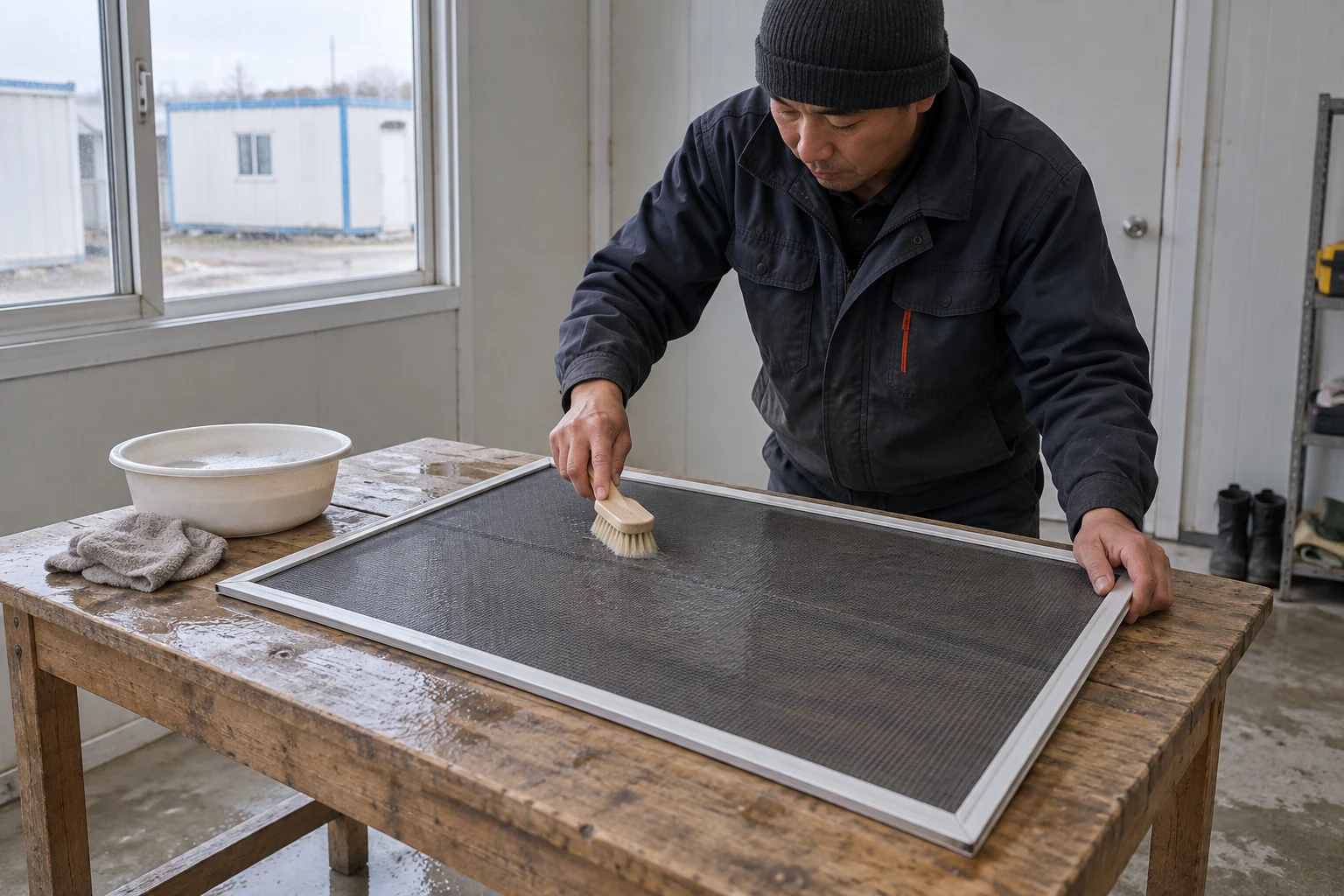
Once an authorised removal method and suitable working arrangement are clear, identify the mesh and frame’s approved care method. Prepare separate equipment for the surfaces involved. A cleaner chosen for glass is not automatically suitable for a painted frame, mesh, gasket or the fittings that hold the screen in position.
For its own insect screens, Andersen’s mesh and frame cleaning instructions specify mild soapy water, a soft brush, a clean-water rinse and drying the frame. These are instructions for Andersen products. They support asking for a gentle, compatible method; they do not confirm a cleaning agent or brush for an unidentified screen supplied in another system.
Write the agreed method into the task description, including any material restrictions and required handling. Identify where the screen will be supported and where water can be used without creating a separate problem. The person receiving the work should know which assembly was cleaned and which concerns remained outside the task.
Discuss stubborn deposits before anyone improvises stronger chemicals or heavier pressure. Record what remains after the permitted cleaning method and request the next appropriate review. An unsuccessful routine clean is information. It is not permission to continue until the surface looks new, irrespective of the material or the approved limits.
| Concern | Information needed | Decision before work |
|---|---|---|
| Mesh deposits | Mesh and frame identity; applicable care instructions | Select a compatible method and support arrangement |
| Glass marks | Which surface is affected and whether it is treated | Confirm the permitted cleaning method for that glazing |
| Unfamiliar retaining fitting | Actual assembly and release instructions | Clarify the method before attempting removal |
| Bent frame or damaged clip | Location and component reference | Obtain assessment or a compatible replacement scope |
| Persistent condition | Before/after observations and work already done | Keep the concern open for the appropriate reviewer |
Keep glass, frame and hardware care distinct

A clean mesh can reveal that a different surface still needs attention. Identify the relevant glass, frame and hardware instructions rather than extending the screen-cleaning method to the whole opening. Keep cleaning materials and observations organised so the operator can explain which component received which treatment and what happened afterwards.
Marvin’s window-washing guidance advises checking whether glazing treatments need special handling and avoiding abrasive materials. It also discourages pressure washing window glass because of possible damage to the assembly. These published cautions are a useful benchmark, not a specification for every window fitted to a container house. Obtain the selected product’s actual care information.
Ask the supplier to clarify any separate instructions for the frame finish, seals and hardware. Record the answer with the relevant component, rather than leaving a general email detached from the asset. Do not assume that a product permitted on one surface is suitable for a neighbouring finish or a moving fitting.
A procurement scope should make this information obtainable. The discussion of container house kit inclusions helps distinguish the delivered package from work and accessories arranged elsewhere. Apply that distinction to the opening: confirm who supplies care information for the actual window and for any screen or fitting subsequently added by another party.
Keep persistent marks and operating changes open
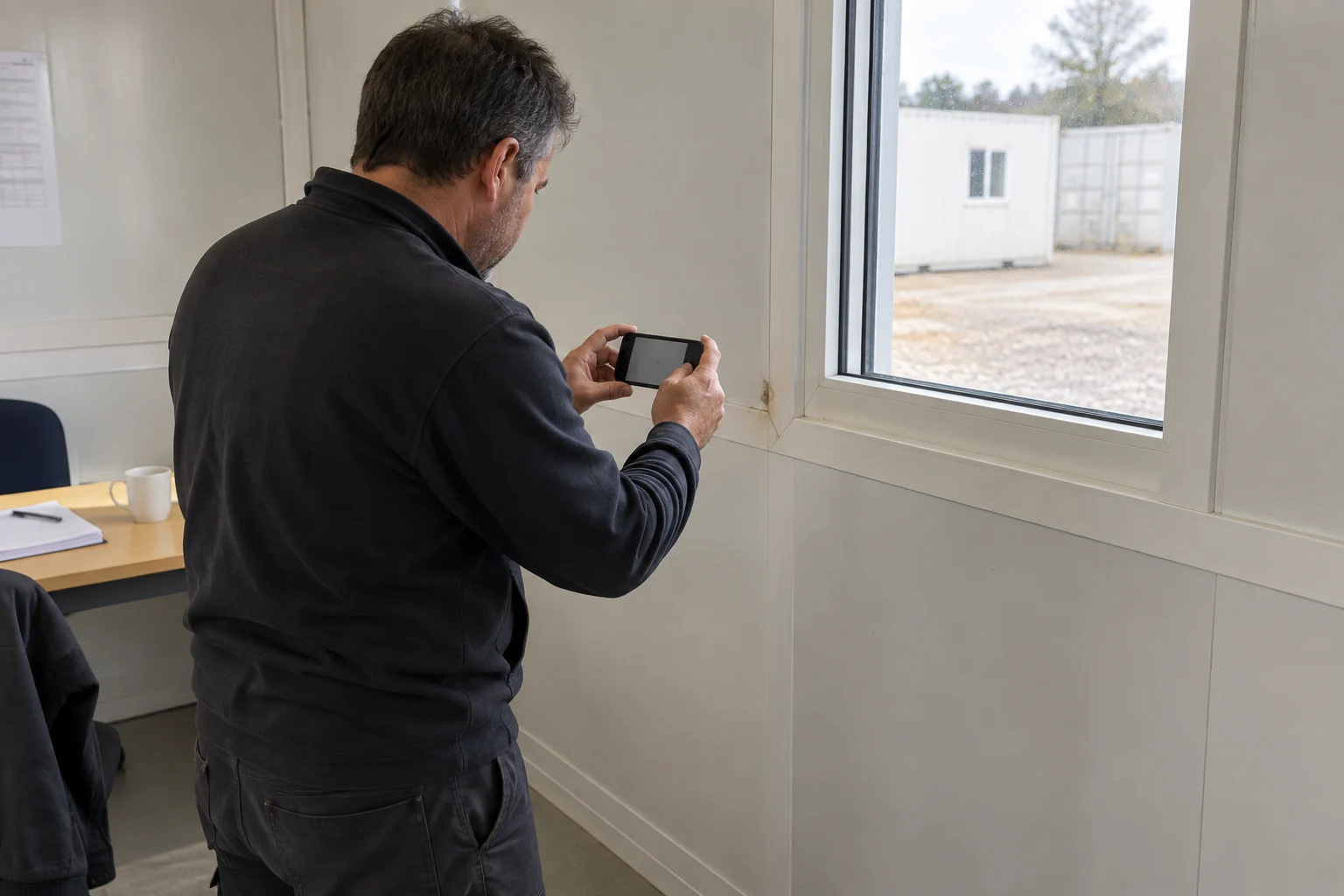
If the agreed cleaning is complete but the reported condition remains, record the result as a remaining concern. Note the affected component, the permitted method used and what changed. Cleaning a visible surface and establishing the cause of a continuing mark or operating difficulty are different outcomes for the maintenance record.
Give the next reviewer useful context: an overview, a closer photograph where appropriate, the task date and a concise history. State whether the observation can be reproduced and under which conditions. Avoid describing an unknown cause as confirmed simply because one explanation seems plausible to the person making the report.
Where assessment or repair is required, identify who authorises the scope and how the opening will be managed in the meantime. Keep that decision separate from an appearance check. The room operator should understand whether the assembly can resume its intended use, needs restrictions or is waiting for a specified technical decision.
Connect the record to the building’s maintenance and repair-closure process. That wider process tracks findings, approved actions and verification. Here, retain the opening-specific information needed for the next visit; a generic entry saying windows done gives little help when the same symptom is reported again.
Check return to position before closing the task

Agree the return-to-use check before the work starts. The responsible person should know what satisfactory reinstatement means for this screen and how any relevant window function is checked. A frame that looks straight in a photograph is not evidence that its retaining fittings are correctly engaged or that the task is complete.
Follow the assembly’s applicable reinstatement method and arrange the relevant verification. Record the installed component’s identity and the outcome. If anything differs from the approved arrangement, keep that difference visible rather than accepting it as a normal result of cleaning. A remaining uncertainty needs an answer from the responsible technical team.
Separate the screen’s presence from the operation of adjacent components. Confirm the checks required by the actual instructions and order information. Do not invent a performance test from a household example or declare an opening secure because a screen has been put back. The verification should describe what was checked and what that result supports.
Keep a straightforward completion record: task undertaken, instructions used, component returned, checks completed and open observations. Where the site has a designated acceptance process, use it. The value is continuity: the next operator can see the current arrangement and avoid repeating a removal attempt based on incomplete recollection.
Give removed screens a protected storage place
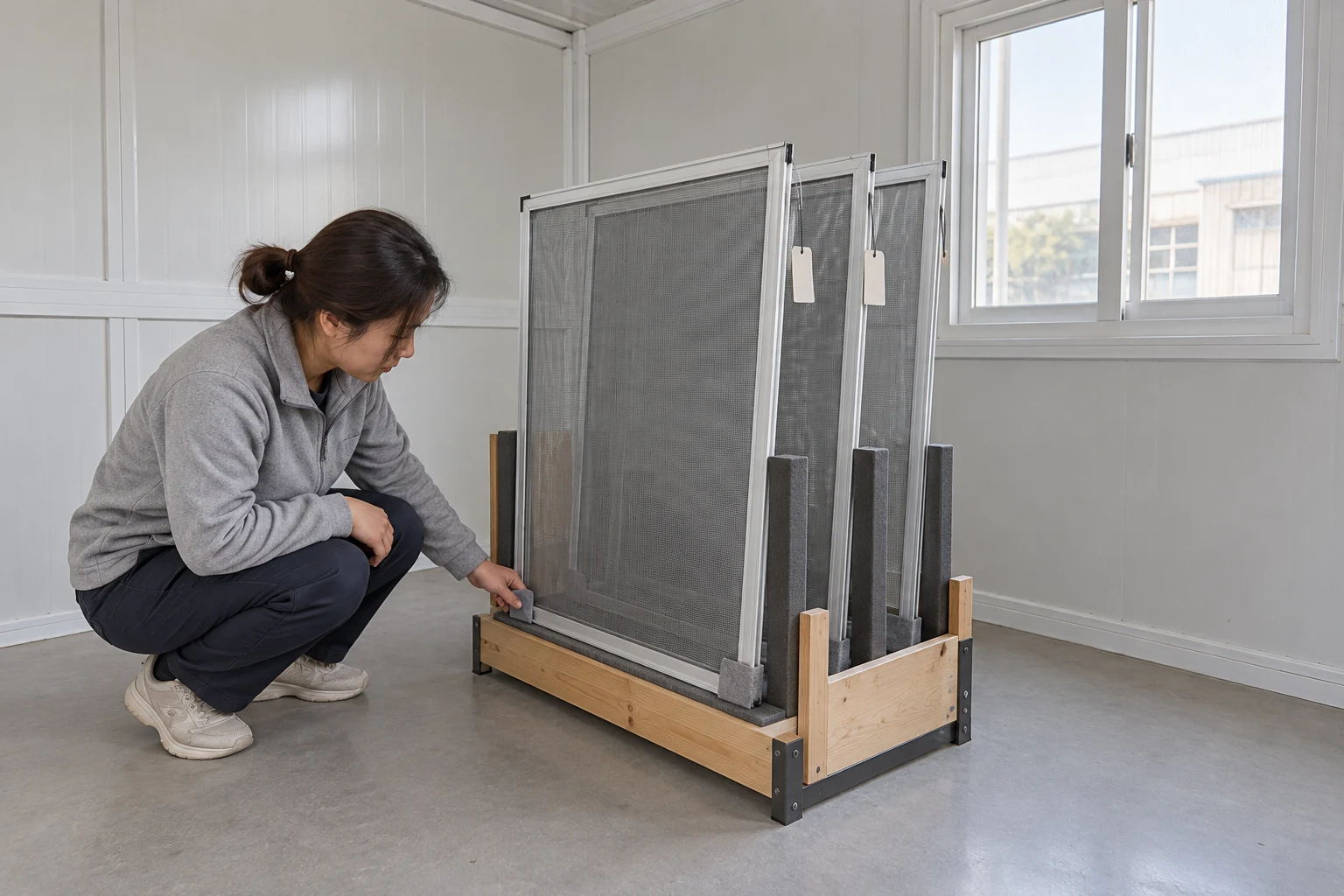
If the authorised plan leaves screens out temporarily, decide where each one will go before it is removed. Connect the stored component to its room and opening using the site’s suitable identification method. Keeping the association clear makes return easier and reduces reliance on memory when several similar frames are handled together.
Andersen’s published storage instructions call for supported screens, a dry, ventilated location and protection from falling objects or pressure on the mesh and frame. This describes care for its products, rather than a storage specification for every system. Obtain the relevant requirements for the selected assembly before adopting an arrangement.
Allocate a place where the component is not casually moved into another job’s materials. A spare frame, a cleaned screen waiting to return and a damaged item waiting for assessment have different statuses. Keep those differences in the storage record and identify who may release each item for use.
Include temporary storage in the operating discussion when a group of buildings changes use or is prepared for later movement. State whether the screen is expected to stay fitted, be separately protected or require another arrangement under the actual instructions. The storage plan should preserve component identity, not silently decide the building’s transport configuration.
Specify replacement as an assembly question
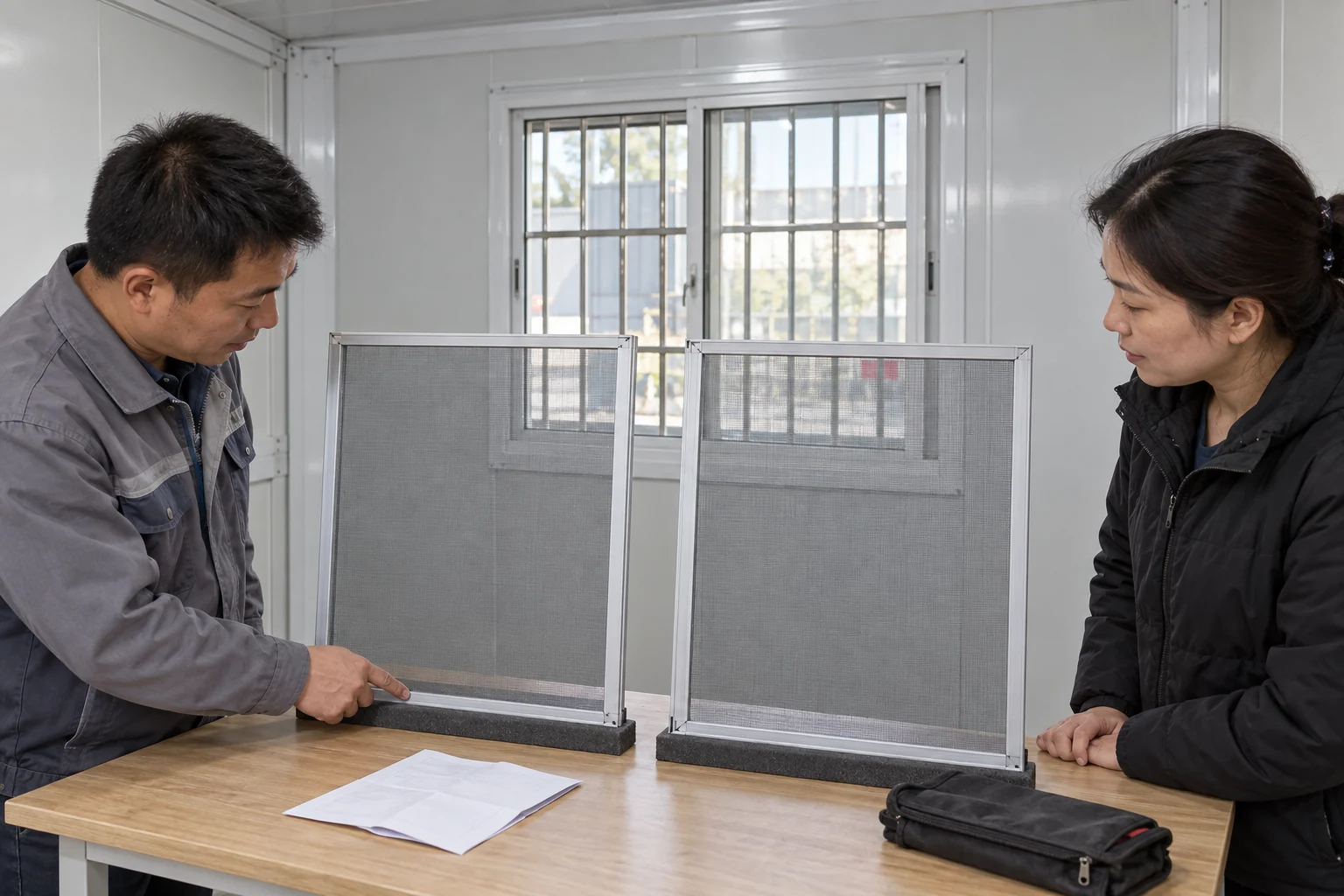
A replacement enquiry needs more than an outside width and height. Explain what failed, which assembly it belongs to and which components the supplier proposes to replace. Ask for the relevant compatibility confirmation. Similar appearance does not establish that a new frame will engage the existing fittings or allow the intended operation.
Have the responsible supplier establish the dimensions and interfaces required for its proposed part. Record the measurement points it requests and the orientation of the component. Avoid supplying a single unexplained number as though it were a complete manufacturing specification. Clarify whether the enquiry concerns mesh only, a frame, fittings or a combined replacement.
Distinguish a measured frame from the opening it sits within. Mark the requested reference points on an orientation photograph and let the supplier resolve any missing interface information. This makes an enquiry reviewable without turning the operator’s first measurements into an unapproved replacement design.
For repeat orders, the quality-control and acceptance discussion should identify what evidence will demonstrate conformity to the agreed opening specification. Keep any accepted change visible in current documents. A different retaining fitting may affect future removal and care even if the room looks similar to the previous batch.
Ask how replacement information will be retained after delivery. Record the supplied reference and applicable instructions with the room or unit. If the new component changes the maintenance method, update the operating information as part of acceptance. This prevents the next caretaker from treating an old instruction as current merely because the building itself has not moved.
| Proposed scope | Clarify before ordering | Retain at acceptance |
|---|---|---|
| Mesh only | Material and compatibility with the existing frame | Confirmed scope and applicable care information |
| Complete screen | Required dimensions, orientation and retention interfaces | Component reference and removal/reinstatement instructions |
| Retaining fittings | Fit to the existing assembly and approved installation scope | Fitting reference and the completed verification |
| Changed window or option | Implications for drawings, screen and operating information | Current accepted configuration and responsible contacts |
Make care information part of the order handover
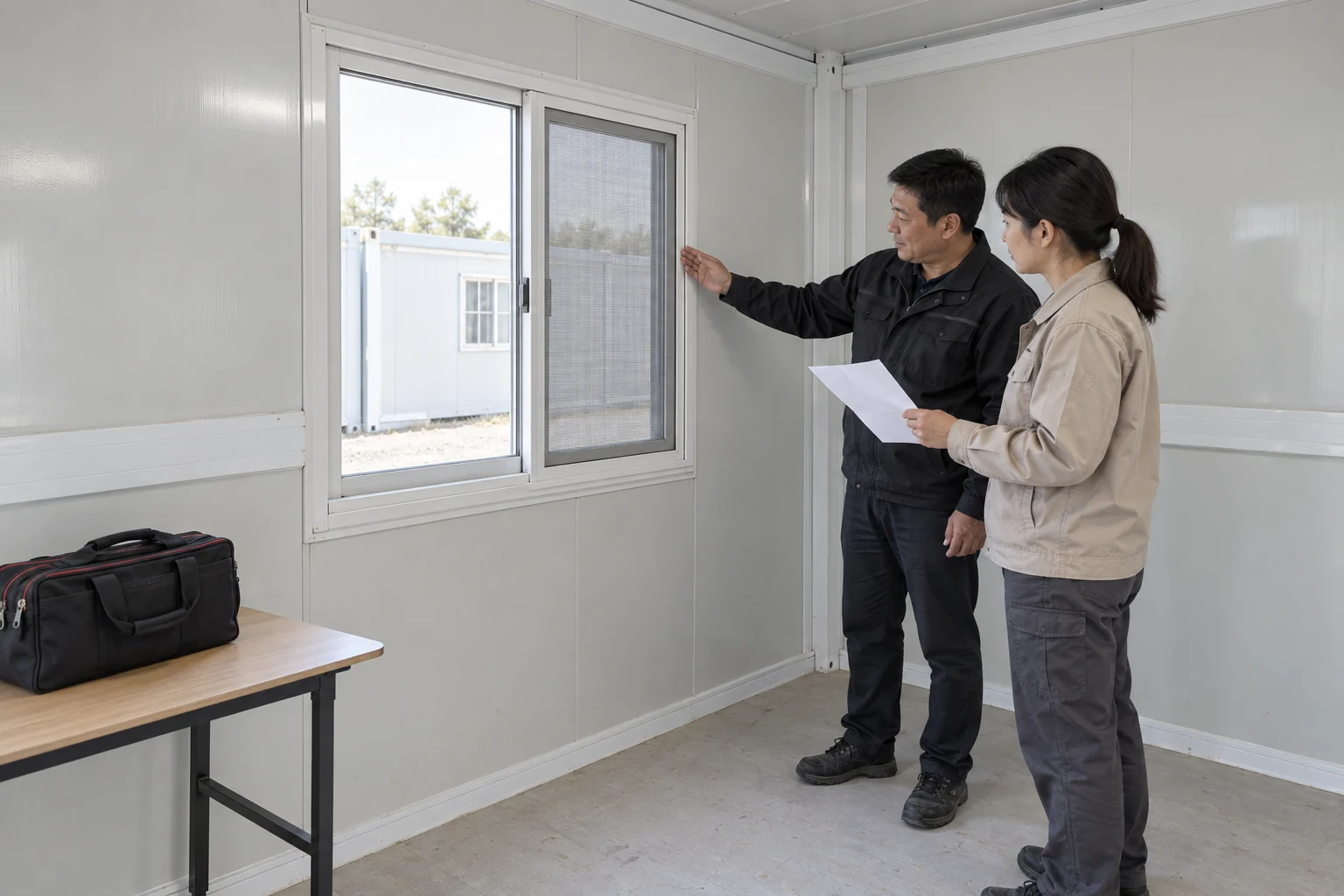
Resolve the information requirement while the order is still being defined. Ask for the selected opening schedule, the supplied screen option and the applicable component instructions. Tell the supplier who will operate the buildings and manage maintenance, so the handover can address the actual team rather than an assumed household routine.
If several room types use different openings, keep the differences visible. Describe any later procurement or local installation that changes the screen arrangement. The operator needs to know where information comes from for each installed component and whom to contact when an identifier or instruction is missing.
The customisation and order-document process provides a place to resolve these choices before manufacture. Include the opening and screen decisions in the agreed scope rather than leave them as an informal visual preference. A useful answer identifies what is proposed, what remains unconfirmed and which document will govern the supplied arrangement.
At handover, check that the information matches the delivered configuration and is accessible to the intended operating team. Keep a route for unresolved questions and subsequent replacements. The practical outcome is modest but valuable: routine care can start from the actual assembly, while unfamiliar removal, damage and compatibility questions reach the right person before action is taken.
Buyer questions
Can I remove any screen by pulling its tabs?
No. Pull tabs do not identify every retaining arrangement or removal sequence. Obtain the instructions for the fitted assembly and clarify an unfamiliar release method with the responsible supplier. If it remains uncertain, exclude removal from the current cleaning task instead of testing progressively stronger force.
Is mild soap automatically suitable for the whole window?
No. Mesh, glazing, finishes, seals and hardware can have different care instructions. The manufacturer examples in this guide are bounded references, not approval for an unknown assembly. Confirm the selected component’s permitted method and restrictions before choosing chemicals, brushes or other cleaning equipment.
Does a fitted insect screen provide window-fall protection?
No. CPSC warns against relying on insect screens to prevent children falling from windows. The responsible project team must establish the applicable safety arrangements for the actual opening and occupancy.
How often should screens be cleaned on a folding house?
Use the fitted product’s care information and the operator’s observed conditions. Do not import another brand’s interval as a PQSE requirement. Record relevant exposure and use, identify the basis of the agreed task schedule and review unresolved findings with the appropriate technical team.
Sources and scope
- Andersen, Clean Your Insect Screen’s Mesh and Frame. Manufacturer instructions for Andersen screens; no cleaning agent or interval inferred for an unidentified PQSE opening.
- Andersen, Proper Removal and Storage of Insect Screens. Model-specific removal information and supported, protected storage for its own screen products.
- Marvin, The Best Way to Wash Windows. Manufacturer benchmark for glazing-treatment checks, material compatibility and cleaning cautions; not a PQSE component specification.
- US Consumer Product Safety Commission, Publication 5124, March 2015. Window-fall safety boundary; insect screens are not child fall protection. Local project requirements remain separate.
- Reddit, r/HomeImprovement, 24 September 2026. One owner’s uncertainty about a tight older window screen; a question-discovery example, not a PQSE case or technical procedure.
This is an editorial decision guide, not a product manual or a reported PQSE maintenance case. The qualitative tables organise questions for the actual supplier and operator. No model-specific durability, cleaning interval, price or performance dataset was available for the proposed opening, so no numerical comparison or performance chart is presented. Generated photographs are illustrative and do not verify a component or completed procedure.