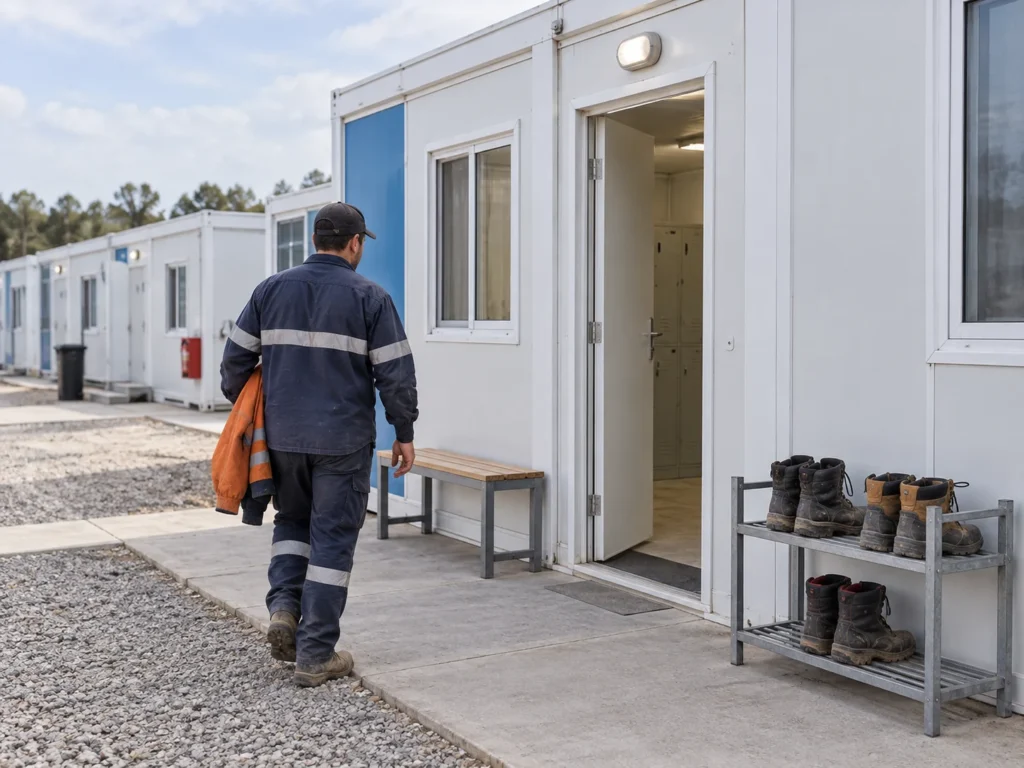
Plan luggage storage between mining rotations as a separate service. Establish which belongings the operator accepts, how a place is allocated, what happens while the owner is away and who may collect the item. Then choose the room and furniture around actual packed bags and the retrieval task. A count of beds gives too little information to settle those decisions.
This matters within a mining camp accommodation proposal because a returning worker may receive a different room while belongings remain at camp. The buyer needs an agreed storage arrangement that survives that change. This guide develops the procurement and operating questions; it does not report a PQSE mine installation or prescribe a legally approved store. All photographs illustrate review situations rather than measured capacity or security performance.
Find out what the camp actually agrees to keep
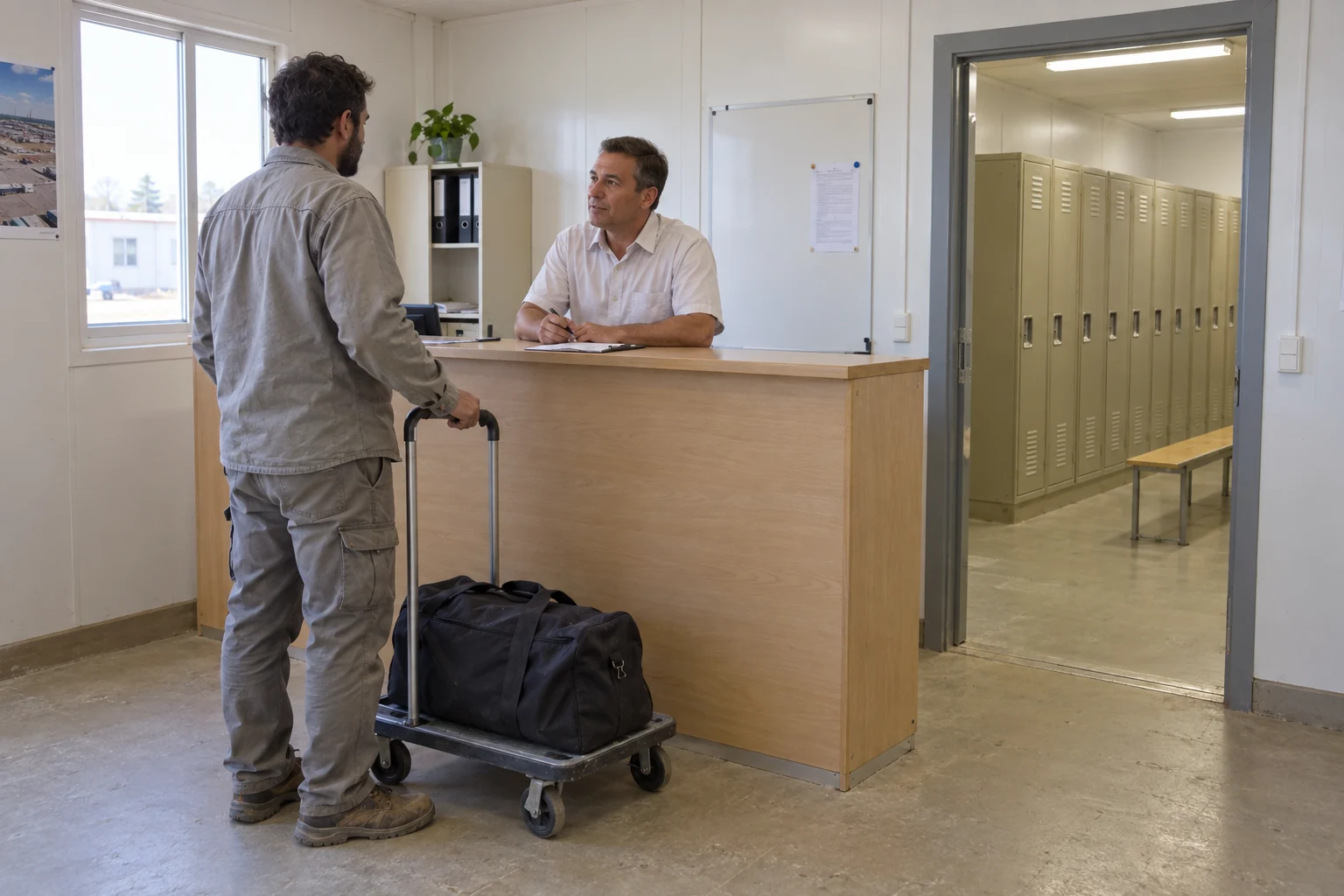
Before a worker leaves a duffle behind, the reception team needs a clear answer about acceptance. The useful discussion starts with the operator's agreed service and the owner of that decision, before anyone points to an apparently empty locker.
A 19 September 2026 first-swing discussion in r/AusMining includes informal advice about leaving work belongings at camp and travelling home with a smaller bag. Another reply suggests containing items left in a locker. These are individual comments, not confirmation that the questioner's nominated operator offers storage.
Ask the proposed operator whether off-roster belongings are accepted under the actual accommodation agreement. Record the eligible users, accepted item categories, allocation method and point of contact. A resident should receive the same answer from reception and their employer. Conflicting informal messages can otherwise turn an assumed convenience into an unresolved collection problem.
Clarify what changes when a worker moves rooms, changes employer or finishes a contract. An assigned sleeping room may be needed by someone else during the break. The storage arrangement should explain whether a bag moves, remains in an independently allocated place or must be collected. Include who communicates the decision before departure.
Separate personal luggage from workwear and other stores
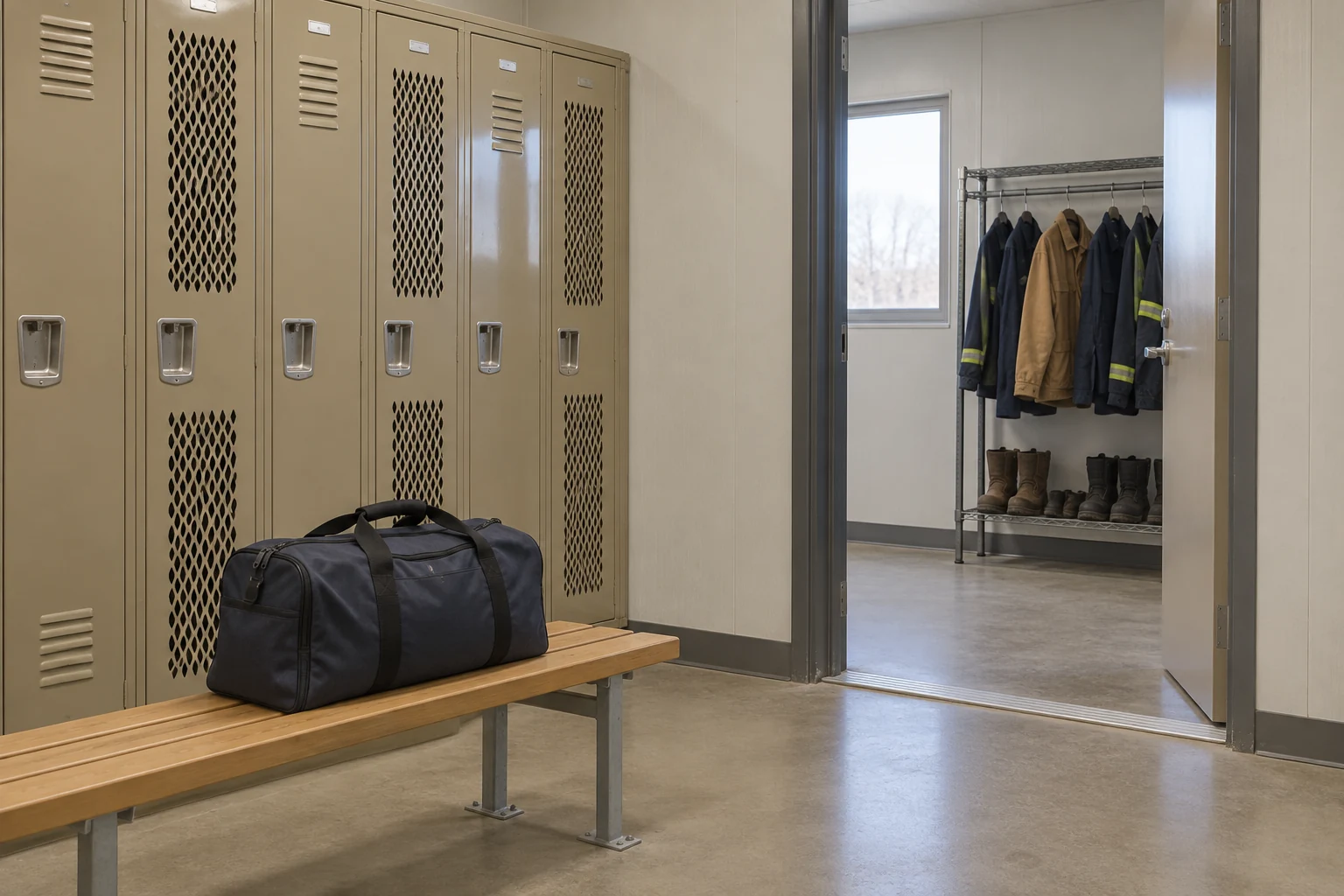
A closed clean duffle and a used work garment can create different storage needs. Identify the item categories at the start of the brief so furniture selection does not quietly combine belongings that the site's handling arrangements keep apart.
Safe Work Australia's December 2025 facilities code recommends accessible, secure personal storage and separation from protective clothing or equipment where contamination is possible. That is Australian model guidance; the responsible project team must establish its applicable local requirements. It does not provide a luggage capacity for this camp.
Build a short acceptance list with the employer and camp operator. Distinguish ordinary personal belongings, work clothing, tools and any item that needs a different permission or handling route. The list should tell reception where a question goes when an item is outside the agreed category, without asking staff to assess an unknown hazard themselves.
A workwear laundry or drying service also has a different destination and return process. Use the camp laundry and drying-room planning guide for that adjacent decision. Keeping the arrangements explicit helps prevent a retained travel bag from becoming the unofficial place for damp or otherwise unsuitable clothing.
| Item category | Permission to establish | Space or handling question | Assumption to avoid |
|---|---|---|---|
| Ordinary personal luggage | Which residents and contents the operator accepts | Packed dimensions, collection route and assigned location | Every bag brought to camp can remain during a break |
| Potentially contaminated workwear or PPE | Employer's approved handling arrangement | Required separation and a responsible service destination | A closed bag removes the need for separation |
| Personal tools | Whether this service accepts them at all | Separate tool-storage and handling requirements | The personal-luggage agreement covers equipment |
| Valuables and important documents | Operator's stated exclusions or conditions | Owner's suitable alternative arrangement | A locked cabinet establishes accepted liability |
| Restricted or unknown contents | Named authority to assess or refuse acceptance | Escalation route before storage | Reception should improvise a hazard assessment |
Measure the packed bag and the way it will be retrieved
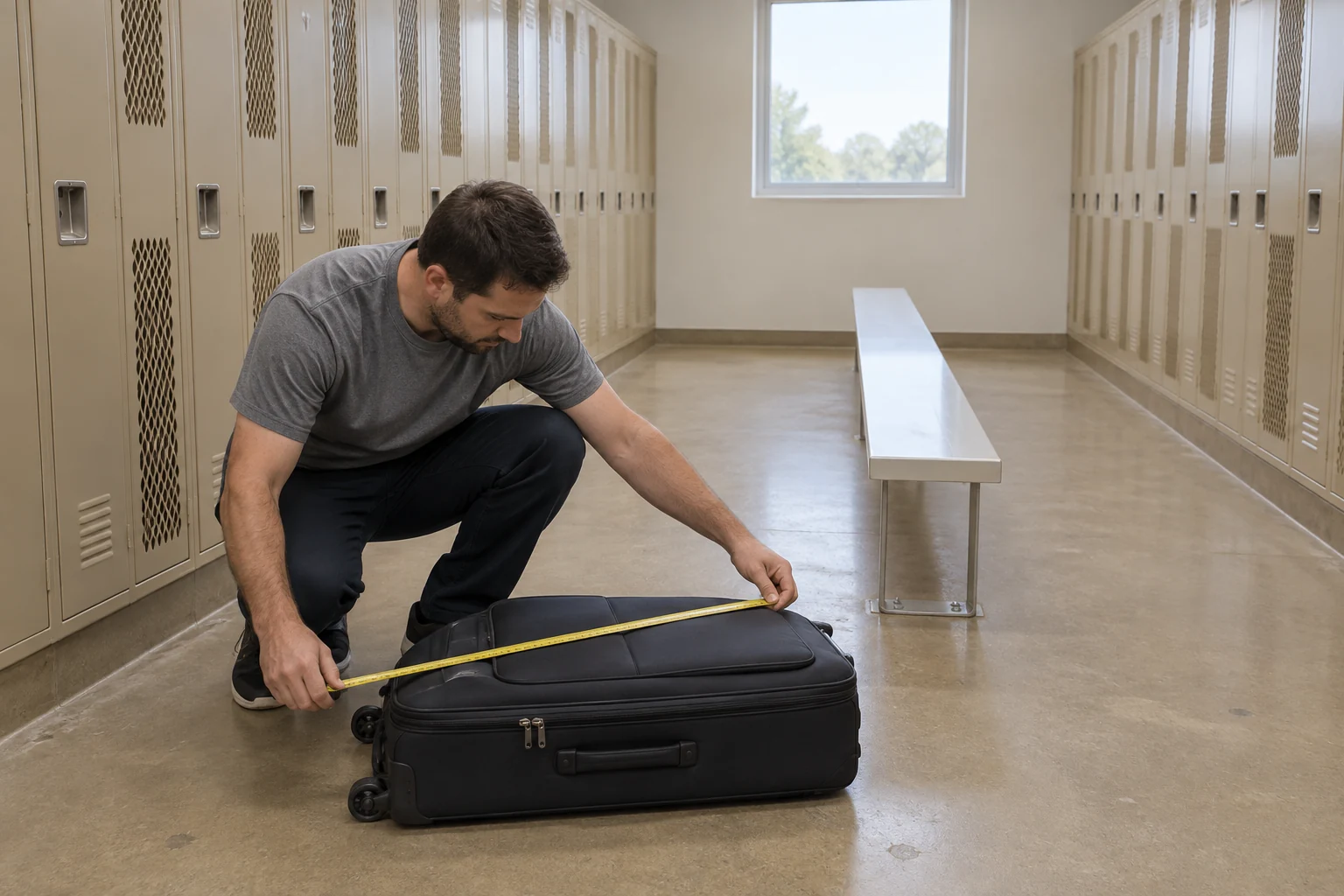
Measure the bag in the condition in which it will arrive. Include projecting handles and wheels, and watch how someone turns it toward the proposed opening. That observation is more useful than matching a luggage label to an exterior locker photograph.
Collect a representative range of permitted bag types from the intended users. Record the loaded outer dimensions and features that affect placing or withdrawing them. Soft luggage may change shape when packed; a hard case may need room to rotate. Preserve which actual bag was checked so a later furniture revision can be assessed against the same object.
Request the selected cabinet's usable internal dimensions, opening geometry, shelf information and relevant load ratings. Check its complete arrangement with the actual bag rather than assuming the door opening equals the inside space. Hinges, dividers, a projecting latch or a shelf can change where the bag can go and how it comes out.
Treat an oversized item as a defined exception. Identify whether it has an alternative location, requires prior approval or cannot be accepted. An empty space above a cabinet should not become an informal overflow shelf. The buyer needs confirmation of the actual furniture and fixing arrangement from the parties responsible for its selection and installation.
Record the result with the bag identifier and furniture revision: where the item was placed, which opening was used and whether another stored item had to move. Keep a failed fit visible instead of compressing a soft bag unusually for the demonstration. The intended user should be able to repeat the ordinary collection movement without relying on a special arrangement known only to the reviewer.
Count retained belongings across rotations
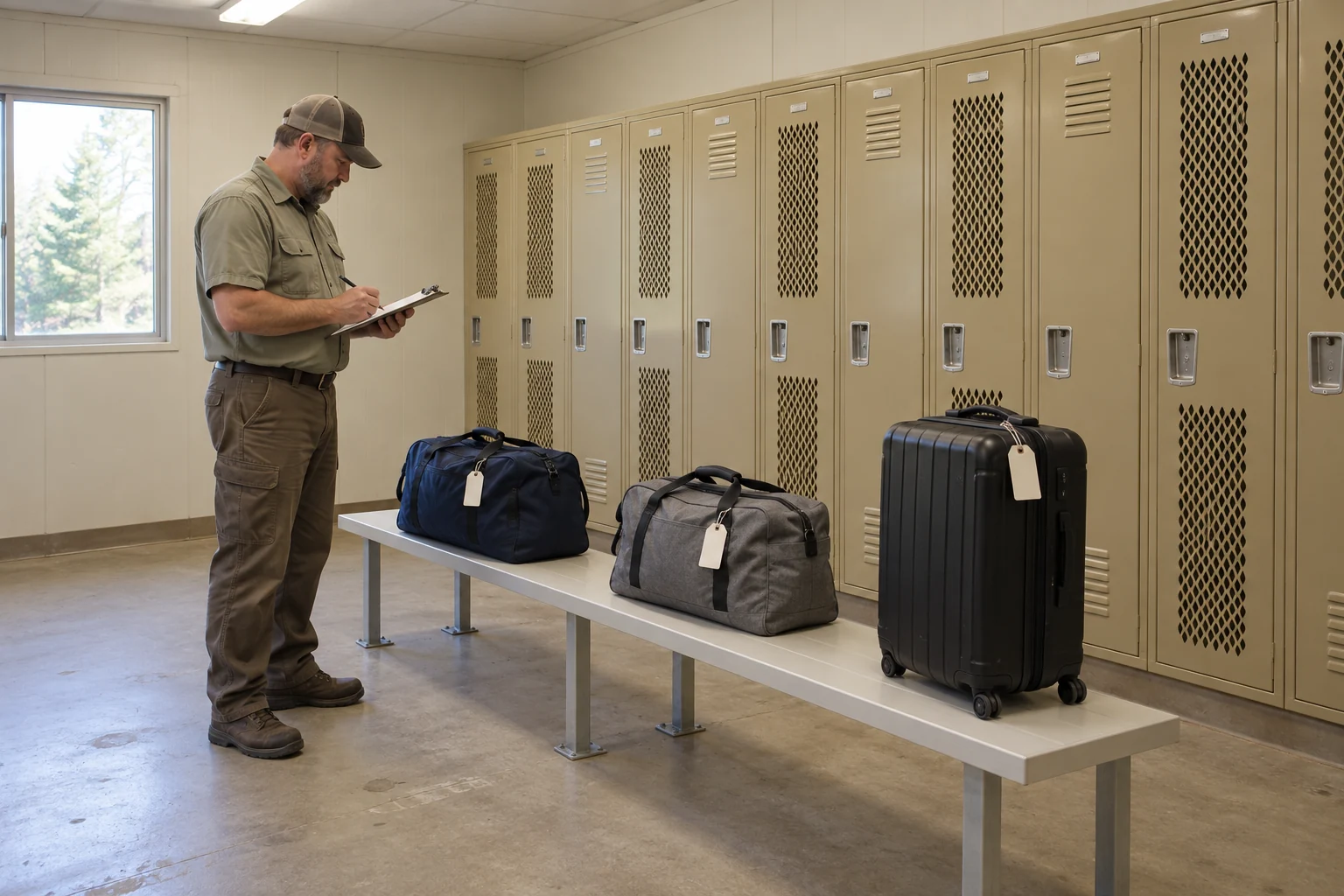
The store may contain bags belonging to people who are nowhere near the camp that day. Its planning inventory should therefore identify retained items and incoming collections together, rather than follow only the occupied bedroom list at the moment of inspection.
Ask the operator for the actual retention and collection pattern, or clearly identified assumptions where the service is new. Separate bags left during normal breaks, new arrivals, delayed collections and unresolved items. Those categories can overlap. A stable room population does not prove that the stored-bag population stays stable over successive rotations.
Prepare a dated inventory view for representative changeover periods. Identify the relevant user groups and how long their belongings may remain under the proposed agreement. Keep an assumption awaiting employer confirmation visible. A single percentage added to bed count cannot represent an unknown combination of bags per person, permission and collection timing.
The broader worker-camp resident and service brief provides context for those groups. This storage review needs its own confirmed inventory inputs. When a contract, roster or acceptance category changes, the operator should revisit the demand basis before reserving additional places or promising continued availability.
For an illustrative overlap, an outgoing group might leave belongings before another group's authorised collection is complete. Those items would coexist even if their bedroom bookings do not. Use the actual operator's dates to examine that possibility. The example supplies a question for the inventory review, not a predicted queue, a recommended reserve or a calculated number of bags.
| Inventory state | Input to obtain | Why it affects the review | Decision owner to name |
|---|---|---|---|
| Normal off-roster retention | Accepted user groups and their actual bag holdings | Stored items can remain after residents depart | Employer and storage operator |
| Arrival and departure overlap | Dated drop-off and collection patterns | Available places can change during the same handover period | Camp operations |
| Additional or oversized bags | Approved categories and measured items | A nominal location may not fit every permitted item | Operator and furniture reviewer |
| Delayed collection | Actual outstanding inventory and agreed response | Unresolved items may continue occupying allocated places | Storage service owner |
| Unknown or disputed items | Identification state and next action | Unconfirmed belongings should not disappear into an available-capacity total | Assigned exception owner |
Choose between assigned lockers and a managed bag store
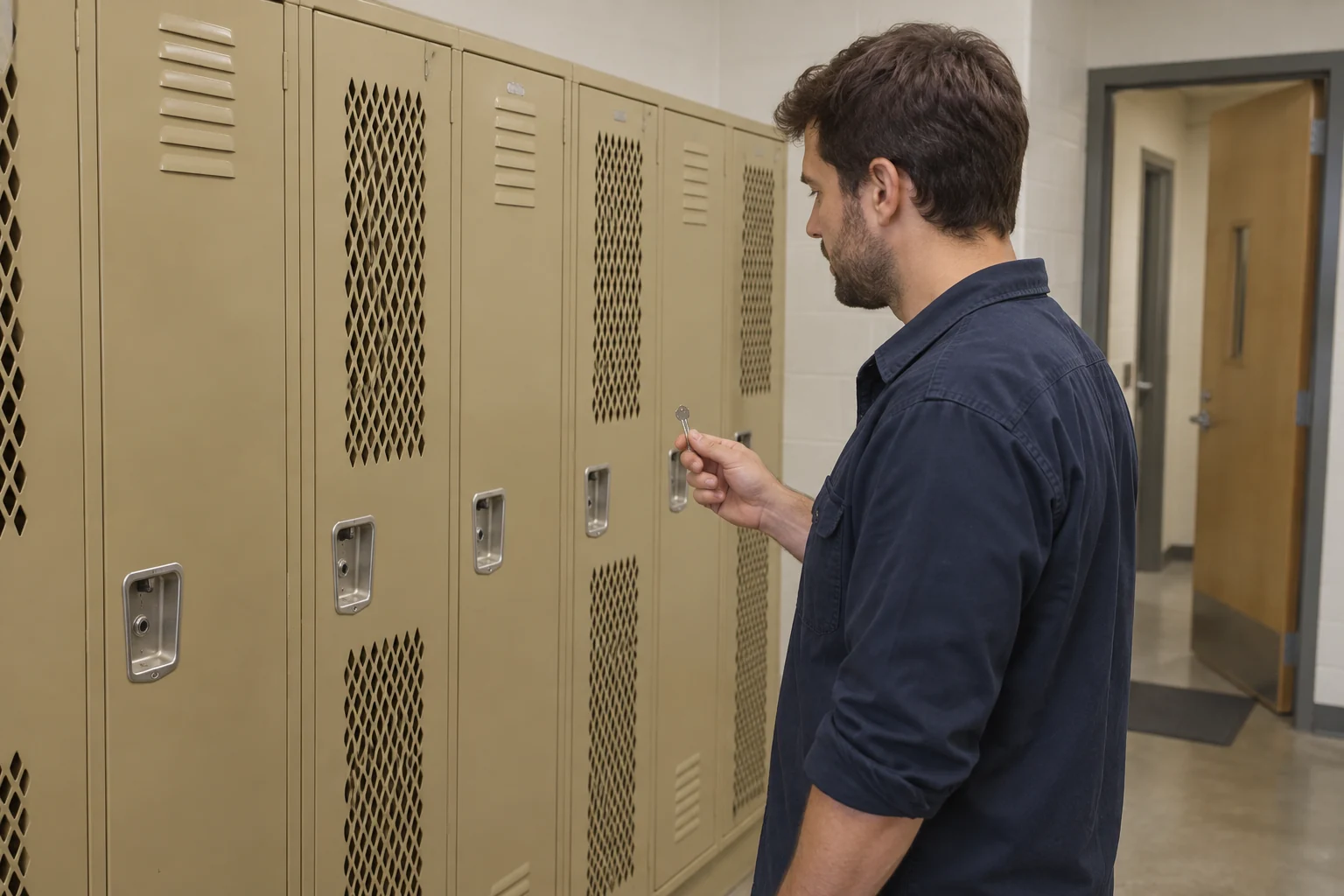
A resident with an individually assigned key uses a different service from a worker collecting a bag through reception. Choose the access model with the operator, then review the furniture and staffing needed to make that particular arrangement work.
An assigned compartment can simplify identifying a place, but it still needs allocation, key or credential management and a response to a changed user. Confirm whether access remains available while the worker is off roster and how a lost credential is handled. A photograph of a locking door cannot answer those operating questions.
An attended store places retrieval with designated staff. The arrangement needs an identifiable location for each accepted item and a way to confirm the requested bag before release. Include the staffing and access hours that the operator actually offers. Do not assume the arrival desk can absorb collection work during its busiest check-in period.
For either model, test what happens when the original location becomes unavailable for cleaning, repairs or layout changes. Agree who authorises a move and updates the record. The resident should not discover that belongings were transferred only after arriving at the old location. Select the arrangement for the service the parties can operate consistently.
Consider collection outside the normal desk period as a separate decision. A worker arriving before reception opens needs to know the agreed arrangement before travelling. The operator might confirm an authorised alternative or require collection during its offered hours. Either answer affects the user's plan. A cabinet key should not silently become permission to enter a closed or otherwise restricted building.
Test the trip from transport to storage and back
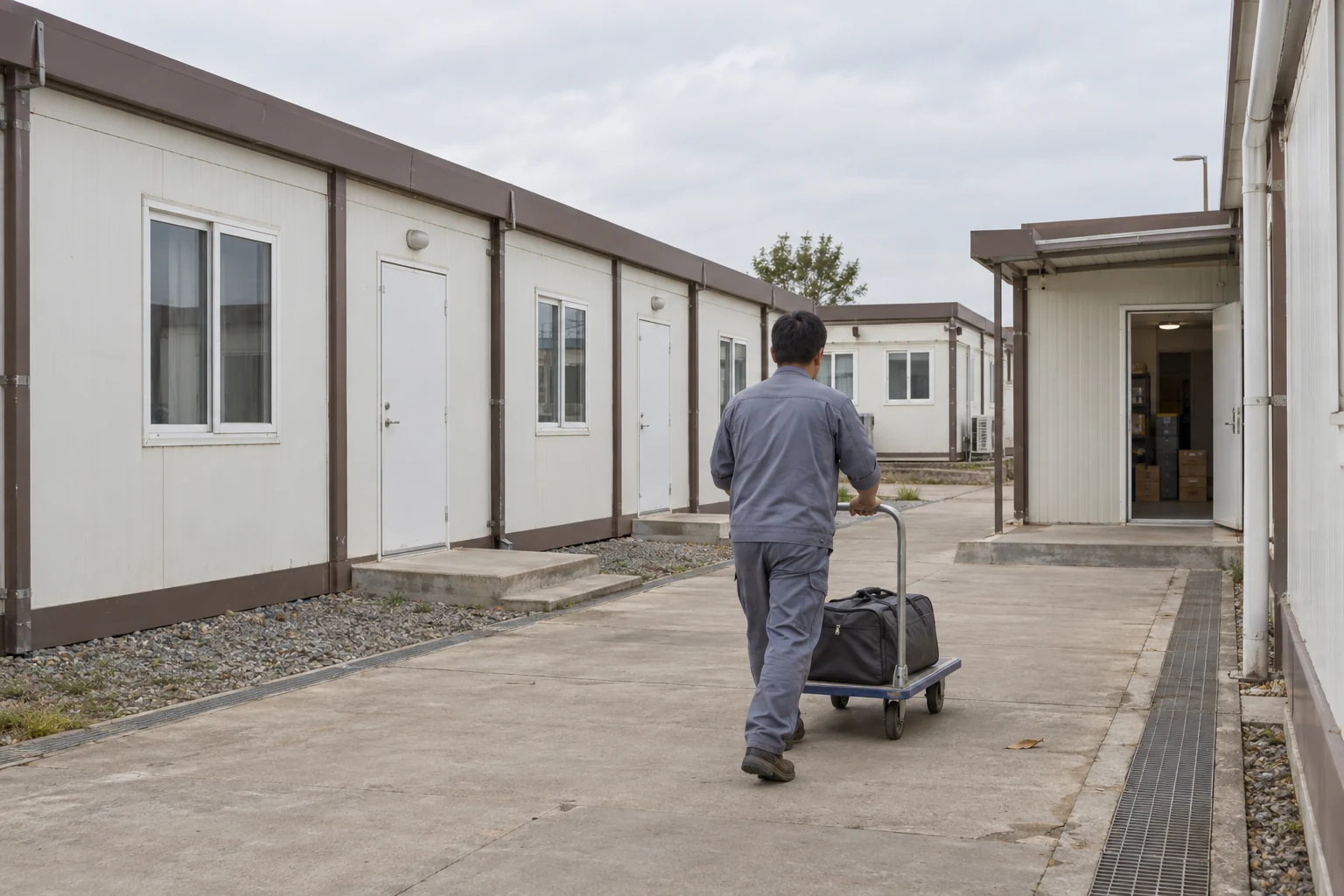
Follow a packed bag from the arrival point to its proposed place, then repeat the journey for collection. Look at doors, turning points and waiting positions in ordinary weather and darkness, with the activities that will actually be happening nearby.
Mark the arrival location, reception decision point, storage entrance and onward route on the camp plan. Identify where someone may pause while permission or a location is checked. That waiting position should be considered in the layout rather than improvised in a doorway when a vehicle delivers several workers at once.
The mining-camp circulation and service review connects this journey with the wider village. For luggage, examine whether the route passes sleeping-room doors, intersects maintenance access or requires bags to be carried through another service space. Preserve the site's actual access and emergency arrangements while resolving those conflicts.
Try the route with the permitted bag and any selected handling aid before fixing the furniture position. Account for the aid's turning and storage needs as well as the bag itself. The appropriate local reviewers should establish clearances and access requirements for the actual destination; this walkthrough does not supply a universal aisle dimension.
Review handling before fixing storage heights
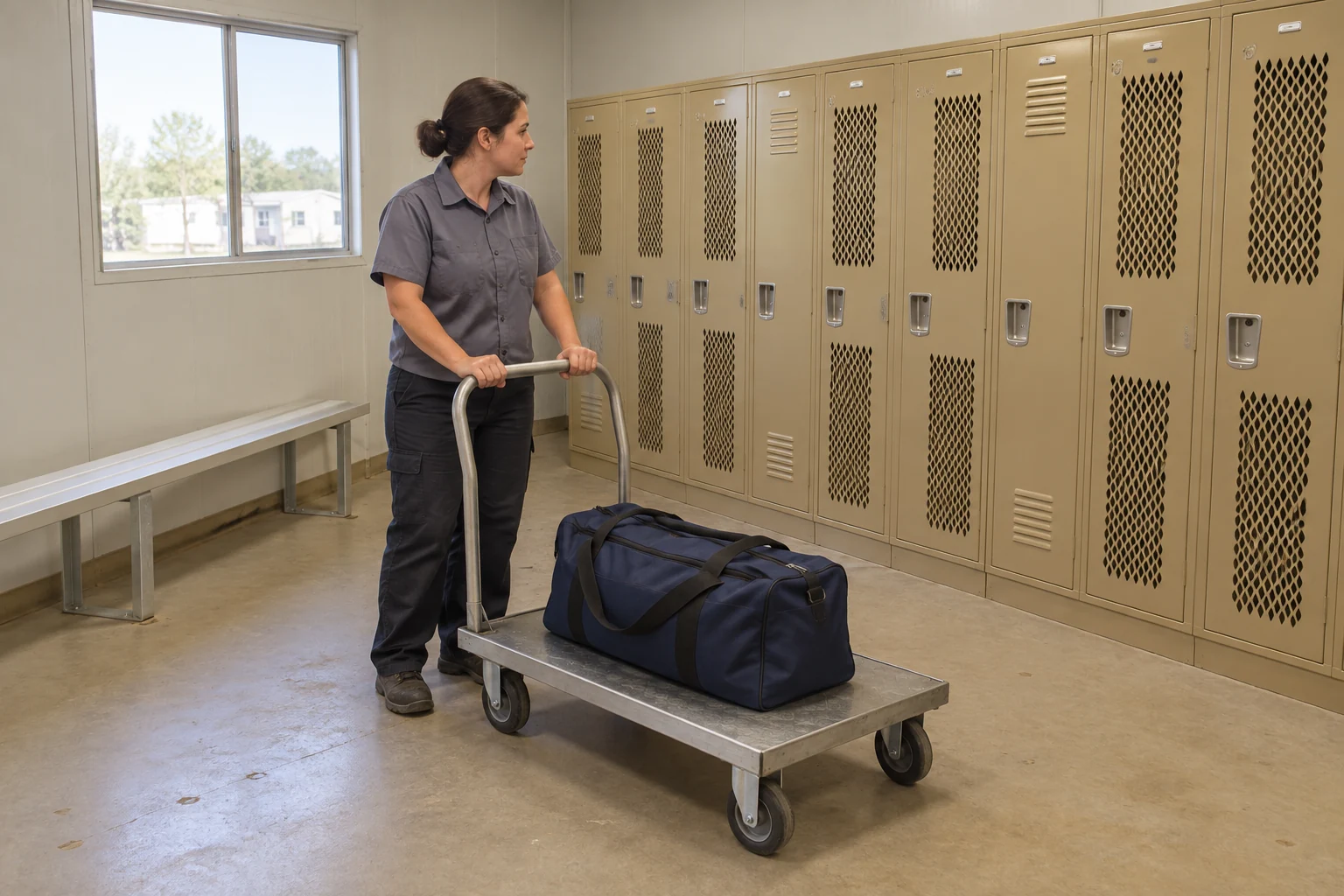
The task continues after a trolley reaches the room. Someone may still have to move a bag onto its assigned shelf and remove it later. Review those complete movements before treating a cabinet's empty spaces as usable storage positions.
Safe Work Australia's October 2018 manual-tasks code explains that no single safe weight covers every worker and circumstance. Its assessment considers the load, posture, grip, layout and task conditions. A travel baggage allowance or furniture load rating therefore cannot establish that the proposed handling task is suitable.
Have the responsible task reviewer examine the actual objects, retrieval frequency and people involved. A bag that fits may still require an awkward reach or an unplanned movement around a door. Preserve the review's assumptions with the proposed layout. Changes in item type or shelf position should be brought back to the reviewer.
Consider whether the service can avoid a repeated handling step through a different location or arrangement. Where an aid is selected, confirm its suitability, available space, maintenance and responsibility through the applicable assessment. This article does not prescribe a lifting technique or authorise staff to handle an unfamiliar load on the strength of a photograph.
Record acceptance and authorised collection
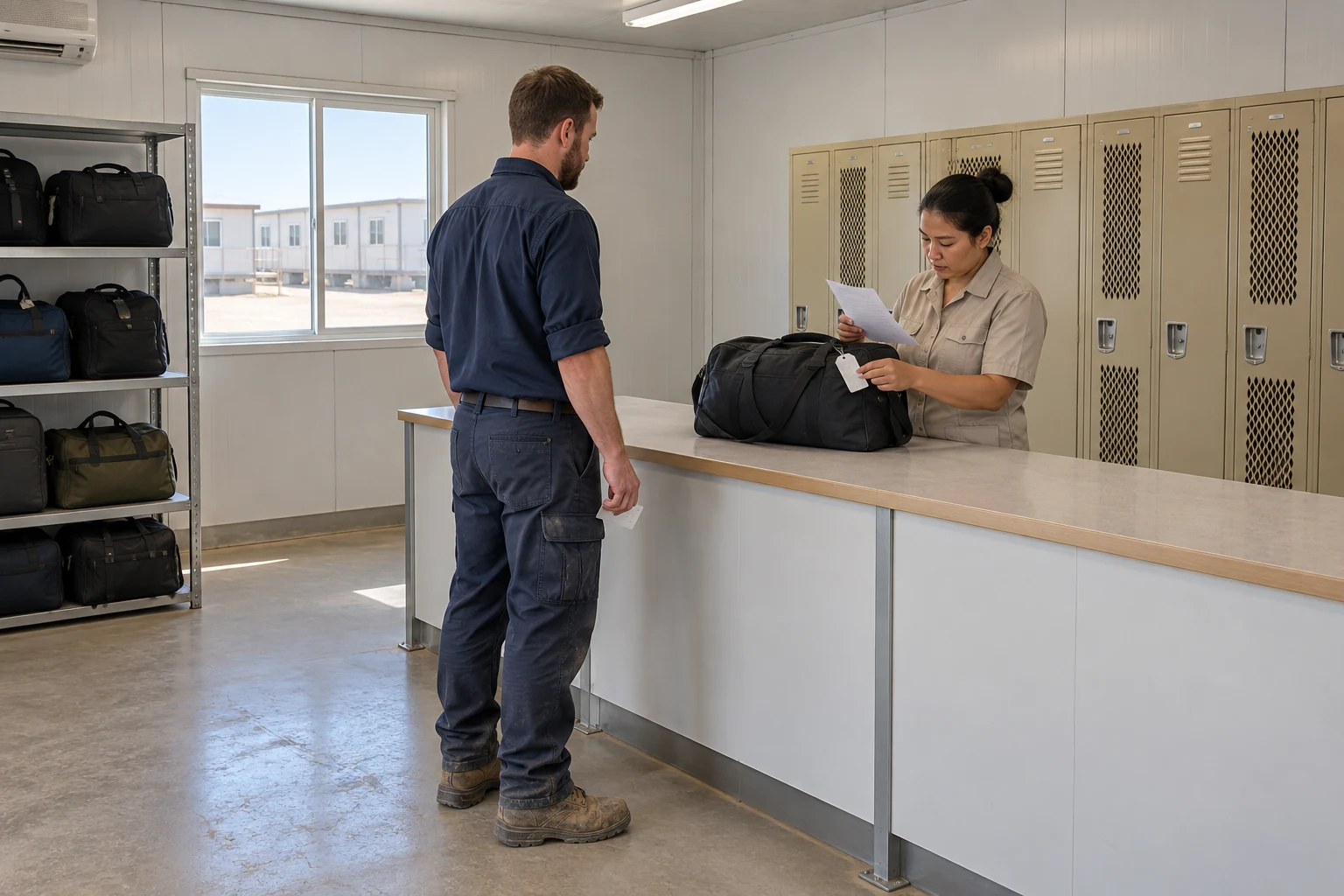
At collection, the staff member should be able to connect the requested item, its recorded place and the authorised recipient. Make that connection possible without putting names, travel plans or other personal information on public labels around the room.
The published Broadsound Camp storage terms from Anaman provide a named Queensland example: collection is restricted to authorised people, identification may be required, and certain contents are excluded. These are that operator's undated public terms. They do not establish the policy, liability or legal conditions for another project.
Agree a record suitable for the service. It can connect an opaque item identifier with the owner, accepted contents category, location, acceptance date and expected collection arrangement. Record external condition only to the extent the agreed process requires. Establish who may view or update the information and how a location change remains traceable.
Confirm the method for approving collection by someone else. Staff should know which authority can resolve a discrepancy instead of releasing a bag because a caller knows its colour. The reception or record workspace may be provided through a container office arrangement; the building itself does not supply the custody procedure.
| Handover stage | Evidence to retain | Who confirms | Unresolved state to preserve |
|---|---|---|---|
| Before acceptance | Eligible user, contents category and permission | Appointed storage service owner | Approval or suitability still awaiting a decision |
| Accepted and located | Item identifier, location and agreed condition record | Authorised receiving staff | Any incomplete identification or disputed condition |
| Ready for collection | Requested item and approved recipient | Staff assigned to the collection process | Identity or collection authority not yet confirmed |
| Location or condition exception | Observed issue, affected record and next action | Named exception owner | Item remains unresolved until the decision is recorded |
| Uncollected or contract-end item | Contact attempts and applicable agreed procedure | Operator and responsible contractual reviewer | No disposal or release assumed from a missed date |
Keep the room maintainable while bags remain stored

Check whether staff can clean the floor and inspect the room while the accepted belongings stay in place. A layout that requires every bag to be moved for ordinary upkeep adds handling work and makes the stored locations harder to keep reliable.
Give cleaning and inspection their own route through the furnished arrangement. Discuss where cleaning equipment waits, which areas remain accessible and who can authorise movement of stored property. The service should not rely on residents being present to make routine access possible, because the purpose of retention is that they may be away.
Assess the room conditions with the responsible building and facilities team. Ask how leaks, dampness, dust or inappropriate heat will be recognised and addressed, and which accepted belongings are sensitive to those conditions. Do not infer a preservation guarantee from a closed cabinet or a sealed travel bag. Define who investigates a reported problem.
If storage is incorporated into a configured detachable container building, confirm the actual enclosure, openings, furniture and services proposed for that use. A building-family name does not define its finished storage environment. Any relocation or altered fit-out should bring the relevant condition and operating assumptions back into review.
Agree what happens when collection does not go to plan
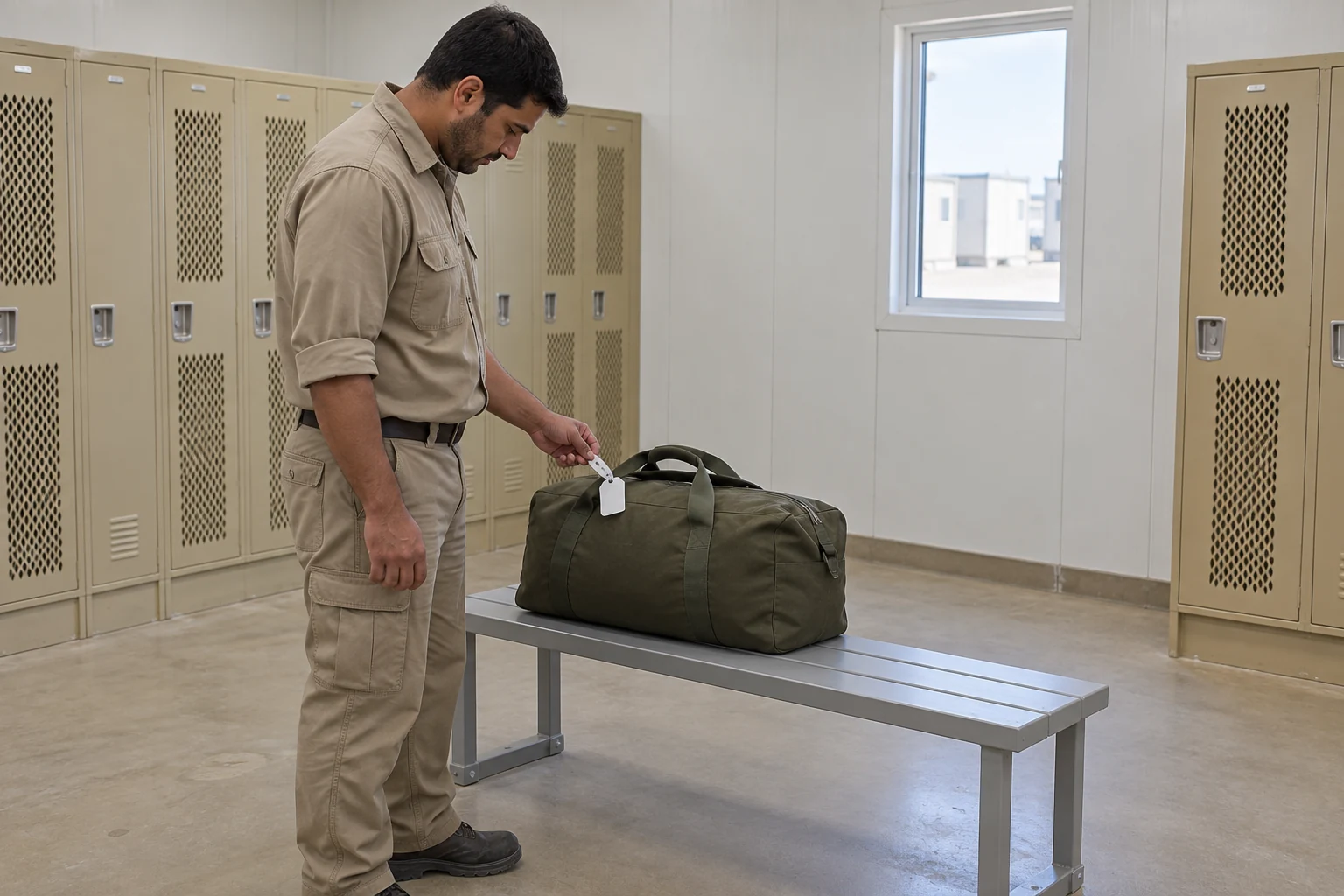
An unidentified or uncollected bag needs a visible decision owner. Keep it connected to an unresolved record and an appropriate assigned place, so its uncertain status cannot be mistaken for an empty location or an item available for someone else.
Discuss foreseeable exceptions before opening: a missing tag, disputed ownership, reported external damage, a changed collection arrangement or belongings left after the user's contract ends. Name who receives the report and who can decide the next action. Avoid putting a receiver in the position of interpreting several employers' agreements without support.
The actual agreement should address the retention period, contact and notice process, escalation and any eventual property decision. Have the responsible operator and contractual or legal reviewer establish what applies at this location. Another camp's published term cannot set that period, authorise disposal here or establish how a dispute should be resolved.
Review outstanding items separately from ordinary retained luggage. Track what information remains missing and when the assigned owner will revisit it. Where capacity is affected, communicate the true available arrangement before accepting further bags. A plan should retain uncertainty honestly rather than remove an inconvenient item from the inventory while leaving it in the room.
In an illustrative contract change, the employer's accommodation contact could change while a resident's bag stays in the same place. The item is still connected to an owner even when an old contact no longer responds. Keep the relevant records and assign the next communication through the agreed procedure; do not let a changed room list alone determine what happens to the property.
Ask for the building and operating scope together
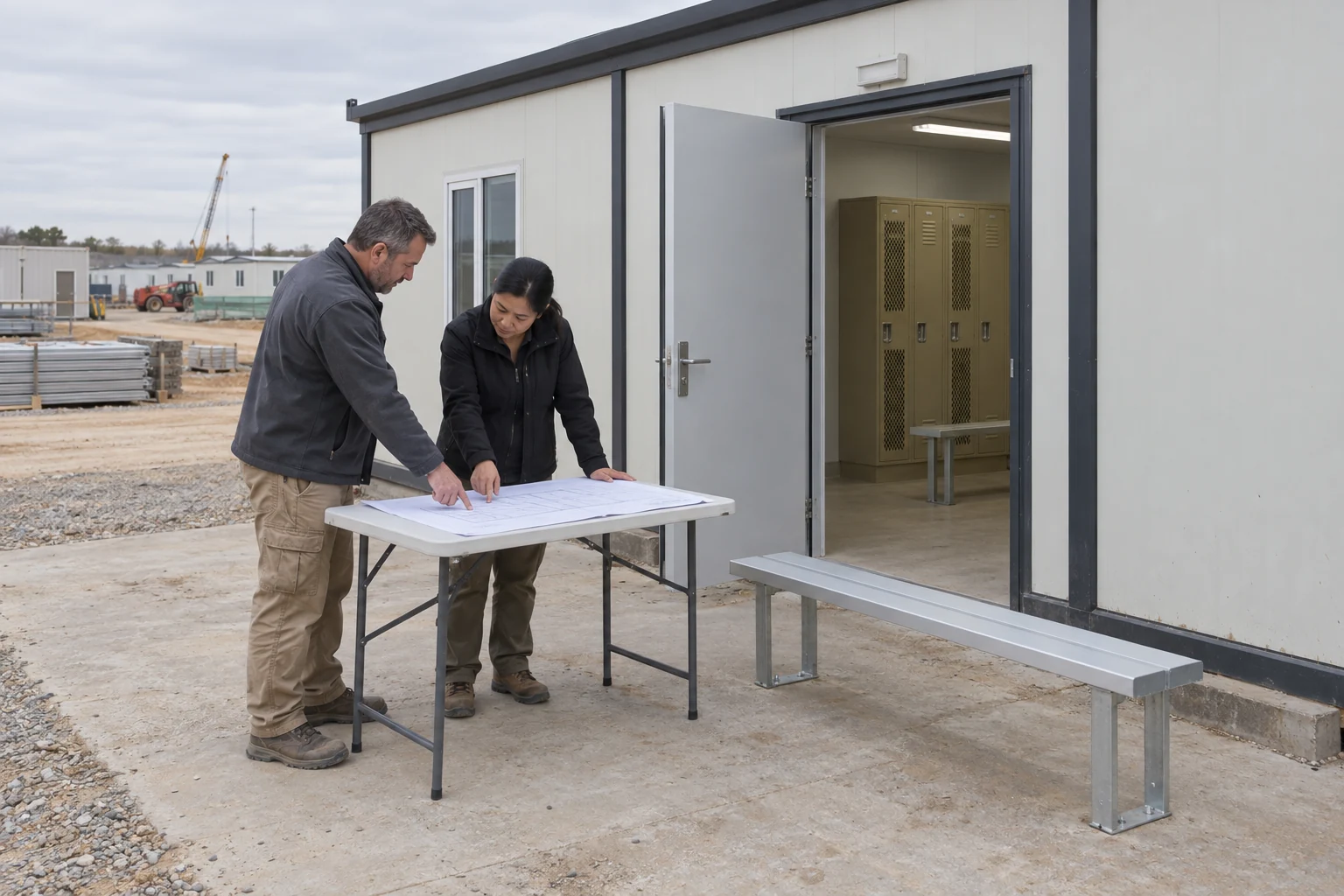
Bring the operator's accepted-bag brief to the building discussion. The supplier needs the actual use, objects and furniture arrangement; the operator needs an explicit service boundary. Resolve both before an attractive room proposal becomes a promise about storage.
The worker-camp building and shared-space proposal can identify the accommodation context. For this store, add the destination, operating period, accepted item range, measured examples, demand assumptions, access model, cleaning needs and site route. Mark the inputs still awaiting employer or local-reviewer confirmation so the supplier can qualify its response.
Request a scope that identifies the enclosure, openings, finishes, actual furniture, fixings, lighting and any proposed environmental services. Establish which party supplies and installs each item and which documents accompany it. Storage permission, resident communication, staff availability, custody records and contractual property decisions should have their own operating owners rather than disappear into the building price.
Before acceptance, review the fitted space using the agreed bag examples and collection scenario. Compare what was supplied with the approved scope, record the remaining issues and identify the responsible correction owner. This is a project-specific review, not evidence of a tested PQSE capacity. Keep the layout and operating agreement together when the service begins.
Require unresolved decisions to travel with the quotation. If the proposed furniture still needs bag-fit review, mark that condition beside the offered arrangement and identify who will complete it. If storage staffing is outside the building supply, identify its owner separately. This keeps a preliminary proposal useful without turning an assumption into an apparent inclusion when the order is issued.
Buyer questions
Can a worker leave belongings in an allocated bedroom between swings?
Only if the actual operator has agreed to that arrangement. Confirm what happens if the room is reassigned and who is authorised to move or collect the belongings. An occupied-room allocation and an off-roster property service are separate decisions; the agreement should connect them where they interact.
Does a locker count settle how much luggage can be retained?
No. The permitted bag range, usable opening and interior, allocation method and retained inventory still need confirmation. Check representative packed objects against the selected furniture and the retrieval task. The count may describe a proposed arrangement, but it does not establish an operating capacity for unknown belongings.
Can personal bags share a store with used protective clothing?
The relevant employer and safety team need to establish the handling boundary where contamination is possible. Obtain that decision before combining uses. Confirm where each category goes and who operates its service; a closed duffle or a separate label is not evidence that the required separation has been achieved.
What information makes a storage quotation useful?
Provide the location, operating model, permission categories, measured bag examples, demand assumptions, proposed access and site route. Identify furniture and maintenance requirements already agreed by the responsible reviewers. Ask the supplier to state its building and fit-out scope, while the operator confirms collection, staffing and property responsibilities.
Sources and scope
- Safe Work Australia, Managing the Work Environment and Facilities, December 2025. Australian model guidance; no luggage-capacity or universal clearance rule inferred.
- Safe Work Australia, Hazardous Manual Tasks, October 2018. Task assessment context; no universal safe bag weight.
- Anaman, Broadsound Camp public storage terms. Named Queensland operator example; policy edition date not displayed.
- r/AusMining, first-swing discussion, original post 19 September 2026. Individual packing comments used for question discovery, not prevalence or verified camp policy.
The inspection and procurement questions are editorial applications for the proposed service. Local project reviewers establish applicable requirements and actual operating terms. Newly generated photographs are illustrative and supply no measurement, security rating or completed-project evidence.