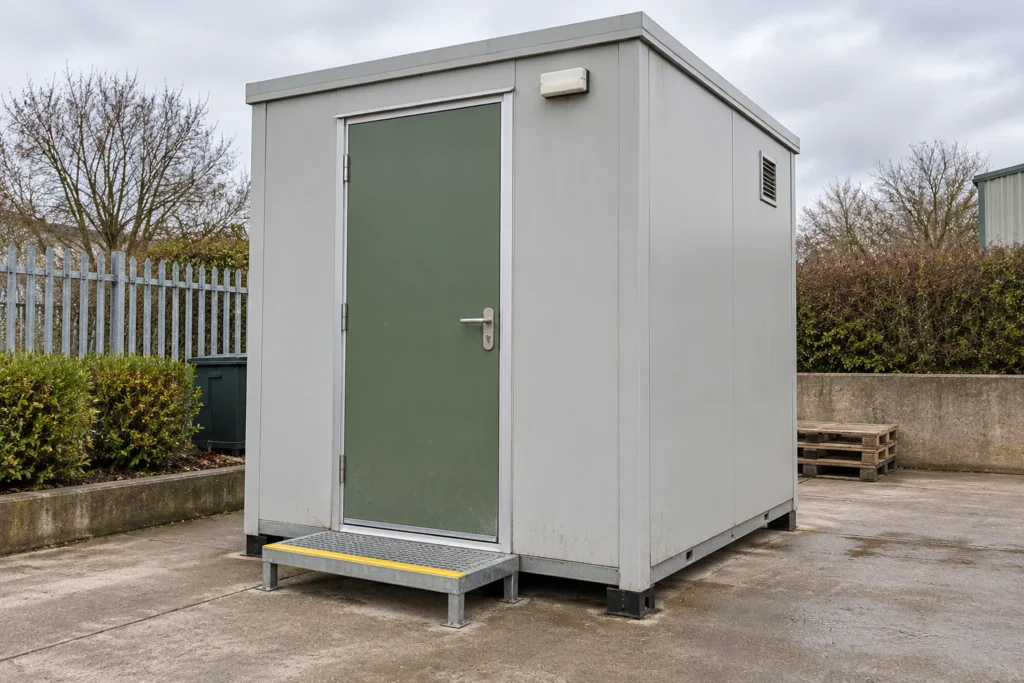
After a reported pallet-rack impact, use the site reporting and control procedure immediately, then keep the affected location, current restrictions and technical response connected. A repair appointment is not a decision to resume use. The warehouse owner needs an identifiable event, the applicable rack information and a named process for changing the restrictions after the necessary review.
The coordination problem can begin with a brief message: a vehicle touched a rack, a driver noticed a change, or the next shift found an unexplained mark. Meanwhile, purchasing may be arranging a replacement and dispatch may be expecting the aisle back. Those conversations answer different questions. Bringing them into one understandable event record helps the team avoid losing the current operating condition between departments.
This guide addresses industrial pallet racks inside a prefab warehouse. It provides buyer and operator questions, not a method for grading damage, unloading a rack, straightening a member or approving its capacity. Apply the actual site procedure and competent technical decisions. The photographs are newly generated illustrations; they do not document a PQSE incident, inspection or accepted repair.
Start with the event and the place it happened

Identify the affected location using the site’s established rack and aisle references. Describe what was observed from a permitted position, when it was noticed and who made the report. The first record should help the right person find the event without asking the reporter to enter the affected area or diagnose the structure.
Describe the observation before assigning its cause
Keep an observation separate from an explanation. A driver may report a contact, while a later employee may notice a visible condition without witnessing its cause. Preserve that difference. Recording an assumed collision as a confirmed event can misdirect the investigation; recording a known contact merely as a cosmetic mark can remove relevant context from the response.
For example, consider a hypothetical report that names only the aisle. A long run may contain several locations, and a second employee may have seen something elsewhere. Keeping the accounts separate until the responsible team links them avoids turning two observations into one assumed event. The aim is a findable, traceable report, not a staff investigation of structural condition.
Use an event reference that survives ordinary conversations. The warehouse location, report time and responsible contact are more useful together than a photograph forwarded without explanation. Where images can be obtained under the site procedure, associate them with the location and their time. They help locate a concern; they are not measurements of remaining capacity.
Place the event within the prefab warehouse operating brief. The shell, floor, storage equipment and operating team may have different suppliers. Establish which package and responsible party the report concerns instead of assuming that the building manufacturer supplied or accepted every rack inside it.
| Field | What the entry helps identify | Question still requiring a separate decision |
|---|---|---|
| Location reference | The reported aisle, run or bay | Which area is subject to current controls? |
| Event and time | Witnessed contact or later observation | What assessment response is required? |
| Report source | Who can explain the observation | Which account is confirmed, assumed or incomplete? |
| Current instruction | Where staff find the applicable restriction | Who may change that instruction? |
| Receiving contact | Who has taken responsibility for routing | What is the next action and its owner? |
Make the reporting route work across shifts

Make the contact route available where staff can use it without approaching the rack. Include the responsible role, the accepted communication method and the alternative when the usual person is absent. A message left in someone’s private inbox may identify a concern while leaving the operating team unaware that a response is needed.
For Great Britain, HSG76’s reporting guidance calls for immediate reporting of observed damage or safety concerns to the nominated racking-safety role. It also addresses employee information and training.
Check the receiving side of the process as carefully as the sending side. Who acknowledges the report? Who brings it to the person able to arrange the technical response? Who tells affected workers where to find the current instruction? These are proposed coordination questions. A sent message and an acknowledged operating decision should carry different status in the event record.
Consider the contractor, temporary worker and evening shift as actual recipients. They may know an aisle by a different name or lack access to the same system. An agreed location reference and a usable contact route are more dependable than expecting everyone to know the day supervisor personally. Test the handover through a discussion of an ordinary absence, rather than inventing a response-time promise.
Identify the rack as well as the building

Collect the available rack identity and applicable documents through the responsible team. Keep a supplier name, installation reference, drawing revision and current location together where they are known. Mark an unidentified item clearly. A familiar rack color or connector outline is a starting observation, not reliable identification of its manufacturer or engineering arrangement.
The RMI’s 2020 voluntary guidance compares installed location and configuration with engineering documents and addresses missing records. A different rack’s information cannot establish the arrangement under review.
Start with records already held by purchasing, facilities or the original supplier. Distinguish the original installation from later additions and relocations. If more than one supply campaign is represented, do not merge them under a single convenient name until the equipment identities have been established. The assessor needs to know which records describe which equipment, not simply which invoice was easiest to retrieve.
The distinction between manufacturer, builder and site contractor is useful for assigning the building work. Apply the same care to this enquiry: identify the rack supplier and the parties responsible for its assessment and proposed work. A business title alone does not describe the competence or authority needed for the technical decision.
Give the assessor the current arrangement

Prepare the information discussion in a separate office or staff location. Bring the applicable layout and the available description of the current storage arrangement, while distinguishing them from unverified assumptions. The purpose is to help the appointed assessor identify the actual questions, not to ask a buyer to calculate rack capacity from a drawing.
Separate available information from assessment findings
Explain which operational changes have occurred since the documents were issued. A different product range, changed storage positions or a relocated run may create a mismatch between the description on file and what the team now uses. Ask the appropriate specialists what information they need. Do not resolve a missing fact by choosing the most convenient historical document.
A clear brief has two layers: what the owner currently knows and what must still be established through the technical assessment. Give each unknown a question and a responsible contact. This reduces the chance that a preliminary supplier conversation will later be described as a completed assessment. It also helps purchasing obtain comparable proposals against the same known conditions.
Connect the record to the warehouse stock-flow and storage planning guide for the surrounding operation. That guide explains why receiving, storage and dispatch need a coherent brief. Here, the narrower issue is preserving the actual arrangement and the questions affecting the reported rack event.
Keep the use restriction separate from the repair booking
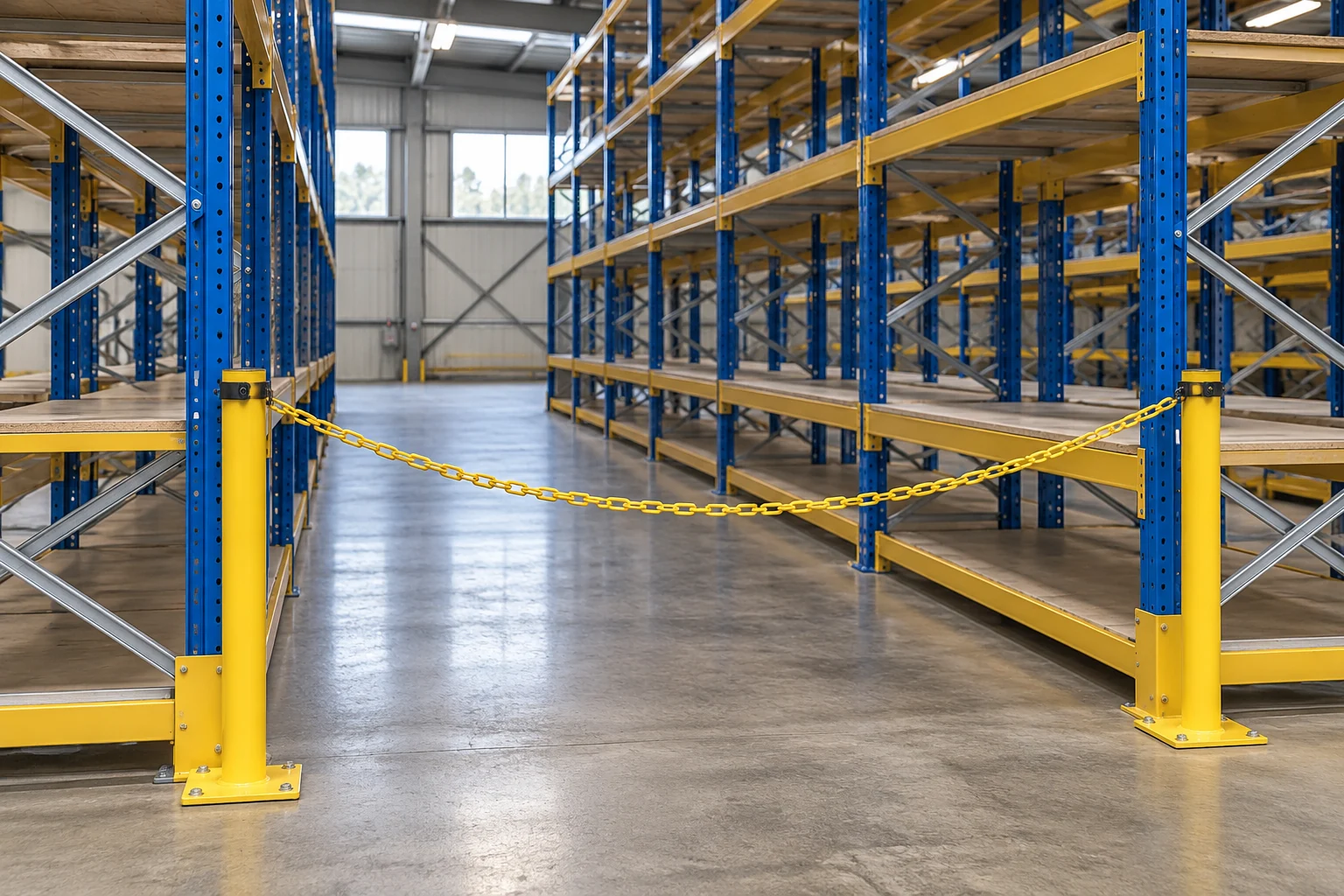
Keep staff outside the controlled area under the actual site instruction. Show them where the current restriction is recorded and who communicates changes. The barrier in an illustrative photograph represents a controlled location only; it does not establish the correct extent of isolation, a safe distance or the condition of the equipment behind it.
Give the current instruction its own place in the event record. The name of a visiting contractor and the expected arrival date answer scheduling questions. They do not describe permitted access, storage activity or the technical basis for any change. Purchasing should be able to update the appointment without inadvertently changing the operating instruction.
Ask the site team how a restriction appears in its normal work systems. A physical control, picking assignment and verbal handover should not tell employees different things. Discuss who updates each one when a decision changes. Keep that coordination with the responsible operational team; this article does not prescribe unloading, moving goods or entering a potentially affected rack area.
Plan for an unresolved event to span more than one shift. If staff need an alternative arrangement, have the relevant operational and safety owners define it for the actual site. Do not borrow space from a route merely because it is near the affected aisle. The event remains open until the necessary decisions, work and communication have reached their stated completion conditions.
| Question to resolve | Scope to identify in the project | Response to request |
|---|---|---|
| Who receives and routes the report? | Site reporting and operational coordination | Acknowledged event reference and next owner |
| What equipment is being assessed? | Rack identity and applicable configuration | Matched documents and unresolved information |
| What may the operation currently do? | Site controls and competent technical response | A specific current instruction and its owner |
| What work is proposed? | Supplier scope and technical compatibility review | Defined work, dependencies and exclusions |
| Who changes the restriction? | Named authorization and shift communication | Decision reference and updated instructions |
Review the traffic context without creating a new obstruction
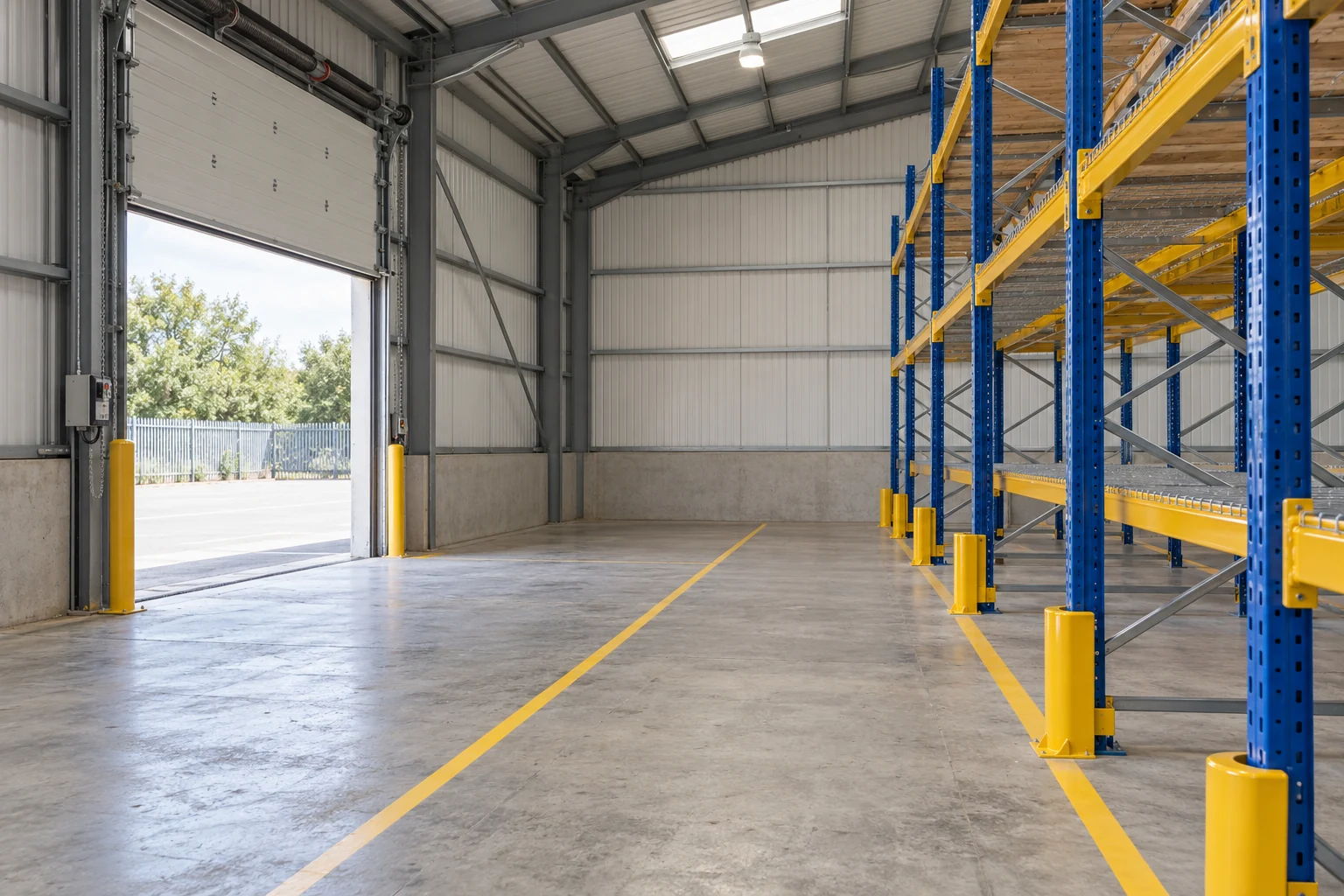
Review the surrounding route as a complete working space, including the aisle end, door approach and pedestrian destinations. A protective item considered in isolation can appear helpful while changing movement elsewhere. Keep the discussion outside the controlled area and use the project’s actual route information rather than dimensions inferred from an illustrative photograph.
HSG76 notes that retrofitted upright protection can reduce maneuvering clearance and needs consideration case by case. It does not prescribe one layout for this project.
Separately, HSE’s warehousing overview discusses vehicle and pedestrian management, visitor communication and changing traffic at shift transitions. This is Great Britain guidance context, not a universal separation dimension. Its historical incident statistics are not used here.
Describe the relevant movement without assuming its cause. Was the vehicle approaching a storage face, passing an aisle end or turning from a receiving area? Which route was intended, and what was actually reported? The operations team can use those questions to identify the context requiring review. They do not replace the investigation or authorize a redesigned route.
The arrival-to-door and loading-area planning guide covers the external approach. Maintain the connection between that route and the internal operating plan when the responsible team considers changes. A solution that shifts waiting vehicles or pedestrians into another conflict needs a wider review than replacing a guard beside one upright.
Ask for a decision that matches the question
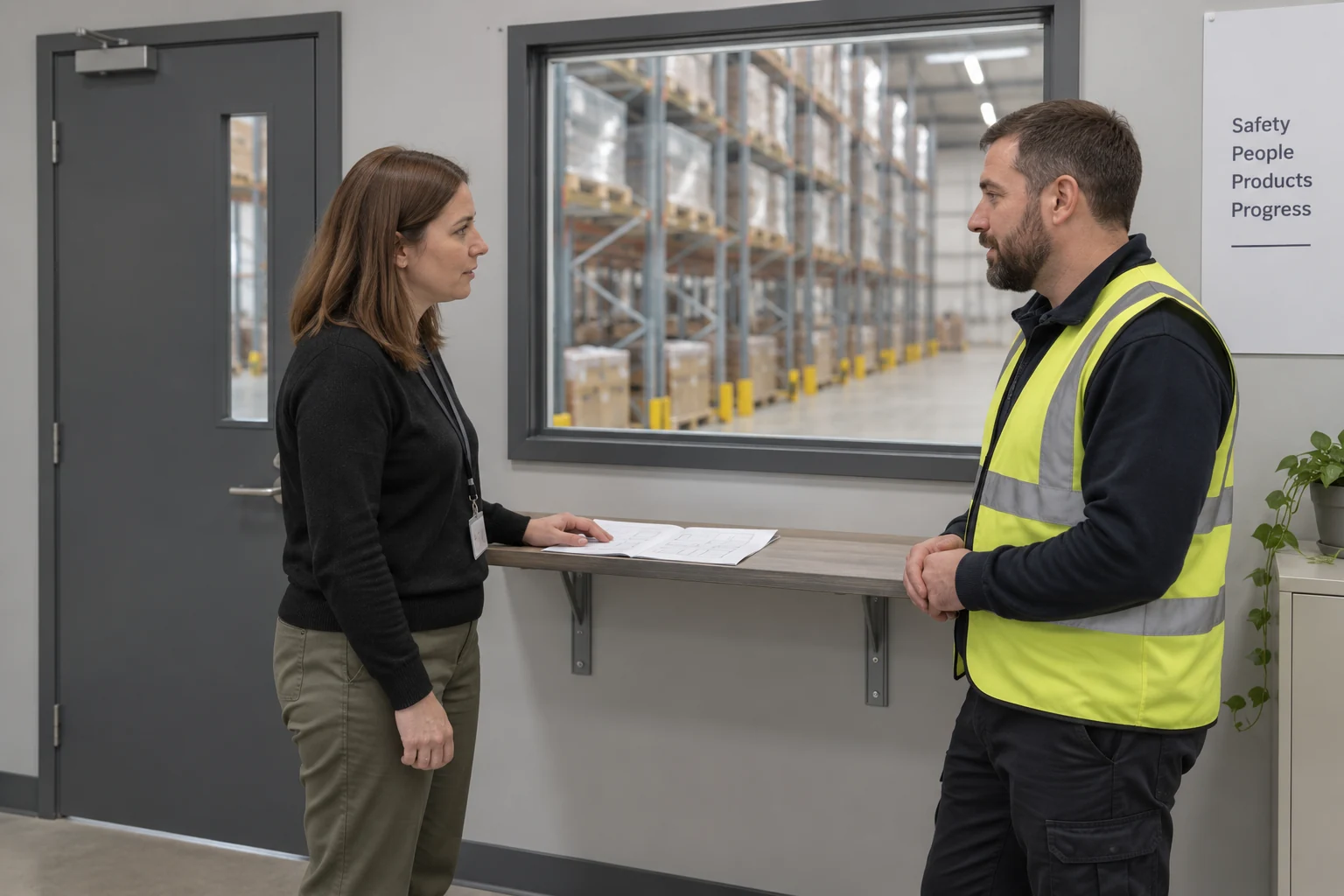
Hold the assessment briefing at a separate staff point or office. State the affected location, the current instruction and the information gaps, then ask the appointed technical parties to identify their scope. An informal conversation may clarify a request, but it should not be presented as an inspection result or an authorization to resume use.
Frame the requested outcome clearly. Is the owner commissioning an assessment, comparing proposed work, confirming a completed scope or requesting the basis for a restriction change? A quotation headed rack service may not answer all those questions. Request the intended deliverable, its boundaries and the information that must be available before it can be issued.
Ask how additional findings will be handled. A proposal based on the first report may need revision when the competent assessment establishes more about the event or equipment. Preserve that distinction between the initial enquiry and the assessed scope. Otherwise, the cheapest early estimate can silently become a limit on the questions the team believes have been examined.
Put the commercial boundaries in writing. Identify travel, access coordination, assessment, proposed parts, work execution and completion documentation separately where relevant. The building-kit inclusion and exclusion guide illustrates why a package description must be explicit. It is not a rack specification; use that scope discipline without transferring building inclusions to storage equipment.
Compare proposed work by scope and compatibility

Compare the proposed work at an ordinary table, away from the affected equipment. Keep the supplier’s proposal separate from any unopened component package. A delivered item can be checked against its purchase description, but its presence does not establish compatibility with the rack or acceptance of the completed technical scope.
A matching delivery description is only one part of the decision
RMI’s 2020 guidance cautions against assuming similar-looking parts are compatible. Its repair discussion considers existing configuration and loading, beyond the particular member. Obtain the appropriate engineering response instead of selecting a kit by appearance.
Ask each bidder which equipment and event the proposal covers. Identify what information the proposal assumes, what still needs verification and who handles a finding outside the quoted scope. Compare those boundaries before comparing the headline price. No market price, repair duration or residual capacity is invented here; the actual project and technical response must supply their own particulars.
Describe substitutions explicitly. A component arriving under a different reference should trigger the relevant compatibility and scope questions rather than be accepted because it looks familiar. Keep receipt separate from installation and technical acceptance. The same separation helps explain why a purchasing clerk can resolve a delivery discrepancy without being expected to authorize the rack’s future use.
Keep the completed arrangement tied to its information
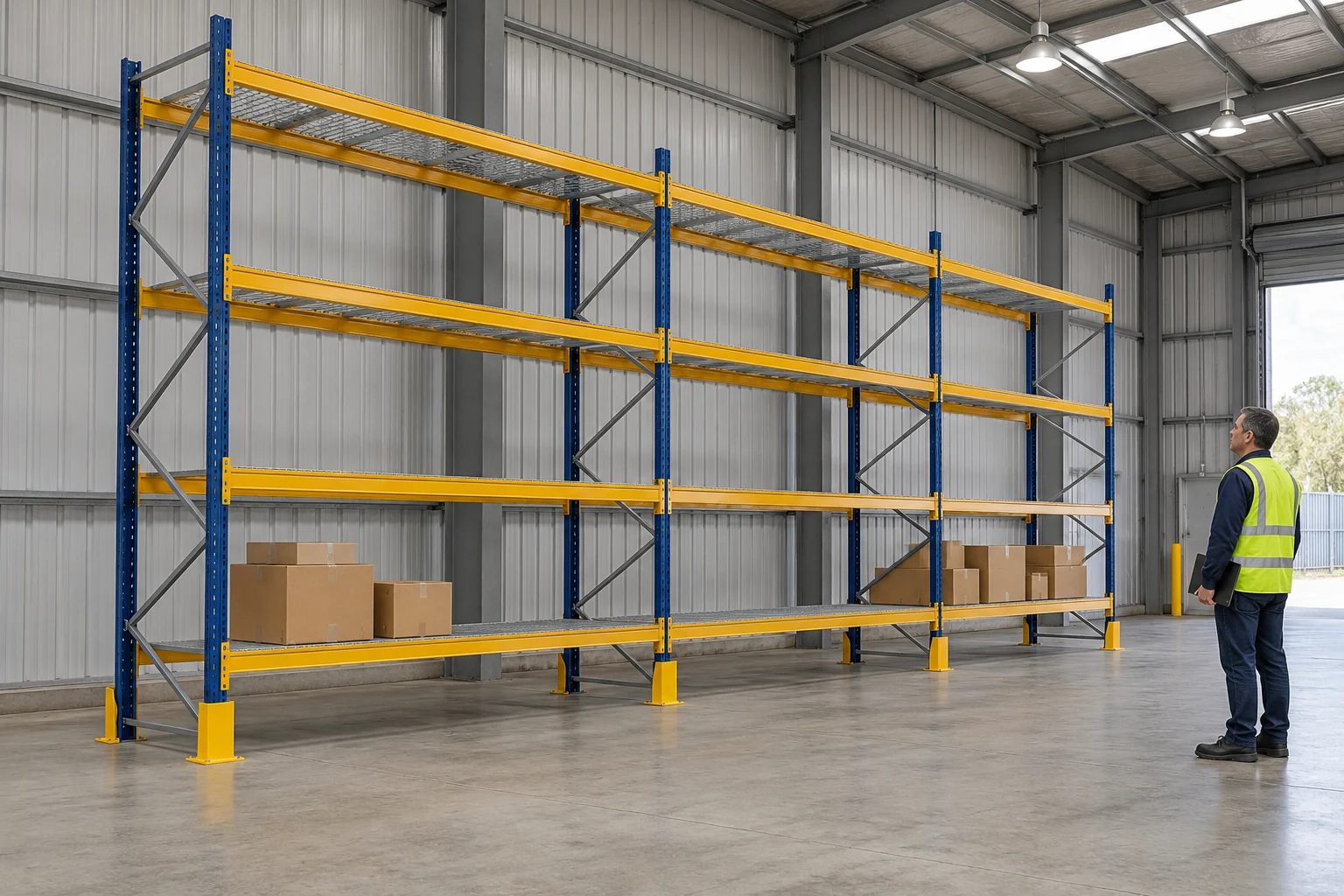
Keep the whole rack arrangement identifiable after the proposed work, not just the component appearing in a completion photograph. From an authorized position, the responsible team can associate the actual location with the relevant completed-work record. The image here illustrates that connection; it does not show measured capacity or an approved return to service.
RMI’s 2020 guidance addresses drawings and load information corresponding to the final arrangement. Preserve the applicable documented response when configuration changes; an earlier plaque alone does not confirm a different arrangement.
Ask what remains unchanged and what has changed in the described scope. Keep the completed work tied to its location, the assessment reference and the information issued for the resulting arrangement. Where a document is revised, preserve its relationship to the superseded version so that an older attachment cannot quietly become the instruction used by the next shift.
A building change may also involve doors, services or other supplied features. Handle those changes through the controlled customization process for the building package. Keep the distinction clear: updating a building drawing does not update rack engineering information, and updating rack records does not establish acceptance of unrelated building work.
Make restriction changes a separate named action

Bring the incoming and outgoing staff together at a separate staff station to discuss the current instruction. Use an understandable location reference and the actual decision record. The handover should establish what employees are told now, rather than relying on someone noticing that a contractor has left or that the affected equipment looks tidier.
Separate work completion from the action that changes restrictions. A contractor may report that its quoted task is finished while the owner still awaits a required document or technical response. Ask who verifies the completion conditions and who issues the revised operating instruction. Those roles and dependencies should be agreed for this installation, not inferred from a generic supplier title.
Keep conditional responses intact. If a decision applies only to a stated arrangement or leaves another matter unresolved, that condition needs to travel with the instruction. Reducing the message to done can erase the part that matters to an employee planning the next task. Use ordinary language for operators while retaining the original decision and its precise scope.
Consider a hypothetical supplier email saying its quoted task is complete while the operating system still marks the location restricted. Neither message should silently overwrite the other: they describe different stages. The named owner needs to reconcile the outstanding conditions and communicate the applicable instruction through the agreed process. This example illustrates a coordination gap, not a permission to use the equipment.
The building quality-control and acceptance guide helps distinguish a supplied package’s checks and records. Keep rack acceptance with the parties responsible for the rack. Neither an accepted warehouse shell nor a completed building inspection supplies the missing technical decision about a reported pallet-rack impact.
Close the event in a form the next shift can use

Close the event with an organized set of records that the responsible team can retrieve. Associate the location, assessment, completed scope and current instruction instead of collecting unrelated attachments in a folder. A closed folder illustrates orderly administration; closure still depends on the actual decisions and completion conditions recorded for this event.
HSG76 calls for records of rack inspections, damage and repairs. The table below adds proposed handover questions; it is neither a reproduced inspection form nor an engineering acceptance declaration.
Make the final handover useful to someone who was not present. Explain which event the documents describe, where the current instruction is held and whom to contact if another observation is reported. Keep earlier decisions available as history while clearly identifying the current one. A future staff member should not need to reconstruct the outcome from a chain of disconnected messages.
Review the coordination process after the event through the people responsible for it. Did the report reach the right role? Did purchasing receive the applicable scope? Did every affected shift receive the same instruction? These questions improve the handover without using a single event to claim an industry trend or a measured reduction in impact risk.
| Record group | Association to preserve | Open question to keep visible |
|---|---|---|
| Reported event | Location, time and report reference | Are any observations still unconfirmed? |
| Assessment response | Equipment identity and stated assessment scope | Which information or finding remains unresolved? |
| Completed work | The agreed scope and resulting arrangement | Are any completion dependencies outstanding? |
| Applicable information | Current documents and their prior revisions | Which version should the responsible team use? |
| Operating instruction | Named decision and affected recipients | Have all affected shifts received the current condition? |
Buyer questions
Can a photograph decide whether the affected bay can be used?
A photograph can help locate an observation where the site procedure permits it. It cannot establish rack capacity or permission to resume use. Follow the current controls and appointed technical response; do not use this article to enter, unload or assess the affected equipment.
Does a repair quotation also authorize the change in restrictions?
Treat the quotation as a proposal with a defined scope and assumptions. Ask separately what assessment and completion conditions apply, who checks them and who issues the revised operating instruction. A booked date or delivered component is a procurement status; it should not automatically become the warehouse’s permission to change use.
What if the original rack documents cannot be found?
Identify the missing documents to the appointed technical party. Share available supplier, location and historical records with their actual status, then ask what further identification or assessment is needed. Keep that dependency visible rather than substituting information from a similar rack.
What should accompany a request for help after a reported impact?
Provide the event reference, affected location, confirmed observations, current instruction and available rack documents through the responsible site process. State whether the request concerns assessment, proposed work, completed-work review or an operating decision. Identify the relevant contacts and unknowns, and ask the supplier to define its deliverable, exclusions and required inputs.
Sources and scope
- HSE, Warehousing and storage, HSG76. Great Britain guidance, second edition, 2007; reporting, records and protection context. No project inspection grade or repair instruction.
- RMI, Assessment and Repair or Replacement of Damaged Rack, v2.0. US voluntary guidance, October 15, 2020; configuration, compatibility and documentation. Older edition, not universal law or PQSE approval.
- HSE, Warehousing overview. Great Britain traffic and communication context. Original content date unstated; historical incident statistics are not used.
Research reviewed October 7, 2026. The tables propose coordination questions, not engineering acceptance criteria. No selected rack, load configuration or human project engineering review is established here. Illustrative photographs do not establish structural condition. Confirm applicable documents, local requirements and responsible specialists for the actual installation.