A wet portable-bathroom floor needs a source-specific investigation before a repair is selected. Water gathering in a shower pan, escaping from a service connection, introduced during cleaning or forming on a cold surface can look similar after it reaches the walking area. The buyer’s most useful first contribution is a clear account of where the water first appeared and what was operating at that moment.
The distinction matters at acceptance. Wiping a patch removes the immediate water but may leave its source unresolved. A change in shower use can make the symptom smaller without demonstrating that the installed arrangement is correct. An installer may need to review the supplied components, unit support and downstream connection together; a photograph of the final puddle does not identify which one requires attention.
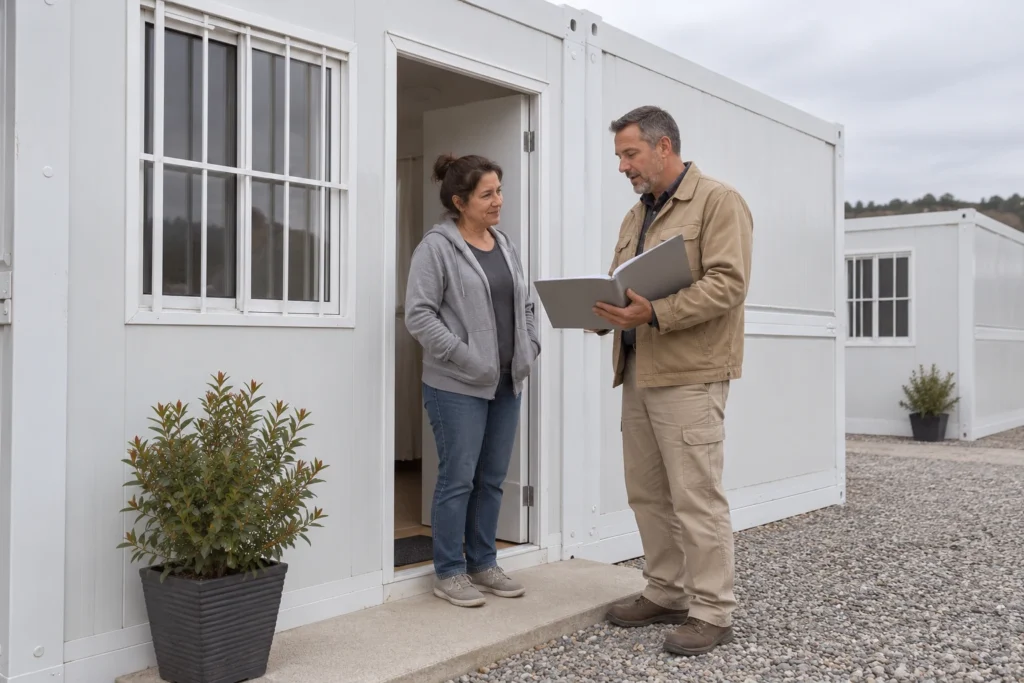
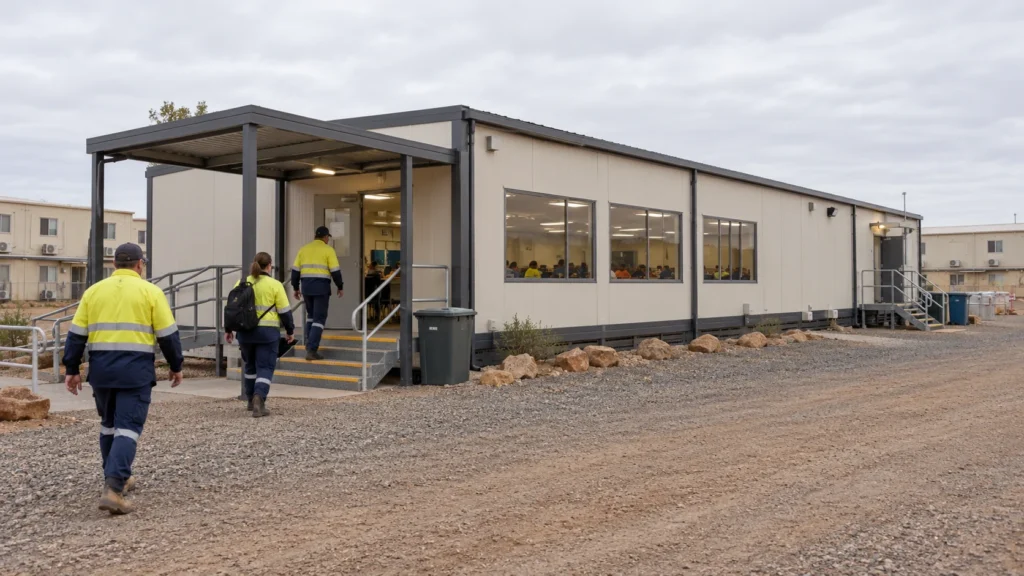
This guide helps procurement and operating teams prepare an evidence-led discussion about an installed portable bathroom. It offers an observation method and scoped official guidance, not a remote diagnosis or a universal slope, flow-rate or repair specification. Photographs are newly generated planning illustrations, not PQSE customer defect records. Every proposed alteration should be reviewed against the actual model, installed configuration and applicable project requirements.
Protect users before investigating
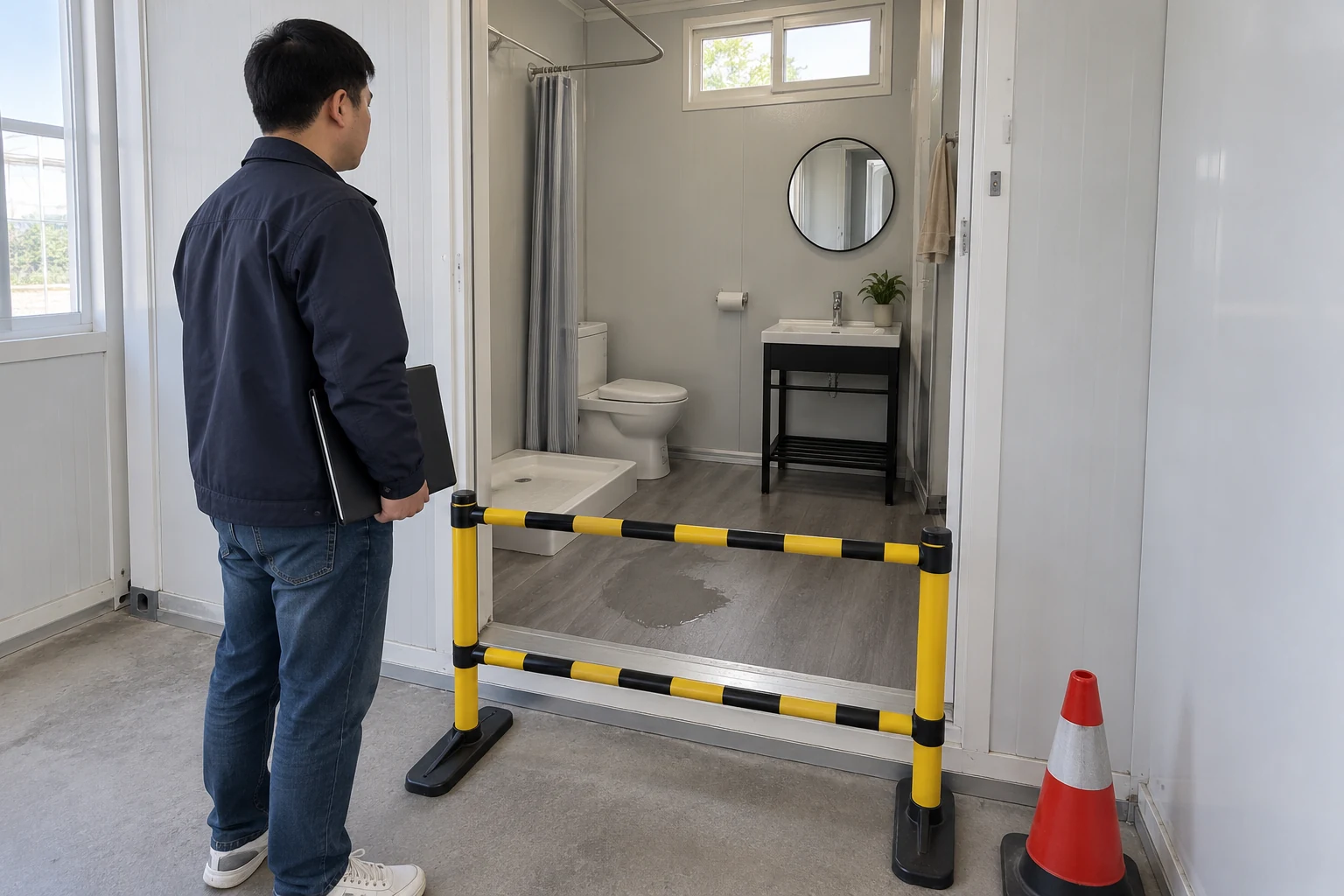
Deal with exposure to the wet area before trying to demonstrate the problem. Tell the responsible operator what has been observed, agree the restriction on use and provide an appropriate alternative where the programme requires one. Do not ask a resident or cleaner to walk through the patch to produce a better photograph. An investigation should not create a second incident.
For covered US general-industry workplaces where this standard applies, OSHA 1910.22 addresses walking-working surfaces, wet processes and correction of hazardous conditions. Its inspection provisions require guarding against employee use when a hazard cannot be corrected immediately. That scope must be retained; this is not a rule defining every private bathroom worldwide or an approval of one particular barrier.
The project operator should decide how the concern affects continued use and who may reopen the area. Record that decision alongside the technical investigation. A warning, a mop or a photograph is not by itself the closeout of an unresolved hazard. Where another service or building condition may be involved, refer the concern to the appropriate responsible person rather than assuming it is only a housekeeping issue.
Give the people reviewing the unit enough information to prepare their visit. A precise location, the first observed condition and the activities immediately beforehand are useful. A demanded repair method is less useful when the cause remains unknown. Ask for a review of the installed arrangement instead of requesting that someone tilt the unit, cut the floor or increase an outlet size without supporting evidence.
Agree who may collect observations and when the investigation should stop for a specialist decision. A buyer can prepare a location record without being responsible for commissioning every service. The operating team should know the contact to use if the condition changes while review is pending, and how any restriction will be communicated to affected users.
Record the first wet point, not only the final puddle
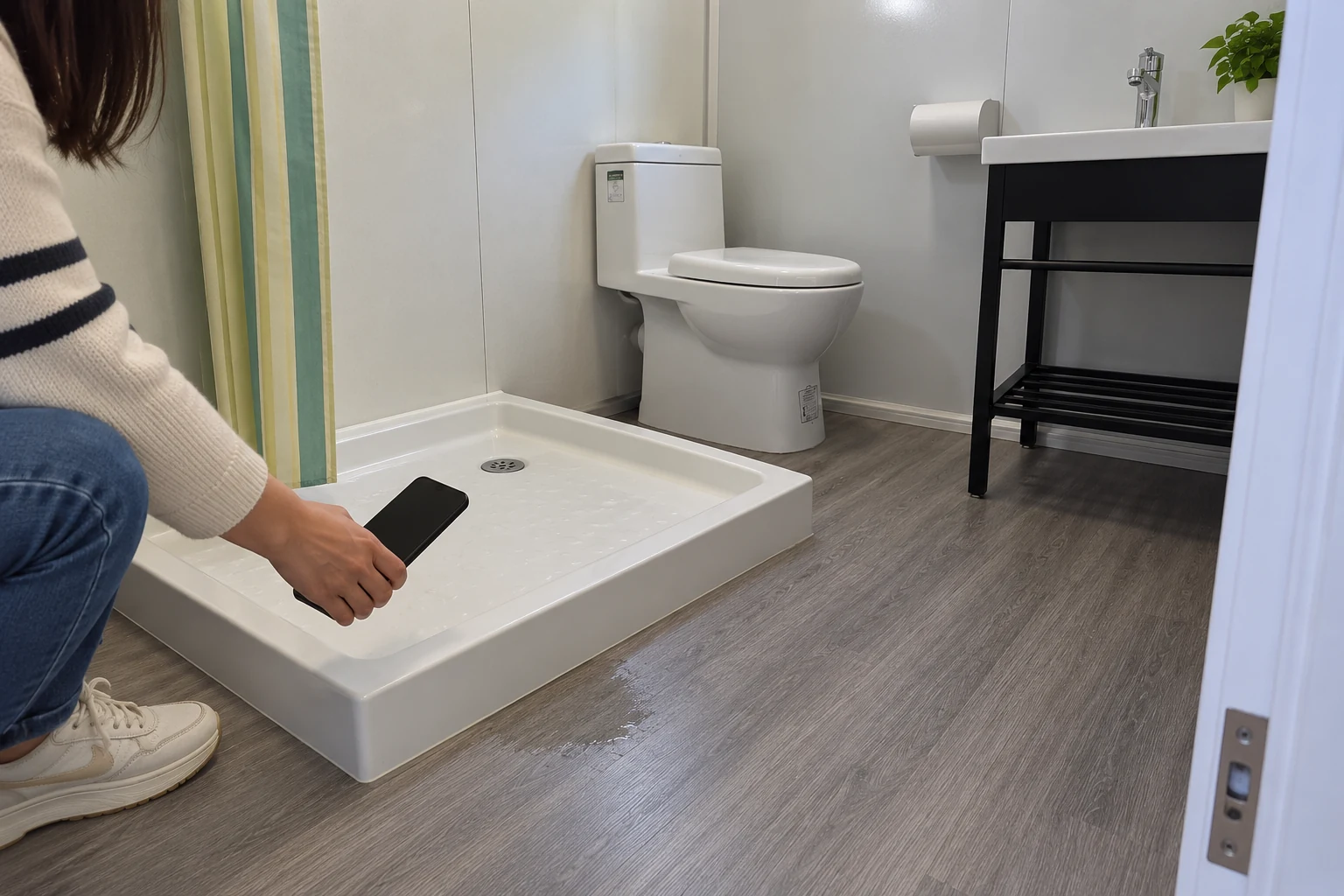
Water can travel before it becomes conspicuous. The largest wet area may be the place where water collected, not where it originated. Record the earliest location the observer actually saw. If that location is unknown because the floor was already wet, say so. This honest limitation is more helpful than reconstructing a confident explanation from a later photograph.
Connect the observation to a particular unit and fixture area. Use the project’s identifier, a wider location view and a closer view of the water. Note whether the floor had been dry beforehand, what activity was taking place and whether other fixtures or cleaning were involved. These are this article’s proposed recording fields, not an official test procedure.
Keep observation and interpretation in different parts of the record. “Water appeared beside the basin stand” describes a visible condition. “The basin connection is leaking” assigns a cause that may still require inspection. Preserve the first statement even if a reviewer later confirms the second. It allows the action and subsequent recheck to be compared with the concern that prompted the visit.
When several people have seen the condition, retain their separate observations rather than combining them into one assumed sequence. A cleaner may know that the floor was dry before the routine; an operator may have seen only the later patch. Note those limits. A simple location sketch can help orient the photographs without pretending to show the concealed water route.
| Reported pattern | Useful context to retain | Question for the responsible reviewer | The observation alone does not prove |
|---|---|---|---|
| Water gathers while the shower operates | First location, shower setup and other activities | Which supplied and site-side elements affect this condition? | A universal drain-capacity fault |
| Water remains after the shower stops | Location and sequence after shutoff | How does the installed arrangement compare with its instructions? | A specific support or pan defect |
| Floor moisture appears without shower use | Other fixtures, recent use and accessible observations | Which other water sources need review? | A confirmed supply leak |
| Wetness follows cleaning | Actual cleaning method and starting condition | Does the routine match the intended wet-area arrangement? | That cleaning explains every occurrence |
| Small droplets appear on a surface | Surface location and room conditions | What moisture sources and surface conditions are relevant? | Condensation as the only cause, or absence of a leak |
Separate inflow from water left after shutoff
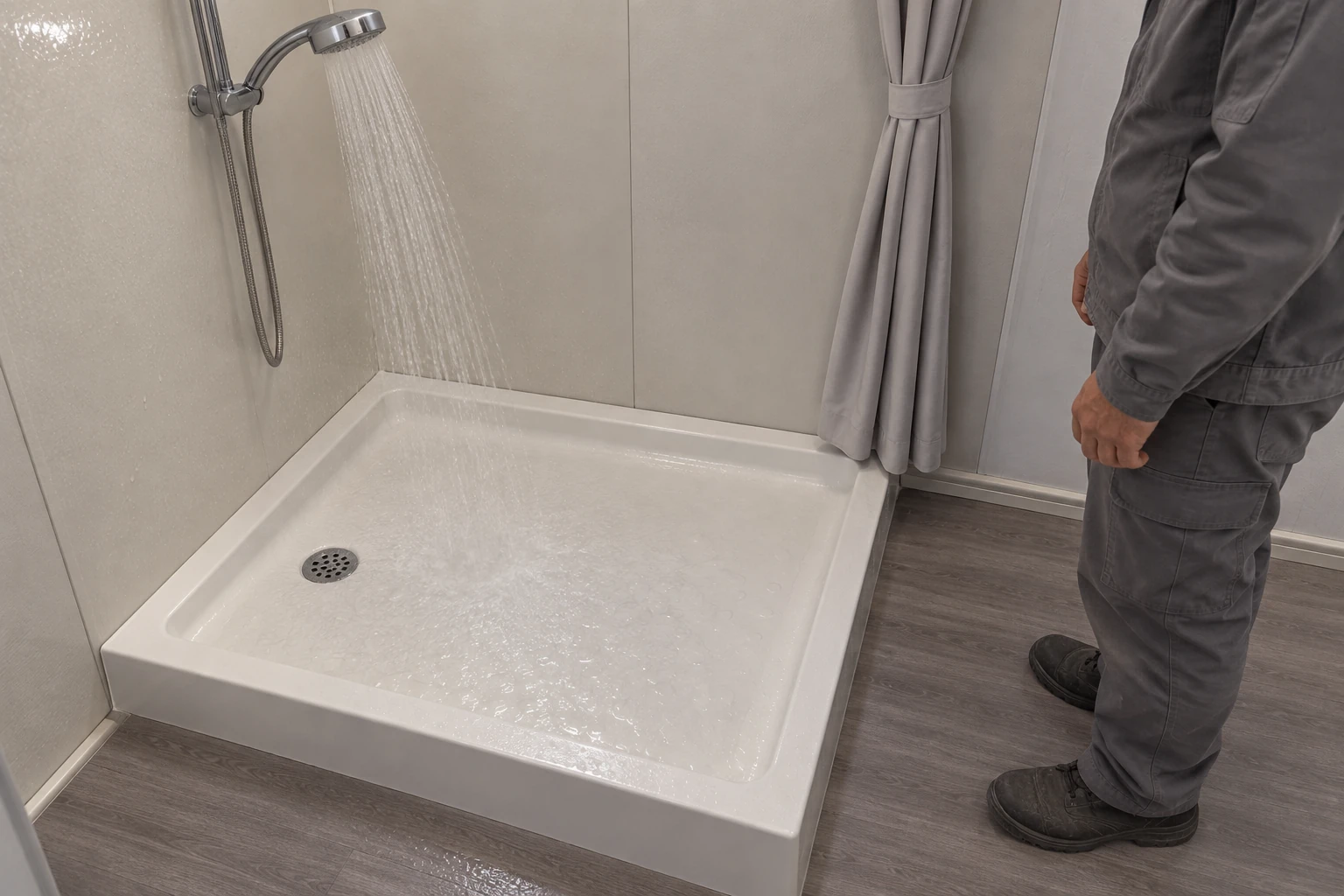
For a shower-related concern, distinguish what happens during operation from what remains afterward. Ask the responsible installer to define a suitable check for the supplied equipment and site arrangement. Record the agreed operating condition rather than inventing a generic test flow. The head, controls, enclosure or curtain and drain configuration may differ between the purchased model and a photograph in a brochure.
A review should also identify which ordinary-use condition the buyer needs the unit to support. A check with a changed setting may answer a different question from the original report. If the reviewer changes the setup, retain both descriptions and explain why. Otherwise a satisfactory-looking demonstration can become difficult to interpret when the original symptom returns.
The same care applies to dedicated portable shower units. Identify the actual product and its external service requirements. A standalone shower and a combined bathroom should not be treated as interchangeable test assemblies merely because both contain a drain. Ask for the applicable instructions and the installed record before adopting another system’s figures.
If a supplier offers a performance statement, ask what assembly and operating conditions it describes. Keep that statement separate from the site’s observation until their relationship is established. The buyer does not need to invent an acceptance number to have this discussion; the useful request is for the responsible reviewer to identify an appropriate basis for the actual installation.
Record what remains after shutoff
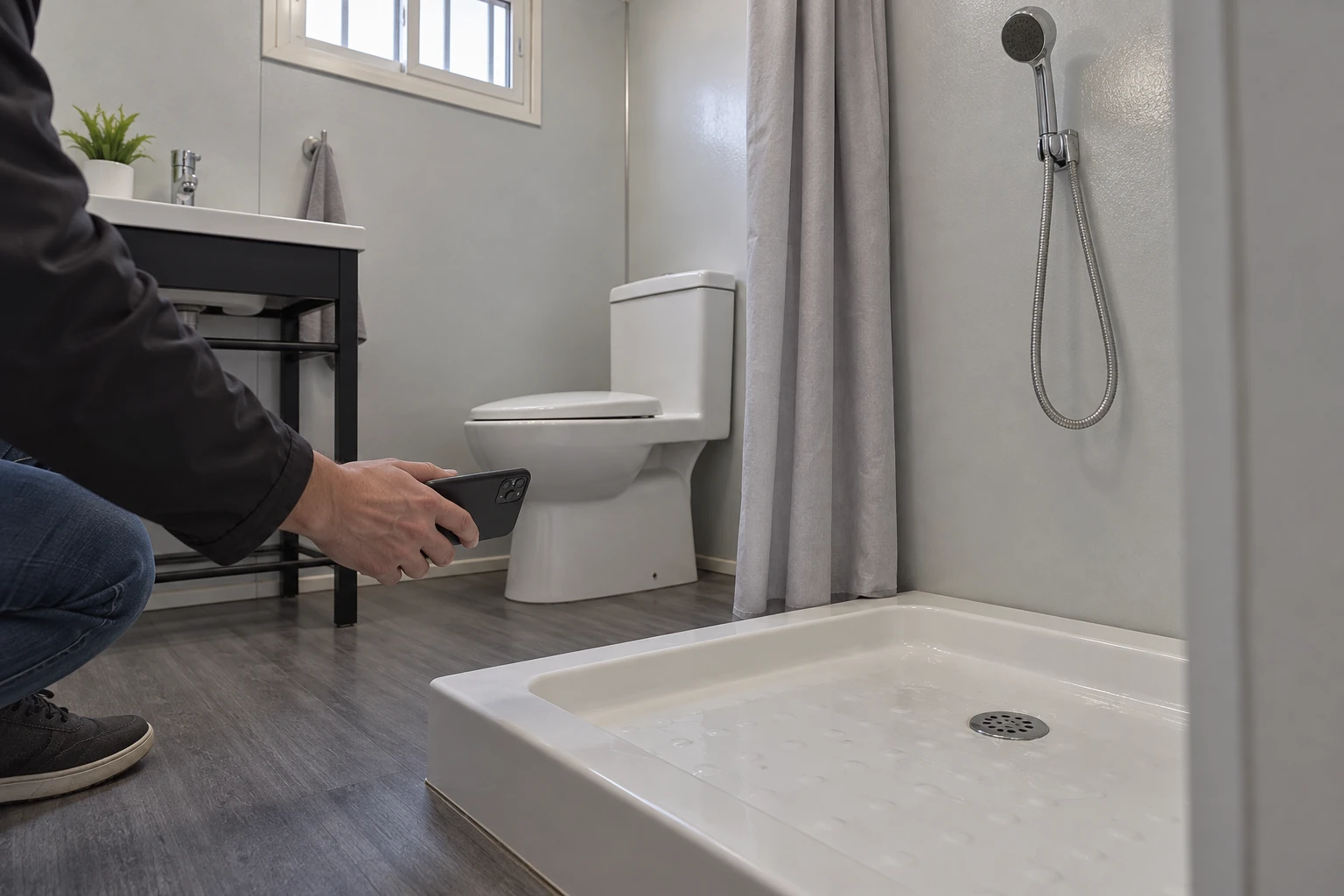
After the agreed operation ends, record where water remains and the observed sequence. Do not turn an unrecorded recollection of “quickly” into a numerical emptying time. A location photograph and a dated observation may be enough to start the review; any measurement used to accept the arrangement should follow an appropriate defined method.
A pan that clears after inflow stops has not, on that fact alone, demonstrated suitability during ordinary use. Equally, a remaining wet area does not identify the required repair by itself. Ask the reviewer to relate the condition to the actual pan, drain, installed support and downstream service. Keep limitations visible rather than converting a single demonstration into a permanent guarantee.
Identify the drain and its approved access
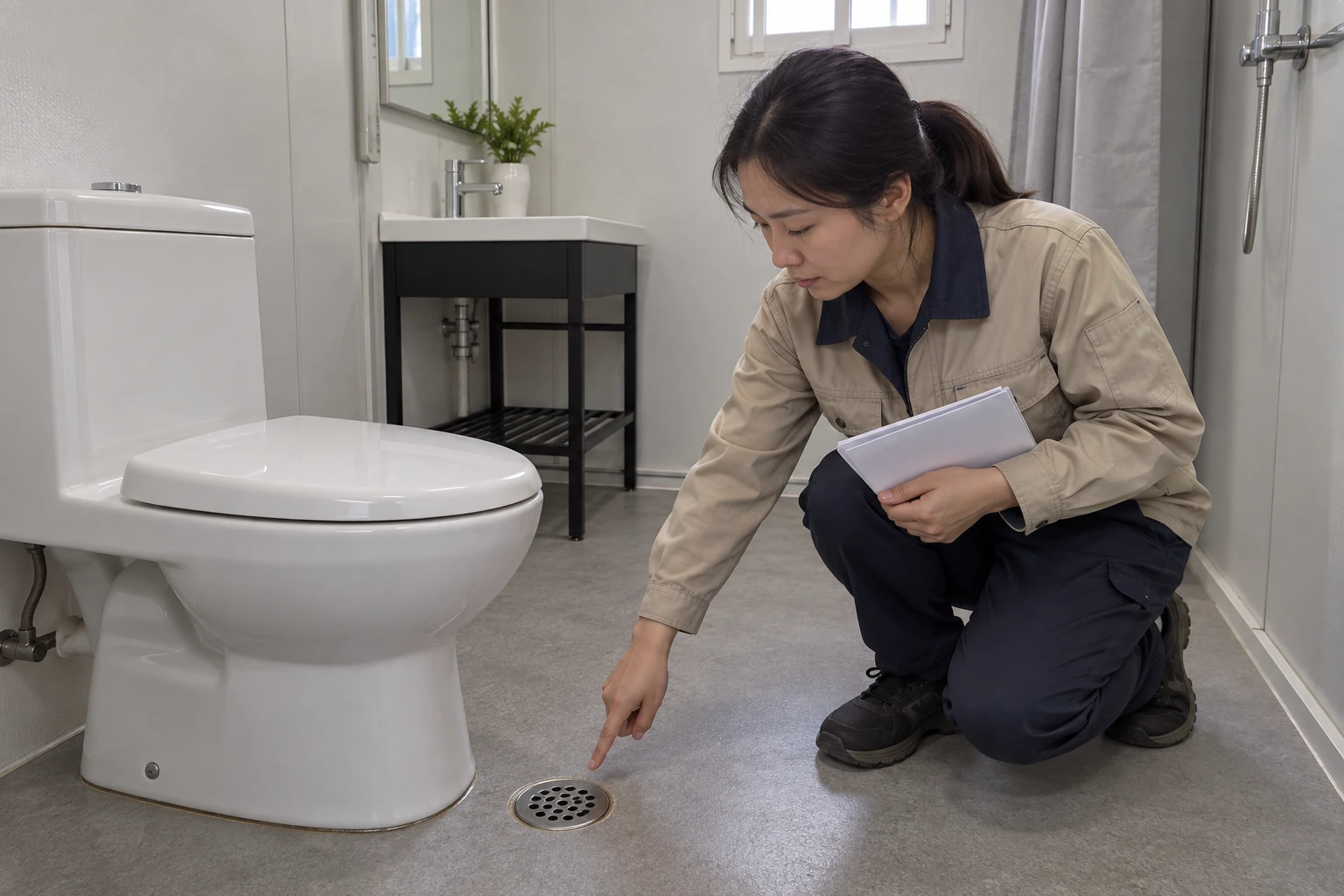
Give the reviewer the drain or assembly identification where it is available, together with the supplied maintenance information. A visible cover may indicate an access point, but its appearance does not explain what is below it or what may be removed. Obtain the model-specific instructions and assign inspection to the appropriate person.
Keep routine cleaning within the permitted procedure. Do not make a buyer’s observation exercise into a dismantling tutorial. If access is unavailable or would require removing another component, document that constraint and obtain a decision. An improvised attempt can alter the condition, lose evidence or introduce a different problem before the original one has been assessed.
Record whether an access limitation belongs to the supplied assembly or to its installed surroundings. A maintenance instruction may describe a component that cannot readily be reached in the current arrangement. That is a practical question for the reviewer, rather than evidence that a different drain must be fitted. Any agreed change should leave usable access information for the operator.
Investigate water outside the shower area on its own terms
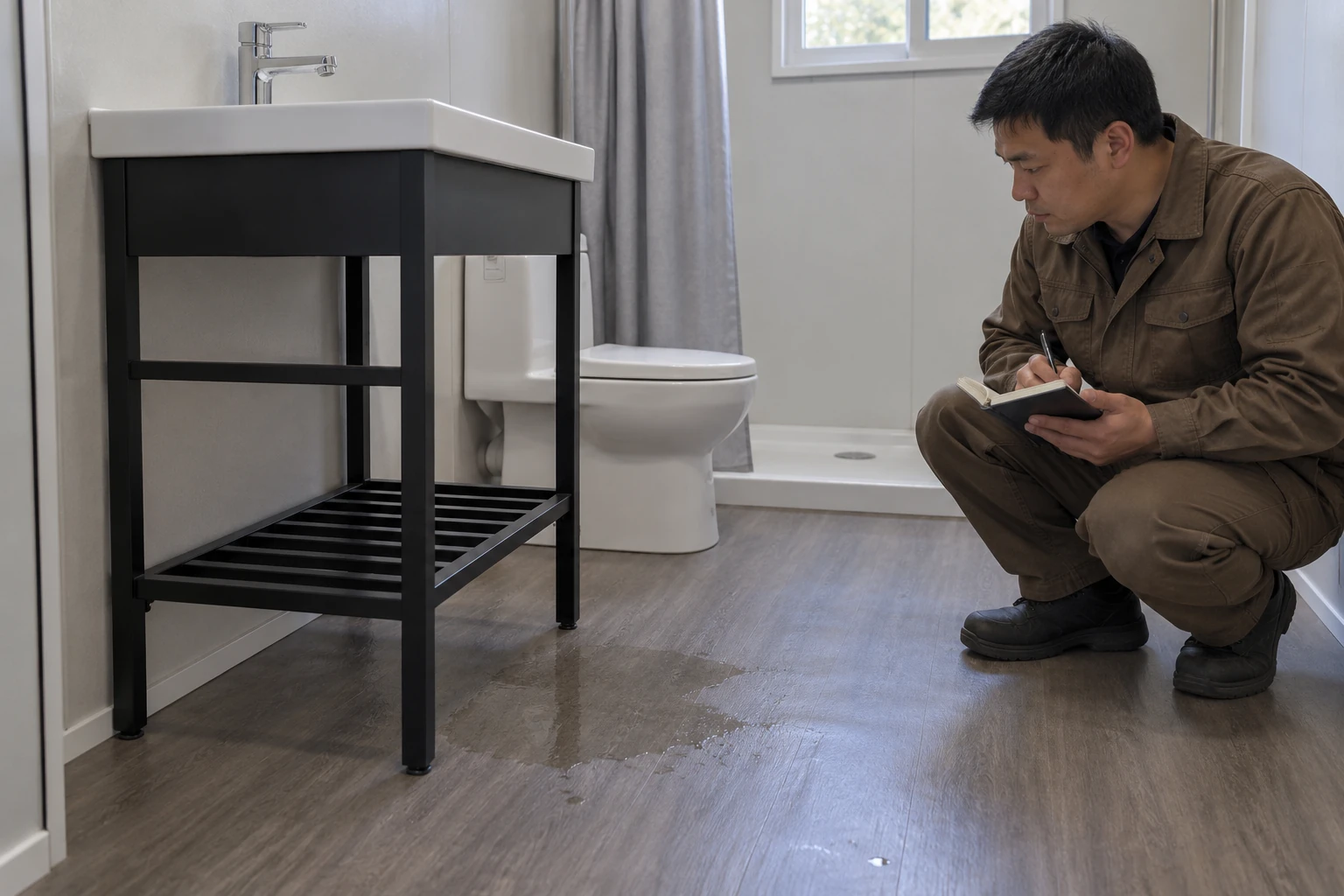
Water near a basin or toilet needs a record separate from shower-pan pooling. Note the other fixture activities that preceded it, without assuming they establish the source. If the condition occurs when the shower has not been used, preserve that observation. It gives the responsible service reviewer a different starting question from water seen only during shower operation.
Describe accessible visible conditions without reaching into concealed or hazardous areas. The buyer can identify the location and report an interruption or wet patch; the appropriate installer can decide which service checks are needed. No component should be disconnected or adjusted simply to make the diagnosis easier for a remote reader.
In a portable toilet configuration, record whether the observation concerns the toilet, handwashing area or adjacent floor. Keep the site discharge and water-supply responsibilities identifiable. A label such as “bathroom leak” is too broad when it hides which fixture was operating and which contractor owns the relevant interface.
Where the first source remains uncertain, state the question still open. The absence of shower use narrows the observation but does not eliminate every other activity or service condition. The reviewer can then choose the relevant checks. This approach avoids assigning the repair to the nearest visible fixture simply because it appears in the same photograph as the wet floor.
Keep cleaning water separate from fixture use
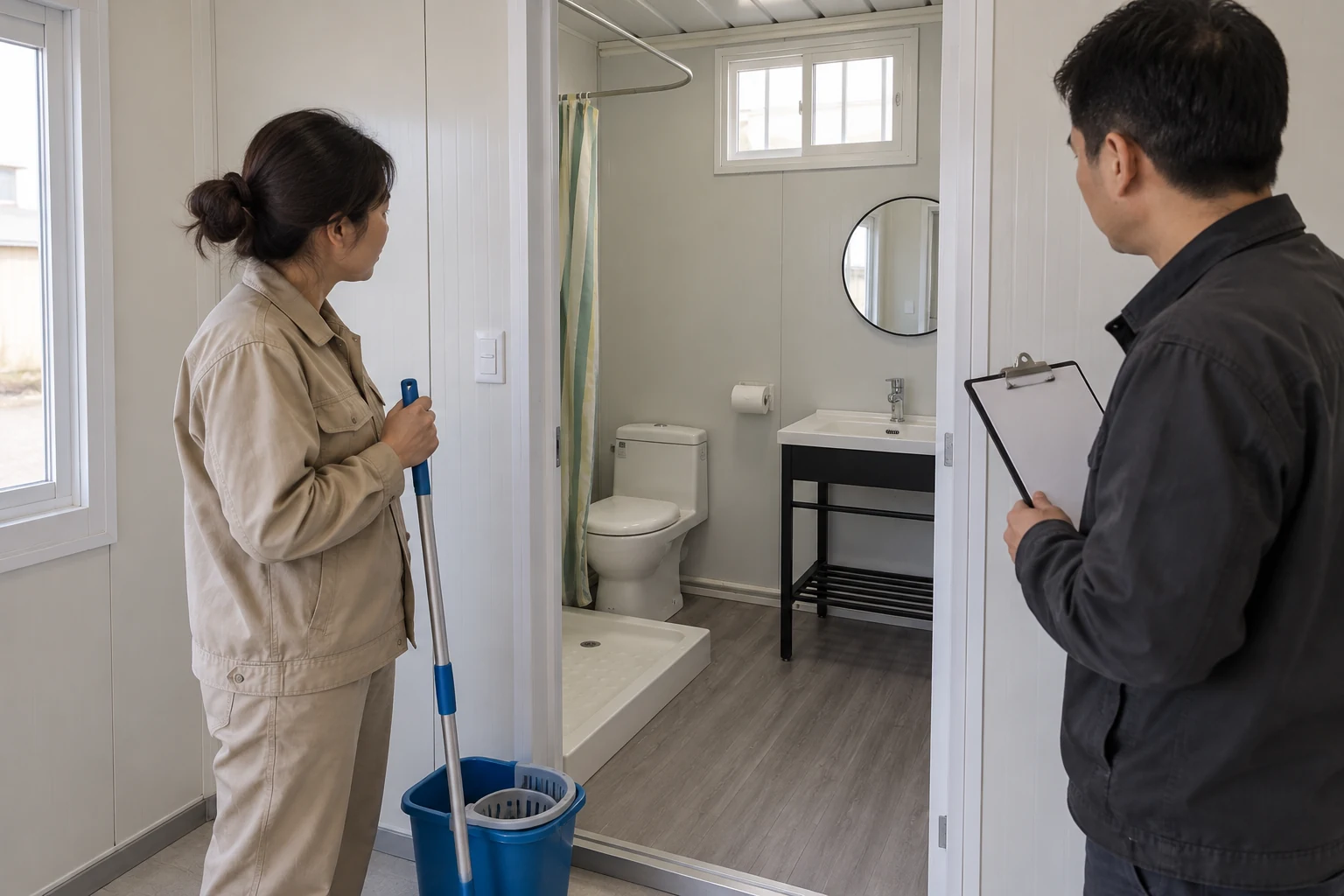
Record the cleaning method actually being used. Water introduced by a mop, rinsing or another permitted routine changes the starting condition for a later observation. Where cleaning and fixture use occur close together, avoid assigning the combined wetness to one activity without a clear sequence. This is particularly important when different shifts clean and inspect the same unit.
For worker camp accommodation, make the routine understandable to the operating team. Establish who reports an unexpected wet area, who can restrict access and who updates the cleaning instructions after an authorized change. The need for a consistent method does not justify adding a curb, sealing an opening or changing the intended drainage arrangement without review.
Cleaning a wet area and resolving its source are related but distinct tasks. Preserve the initial record where it can be collected safely, then manage the moisture promptly through the agreed procedure. Note what was cleaned and when so the next reviewer knows why the initial condition is no longer visible. A dry photograph taken afterward should not be presented as evidence that the source has been repaired.
If the symptom occurs after one cleaning routine but not another, retain the difference without declaring the matter solved. Confirm which routine is intended for the supplied finishes and layout. The operating instruction may need clarification, or another source may still need investigation. The purpose of a comparison is to improve the question, not to shift responsibility automatically to the cleaner.
Check air and cold surfaces without assuming condensation
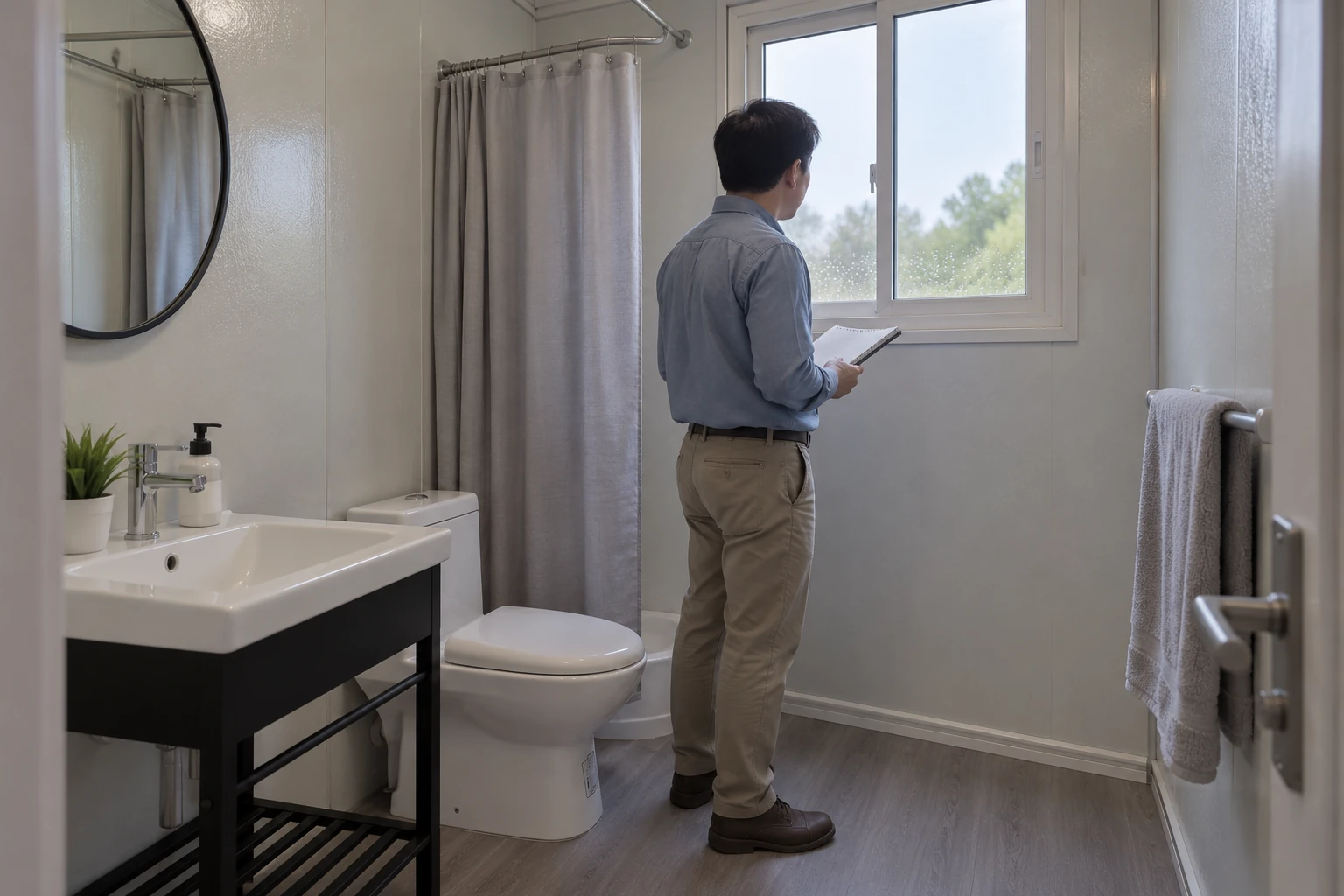
Small droplets on a window, pipe or other surface are a useful observation, but they do not uniquely identify the source of all floor moisture. Record the surface and location, then ask which moisture sources and operating conditions should be reviewed. Condensation and a separate leak need not be mutually exclusive explanations. An attractive photograph of droplets is not a diagnostic test.
The US EPA household moisture guide recommends keeping indoor humidity below 60% if possible, ideally 30–50%. Its advice to dry wet materials or areas within 24–48 hours after a leak or spill supports prompt moisture management. These are prevention recommendations, not drain-performance criteria, a permission to wait before responding or a guaranteed reopening deadline.
| Guidance value | Object | Relevant purpose | Limit for this investigation |
|---|---|---|---|
| Below 60%, if possible | Indoor relative humidity | Household moisture prevention | Does not exclude a leak or measure drainage |
| Ideally 30–50% | Indoor relative humidity | Preferred range in that guidance | Not a guaranteed condensation-free condition |
| Within 24–48 hours | Wet materials or areas after a leak or spill | Prompt drying to help prevent mold in most cases | Not a safe-use deadline or a no-mold guarantee |
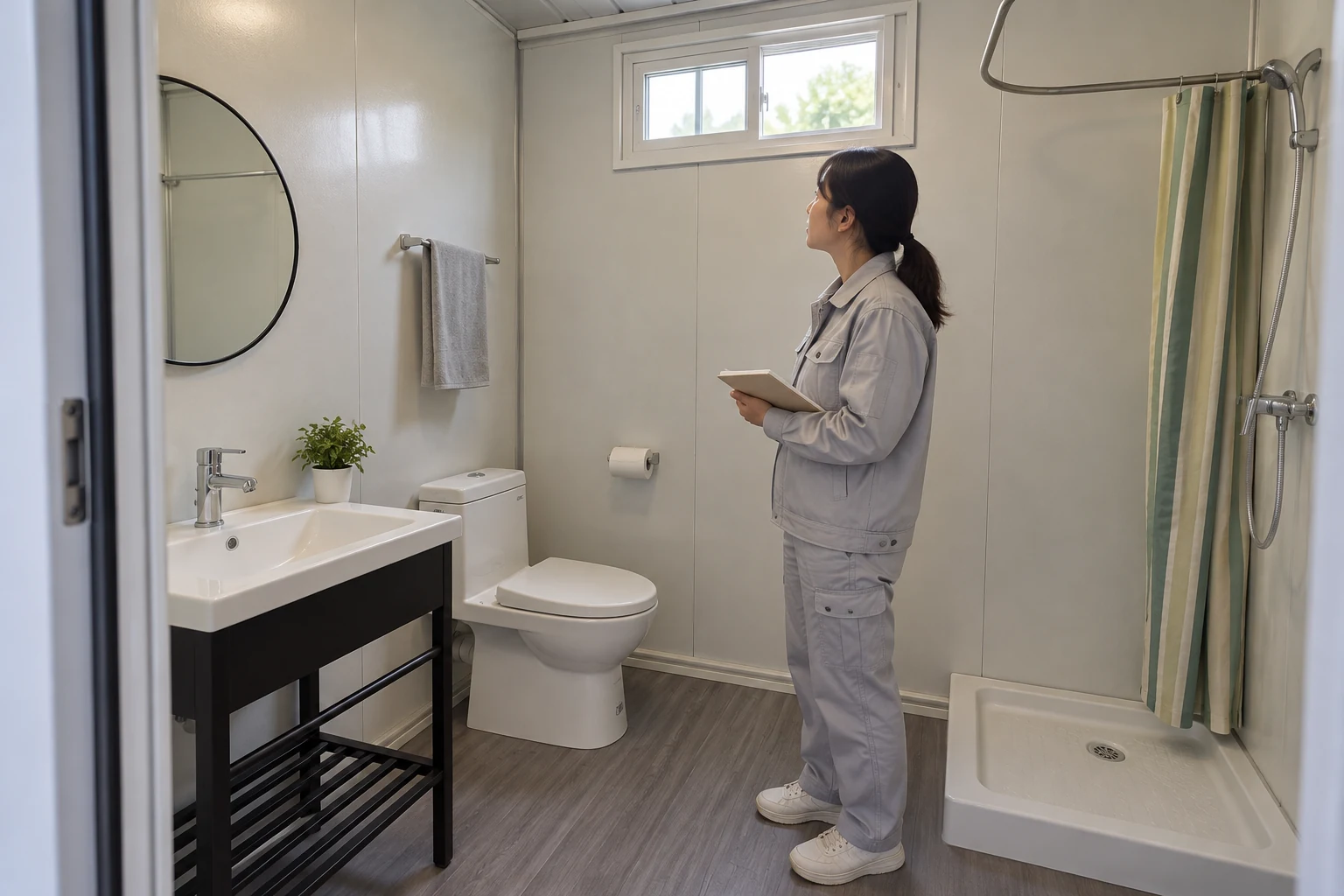
If room-air readings are collected, retain their time, position and the conditions of collection so the reviewer can interpret them. Those recording fields are an editorial recommendation here. A single humidity value cannot establish the temperature of every surface or exclude an unrelated water source. Keep the readings alongside the fixture and cleaning sequence instead of using them to replace it.
Confirm the supplied ventilation and operating instructions with the responsible team. A grille visible in a photograph does not demonstrate extraction performance. Changes to controls, openings or equipment require the applicable review. The procurement question is whether the operator has a supported operating method for the actual configuration, rather than a generic claim that all wet floors are caused by inadequate ventilation.
Ask for slip evidence that matches use
Drainage and slipperiness are different questions. A floor can be dry at inspection but wet during use; a rough-looking finish is not proof of acceptable performance. Request relevant evidence for the completed surface and expected contamination. The UK HSE GEIS2 guidance, first published in May 2012, describes pendulum slip-potential categories and stresses competent testing and interpretation.
| Pendulum test value | Source category | Context to retain with the result |
|---|---|---|
| 0–24 PTV | High slip potential | Slider, contamination, direction and completed surface |
| 25–35 PTV | Moderate slip potential | The same relevant testing information |
| 36+ PTV | Low slip potential | Low potential does not mean slip-proof |
The guidance identifies Slider 96 for shod use and Slider 55 for barefoot use. Profiled floors may require tests in several directions; using both slider materials may also be helpful. A dry or water-wet result for shoes should not silently become evidence for a soap-contaminated barefoot shower. Keep the report’s actual conditions visible and have its relevance assessed by a competent reviewer.
These categories are guidance values, not a percentage chance of falling or a product certificate. They are not measured results for PQSE flooring. Ask for a relevant report and clarify its scope with the reviewer. A photograph of a floor or testing instrument cannot replace the recorded conditions and interpretation needed for a project decision.
Retain the distinction between a material sample and the installed condition. The reviewer needs to know what surface the submitted report represents and whether its use assumptions match this bathroom. A favourable document can still leave a question about the current wet-area routine. Resolve that relevance explicitly instead of collecting certificates whose relationship to the installed floor remains unclear.
Review installed support and the service boundary before altering anything
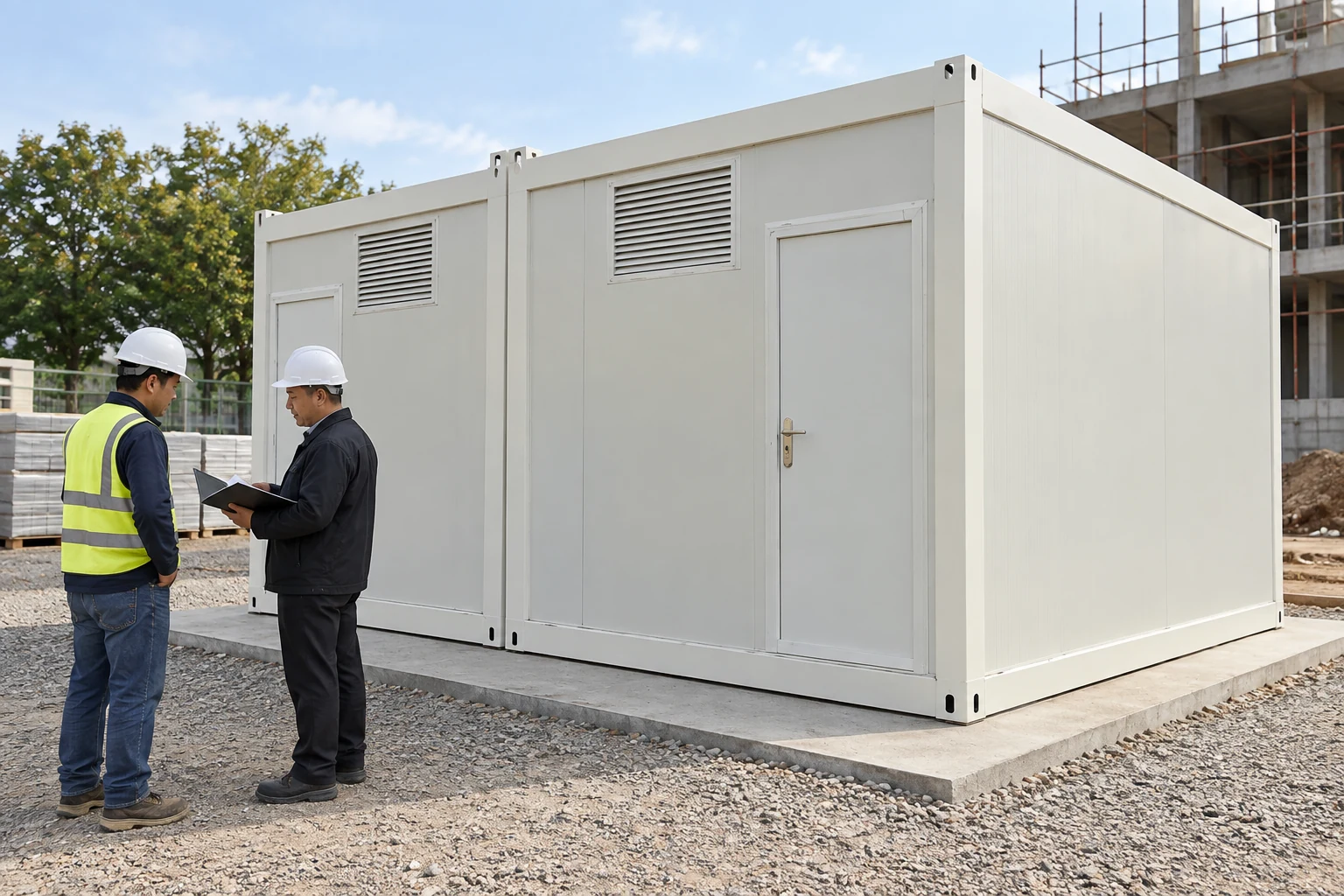
An installer may need to review the unit support, pan assembly and downstream wastewater arrangement as connected parts of the installation. Give that reviewer the supplied instructions, relevant drawings and site records. Do not prescribe a generic tilt or shim from a photograph. An alteration that changes one symptom can affect other components or depart from the intended installation.
Identify the actual sanitation family through the portable sanitation product range and the order documents. Then name the supplied drain assembly, the site connection and the parties responsible for each. A product-family page helps locate the discussion; the project’s configuration and records establish what must be reviewed.
For covered US general-industry workplaces where this standard applies, OSHA 1910.22 also assigns repairs affecting structural integrity to a qualified person or their supervision. That limited provision reinforces the need to identify the appropriate authority; it supplies no universal bathroom floor slope, outlet capacity or method for lifting a module. Other locations require their own applicable rules and project decisions.
Before work starts, distinguish the proposed action from the diagnosis supporting it. Name the components or interfaces involved, the responsible party and the authorization required. If the action departs from a supplied instruction, obtain the relevant review rather than treating a successful-looking trial as approval. Keep an account of what changed so subsequent checks have a reliable starting point.
| Field | Record or obtain | Decision it supports |
|---|---|---|
| Unit and location | Project identifier and affected fixture area | Match evidence to the installed unit. |
| Observed sequence | First water point, activities and post-shutoff condition | Define the concern to be resolved. |
| Supplied components | Applicable pan/drain identification and instructions | Check the intended assembly and access. |
| Site services | Connection record and responsibility boundary | Assign downstream review appropriately. |
| Support record | Applicable drawing and installed evidence | Review support before authorizing alteration. |
| Proposed action | Scope, responsible party and required authorization | Avoid an unapproved workaround. |
| Recheck conditions | Relevant original setup and agreed method | Evaluate the response to the actual symptom. |
| Operating disposition | Restrictions, reopening decision and update owner | Communicate current use status. |
Agree a recheck that matches the original symptom
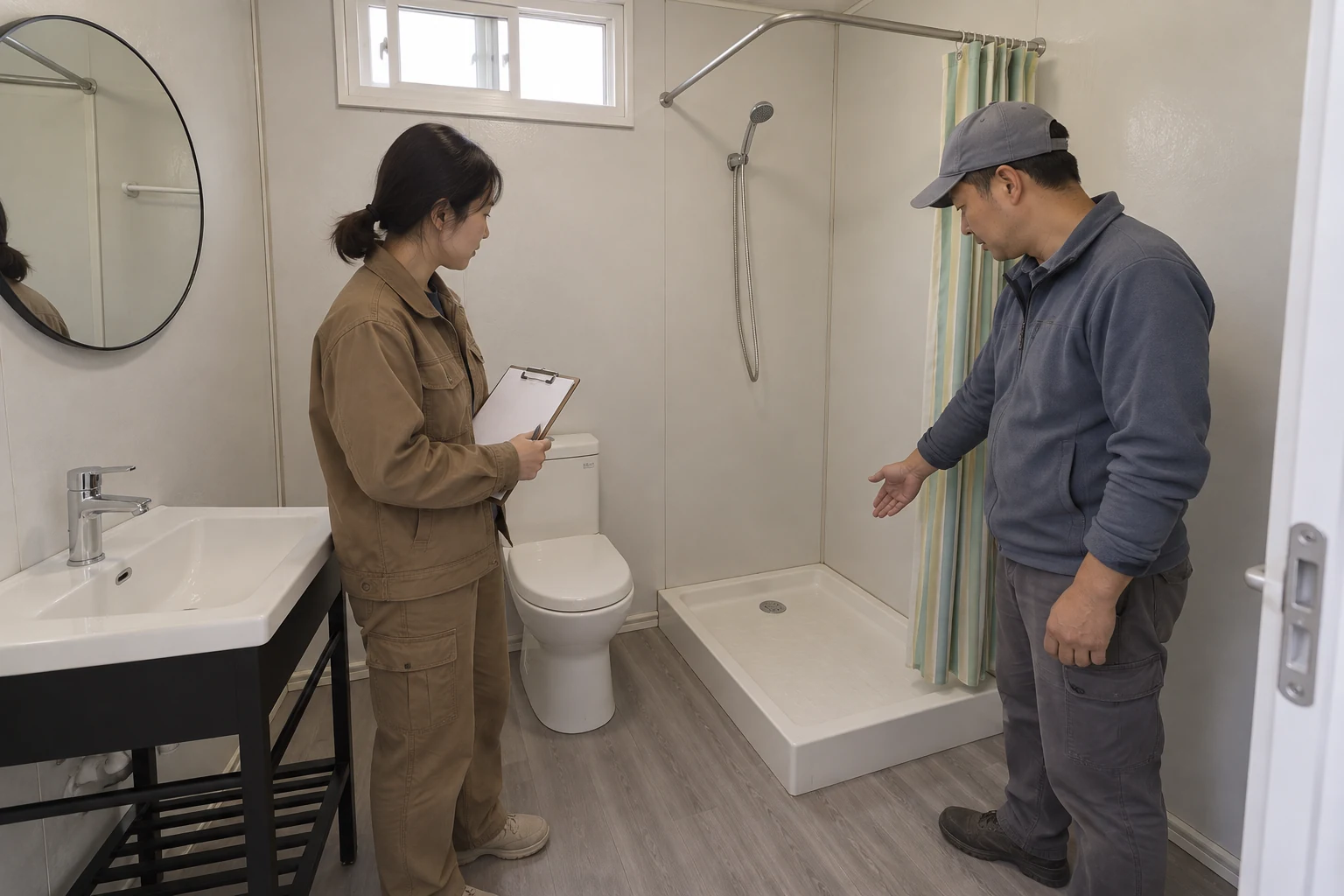
Ask the responsible reviewer to define how the proposed action will be checked. The record should connect the original observation, authorized work and relevant repeat condition. If the setup changes, identify that change and explain what the new check establishes. Do not treat contractor attendance or a photograph of a wiped floor as the outcome of a drainage investigation.
If the original symptom cannot be reproduced, preserve that limitation and agree the next reporting route. Record who owns further review and who may decide on continued use. A visit that does not reproduce the condition should not erase the resident’s or operator’s earlier report, nor create a guarantee that it will never occur again.
For mining camp accommodation, an identifiable owner and accessible operating record help replacement shifts handle a recurrence without reopening the whole supplier discussion. Keep the instructions and any approved changes with the unit’s current file. A completed repair record should leave the next operator with understandable conditions, responsibilities and limits.
Check that closeout reaches the people who operate and clean the unit. A technical file alone does not explain a revised permitted routine or a remaining restriction. Agree who updates those instructions and who tells users about the current disposition. This is the point at which an investigation becomes an operating improvement rather than a contractor note stored away from the bathroom.
Questions about an installed wet floor
Does clearing after shutoff prove the drain is acceptable?
It describes one observed condition. The responsible reviewer should assess the actual arrangement during its intended use and against applicable instructions. Record the operating setup and sequence rather than relying on a dry final photograph.
Should the buyer reduce shower flow first?
A changed setting may change the symptom and the question being tested. Have the appropriate person establish the review method and retain any change in conditions. No generic flow reduction here substitutes for confirming the purchased configuration.
Can a wet patch be called condensation?
Surface droplets and room conditions may inform the review, but neither a photograph nor one humidity reading uniquely identifies the source. Keep fixture, cleaning and other moisture observations separate until the responsible reviewer assesses them.
Does a textured surface prove wet slip resistance?
No. Ask for evidence relevant to the completed surface, contamination and shod or barefoot use. A guidance category or a test under different conditions is not a guarantee for every bathroom activity.
What should the buyer send for review?
Send the unit identifier, observation sequence, location photographs, applicable component documents and site responsibilities. State the decision needed and any restriction on use. These inputs support a project-specific review without prescribing an unsupported repair.