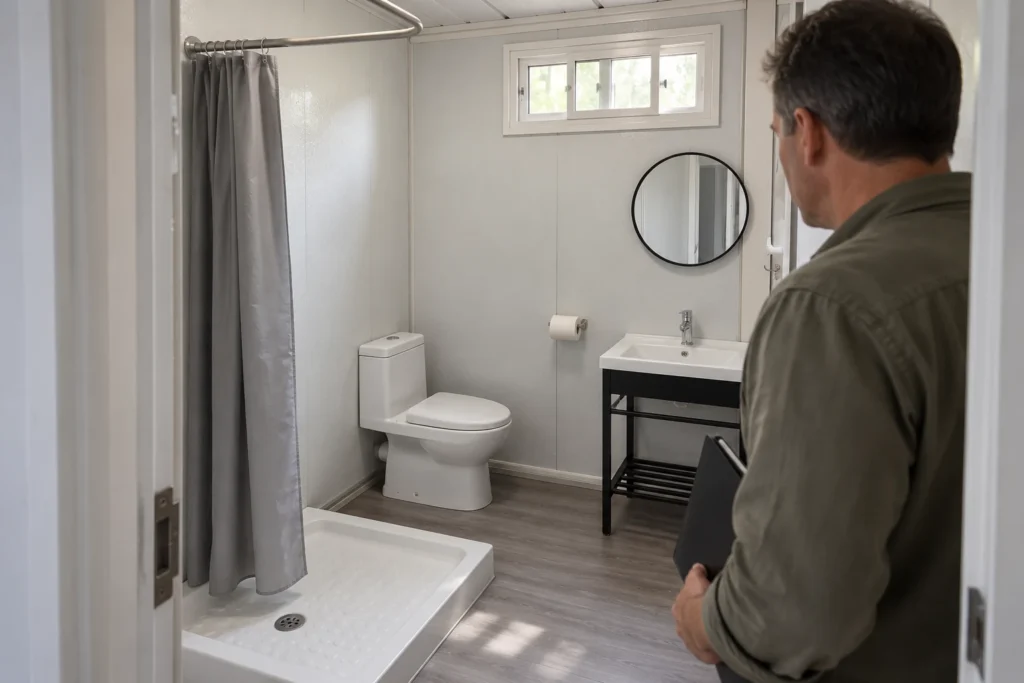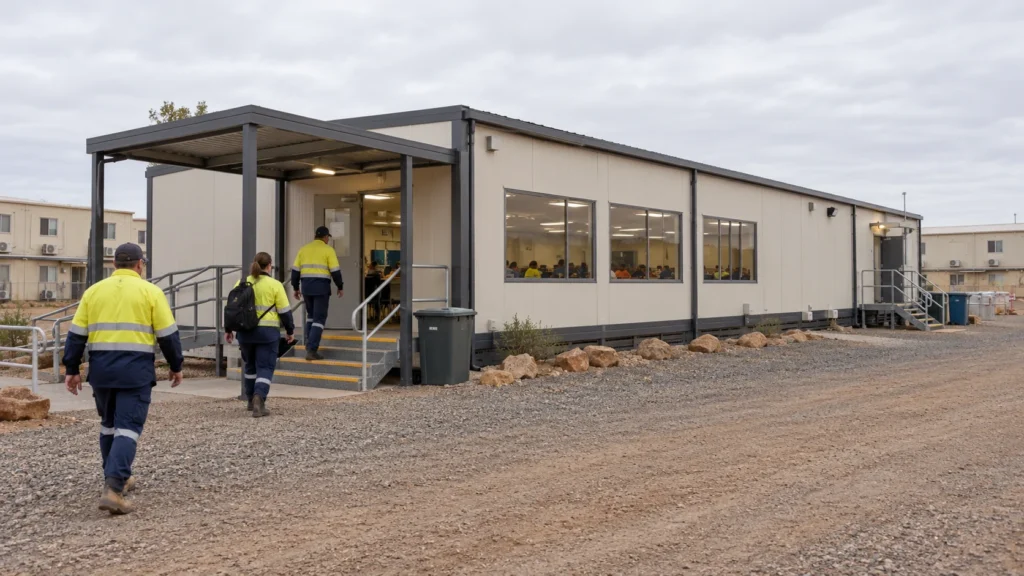
An emergency housing unit is ready for a resident when the installed unit, its site services, the occupancy decision and the resident’s support route have been connected by usable evidence. A delivery receipt or a key exchange establishes only part of that chain. Procurement teams need to know who will answer a problem, who may authorize the response, and how the answer will reach the household after the installation team leaves.
Urgency makes these distinctions easy to lose. The building supplier may have completed its scope while the water contractor still has a question. A room can look clean while a required document is missing. A minor finish issue may remain open with an agreed action, while a service problem needs a different decision before anyone moves in. The practical task is to make those states visible without treating every outstanding item as equivalent.
This guide develops a handover method for buyers and operators planning modular emergency housing. It is a procurement and operating framework, to be adapted to the project’s contracts, installed configuration and local requirements. Photographs are generated planning illustrations, not images of a PQSE customer installation. Official benchmarks below retain their source scope; they are not specifications or measured results for a PQSE unit.
Separate completion from the move-in decision
Start by asking what each signature actually means. Supplier completion, site-service completion, an operator’s condition record and permission to occupy may be separate acts by different people. Combining them into one box marked “handover” can hide a missing authority. Keeping them separate lets the buyer see which evidence supports which decision and whom to contact when an item is unresolved.
The contract should identify the person responsible for coordinating that chain. Coordination does not make that person the certifier for every trade. It means they can assemble the records, obtain a decision from the appropriate party and communicate a consistent status to the allocation team. Residents should not discover competing interpretations of readiness when they arrive with their belongings.
Agree the handover sequence while the purchase scope is still being discussed. Name who supplies each record, who reviews it and which decision depends on it. If the programme changes its allocation plan, revisit the sequence rather than simply bringing key day forward. This allows the team to identify a missing dependency while there is still a named person available to resolve it.
Use plain status words with a defined next action. “Awaiting water review” is more useful than “nearly complete.” “Available for allocation subject to the recorded restriction” is meaningful only if the authorized decision, restriction and communication are clear. A photograph of a tidy interior cannot replace that decision. Neither can a general product certificate establish that every site connection has been completed for the installed unit.
For a flat-pack container house, confirm the purchased configuration and the site work included in the order before assigning these responsibilities. The same commercial boundary matters for other building formats. A procurement schedule should name the evidence expected from each party rather than assume that the product name defines all installation and operating duties.
Match evidence to the installed unit
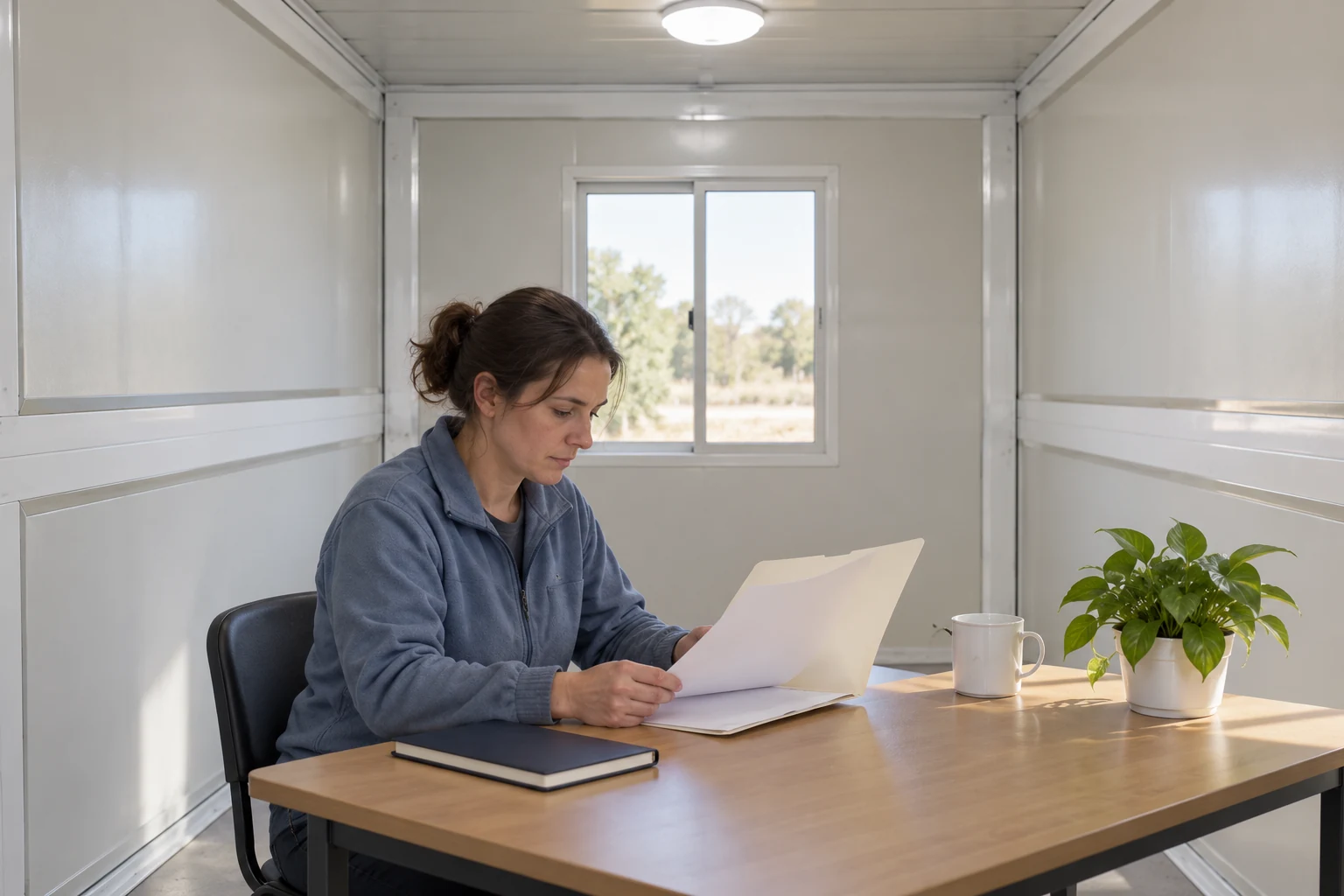
A document is useful only when its scope can be matched to the room being allocated. Record the project’s unit identifier, the installed location and the relevant drawing or configuration revision. A room number used by residents may differ from a factory or delivery identifier. Preserve the relationship so a service employee can find the right records without relying on the coordinator’s memory.
Check the document boundary as carefully as the identifier. A manufacturer’s instruction may cover the unit’s supplied equipment. A contractor’s record may cover only the external connection. A drawing can describe an intended arrangement without recording what was installed. The file should distinguish these purposes and identify the evidence still needed where one party’s scope ends and another begins.
This becomes particularly useful when several similar-looking units have different options. A folding container house and another room in the same programme may require different model instructions or service arrangements. Do not transfer a satisfactory result from one unit to the next simply because their finishes look alike. Record what was checked, by whom, against which applicable document.
| Record group | Identify in the project file | Question for the responsible reviewer | If unresolved |
|---|---|---|---|
| Unit and location | Unit identifier, resident address and configuration revision | Does this evidence describe this installed unit? | Resolve the identifier or revision mismatch. |
| Site-service interfaces | Connection scope, responsible contractor and relevant record | Which unit-side and site-side work does the record cover? | Name the missing scope and its reviewer. |
| Supplied controls and equipment | Model information, instructions and applicable demonstrations | Can the operator support the supplied configuration? | Obtain the correct instructions or a decision. |
| Condition observations | Location, symptom, date and supporting photograph | Can another person find and repeat the observation? | Improve the record before assigning a cause. |
| Occupancy decision | Decision maker, outcome, conditions and communication | Who is authorized to decide whether allocation may proceed? | Keep allocation status explicit. |
The index is a filing aid, not a substitute for mandatory inspection records. Add project-specific documents to it instead of treating these five rows as a complete regulatory list. Keep the operator’s accessible copy current when a unit is moved, altered or placed back into use.
Test the filing method with someone who did not compile it. Ask that person to find the unit, identify its applicable record and locate the responsible contact. If they need a private message from the original coordinator, the index is not yet sufficient for a replacement shift. Agree a controlled update method so an older copy does not silently become the working record.
Accept site-service interfaces as well as the unit

Trace each service across the commercial boundary. The buyer needs an answer for the supplied unit, the installed connection and the operating arrangement. Water availability, wastewater disposal and electrical supply are not established merely because an interior fixture or socket is present. Ask the responsible parties to identify the applicable checks and retain their records for this location.
This is especially important where a temporary site changes as households arrive. A connection tested under one arrangement may need review after a change in supply, routing or equipment. Define who reviews changes and updates the operator’s file. Avoid asking residents to settle a technical interface dispute between suppliers; give them one reporting route that can direct the issue internally.
When a service is absent from the supplied scope, say so explicitly. The buyer can then assign that work and request the relevant evidence from the site team. The same principle applies to a temporary arrangement: record its responsible owner and any agreed restriction. Do not allow an unrecorded workaround to become the assumed permanent configuration because it was convenient during installation.
Where the programme uses portable bathroom units, record whether the facilities are part of the household unit or a shared service. That distinction changes which location a resident reports and who coordinates access when a facility is unavailable. It does not establish a universal fixture ratio, connection detail or maintenance interval.
Retain the water record with the unit

For a building affected by prolonged shutdown or reduced operation, the CDC building-water guidance describes a water-management approach rather than a fixed flushing time for every room. Its benchmarks distinguish heater temperature from hot-water temperature at points of use. Anti-scald measures and system-specific procedures remain relevant. These temperatures must not become instructions for a resident to adjust a heater or a bathing-water setting.
Retain the responsible service team’s applicable procedure, date, scope and result. Record any limitations that affect use. If the configuration includes a portable shower unit, confirm its supplied equipment and site arrangement with the responsible team. A generic number quoted in a handover sheet cannot establish acceptable operation for an unidentified model.
Keep official benchmarks at their own measurement points
Authority data can make a review more precise when the measurement point and jurisdiction travel with the value. The following table is a source-selection aid. These quantities describe different tasks; they should not be combined into a performance score or a chart suggesting that one housing unit has passed them.
| Source and scope | Published benchmark | Where it applies | What the value does not establish |
|---|---|---|---|
| CDC: prolonged shutdown or reduced building use | Heater at least 140°F | Water-heater operation within the guidance, with scald precautions | A safe bathing temperature or approval of this system |
| CDC: building-water flushing guidance | Hot water at or above 120°F, where possible | Hot-water points of use; anti-scald devices may limit temperature | A universal shower setting or fixed flushing duration |
| CDC: portable generator use | Outdoors, more than 20 feet away | Separation from windows, doors and vents | A complete generator installation or site approval |
| USFA: residential smoke-alarm care | Test at least monthly | Alarm care using the applicable instructions | Completion of every site fire-safety obligation |
| USFA: residential smoke alarms | Replacement at 10 years from manufacture | Check alarm type and manufacturer instructions | A ten-year period beginning at housing handover |
The water rows come from the CDC reopening-building guidance. The generator row comes from CDC carbon monoxide guidance, which also says not to operate a generator inside a home or garage, even with openings left open. An operator must consider nearby occupied units’ openings as well as the receiving unit; local specialists must resolve the actual site arrangement.
The alarm rows come from USFA residential smoke-alarm guidance. Its care advice distinguishes power and battery types, and points to manufacturer instructions and local fire requirements. Keep the manufacture date and applicable model instructions available. These US sources are reference material for scoped questions, not a worldwide commissioning checklist or a claim that PQSE supplies a particular alarm or generator.
Record observations before naming the cause
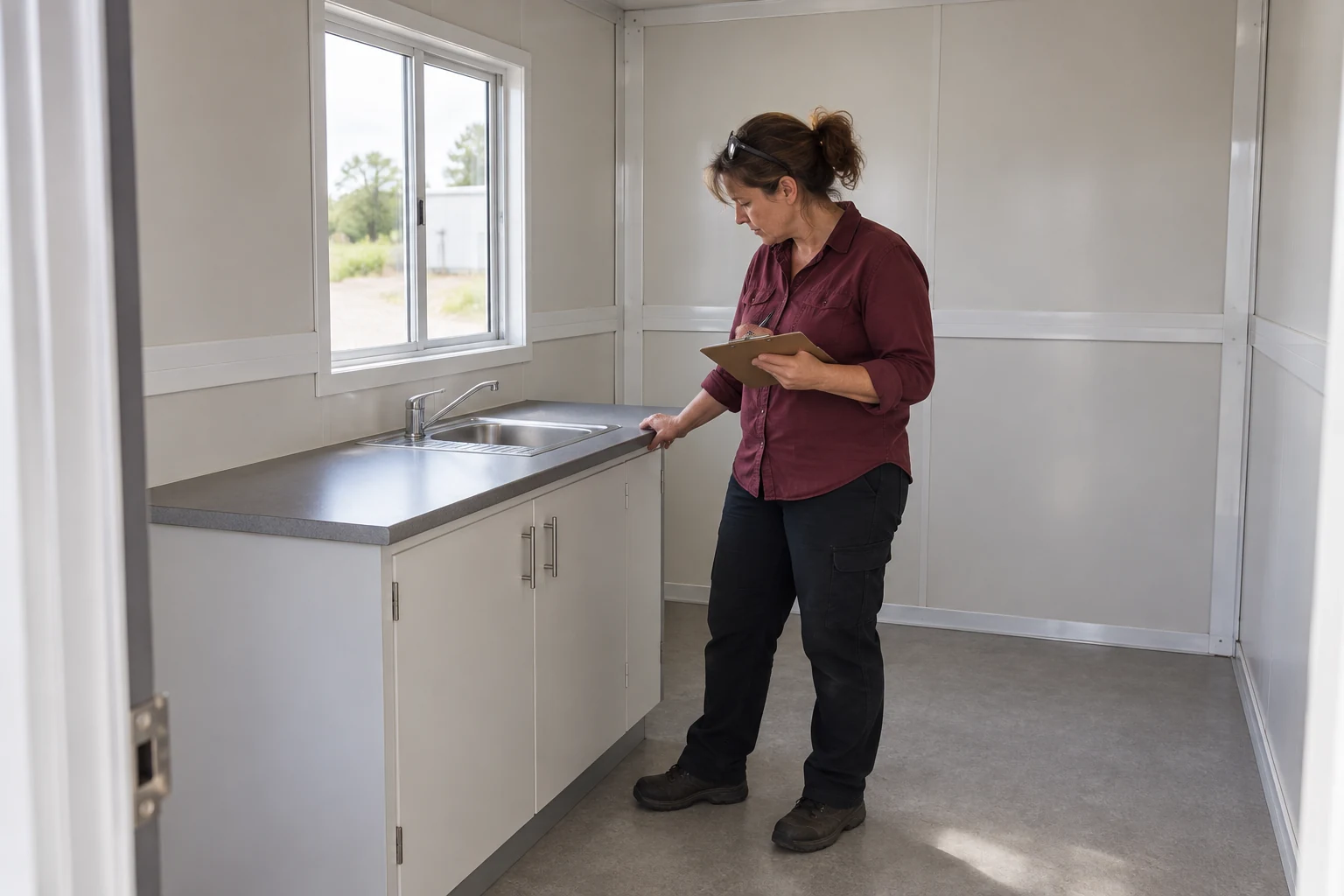
A useful condition record describes what the observer encountered. It does not start by selecting the party who must be at fault. For example, water visible at a particular service point needs a location, time, operating condition and response. A photograph alone may not distinguish a fitting issue from another source of moisture. Leave the diagnosis to the responsible reviewer while preserving evidence that helps that review.
Separate severity decisions from completion tracking. An issue that may affect permitted use should reach the authorized decision maker promptly. A finish observation can follow a different agreed route. The coordinator should not invent a universal severity ranking from an online photograph. Obtain the project’s decision rules, who may apply them and what temporary arrangements they can authorize.
Make a defect record another person can find
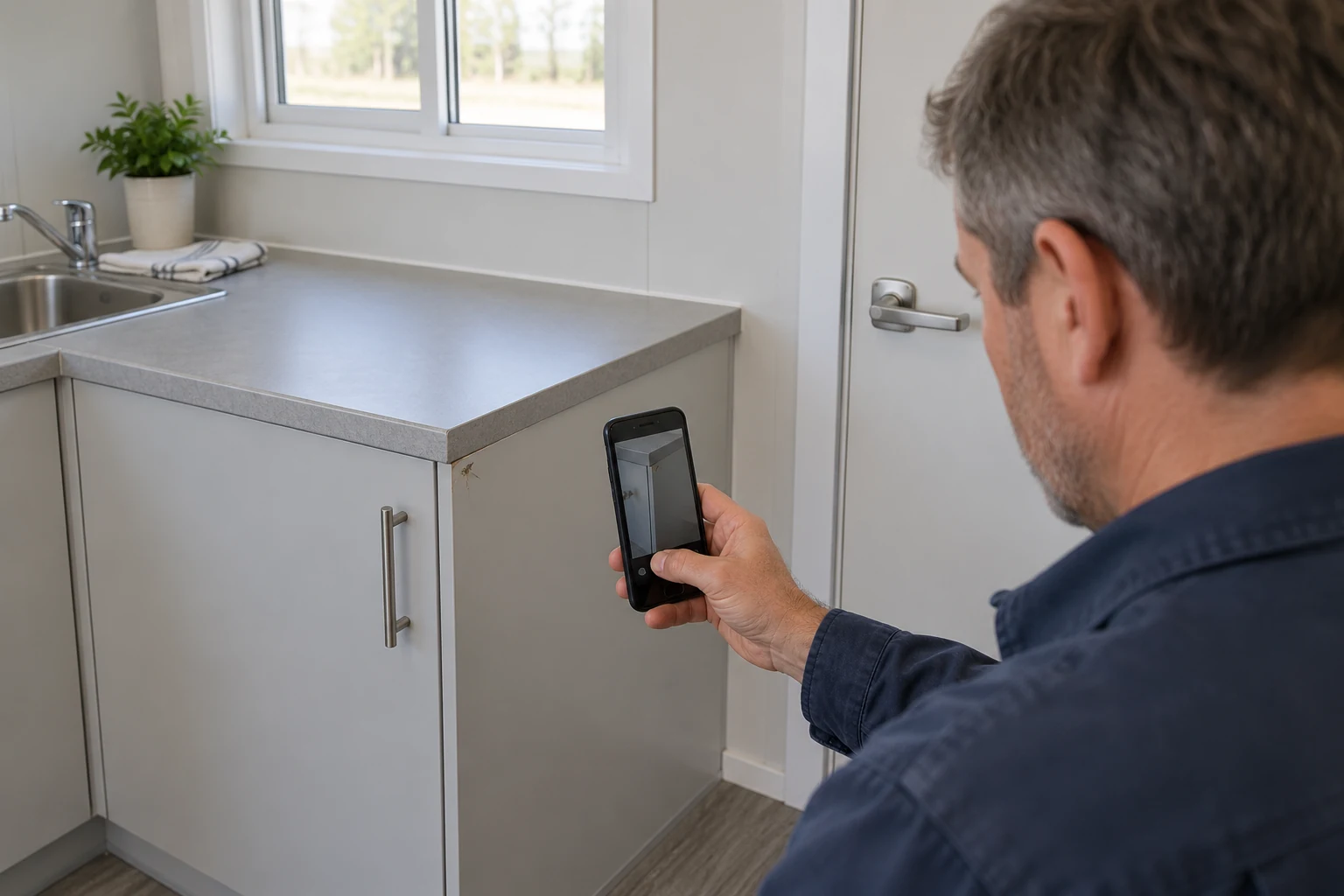
Include enough context for a person arriving later to locate the issue. Use the unit identifier, the room or external side, the component and the observed symptom. A close photograph can show a mark, but a wider view establishes where it sits. Keep personal belongings and identifying information out of unnecessary photographs, and use the operator’s agreed method for storing and sharing the record.
Record what was happening at the time without asking an unqualified observer to repeat a hazardous condition. If an ordinary door action is affected, describe that action. If a service is unavailable, record the reported interruption and refer it through the designated route. Evidence should shorten the review; it should not turn the resident into the repair contractor.
Keep the reporter’s words distinguishable from the reviewer’s findings. A resident may describe an interruption; a contractor may later identify a component or conclude that further investigation is needed. Preserve both stages with their dates. This avoids rewriting the original report as if the resident had already known the technical cause, and makes a later recurrence easier to compare.
| Illustrative observation | Capture first | Assign for review | Closeout evidence to agree |
|---|---|---|---|
| Water observed at an interface | Unit, exact location, time and visible condition | Responsible service reviewer and occupancy decision maker if needed | Recorded response and applicable recheck |
| Ordinary door operation affected | Opening identifier and action that could not be completed | Assigned installer or service reviewer | Repeat of the relevant ordinary operation |
| Required demonstration missing | Control or equipment model and absent record | Party responsible for the demonstration | Completed demonstration or documented decision |
| Finish mark recorded | Location view and close view, without an assumed cause | Agreed finish-review contact | Agreed disposition, action and owner |
Show residents the controls they will use
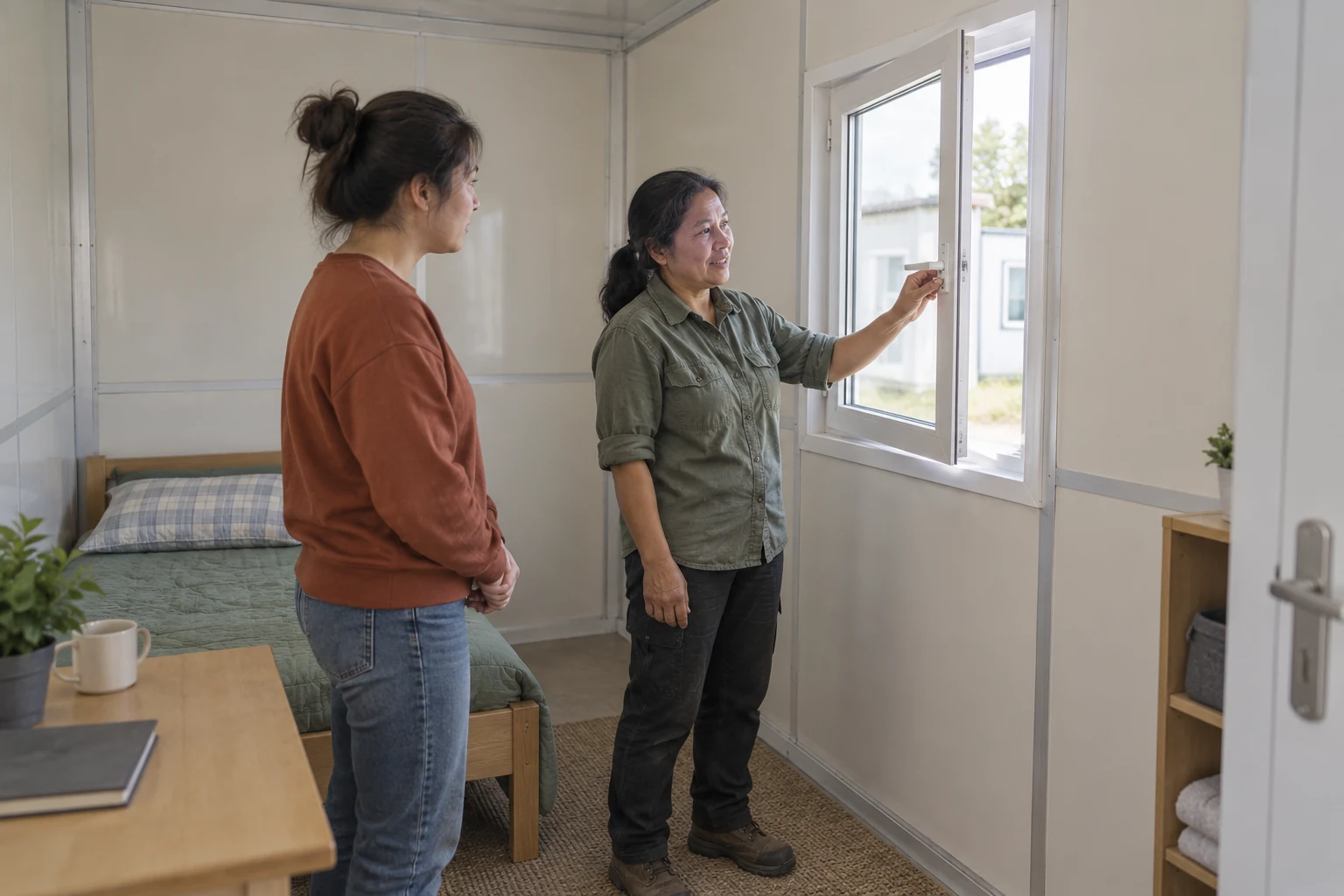
Resident orientation should focus on ordinary use and on getting help. Demonstrate the supplied door, window and permitted user controls according to their instructions. Explain what the household should report rather than attempt to fix. Keep technical commissioning activities with the people responsible for them. Seeing an operator move a handle is useful orientation, but it is not proof of structural or fire compliance.
Check how the information reaches this household. Language, hearing, sight, literacy and unfamiliarity with the site can change whether a written instruction is usable. Agree appropriate support with the programme team. A short explanation supported by a clear contact route can be more useful than handing over a large technical file that residents cannot interpret.
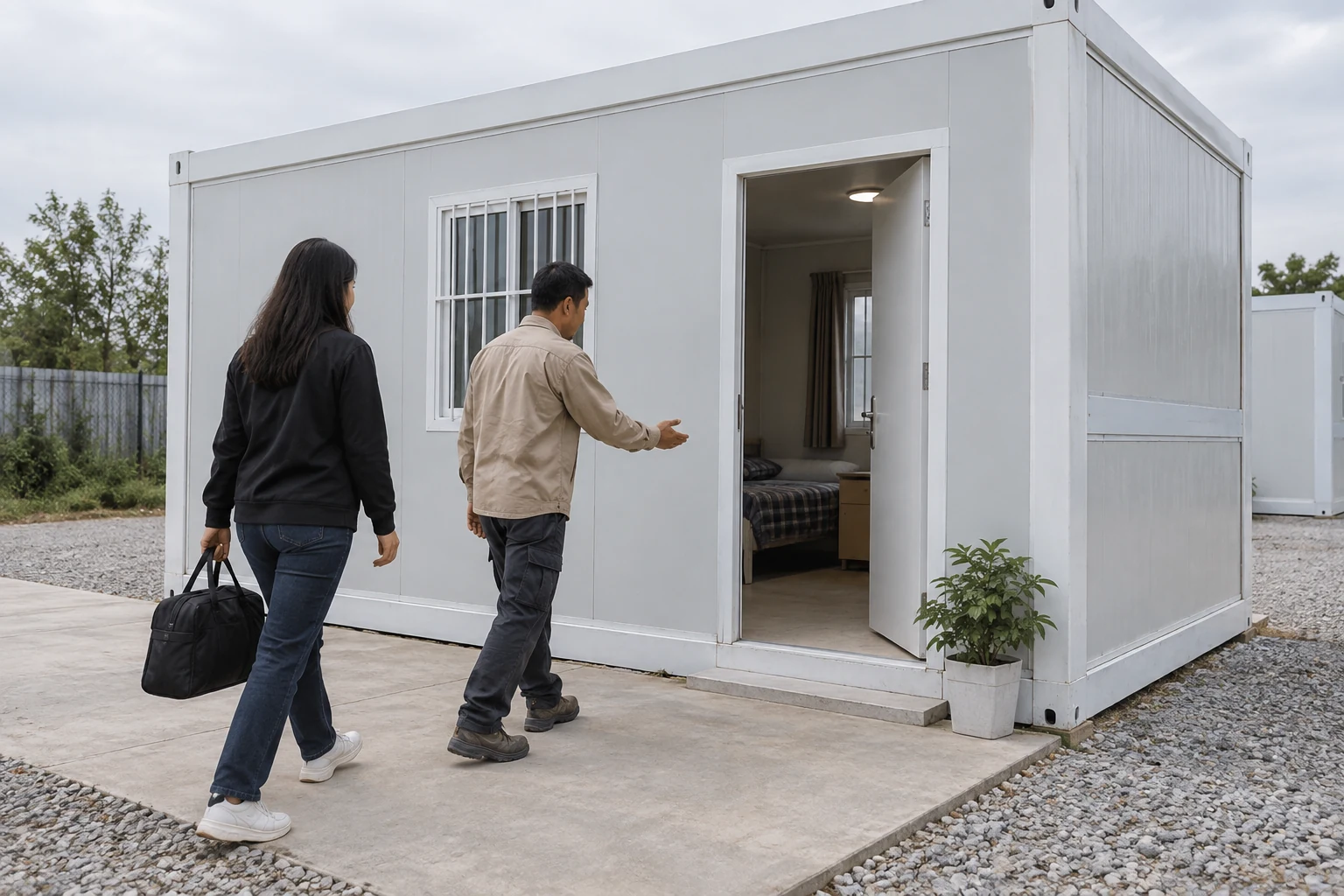
Walk the everyday approach and explain the unit’s location in the operator’s reporting system. Include shared facilities and any relevant temporary restriction. Confirm the household knows where to seek help if the route or a service changes. The walk is an operating conversation; access dimensions and legal requirements still need the project’s applicable review.
For a detachable container house, retain the current configuration when planning that conversation. Building format alone does not define the household’s access needs or authorize an improvised adaptation. Record requests that require a design or operating decision and route them to the appropriate person before promising a change.
Give residents a reporting route they can use

A contact list is incomplete if it gives a name but not a usable response path. Confirm the channel, operating hours, backup contact and information the recipient needs. The resident should be able to state the location and symptom without searching for a factory serial number in an inaccessible space. The operator can link that everyday location to the technical file internally.
Agree how the resident learns what happens next. An acknowledgement, an assigned owner and an update route reduce uncertainty even when a specialist decision is pending. Do not promise a response time the contract has not established. Distinguish the project’s maintenance channel from local emergency services, and communicate any emergency advice through the responsible programme team.
Check the support route under the conditions in which it will be used. A printed contact may be accessible when mobile reception is poor; a phone channel may still need an agreed backup if the first recipient is unavailable. The project operator should establish these arrangements, keep the information current and tell residents when a contact or responsibility changes.
Establish the after-hours decision

Ask who can authorize action when the usual coordinator is unavailable. That question includes access to the unit, a contractor visit, any temporary service arrangement and the route for approving costs. Allocation teams should know the answer before residents arrive. A resident should not have to negotiate a supplier boundary while an urgent concern remains unanswered.
One bounded public example is the NSW Central West temporary-housing programme for the 2022 floods. Its published information distinguished routine reporting, urgent or after-hours maintenance and certain structural-defect claims; applications closed in January 2025. That scheme illustrates why reporting paths differ. Its contacts and reimbursement terms are not terms for a PQSE project or a general legal entitlement.
| Situation | Resident information | Operator must establish | Record returned to the unit file |
|---|---|---|---|
| Routine issue | Location, symptom and suitable contact method | Reporting channel, hours and assigned owner | Acknowledgement and next action |
| Urgent or after-hours concern | Location and current condition | Backup contact and authorized response route | Decision, action and update responsibility |
| Supplier/site interface question | The observed problem, without an assumed cause | Internal referral and coordinating contact | Scope decision and responsible party |
| Facility temporarily unavailable | Affected household or shared location | Authorized interim arrangement and communication | Restriction, duration review and reopening decision |
Close an issue with a repeat check and an owner
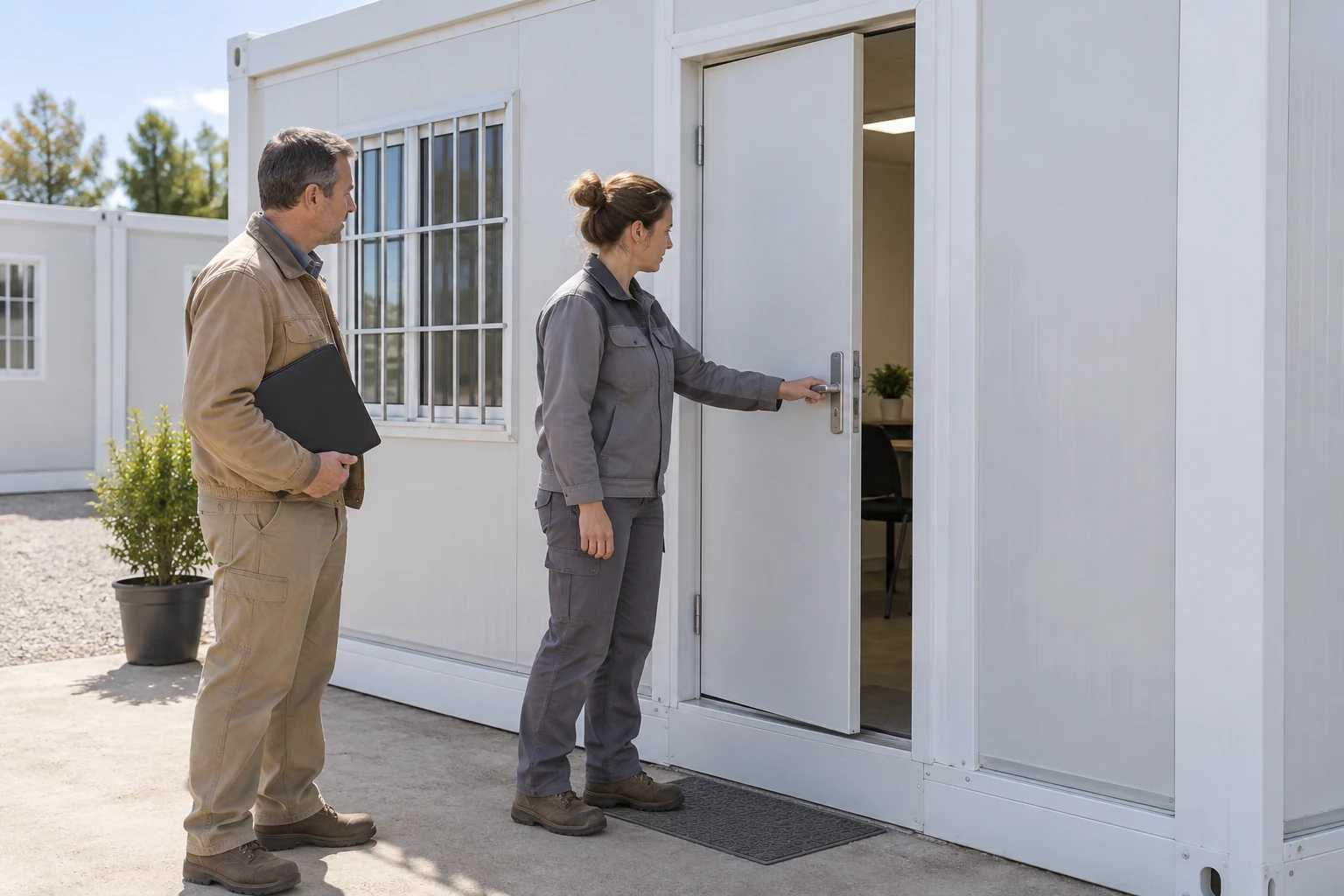
Contractor attendance and issue closure are different records. An attendance note shows that someone came to the unit. The closeout should identify what was done, which relevant check followed and who accepted the disposition within their authority. Preserve the earlier symptom so the check relates to the original concern rather than a general statement that everything looked satisfactory.
Where appropriate, repeat the affected ordinary use under the agreed conditions. Other issues may need a specialist record rather than a resident demonstration. If a problem cannot be reproduced, record that limitation and the next reporting instruction. Do not convert an inconclusive visit into a permanent assurance that the issue never existed.
Connect this operating file to the installation records. The general container-house installation guide is a useful starting point for discussing the construction scope. The move-in file adds the unit’s allocation decision, resident information and subsequent issue history. Keeping those records linked helps a new shift or replacement manager understand the current state without recreating the handover.
Make the occupancy decision explicit
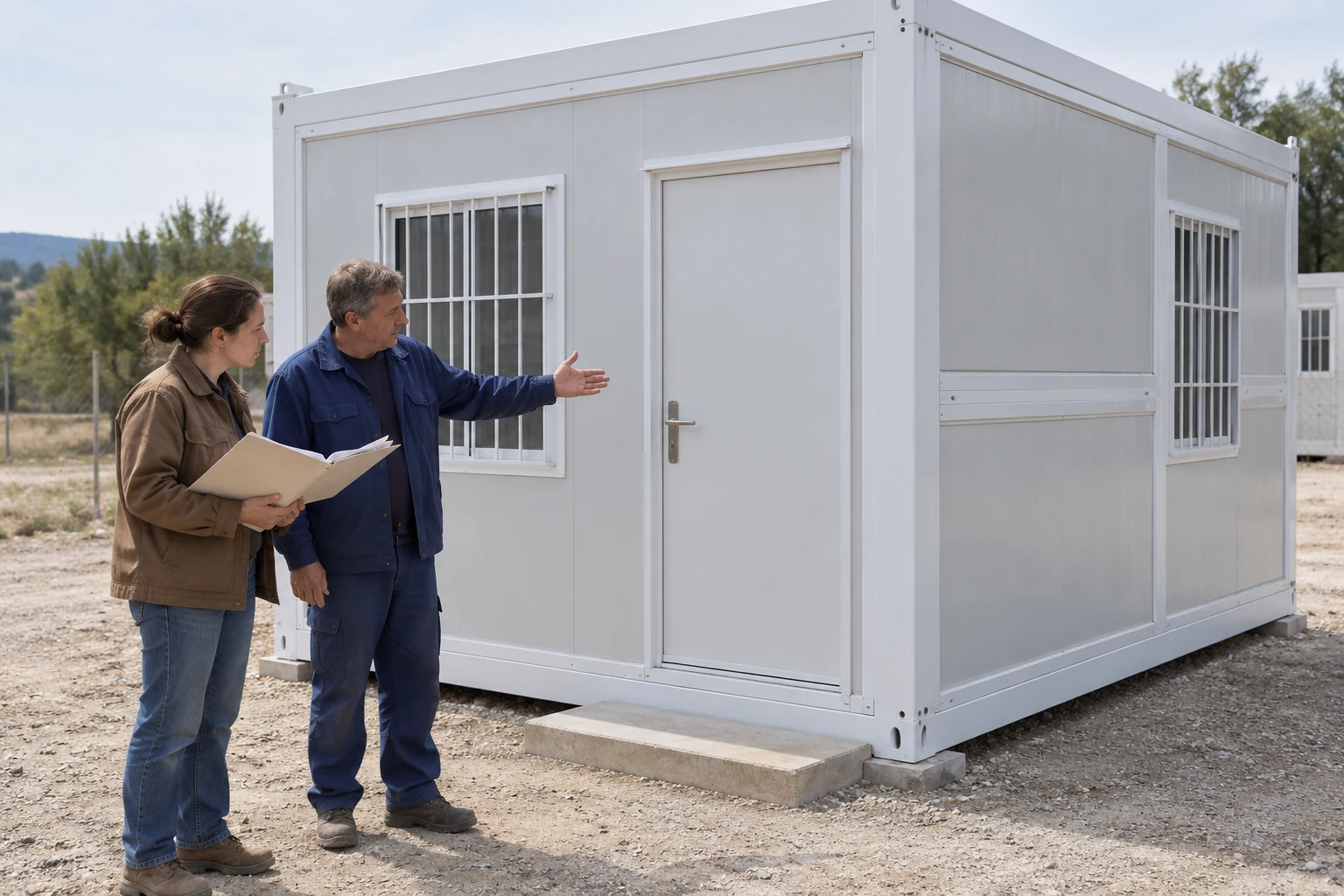
Before releasing the unit to allocation, obtain the required decision from the authorized party and communicate its conditions. Record open items with their owners rather than hiding them in an attachment. If a condition changes after move-in, establish who reviews the effect on continued use and who informs the household. The file remains an operating record, not a folder closed forever on key day.
The procurement benefit is continuity. The buyer can see the purchased scope, the operator can find the installed evidence, and the resident has a reporting route. None of those parties needs to infer a safety approval from an illustrative photograph or a generic benchmark. Each decision has a named source of authority and an identifiable next step.
Review the file when responsibility changes, not only when a defect is closed. A new operator needs the current contacts, unresolved actions and restrictions together with the technical documents. Transfer the record through the agreed project process and identify the person who will maintain it. This turns a collection of handover attachments into information that remains useful during occupation.
Source scope and project decisions
The cited CDC guidance addresses specified US public-health situations; USFA provides residential fire-prevention advice; the NSW page describes a particular recovery programme. Use them to sharpen questions while retaining their boundaries. Required occupancy permissions, installation checks, accessibility provisions and contractual remedies must be established for the project’s location and configuration. This article does not report measured PQSE performance or a completed customer handover.
Questions buyers ask before allocation
Does a delivery signature authorize move-in?
It records the event defined by the delivery terms. Confirm separately which installation, service and occupancy decisions are required, and who is authorized to make them. Keep allocation status clear while any required decision remains pending.
Can a finish item remain open when a household moves in?
That depends on the authorized project decision and the item’s effect on use. Record the observation, agreed disposition, owner and follow-up. Do not assume that a cosmetic description alone establishes permission to occupy.
Should residents receive the entire commissioning file?
Residents need usable instructions, relevant restrictions and a clear support route. The operator should retain the technical evidence and provide appropriate access to relevant information. Large files are not a substitute for explaining ordinary use and how to report a concern.
What should a buyer send before a handover discussion?
Send the proposed unit configuration, site-service responsibilities, intended household use, local review requirements and operating-support plan. Identify unresolved interfaces and the decision needed. These inputs let the discussion focus on the evidence and responsibilities for the actual project.