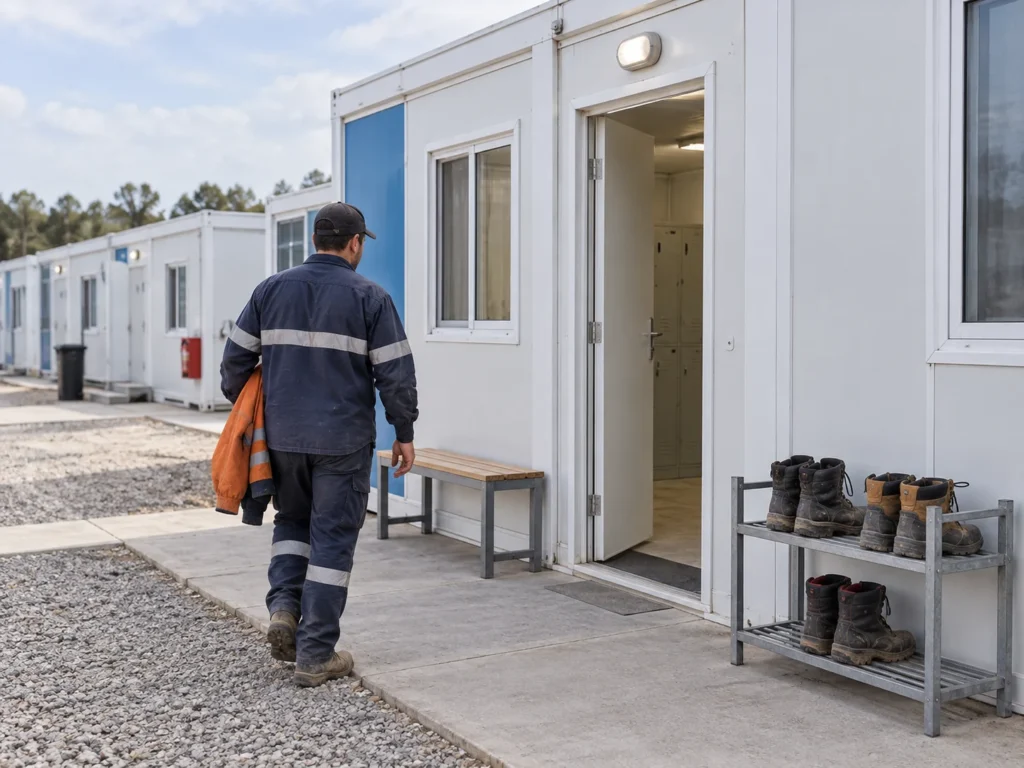
Before accepting a furnished worker camp, agree who receives a suspected bedbug report, who arranges identification, how belongings and linen are handled, and who decides when a room can return to use. Put those responsibilities beside the furnished layout and service contract. A delivered bedroom and a clean-looking mattress do not establish an operating response.
The difficult moment is often uncertainty: a resident reports bites after a night in accommodation, a cleaner notices something unfamiliar, or a returning worker asks whether a bag can enter another room. The operator needs a usable reporting route without treating every complaint as a confirmed infestation or dismissing it because nobody immediately sees an insect.
This guide concerns procurement and operating coordination for worker camp accommodation. It does not diagnose skin symptoms, prescribe pesticides or establish a treatment temperature. Insect identification and control belong to the applicable specialist service; medical concerns belong to a healthcare professional. The buyer's task is to make access, decisions and handovers workable before residents arrive.
Give the first report a clear owner

A resident should know where to report a concern and what happens next. Give that contact an alternative for nights, weekends and shift changes. The response arrangement is incomplete if the published contact can receive a message but cannot arrange access, obtain assistance or tell the resident when another update is due.
Describe the first conversation in ordinary language. Record the room and bed position, when the concern was noticed, what was observed and how the resident can be contacted privately. Separate an observed insect or mark from a description of itching. The person receiving the report should preserve that distinction as the issue passes to maintenance or a service provider.
One public hotel discussion about a bedbug complaint describes a guest who did not understand why a contractor's visit was followed by another inspection before an answer. Comments described differing arrangements. This is an unverified hotel account, with no confirmed cause or reliable original absolute date available here; it illustrates a communication question, not a workforce-camp trend.
For a camp, specify the next communication rather than promising an unsupported clearance time. Someone should acknowledge the report, explain who is reviewing it and identify the next decision. A resident can understand an investigation that has not reached a conclusion when the operator makes responsibility and uncertainty visible.
Separate the reported symptom from insect identification

Keep the record specific enough for a competent inspection. A room identifier, actual observation and accessible inspection point are more useful than an unsupported label entered into a maintenance log. Staff awareness should help route evidence, while the specialist confirms what it means.
CDC's diagnostic reference states that the inflammatory reaction to bites is not specifically diagnostic of bedbugs. Identification of adults or nymphs collected near the relevant area provides stronger confirmation. That distinction matters when writing a report: symptoms alone should not be recorded as an identified insect or used to invent an infestation count.
Agree how staff preserve the information the provider requests without giving them a new job outside their training. Photographs should retain the location and context; the inspection contact should explain any collection procedure. Avoid asking residents to dismantle fittings, apply a chemical or interpret an online photograph as a condition of receiving help.
Make the outcome categories useful to the operator. A specialist may identify activity, find no evidence during a particular inspection, request further access or recommend continued monitoring. Those descriptions answer different questions. Retain the scope and limitations of the actual report rather than shortening each outcome to a green or red status.
Where more than one employer or contractor supplies residents, agree which organization holds the confidential record. Publishing someone's medical photographs or room complaint in a general work group adds avoidable disclosure without improving the inspection. The operational record should contain what the relevant staff need for their assigned decision.
| Recorded state | What is established | Operator decision to define |
|---|---|---|
| Concern reported | A resident or staff member describes an observation | Named receiver, private contact and next update |
| Inspection arranged | A provider has accepted an inspection request | Access, room inventory and availability |
| Identification recorded | The actual specialist finding and its scope | Relevant actions under the approved service plan |
| Release decision recorded | The named authority has reviewed the required information | Rebooking, communication and any follow-up |
Review the furnished room as an inspection space
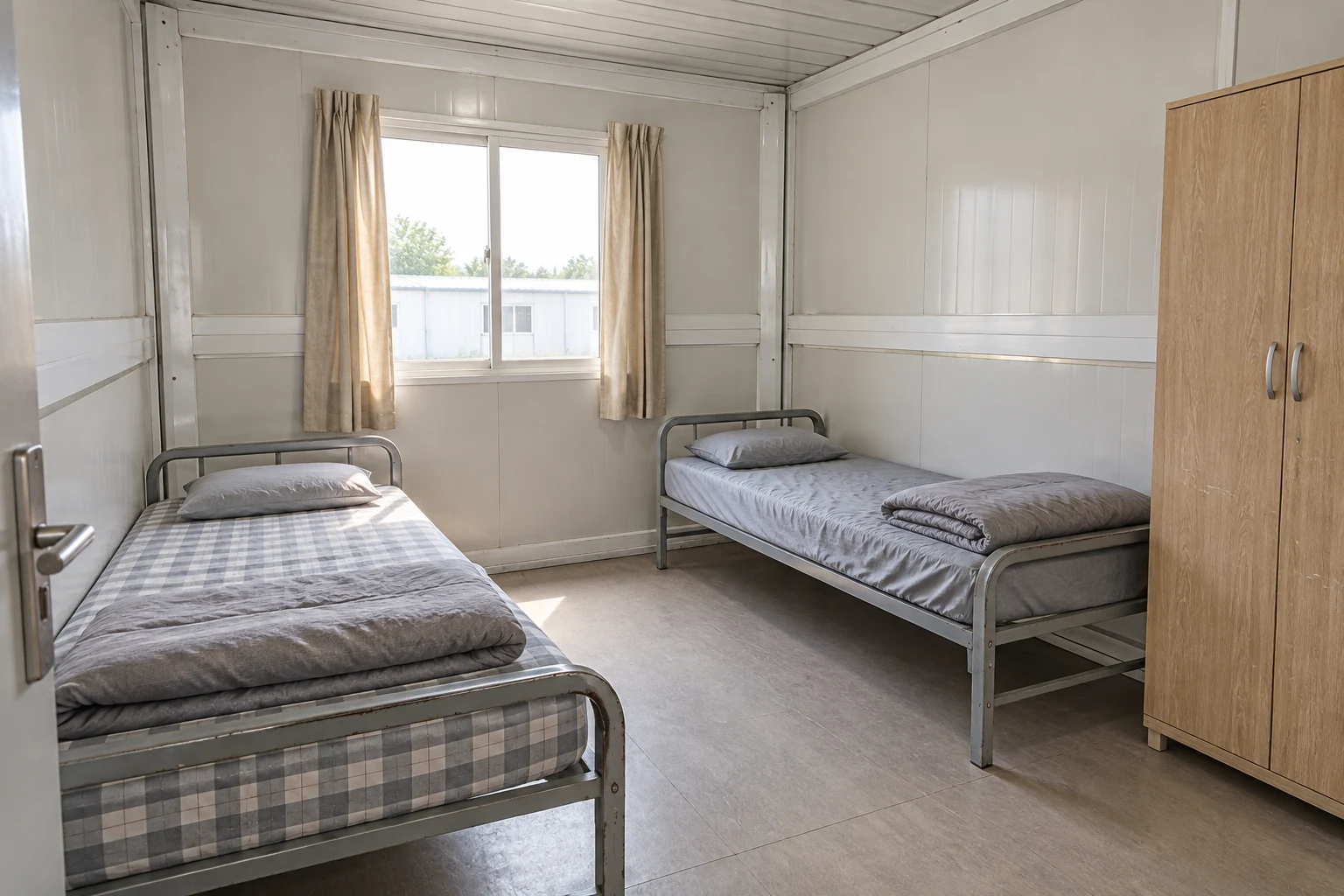
Review the proposed bedroom with its actual beds, mattresses, headboards and storage in place. An empty shell can look accessible while installed furniture conceals the places the service provider wants to examine. Ask the operator and provider to review the furnished arrangement before it becomes an order document.
Start with the room inventory. Show which items are delivered with the building, which are supplied by another contractor and which residents may bring themselves. Include the intended attachment of headboards and wardrobes. The same-looking room may have very different access if an object is fixed to a panel rather than standing independently.
Distinguish a maintenance decision from a product claim. An accessible frame may be easier to examine in the proposed arrangement, but choosing metal, a smooth finish or a modular building does not establish a pest-free guarantee. Request the actual furniture and finish information, then let the relevant provider assess the inspection implications.
Review access without compromising the building. A service visit should not depend on removing an electrical cover, cutting a panel or dismantling structural connections by untrained staff. Identify which visible items the provider can examine during an ordinary visit and what requires an authorized maintenance action.
The selection between flat pack container accommodation and another building system should therefore include the furnished operating brief. The enclosure, room arrangement and furniture schedule need to be considered together. A generic photograph of a bed in a module cannot resolve who supplies, maintains or authorizes access to that bed.
Keep bed positions and room changes traceable
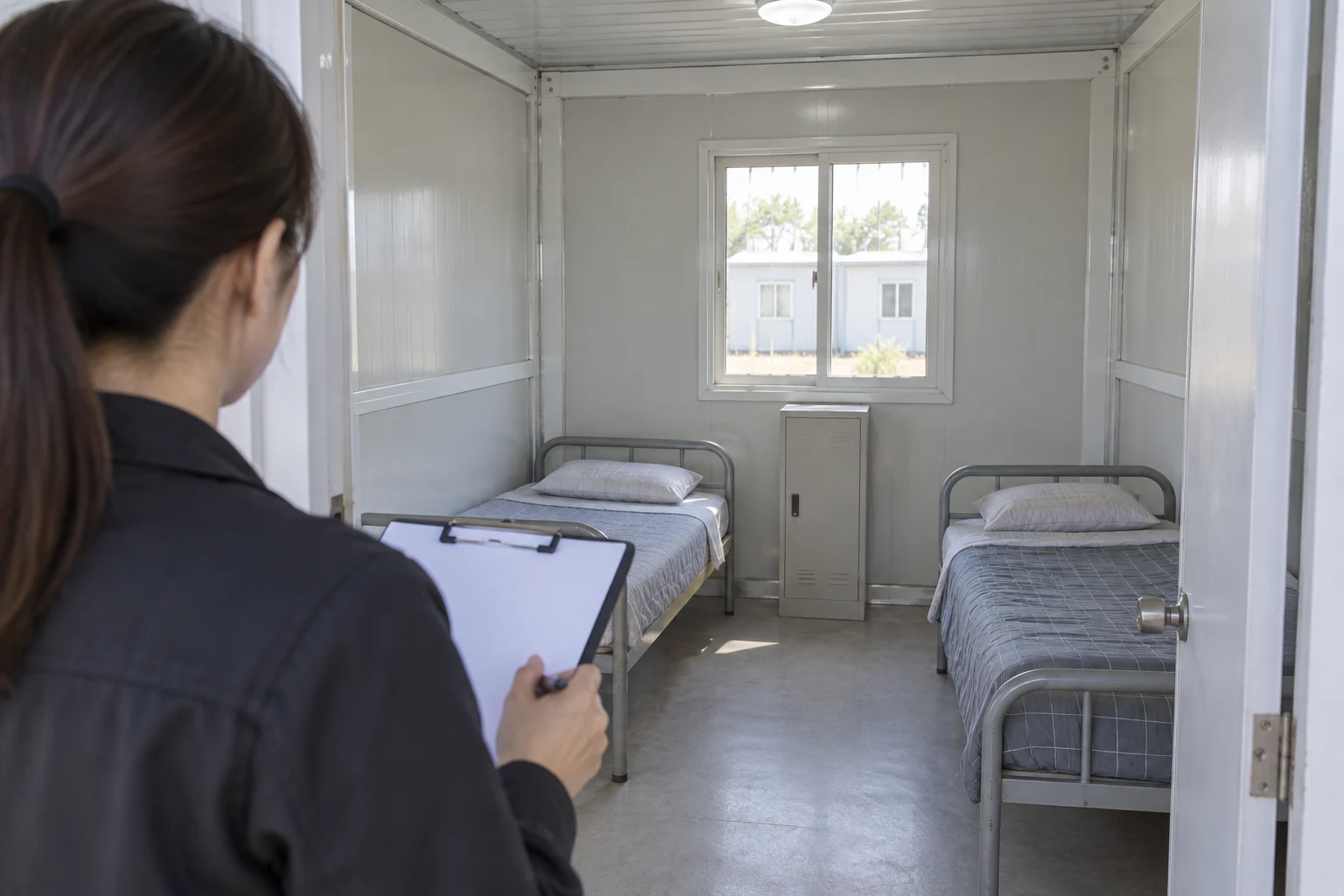
Give each report a room and bed position that can still be understood after a roster change. Retain the furniture arrangement used during the inspection. A report referring only to the previous occupant becomes difficult to apply when beds are moved or a bedroom is reassigned.
Prepare a simple room inventory with the operator. It can show bed positions, supplied furniture and relevant replacement items without becoming a complicated building database. Link the inspection record to the current arrangement and keep the earlier revision when a change matters to an unresolved concern.
A move to another room creates its own decisions. Specify who can authorize it, who checks the availability of the receiving room and who obtains instructions about the resident's belongings. The article does not prescribe a relocation method; it asks the buyer to make that handover part of the service arrangement rather than leaving it to an improvised favor.
Consider the normal roster too. A vacant bed may be scheduled for a new shift crew while an investigation is still open. The accommodation booking system should be able to carry the operator's actual restriction, including an owner and review point. A room number on a printed sheet is useful only if the person allocating beds receives the change.
This is particularly relevant to mining camp accommodation with rotations and several operating contractors. Define who reconciles the accommodation roster, service record and room availability. Do not assume the building manufacturer controls the camp's daily allocations.
Define a belongings handover before moving items
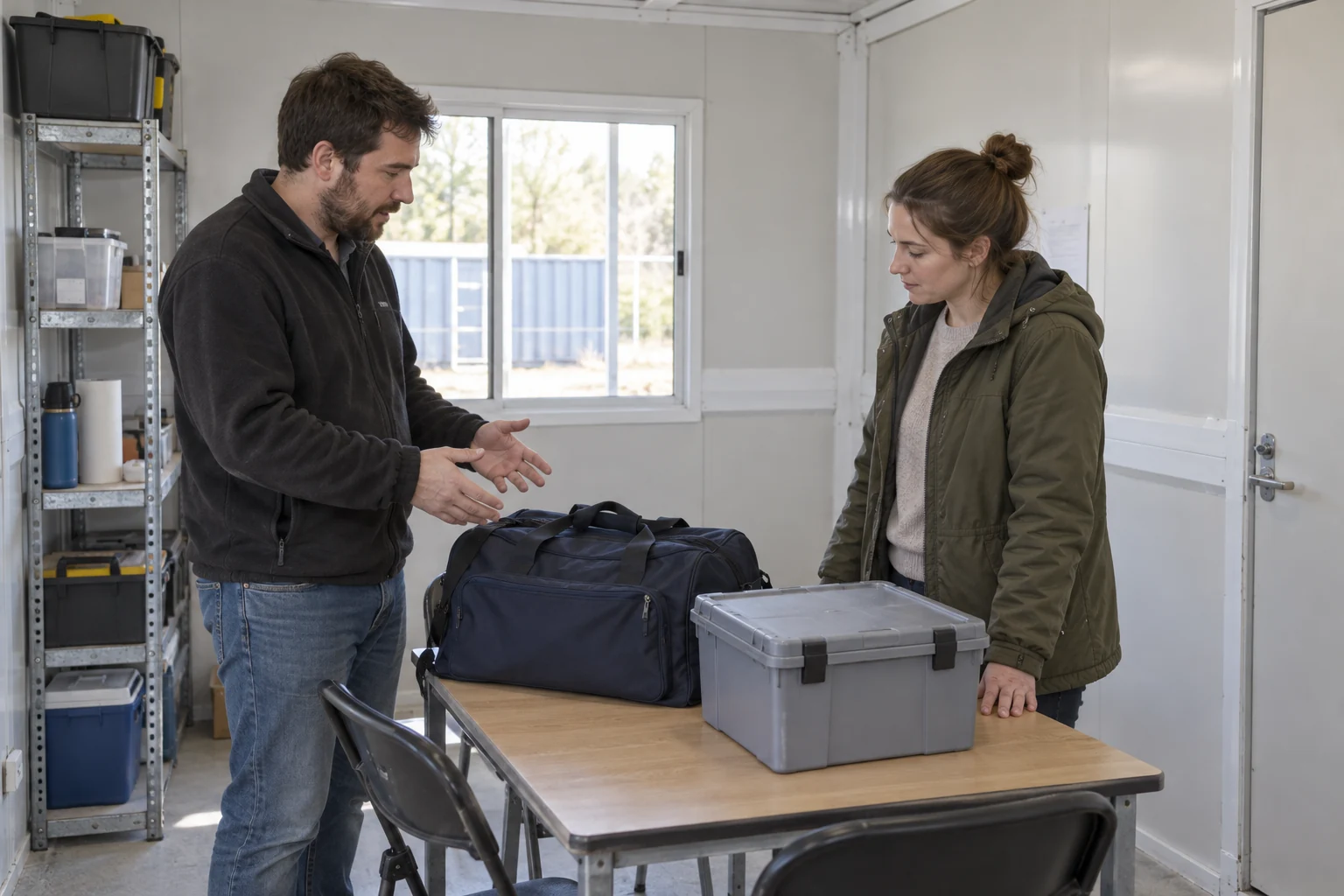
A room response also concerns bags, clothing and personal effects. Obtain the provider's instructions for the actual items before transferring them between rooms or service areas. Name the person who explains those instructions and the place where the agreed handover occurs.
Follow one bag through the proposed arrangement as a planning exercise. Who owns it, who may move it, how is its status communicated, and where is it returned? The exercise should reveal missing permissions or storage responsibility without pretending that a photograph or a sealed container proves the contents have been cleared.
Keep item identity distinct from a room number. A resident may leave the camp before an item is returned, while a room may be assigned to somebody else. The operating record should explain how an authorized person matches an item to its owner and avoids giving the wrong belongings to the next occupant.
Discuss personal property and contractor equipment separately. Boots, clothing, electronics and work tools may need different handling instructions. Do not infer that a method selected for washable linen is suitable for a device or a material the provider has not assessed.
A temporary holding location needs an owner as well as floor space. Decide who controls access, records movement and deals with unclaimed property. For the buyer, this is a service and layout question to resolve with the operator. It is not a recommendation to create an unapproved fumigation enclosure or treat possessions without permission.
Connect linen handling to the room response
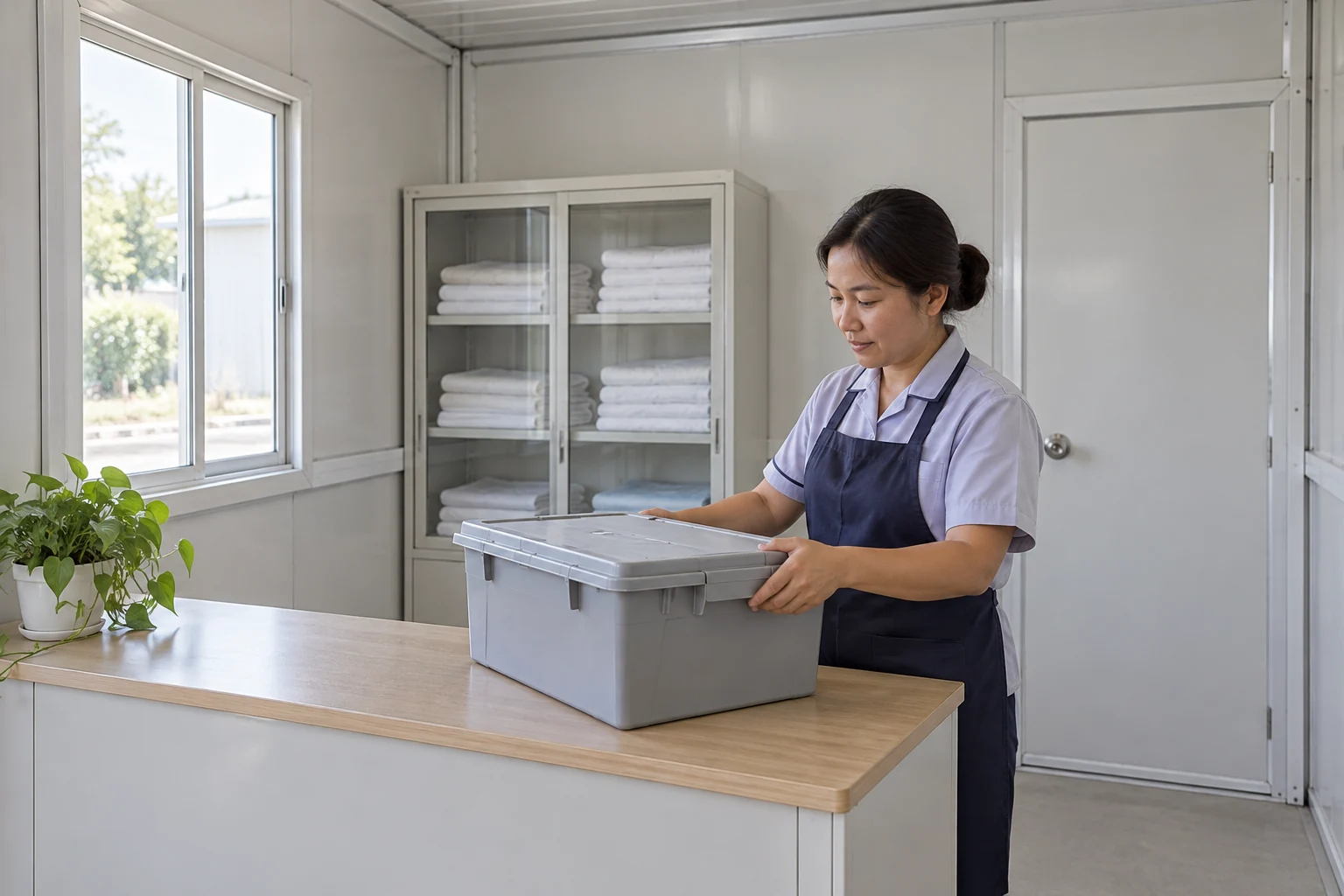
The linen team needs the relevant instructions before collection begins. A service plan that names only a bedroom omits the people who remove bedding, transport it and receive it at the laundry. Review that complete handover with the selected operator and provider.
Map the actual ownership of bed linen, mattresses and laundry containers. Identify who supplies them at opening and who replaces them during operation. A lease or outsourcing arrangement may limit what camp staff can authorize. Record those boundaries instead of assuming the accommodation supplier also manages textile care.
Ask the provider to explain the handling instructions that apply to a suspected or confirmed case, including item identification, segregation and the receiving party. The operational drawing should show where the agreed collection happens without blocking the ordinary route or mixing the handover with clean stock.
The worker camp laundry and drying-room planning guide addresses the wider utility and operating brief. A particular pest response still needs its own qualified instructions. This article deliberately gives no dryer setting, chemical dose or heat-treatment time to transfer between unlike machines and materials.
Compare service proposals by their complete responsibility. A provider who inspects the room may exclude linen transport; a laundry contractor may exclude investigation or specialist treatment. Those exclusions can be workable, provided someone accepts the missing handover. A price comparison that ignores them conceals work the camp will still have to arrange.
Write the inspection and control service boundaries

Request a service description that distinguishes inspection, identification, recommended action and follow-up. Check who can authorize each stage and how additional work is quoted. A single line for pest control does not show whether the contract answers an uncertain report or only treats confirmed activity.
EPA's integrated pest management guidance combines appropriate control measures with participation by residents and building management. It also identifies monitoring as part of checking the outcome. These are coordination principles; they do not provide a fixed reopening time or certify a furnished worker camp.
The actual Rentokil US commercial service page describes distinct inspection, corrective-service and recurring-service plans. Its follow-up and guarantee terms belong to those specific offers. Use the distinction to ask what a proposed contract includes, without copying another supplier's times or promising the same outcome from an unrelated camp service.
Specify the available hours and escalation contact in the quotation. The response the operator needs may differ during occupancy, between rotations and during commissioning. Where a provider cannot cover every period, record the alternative arrangement and who obtains it.
Keep building, furniture and specialist-service warranties separate. A supplier's responsibility for a damaged door or missing mattress does not establish responsibility for pest introduction, investigation or treatment. The purchase documents should identify the relevant party for each issue and preserve the agreed exclusions.
| Work item | Question for the proposed provider | Camp-side responsibility |
|---|---|---|
| Initial inspection | Access scope, evidence record and stated limitations | Authorized entry and furnished inventory |
| Identification or further assessment | Who issues the actual finding? | Private communication and record custody |
| Recommended control work | Approvals, exclusions and item instructions | Named authorization and coordination |
| Follow-up and room availability | Actual criteria, restrictions and reporting | Release authority and booking update |
Provide practical access and maintenance support
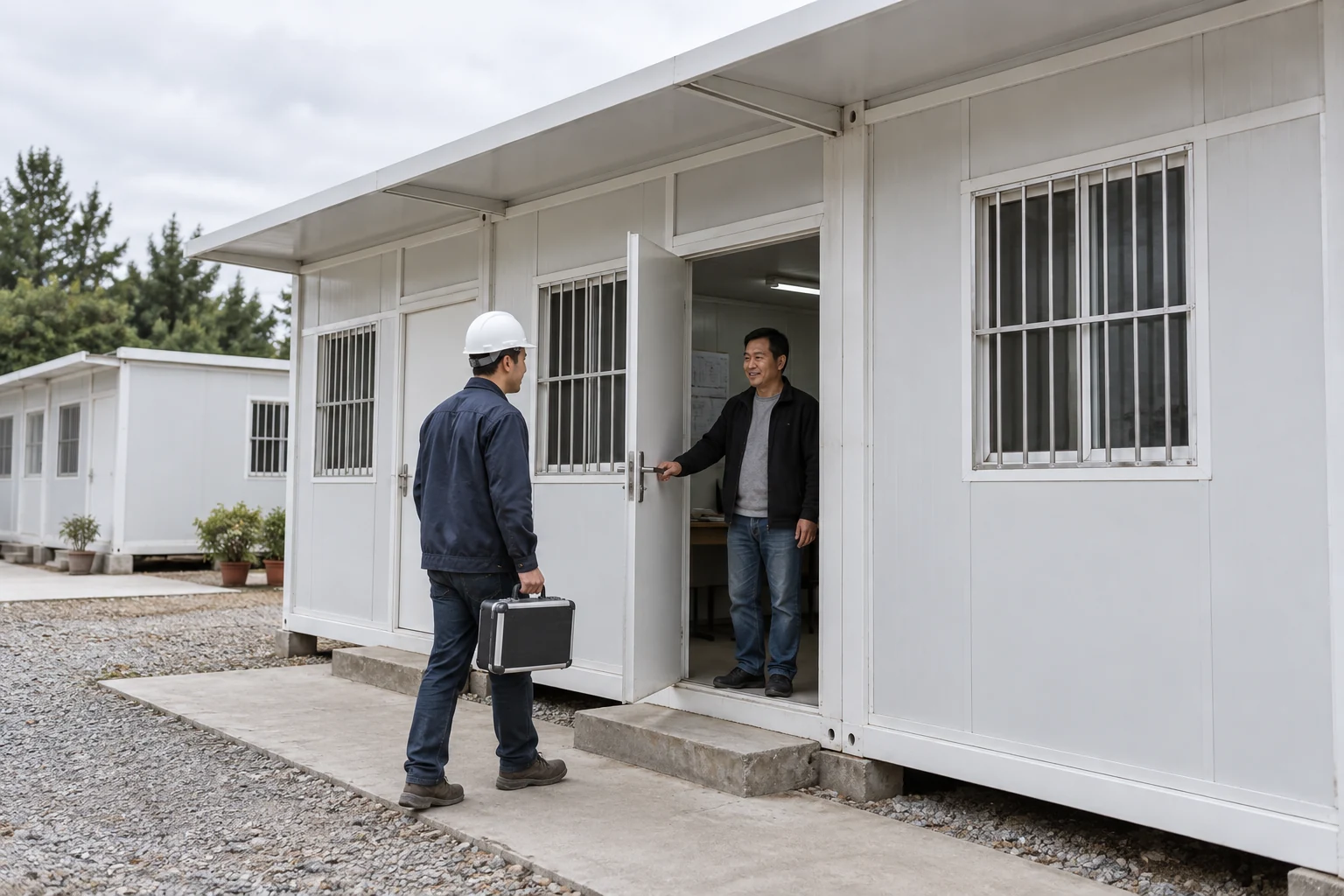
Review how the provider reaches the room and the installed furniture. Include entry authorization, keys, resident privacy and maintenance support. A proposed service can be delayed by an unresolved access decision even when the contractor is available.
Check the furnished route on the actual drawing. Doors, stairs and common passages must continue to serve the ordinary operating brief. The inspection plan should explain where equipment can wait and who arranges any necessary assistance. It should not quietly convert a shared passage into an unassigned storage area.
Confirm whether detachable furniture, replacement fittings or spare keys require the building supplier's involvement. If the camp uses detachable container buildings, the fact that the building can be assembled or relocated does not authorize staff to dismantle it for an inspection. Keep maintenance actions within the documented responsibility.
Treat remote availability as an operating question. Ask what information the provider needs before travelling, which camp contact can give access and how an unresolved finding is handled after the visit. Avoid inventing a universal response interval that ignores the location, contract and available service.
For multi-room facilities, ask the specialist to identify the actual scope of inspection. Camp staff should not decide that only the originally reported bed matters, or that all adjoining rooms must be treated, from this guide. Record the provider's recommendation, the affected room identities and the operator's corresponding access arrangement.
Make room reopening a recorded decision

Separate finishing a service visit from releasing a room for use. Name the authority who reviews the required information and updates the booking record. The practical question is what permits that particular room to return to occupancy under the applicable plan.
Ask for the provider's actual report, restrictions, follow-up arrangement and any outstanding actions. The operator should know what was examined and what remains unresolved. A paid invoice or a photograph of freshly made beds does not answer those questions by itself.
Define how the accommodation team receives the release decision. It may need to coordinate a resident's return, replacement furniture, linen delivery and the next roster. Give each outstanding action an owner. Otherwise a bedroom can be rebooked while a necessary handover is still waiting for somebody else.
Use careful language in the communication. Describe the actual inspection and the provider's finding rather than promising that a building system makes recurrence impossible. Where follow-up remains part of the plan, preserve it in the operating record after the room has returned to use.
Related accommodation businesses face similar allocation questions. The modular hotel rooms solution is relevant when guest turnover rather than workforce rotation defines the operating brief. A hotel comparison can inform responsibilities, while its local rules, service terms and customer policies remain specific to that property.
Keep treatment outside improvised camp maintenance

The buyer should obtain an applicable specialist plan instead of turning a general maintenance team into an extermination service. Keep the guide's role to procurement, access and coordination. Treatment products, equipment, occupant restrictions and technical methods need the appropriate local authority and competence.
EPA's US safety guidance requires following the directions and precautions of registered pesticide labels and warns against improvised room heating, which has caused fires. Its jurisdiction is the United States. Elsewhere, obtain the applicable local requirements and provider instructions rather than transferring a US product authorization.
Do not use an illustration of a panel room to infer that its finishes, wiring or furnishings tolerate a proposed treatment. The actual configuration and materials must be assessed. Procurement documents should make the necessary product information available to the competent party without advertising an unsupported resistance rating.
Have the provider explain any preparation responsibilities in writing. If an instruction conflicts with a supplied component, leased item or resident's property, resolve that conflict before work is authorized. The camp contact should not quietly substitute a different method or increase an application because the first visit has not answered every concern.
Budget for the coordination as well as the initial callout. The operator may need access support, records, communication and follow-up appointments. These are items to identify and price from actual proposals; this guide contains no invented treatment cost, probability of success or promised downtime.
Test the response arrangement before move-in
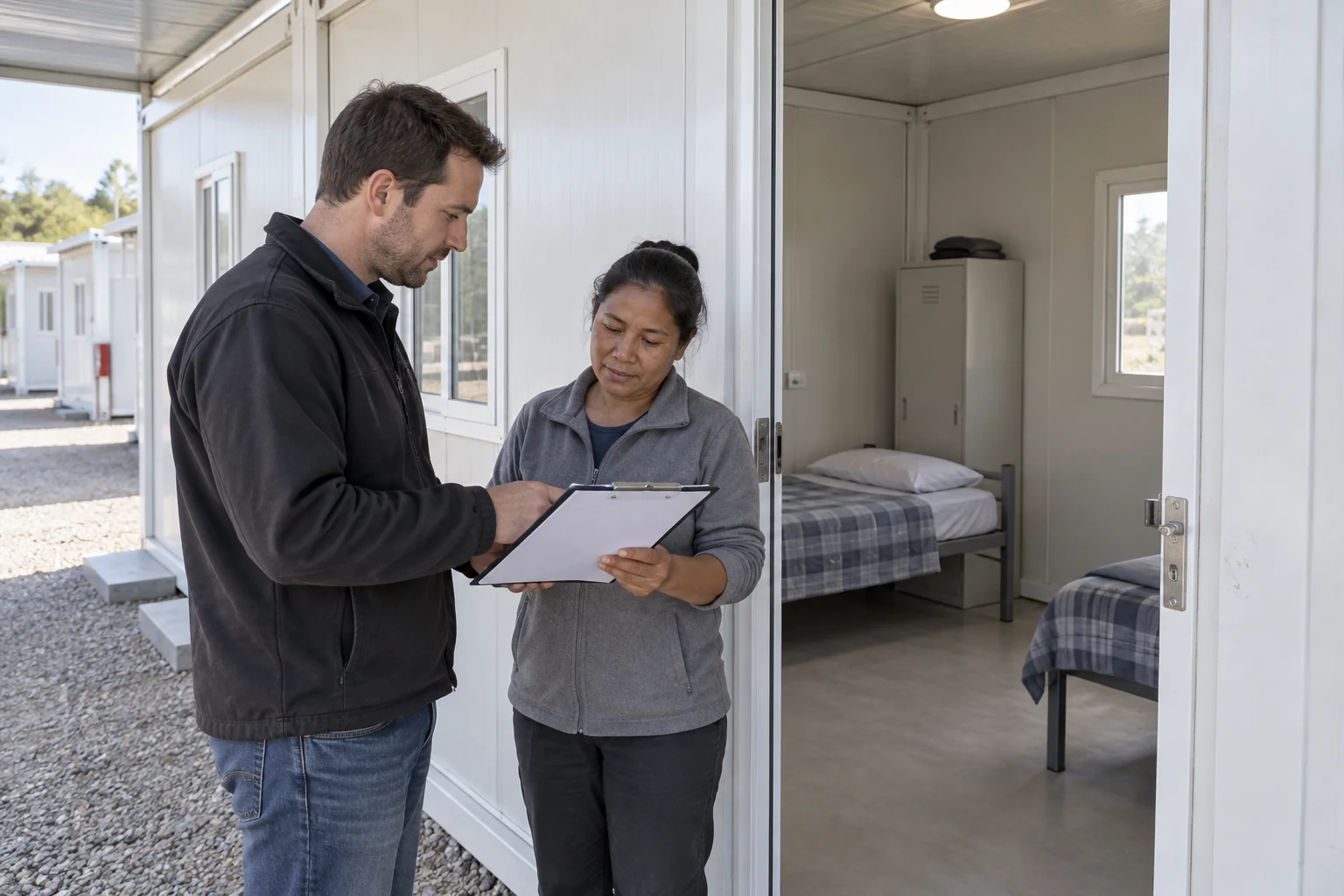
Before opening, walk through a hypothetical report with the people who will actually receive it. Use the real contact list, furnished drawing and contract. The exercise is complete when the team can explain the next decision and its owner without relying on an unwritten assumption.
Choose a deliberately uncertain scenario: a resident reports a concern, no insect has been identified, and a bed allocation is due to change. Ask the receiver to describe what information is recorded, who is contacted and how the accommodation team receives the current status. Keep the exercise separate from a claim that a real incident occurred.
Then trace the item and access handovers. Who explains the provider's instructions, who controls entry, who updates room availability, and who receives the follow-up record? Include the laundry contractor and furniture supplier where their responsibilities are relevant. If a necessary party is absent, record the remaining decision rather than declaring the whole plan complete.
For a prefab K house accommodation project, include both the furnished room arrangement and the proposed operating team in the enquiry. Send the supplier the destination, occupancy brief, furniture schedule and service boundaries that affect the order. Ask which items are supplied, optional or locally arranged.
Retain a concise opening record with the agreed contacts, layout revision and unresolved actions. Revisit it when providers, furniture or occupancy arrangements change. Its value is that a routine purchase decision has produced a response people can actually follow, while specialist identification and control remain properly assigned.
| Record | What to verify | If unresolved |
|---|---|---|
| Furnished layout | Actual bed identities, supplied items and access | Name the drawing or furniture decision owner |
| Reporting route | Receiver, alternative contact and next update | Agree an operating contact before occupancy |
| Item and linen instructions | Applicable provider and receiving responsibility | Obtain the missing handover instruction |
| Room release arrangement | Authority, required report and follow-up record | Keep availability decision pending under the operator's plan |
Buyer questions
Does modular accommodation prevent bedbugs?
No such guarantee follows from the building category. Specify the actual furniture, inspection access and operating response, and obtain the competent provider's assessment. This guide contains no test showing that a PQSE building system prevents introduction or recurrence. An enclosure choice should not replace reporting, identification or the applicable control plan.
Can a room reopen as soon as the contractor leaves?
Use the particular provider's instructions and the operator's agreed release procedure. Completing a visit is one event; occupancy permission, remaining preparation and follow-up may be separate decisions. Request the actual report and restrictions, then have the named authority update room availability. A universal waiting time is not established here.
What should accompany a furnished camp quotation?
Provide the destination, occupancy and rotation brief, room and furniture schedule, proposed operating team and access arrangements. Identify who supplies linen and mattresses, who handles reports and what specialist-service coverage is required. Ask the building supplier to distinguish delivered components from optional furniture, maintenance and locally arranged operations.
Sources and scope
- CDC — bedbug identification. Diagnostic reference, reviewed June 3, 2024; symptoms do not establish insect identification.
- US EPA — integrated pest management. Updated March 30, 2026; coordinated control and monitoring, not camp-specific clearance criteria.
- US EPA — treatment safety. Updated August 31, 2026; US label and safety guidance, not a locally authorized treatment recipe.
- Rentokil US — commercial service comparison. Supplier-specific inspection and follow-up offers; its guarantees are not transferred to PQSE.
- Reddit — one hotel complaint discussion. User account and comments read for communication context; original absolute date, cause and engagement count not verified.
Prepared by PQSE House as a research-led purchasing and operating guide. The tables organize proposed responsibilities rather than set a regulatory or treatment standard. Photographs are newly generated illustrations based on genuine building references; they do not record a PQSE infestation, customer project or measured treatment outcome.