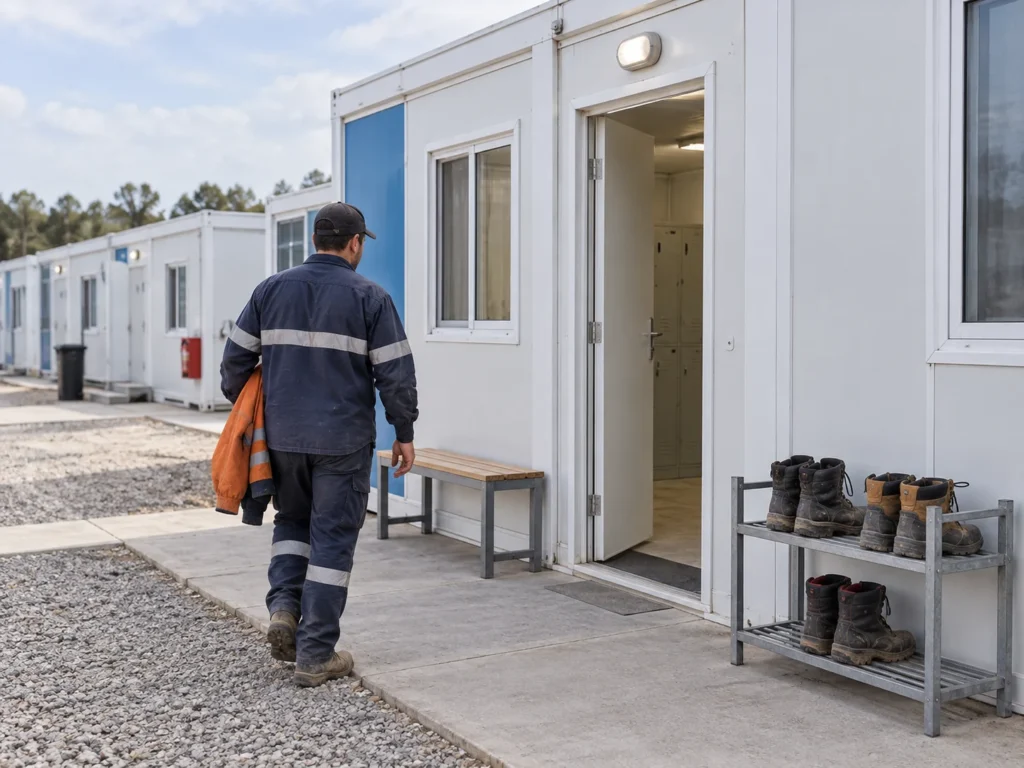
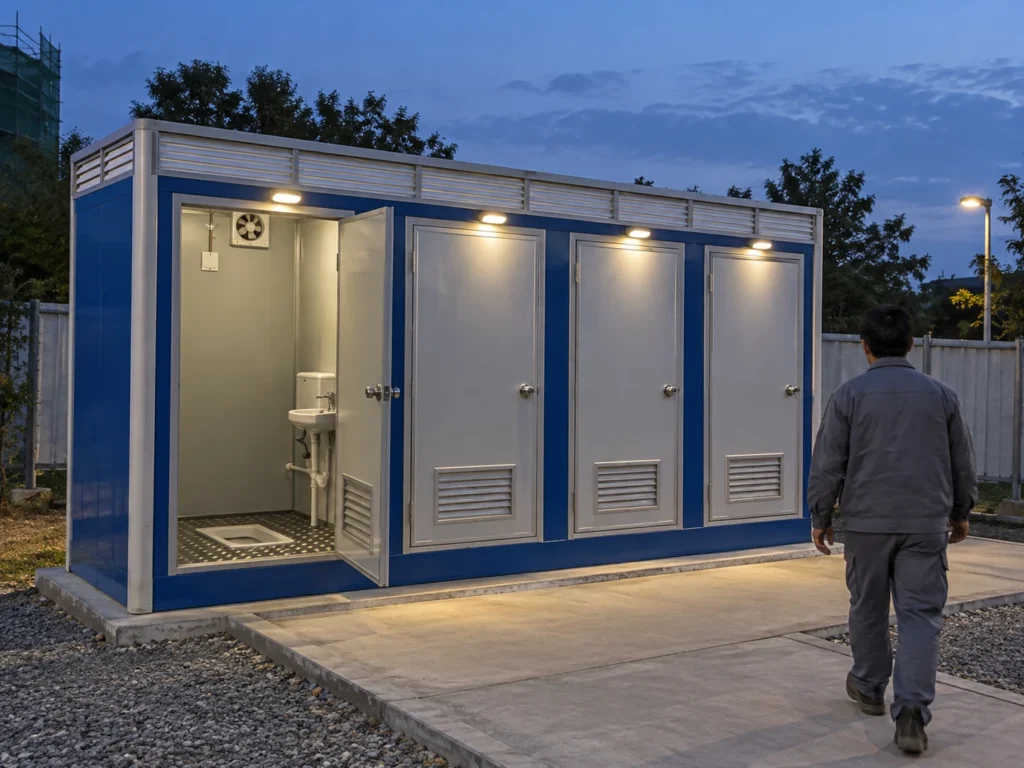
Plan household storage before calling an emergency housing room furnished. Identify the belongings residents actually need, the person who uses each item and the ordinary action required to put it away and retrieve it. Then connect that brief to the proposed furniture and responsibilities. A cupboard shown on a drawing does not answer whether a resident can use it during the household's normal day.
For buyers considering modular emergency housing, the useful question is what happens after the move-in bags have been unpacked. This guide offers purchasing questions and illustrative household situations, rather than a universal storage allowance. It separates the building, furniture and operator support so that a missing daily-use requirement can be discussed before an order is accepted. Project-specific dimensions, accessibility requirements and technical assessments still need their own evidence.
Start with belongings that have to work tomorrow

Begin the conversation with an ordinary task: finding clean clothes for the morning, putting away bedding or locating a personal document. Ask what the household needs to keep nearby and which items belong to an individual. The point is to describe a usable arrangement, not to make residents disclose everything they own. An operator can record a requirement without recording private contents or deciding that every household needs the same furniture.
The Sphere Handbook's 2018 shelter guidance considers domestic activities, possessions and changing household needs together. Its household-item guidance also addresses suitability, ease of use and review as circumstances change. These humanitarian principles give this enquiry context; they do not specify a PQSE cupboard, a household storage volume or a furnished occupancy limit.
Keep the initial discussion concrete. A resident might need somewhere for a coat that is used every day, while a spare blanket can be put elsewhere. Another household may have a different pattern. These are illustrative distinctions, not survey findings. Ask the operator which belongings are already present, which are expected later and what information remains unavailable before it chooses furniture.
Connect the storage brief to the wider emergency housing planning decisions. Record who can answer household-use questions and who decides the supplied furniture. An uncertain input can remain open in the brief; filling it with a standard-looking cabinet quantity would create an apparent answer before the relevant household has been considered.
Give an item a place and an action
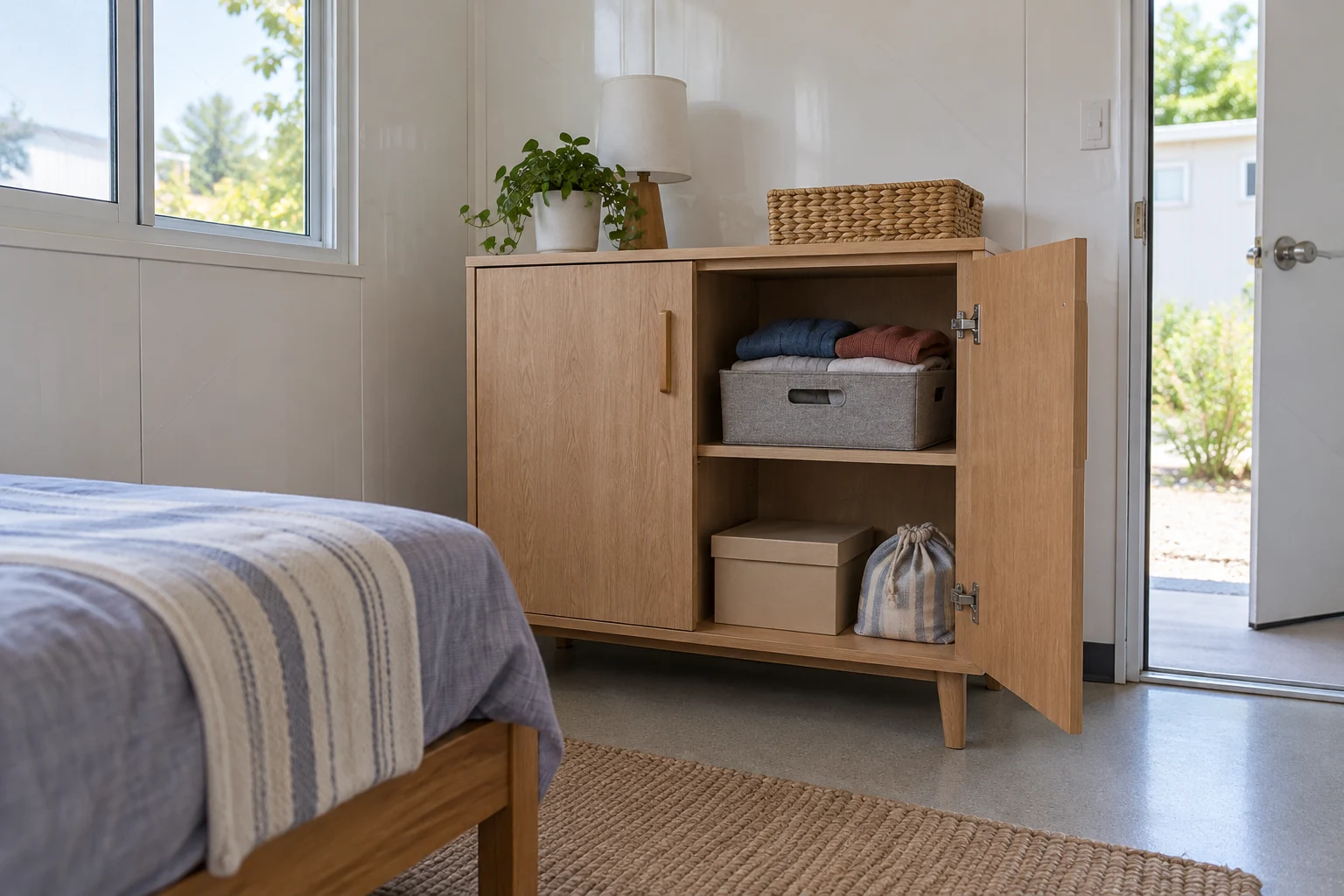
A furniture name is an incomplete requirement. For a folded blanket, describe the proposed place, who puts it away and what must be moved to retrieve it. For everyday clothing, ask whether the selected container and cupboard are intended to be used together. The same cabinet can support different routines, so the buying conversation should connect an actual belonging to a proposed action instead of treating the shelf as an answer by itself.
Use the table as an original briefing aid. Its examples are prompts for project information, not recommended relief-kit quantities or measured household needs. Replace them with the belongings the operator has actually identified. Keep the furniture reference beside the intended action, so a later drawing change does not leave the old requirement attached to a different cabinet.
Distinguish the item from its packaging. A bag that holds clothing during travel may remain part of daily use, or the household may prefer a different container. Ask rather than assume it will be discarded. A proposal that accommodates unpacked clothes but leaves the retained bag without a place is still missing part of that household's brief.
Ask the operator to identify any requirement outside the furnished-room scope. Keep the missing answer visible rather than assuming a service or a storage location that has not been offered.
| Illustrative belonging | User and routine to clarify | Proposed action to discuss | Project input still needed |
|---|---|---|---|
| Everyday clothing | Who chooses and returns it each day? | Take out the intended container and put it back. | Actual clothing arrangement and container. |
| Spare bedding | Who needs it, and at what time? | Retrieve the complete folded item from its proposed place. | Bedding supplied and ordinary household routine. |
| Personal pouch or documents | Does the resident want it out of shared view? | Discuss the intended privacy and access arrangement. | Resident preference and operator responsibilities. |
| Bag retained after arrival | Will it remain in everyday use? | Identify its place when full and when not being used. | Actual bag and intended household use. |
| Item not yet known | Who can confirm the requirement? | Keep the furniture decision open for that item. | Named contact and next confirmation. |
Look at the same room in the evening and morning
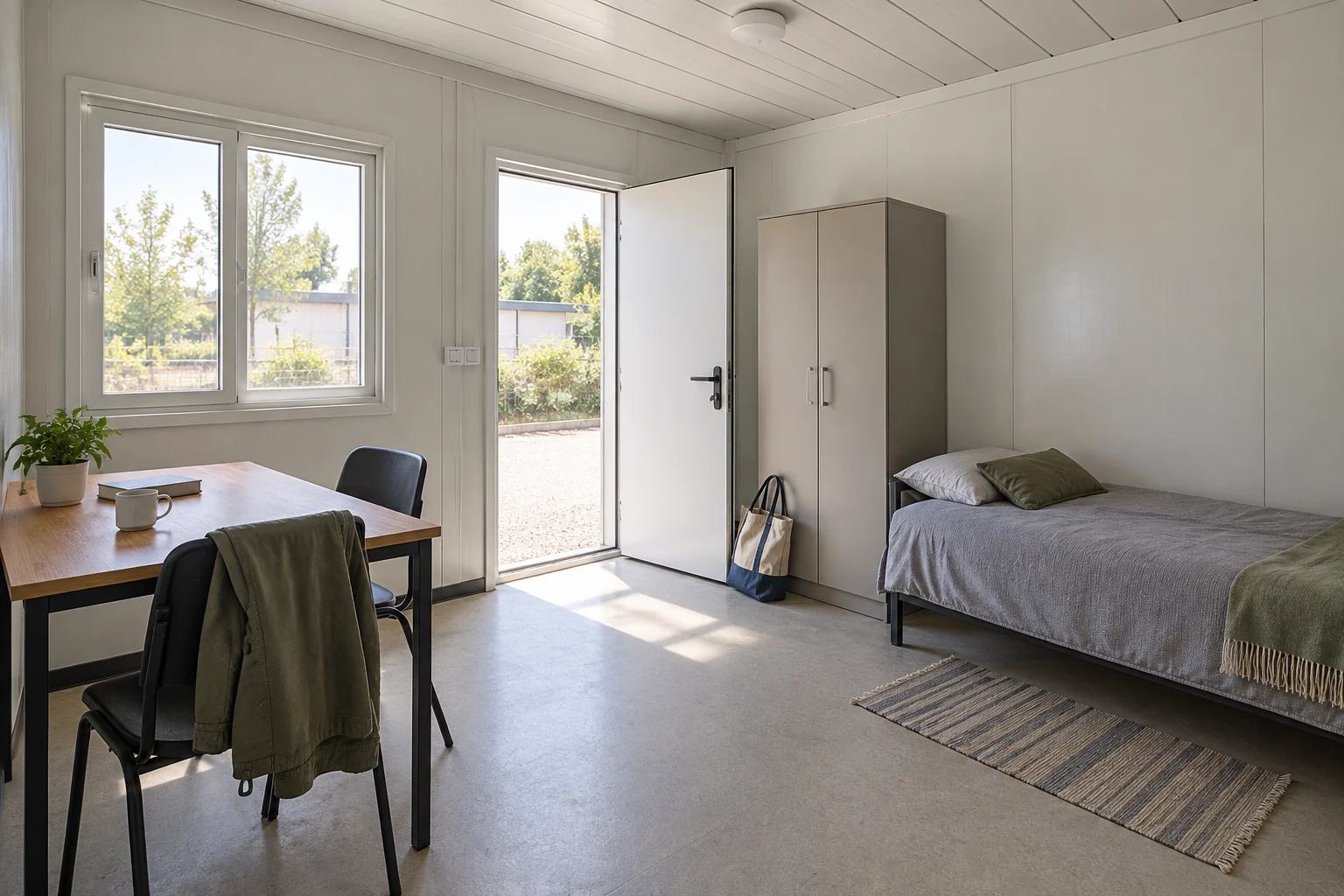
Consider a hypothetical room where a table is used during the day and a resident retrieves bedding in the evening. The storage position might appear convenient when the chair is tucked away but become awkward during the actual activity. Describe both moments without inventing a household schedule. A single tidy drawing can show furniture positions while leaving the change between ordinary uses unexplained, particularly when a bag or chair is moved temporarily.
Follow one belonging through that change. Where does it start, where is it used and where does it return? If the proposal depends on moving another person's things, make that dependence visible. The buyer then has a specific question about the arrangement rather than a general request for more storage that may produce another piece of furniture in the wrong location.
Ask whether the depicted bed, table and cabinet are the actual proposed pieces. A compact symbol on a plan may not describe an open cabinet door or the retained household containers. Where an expandable container house configuration is being considered, request the furnished layout for the deployed arrangement; a product-family name does not establish usable positions.
Ask what privacy means for this particular belonging
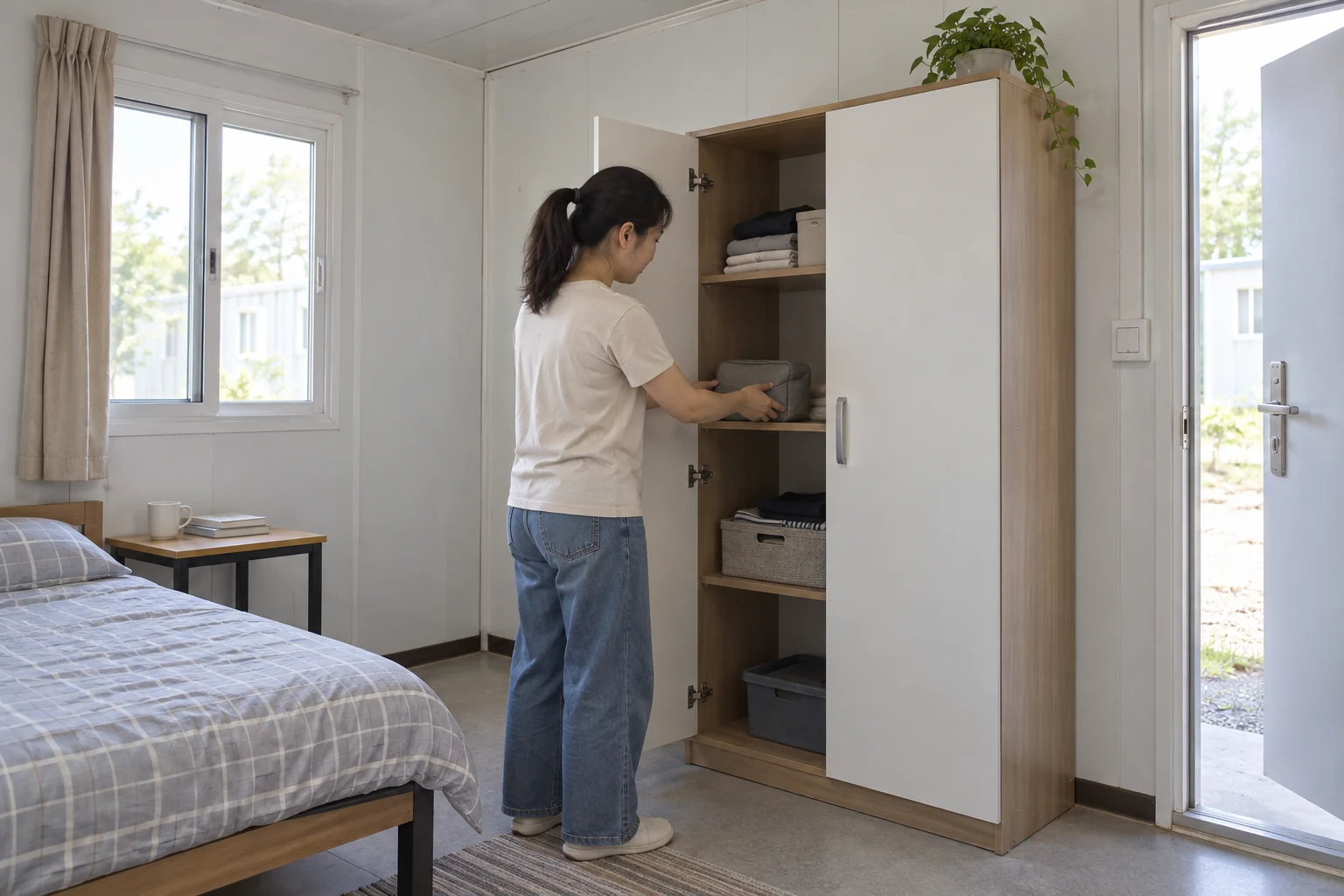
A closed cupboard may keep personal items out of ordinary view, but that is different from an agreed security arrangement. Ask the resident what concern the proposed storage is meant to answer. It may concern visual privacy, sharing within the household or access by someone providing support. Avoid presenting a closed door, a box or a lock symbol as proof that every one of those questions has been resolved.
UNHCR's Bangladesh shelter explanation includes keeping belongings with dignity among its aims. This is a regional service example, not a storage specification for other destinations or a statement about PQSE services.
For an illustrative personal pouch, discuss who may open the compartment and whether anyone needs help to use it. Keep private contents out of procurement photographs and shared records unless they are genuinely necessary and authorized. The supplier usually needs the furniture requirement and intended operation, not an inventory of documents or possessions that would expose the household's personal circumstances.
If the operator proposes keys or another access arrangement, ask it to explain the real responsibility for issuing, replacing and using them. Do not invent a security service on the building supplier's behalf. Where the request concerns protection, safeguarding or sensitive belongings, the operator should involve the appropriate responsible service rather than treating an ordinary furniture choice as a complete answer.
Discuss the action with the person who will do it
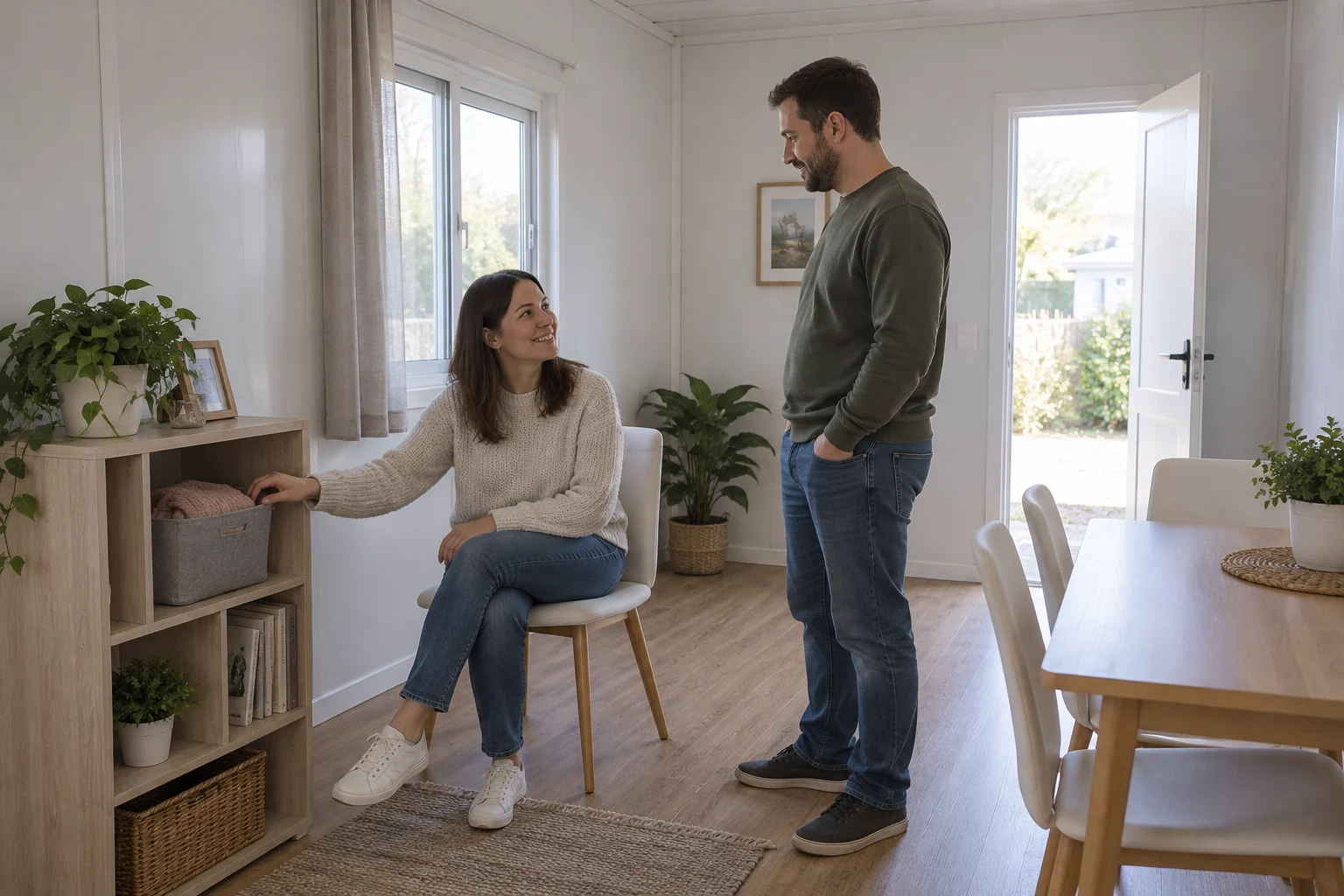
The person choosing a cupboard may use it differently from the person living with it. In an illustrative discussion, a seated resident might explain how they approach a basket, while a standing coordinator sees only that the basket fits on a shelf. Ask the resident about the ordinary action and the help they actually want. Do not replace that conversation with a generic label such as suitable for everyone or an assumed reach height.
A useful conversation does not certify a design
IFRC's All Under One Roof considers using and understanding shelter alongside reaching and entering it. It calls for attention to users' priorities, familiar household items and appropriate adaptations. Its disability-inclusive guidance informs this discussion, but does not supply a universal shelf position. Assistive-equipment choices require relevant qualified input; this article does not prescribe them or report a resident assessment.
Describe the difficulty in the resident's terms. They may be able to reach the basket but prefer not to remove everything to find one item, or they may want a different opening arrangement. Those hypothetical observations point to different questions. Ask which feature needs discussion and who can assess it, rather than immediately buying a larger cabinet or assuming another person will provide help.
A furniture-use conversation cannot establish building accessibility or compliance. Relate it to the project's separate access between homes and shared facilities, while keeping the questions distinct. A resolved entrance issue does not demonstrate that a resident can use a cupboard; an acceptable cupboard discussion does not approve the building's routes or technical design.
Make the furniture scope visible in the quotation
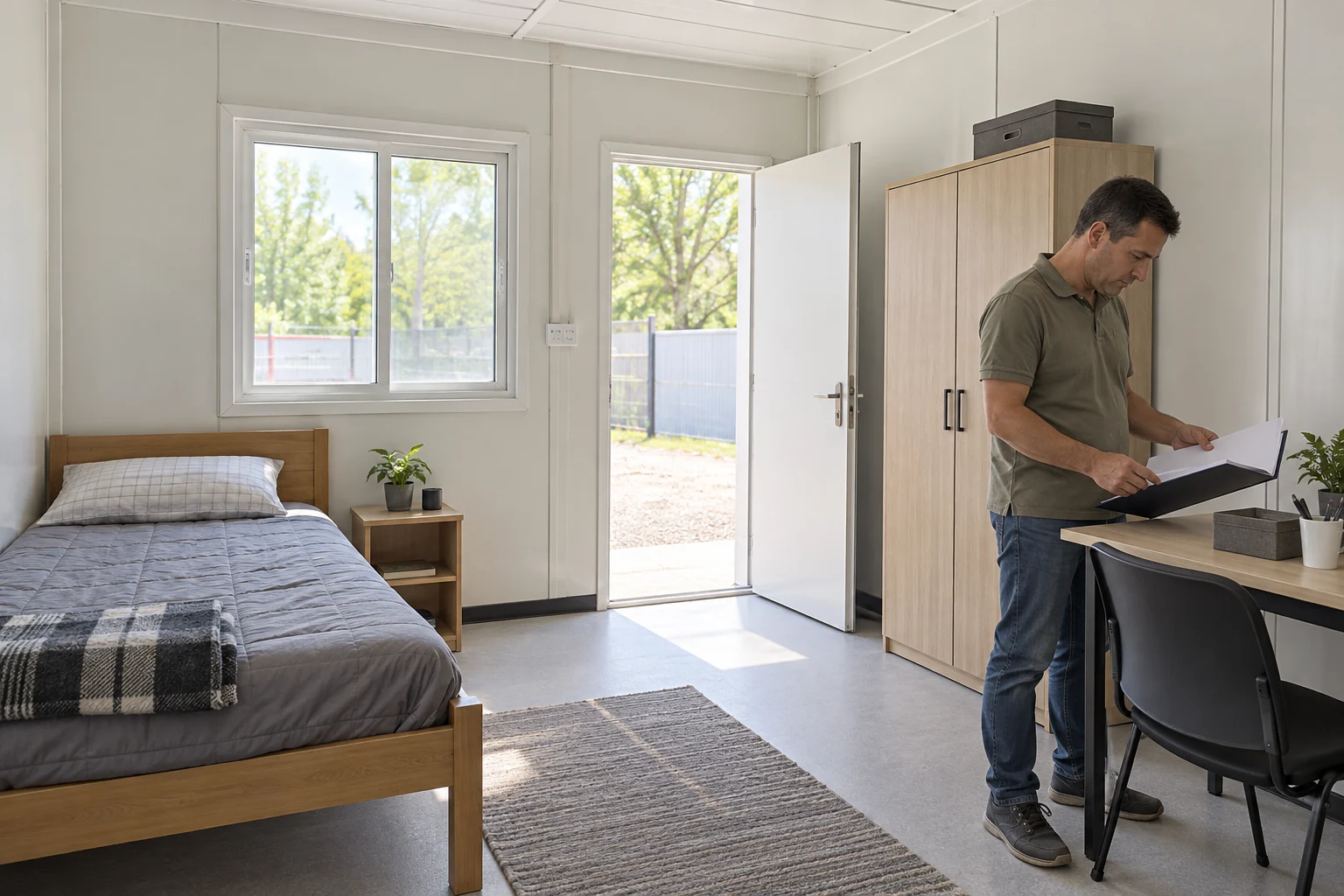
The word furnished can hide several separate decisions. A proposal might identify a bed without its bedding, a cabinet without a household container, or a drawing without confirming who supplies the loose furniture. Ask each party to describe its actual part of the order. This does not presume that any item is included or excluded by PQSE; it gives the buyer a way to compare the scope the parties have really offered.
The table separates commercial questions that should be answered together. Keep the accepted furniture schedule with the quotation and drawing. If the operator supplies a piece locally, the supplier still needs the relevant information before that piece is treated as part of the proposed room. A later substitution should be recorded as a change, not hidden behind the same furniture label.
For flat-pack container house proposals, distinguish the building package from the furnished household arrangement. Confirm the current order documents rather than inferring inclusions from a photograph, another project or a general product description. The comparison should expose an unanswered item and its owner, without inserting assumed costs to make competing totals look equivalent.
Name the contact for a delivered piece that differs from the schedule, including its opening arrangement or supplied information. Retain the accepted description so the household is not left to resolve an order ambiguity.
| Scope to identify | Supplier answer to retain | Operator contribution to confirm | Useful order evidence |
|---|---|---|---|
| Building configuration | Which supplied arrangement does the quotation cover? | Intended household use and furnished layout. | Order-specific drawing and revision. |
| Fitted storage, if offered | Identify the actual piece and declared limitations. | Belongings and actions it is expected to accommodate. | Named specification and applicable instructions. |
| Loose furniture | State what is supplied, separately priced or excluded. | Any locally supplied substitutions. | Accepted furniture schedule. |
| Containers and bedding | Clarify whether these appear in this order. | Actual items already held or separately procured. | Item description linked to the proposed place. |
| Later clarification | Name the contact for an order discrepancy. | Who receives household feedback and requests a change? | Agreed responsibility and correspondence. |
Follow the complete item, including its return
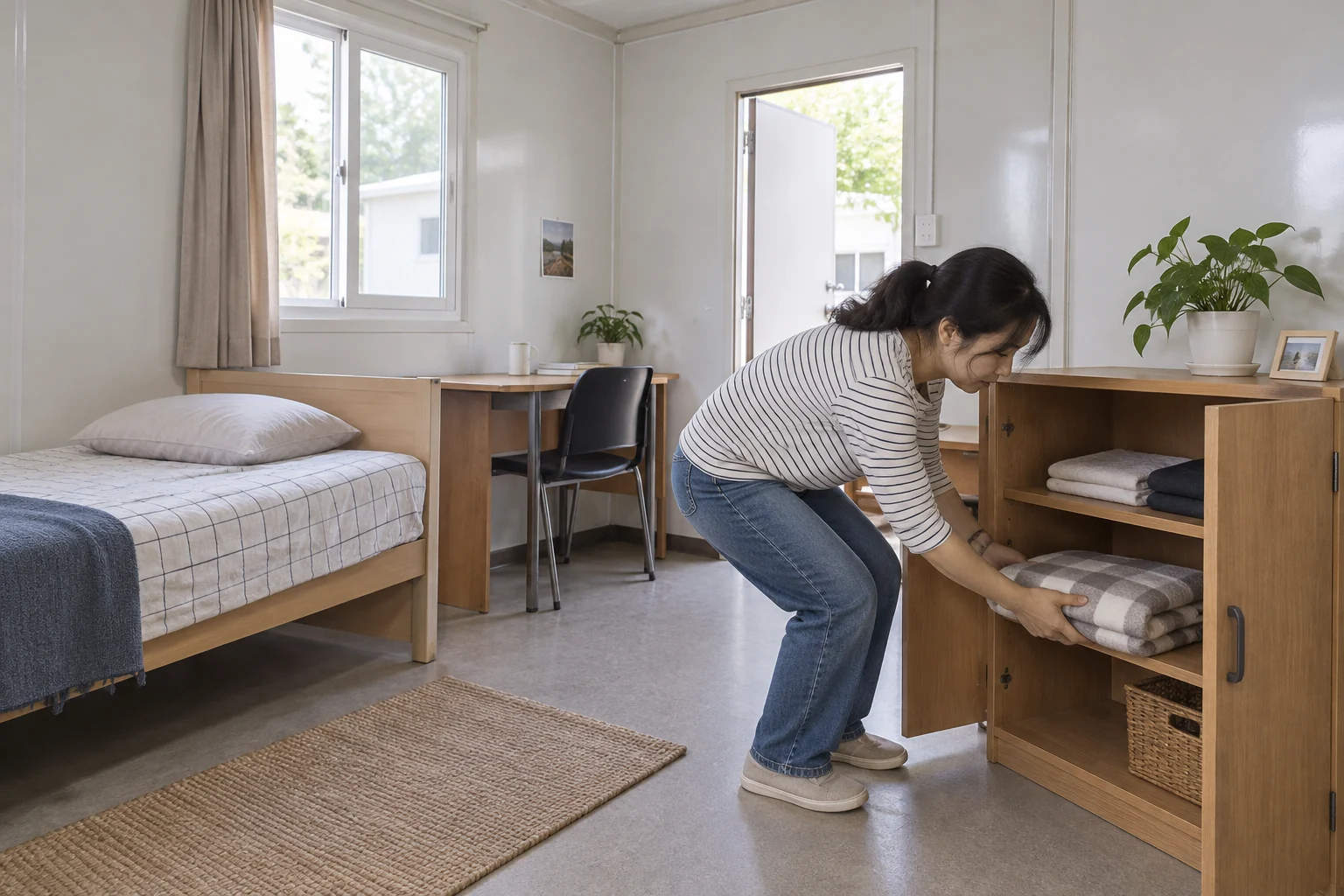
A useful ordinary-use review follows a complete belonging, rather than an empty shelf. In a hypothetical bedding discussion, consider the actual folded blanket and the proposed cupboard with its normal furniture nearby. Ask how the resident intends to put the blanket away, retrieve it and return it after use. This is a qualitative conversation to reveal a question; it is not a validated trial protocol or a reason to attempt an unsafe action.
Record the step that remains awkward
If the resident says the blanket fits but is difficult to take out, record that distinction. More internal cabinet volume may not address the opening, the container or the position that caused the difficulty. A useful note identifies the particular action and circumstances without grading the whole room as a failure or announcing that an untested replacement will solve it.
Keep the discussion within ordinary use and stop at a question requiring specialist assessment. Do not climb, overload furniture or improvise an alteration to demonstrate a point. Questions about fixing, structural support or equipment should go to the responsible supplier and appropriate qualified party. The buyer's record can describe the problem without pretending to be the technical design that resolves it.
Read the furniture arrangement together with the doorway
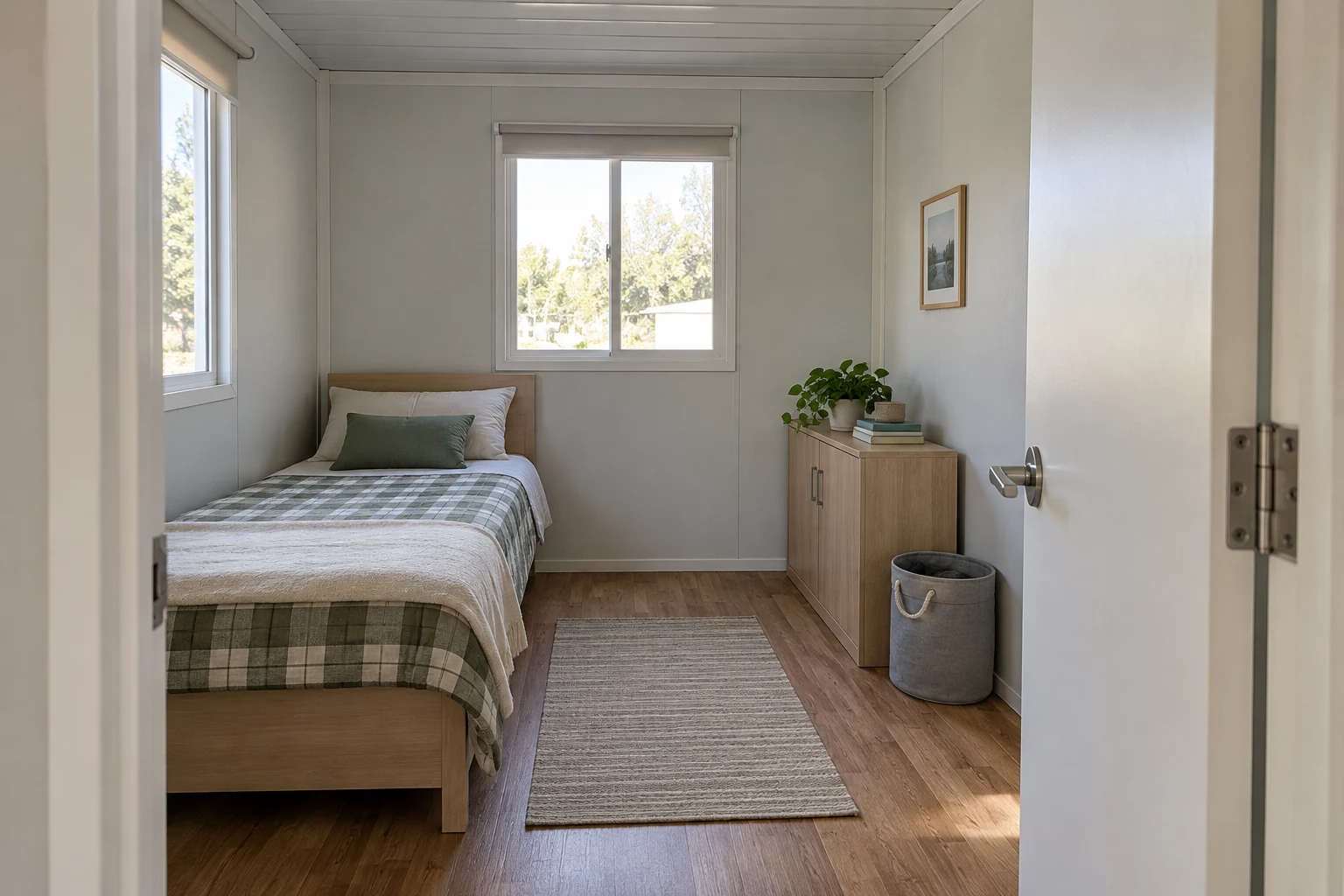
An empty doorway and a furnished room are different subjects for review. Show where the proposed cabinet, bed and household containers would stand relative to the entrance, and ask the responsible project team to consider normal room use. An illustration can help explain the question, but it cannot prove a clearance, approve an escape route or establish compliance. Keep those decisions attached to the actual design and destination requirements, not to a convincing photograph.
Discuss the ordinary relationship without inventing dimensions. Does the furniture drawing show the intended opening direction? Is the bag's proposed place included, or was it removed for a tidy illustration? A question about a visible arrangement is useful when it identifies what the designer or supplier must clarify. It becomes misleading if an unmeasured picture is described as an approved layout.
Separate arrival logistics from occupied-room storage. The delivery route and staging plan concerns how the project receives its supplied items. This article concerns where daily belongings remain after that activity is over. A room used temporarily for delivery packaging should not be mistaken for the accepted household arrangement, and delivery convenience should not silently decide the resident's storage position.
Send a changed furniture proposal to the party responsible for the room design. Residents can identify a practical need; they should not be expected to resolve the building's technical questions by rearranging furniture.
Ask what changed once the bags were unpacked

The initial brief can miss an everyday requirement that becomes clear after move-in. Ask the household which part of putting away or finding an item has become inconvenient, and whether the difficulty is new or was already recorded. A specific account is more useful than asking whether there is enough storage. Keep the conversation proportionate, with room for a resident to decline a photograph or discussion of private belongings.
For example, a resident might explain that a bag remains on a table because its proposed cupboard is needed for another item. This hypothetical situation leaves several possible responses: reconsider the allocation, discuss another container, or ask the operator about a requirement outside the original brief. The feedback identifies the conflict; it does not determine which response is affordable, technically appropriate or preferred by the household.
Compare that account with the accepted occupancy handover and outstanding responsibilities. The issue may be an omitted item, a supplied piece different from the schedule or a changed household need. Keeping those possibilities separate prevents an operational concern from being lost as an undefined complaint or incorrectly treated as proof of a building defect.
Tell the household who will respond and what can actually be considered. Collecting comments without explaining the next step can create expectations the operator cannot meet. Record the question, the relevant order information and the party expected to answer, while retaining the resident's preference as an input rather than rewriting it as an approved alteration.
Close the question, not just the furniture delivery
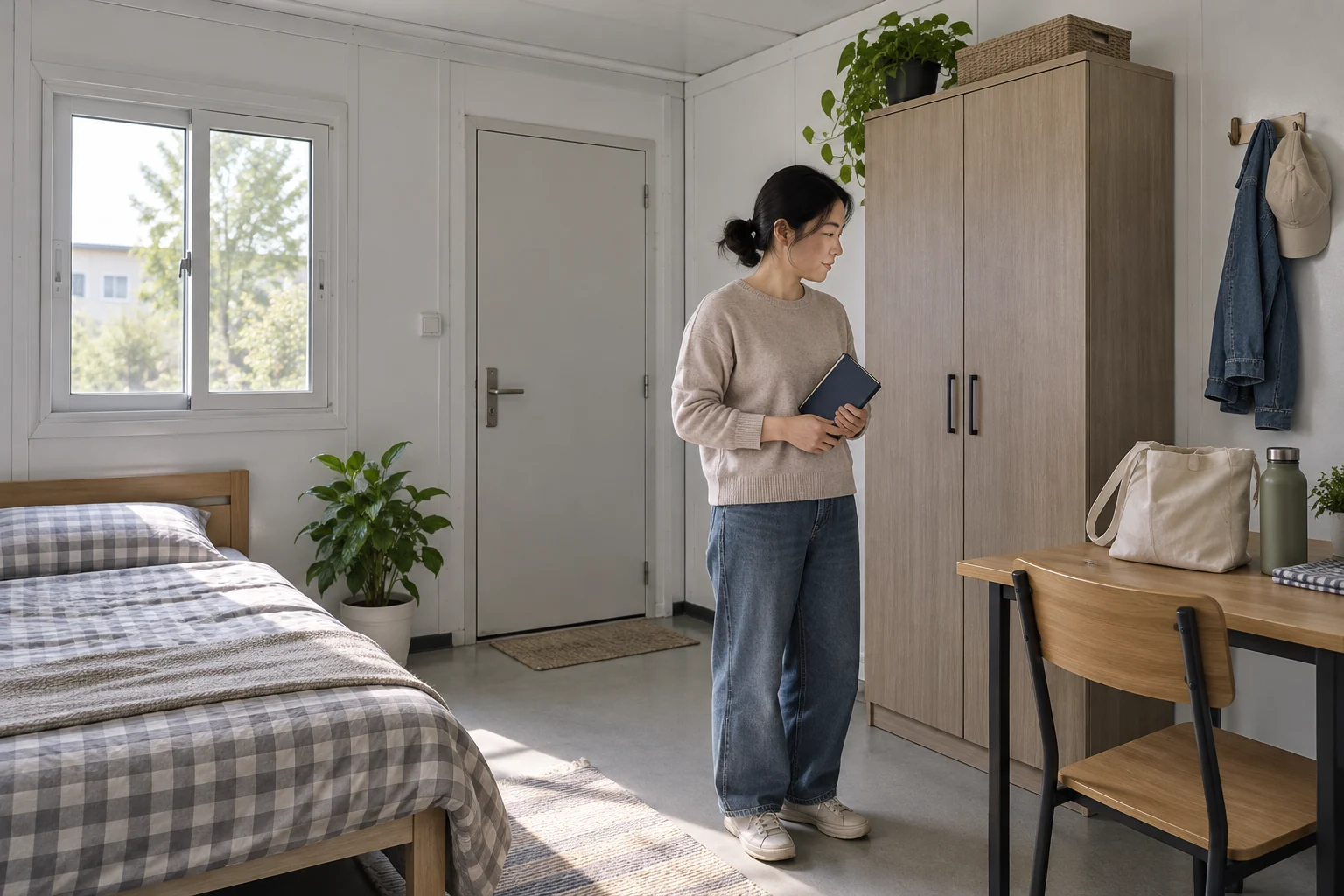
A delivered cupboard does not automatically close the concern that led to its purchase. Ask whether the household can now carry out the intended ordinary action and whether any qualification remains. The follow-up record should distinguish an answer received, a proposed change and an unresolved dependency. These are administrative distinctions, not performance scores; they help the operator explain what happened without converting an open question into an apparent successful result.
Keep a revised assumption visible
Use the table for explicitly hypothetical difficulties. It is an original decision record, not resident survey data or a professional assessment form. Replace the examples with the actual account and supporting documents. If the first response changes the assumed item, user or furniture, say so; otherwise the next discussion may repeat a check whose starting conditions are no longer understood.
A commercial answer and a technical answer can arrive from different parties. The operator may confirm responsibility for another container while the supplier is still clarifying a furniture limitation. Record both rather than describing the concern as finished because one email arrived. An outstanding question should have a named recipient and the information needed to reach the next decision.
Keep the final correspondence with the original brief. Future occupants or staff may inherit the furniture without knowing why it was selected. A short record of the resolved requirement and any retained limit is more useful than a photograph labelled complete, and avoids presenting one household's outcome as a tested promise for other residents.
| Hypothetical account | Clarification needed | Party to involve | Record before another review |
|---|---|---|---|
| The blanket fits but is awkward to retrieve. | Which part of the normal action causes difficulty? | Resident, operator and relevant furniture supplier. | Actual item, furniture and circumstances. |
| A personal bag stays on the table. | Was its intended place omitted or allocated to another item? | Household and operator. | The original allocation and requested preference. |
| The supplied cupboard differs from the drawing. | Which accepted document describes the ordered piece? | Buyer and responsible supplier. | Schedule, revision and delivered-item description. |
| A proposed change affects the room arrangement. | Who must review it for the actual building? | Responsible project designer or qualified party. | Current proposal and open technical question. |
| A response covers only part of the concern. | What remains unanswered and who will respond? | Named owner of the remaining decision. | Response received and explicit unresolved item. |
Send a brief that describes the furnished household
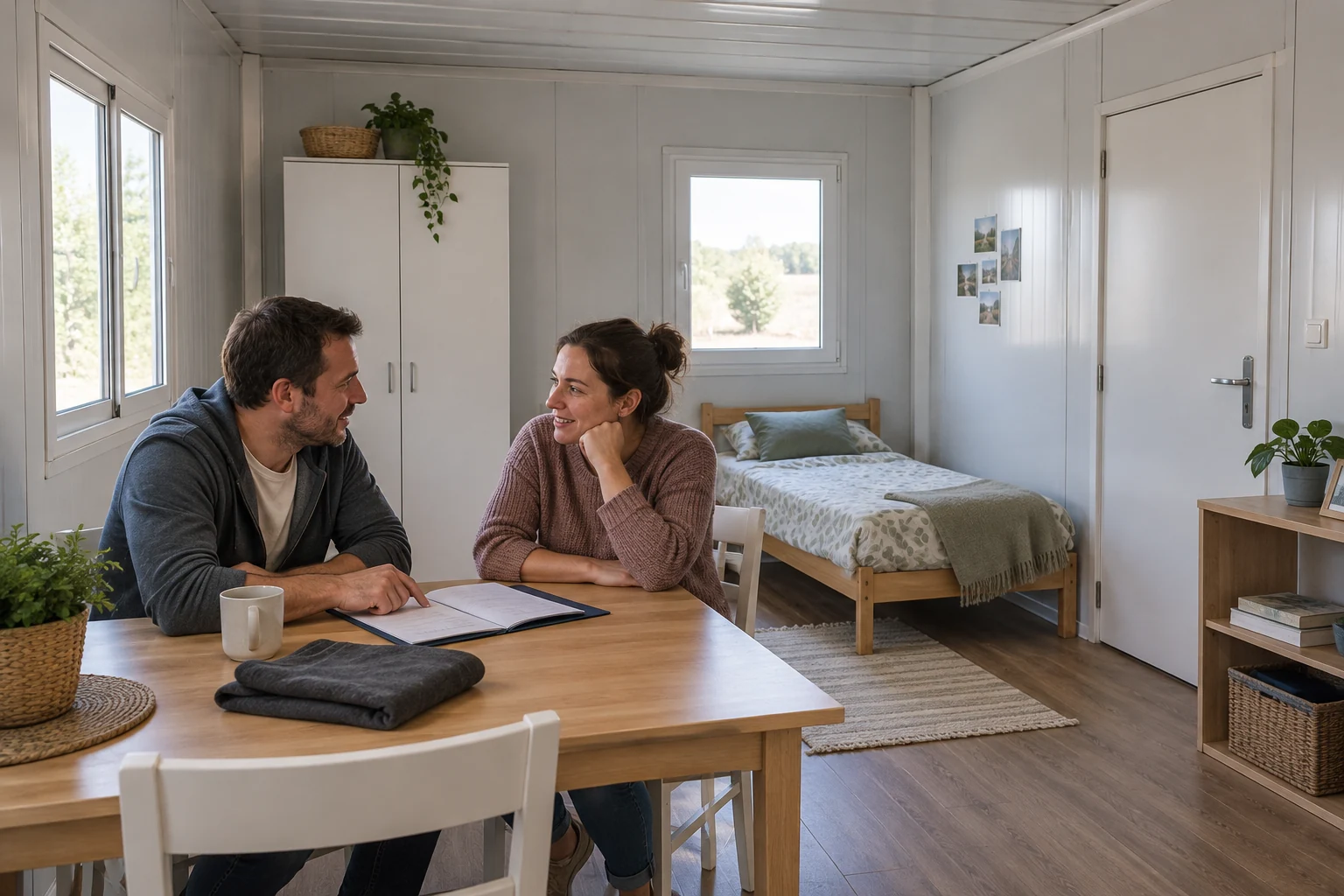
Give the supplier a brief that connects the proposed household use to identifiable furniture and belongings. Include the room arrangement, the pieces each party would supply and the everyday questions still unresolved. Explain whether the request is for an initial proposal, clarification of an inclusion or a revision to an accepted schedule. Those different requests need different answers; a broad request for additional storage leaves the supplier to guess which problem the buyer is trying to solve.
Provide the available furniture descriptions and drawing references, while marking missing inputs plainly. Explain who will confirm household preferences and who may accept a change to the order. This allows a supplier to separate a question about its offered piece from a question about the operator's service or the wider room design. Avoid asking a product photograph to carry all of that information.
The reviewed primary material does not establish a PQSE household storage capacity, shelf height or universal cabinet allocation. Its published humanitarian indicators are not a dataset of furnished modular-room performance. The qualitative tables therefore organize questions rather than calculate an allowance. Actual dimensions, loads and destination requirements need order-specific evidence and appropriate review before they become a technical commitment.
Retain the brief with the furniture scope and subsequent feedback. It should help a buyer compare the declared proposal and identify the next project decision, without presenting an unresolved arrangement as ready.
Buyer questions
Can a cupboard count on a floor plan prove adequate household storage?
No. Identify the actual proposed furniture, the belongings it is meant to accommodate and the ordinary action involved. A drawing can record positions without explaining containers, opening arrangements or how items are returned. Keep the unresolved requirements in the brief; do not convert a cabinet quantity into a universal household capacity or a verified performance claim.
Does a furnished building quotation automatically include containers and bedding?
Confirm the actual order. Ask each party to identify the building package, furniture, household items and operator support it supplies or excludes. Retain the accepted schedule with the drawing and quotation. If the operator supplies something separately, identify it before treating the room as a complete furnished arrangement, and record who will clarify a later mismatch.
What should be recorded when a resident describes an awkward storage task?
Record the item, the relevant furniture, the ordinary step and the resident's account of the difficulty. Ask what was assumed in the original brief and who can answer the remaining question. A hypothetical method in this guide is not a validated usability test. Refer technical or specialist matters to the responsible qualified party instead of improvising an alteration.
How can the buyer request privacy without disclosing personal belongings?
Describe the intended privacy and operation of the storage, rather than listing sensitive contents. Clarify who would normally open it and any support the resident wants. Keep unnecessary private details out of shared records and photographs. A closed compartment can be discussed as a visual-privacy feature, but it does not by itself establish a security service or protective performance.
Sources and scope
- Sphere Association — The Sphere Handbook: Humanitarian Charter and Minimum Standards in Humanitarian Response, fourth edition (2018). Contextual humanitarian guidance on living activities and household items; not a PQSE furniture capacity or configuration.
- IFRC — All Under One Roof: Disability-inclusive shelter and settlements in emergencies (2015). Inclusive use and household-item considerations; no universal storage dimensions, accessibility certification or resident trial supplied.
- UNHCR Help Bangladesh — Shelter and settlements. Regional shelter-service example only; not a general product standard or a description of PQSE services.
Published by PQSE House as a research-based purchasing guide, using the cited primary guidance and AI-assisted drafting and editorial checks. The tables are original qualitative prompts and hypothetical situations, not measured resident results. No PQSE emergency project, resident trial, human specialist approval or independent brand endorsement is claimed. Newly generated AI photographs illustrate the questions using reviewed genuine modular-building references; they do not document a resident consultation or prove furniture capacity, accessibility or compliance. Confirm the actual order and destination requirements with the responsible parties.