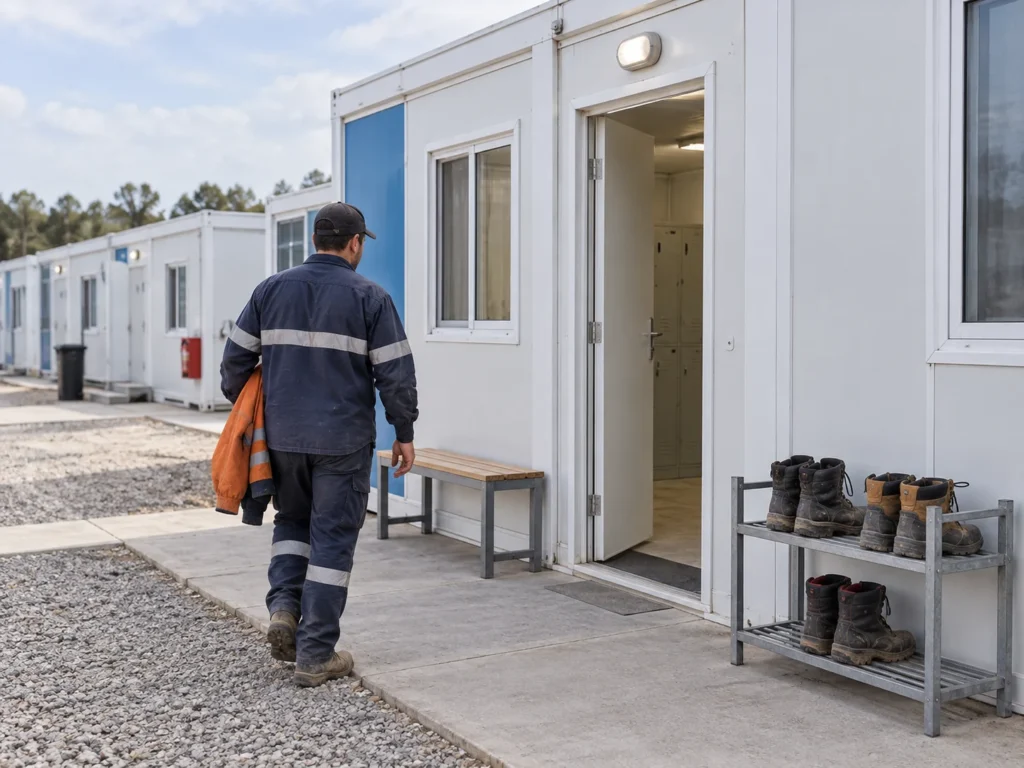
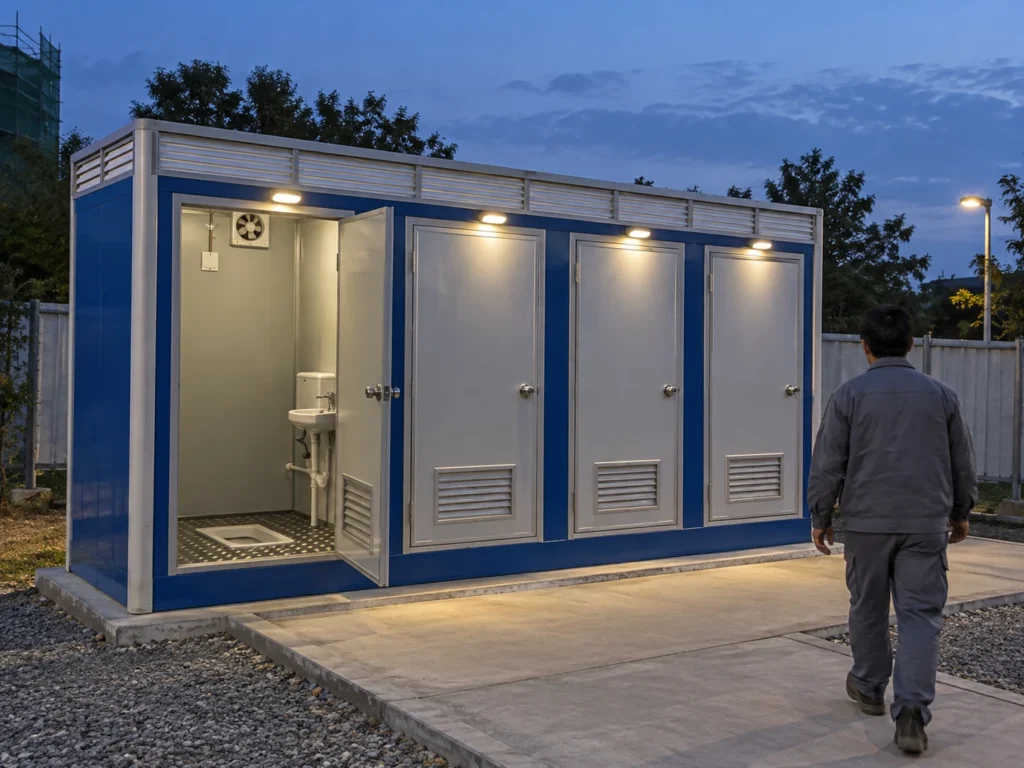
Before booking roof maintenance for a detachable container house, define the work location, identify the actual building and ask a competent contractor to explain the access scope. A maintenance request and an access proposal answer different questions. The first describes what needs attention; the second establishes how the contractor proposes to reach and manage its work for this particular site.
A buyer can prepare a useful brief without going onto the roof. Collect observations from accessible places, current order records and information about building use. Keep unresolved facts visible. A photograph, an old drawing or a previous visit should not silently become permission for a new task. This guide develops the purchasing and coordination questions; it does not classify any PQSE roof, select access equipment or provide instructions for working at height.
Describe the request before naming an access method
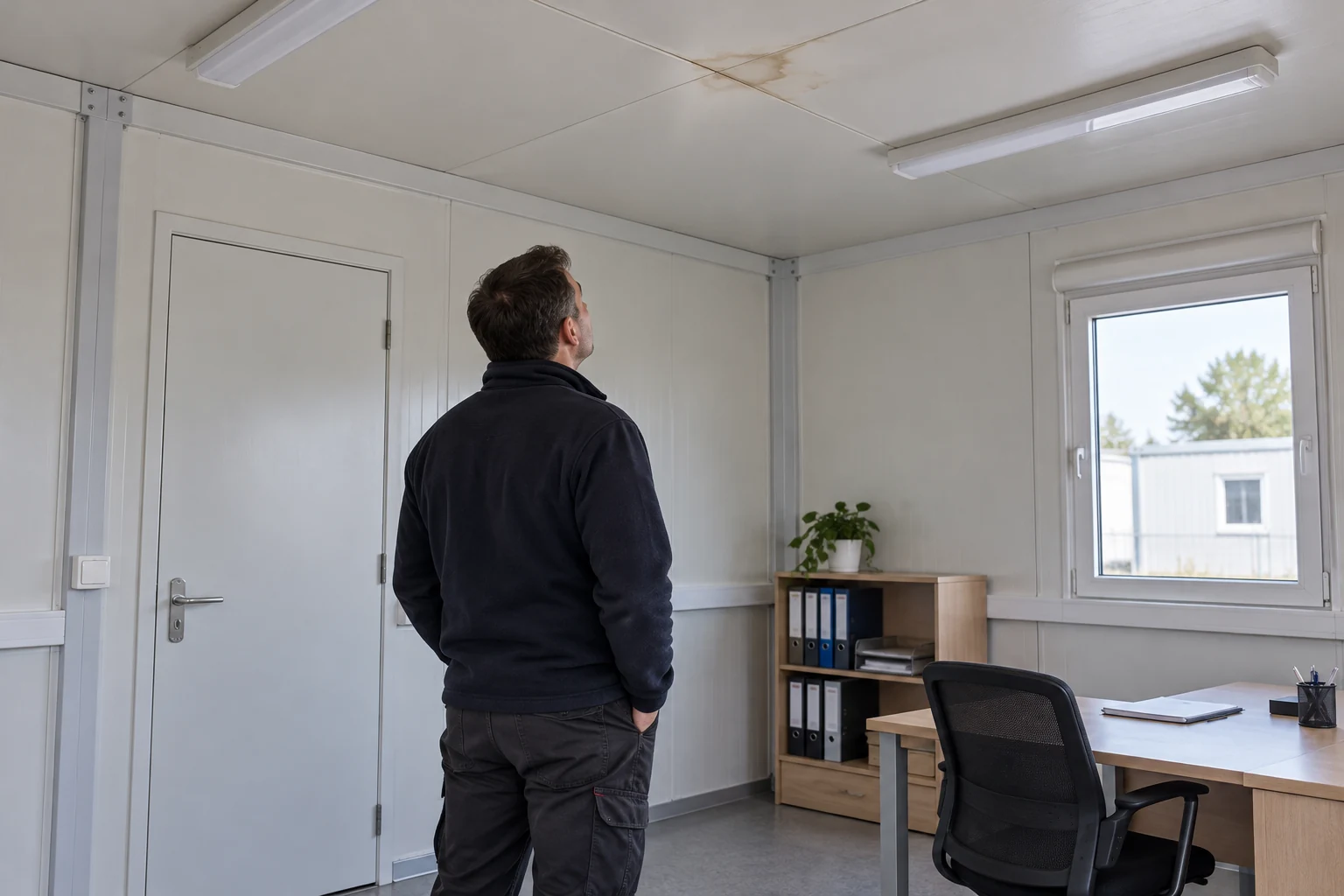
Start with the problem the operator can actually describe. Identify the building, the affected area and when the observation was made. Separate an inspection request from a request to perform a repair. The contractor may need to investigate before it can offer a defined work scope.
HSE's roof-work guidance for Great Britain treats brief roof jobs as work requiring planning and competent precautions, and calls for clients and contractors to agree how work will be managed. A short expected visit therefore does not settle the access question.
Write the observed symptom in ordinary language: an operator noticed water inside after rain, or a visible outlet appears obstructed from an accessible position. Record the observation without diagnosing its cause. Explain whether the buyer wants an initial assessment, a priced repair proposal or agreed maintenance already supported by current instructions. Those requests can require different visits and different commercial approvals.
Connect the request to the building's existing maintenance records and service planning. An earlier entry may identify a location or unfinished follow-up, but its conclusion should retain its original date and scope. A new appointment needs a current brief, rather than an assumption that a familiar task remains unchanged.
Match the roof to the building that is actually on site

Place the building identifier beside the documents offered to the contractor. A drawing for a similar unit may be useful background, yet the buyer still needs to establish whether it describes this order, this roof arrangement and the building's current condition after any later work.
Request the available order-specific drawings, maintenance instructions and revision history from their actual owner. Mark an unavailable record as unavailable. A brochure photograph cannot fill an empty approval field. Ask which documents the contractor needs before assessing access, and which questions require clarification from the building supplier or another responsible party.
If the building has been assembled from delivered components, retain its assembly and handover documentation with the maintenance enquiry. If it has been moved or reassembled, include the relevant dismantling and reuse history. Neither history automatically answers the roof-access question; both help identify what the assessor should investigate.
The following table organizes evidence requests. Its entries are editorial purchasing fields, not a declaration that these records exist for every order. Keep a document's issue status alongside its filename. That allows the recipient to distinguish a current supplied record from an archived version, a photograph or a buyer's provisional note.
| Record or observation | Useful identification | Confirmation to request | Limit of the input |
|---|---|---|---|
| Order or building record | Order reference and current site identifier | Does this record describe the installed unit? | A matching product name alone is insufficient. |
| Roof drawing or instruction | Revision, issuer and stated application | Which version applies to the present arrangement? | An archived drawing is not a current access decision. |
| Relocation or later alteration | Date, affected area and available handover | What changed, and who recorded it? | A move does not explain every present condition. |
| Accessible observation | Location, time and circumstances | What further assessment is needed? | A visible symptom does not establish its cause. |
| Missing document | What was requested and from whom | Who will resolve the gap before the next decision? | An empty field must remain an unresolved question. |
Keep observation separate from permission to access the roof
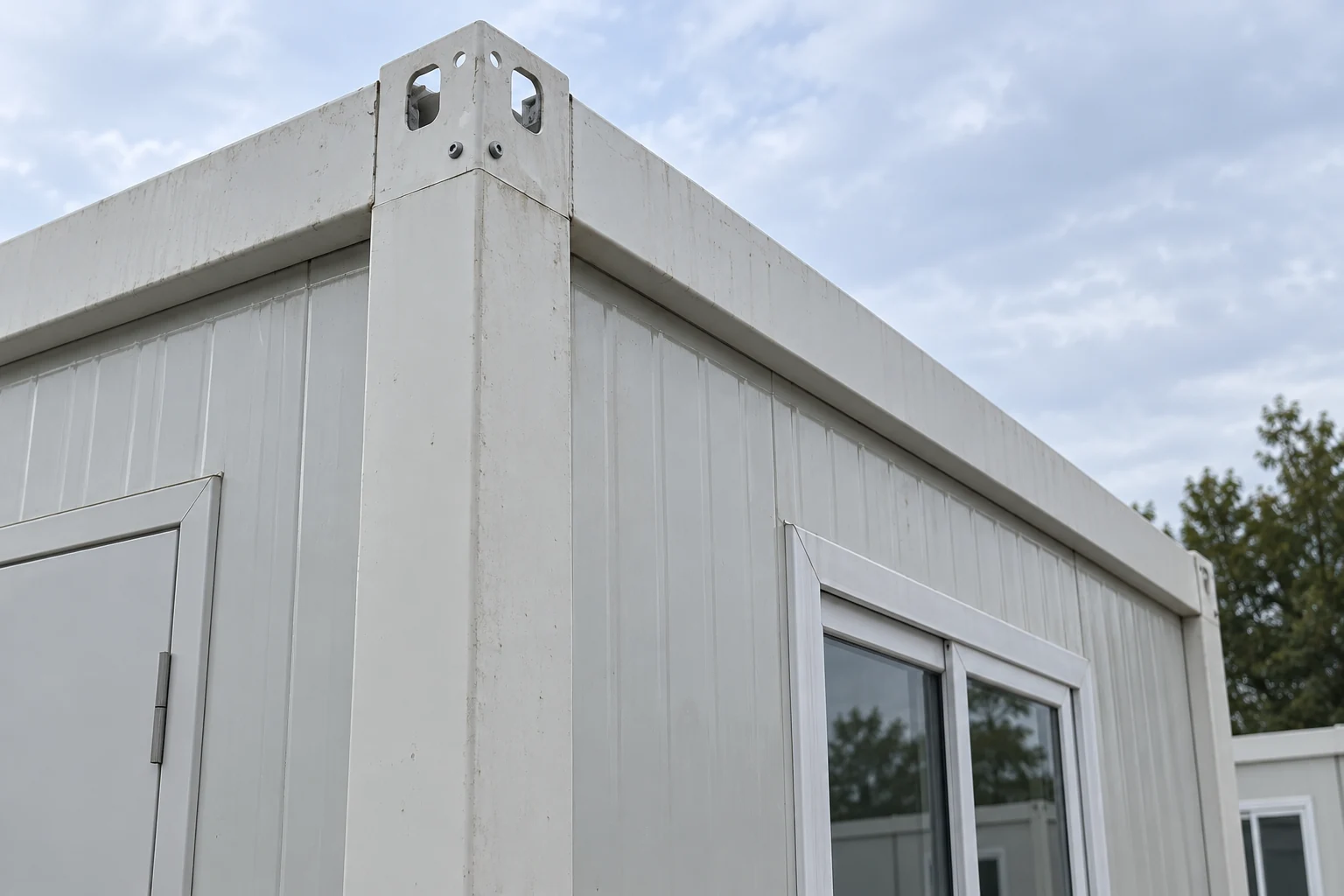
Ground-level photographs can locate an enquiry, especially when several buildings look alike. They can show a visible edge, an adjacent doorway or the relationship between the building and its surroundings. They do not establish concealed condition or the suitability of a surface for a person to stand on.
An unknown remains open until the appropriate assessment resolves it
HSE's fragile-surfaces guidance calls for precautionary treatment until a competent assessment establishes otherwise. This article does not determine the fragility of a particular PQSE roof. Appearance and apparent material identity should not be converted into permission to enter the roof area.
Ask the contractor what evidence is missing, who is expected to supply it and whether the first appointment is for assessment only. The buyer should know what decision will follow that appointment. Otherwise an enquiry can progress from photographs to equipment booking while the central roof question has never been answered.
Describe the limits of each observation in the record itself. A note can say that the visible area was photographed from an accessible external position and that concealed areas were not inspected. This is more useful than labelling an entire roof as checked. It also gives a later assessor a clear starting point without implying that the buyer performed a technical examination.
Name the party responsible for assessing the proposed work

The quotation contact is not necessarily the person who assesses the task. Establish who will review the roof information, visit the site if needed and explain the proposed access arrangements. The buyer needs a recognizable responsibility, rather than a chain of unnamed people assumed to approve one another's work.
Ask what information the responsible assessor will use and which questions remain outside that person's appointment. Building information, contractor planning and the operator's occupancy arrangements may come from different parties. Record how a question moves between them. A supplier's maintenance advice should be connected to the actual work request without being treated as approval of a contractor's chosen method.
Request an explanation of relevant competence for the proposed task, not merely a general company description. Where another contractor or equipment provider will participate, clarify which party coordinates those interfaces. The buyer does not need to design their arrangements, but should understand who is accountable for giving the project-specific answer.
Keep commercial authorization separate from technical assessment. A purchasing officer can approve an agreed expenditure while a roof-access question remains unresolved. Ask the proposal to identify what must be confirmed before work can be booked or released, so approval of an invoice or purchase order cannot be mistaken for resolution of that question.
Request the reasoning before ordering equipment
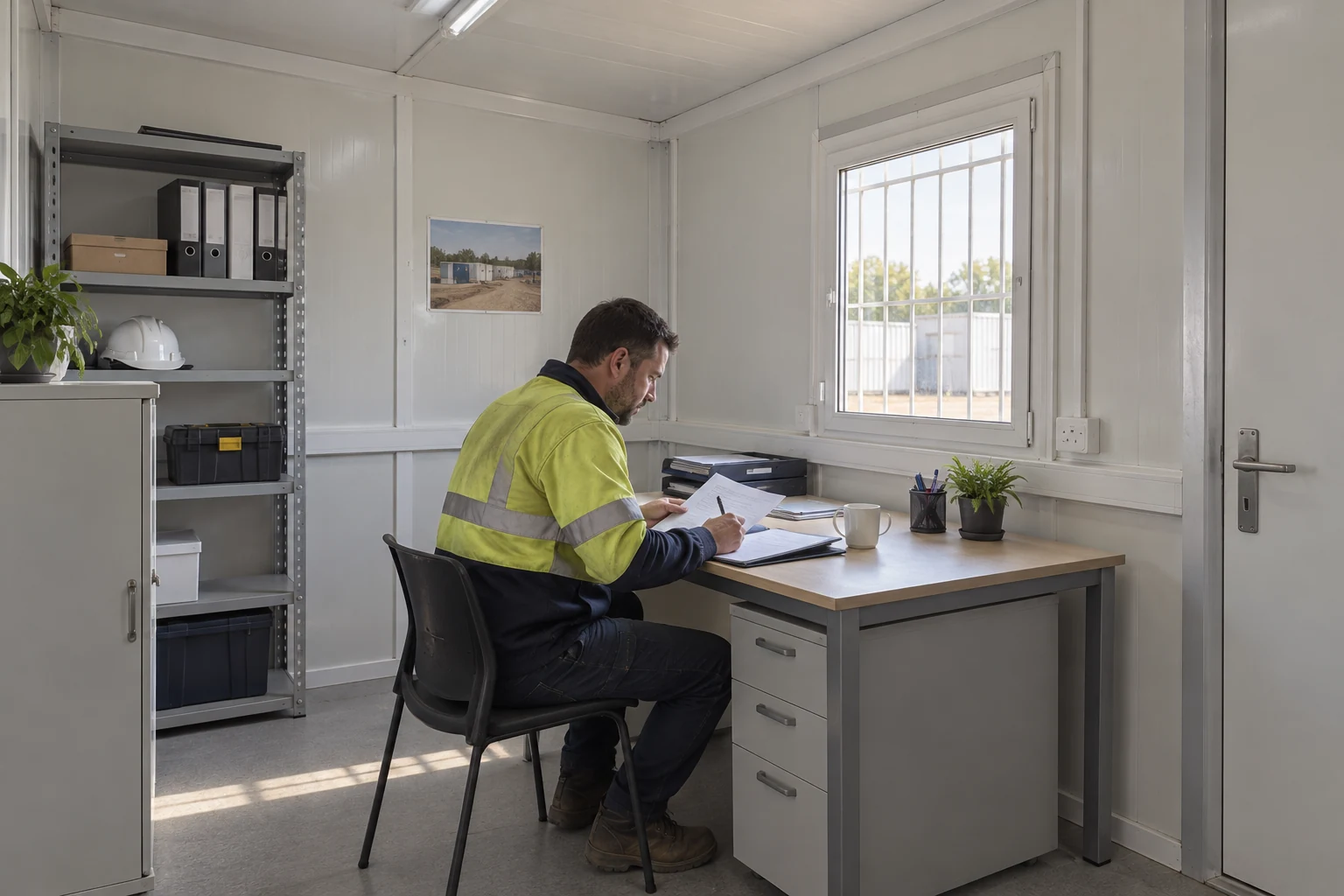
A request that names an access machine too early can narrow the discussion around an untested assumption. Give the contractor the task and site information first. Ask it to explain the proposed approach, the outstanding checks and the conditions on which its proposal depends before any equipment booking becomes a commitment.
HSE's step-by-step work-at-height guide starts with avoiding height where possible, then preventing falls, then limiting the consequences of remaining risk. It prioritizes collective measures over personal measures. Here, that sequence informs questions for a competent contractor; it is not an equipment-selection instruction for the buyer.
Ask whether the enquiry can be answered without roof entry, which part of the task needs the proposed access and what further assessment precedes the final method. A useful answer relates the reasoning to this job. A generic equipment list leaves the buyer unable to tell whether the contractor has considered the actual maintenance location.
Document who may authorize changes to the proposal and who receives the revised scope. If the first visit reveals a different task, the work and its access assessment may need separate reconsideration. Do not let a prearranged delivery force the discussion toward using equipment simply because it has already been ordered. The commercial decision should follow the assessed requirement.
Show how the occupied site differs from a vacant plot
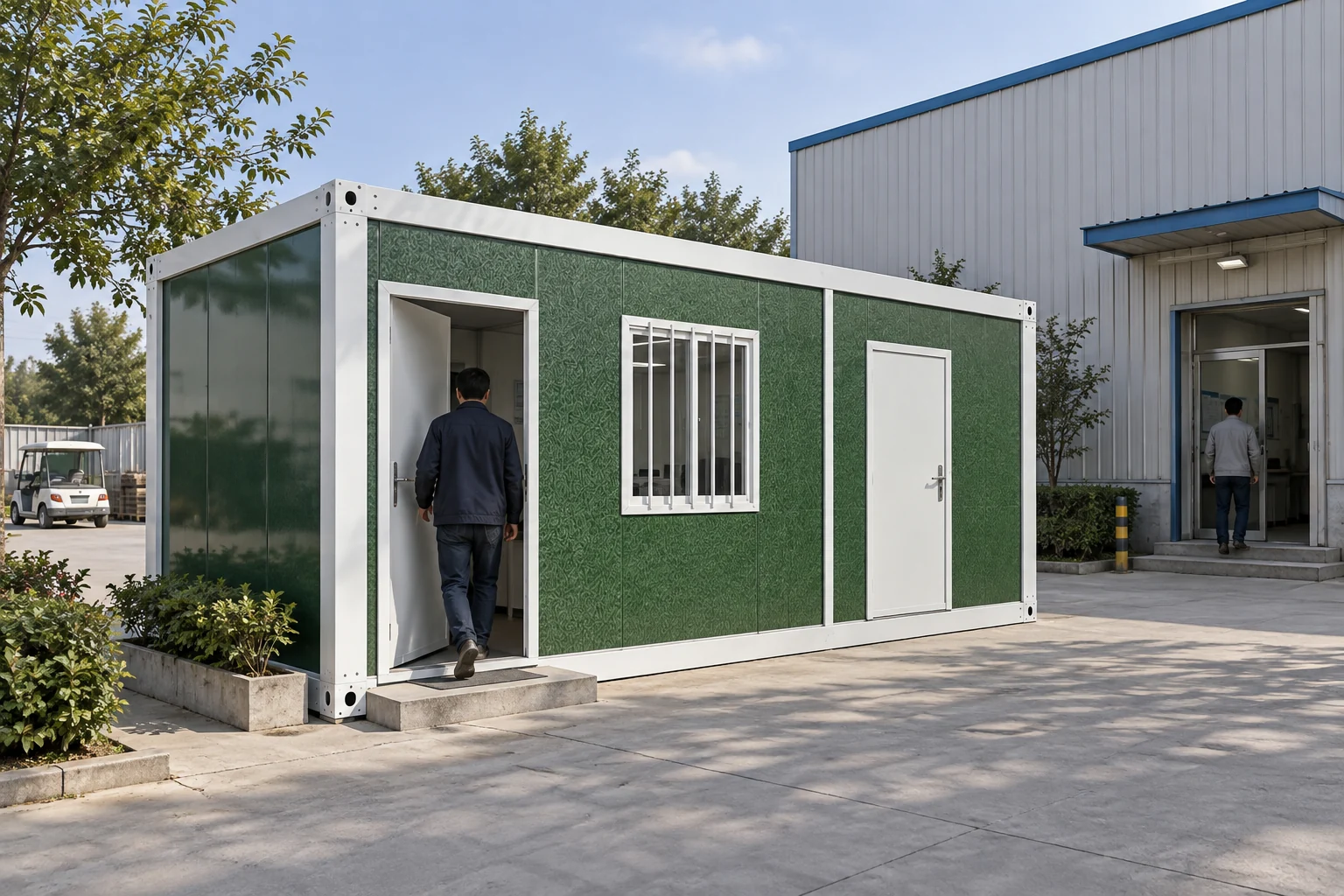
Describe the building's ordinary use during the proposed appointment. An office entrance, a service delivery and a shift change may share the same external area. The contractor needs to understand those movements; the operator needs to know which parts of normal use the assessed work might affect.
In its work-at-height questions and answers, HSE includes ground conditions, obstructions, traffic, operators and equipment checks among the questions relevant to a MEWP application. These are inputs for competent selection. A buyer's site photographs do not establish ground capacity or make a particular machine suitable.
For a construction site office, describe staff and visitor movements around the affected entrance. For worker camp accommodation, explain the occupied rooms and ordinary service activity. These examples describe operating context, not permission to continue occupancy during any chosen method.
Provide current information rather than an idealized layout. Mark a normally busy delivery area, a locked gate or an entrance used outside office hours. Ask what additional inspection or site evidence the contractor requires. Where a temporary arrangement is proposed, identify the operator who can confirm that it works for the occupants, and retain any unresolved conflict for review.
Compare quotations by the work each party actually includes

A lower quoted price is difficult to interpret when assessment, access preparation and return to use sit outside its description. Ask each bidder to explain the same appointment and the same site context. Compare declared inclusions and exclusions before comparing totals, without inserting assumed allowances into either proposal.
The buyer's comparison should expose an unanswered responsibility rather than award it silently to someone. If a contractor excludes a site visit, ask what information supports its proposal and what condition would trigger a visit. If the building supplier will answer a document query separately, record that dependency instead of treating the exchange as part of the contractor's price.
Use the table as a conversation structure. It contains no sample prices and does not imply that one commercial allocation is standard. An item may reasonably be separate, included or still subject to assessment. The useful result is an explicit agreement about the actual order, together with the conditions that could change its scope.
Keep the final accepted version with the original enquiry. A revised appointment can alter responsibility even if the quoted total stays unchanged. Identify which version the buyer has accepted and which unresolved items prevent a booking. That makes later clarification traceable without pretending that every uncertainty can be priced at the first conversation.
| Scope boundary | Question for each proposal | Decision the buyer needs |
|---|---|---|
| Initial assessment | Is the appointment an investigation, defined maintenance or both? | An agreed purpose and deliverable for the visit. |
| Roof information | Who obtains and reviews missing order-specific records? | A named contact and a visible outstanding dependency. |
| Access and site preparation | Which assessed arrangements are included, and which are separate? | Declared inclusions, exclusions and responsible parties. |
| Occupied building interface | Who agrees any interruption or temporary arrangement with the operator? | A coordinated scope that reflects actual building use. |
| Changed findings | Who proposes, prices and authorizes a different work requirement? | A documented route for revising the accepted appointment. |
| End of appointment | What completion evidence and unresolved-item record will be handed over? | An agreed handover rather than an undefined finished label. |
Agree the interfaces around arrival and the work area
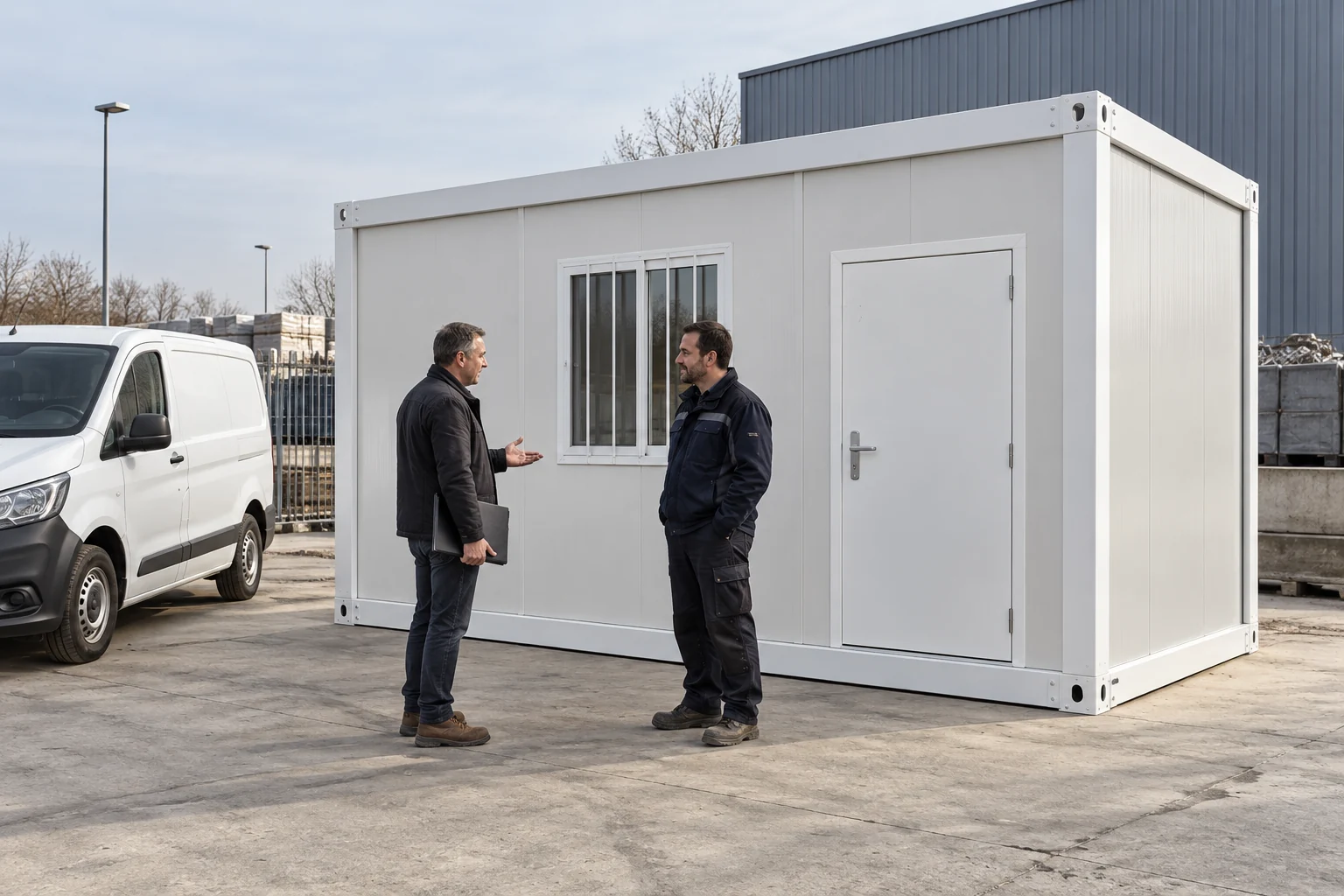
The access scope extends beyond the instant when a worker reaches a maintenance point. The buyer should know who coordinates the appointment with the site operator and who communicates the assessed work boundaries. An arrival time alone does not explain how the contractor's activities relate to the building's normal operation.
Give each interface a contact and an agreed response
HSE's introduction to work at height includes movement to and from the work location, falling objects and evacuation or rescue within its planning considerations. Those matters require the responsible contractor's project-specific arrangements. This guide asks who coordinates them; it does not design the controls or rescue procedure.
Identify the contact for an unexpected delivery, an inaccessible agreed area or an occupant's question about a changed entrance. Clarify who can resolve the issue and who must receive the answer before the appointment proceeds. A contact list becomes useful when linked to a decision, rather than attached as a collection of phone numbers.
Ask the operator and contractor to explain the handoff between their responsibilities. An operator may control building access while the contractor manages its work. The accepted scope should show how those responsibilities meet, including who communicates a revised arrangement to affected users. It should not depend on an occupant inferring the intended boundary from unfamiliar equipment arriving nearby.
Recheck the brief when the appointment or site changes

The maintenance location can remain the same while the appointment changes. A neighboring unit may become occupied, a delivery area may be reassigned or an assessment may identify a different work requirement. Give the contractor the changed information and ask whether its proposal still describes the job it intends to perform.
Keep an accepted brief distinct from a copied calendar entry. When rescheduling, ask which site facts need reconfirmation and which assessment remains applicable. A date change does not prove that an earlier decision is invalid, but neither should it conceal changes that the responsible party has not considered.
Use a short change record to identify what happened, when it was reported and which response is outstanding. This is an editorial coordination aid, not an official safety form. It helps the buyer avoid circulating several inconsistent descriptions of the same appointment. The contractor can then state whether its work scope needs revision and explain what further information it requires.
If the site has no clear answer yet, retain the dependency openly. A purchasing deadline is a commercial condition, not evidence about the roof or proposed access. Ask whether the current order is for a defined assessment or for work after specified confirmations. That distinction allows progress on genuine preparatory tasks without misrepresenting the remaining uncertainty.
Ask what the handover proves, and what remains unresolved

An appointment can end without resolving every question in the original enquiry. Ask for a record that distinguishes assessed areas, completed work, excluded work and follow-up requirements. A photograph of a finished-looking surface should not replace the agreed explanation of what the contractor actually did.
Keep repair evidence and access evidence distinguishable
Retain the work description with any photographs or findings so a later reader can understand their scope. The evidence should connect to the identified building and location. If the appointment concerned a visible defect, record whether it was investigated, repaired or left for another decision. Avoid turning a limited visit into a statement about the entire roof.
For surface repair enquiries, coating repair records address a different documentation question. They help describe the repair evidence, while this article concerns the access appointment and its responsibilities. Keep both connected when relevant, without assuming that acceptance of one record approves the other scope.
Ask who communicates the end of the contractor's activities and who confirms any operator action still required before normal use resumes. The answer should correspond to the assessed arrangements for this appointment. Where another party must finish a separate task, identify that open dependency rather than allowing the original contractor's departure to stand for completion of everything.
Send a brief that supports the next decision
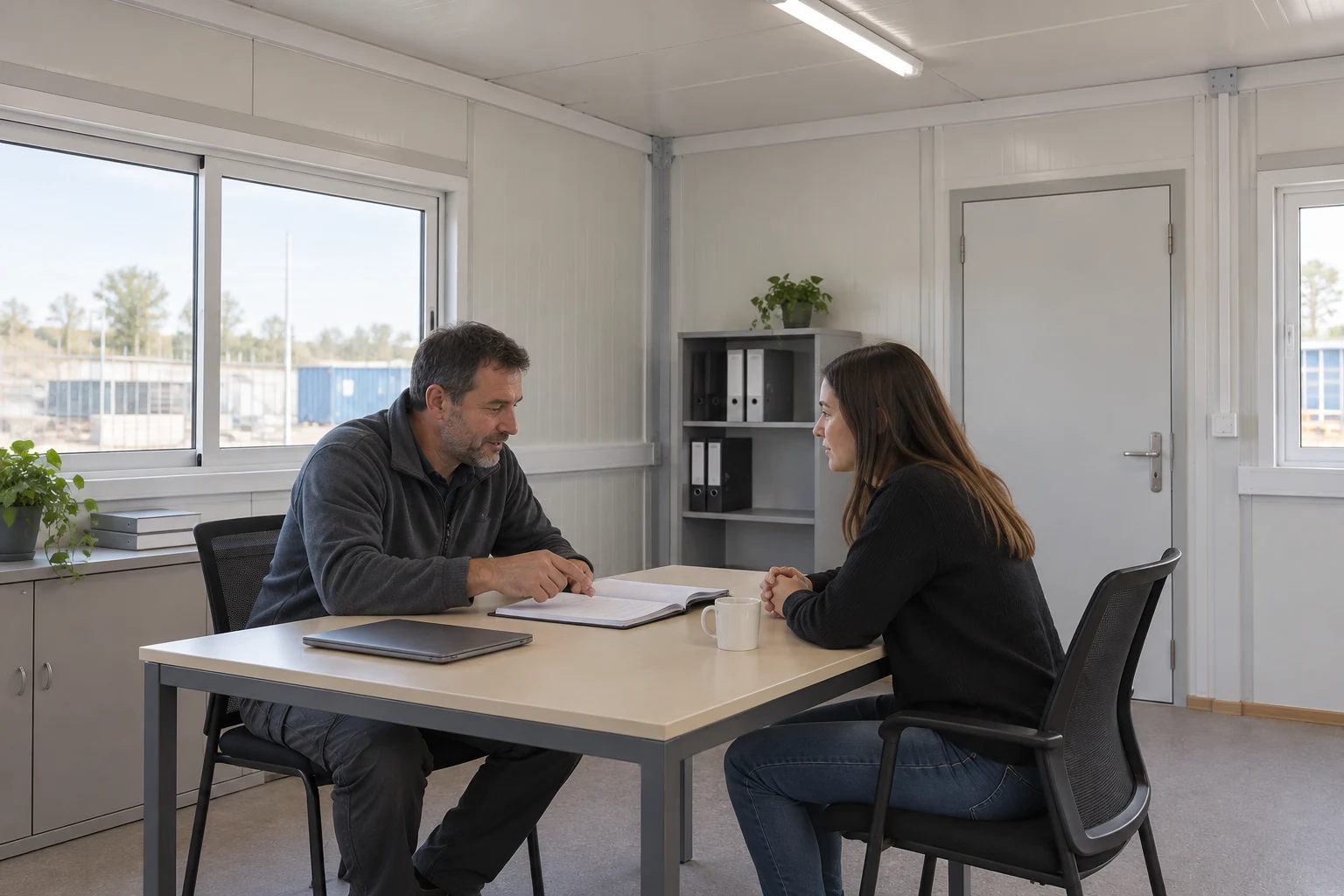
A useful roof-maintenance brief leaves the recipient able to answer a defined question. State whether the buyer needs missing building information, a contractor's assessment proposal or a price for an already defined scope. Attach the relevant records and keep unconfirmed matters in plain view alongside the request.
Include the building identity, observed location, current available documents, occupancy context and intended appointment. Explain who can answer questions about the site and who can approve a commercial change. Do not fill absent technical fields with assumptions copied from another building. The supplier and contractor need to see the same distinction between known information and outstanding questions.
The research reviewed here does not establish a roof load, an anchorage specification or a standard access cost for a PQSE order. Published accident statistics also do not answer those order-specific questions. The qualitative table below therefore tracks unresolved decisions rather than offering numerical thresholds or a chart that could imply an unsupported product capability.
Before accepting the next proposal, check that its purpose matches the enquiry and that the recipient has addressed the relevant open items. A concise brief can still be complete when it gives each uncertainty an owner and a next decision. Keep the accepted correspondence with the building record so future enquiries begin with an intelligible history.
| Open item | Evidence or response to retain | When it remains open |
|---|---|---|
| Applicable roof record | Supplier or document-owner confirmation of the relevant version | The supplied record cannot yet be matched to the installed arrangement. |
| Access assessment | The responsible contractor's task-specific response and its limits | The enquiry has only received a generic equipment or service description. |
| Site change | Changed information and the contractor's response to it | The accepted proposal has not addressed the reported change. |
| Scope exclusion | The excluded task, responsible contact and next decision | Another party's work or approval is still required. |
| End of appointment | Completed work, outstanding findings and agreed operator handoff | Departure or photographs are the only record of what ended. |
Buyer questions
Can photographs from the ground establish whether the roof can be accessed?
No. They can help locate an enquiry and describe visible surroundings, but they do not establish concealed condition or permission to stand on the roof. Ask the competent contractor which further information and assessment are required for this building and task. Keep the roof question unresolved until the appropriate party supplies a supported answer.
Should the buyer choose an access machine before requesting a quotation?
Define the task and provide site information first. Ask the contractor to explain its assessed approach and outstanding dependencies before equipment booking. This guide does not select a machine or authorize a method. If the contractor requests a separate preliminary appointment, clarify its purpose, deliverable and commercial scope so the buyer can distinguish assessment from subsequent work.
Is access automatically included in the building supplier's maintenance support?
Check the terms for the actual order and the proposed appointment. A supplier's information response, a contractor's assessment, access arrangements and a repair can belong to different commercial scopes. Ask each party what it includes and excludes, who coordinates the remaining interfaces and what must be confirmed before booking. Do not infer PQSE service or warranty terms from another manufacturer's package.
What should be retained after a limited inspection or maintenance visit?
Keep the identified building and location, the accepted appointment description, the contractor's findings, the work completed and any excluded or unresolved items. Connect photographs to that description so their meaning stays clear. Record the contact and next decision for an open item, together with the operator handoff agreed for this appointment. A limited inspection should remain labelled as limited.
Sources and scope
- Health and Safety Executive — Roof work. Great Britain guidance on planning roof work and client–contractor cooperation; not a PQSE roof specification.
- Health and Safety Executive — Fragile surfaces. Precaution pending competent assessment; no classification of this particular roof is supplied.
- Health and Safety Executive — Step-by-step guide. Published planning hierarchy, used to frame contractor questions rather than select equipment.
- Health and Safety Executive — Work at Height: Frequently asked questions. Task and site questions, including MEWP applications; no project method or technical parameters transferred.
- Health and Safety Executive — Introduction to working at height safely. Workplace movement and surrounding planning responsibilities; no rescue or protection design provided.
Research-based procurement guidance by PQSE House, prepared from the cited HSE pages and a separately recorded manufacturer benchmark review. HSE guidance has a Great Britain context; destination requirements and the actual building documents must be checked for the project. No firsthand maintenance job, independent brand endorsement or human engineering review is claimed. Photographs are newly generated AI illustrations informed by reviewed genuine modular-building references. They do not record a PQSE maintenance job or establish roof capacity, access approval or tested performance.