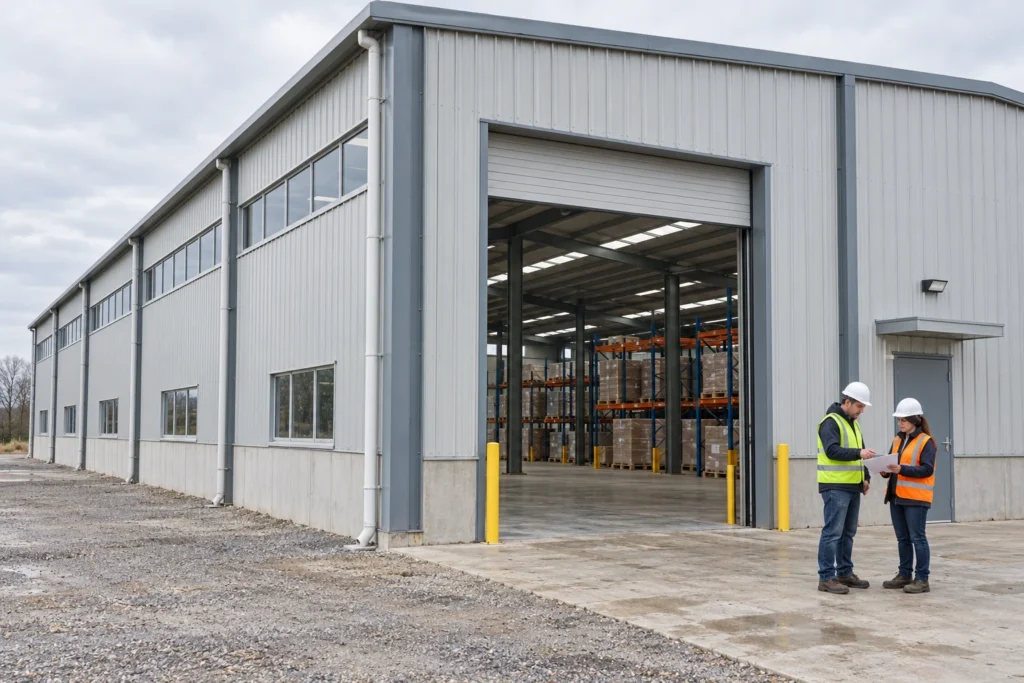
Specify a portable bathroom privacy lock as a complete set of functions: how a user obtains privacy, what someone outside can understand, how the user leaves normally, and how authorized assistance is arranged. Confirm these against the actual door, frame and selected hardware. An indicator photograph or the words emergency release do not settle the whole purchase.
The useful buying question is therefore broader than which finish looks best. A shared bathroom can serve changing shifts, visitors and people needing assistance. Its operator needs to understand the delivered arrangement without guessing from the door position. The user needs an understandable ordinary experience. These two perspectives meet at the same doorway, but they are not the same specification.
This is a research-based procurement and handover guide, with individually identified manufacturer examples and a scoped US accessibility reference. It offers no lock bypass, installation method, emergency-response procedure or approval of a particular PQSE model. Reconstructed photographs illustrate the questions; they do not establish the operation or compliance of an installed facility.
Separate privacy from the room’s operating status
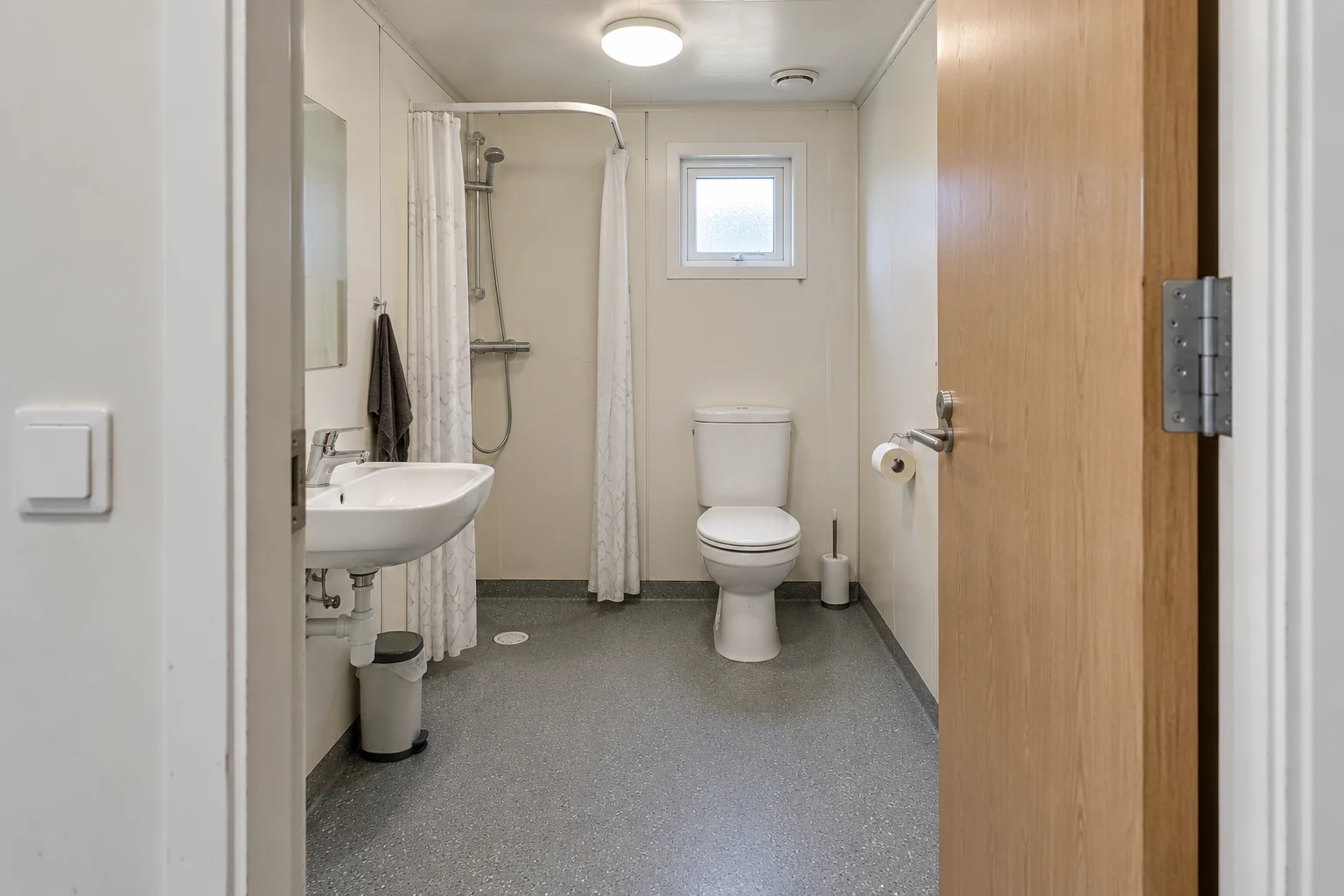
Start with the room and the people who will use it. A private bathroom must support the intended sequence of entry, use and departure. Its operating team also needs a way to manage availability. Write those needs separately before treating a closed door or an attractive lock face as their shared answer.
Describe whether the facility is a single private room or a building containing several cubicles. Identify the doorway under discussion. A lock on the building entrance and a latch on an internal cubicle may have different purposes and owners. A quotation that names only bathroom lock leaves that distinction unresolved, even when the drawing shows both doors.
For a combined portable bathroom unit, consider the user’s complete visit: belongings, washing, showering where included, changing and leaving. The lock specification belongs to that use brief. Do not assume a cubicle accessory chosen for a brief toilet visit is automatically the agreed arrangement for the whole combined room.
Separate user privacy from facility availability. A room can be unavailable for cleaning or a reported fault even when nobody is using it. Conversely, an operator’s allocation list does not tell a person standing at the entrance how the selected privacy mechanism behaves. Resolve both questions in the order instead of expecting one visible feature to cover every operating condition.
| Function | Buyer’s question | Assumption to avoid |
|---|---|---|
| Privacy during use | What does the selected user-operated assembly do? | A closed door alone establishes privacy |
| Information outside | What state does the selected indication describe? | A display is an independent occupancy detector |
| Ordinary departure | How is normal inside operation demonstrated? | Outside assistance explains normal user exit |
| Authorized assistance | Who determines authority and the applicable procedure? | A feature gives everyone permission to enter |
| Facility availability | How does the operator communicate a closure? | Vacant means clean, fault-free and available |
Identify the door, frame and hardware together
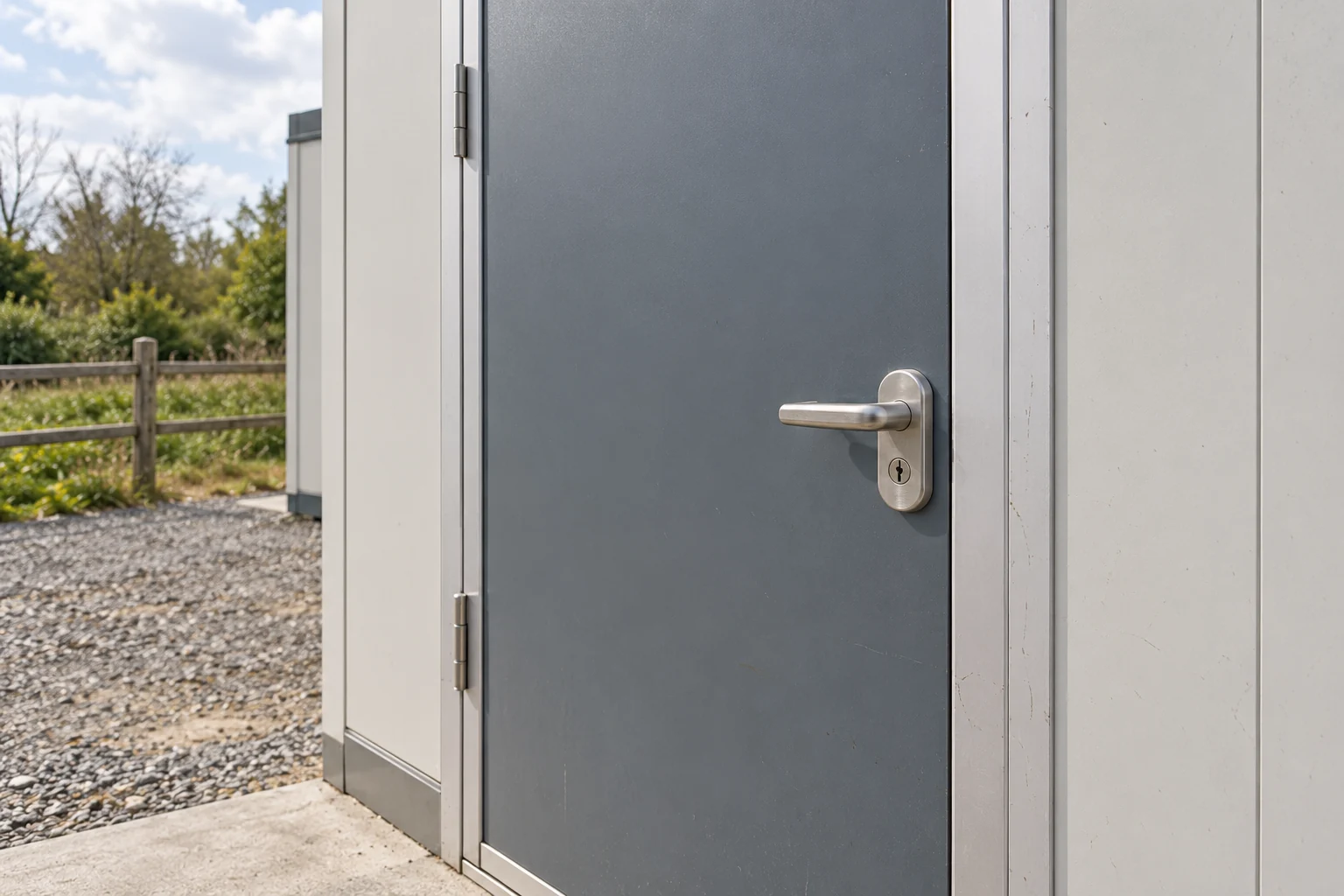
Use the complete doorway as the subject of the enquiry. The visible lever, door edge, frame and hinges help locate the assembly, but they do not identify everything supplied with it. Ask for the selected hardware identity and its relationship to the specific doorway before comparing alternatives by appearance or price alone.
Name the door location, its intended use and the relevant drawing revision. Ask the supplier to identify the actual lock or latch, associated indication where provided, handle arrangement and required mating parts. Keep this information linked to the door rather than scattered across unrelated product brochures. An unresolved component should stay visible as an open purchasing question.
Finish is only one part of identity. Two chrome products can have different functions; two finishes can be variants of the same product. The purchase should preserve the identifier that lets the supplier and future maintainer find the appropriate information. A photograph remains useful as a location aid, but cannot replace that identifier or establish concealed construction.
Use the same discipline when reviewing supplied components and remaining project responsibilities. Request a clear answer about whether the quoted package includes the agreed door hardware, indication, instructions and installation responsibility. That general scope method is useful here; it does not establish any particular lock as a PQSE standard inclusion.
Ask what the outside indication actually describes
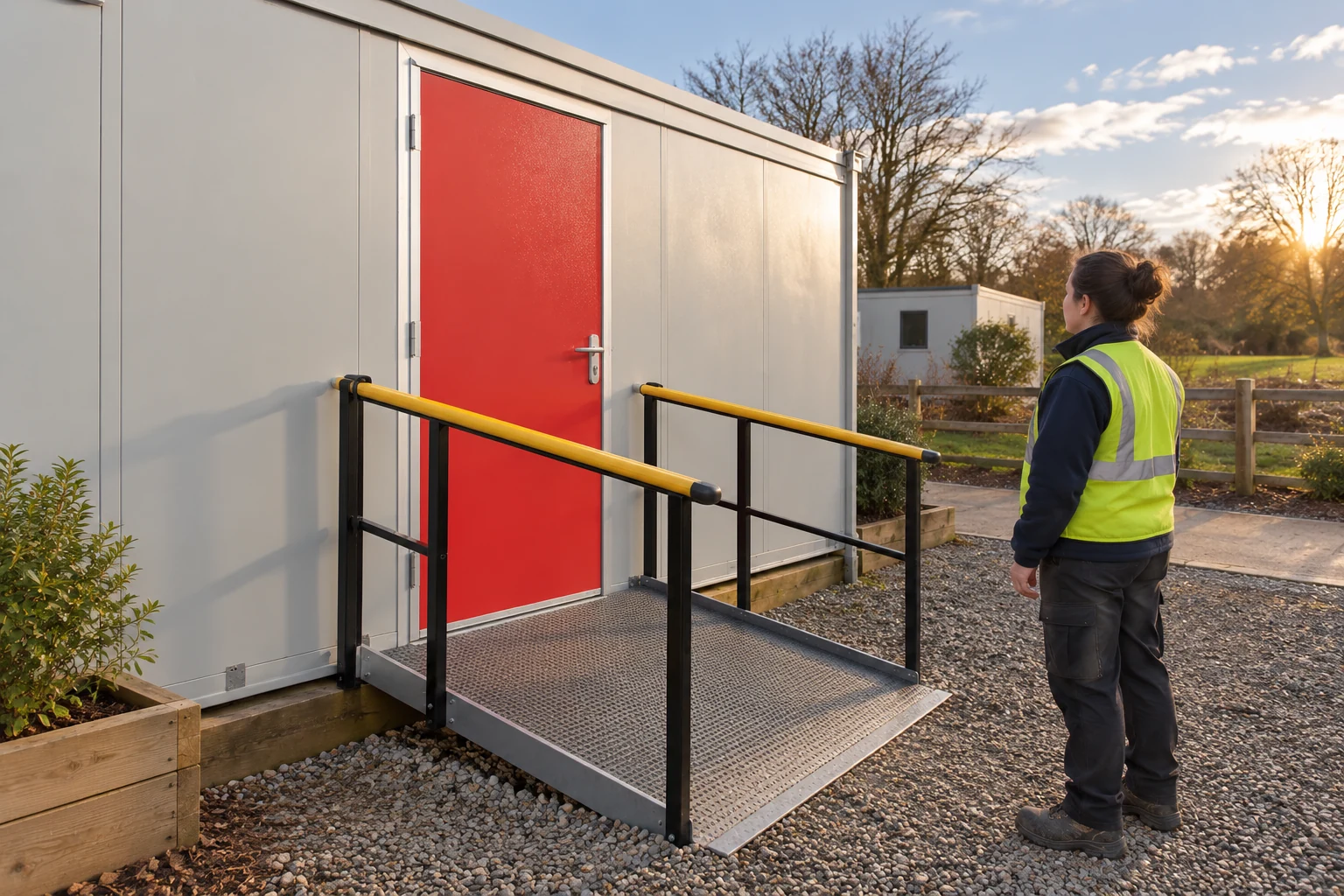
Review the entrance from the position of someone waiting outside. They need understandable information without disturbing a person using the room. Establish what the selected display represents, how that meaning is explained, and what remains unknown. An exterior photograph can show the doorway context; it cannot establish the relationship between a display and occupancy.
A display’s meaning is part of the specification
Ask whether the proposed indication follows the selected locking action, requires a separate user action, or comes from another specifically identified system. Obtain the answer for the actual product. The wording in a catalogue is not a reason to assume a sensor, power supply or automatic connection that the selected arrangement has never included.
Then consider ambiguous situations as questions for an authorized demonstration. What should a user or operator understand if the displayed state and the reported door condition seem inconsistent? Who receives that concern? Avoid writing an entry rule that depends on guessing why the disagreement exists. The facility procedure and identified device information should govern the response.
Keep other signals distinct. A call indicator, a room identification sign and a privacy display answer different questions. The photographed presence of one does not prove the function of another. Coordinate this with the wider portable bathroom privacy and layout brief, while keeping the selected hardware question precise.
Give normal user departure its own demonstration
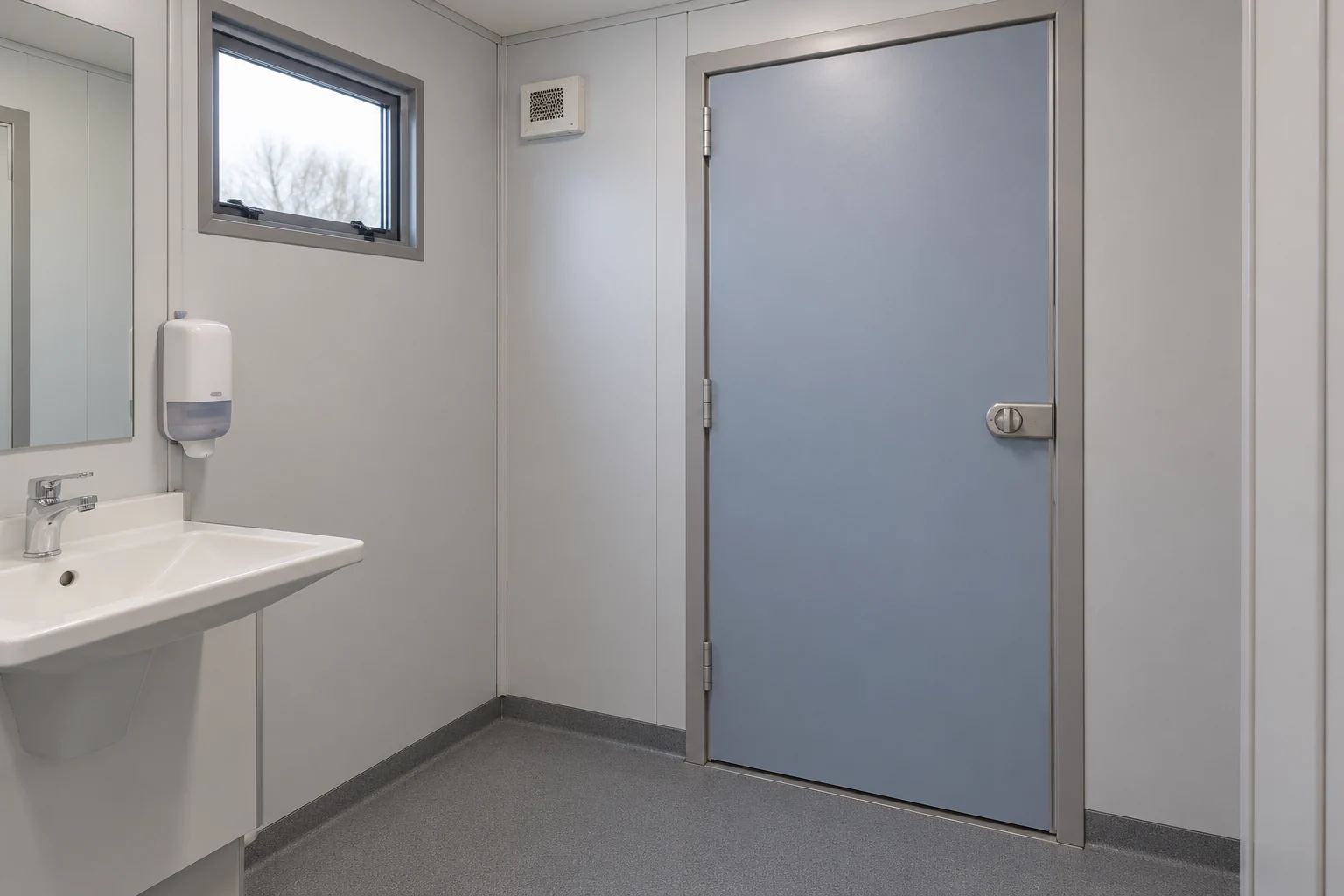
The inside view deserves its own review. An unoccupied room lets the responsible team discuss the controls a user will encounter without intruding on anyone’s privacy. A visible handle or thumbturn is only a starting point. Have the authorized supplier explain and demonstrate ordinary use for the selected complete assembly, including normal departure.
Normal use and assistance are separate questions
Write the intended user sequence in ordinary language: entering, obtaining privacy and leaving. Ask the responsible supplier to connect each part of that sequence to the identified hardware and instructions. This is a request for a proper demonstration, not permission for buyers to invent their own test, modify the latch or trial an unfamiliar release arrangement.
Include all the relevant controls in the discussion. If the door contains more than one device, establish each purpose rather than judging a single product in isolation. A feature described as providing assistance outside the room does not answer every question about what the ordinary user must do inside. Keep any unresolved operation issue assigned to the appropriate supplier or reviewer.
The room’s daily functions also matter. The comparison of site toilets and bathroom blocks helps establish the service being purchased. Here, carry that agreed use into the doorway review: a combined private room and a cubicle within shared facilities may call for different demonstrations and operating arrangements.
Define assistance responsibility without a bypass guide
Identify the operational contact before accepting an assistance feature. The person receiving a concern needs the room location, the appropriate information and a clear route to the responsible party. Establish who may authorize the response under the facility’s procedure, including later shifts, rather than treating a device description as an operating arrangement.
The existence of an assistance feature and the authority to use it are different matters. Ask the facility operator to establish the relevant procedure with the responsible local parties. It should identify the actual facility and applicable hardware information. This article cannot grant access permission, determine a medical response or supply a method for opening an unfamiliar locked door.
Consider ordinary staffing rather than an ideal arrangement in which the original installer is always present. Who is the contact during the next shift, and how is a change communicated? A phone number in a purchasing email may be unsuitable as the continuing operational contact. Resolve the ownership of that information before the facility is handed to its users.
Keep the discussion proportional to the actual use. A facility serving accommodation, a staffed workplace and a temporary event can have different operating arrangements. Define the responsible parties for the particular project. Do not translate a manufacturer’s feature description into a universal response time, a legal entitlement to enter or a promise that every possible incident is resolved.
Read named examples without declaring the supplied model
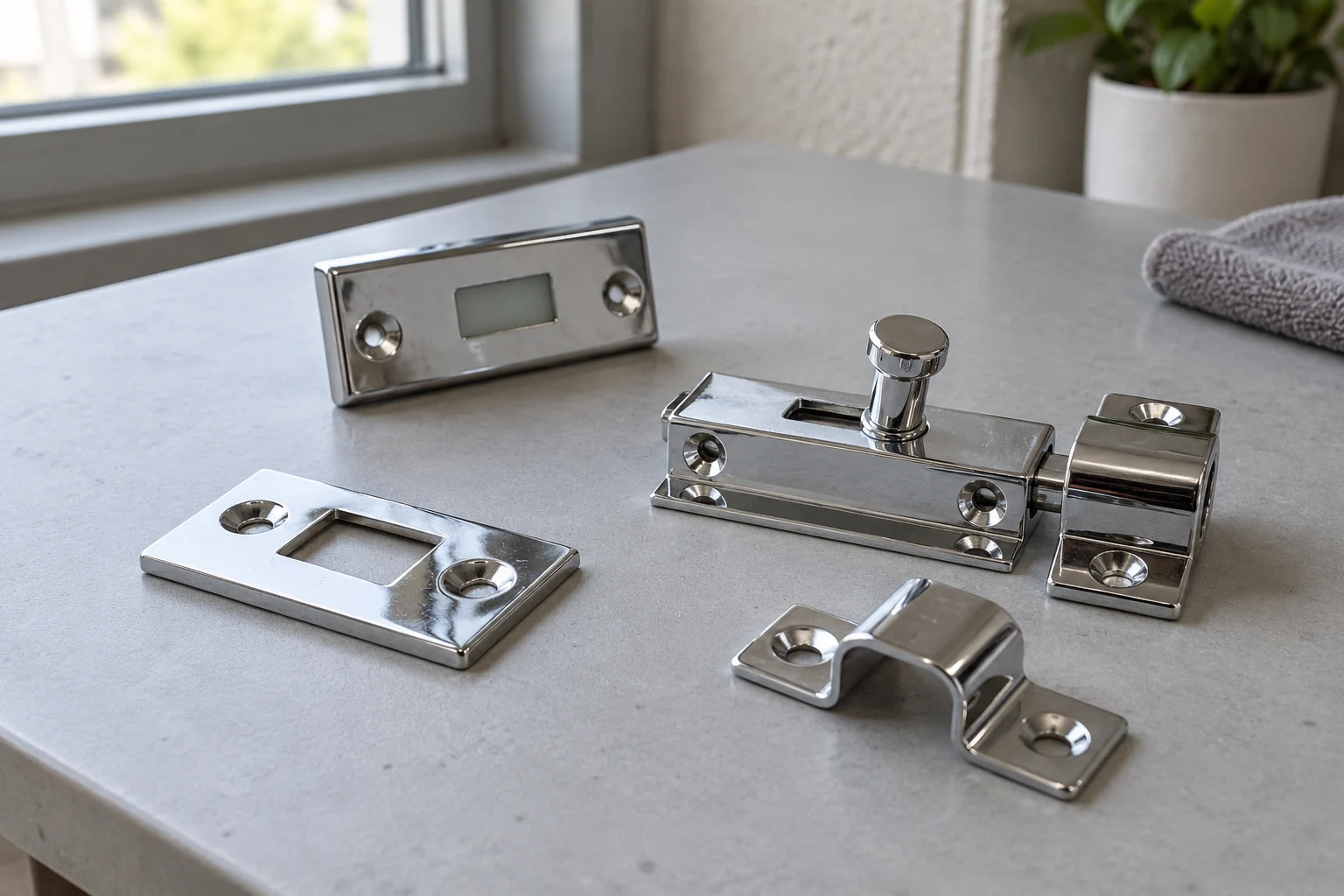
A display of loose hardware makes a useful distinction: a part is not an installed doorway. Compare published features only for the product actually named, then ask what the real order includes. Neither a familiar finish nor the presence of separate mating pieces proves that the complete selected door has been assembled, demonstrated or accepted.
ASSA ABLOY’s Ireland page describes AA35 and AA35CP as an assembly with inside thumb operation, outside red/green indication and an emergency-release provision. These are named manufacturer examples, not confirmed PQSE components. The page’s feature description helps separate purchasing questions; it does not settle the destination requirements or compatibility of the actual proposed doorway.
Pride Barco describes its S-100 as a surface-mounted slide-bolt indicator with built-in emergency release, left/right-hand use and supplied strike options. Its choice of indication wording is also stated. Keep those claims attached to S-100. A loose product photograph or vendor accessibility wording is not acceptance of a complete portable facility.
Use a comparison to expose what remains to be answered, rather than to select a winner from photographs. The actual proposal needs its own identity, matched documentation and responsible confirmation. This guide intentionally does not compare the examples’ prices, fit dimensions or installation steps: those details would not establish suitability for a doorway whose configuration is still unknown.
| Identified example | Published feature example | Project answer still required |
|---|---|---|
| ASSA ABLOY AA35 / AA35CP | Inside thumb operation, outside indication and emergency-release provision | Identify the actual proposed assembly and applicable requirements |
| Pride Barco S-100 | Surface slide-bolt indicator, stated handing and supplied strike options | Confirm the selected door, mating parts and matched information |
| The ordered bathroom doorway | Only the actual accepted proposal defines its inclusions | Retain identity, demonstration scope and unresolved conditions |
Review the user and the applicable doorway requirements
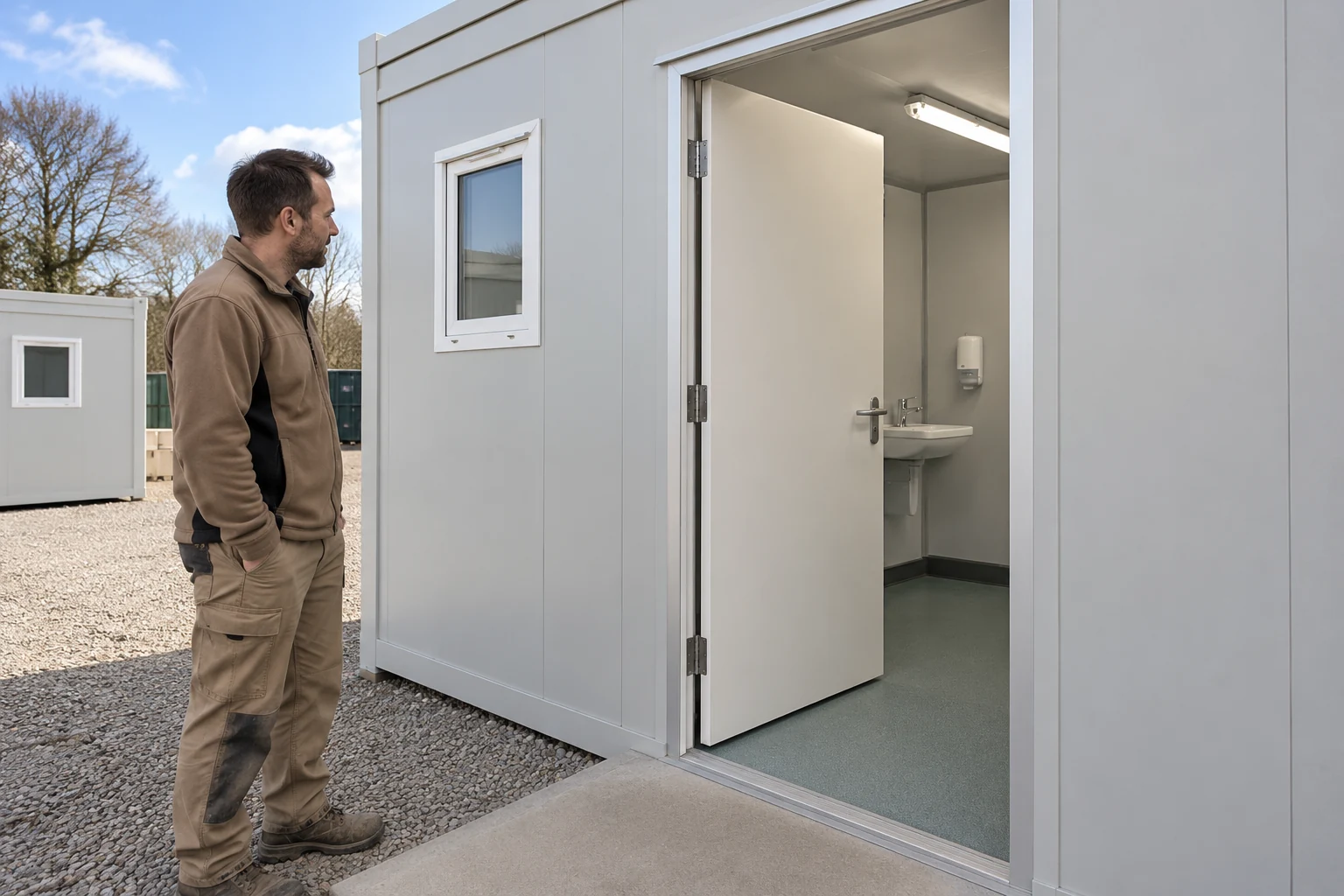
Look at the approach as well as the hardware. The person must reach and use the intended doorway in the assembled facility. A photograph of a clear entrance supports a layout discussion, but not an accessibility finding. Identify the users, destination requirements and responsible review before treating an attractive lock or spacious-looking approach as suitable.
The US Access Board’s guide addresses doors providing user passage on applicable accessible routes. Its hardware provisions distinguish one-hand operation without tight grasping, pinching or wrist twisting from the separate force needed to move the door. Closed-fist operation is advisable, not itself a universal mandate. These are scoped US distinctions, not approval of an exported bathroom.
For the actual proposal, ask which review covers the whole doorway and which evidence concerns only a component. Hardware operation, the approach and the room arrangement may need coordinated consideration. A supplier’s component description can answer a limited question while leaving that wider review open. Record the responsible reviewer and information required without inventing a global dimension or force requirement.
Also discuss the anticipated users and how the intended operation is explained. If assistance will sometimes be present, that situation belongs in the brief rather than being added after handover. The objective is to preserve the agreed function in the assembled facility, not to turn an illustration, logo or catalogue phrase into a compliance certificate.
Give the operating team a usable handover
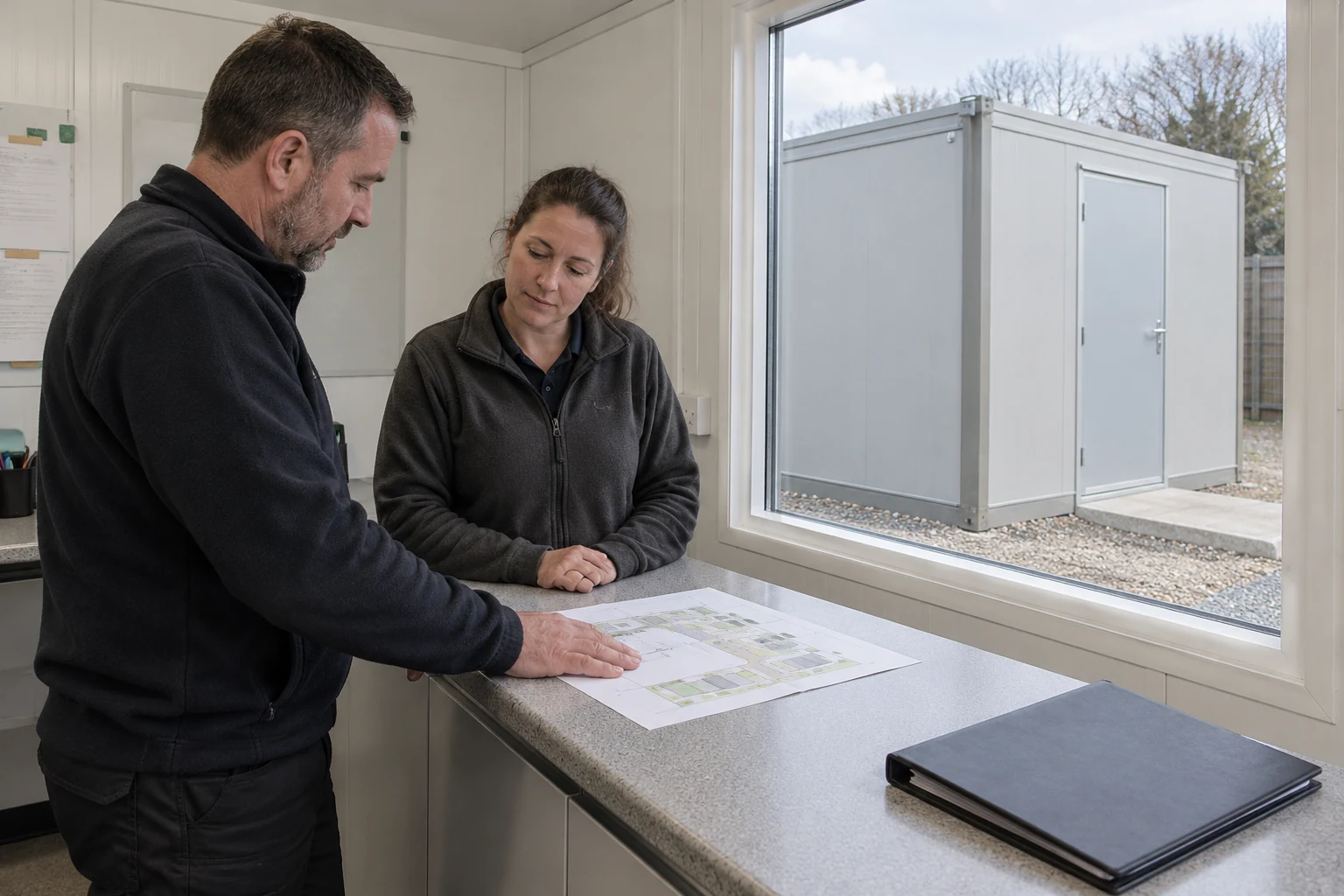
Give the operating team a handover they can use at the actual room. Link its location to the selected assembly, current instructions and the contacts responsible for unresolved questions. A new shift should find those answers together, rather than reconstruct the arrangement from separate emails, remembered demonstrations or an unlabelled photograph.
Organize the handover around what someone needs to know at the time of a concern. Which bathroom is involved? Where is the matched hardware information? Who is the operational contact? Which matters must be referred to a supplier or other responsible specialist? Keep the answers specific enough to avoid a caller being passed between unrelated contacts.
For worker-camp bathroom operation, consider the relationship between accommodation management and the team maintaining the buildings. A resident’s report may first reach someone other than the person who manages the hardware. Define that route in the project; do not assume the building supplier also provides on-site response staff or continuing local service.
A demonstration and a document serve different purposes. The demonstration can explain the agreed normal use; retained information helps a later operator identify what was selected. Include changes that occurred after the original proposal. An immaculate folder is unhelpful if it describes a replaced device, while a remembered demonstration can become unreliable when the responsible staff change.
Separate a reported fault from the availability decision
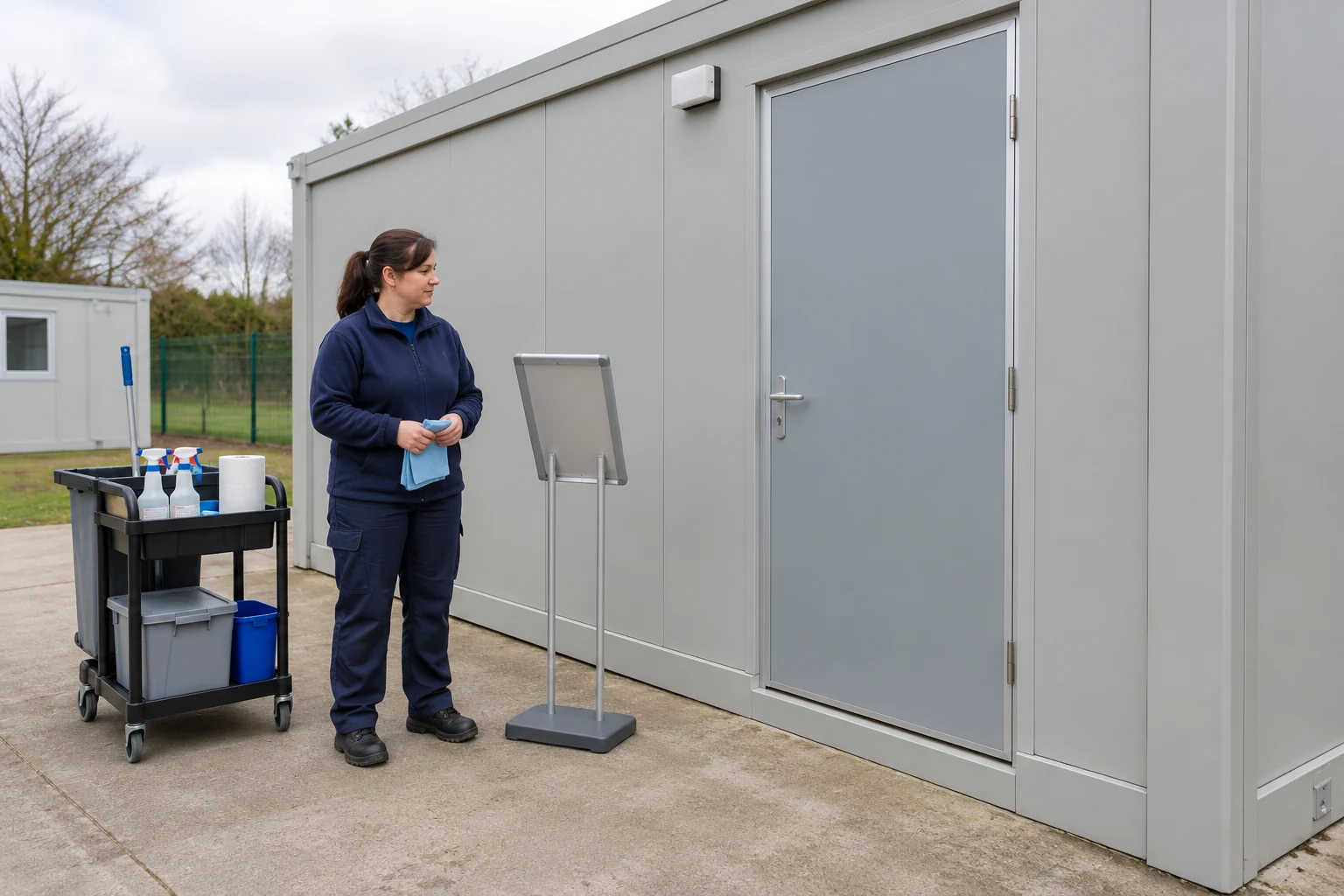
A cleaning or service interruption needs a clear operating decision. Keep equipment outside the doorway’s intended movement and discuss how the affected room is managed under the facility procedure. The illustration does not show a diagnosed fault. The distinction is between receiving an observation, deciding availability and confirming the appropriate follow-up, with a named owner.
Ask staff to describe what they observed without diagnosing concealed parts. A report that the display did not seem to match the door condition is different from a verified explanation of why. Preserve the location, circumstances and report source so the appropriate person can investigate. Avoid asking cleaning staff or users to compensate by improvising a different locking routine.
The operator should decide how the room’s current availability is communicated and what provision remains for users while the matter is addressed. That decision cannot be inferred from a vacancy indication. Keep the selected privacy feature in the review when the room is returned to its intended use, instead of closing the report merely because the surface has been cleaned.
Technical bathroom service access and maintenance responsibilities are a separate scope. A plumbing repair, cleaning activity and privacy-hardware concern can involve different parties. Routing each to the relevant owner helps avoid a general service appointment being mistaken for resolution of every issue recorded against the room.
Control replacement by function and identity
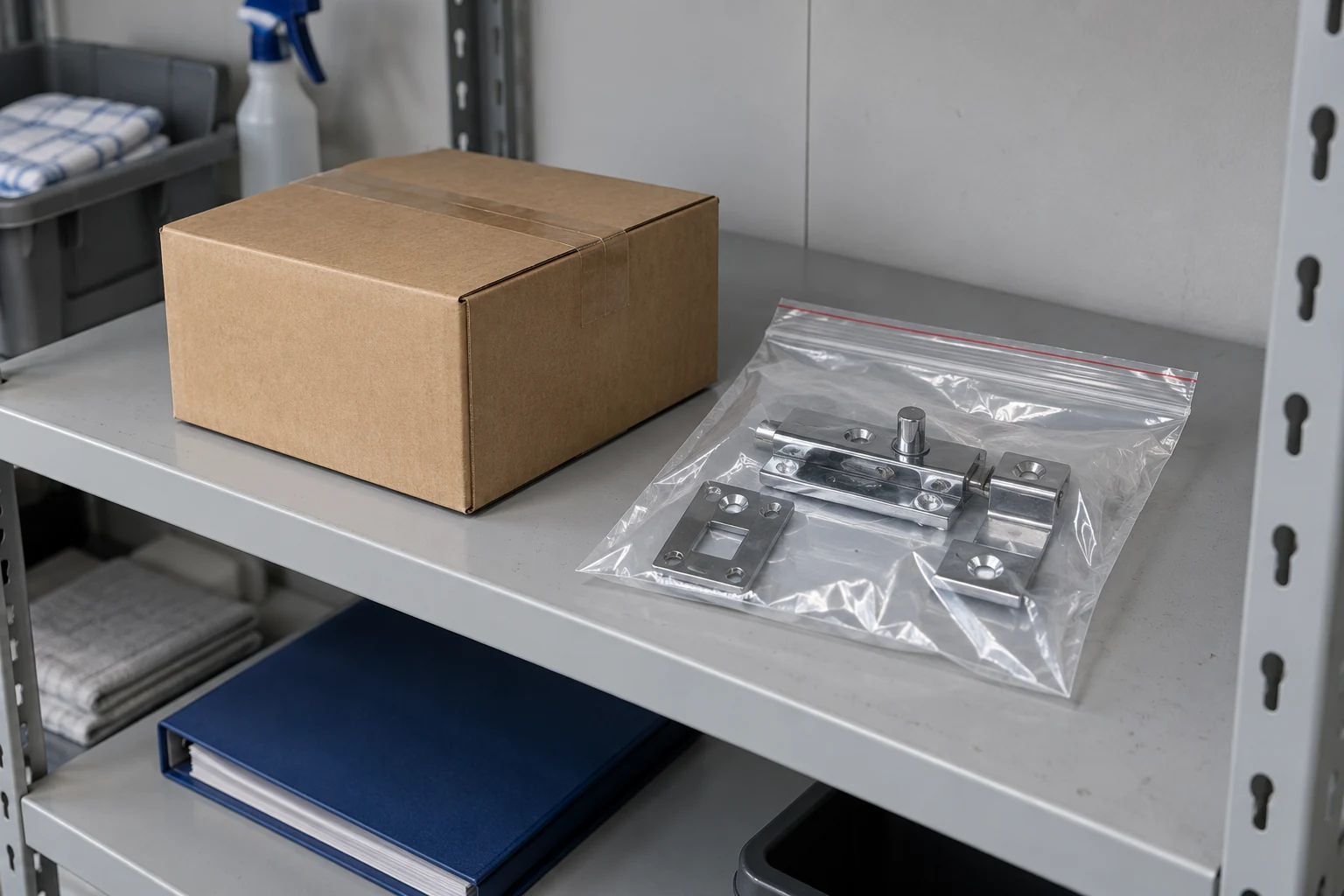
Keep replacement items identifiable before anybody treats them as ready to fit. An unopened box and a closed hardware bag show custody, not compatibility or completed work. Ask the responsible supplier to match the replacement to the selected doorway and its functions, with the information needed to review any resulting change to operation or handover.
A familiar finish does not establish equivalent function
Replacement should begin with the installed identity and the reported issue. A similar-looking item may leave different questions unanswered, particularly if its indication or ordinary user operation differs. Avoid accepting the phrase equivalent hardware without the explanation that makes the equivalence meaningful for this doorway. The appropriate supplier or reviewer should identify the relevant functions and compatibility conditions.
Preserve the history without leaving old information in everyday use. Keep the earlier identity as part of the change record, while making the current instructions findable by the operator. If a change affects the agreed demonstration or assistance arrangement, identify who needs the updated information. A parts delivery is not the same event as completed, appropriately accepted work.
The distinction also improves purchasing. Decide whether the proposal concerns a component, an assembly or wider doorway work, and who owns each task. This guide supplies no fixing pattern, component substitution or permission to perform the repair. Its contribution is to keep the requested function and resulting operating information connected to the item actually selected.
Leave a record that the next shift can use

Finish by identifying the current configuration and the decisions that remain open. The next shift needs to know which information describes this doorway, which tasks have actually been completed and who owns the outstanding response. Keep the handover usable after staff changes, without confusing delivery, demonstration and acceptance of the actual assembled facility.
Retain the accepted configuration, relevant supplier information and outcome of the agreed demonstration. Keep an unresolved item attached to its owner rather than allowing it to disappear when the equipment arrives. If the assembled doorway differs from the proposal, obtain the appropriate response and update the information that will be used after handover.
The broader stage-specific building quality-control approach is useful for separating dispatch condition from installed acceptance. Apply that principle to the actual doorway without claiming the general guide certifies a lock. The selected hardware and site arrangement need their own matched checks and responsible decisions.
When requesting a quotation, send the destination, room or cubicle use, anticipated users, door location, known operating responsibilities and any relevant accessibility brief. Identify what is still unknown about indication, ordinary inside operation and assistance. Ask PQSE to discuss the building package against that information while the responsible parties resolve the actual hardware and local requirements.
| Record to retain | Association it should preserve | Unresolved question to assign |
|---|---|---|
| Selected assembly | Door location, identifier and current instructions | Is any included component still unconfirmed? |
| Normal-use demonstration | Actual arrangement and intended user sequence | Which operation question still needs a response? |
| Assistance arrangements | Responsible contact and applicable procedure | Who maintains the information for later shifts? |
| Reported fault and availability | Observation, current decision and follow-up owner | What remains outstanding before intended use? |
| Replacement or change | Previous identity, selected change and current information | Who receives the revised handover? |
Buyer questions
Does an occupied or vacant label prove whether the room can be used?
Confirm what the selected display describes and how the operator manages availability. A label should not be treated as proof that the room is clean, fault-free or available under the facility’s procedure. If its meaning or relationship to the door condition is unclear, refer the question to the responsible supplier and operator rather than guessing an entry rule.
Should every portable bathroom use one particular emergency-release lock?
No universal selection follows from the sources here. The appropriate proposal depends on the identified doorway, intended use, destination requirements and responsible review. Named manufacturer features are examples, not PQSE standard inclusions. Obtain the selected assembly’s information and establish authorized assistance arrangements; this guide provides no method for opening an unfamiliar locked room.
Does a hardware manufacturer’s accessibility claim approve the whole bathroom?
A component claim is not a whole-facility finding. The assembled doorway, approach, user operation and applicable requirements must be considered in their actual scope. The US Access Board reference belongs to its stated jurisdiction. Ask the responsible reviewer which evidence applies to the proposal instead of transferring a vendor phrase or isolated value to every exported module.
What should accompany a request for privacy-hardware confirmation?
Provide the destination, room or cubicle function, identified door location, proposed hardware if known, anticipated users and operating contacts. Include the questions about outside indication, normal inside use and authorized assistance. Request inclusions, matched instructions, agreed demonstration responsibility and a clear owner for any unresolved item so the quotation and eventual handover describe the same facility.
Sources and scope
- ASSA ABLOY Ireland, Indicator Bolt With Emergency Release. AA35/AA35CP feature example; publication date unstated. No PQSE supply, installation or destination approval established.
- Pride Barco, Model S-100. US manufacturer example; publication date unstated. Supplied-model compatibility and whole-facility accessibility remain separate questions.
- US Access Board, Guide Chapter 4: Entrances, Doors and Gates. Applicable US accessible-route scope and hardware operation. Original guide date unstated; no universal exported-module approval.
Research reviewed October 7, 2026. The tables organize purchasing questions rather than installation or emergency instructions. No selected PQSE door-hardware assembly or witnessed operating test is established. Illustrative photographs cannot establish hidden lock functions. Confirm the actual model, applicable destination requirements and responsible handover parties.