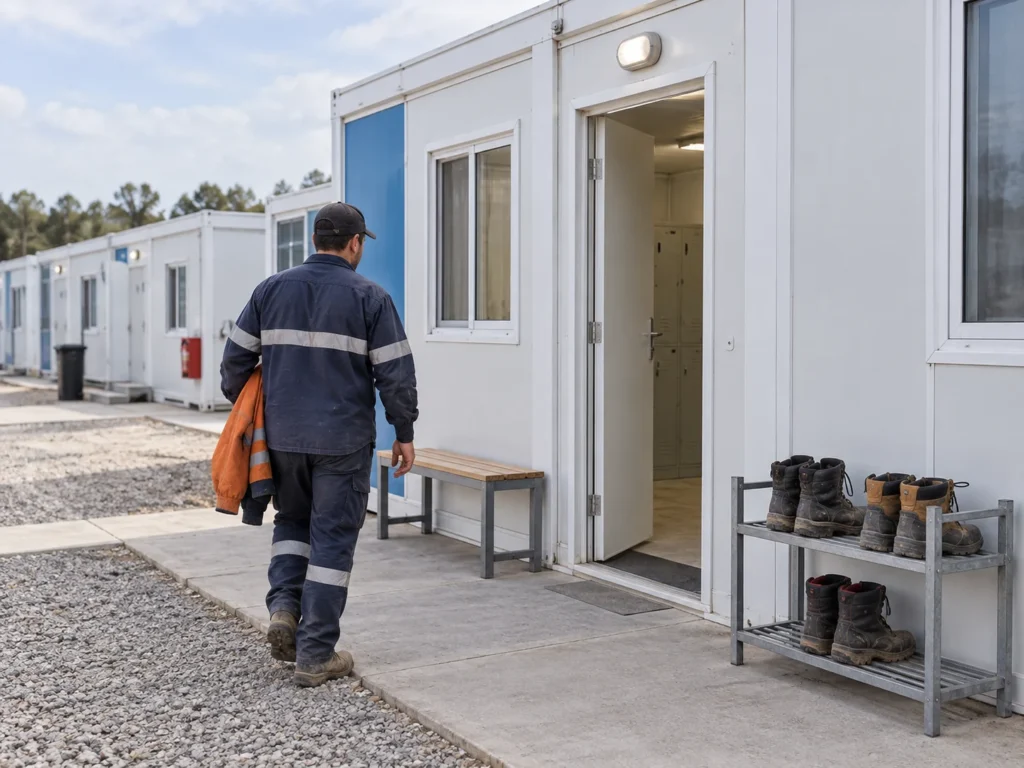
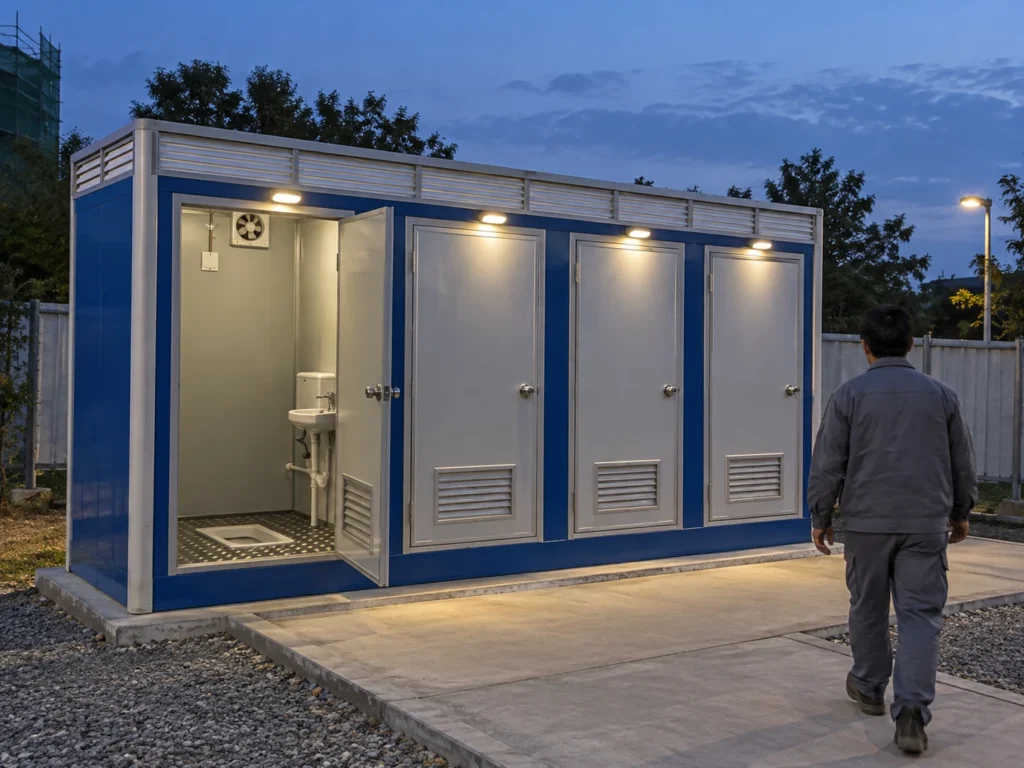
A visitor can reach a site office without being ready to enter the work area. Plan those as separate events. The office needs an identifiable arrival point, a place to wait within the agreed visitor boundary, and a reliable handover to the person responsible for the visit. A meeting invitation, a completed sign-in entry and a room key each answer different questions.
The practical test is a visitor whose host is late. Where does that person remain, who can contact the host, and what happens if the visit cannot proceed? If the answer depends on following a worker through an open door, the reception arrangement is unfinished. This guide explains how to turn that problem into a room brief, an operating allocation and a useful handover check.
The following decisions are planning proposals for project buyers, not a universal access-control standard. UK Health and Safety Executive guidance provides a bounded construction-site example; the destination’s requirements and responsible site team govern the actual project. The illustrated scenes explain possible arrangements and do not document a PQSE inspection, a security test or an approved site layout.
Start with the visit that the office must support
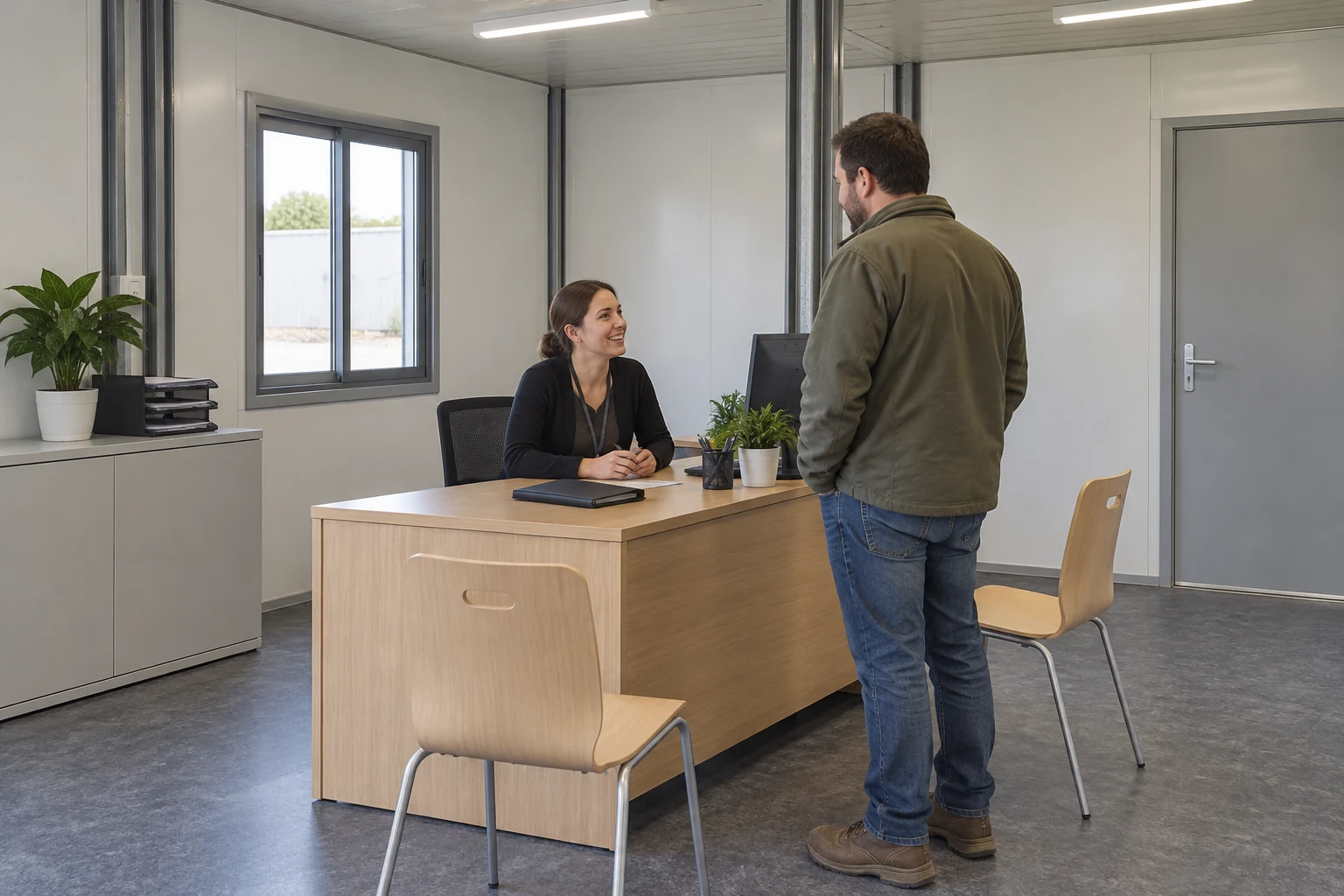
Describe the visit before drawing the reception desk. An appointed client attending an office meeting, a specialist attending an escorted work-area visit and a delivery driver reporting to a receiving contact create different handovers. Putting them in one queue does not make their next steps identical.
Write a small set of representative visit descriptions using the site’s own operating terms. For each, identify the arrival contact, the intended destination, the person who can confirm that destination and any onward accompaniment. Include an unannounced arrival because an appointment system does not remove that possibility. This is a useful input to a construction site office brief.
Keep each description specific enough to expose a layout decision. A visitor who remains in a meeting room may need a different route from someone going to an active area. The office team must decide whether those routes share reception and where they separate. Do not assume that every person wearing a visitor badge has the same permission or that reception staff can independently approve every onward movement.
| Visit description | Office function to identify | Handover question |
|---|---|---|
| Office meeting | Arrival contact and meeting destination | Who confirms the host and receives the visitor? |
| Escorted work-area visit | Waiting and preparation before onward movement | Who confirms the permitted scope and accompaniment? |
| Driver reporting to reception | Receiving contact and agreed reporting point | Does the driver remain at the reporting point or move elsewhere? |
| Unconfirmed arrival | Holding position and decision contact | Who can resolve the visit without suggesting onward permission? |
Make the first arrival point unmistakable
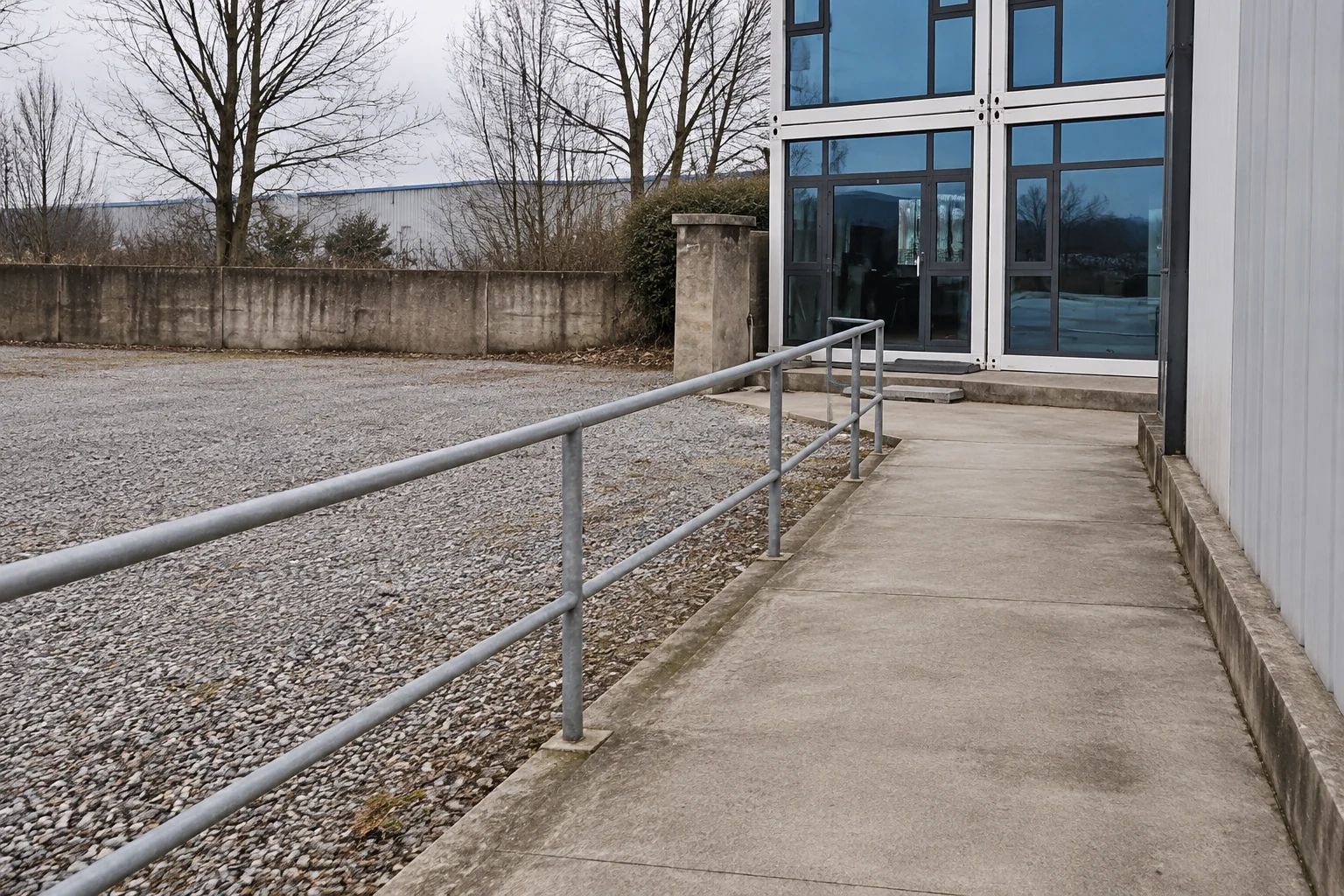
The arrival point must make sense from the route people actually use. Review it from the pedestrian entrance, the visitor parking position and any separate driver reporting location. A desk that is obvious from an architectural drawing may be difficult to find from the edge of a working compound.
In its construction traffic-management guidance, HSE discusses separating pedestrian and vehicle movements, planning suitable routes and providing visitors with route instructions. That is UK site guidance, not a supplied traffic plan. Use the responsible site team’s agreed arrangement when locating the office entrance.
Ask what a first-time arrival sees before they reach that entrance. A reception sign inside a closed lobby cannot resolve an unclear choice outside. Include the approach and reporting position in the drawing review, alongside the actual site boundary and adjacent activities. The broader site-office planning guide helps place this decision within rooms and daily operations.
The Gabon visitor-facing office brief explores reception and meeting routes alongside staff workspaces.
Separate route identification from route approval. Suppliers can identify building doors and proposed room relationships; the project still needs someone accountable for the external approach. Record that interface rather than letting an office quotation imply that surrounding roads, fencing or pedestrian arrangements are automatically included.
Give waiting a defined place and a clear meaning
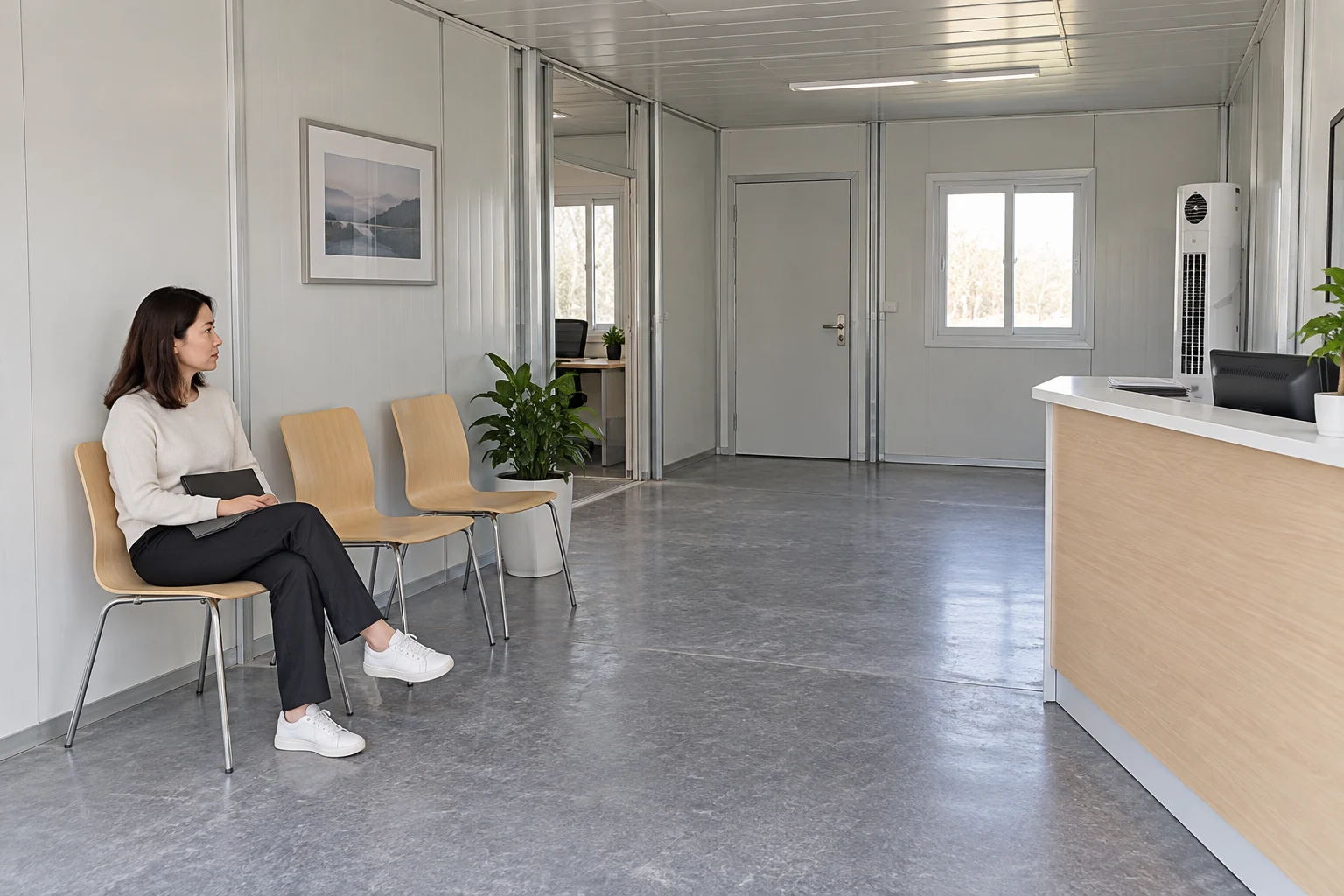
Waiting is an operating state, not an absence of activity. A person who has arrived but has not been received needs an understood place to remain. Seating helps only if its position, access and supervision match the way the office will be run.
Separate an available seat from onward access
Imagine the reception contact answering a call while another visitor approaches. Can the waiting person understand where to stay without entering staff workspaces? Can the contact see or otherwise account for an arrival using the selected arrangement? These questions should influence the furnished plan, not be left until chairs are delivered.
Describe whether waiting is inside the reception room, in a separately managed lobby or somewhere else approved by the operator. Identify what remains unavailable while the visitor waits. A convenient passage to a meeting room should not accidentally become an invitation into the rest of the office. The container-building layout guide provides a wider framework for checking room relationships.
Do not estimate the waiting requirement from staff headcount alone. Ask about visit overlap, scheduled meetings, early arrivals and the operator’s response when the intended space is unavailable. Use actual project expectations to review the arrangement; this guide supplies no seats-per-worker ratio or generic occupancy allowance.
Name the handover between reception and the host

A receptionist contacting a host and a host accepting responsibility are different events. Make the second event observable in the site’s chosen procedure. Otherwise the visitor may leave reception while both parties believe the other person is handling the visit.
Agree who receives the message and how an answer returns to the arrival contact. The exact method may be a phone call, an established reception system or an in-person handover. The decision is whether it works during ordinary interruptions, not whether the office has the most elaborate technology. Identify an alternative contact for the situations the operator expects.
Information should travel with the visitor’s actual purpose. A host expecting a brief office meeting may not be prepared to receive a request to inspect a work area. State the visit scope when asking for acceptance and resolve a proposed change before treating it as agreed. This is an editorial coordination method; it does not establish the host’s legal authority.
Check that the chosen desk, communications equipment and working positions support that exchange. A reception point with no functioning contact method can look finished while its essential job remains impossible. Include the interface in office fit-out and handover planning, with the responsible party identified for each connection and test.
Match orientation to the visit that is actually permitted
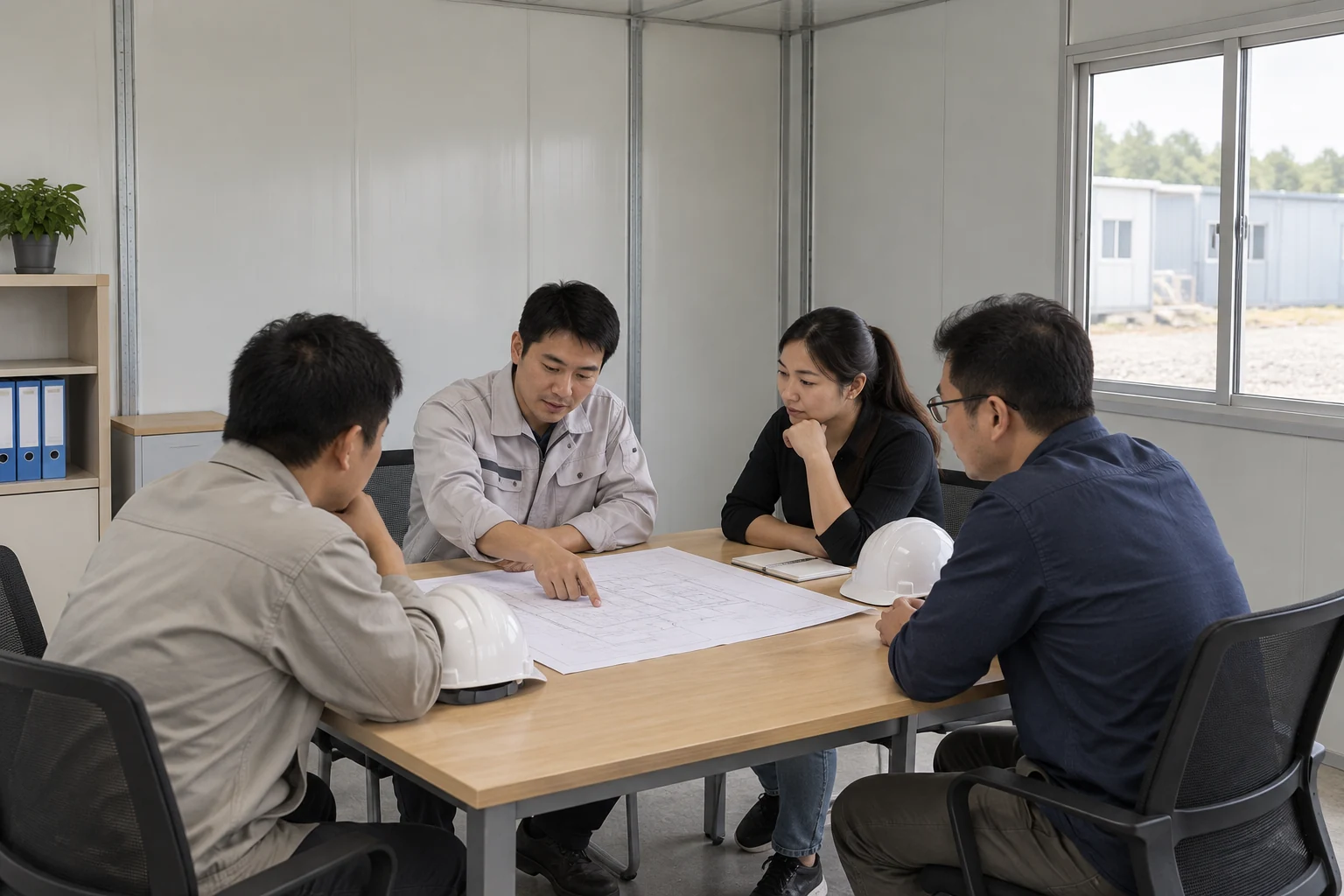
Do not use the same explanation merely because two visitors arrive at the same desk. The relevant information depends on where each person is allowed to go, what they will encounter and whether they will be accompanied.
HSE’s site-rules and induction guidance distinguishes the needs of occasional visitors and describes proportionate induction for escorted visitors. It also calls for understandable information. Keep that distinction within its UK construction context; a badge, an appointment or this article is not evidence that the required induction has occurred.
Ask the operator what must be explained at reception and what occurs elsewhere. A short office-only visit and a specialist visit may require different documents, discussions or preparatory steps. Put the space and equipment required for the agreed procedure in the room schedule. Do not call a spare meeting table an induction facility until its intended use has been defined.
An explanation can be complete on paper and still fail in the actual room. Review the chosen position with the people who will provide it: can they communicate without exposing confidential documents or being repeatedly interrupted by unrelated arrivals? Where languages or communication needs differ, agree how the information will be made usable. Avoid assuming that a wall full of notices settles comprehension.
Test the visit when the host is unavailable
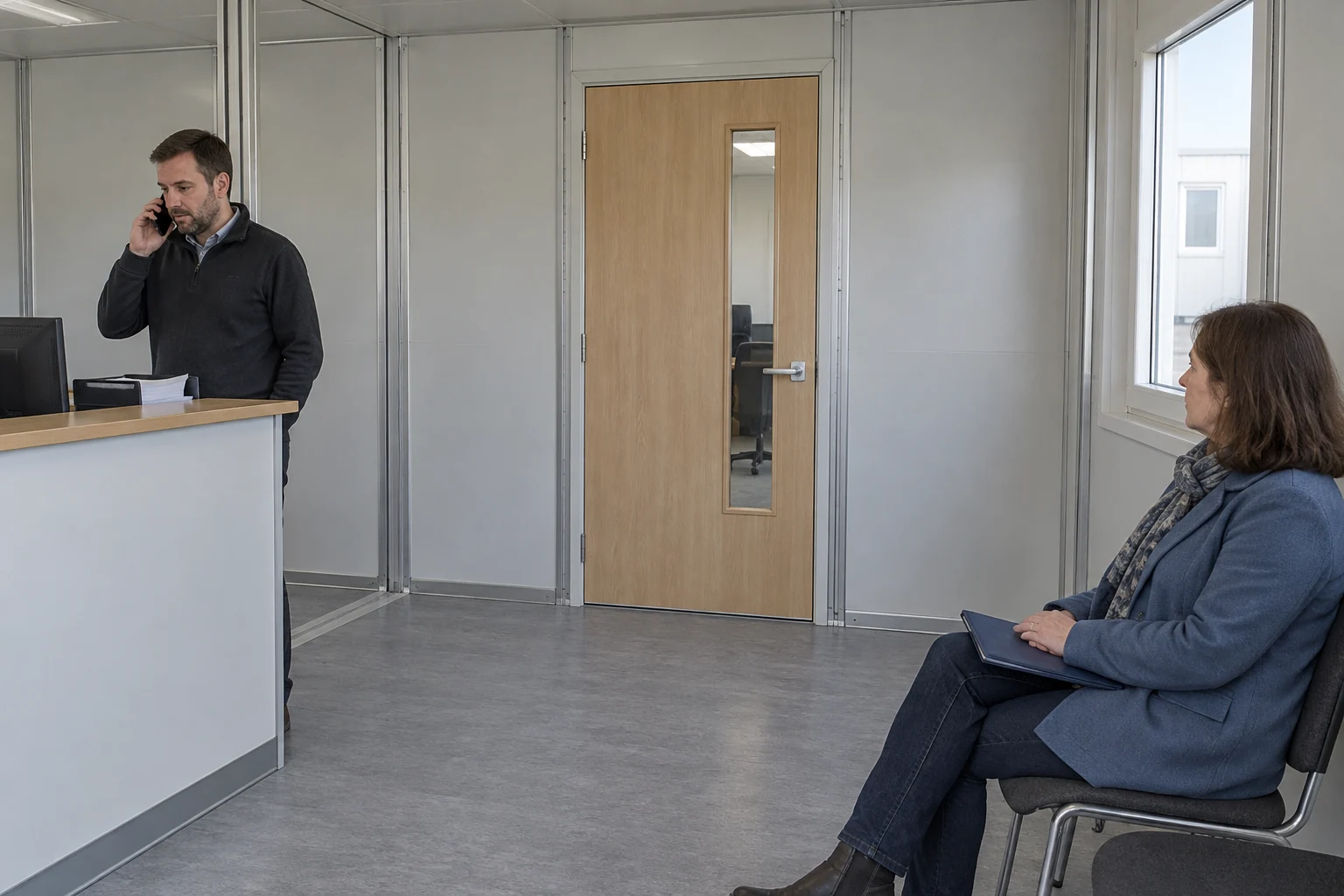
The missing-host case reveals whether the arrangement has a workable stopping point. The visitor should not have to improvise a route through the compound to locate someone. Define the next decision and the person who owns it.
Use a realistic discussion with the proposed operator: the named host cannot answer, a meeting room is occupied and another arrival is due. Ask which contact can decide whether the visit waits, changes or ends. Record where the visitor remains during that decision. This is a rehearsal of an agreed process, not an invitation to conduct an unsupervised live-site trial.
Try a changed-purpose case separately. Someone booked for an office discussion asks to enter a work area. The reception contact needs a way to identify that request as unresolved, rather than treating the original appointment as permission for the new activity. HSE’s public-protection guidance describes site-specific authorization and circumstances involving accompaniment. It does not grant access through a building purchase.
Keep the exception record brief enough to use. It should identify the unresolved decision, the responsible contact and the current disposition of the visit. Avoid recording a promise such as “someone will collect them” when nobody has accepted that action. The point is to keep responsibility visible during an interruption.
| Exception to discuss | Decision to identify | Room or interface consequence |
|---|---|---|
| Host does not answer | Who can resolve or end the visit? | Waiting remains meaningful while the decision is pending. |
| Meeting destination unavailable | Who selects an alternative or reschedules? | The substitute destination needs the same permission review. |
| Visit purpose changes | Who can approve the revised scope? | Reception does not release the visitor on the old assumption. |
| Arrival outside staffed hours | Who receives the arrival, if anyone? | The access and communication arrangements need an explicit limit. |
Separate driver reporting from an ordinary office visit
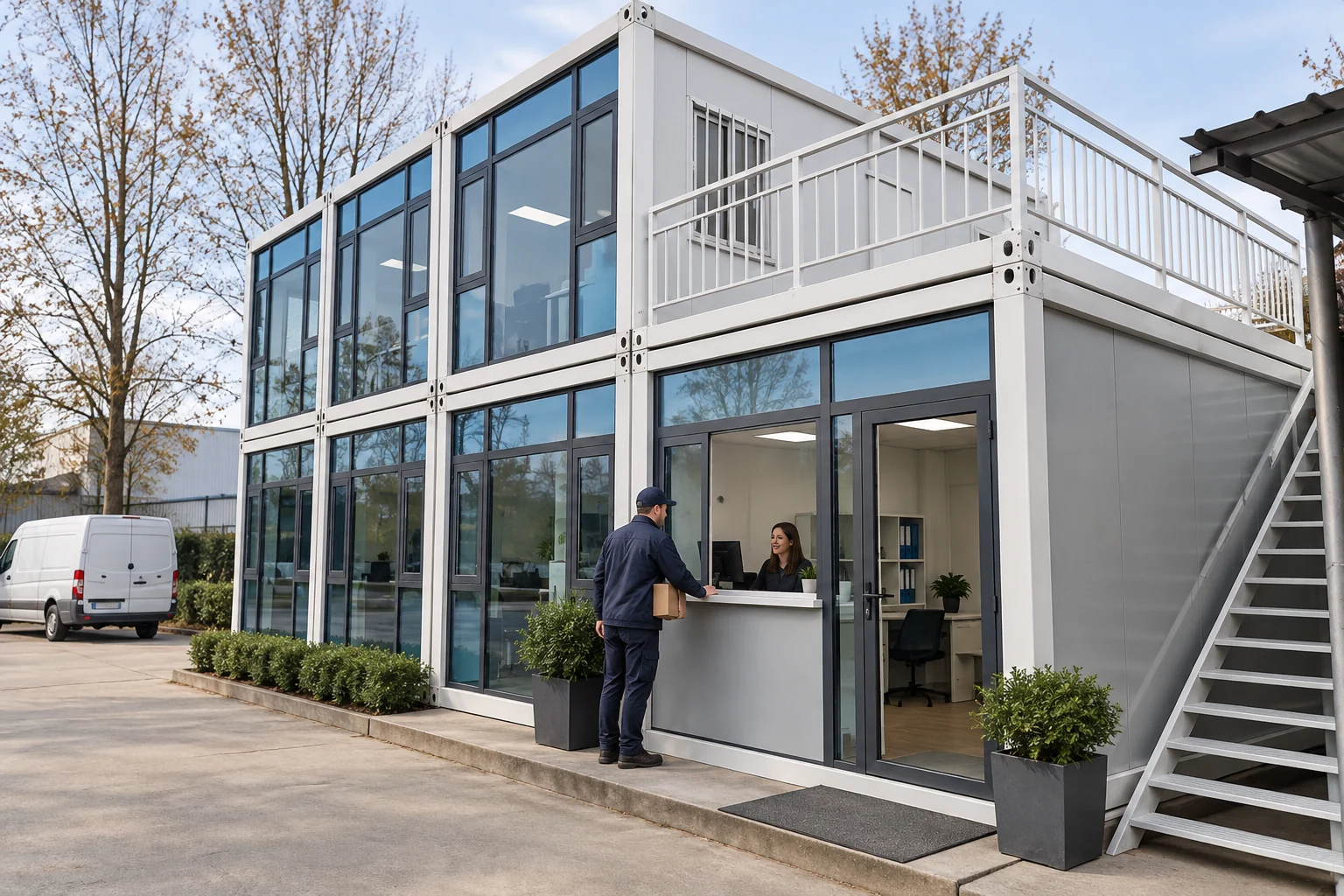
A driver may need a receiving contact without needing access to office rooms. Treat reporting, waiting and onward vehicle instructions as their own interface. A visitor appointment process cannot answer every delivery question.
HSE’s visiting-driver guidance highlights the difficulty of unfamiliar sites and the need for information about layout, routes, parking and unloading arrangements. It also discusses coordination between the workplace and the driver’s employer. The relevant teams should define that interface for the actual operation.
Ask whether the driver reports from an agreed stopping position, at a separate reception window or at the main office desk. Each choice affects who receives the message and how the driver obtains the next instruction. Do not add a reporting door to an office drawing and assume that a suitable vehicle waiting location therefore exists.
Office staff also need to distinguish a driver waiting for instructions from a person attending a meeting. Include the reporting function in the brief even when the receiving area is elsewhere. The final arrangement should not depend on the driver guessing which person is responsible from activity visible through a window.
Make the reception exchange usable for the expected visitors

Review the exchange from the visitor’s position as well as the staff position. A physical reception counter, a sign and a phone are only useful when the intended person can find, approach and use the agreed arrangement.
Identify expected access and communication needs during the briefing stage. Refer the required physical access, door, approach and counter details to the destination’s responsible design team. This article gives no universal dimensions. The supplier should identify the proposed configuration and open design questions instead of labeling an unreviewed arrangement accessible.
HSE’s safety-critical communications overview discusses matching information, timing and communication method to the people who need it. That supports asking how a visitor receives the next instruction; it does not prove that a particular sign or electronic system is suitable.
Consider the ordinary interaction: a visitor cannot hear a name over nearby conversation, cannot understand the written notice or needs another way to contact reception. Agree the response rather than relying on politeness to solve a missing process. Also identify how visitors reach any facilities they are permitted to use. Where welfare is part of that journey, the site toilet service plan helps separate access from cleaning and service responsibilities.
Close the visit without leaving its status uncertain
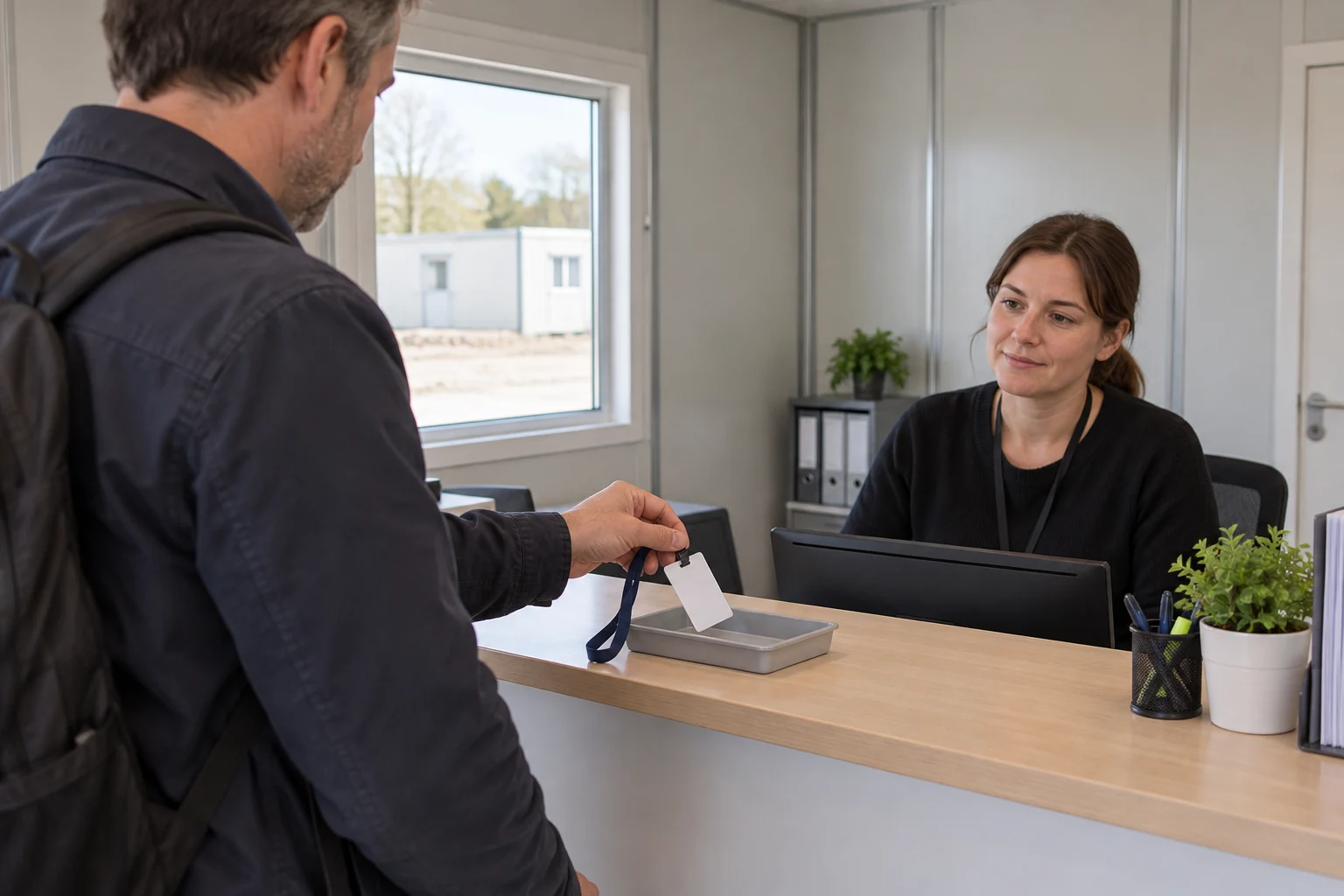
Arrival records need an agreed end to the visit. Decide how the operator learns that a visitor has departed, how any issued item is returned and who resolves an incomplete departure entry.
Do not treat an empty waiting chair as proof that a person has left the site. They may have been collected, redirected or moved to an agreed destination. Use the operator’s chosen departure method and make it understandable to the host as well as reception. A paper register and an electronic system both need a defined owner.
Keep routine departure and emergency accountability distinct. The site’s responsible team must determine what records and arrangements are needed for emergency procedures. This guide does not specify a headcount method or imply that an ordinary sign-out record is sufficient. Identify any required interface with the visitor process before handing the office over.
Privacy matters here too. Discuss which visitor details are necessary, who may see them and how records are handled under the applicable requirements. This is a question for the operator, not a reason to publish visitors’ names on an open board. The room arrangement should support the agreed handling of information without requiring staff to improvise concealment every time a new person arrives.
Review the furnished journey before accepting the office function
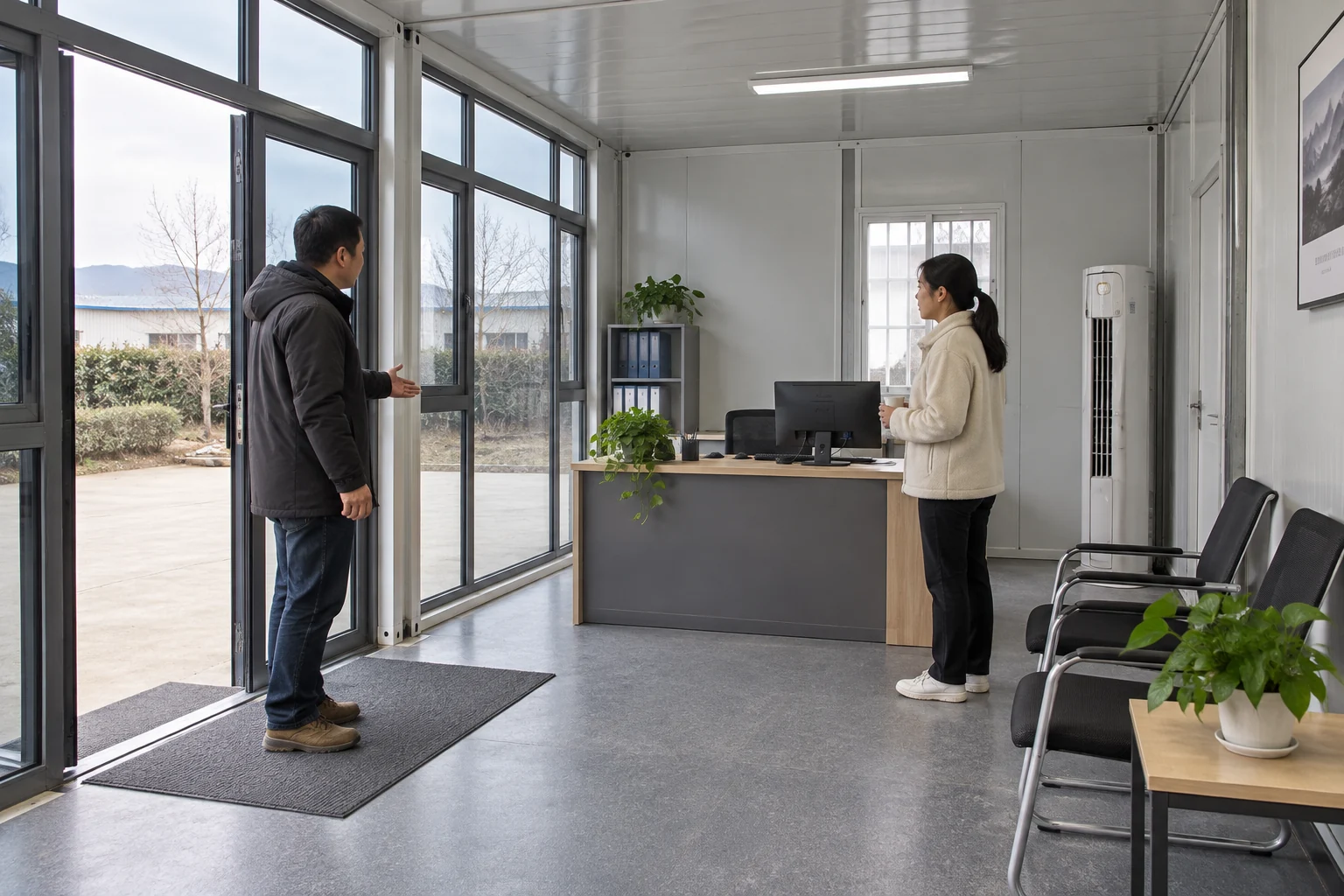
Walk through the proposed sequence with the actual furnished arrangement: identify arrival, make contact, wait, receive the host and close the visit. Keep the review within an approved context and do not use a planning walkthrough to authorize entry to a working site.
Record the failed exchange, not just the room finish
A desk, chair and finished door are tangible items, so they can dominate a handover discussion. Include the functional exchange as well. If the reception contact cannot reach the host, identify whether the open item concerns an external network, an office connection, staff allocation or an unresolved procedure. Give the next action to the party responsible for that item.
Review interruptions in the same setting. Someone is waiting, a delivery contact calls and the assigned host changes. Observe which decisions the agreed system makes visible and which remain ambiguous. The result should be a clear list of open questions with dispositions, not a claim that a single walkthrough demonstrates security or compliance.
If the office layout or operating pattern changes later, revisit the affected handovers. A reception that worked when all visitors went to one meeting room may need different instructions once destinations multiply. Keep that change tied to the actual office configuration and operating team.
Ask for a building and operating brief that fit together

A supplier can review the rooms and physical interfaces in a modular container office. The operator must still define the decisions those rooms support. Submit both pieces of the brief so exclusions remain visible.
Send the destination, proposed office location, visit descriptions, staffed hours, arrival and waiting arrangement, host contact method and permitted destinations. Include the furnished plan where available. Mark undecided functions explicitly rather than expecting a supplier to infer a security or visitor-management scope from the word reception.
Ask which items are included in the building quotation and which require separate design, supply or site work. A reception counter, external approach, communications connection and operating procedure have different owners. Responsibility may be divided in several legitimate ways; the useful comparison is whether each quoted arrangement identifies its boundary.
Before accepting a substitution, check the function it affects. Moving a door or desk can change where an arrival waits and how contact occurs even when the total room area is unchanged. The buyer’s task is to preserve the agreed visitor journey through the final configuration, with unresolved decisions still visible to the people who must close them.
| Brief item | Information to send | Responsibility to make explicit |
|---|---|---|
| Visit descriptions | Purpose, destinations and expected overlap | Operator defines the visit and acceptance decisions. |
| Furnished room arrangement | Arrival contact, waiting and relevant doors | Supplier and responsible designers identify proposed physical scope. |
| Communication interface | Selected contact method and required connection | Name the party supplying, connecting and checking each interface. |
| External arrival route | Approved site relationship and reporting point | Name the responsible site team and any excluded external work. |
| Functional handover | Agreed exchange, exceptions and unresolved items | Assign operating decisions and technical open items separately. |
Buyer questions
Does signing in mean that a visitor can enter the work area?
No. Signing in records the agreed arrival step; the site must separately resolve the visit’s permitted scope and any required accompaniment or preparation. Do not allow a reception record to imply a decision that nobody has made. The procedure and responsible people depend on the actual site.
Can office staff determine waiting capacity from workforce size?
Workforce size alone does not describe visitor overlap or delayed hosts. Use the project’s actual visit pattern and review the furnished arrangement with the responsible team. This guide does not provide a universal waiting-seat ratio, occupancy limit or accessible-layout dimension.
Is a separate reception room always necessary?
The required function does not automatically determine one room arrangement. Identify the arrival contact, waiting boundary, information handling and onward handover first. Then review whether the proposed configuration supports them. The destination’s design and operating requirements remain part of that decision.
What should the buyer resolve before handover?
Resolve who receives an arrival, who accepts the visit, where someone waits, how exceptions and departures are handled, and which physical or communications items remain open. Keep the supply boundary explicit. An attractive reception area does not demonstrate that those responsibilities have been agreed.
Sources and scope
- HSE: Site rules and induction. UK construction guidance on understandable, proportionate visitor information.
- HSE: Construction traffic management. UK site planning context for pedestrians, vehicles and visitor instructions.
- HSE: Protecting the public. UK construction context for boundaries and authorization.
- HSE: Visiting drivers. Workplace-transport interface for unfamiliar drivers; not a supplied traffic plan.
- HSE: Safety-critical communications. Communication context; no particular reception-system approval.
Prepared for PQSE House as an AI-assisted research guide. The tables are editorial briefing tools, not measured project data. Photographs are newly created illustrations using real modular-office photographic references; they do not record a completed visitor operation. Project-specific design, local requirements and the responsible operator’s decisions remain necessary. No firsthand reception test, professional signoff or independent endorsement of PQSE is asserted.