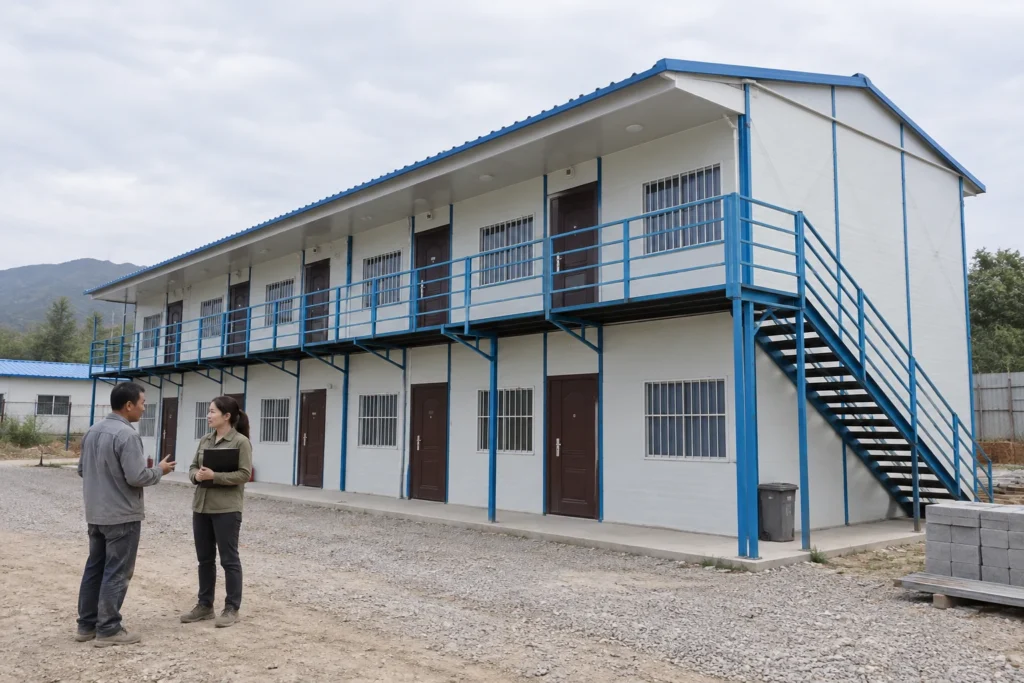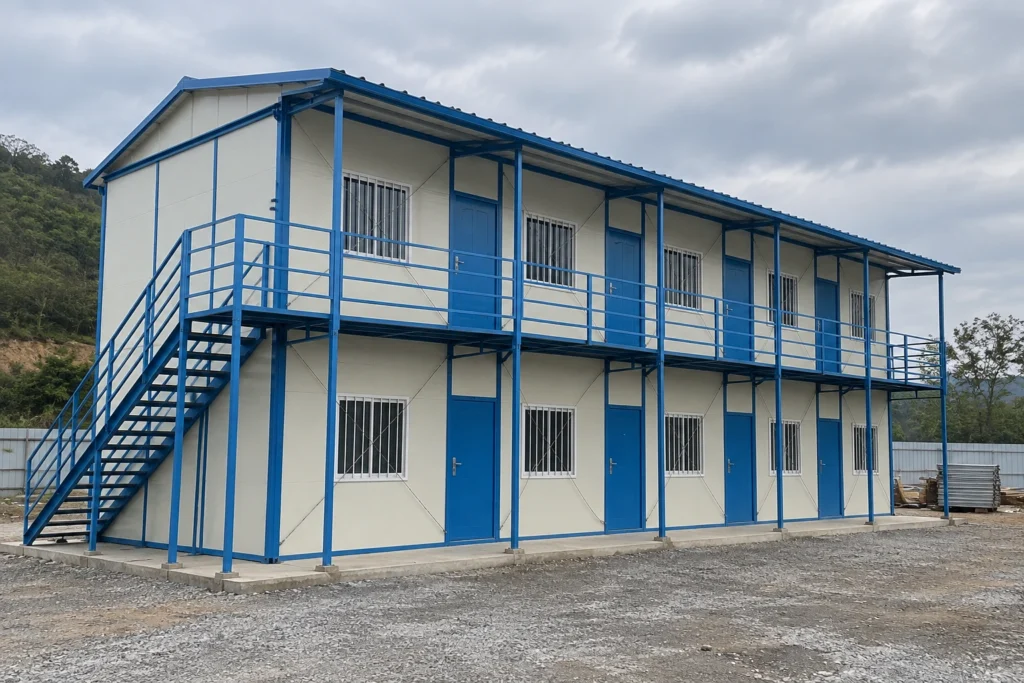
Editorial scope (updated 27 September 2026): PQSE House prepared this comparison guide for international project buyers. The examples are a method for checking scope, not a current offer or universal market price. Confirm the selected model, quantity, currency, delivery term, dated lead time, warranty terms and destination work in the written project quotation.
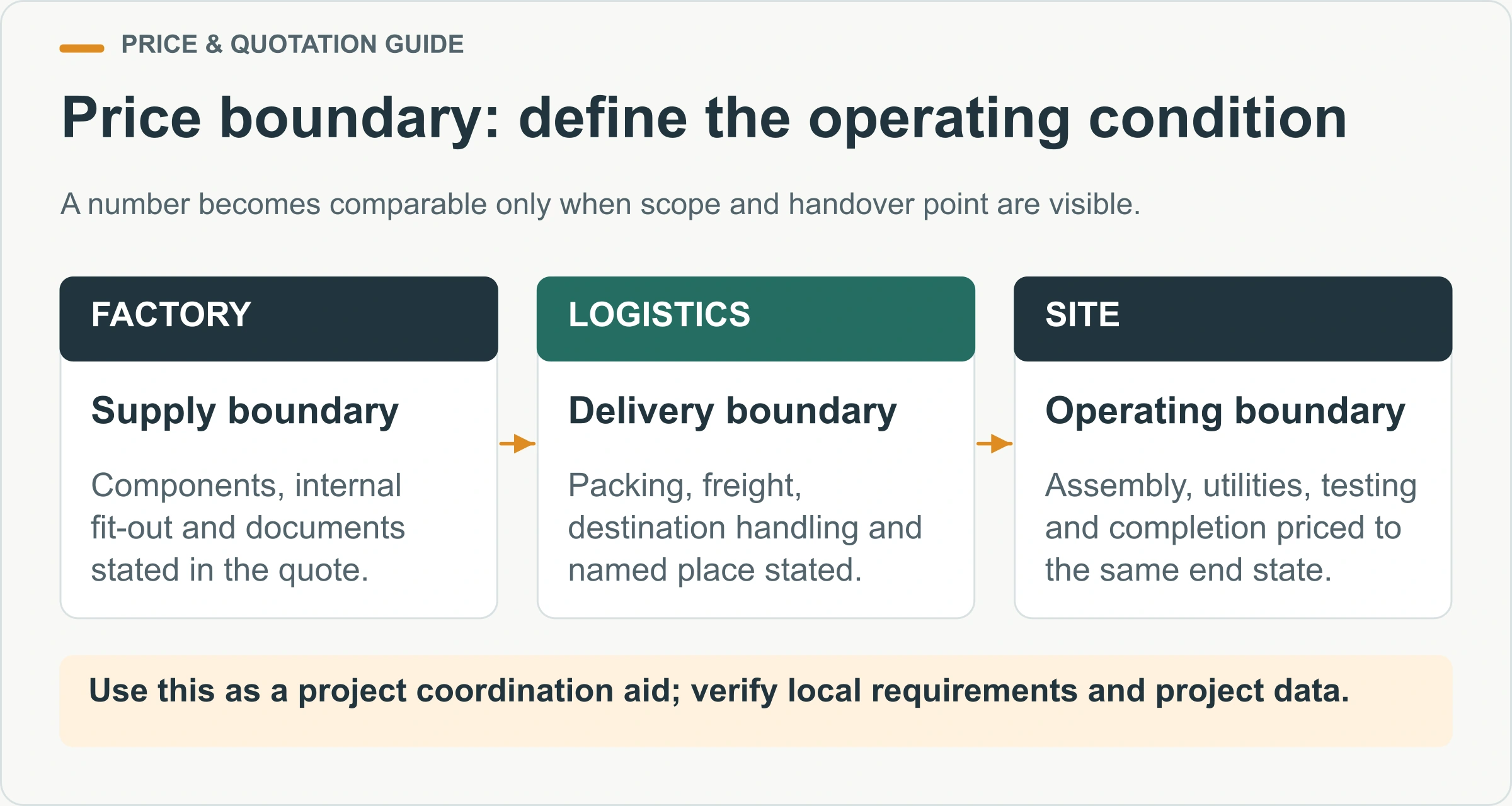
For a project buyer, a flat pack container house price is useful only when it states what is included, where delivery responsibility changes, and which work remains at the site. Two quotations can describe the same nominal module but cover very different panels, doors, electrical work, packing, freight, installation support and commissioning. The correct comparison is therefore not “which unit price is lowest?” It is “which compliant scope reaches the required operating condition at the lowest controlled total cost?”
This guide provides a repeatable way to answer that question. It does not publish a universal price band because a credible figure depends on configuration, quantity, destination, contract terms and the local project. Start with the flat pack container house product system to identify the configuration being discussed, then use the method below to make every supplier quote answer the same brief.
What does a quoted flat pack house price actually mean?
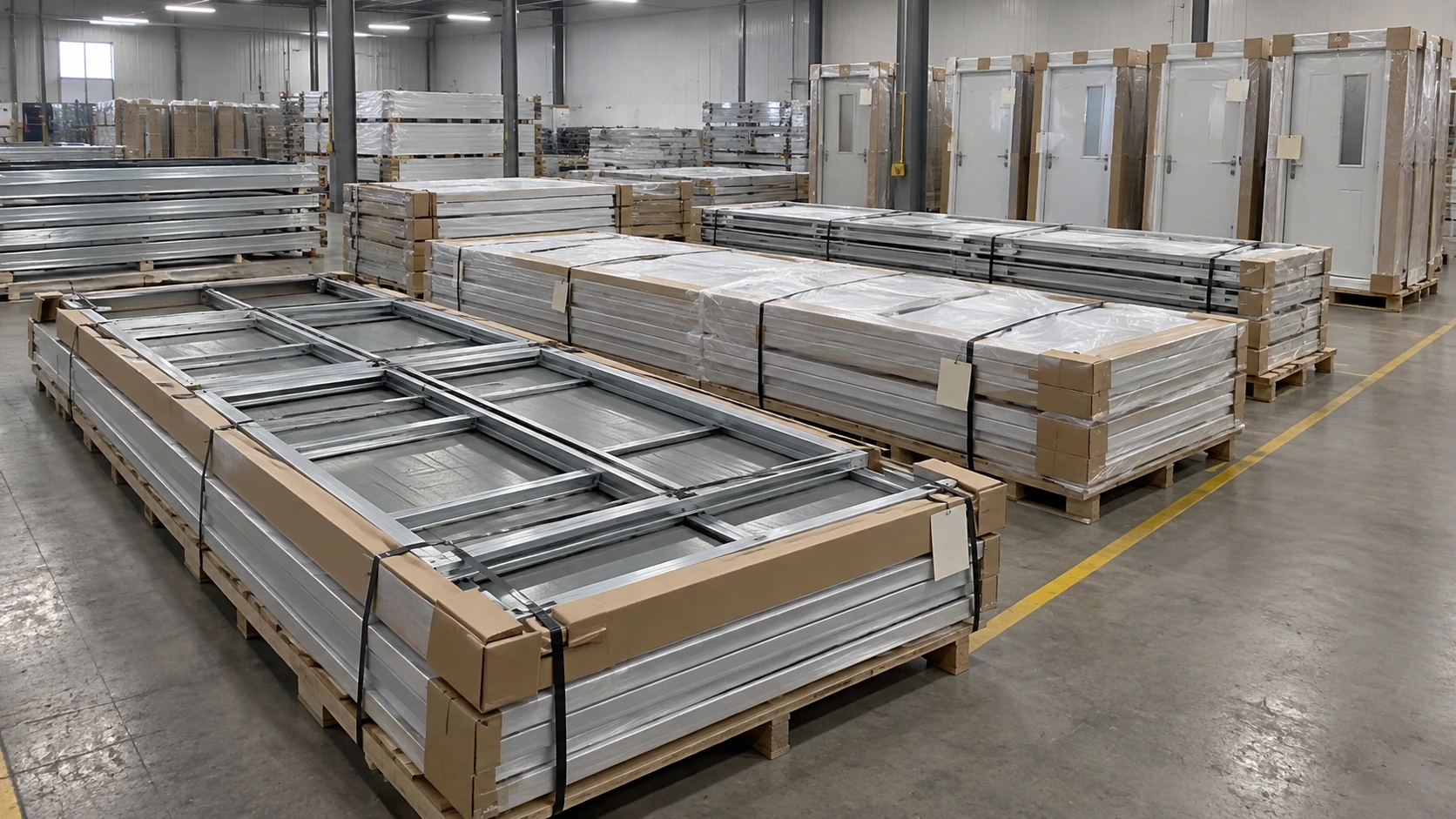
A price is the result of a defined scope at a defined commercial point. It may cover a structural kit at the factory, a more complete module package loaded for export, or a broader supply that includes fixtures and supervision. The number alone does not reveal that boundary. A quotation should therefore be read with its technical schedule, bill of materials, drawings, delivery term, exclusions and validity period.
The first check is the product identity. “Flat pack” should describe a system supplied in components or compressed packages for assembly, but sellers may use the term loosely. Confirm the frame arrangement, roof and floor build-up, wall panels, connections, intended assembly sequence and the exact number of complete units represented. A low figure for a partial frame-and-panel package should not be compared with a fitted office or accommodation unit.
The second check is the operating condition used for comparison. For example, a buyer may define it as “assembled, weather-tight, connected to the approved site utilities, tested and ready for furniture.” That statement exposes the work between a factory quotation and the buyer’s actual requirement. The broader container house kit inclusion checklist can help separate standard supply, options and site-provided work before price discussions begin.
Build one reference configuration before requesting prices
The fastest way to create incomparable quotes is to send suppliers only a room count and a request for the “best price.” Build a reference configuration first. It does not need to be a final production drawing, but it should give every bidder the same basis.
Define the number and nominal type of units, intended use, occupancy, room layout, destination climate, expected service life, required relocation or stacking, and whether bathrooms or other wet areas are included. State the external appearance only to the degree that it affects materials and scope. Attach a simple layout that shows doors, windows, partitions and service points. The container house design and layout guide explains how furniture, circulation and service interfaces should be resolved before a drawing is treated as production-ready.
List the evidence required with the offer. Depending on the project, this may include a component schedule, material data, coating description, panel data, door and window schedule, electrical single-line information, plumbing point schedule, packing plan and installation manual. Do not ask a supplier to certify compliance with an unidentified code. Give the destination and let the responsible local designer identify applicable requirements.

Use a revision number on the brief. If one bidder proposes a different insulation, window type or electrical scope, record it as a priced alternative rather than silently replacing the baseline. This preserves a comparable column and makes later value engineering visible.
Which costs belong in a complete project comparison?
Which specification decisions move the factory supply cost?
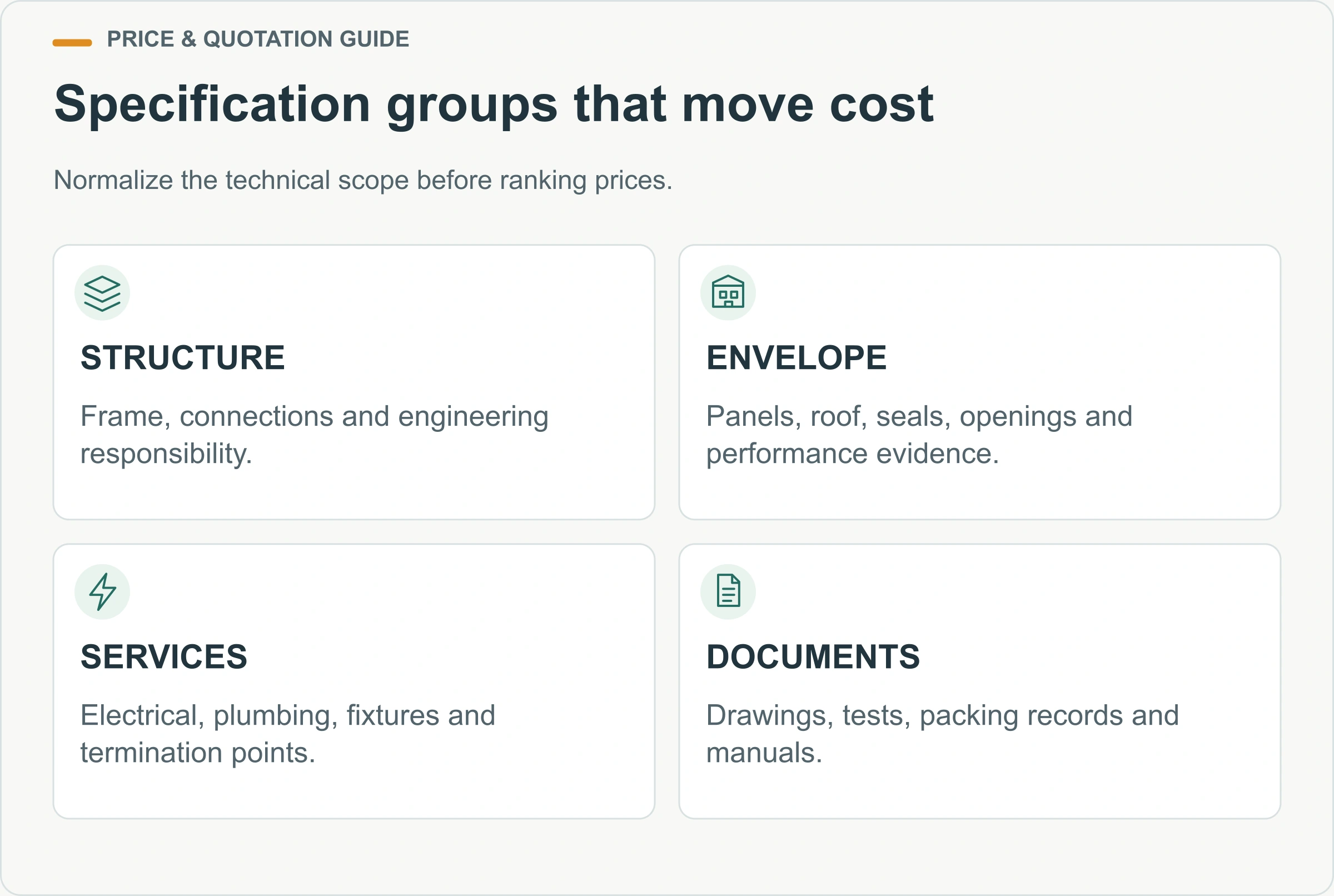
The main price movements usually come from material quantity, performance requirements, factory labor, bought-in components and the degree of pre-installation. Their impact is project-specific, but the following groups should always be made visible.
| Specification group | Questions to normalize | Evidence to request |
|---|---|---|
| Structural system | Frame sections, connections, stacking or transport assumptions | Schedule, drawings and project-specific engineering responsibility |
| Envelope | Panel type and thickness, roof build-up, flashings, seals and thermal continuity | Material data and junction details |
| Openings | Door and window material, glass, hardware, screens and quantity | Door/window schedule |
| Interior | Floor finish, ceiling, partitions, trims and wet-area finishes | Finish schedule and room-by-room scope |
| Electrical | Voltage, frequency, outlets, lighting, distribution board and testing | Point schedule, component list and test scope |
| Plumbing | Fixtures, pipework, water heating, internal connections and termination points | Fixture and interface schedule |
| Documentation | Drawings, manuals, packing lists, inspection records and certificates | Deliverables register |
Panel descriptions need special care. The material name alone does not prove the installed thermal, moisture or fire performance of the complete building. Thickness, skins, joint details, penetrations and local approval requirements matter. Use the container house insulation guide to frame those questions without turning one product label into a guaranteed building result.
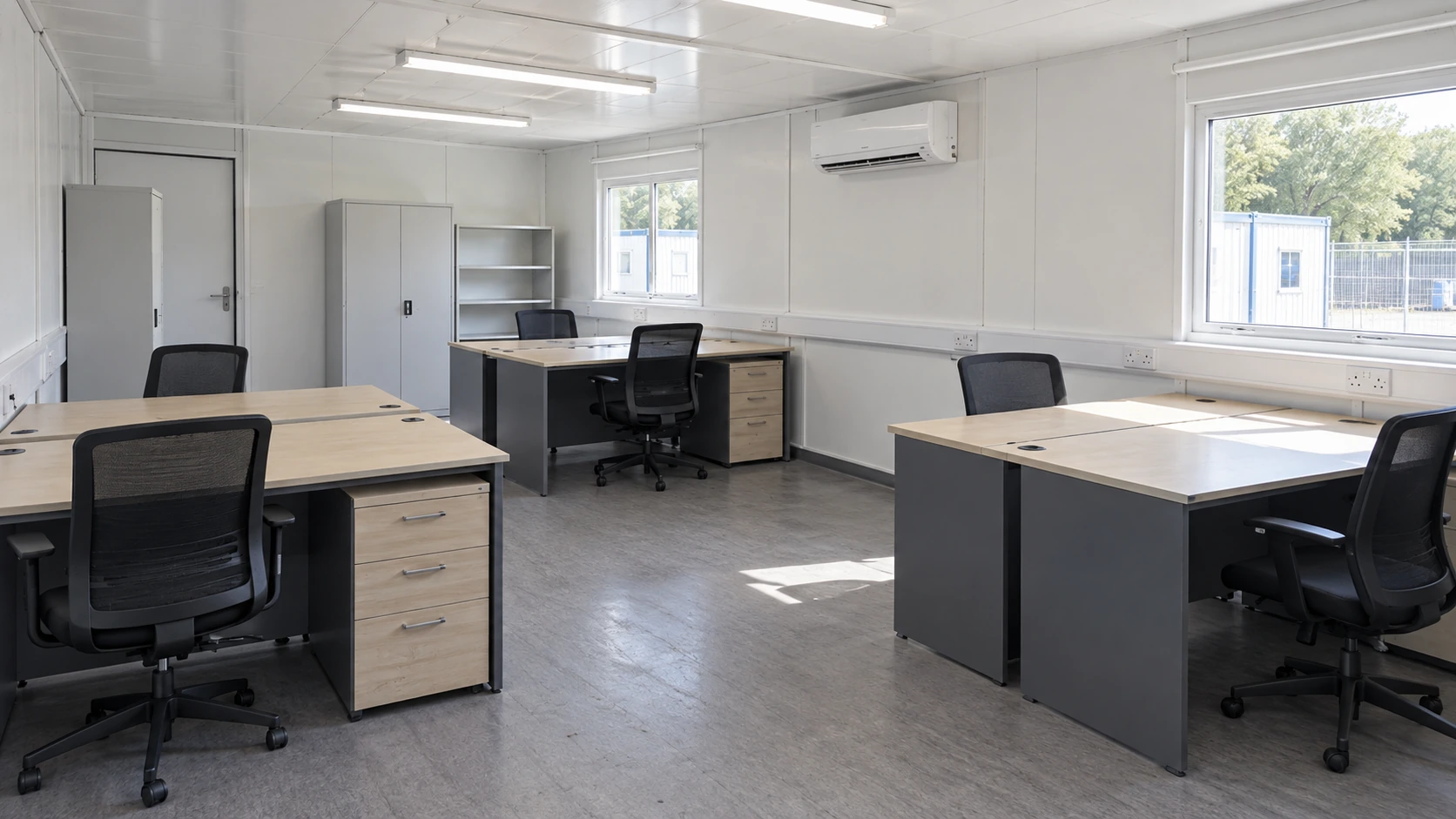
Windows and doors can look like minor line items but alter openings, flashings, packing protection and installation work. Wet areas affect more than the fixtures: they introduce waterproofing decisions, drainage routes, ventilation, hot-water equipment and testing. Electrical options also need a country-specific basis. A generic “complete electrical system” may still leave the incoming supply, external cable, earthing arrangement or certification outside the factory scope.
How do quantity, repetition and packing affect the unit price?
Quantity affects price through repetition and procurement, but the relationship is not a guaranteed percentage discount. A repeated layout can reduce drawing, setup and material-handling effort per unit. A mixed order with many room types, finishes and electrical variants may retain significant coordination work even when the total unit count is high.
Ask the supplier to distinguish three effects: the cost of the first configuration, the repeated-unit production cost, and any one-time engineering or tooling work. This makes it easier to evaluate a pilot batch without assuming that a later volume price applies immediately. It also shows whether a claimed discount depends on fixed configuration, deposit timing or a particular shipment lot.
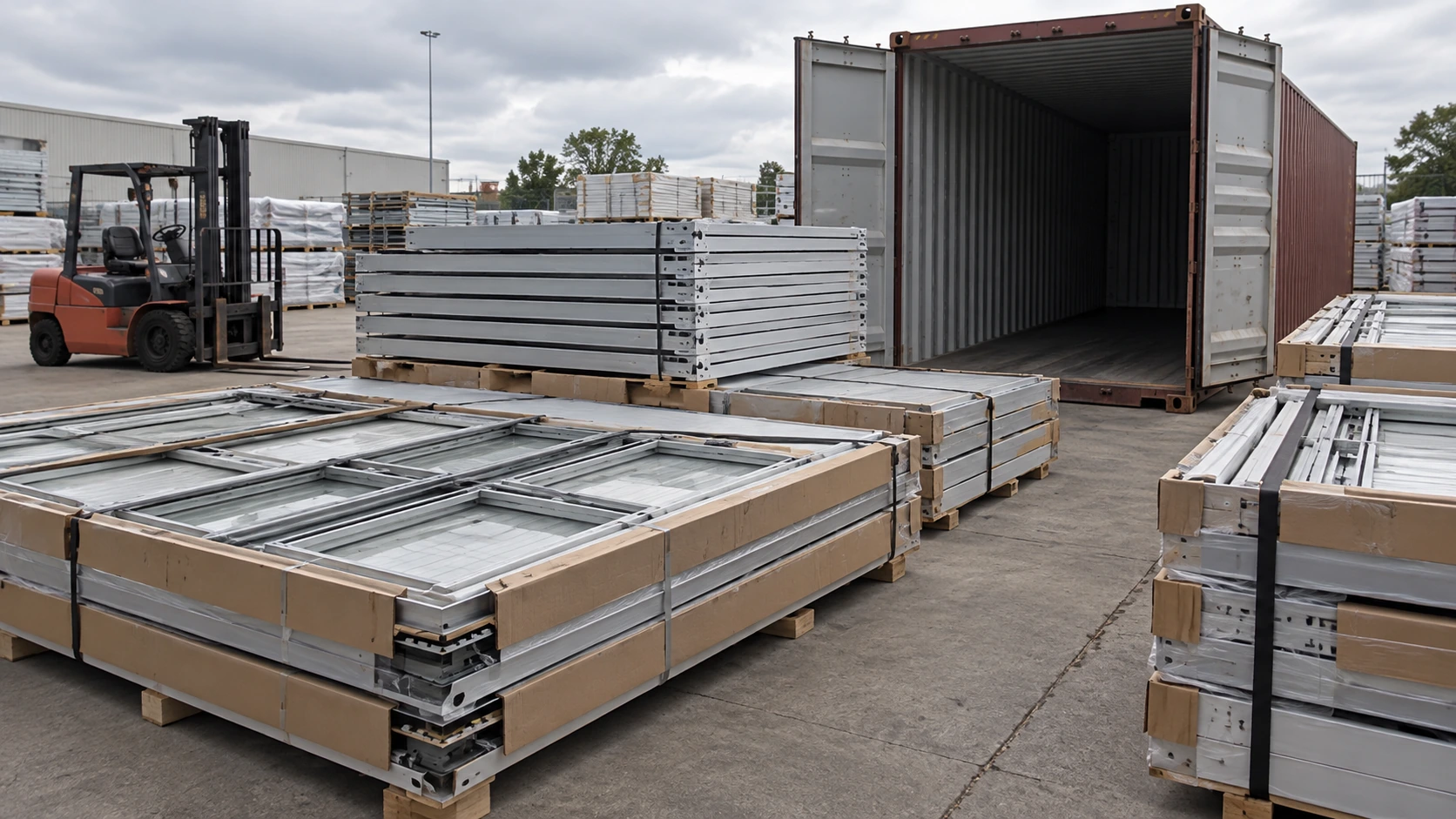
Packing density matters because the product is intended for transport in a compact form. The relevant measure is not only how many packages theoretically fit in a container. It is how many complete, protected units fit under the agreed packing method and weight limits, with all doors, panels, fixtures, fasteners and documents assigned to the shipment. The container house loading and shipping guide covers container selection, packing records and receiving checks in more detail.
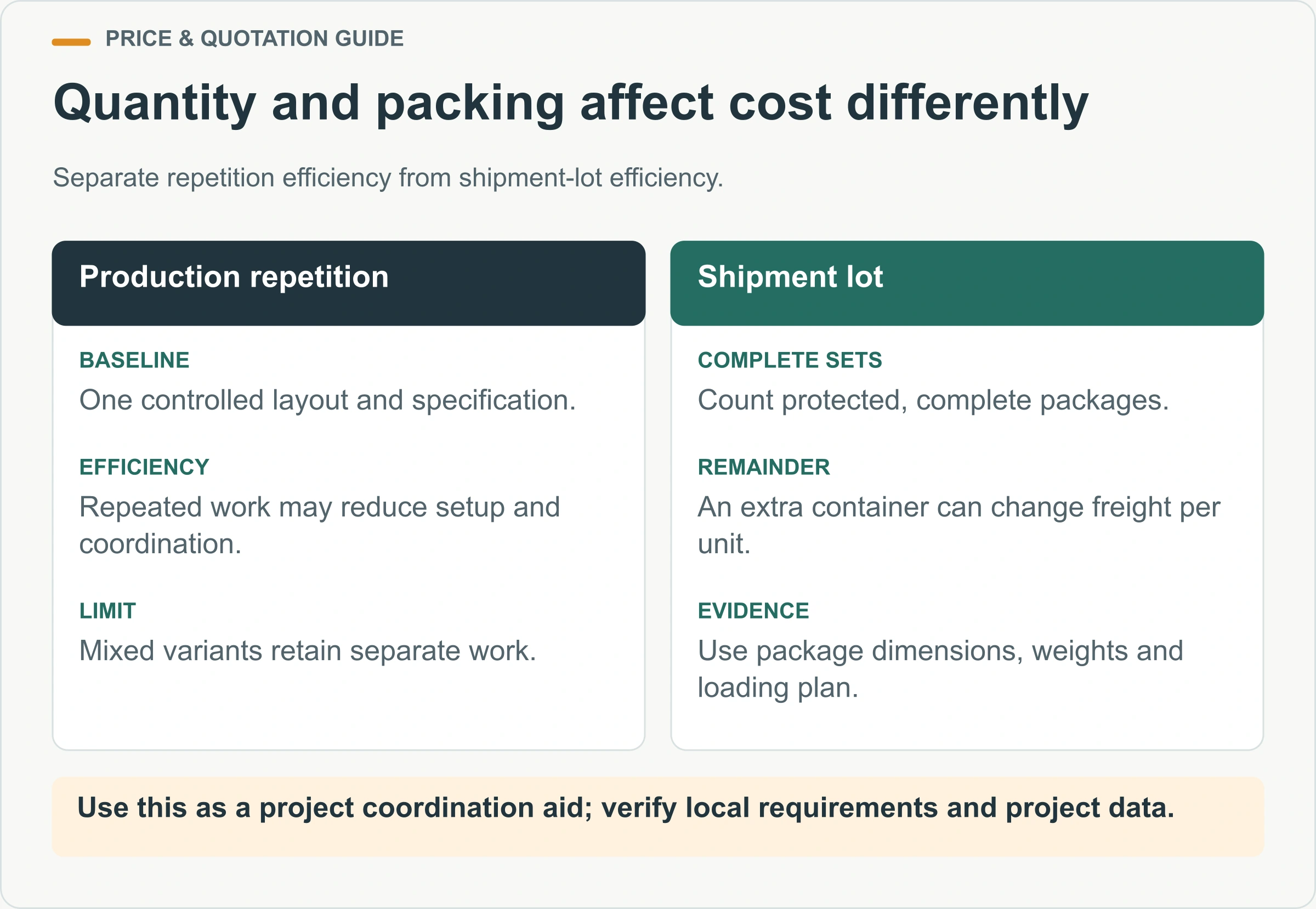
Request a loading proposal that identifies package dimensions, gross weights, quantity per shipping container, loose accessories and any item shipped separately. Confirm whether the quotation assumes full-container loads. A remainder that occupies an additional container can change freight per unit sharply, so calculate shipping by the actual order lot rather than multiplying an ideal full-load rate.
Separate the factory price from the international landed cost
The factory supply price and the cost at the buyer’s site are different calculations. The U.S. International Trade Administration describes landed cost as the product price plus items such as insurance, freight, tariffs, taxes and other fees. It also explains that the chosen trade term helps determine which party pays particular costs. This is a useful framework, but the actual customs method and charges come from the importing jurisdiction.
Record the named place and version of the agreed trade term in the quotation. Do not accept “FOB price” without a named port or assume that it includes destination handling. Likewise, a freight estimate should state route, container type, validity, included surcharges and whether inland delivery is covered. Rates can change between quotation and shipment, so retain the quotation date and the rule for updating it.
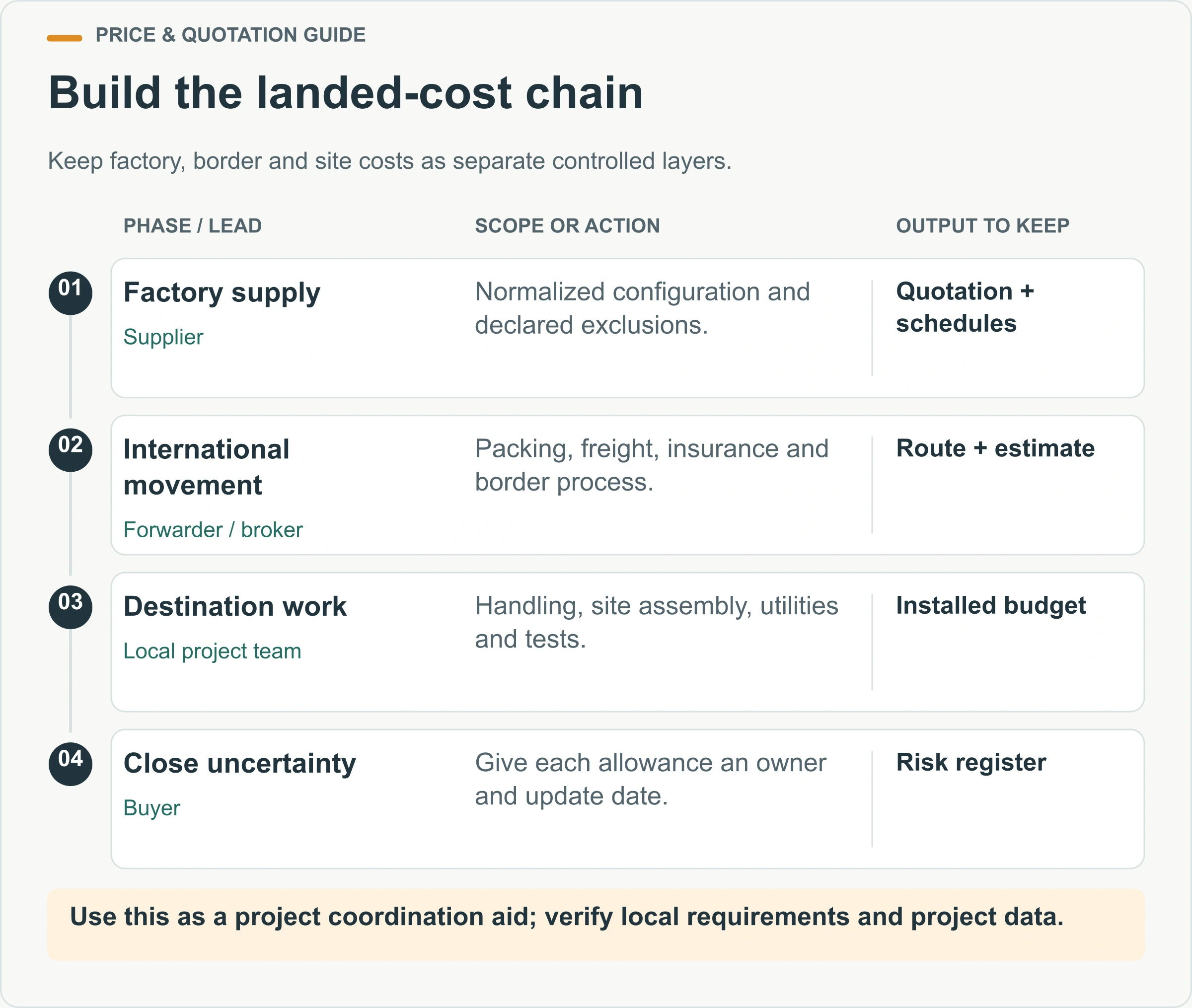
For a practical budget, build the cost chain below:
- Factory supply under the normalized product scope.
- Export packing and origin handling not already included.
- International freight and cargo insurance.
- Destination port, customs brokerage and local handling.
- Duties, taxes and government fees based on confirmed classification and local rules.
- Inland transport, unloading and temporary storage.
- Site assembly, utilities, testing and handover.
The U.S. Department of Commerce cautions that tariff and tax estimates can change and recommends checking classification and current destination rules. U.S. Customs and Border Protection likewise distinguishes transaction value from freight and insurance for its valuation method and publishes separate user-fee guidance. Those U.S. examples should not be copied into another country’s budget. Ask a qualified broker in the destination market to confirm classification, valuation, duties and taxes.
Which site costs remain outside the module quotation?
Site cost starts before the packages arrive. It can include surveys, approvals, design coordination, foundations or supports, drainage, access improvements, crane or forklift planning, temporary protection and storage. It may also include local trades, consumables, sealing, external stairs or decks, fire systems and connection to permanent utilities.
Create a responsibility matrix with four owners: module supplier, international logistics provider, local contractor and buyer. Assign every task and every required record. “Installation by others” is not sufficient unless the drawings, supervision boundary, tools, labor, lifting plan, tolerances and acceptance tests are defined. The prefab container house installation and handover guide provides a stage-by-stage structure for that matrix.

Local approvals can change both supply and site work. Wind, snow, seismic, fire, energy, accessibility and sanitation requirements vary by location and use. Resolve the responsible designer, submission route and evidence before ordering. The container house permits and codes guide lists the questions a buyer should take to the authority and local professionals.
Allow for commissioning and defects closure. A building is not operational merely because the components are bolted together. Doors, windows, seals, electrical circuits, plumbing, drainage and installed equipment need the agreed checks. Budget time and responsibility for corrections, re-testing and completion records.
Use a normalized quotation table instead of a single price column
Copy each supplier’s offer into one comparison sheet. Do not rewrite an unknown as “included.” Mark it included, excluded, buyer-provided, allowance, or not stated. An allowance is not the same as a fixed price; record its basis and the mechanism for adjustment.
| Comparison line | Bidder A | Bidder B | Buyer check |
|---|---|---|---|
| Reference drawing and revision | Same configuration and date? | ||
| Complete unit quantity | Same definition of a complete unit? | ||
| Frame and connection scope | Sections, finish and fasteners stated? | ||
| Envelope and openings | Materials, thicknesses and schedules aligned? | ||
| Electrical and plumbing | Internal work and site termination points clear? | ||
| Packing and loading | Complete packages, quantity and weights stated? | ||
| Delivery term and named place | Same commercial boundary? | ||
| Documentation and tests | Deliverables and acceptance evidence listed? | ||
| Exclusions and buyer work | Priced separately in project budget? |
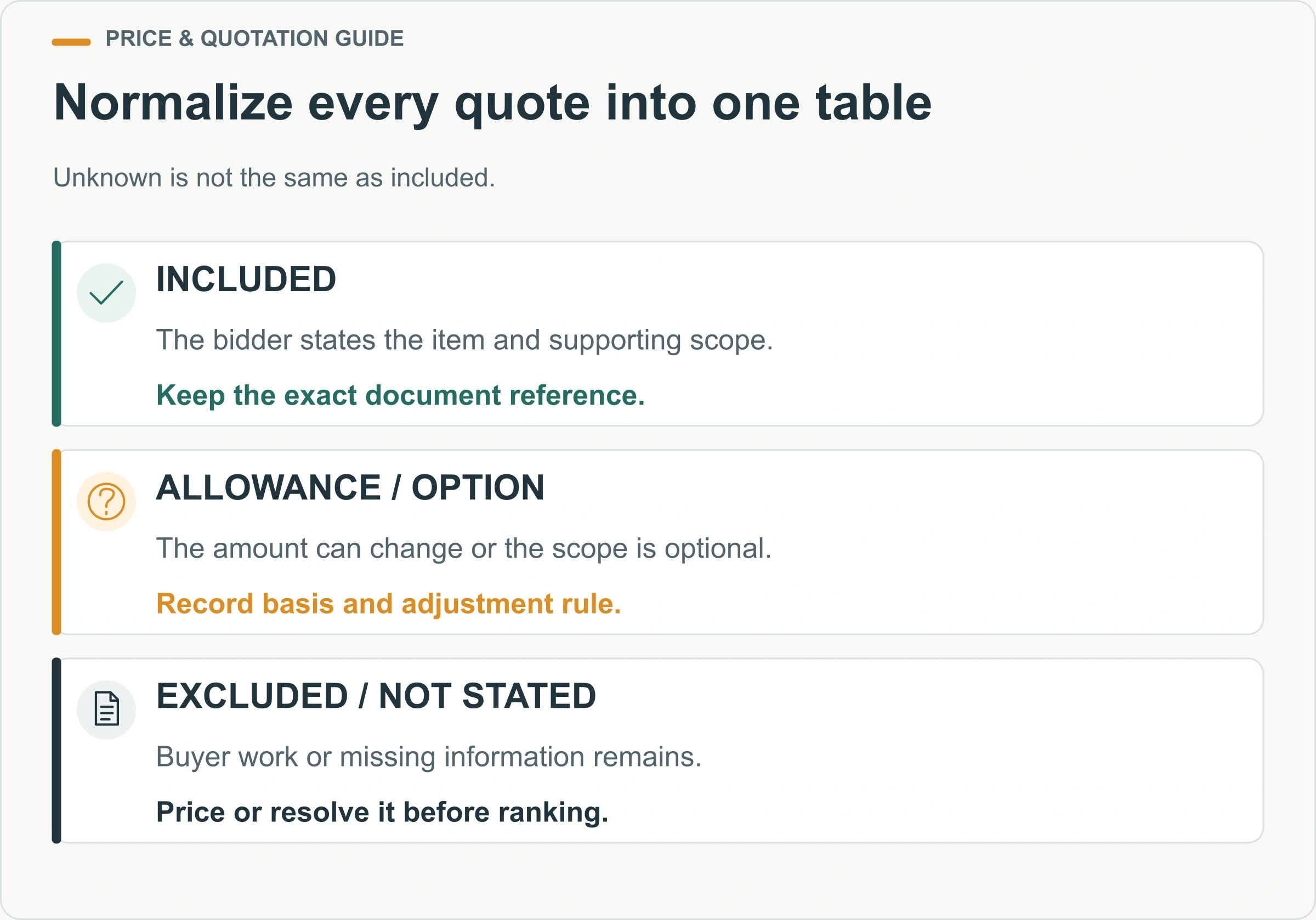
Convert the table into the same currency and price date, but keep exchange-rate assumptions visible. Add project costs outside each quote so the final comparison reaches the same operating condition. Avoid false precision: uncertain duties, freight or site work should be shown as an estimate range or an open item with an owner and due date.
Test every apparent saving against the project requirement
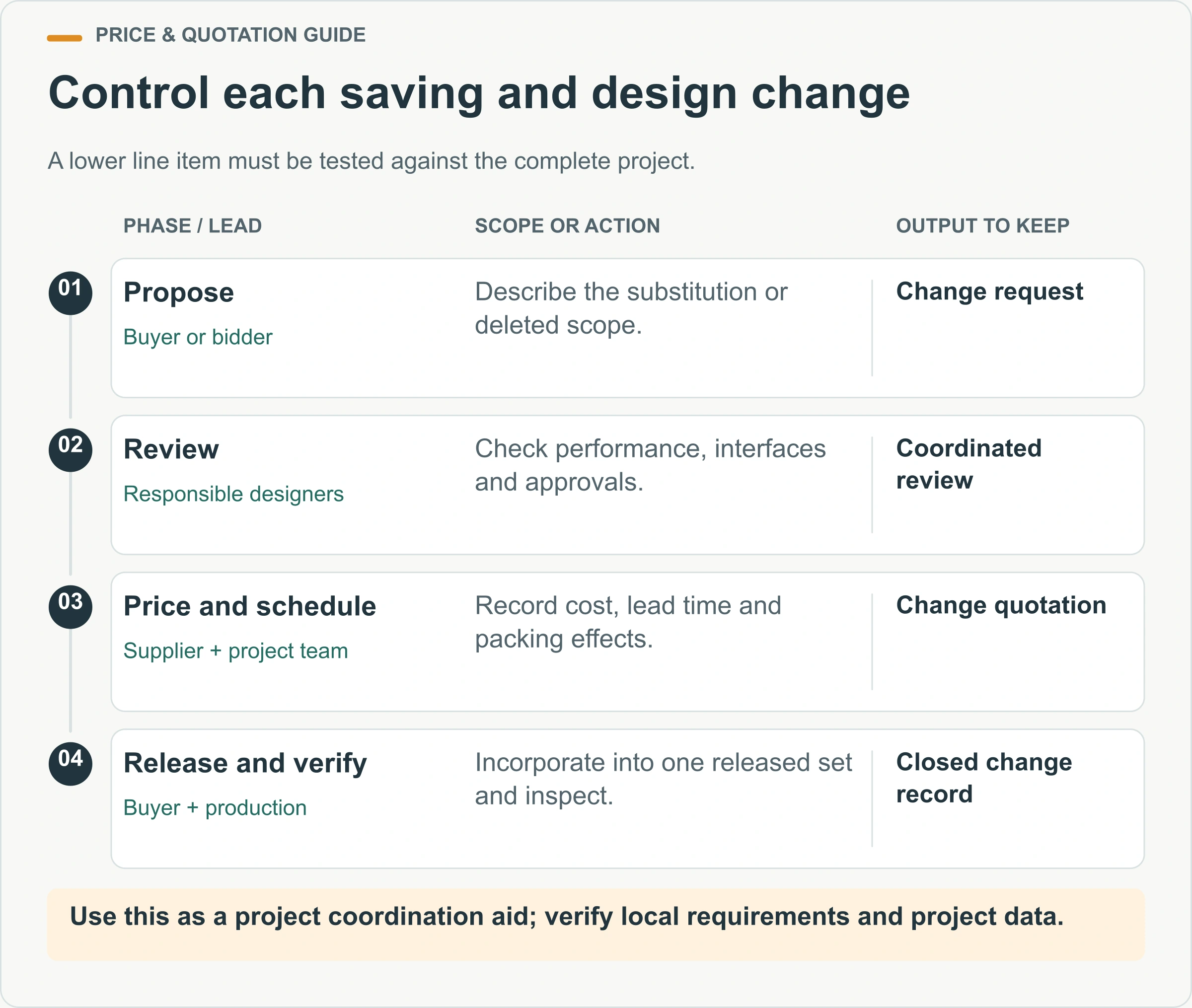
A lower-cost alternative is valuable only when it still meets the brief or when the buyer consciously accepts the changed outcome. Review each saving under four headings: performance, interface, schedule and operating consequence. A different finish may be acceptable; a different connection that has not been coordinated with the local design may create more work than it saves. A deleted factory task may simply reappear as higher-cost site labor.
Ask the bidder to describe the change in plain terms. Identify the component removed or substituted, the related drawing revision, the price difference and any effect on packing or lead time. Then assign the downstream review. For example, changing an interior floor finish may require a maintenance review, while changing a wall panel may need thermal, moisture, fire and approval checks by the responsible project professionals. Do not approve a value-engineering item from its price column alone.
Procurement teams should also test timing. A product option that costs less but has a longer procurement period can affect shipment consolidation or the site program. A faster option may require a different minimum order or payment commitment. Record these conditions beside the price so the decision is reproducible later.
Finally, distinguish a true scope reduction from an efficiency. Repetition, a stable design and a full loading plan can reduce wasted effort without reducing the required result. Removing documentation, testing, protection or interface coordination can make the initial quote smaller while increasing project risk. A useful comparison labels which kind of saving is being offered and who carries the resulting responsibility.
How should changes be controlled after a supplier is selected?
Price comparisons often fail after selection because the accepted configuration keeps changing. Freeze a baseline that names the drawings, specifications, quotation, commercial term and schedule. Each later change should identify the reason, affected documents, price movement, schedule effect and approval status.

Small visual changes can affect several packages. Moving a door may alter the frame opening, panel cut, electrical point, furniture plan and packing list. Changing panel type can affect junction details and approval evidence. Ask the supplier to return a coordinated revision rather than accepting isolated chat messages as production instructions.
Use a simple status for each change: proposed, priced, technically reviewed, approved, incorporated and verified. Production should use one released set. At pre-dispatch review, sample the physical configuration against that set and check the packing list against the agreed complete-unit definition.
What should a buyer send to receive a useful quotation?
Send a short project brief with the destination, use, quantities, target delivery period and site status. Attach the reference layout and list the required configuration, climate information, utilities and any known local requirements. Identify unknowns honestly; asking the supplier to state assumptions is better than burying uncertainty in a fixed figure.
Request the quotation in a structured format: price, currency, validity, payment milestones, trade term and named place, production assumptions, packing plan, lead-time basis, exclusions, options and document register. Ask which inputs must be confirmed before engineering release and which changes can affect price.
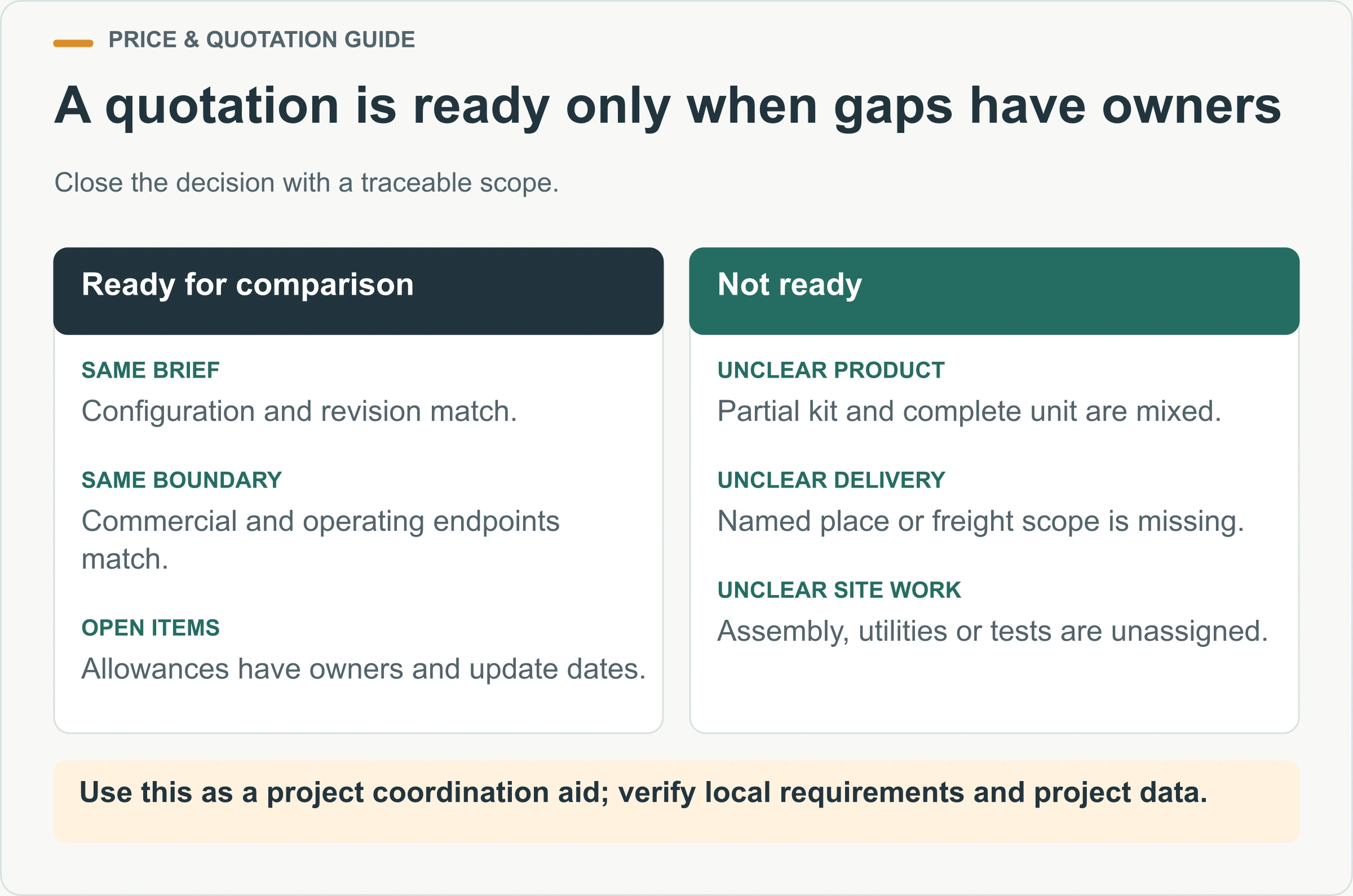
The result should let a reviewer trace each number to a scope and each open item to an owner. If a supplier cannot explain whether an essential item is included, the quote is not ready for a final ranking. Resolve the gap or include a buyer-side allowance with clear risk ownership.
Compare the product-specific table with the wider container house cost guide so factory, logistics and site budgets use the same boundaries. When the project brief, quantities and destination are defined, send the requirements to PQSE House for a configuration and quotation that can be checked line by line.
Before commercial approval, issue one final comparison record showing every accepted inclusion, exclusion, allowance, interface and currency assumption. Attach it to the selected quotation and keep its revision date visible. This control helps procurement, design, logistics and site teams work from the same baseline when later questions arise. It also makes a change easier to price because the original responsibility can be identified quickly. If a figure still depends on an unconfirmed drawing, local charge or site condition, label it as provisional and name the person responsible for closing it.