
The Bhutan school sanitation brief
A school programme in Bhutan needed transportable toilets and handwashing facilities that could be placed near existing classrooms. PQSE House was responsible for the modular-building work. The brief put two decisions at the centre of planning: provide accessible routes and fittings appropriate to the pupils, and resolve water supply, wastewater and cleaning access together.
That combination makes this a useful case for an overseas buyer considering a portable school sanitation cluster. A toilet block has to fit the school day as well as the plot. Children need to find the entrance, use the facilities with privacy, wash their hands and return to class. The people responsible for replenishment, cleaning and repairs need a workable route through the same arrangement.
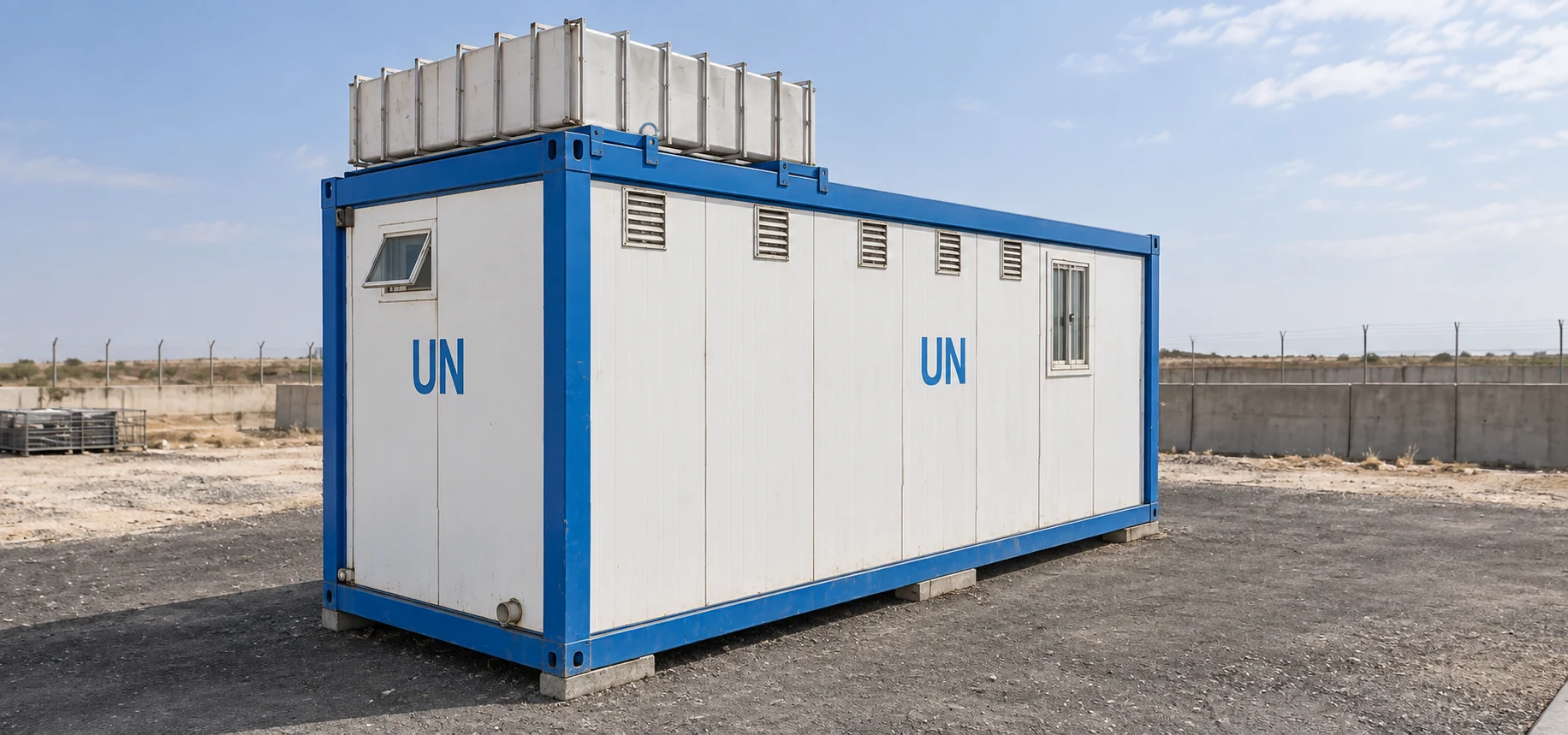
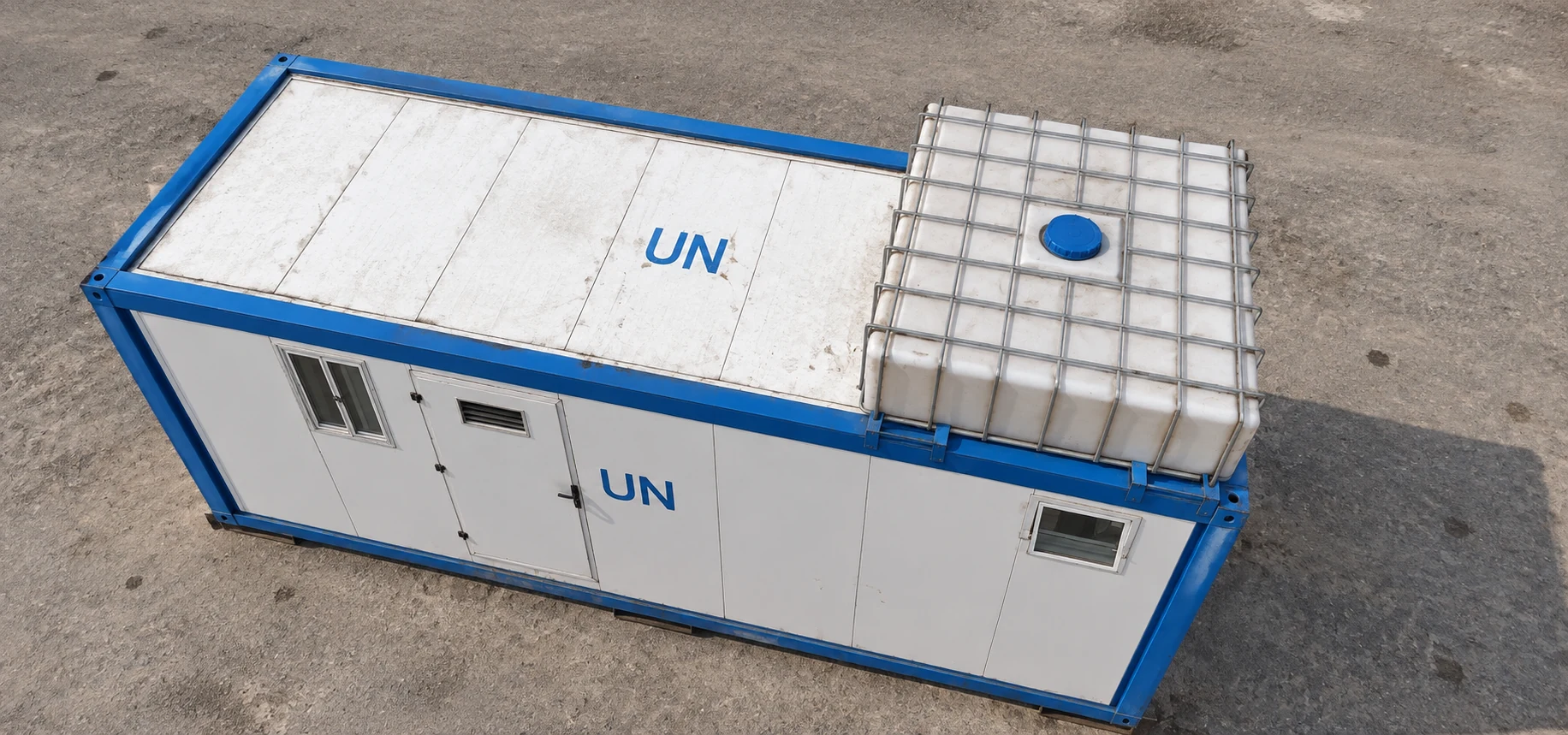
The available project brief does not specify a named school, pupil roll, module quantity, approved fixture schedule or commissioning date. Those details therefore remain outside this case. The discussion below explains the confirmed brief and the purchasing questions it raises; configurations in the image collection are references rather than a verified record of the Bhutan installation.
Buyers can start with the portable bathroom range when comparing the building envelope and wet-room arrangement. For a school, the next step is to translate that product discussion into a room schedule, a pupil access plan and an agreed division of responsibility for services.
| Project item | Available information | Decision for a similar purchase |
|---|---|---|
| Location and purpose | Bhutan; school toilets and handwashing near classrooms. | Identify the classrooms and users the new cluster must serve. |
| PQSE responsibility | Modular-building work. | Agree who supplies, connects and commissions each service. |
| Planning priorities | Pupil access, appropriate fittings, water, wastewater and cleaning access. | Review these together on the school site plan. |
| Detailed specification | Final quantities, fixture selection and operating results are not provided. | Obtain the approved schedule before using a reference arrangement in a quotation. |
Place the cluster around pupil movement
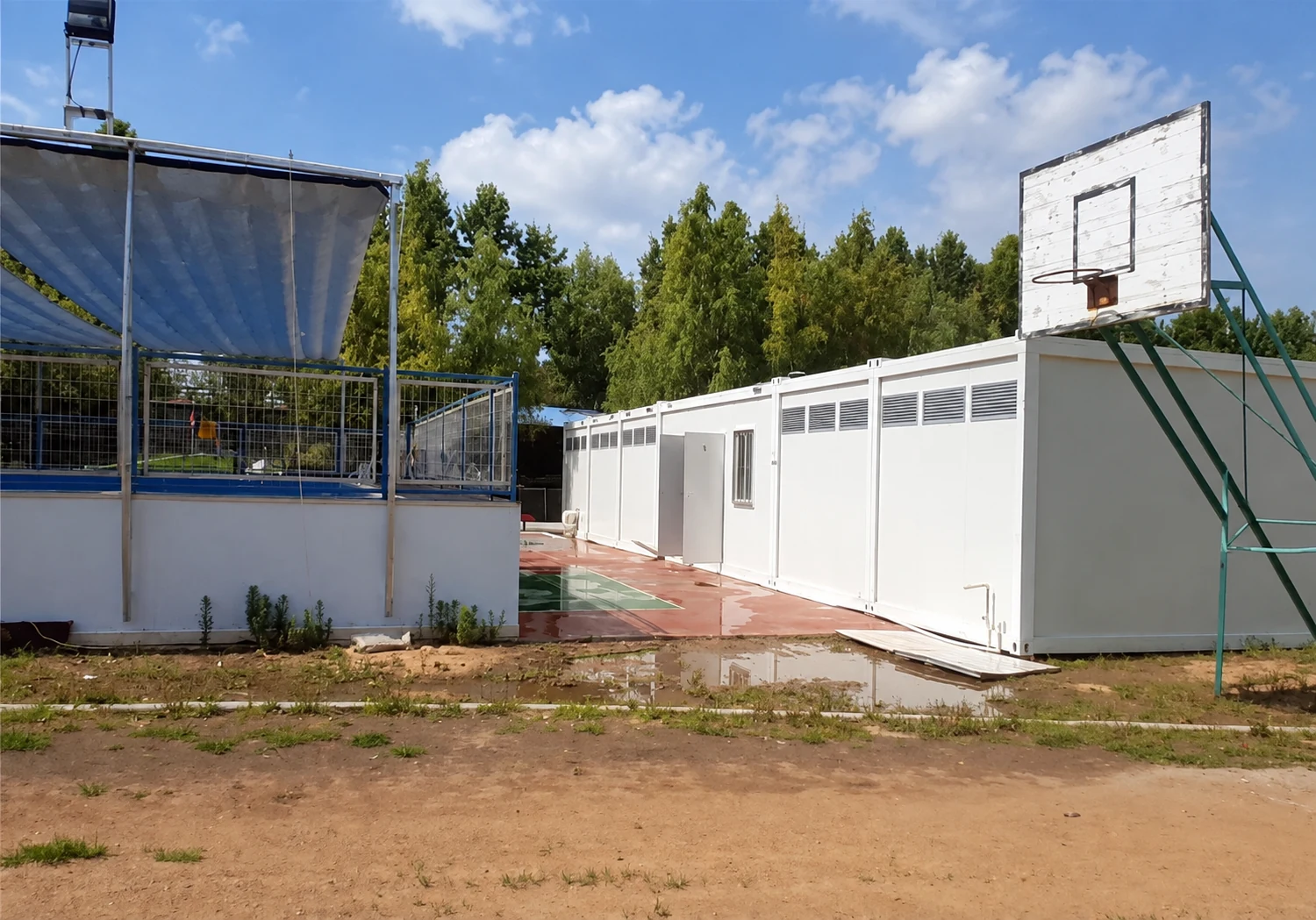
The confirmed requirement was to place facilities near existing classrooms. A useful site plan begins with those classroom doors, the routes pupils already follow and the entrance positions of the proposed modules. It should show the journey to the toilets and the return through a handwashing area. A spare rectangle on a drawing does not describe whether that journey will work during a busy break.
Ask the school to identify who uses each route and when. Younger pupils may move with a teacher; older pupils may arrive independently from several rooms. Existing doors, play areas and shared corridors can put different movements through the same space. These are questions for the particular campus, and should be checked with the people who supervise it rather than inferred from an attractive exterior image.
Placement also needs a view of routine servicing. Mark the path used to carry cleaning supplies, remove waste and reach external connection points. Discuss whether that route crosses a pupil queue or requires work beside a classroom entrance. The plan should make the intended separation visible so that the school, installer and service provider can review the same arrangement.
Bhutan’s 2024 National WASH Standards, Standard 2.2, call for school toilets to be attached to or near classrooms and usable by children of different ages and heights. This supports reviewing the route and the users together. It does not establish that the illustrated configurations satisfy the requirements of this school.
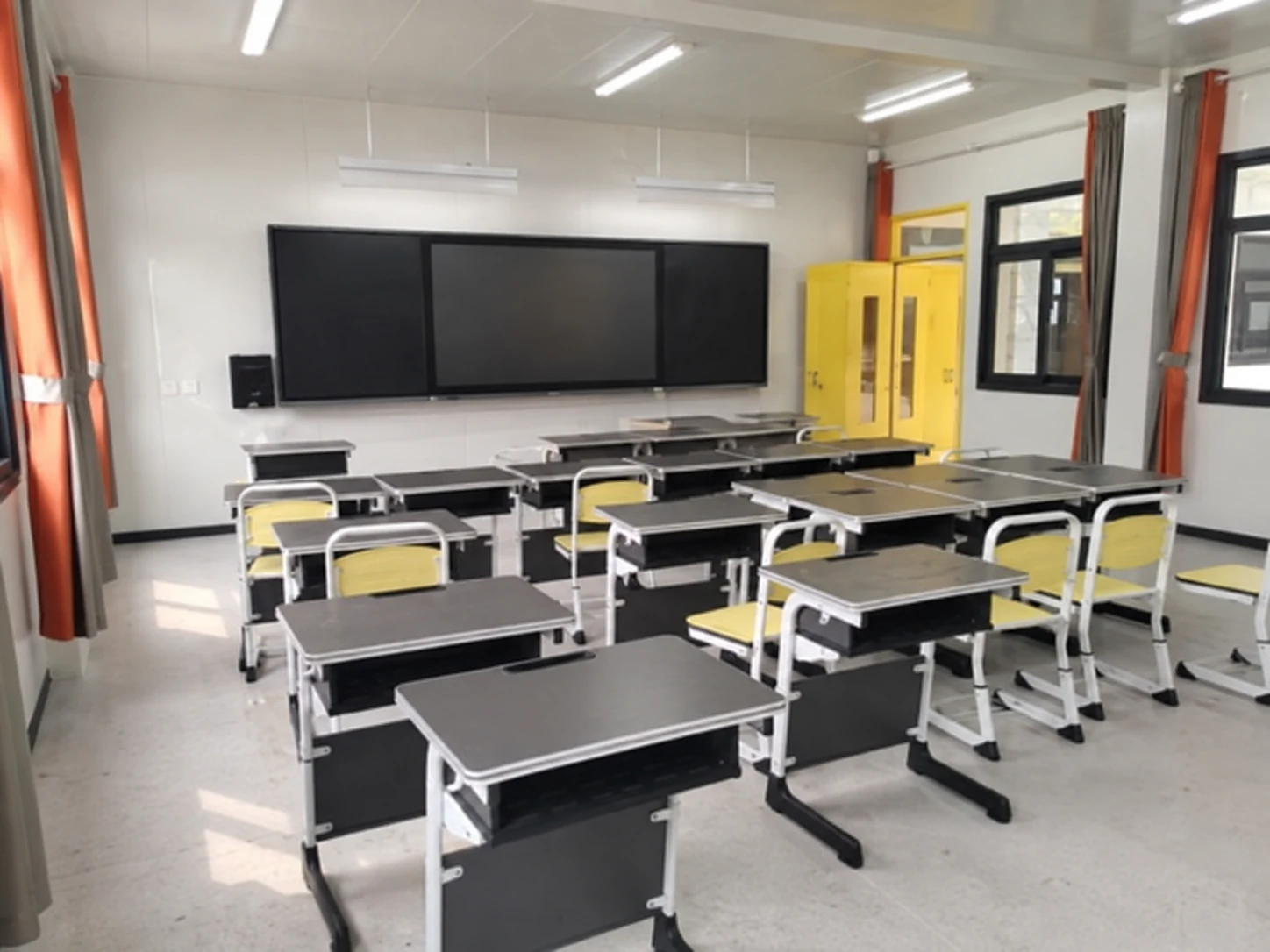
Where sanitation is being considered alongside teaching-space changes, the modular classroom planning page provides the related building context. Put the teaching rooms and sanitary provision on one campus plan, even if they will be bought under different packages. That helps the team notice a proposed classroom doorway that would later obstruct a service route or change how pupils reach the toilets.
Review fixtures, privacy and access together
Age-appropriate fittings were an explicit priority in the Bhutan brief. The buyer should identify the pupil groups and the staff who will use the facilities before approving a fixture schedule. A general product photograph cannot determine whether a pupil can comfortably reach a tap, operate a latch or approach a basin with an assistance device. Those decisions need the proposed layout and the users’ needs.
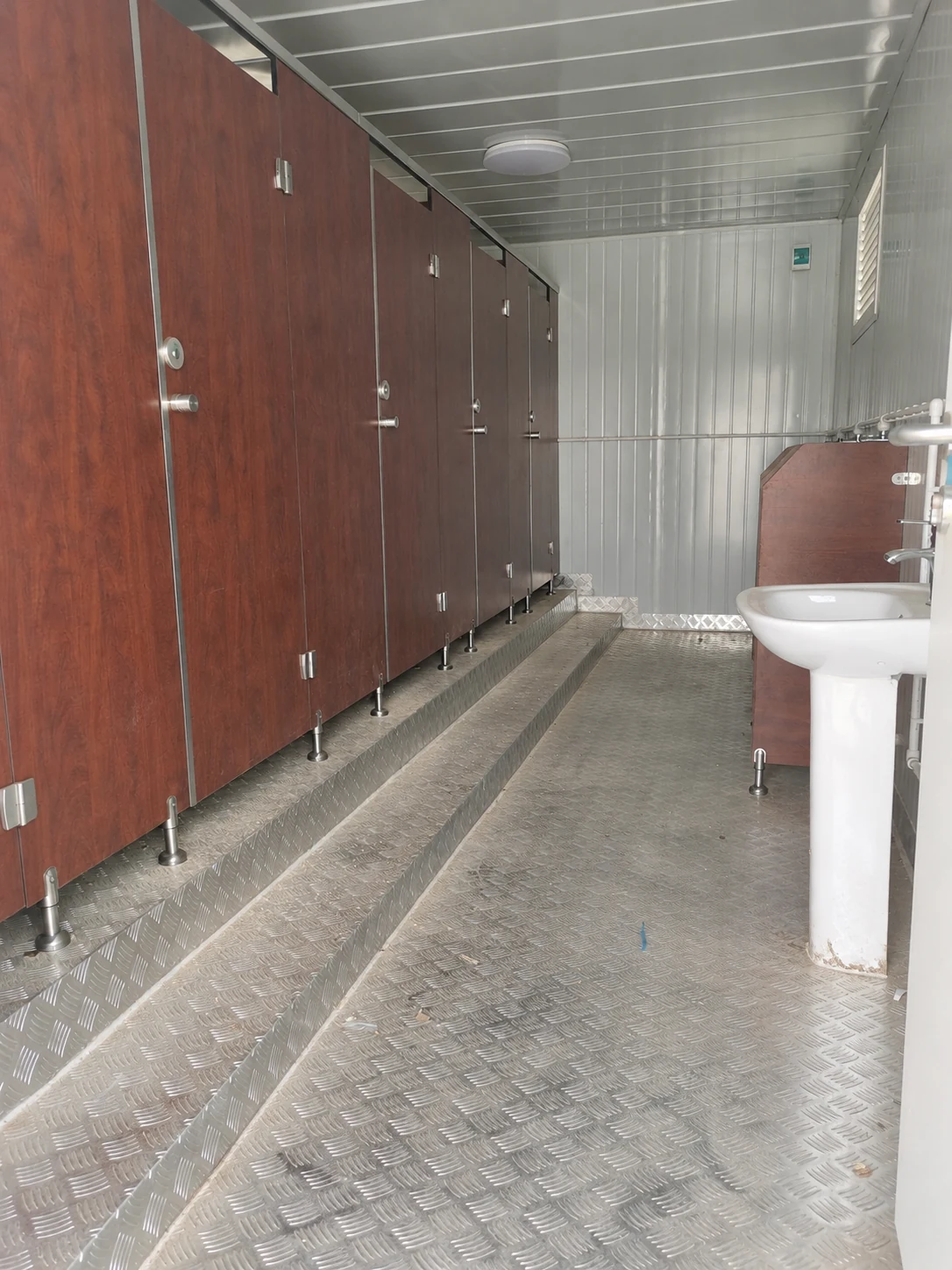
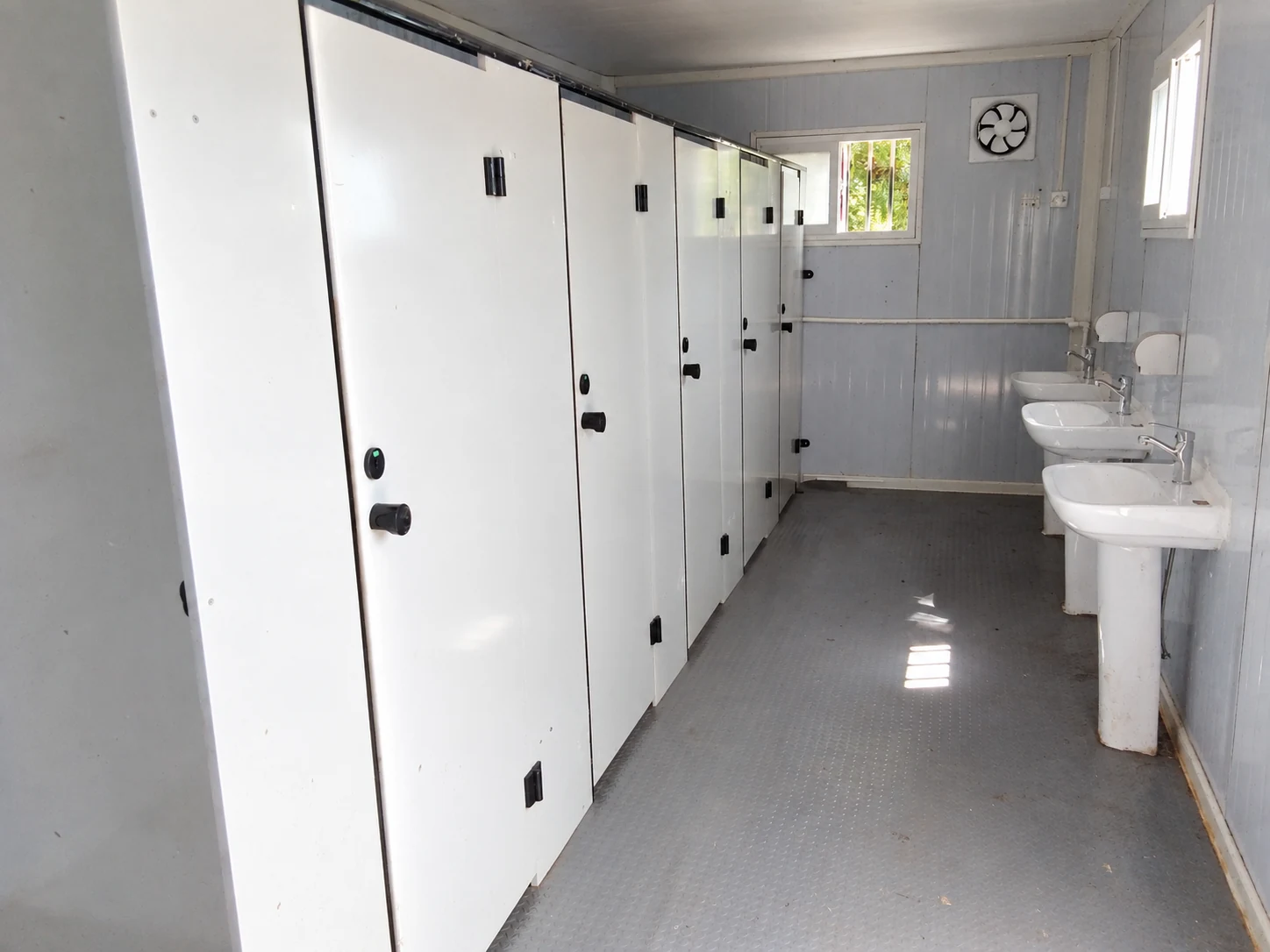
Review access as a complete journey. The campus route, entrance, threshold, internal circulation, cubicle and basin all contribute to that journey. A photograph of a flat aisle is useful for discussing an arrangement, but it is insufficient to verify an accessible facility. Require the project’s qualified designer to assess the relevant local requirements and record the agreed details in the approved drawings.
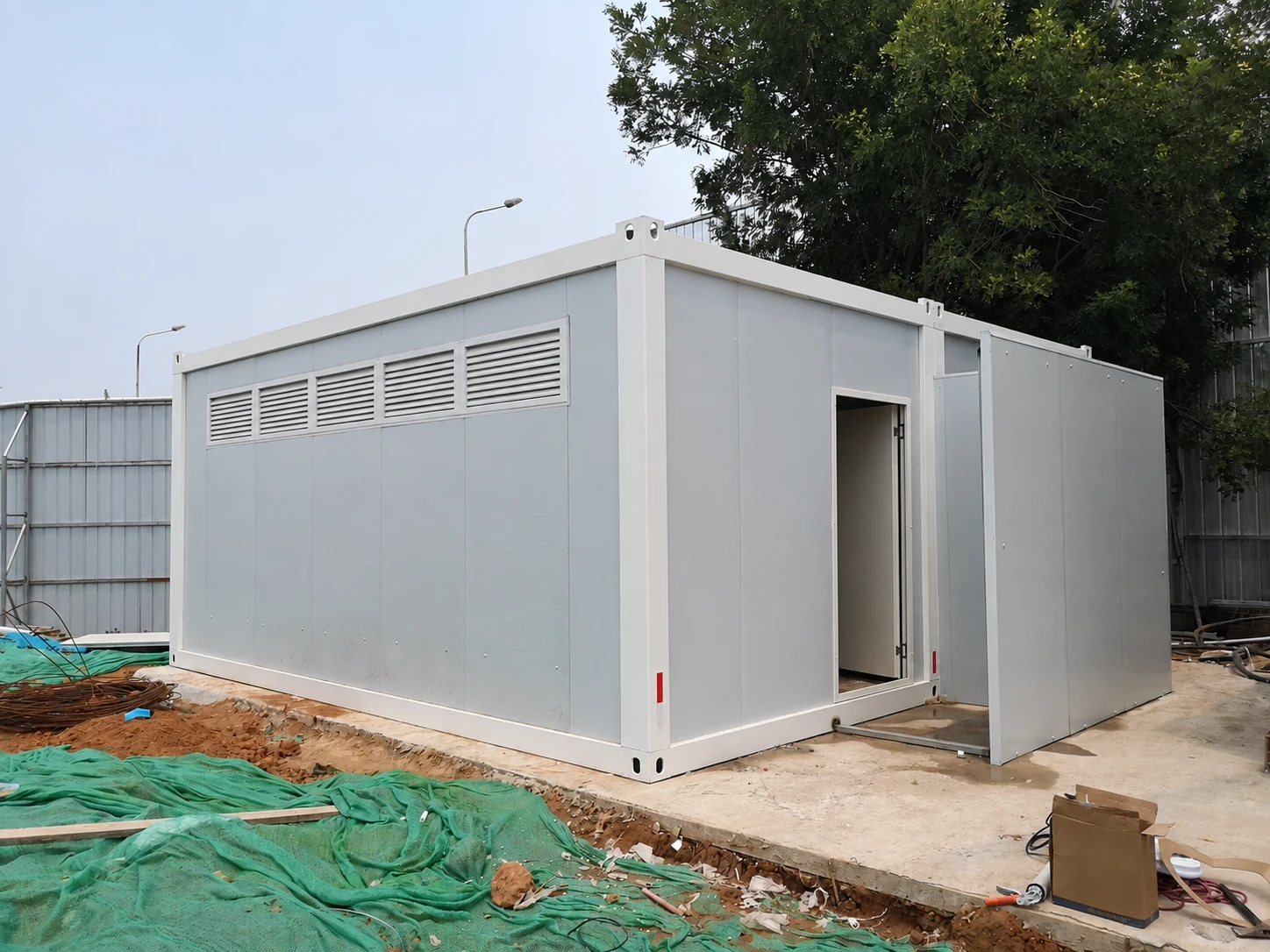
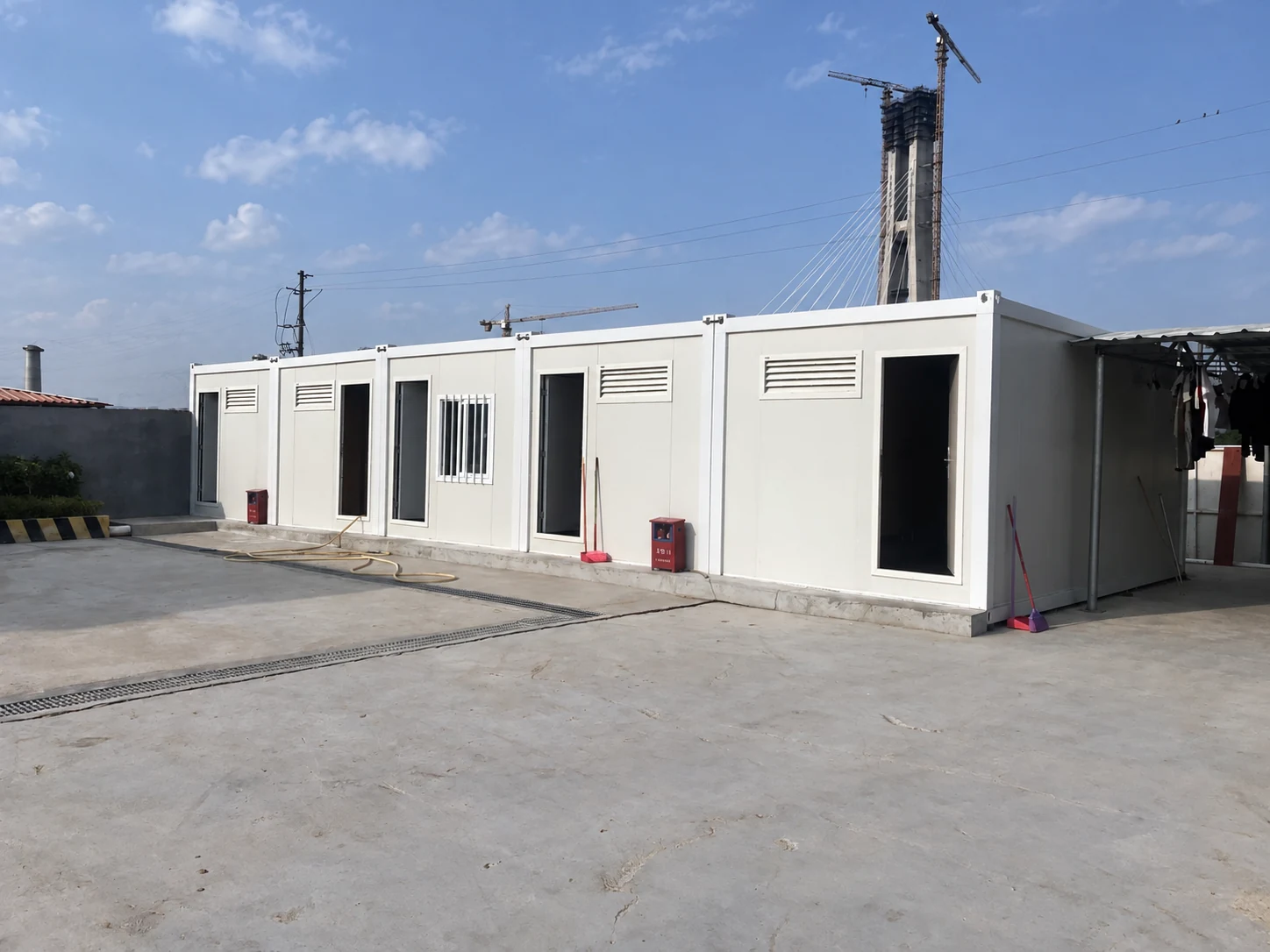
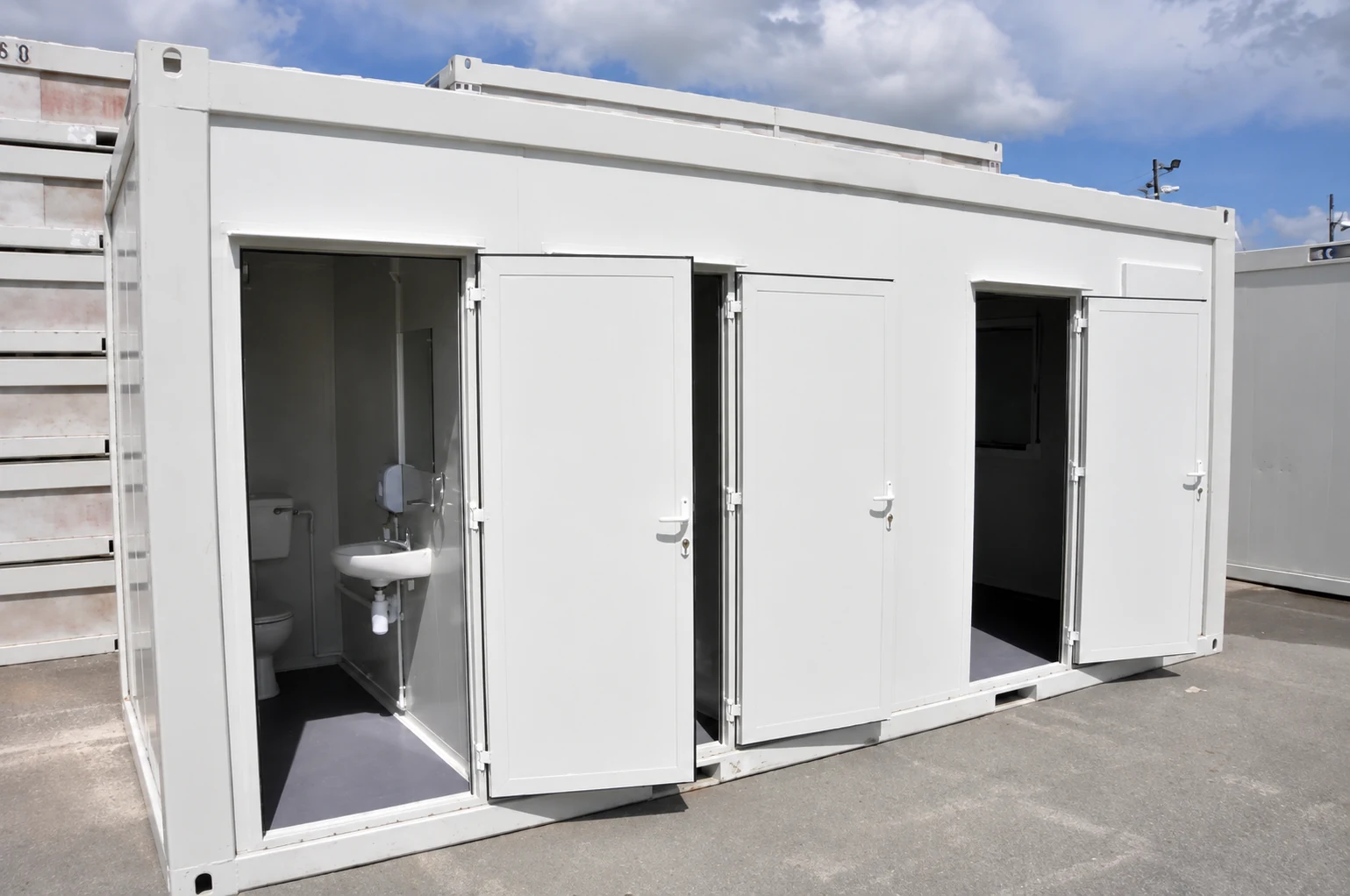
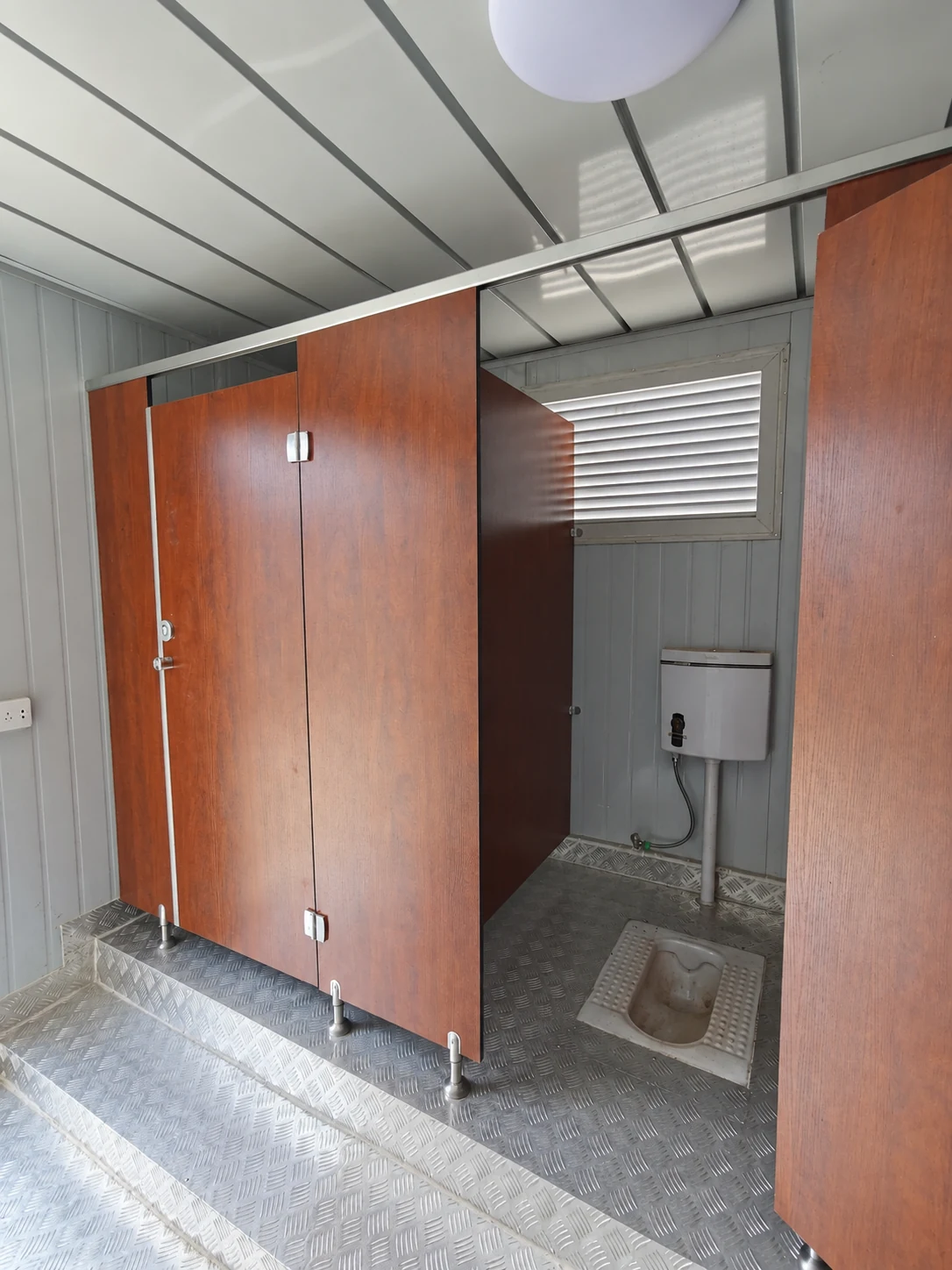
Privacy is equally concrete. Ask how doors and partitions will work for the intended age groups, how a pupil can request help and how staff will respond to a door or latch fault. Put those questions into the review of the actual door schedule. An exterior view with separate entrances does not show the operation of a latch or the privacy inside a cubicle.
Menstrual hygiene provision also belongs in the school discussion. UNICEF Bhutan’s 28 May 2024 announcement describes the country’s commitment to period-friendly schools and the importance of water, privacy and disposal provision. It reports historical 2023 ministry records: 63% of schools had menstrual-waste disposal mechanisms, 41% had covered disposal bins and 46% had changing rooms. These are dated national context, not current coverage estimates or results from PQSE’s project.
For a purchase, translate the discussion into named items and responsibilities. If a changing area, covered bin or additional privacy feature is required, show it in the room list and identify who maintains it. Avoid leaving those items inside a broad phrase such as “complete school bathroom.” The school can then compare an offered layout against the agreed need without guessing what the supplier included.
Connect handwashing to water and wastewater
The brief treated water supply, wastewater and cleaning access as one system. That is a useful way to structure the purchasing conversation: follow a basin from its water connection through daily use, drainage and maintenance. The building supplier needs a clear interface description, and the school needs to know which site services must be available before the room can be used.
Start by asking the responsible local team to identify the water source, connection position, availability and intended uses. A school may already have a supply, but adding a sanitary cluster changes the list of outlets it must serve. The supplier cannot resolve that question from the module footprint alone. Water suitability, demand, storage and treatment decisions require the school-specific assessment and the responsible local professionals.
Then identify the agreed wastewater destination and the people responsible for the connection and continuing service. Show external service access on the site plan, including any equipment or attendance that the proposed arrangement needs. This case does not prescribe a disposal technology or an installation detail. The procurement task is to obtain a defined, locally reviewed solution and make the boundary between the module and the site clear.
The WHO/UNICEF JMP school WASH definitions provide a useful distinction for buyers: basic hygiene requires water and soap at handwashing facilities at the time of the survey. “Usable” sanitation includes student access, functioning facilities and privacy. These are monitoring definitions, not a design approval. They show why delivery of a basin or toilet alone cannot demonstrate a continuing school service.
| Interface | Question before quotation | Information to exchange |
|---|---|---|
| Water | Who confirms the source and the supply available to the cluster? | Reviewed supply brief and agreed module connection points. |
| Wastewater | Who approves the destination, connections and servicing arrangement? | Site service plan, package boundary and service contact. |
| Handwashing supplies | Who buys and replenishes soap during school use? | Storage location, purchasing responsibility and replenishment record. |
| Cleaning access | How will staff reach fittings and external service points? | Access drawing and cleaning equipment requirements. |
The bathroom maintenance-access guide develops the service-point discussion. Use it to prepare questions for the actual layout, then have the installer and school confirm the answers. Resolve changes before production rather than assuming that an access panel can be added wherever it later appears convenient.
Compare configurations on an agreed room schedule
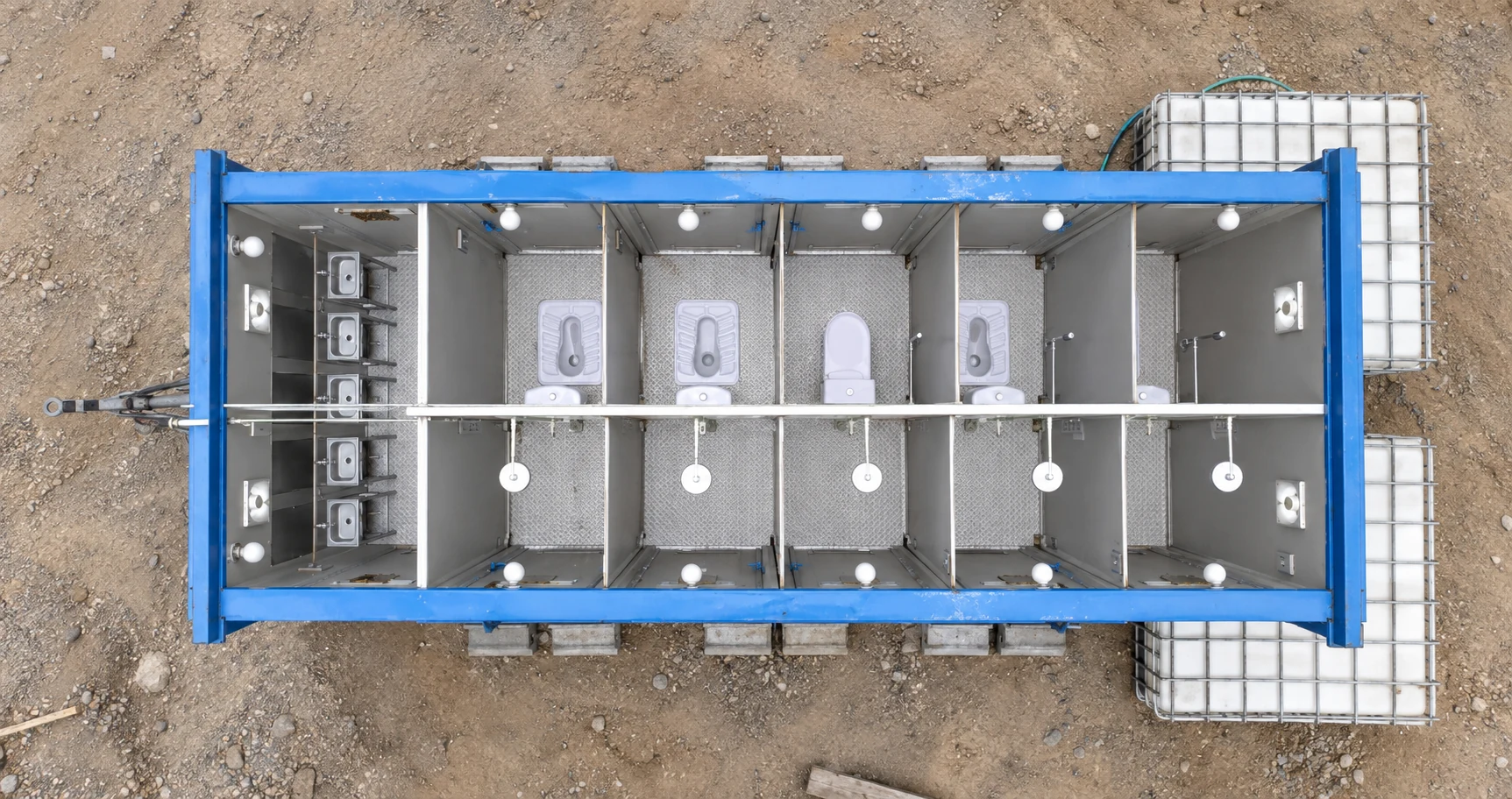
A portable sanitation cluster can contain different functions, and the buyer should make those functions explicit. Record toilet provision, handwashing, any changing space and the storage or service access that the school requires. Keep that schedule separate from a count of modules. Two offers with the same number of modules can contain different usable arrangements and different site responsibilities.
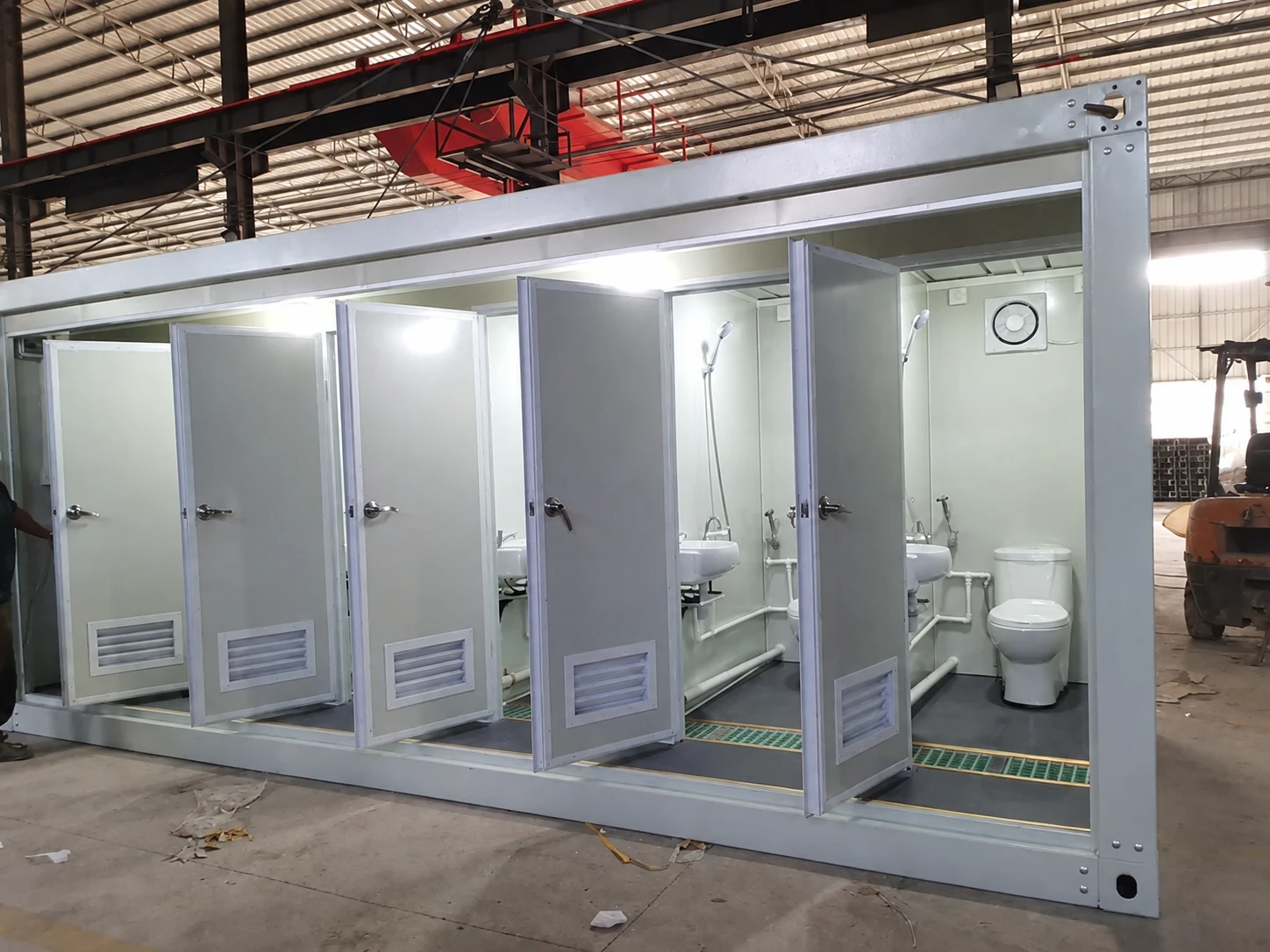
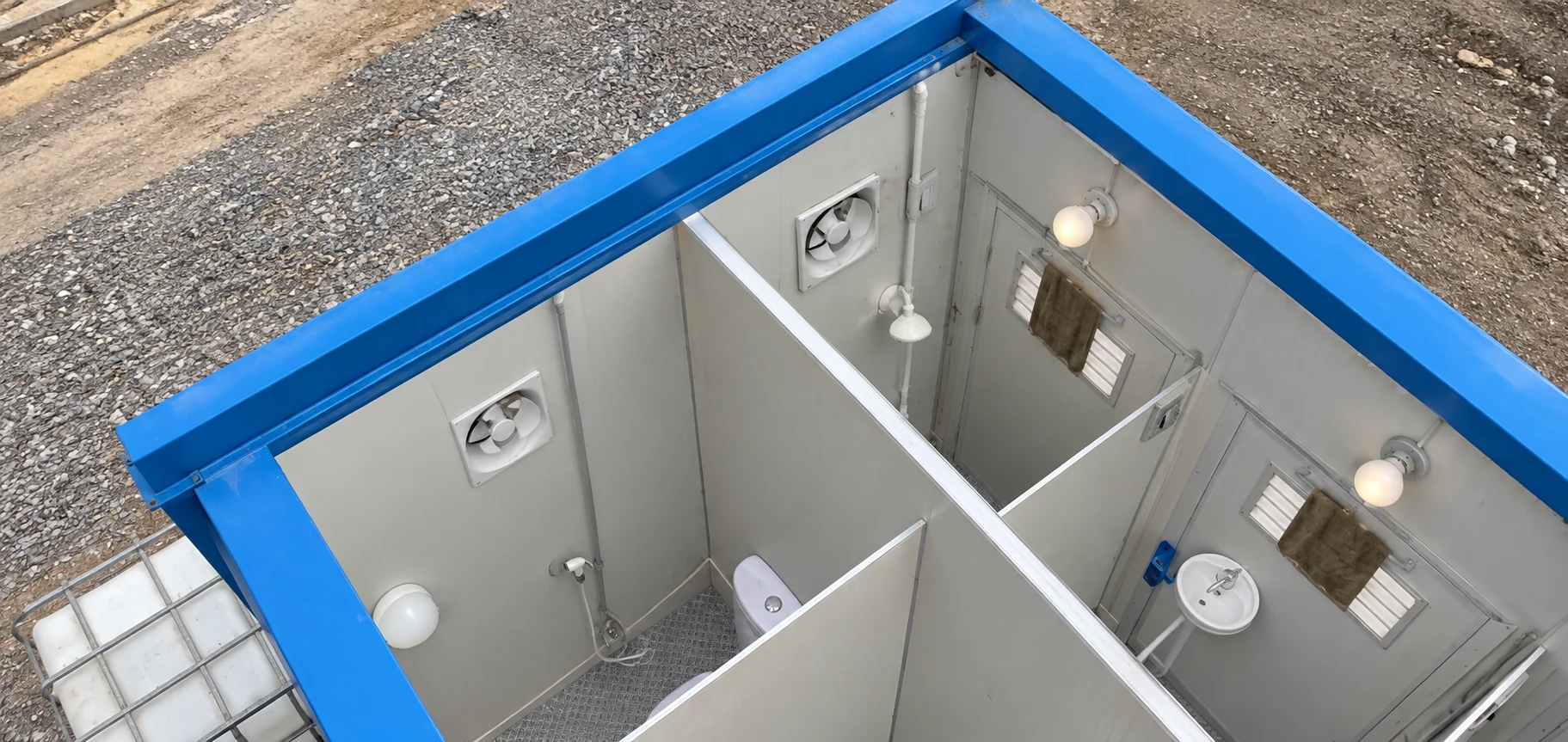
The portable toilet product page is relevant when discussing a narrower toilet package. A combined bathroom arrangement may include other wet-room functions, but their inclusion should be checked against the school schedule. Shower fittings visible in a workshop reference are not evidence that showers formed part of the Bhutan brief.
Describe the chosen arrangement in a drawing that carries a revision date and matches the quotation. If a supplier provides alternatives, ask what changes between them: the number and type of rooms, entrance positions, internal access, fittings and external service interfaces. Record exclusions alongside inclusions so that the school can compare the whole purchasing package.
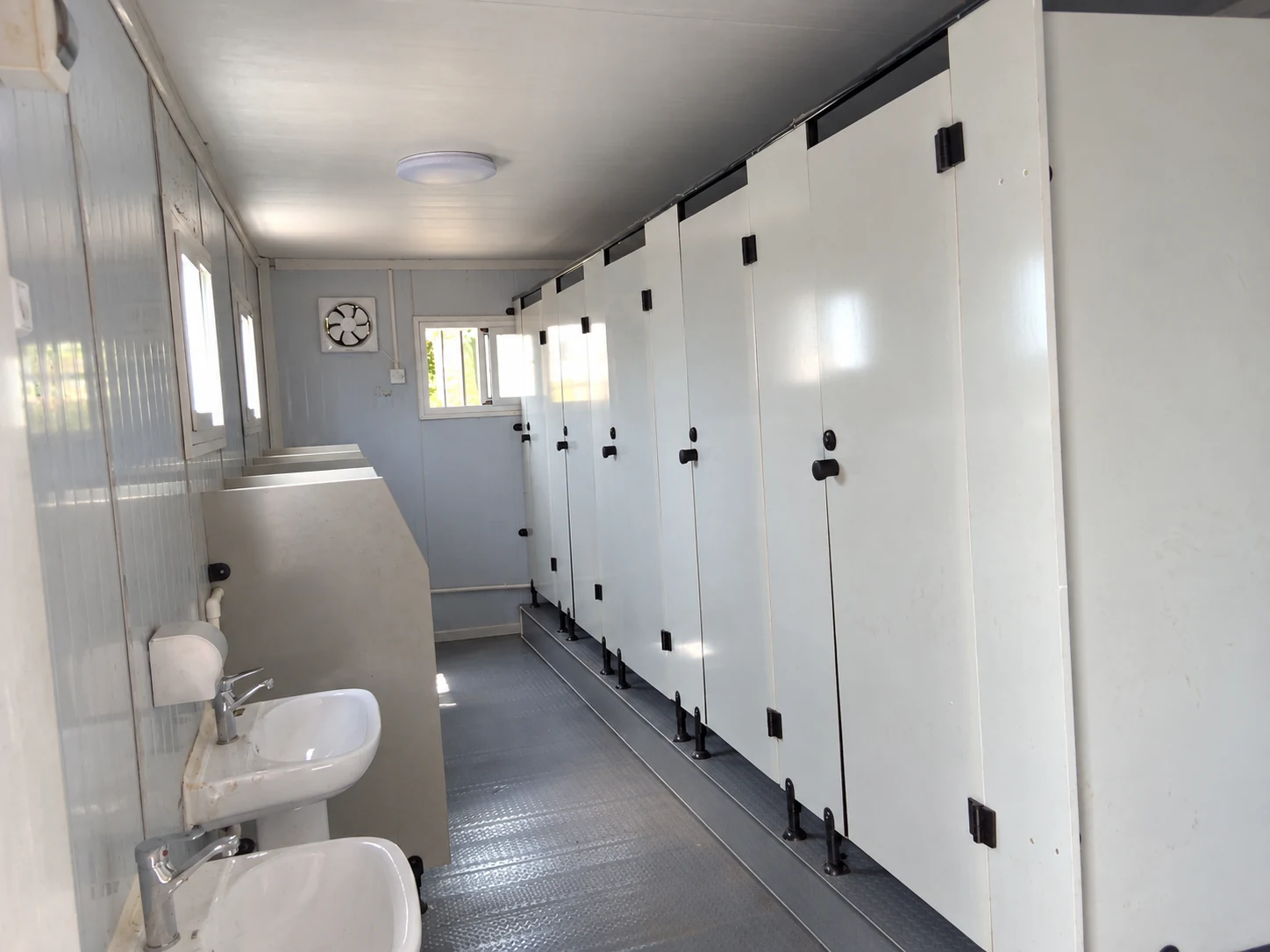
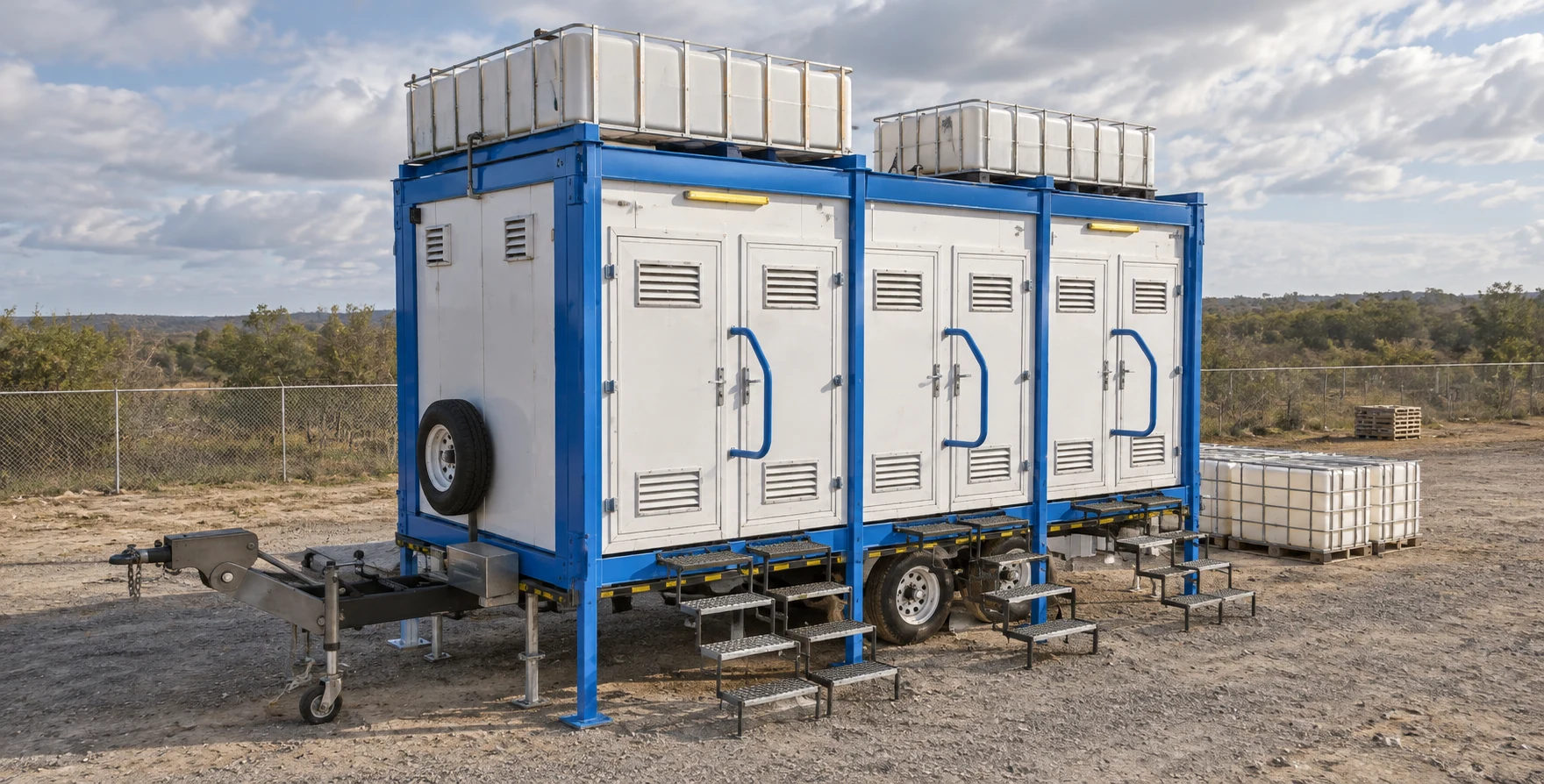
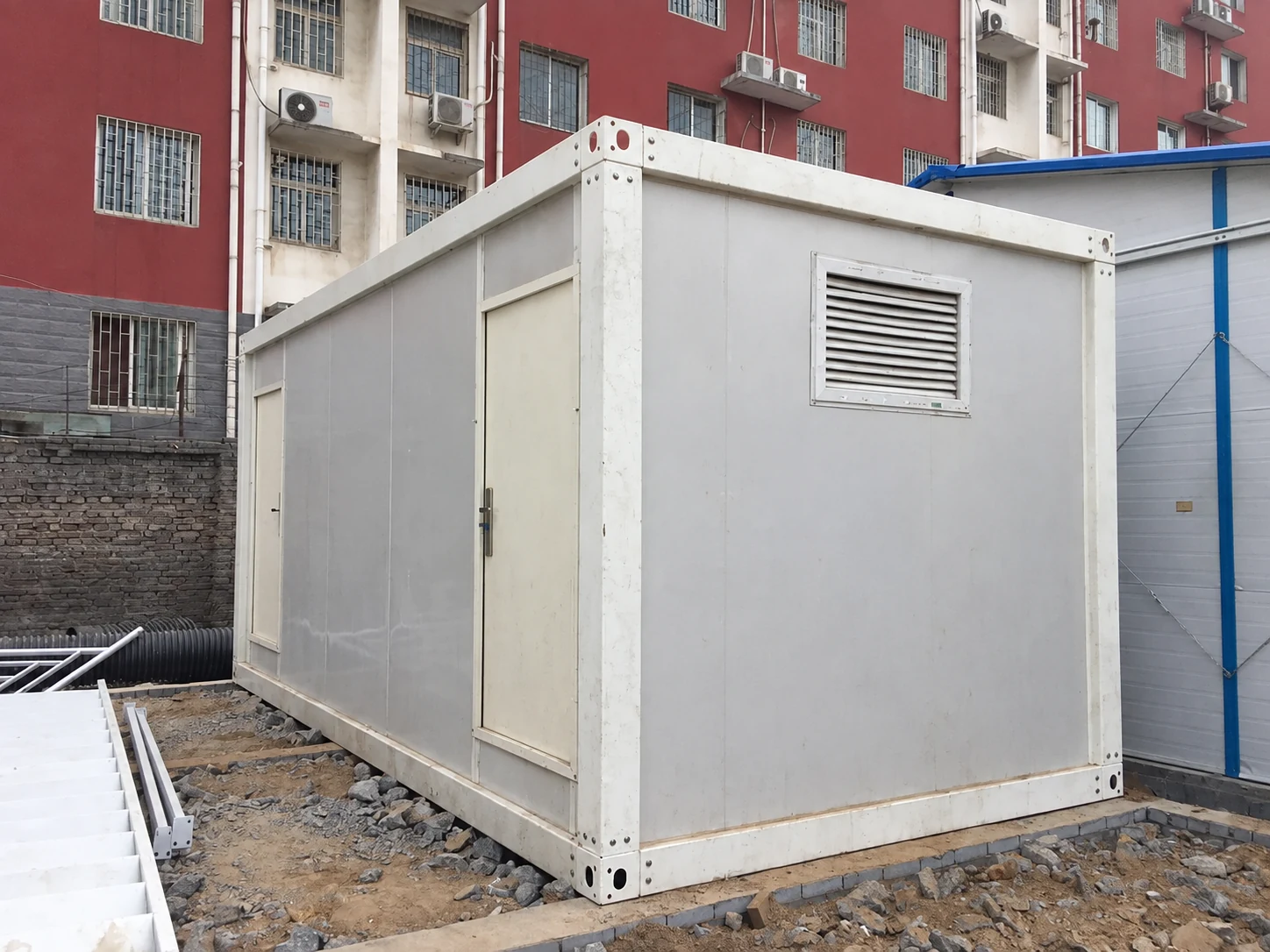
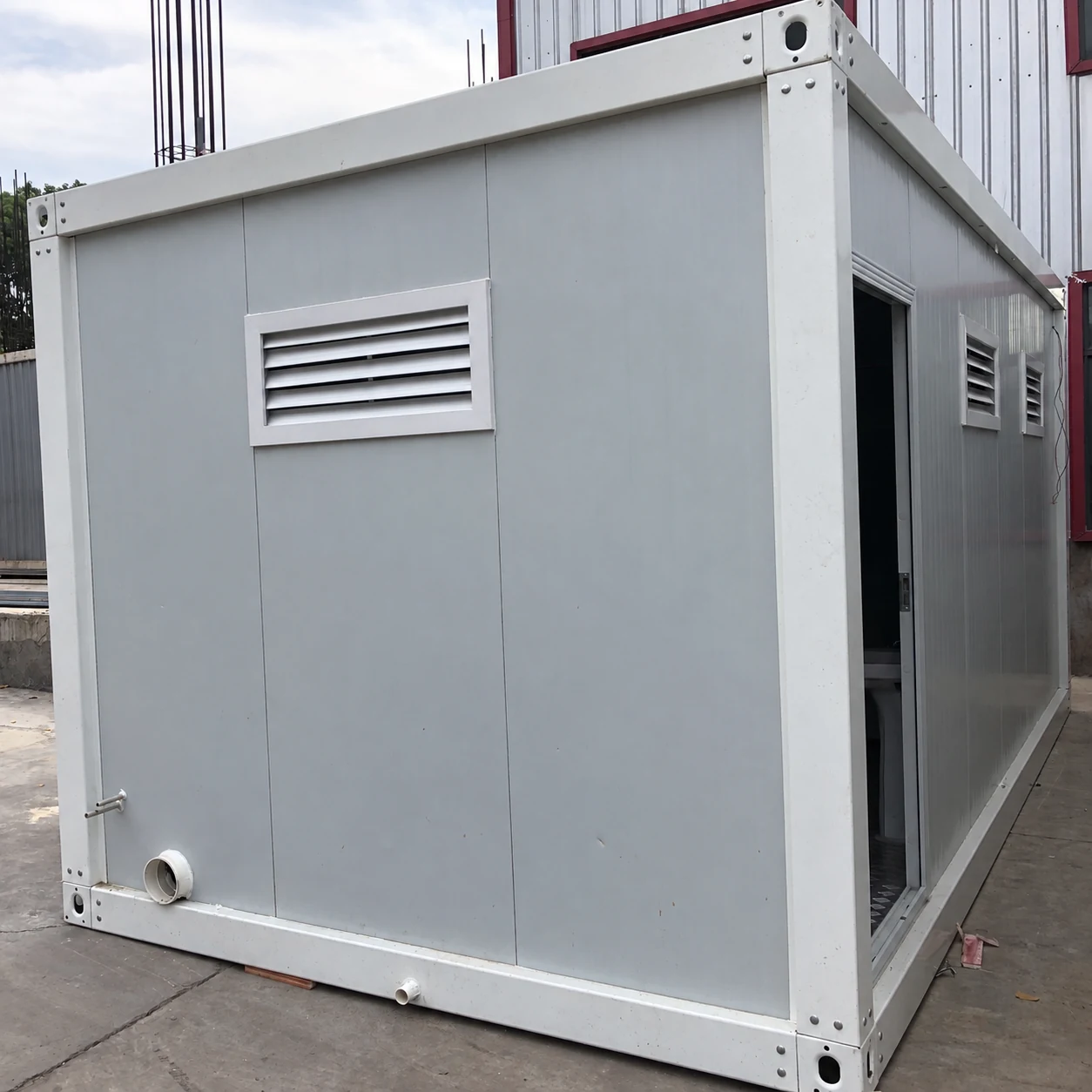
The reference collection shows several arrangements, including separate cubicle doors, shared internal aisles and a trailer configuration. They are useful prompts for a review meeting. The trailer image in particular raises different access and positioning questions because steps and towing equipment are visible. It should not be adopted as a school access solution simply because it is transportable.
Ask for an explanation of the proposed arrangement in relation to this school’s users and plot. If a reference appears convenient, identify exactly which feature is helpful and which details still need approval. That keeps a visual preference from becoming an undocumented specification. The agreed school schedule should remain the basis for production and acceptance.
Compare alternatives with the same stated assumptions. For example, an offer for individual cubicles and an offer for a shared internal aisle may allocate the building footprint differently. Ask each supplier to show the pupil entrance, basin location and service access on the offered drawing. The school can then discuss those differences against its campus plan instead of treating the exterior size as a complete description of the room.
Keep a record of proposed substitutions as the quotation develops. A changed basin, door fitting or partition can affect the original user review even if the exterior remains unchanged. Identify who will review substitutions and where the approved revision will be recorded. This is a purchasing control for the proposed school package; it does not assert that any substitution occurred in the Bhutan project.
Prepare delivery around an operating school
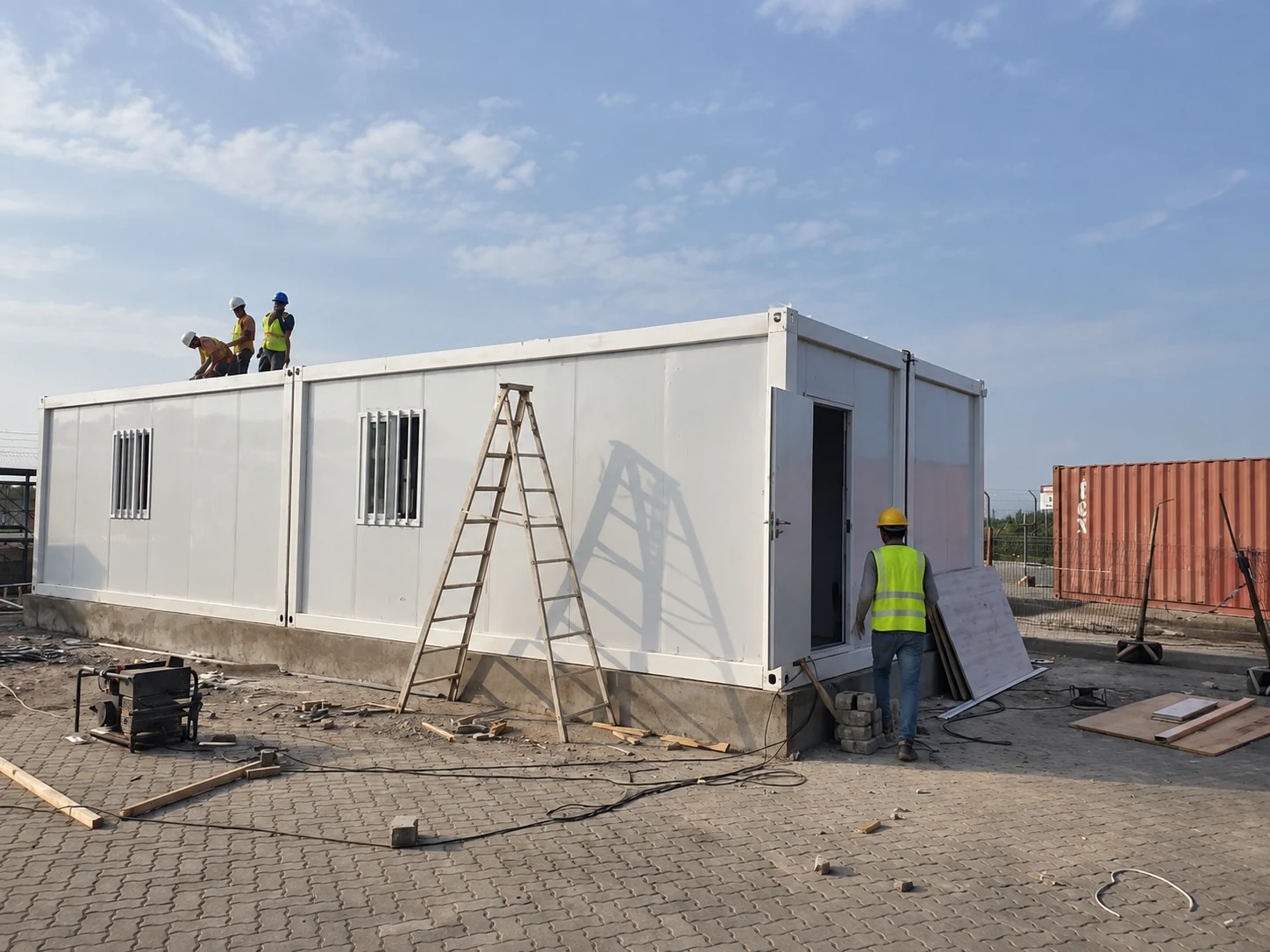
Transportable describes a building characteristic; it does not settle the delivery programme. The buyer should provide the proposed route, the arrival position and any restrictions that affect movement through the campus. Confirm who controls access on delivery day and who will coordinate the school, transport company and installer. No delivery duration or route capacity is documented for this Bhutan case.
Before fixing the programme, agree what the site must have ready and how that readiness will be recorded. The installer should identify the information needed for setting out, supports and service connections. The school’s responsible team should confirm the campus arrangements needed around the work. Put outstanding decisions into the programme instead of leaving them inside an assumption that the module will arrive ready for immediate use.
School activity creates a particular coordination problem because teaching and pupil movement may continue nearby. Review the proposed work area, temporary routes and access arrangements with school management and the qualified delivery team. The operating-campus installation guide is a related resource for organizing that conversation. It provides planning context rather than an approved method for the Bhutan site.
Separate arrival, installation, connection and permission to use the rooms in the handover plan. Each stage may involve different people and different records. The buyer can then identify the consequence of an unfinished site service before the school expects pupils to use the facilities. An agreed sequence is more useful than a single completion date whose meaning is unclear.
Give maintenance a place in the purchase
Maintenance decisions should be made while the purchase can still respond to them. Ask the school which team will clean the facilities, replenish supplies, receive faults and arrange repairs. Identify where tools and consumables will be kept and how staff will obtain replacement items. The person responsible for daily use needs more than a drawing showing where the toilets stand.
The management section of Bhutan’s 2024 National WASH Standards describes accountable care, maintenance arrangements, supplies and an operating budget. For this procurement discussion, the practical consequence is to name responsibilities and reserve resources before handover. Refer the detailed school plan to the relevant local team; the case does not certify an operating arrangement against the national standards.
Consider a simple fault-reporting route with a named recipient and a record of the action taken. A latch problem, unavailable soap and an inaccessible service point require different responses. The school needs to know whom to contact, which items it can replace under the supplier’s instructions and when a qualified contractor should attend. Keep those responsibilities visible in the handover information.
Cleaning requirements also influence the room review. Ask the supplier for the care instructions for the proposed surfaces and fittings, and let the school assess whether its equipment and purchasing arrangements can support them. This article does not prescribe chemicals or cleaning frequencies. Those details should follow the approved school plan and the relevant product instructions.
Include an agreed handover demonstration with the responsible installer and the school representative. They should review the supplied rooms, fittings and service access against the approved documents, and record any outstanding items with a responsible contact. Ask for the operating and care information in a form the school can keep and use. Receiving that information should be an explicit part of the purchase rather than an informal conversation after the delivery team leaves.
For a related application, the Oman modular welfare-hub case discusses planning around support facilities. Its workforce context differs from a school, but the comparison is useful when identifying service ownership and shared facilities. Pupil access, supervision and age-appropriate fittings still need their own school review.

Turn the brief into a reviewable buying package
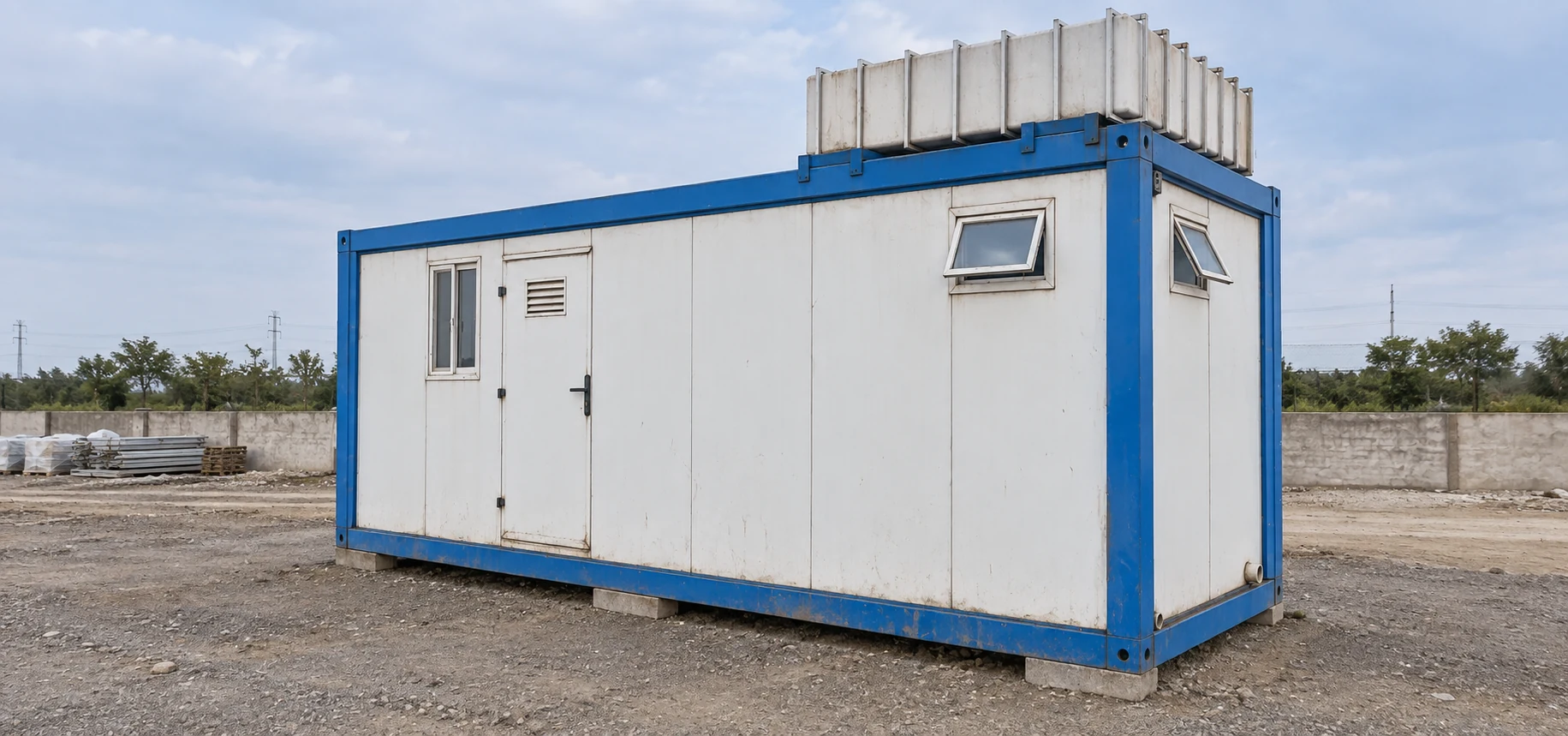
A similar buyer can prepare a useful first enquiry without inventing a final specification. Provide a campus plan, the classrooms to be served, expected users and age groups, the room functions, delivery access and the available service information. Add the local review contacts and the intended programme. Flag decisions still under review so that the supplier can distinguish an option from an approved requirement.
Ask for a quotation that explains the proposed rooms and the division of responsibility. The drawing, fittings list and exclusions should describe the same arrangement. If site work is supplied separately, make the connection boundary and coordination responsibilities explicit. That allows the school to assess the complete proposal instead of comparing a module price with an unrelated installed package.
Where the school has a limited initial budget, list unresolved services alongside the building price before choosing an option. A lower building quotation may still leave the buyer responsible for access work, connections or an operating arrangement that has not been priced. Request those items as clearly described packages and compare the same scope across offers. This case supplies no cost estimate; its useful contribution is a way to expose what the school is actually purchasing.
| Buying document | What it should resolve | Useful review question |
|---|---|---|
| Campus plan | Classroom routes, entrances, servicing and delivery access. | Can each responsible team find its route and work area? |
| Room and fittings schedule | Who uses each room and what the quoted arrangement contains. | Does the schedule agree with the current drawing? |
| Package boundary | Building supply, site works, utility connections and handover. | Is any required task missing an owner? |
| Care and service information | Instructions, replacement items, contacts and school responsibilities. | Can the school operate the proposed arrangement after delivery? |
This Bhutan brief is most useful as an example of coordinated school sanitation planning: accessible pupil routes, appropriate fittings and service arrangements need to be discussed together. It is not a source of transferable capacities or installation results. Buyers should use the questions to prepare their own review, then obtain the approved layout and site-specific decisions for their campus.
Sources and applicability
- Ministry of Education & Skills Development and Dratshang Lhengtshog: National WASH Standards, 2024. Standards 2.2, 3 and 5 provide the school context cited here; the approved project design still requires local review.
- WHO/UNICEF JMP: WASH in schools. The definitions explain monitoring terms, rather than certifying this project.
- UNICEF Bhutan, 28 May 2024: period-friendly schools announcement. The quoted percentages refer to 2023 national records, not present-day coverage or a PQSE outcome.
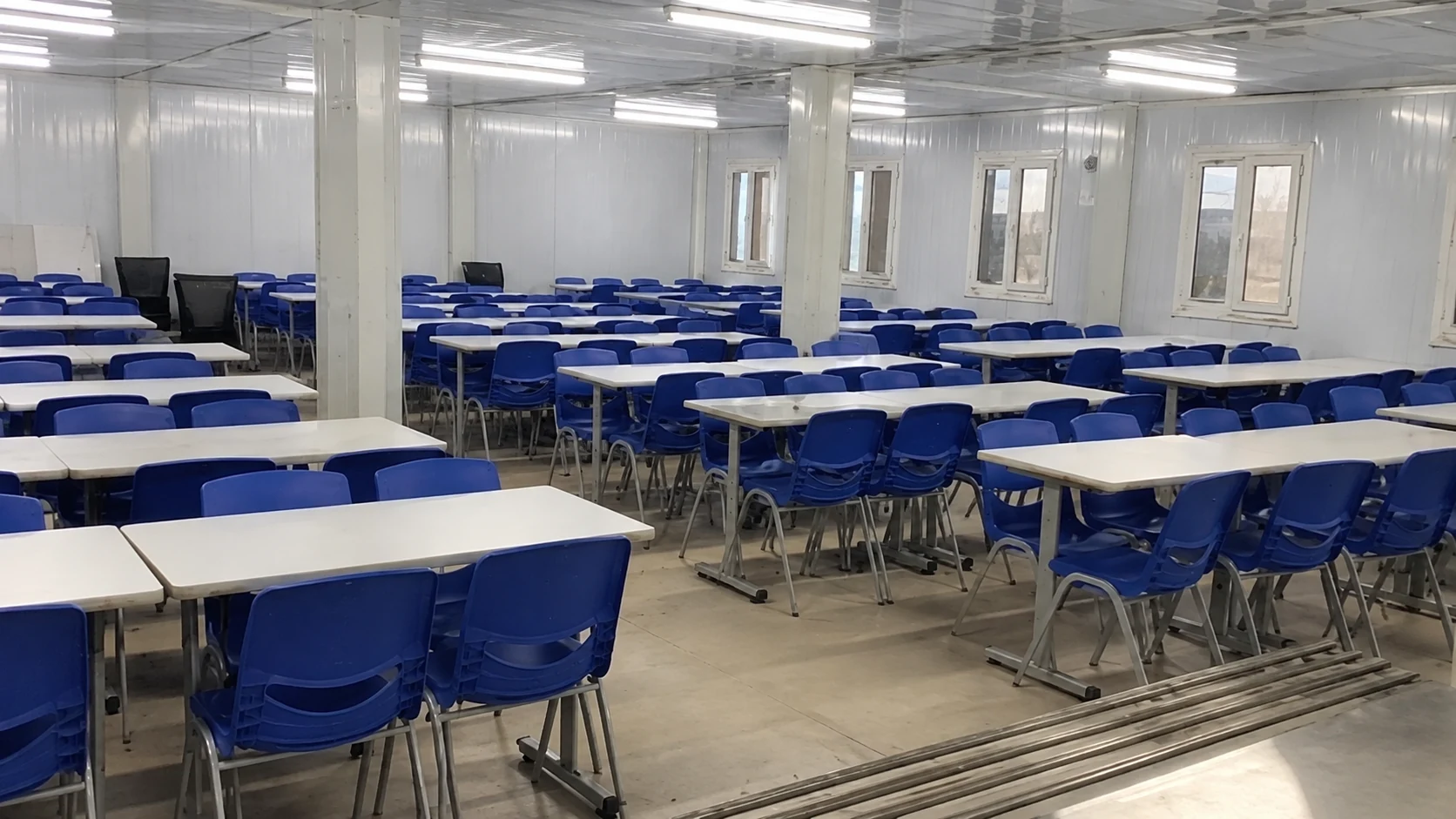
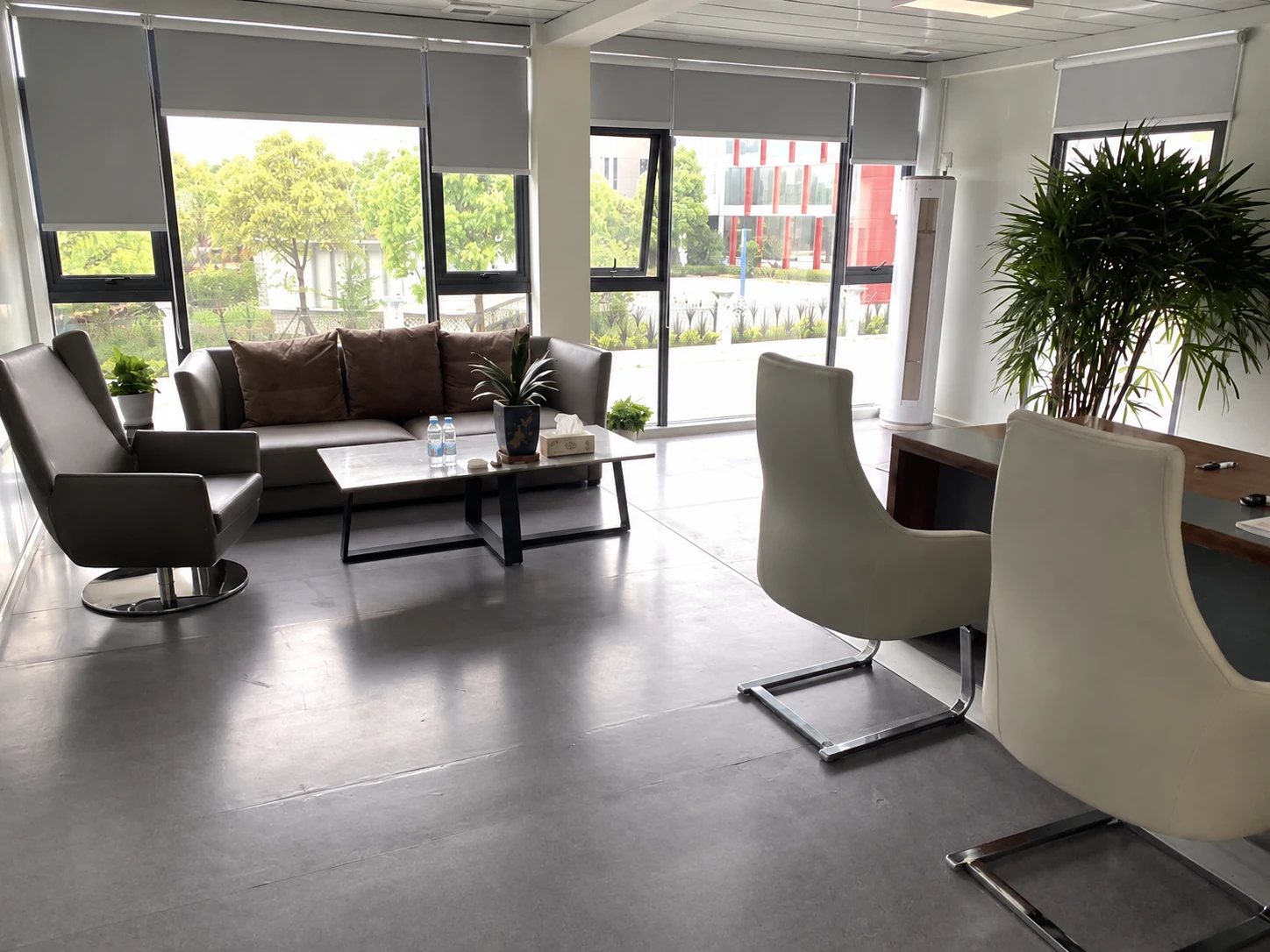
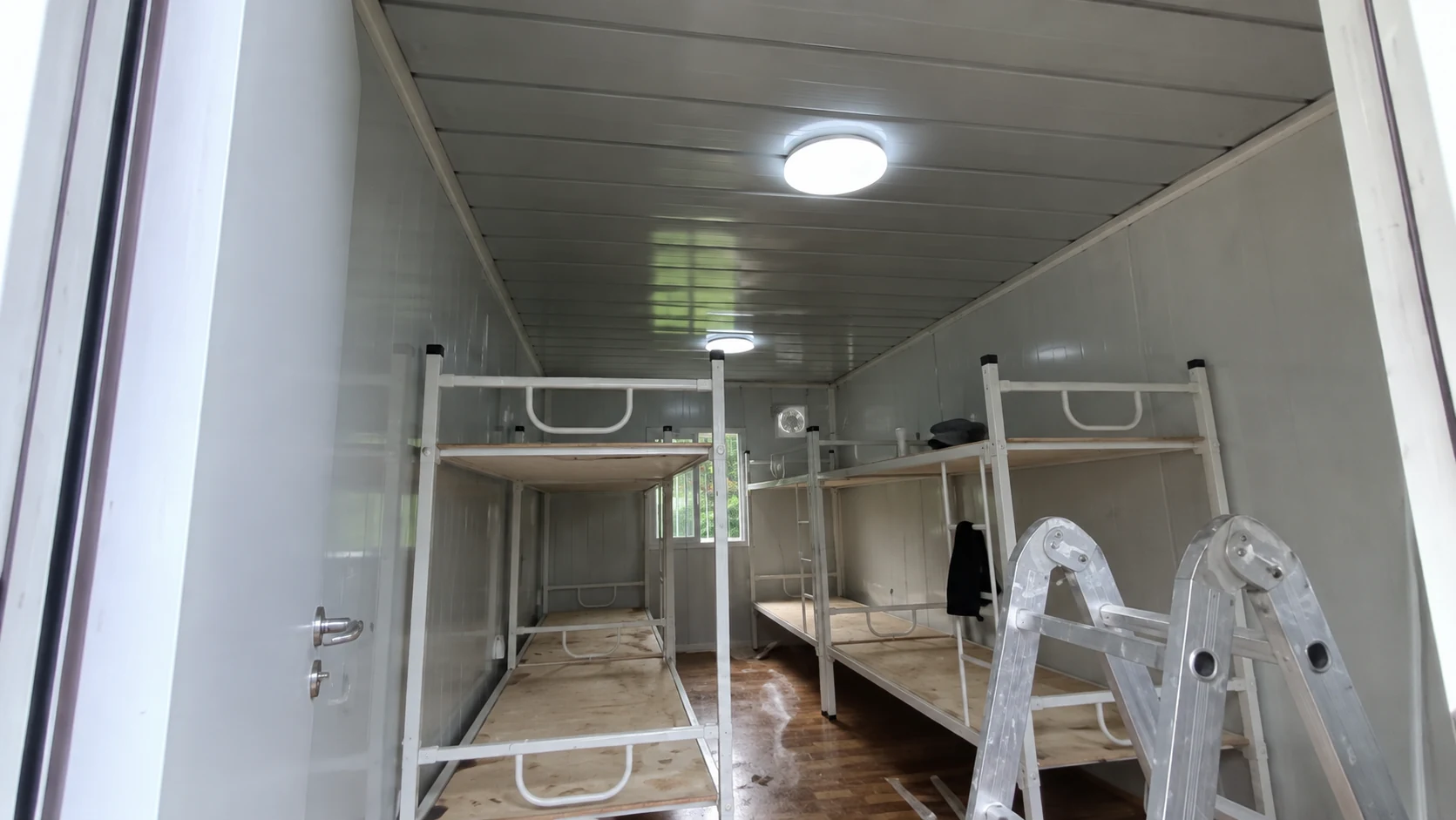
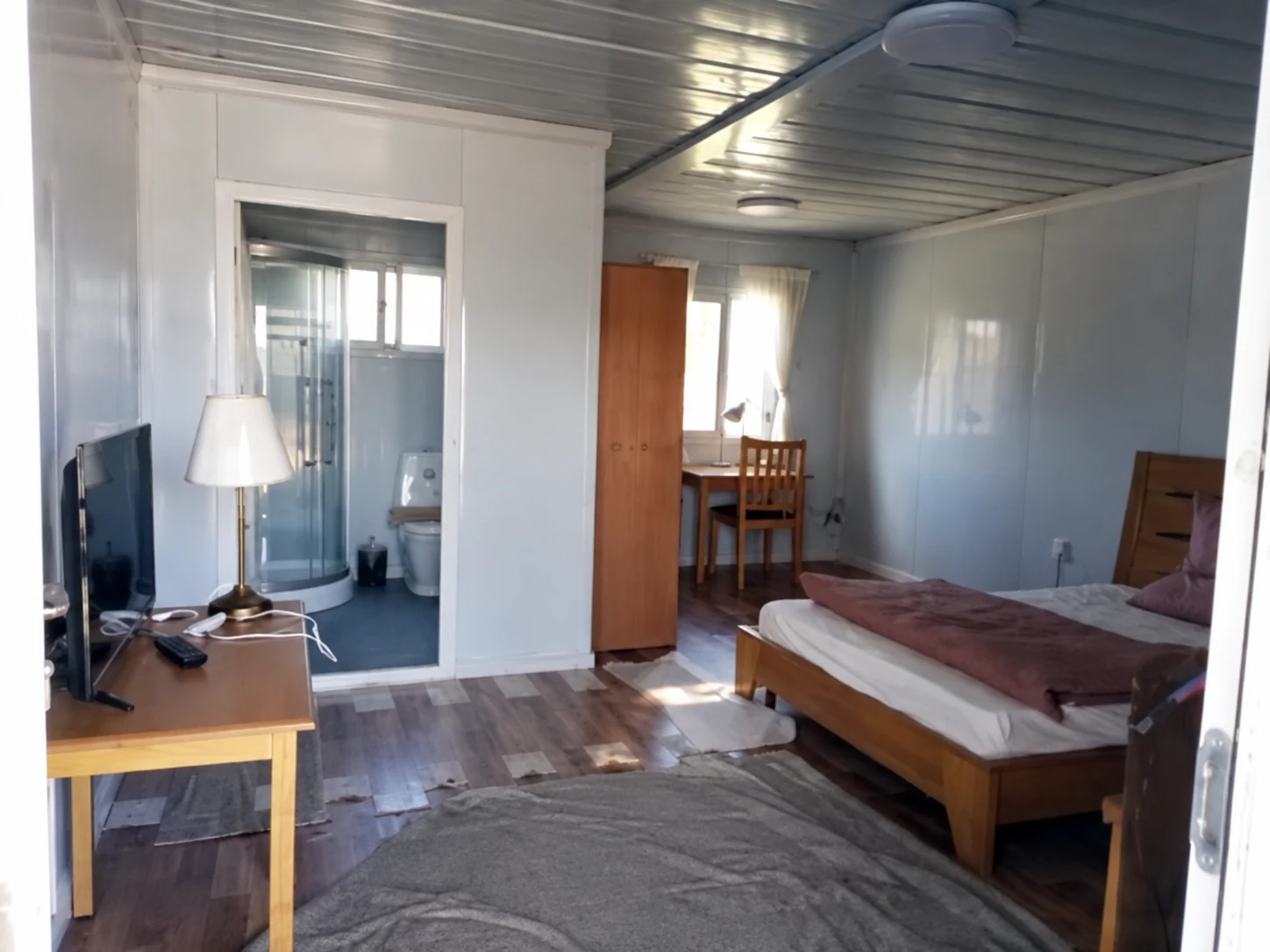
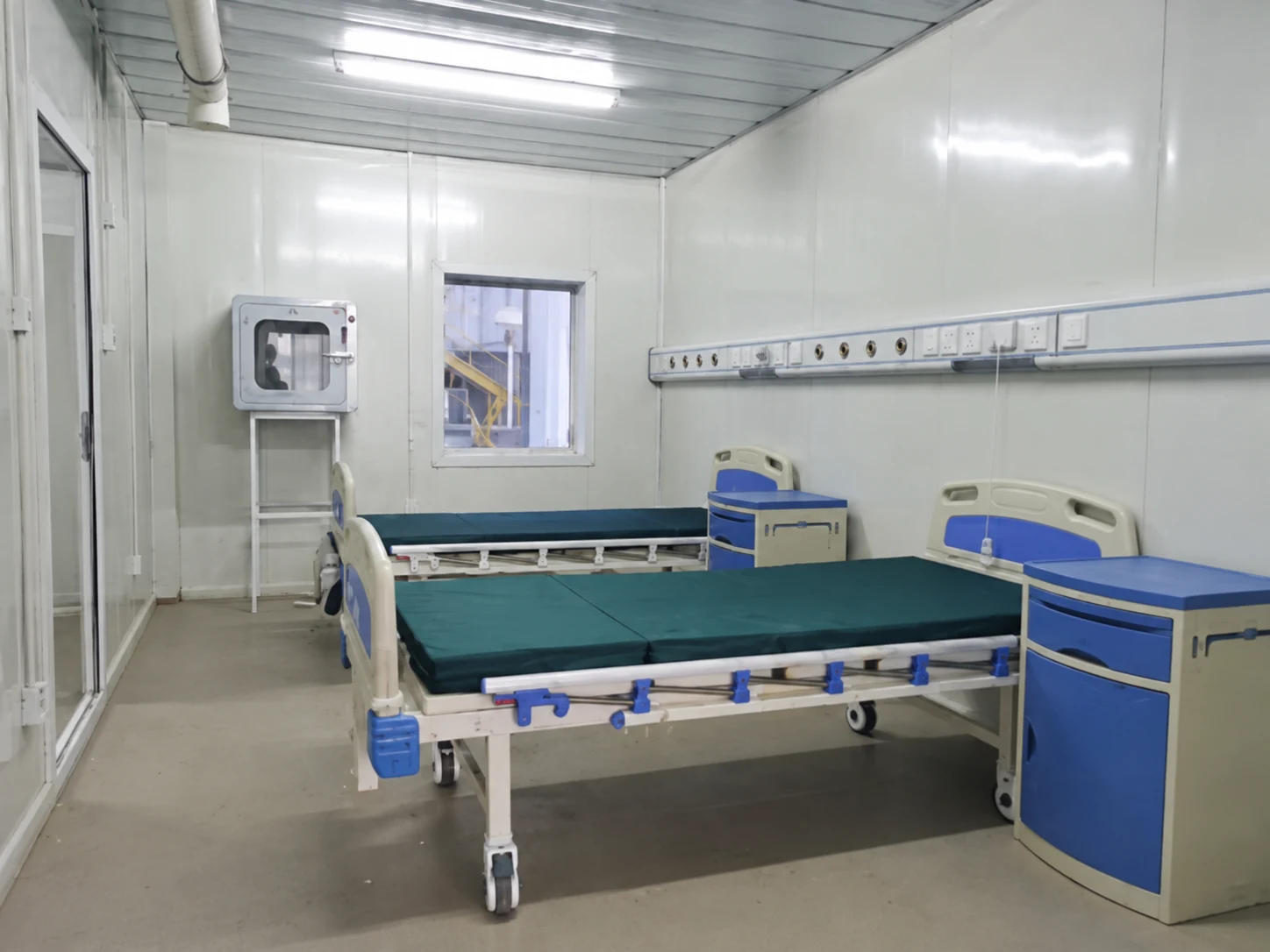
External sources were read on 10 October 2026. Project scope comes from the owner-confirmed Bhutan brief. Images are design, construction, workshop and wider application references; existing institutional lettering in reference views does not imply an endorsement or project relationship.
Discuss your school sanitation brief
Send your campus plan, pupil groups, room needs and service information to PQSE House.