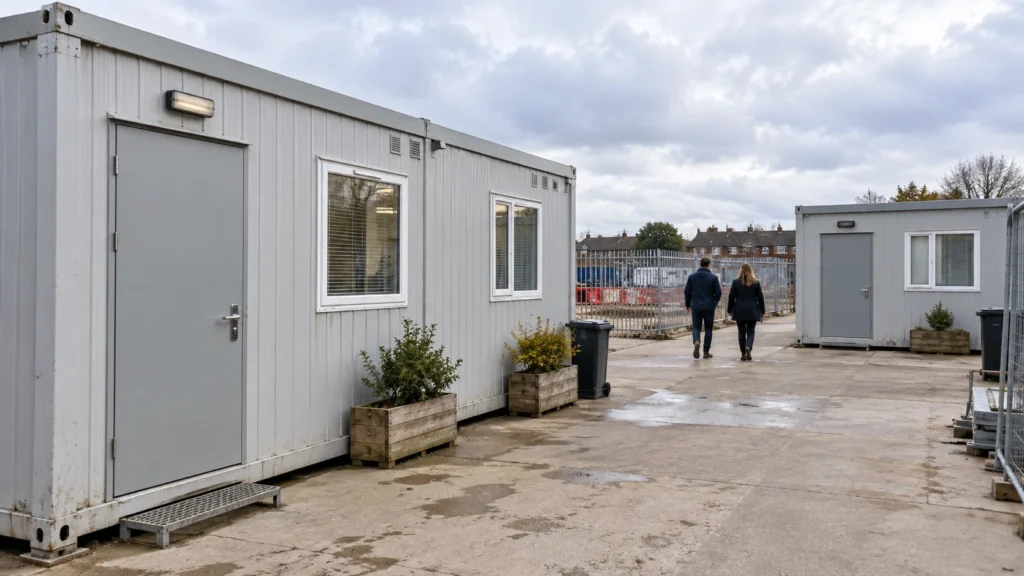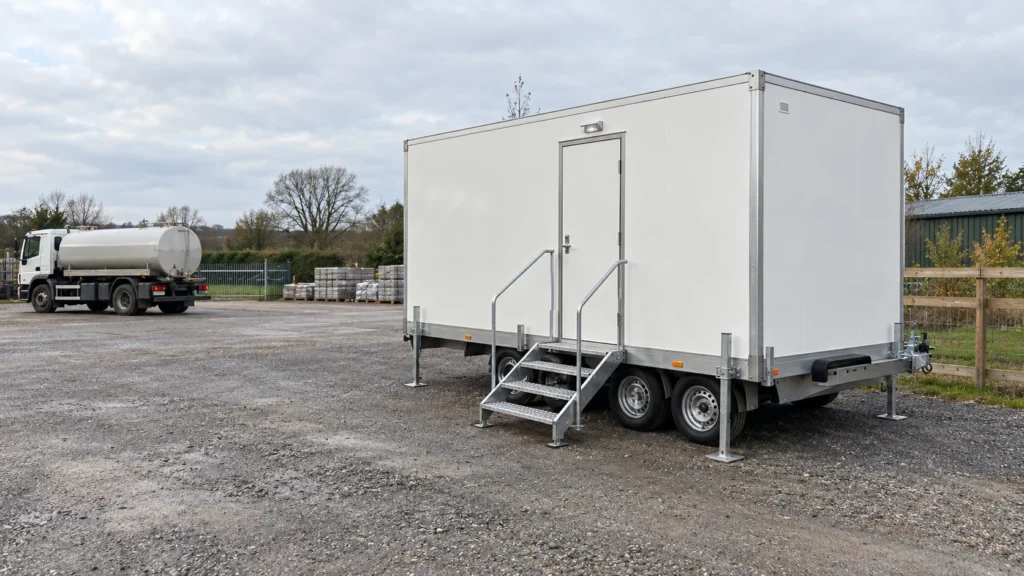
Choose construction-site toilets or a portable bathroom block by the functions people need during the working day. Separate cubicles can be a workable toilet provision when their washing arrangements, access and servicing are suitable. A combined block can bring several specified functions together when the site can support its water, power, discharge and operating needs. Neither option becomes adequate simply because it is larger, newer or described as a complete bathroom.
The important difference is what the buyer is actually purchasing. A cubicle, a wash basin and a shower perform different jobs; a combined building may contain some or all of them. Start with the work, the people, the shifts and the available services. Then compare the delivered arrangement and its continuing operation. This article provides a purchasing method, with clearly limited Great Britain and US examples rather than a universal fixture calculator.
Describe the working day before choosing the building
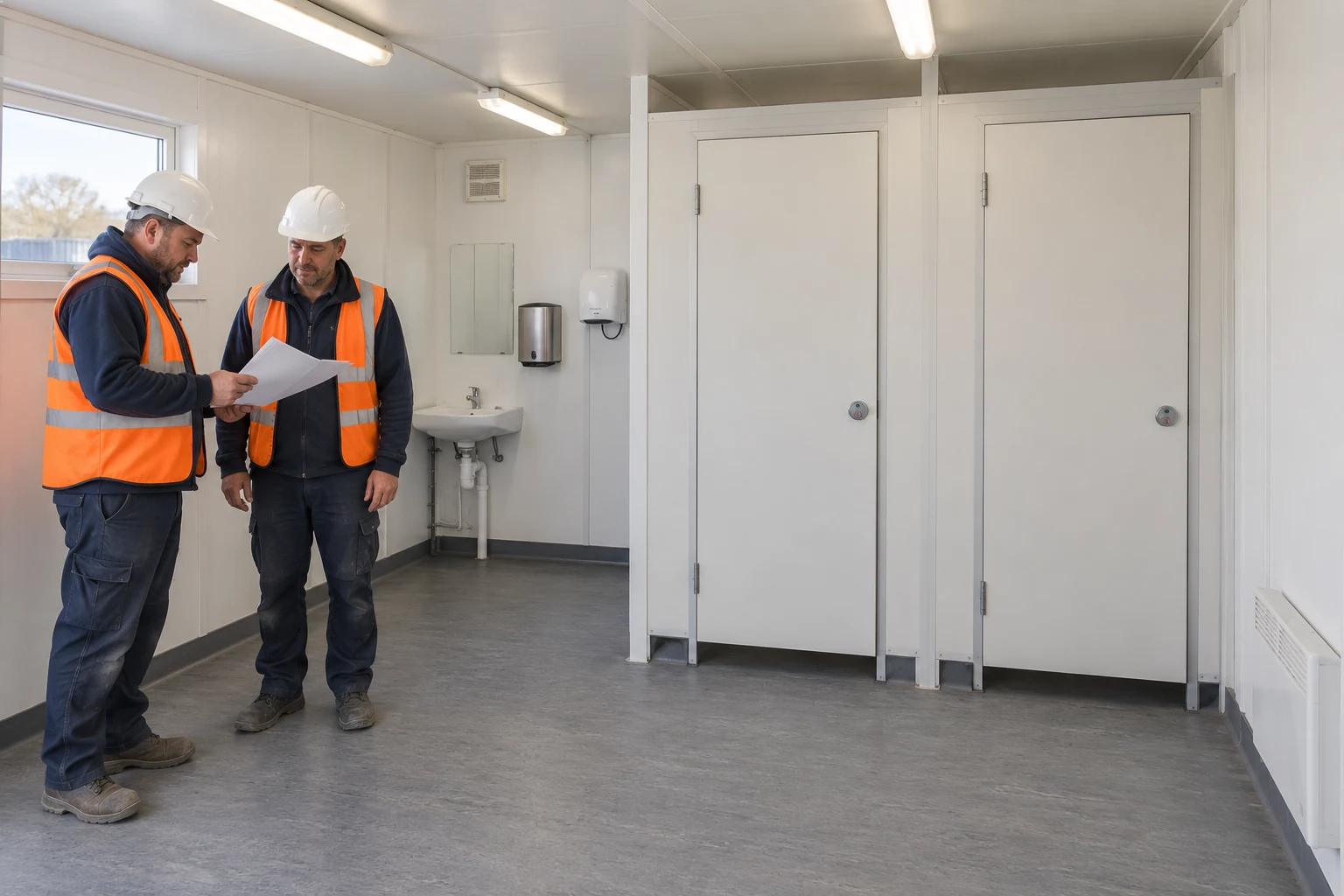
Begin with the actions people need to complete: toilet use, suitable washing, any work-related showering, changing and storing clothing. Establish when each happens and who needs it. A toilet near the entrance may suit visitors but leave the active work area poorly served. A shower beside sleeping accommodation may meet a residential need while a separate workplace washing need remains unresolved.
When discussing a portable bathroom block, turn the building name into a function schedule. Identify the fixtures requested, the intended users and the conditions in which they must operate. Mark missing information explicitly. It is better to leave a water supply or discharge question open in the brief than to treat the empty space on the drawing as evidence that somebody else has resolved it.
HSE’s construction-welfare overview addresses provision throughout the work in Great Britain. Buying sanitation equipment is only one part of that wider arrangement. Keep rest, eating and other welfare needs in the overall site plan, even where another supplier provides them.
Distinguish total users from the pattern of use. People arriving together at a break can create a different practical demand from the same group using facilities throughout the day. Note the relevant timing in the brief without inventing a guaranteed queue time. It helps the responsible team review the configuration and operation together instead of relying on a headcount alone.
| Option | Useful purchasing role | What still needs confirmation |
|---|---|---|
| Separate toilet cubicles | Provide distributed toilet points or serve a changing work area | Suitable washing, access, emptying, cleaning and other required welfare |
| Specified combined bathroom block | Bring agreed toilet, washing or shower functions into one facility | Actual fixtures, utilities, discharge, circulation and operating service |
| A phased or mixed arrangement | Match different functions and locations as the site develops | Which provision remains usable at each stage and who manages the change |
Test what the separate-cubicle option leaves elsewhere
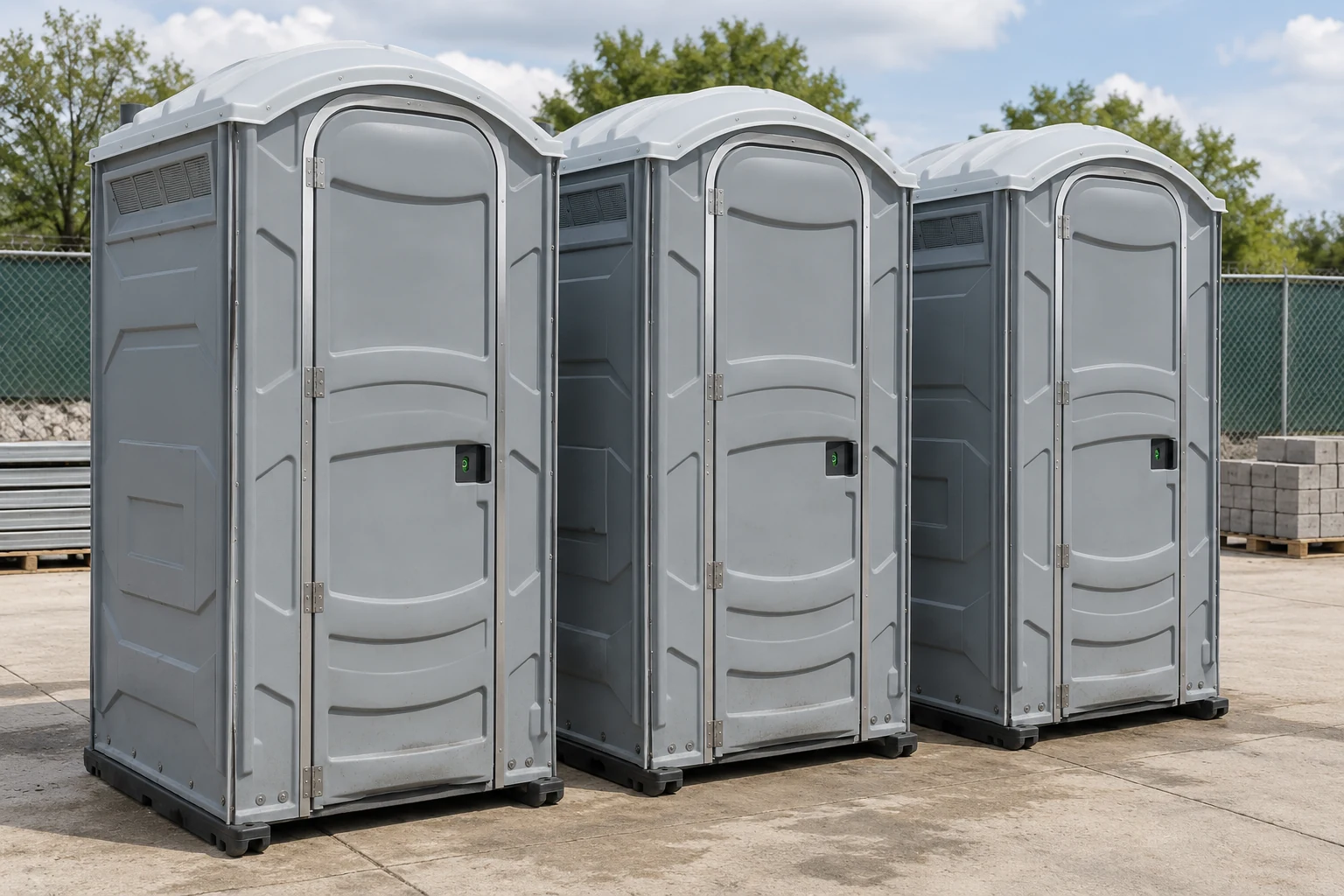
Separate units can help when work is spread across locations or a single central facility would be difficult to reach. Their usefulness depends on the actual arrangement around them. Identify the washing location, privacy, route from the work area and access for service personnel. The visible shell does not reveal whether the selected unit contains suitable washing provision, what its tank arrangement is or how the contracted service operates.
For portable toilet orders, ask the supplier to state the actual model and inclusions. Confirm which functions are integrated and which are provided separately. Request the relevant installation and service information for that configuration. A quotation for equipment supply should not be mistaken for a contract covering transport, setup, cleaning and recurring collection.
Great Britain’s HSE toilets and washing guidance prefers flushing toilets where possible and accepts chemical toilets where flushing cannot be provided. This is a qualified local example, rather than a worldwide ban or permission. The buyer still needs to determine whether the whole proposed facility meets the applicable project requirements.
Give washing its own requirement
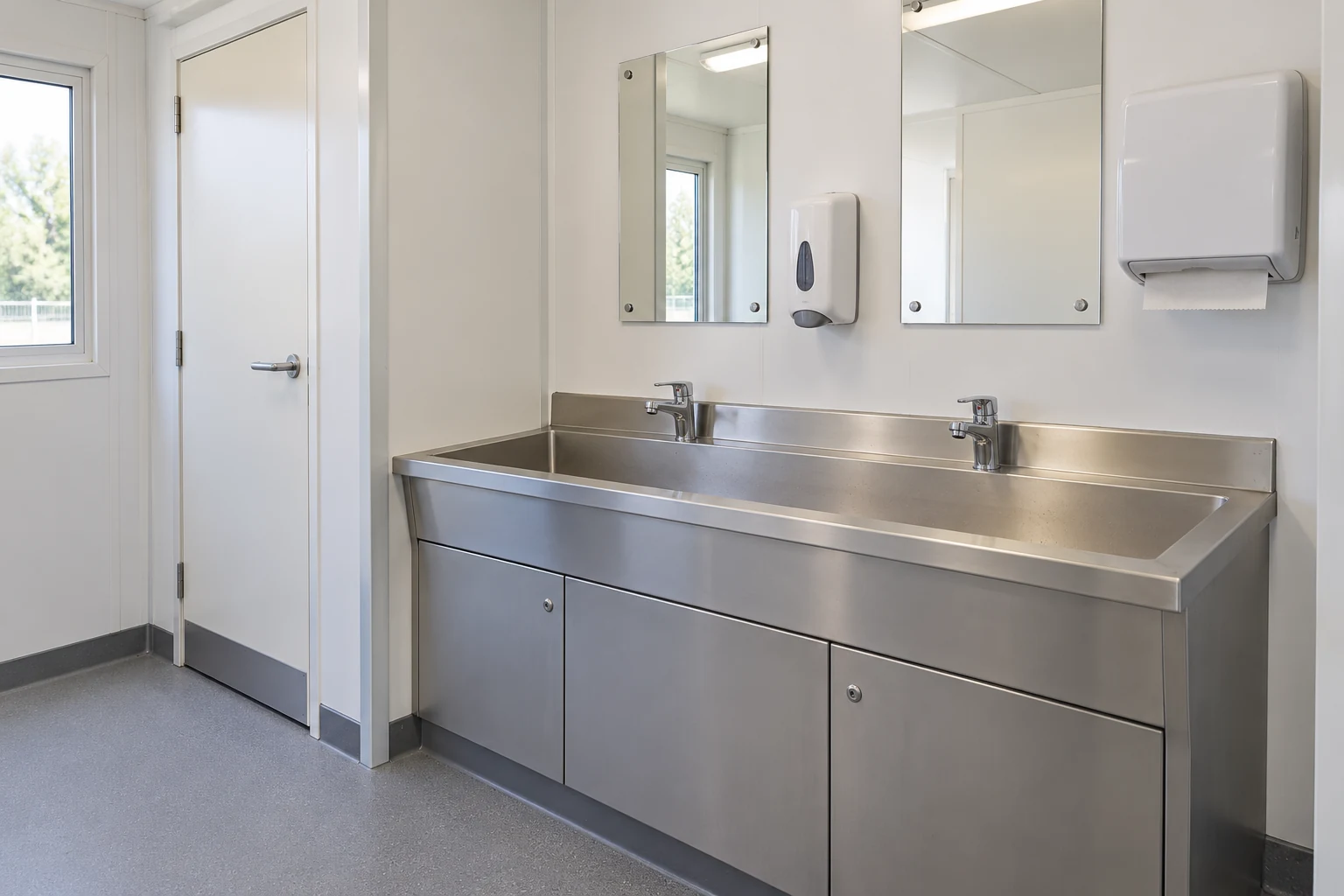
Write down what people must wash and why. Hand washing after toilet use and washing exposed skin after a task may place different demands on the facility. Ask the responsible site team to identify the work-related need before accepting a small integrated sink as the complete answer. The size and arrangement must be checked for the intended function, rather than inferred from the fact that a tap appears in a photograph.
Within its Great Britain construction scope, HSE describes suitable washing for hands, faces and forearms, with running hot and cold or warm water, cleaning materials and drying provision. A hand-sanitiser bottle should not be presented as equivalent to that facility. The guidance does not give the buyer a universal shower-water temperature to apply to every product.
Review the experience from approach to departure. Can someone find the washing point, use the intended fixture and obtain the necessary supplies? How is an unavailable tap or missing consumable reported? A basin count alone leaves these questions unanswered. Include the normal working period and service interruptions in the acceptance discussion, so a fixture is assessed as an operating function rather than a finished item.
Decide whether the work requires a shower
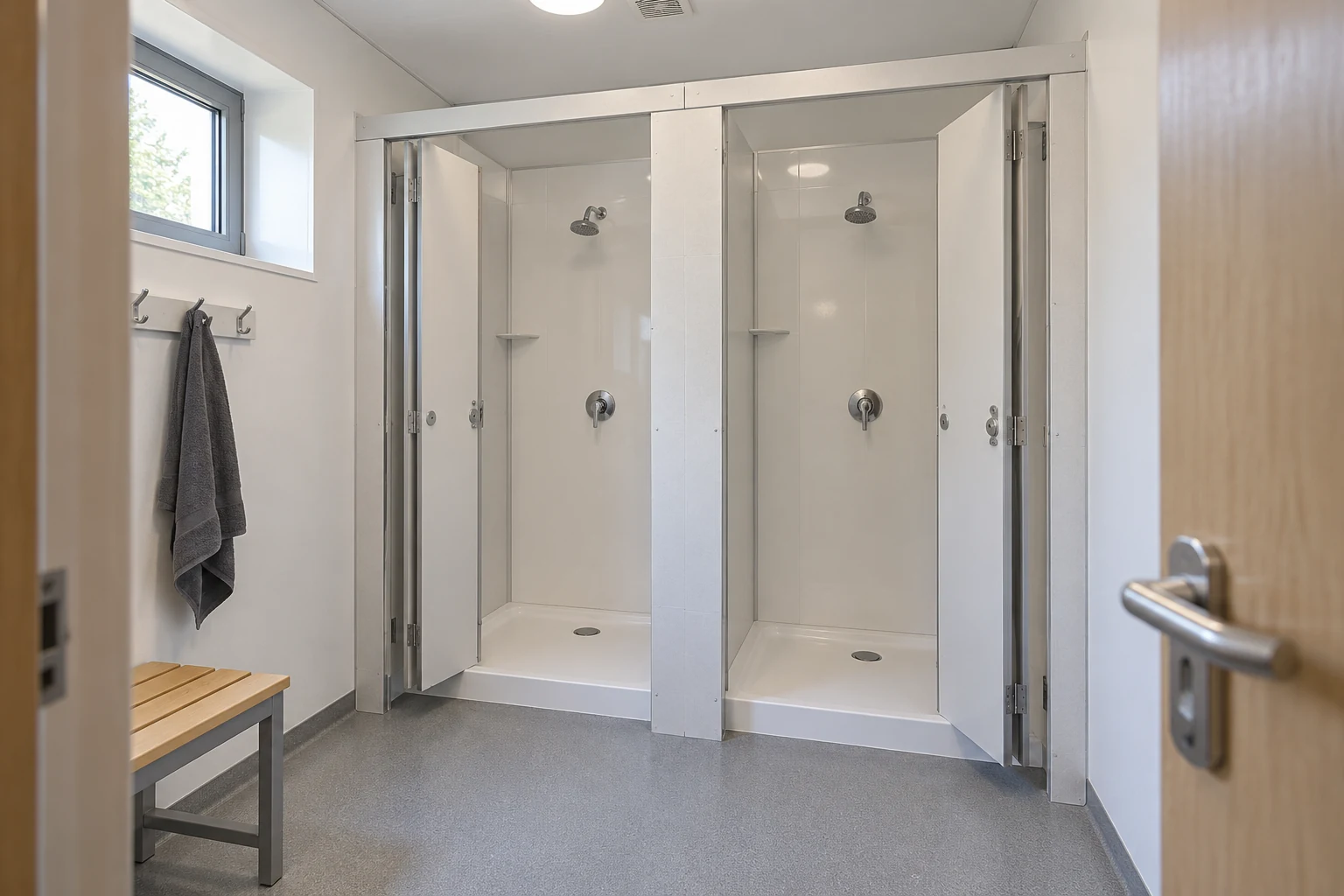
Do not add showers merely to make a building appear more comprehensive, or omit them because most people only use the toilets. Ask which tasks, exposures, destination rules or accommodation needs create a shower requirement. Where the answer depends on a particular work activity, involve the competent person responsible for that activity. A generic sanitation quotation cannot establish the exposure control or washing procedure.
If showers are needed, compare a combined block with a separate portable shower unit. Consider the location, privacy, changing sequence, water and energy arrangements, discharge and cleaning. The better configuration is the one that supports the required activity under the actual site conditions; it is not automatically the option with more fixtures in one shell.
Keep residential bathing separate in the brief. For worker-camp accommodation alongside a construction site, residents may need showers outside workplace hours. That use does not determine every work-related requirement, but it does affect when the facilities must remain available. Identify the two user patterns and confirm whether sharing a facility creates an unresolved conflict.
Also consider the time around the shower itself. Changing, drying, replenishing supplies and cleaning a compartment can affect when it is ready for the next person. Ask the operator how these activities fit the actual shifts. Do not turn a fixture number into a promise that every user can complete the required sequence during a particular break.
Consider what happens to clothing before and after washing

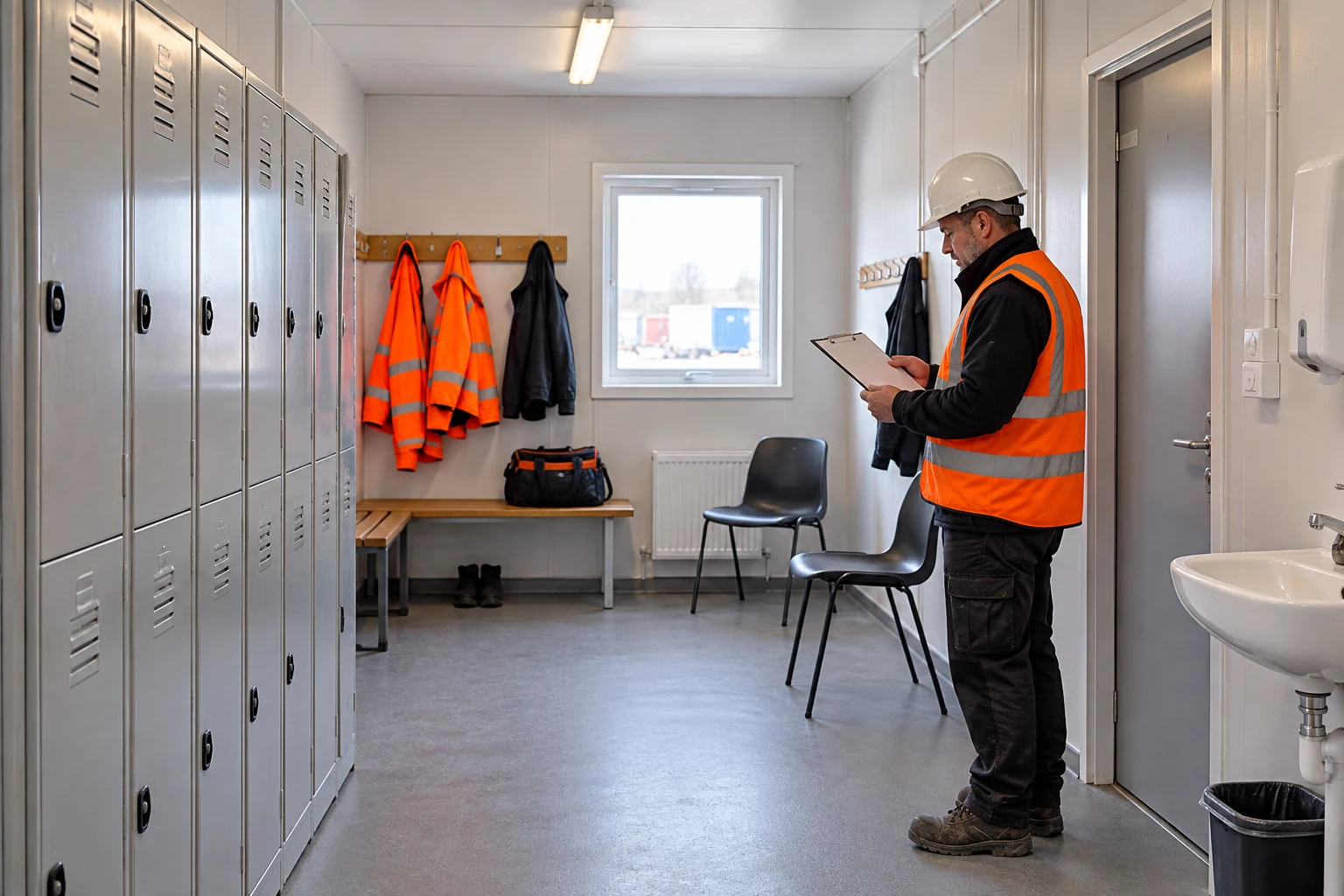
A shower compartment alone does not answer where a worker changes or stores belongings. Consider the sequence: arriving from the task, placing clothing appropriately, washing, dressing and leaving. The arrangement should protect the required privacy and keep the relevant clothing streams distinct. A bench or hook is a visible fixture, not proof that a complete changing or contamination-control system is present.
HSE’s construction changing guidance addresses changing, drying where necessary, secure storage and keeping contaminated protective equipment separate from ordinary clothing. It supplies no universal locker dimensions or drying time for a PQSE product. Translate the actual need into the brief and have the responsible designer and operator review the arrangement.
Inspect this need early enough to influence the order. If the changing area is supplied elsewhere, show how people move between it and the washing facility. If it is inside the block, confirm its usable position and the effect of normal activity on circulation. Avoid counting a space twice because it has been labelled both a changing area and a service-storage area.
| Function | Use condition to establish | Confirmation needed before selection |
|---|---|---|
| Toilet use | Users, shifts, location and relevant accessibility needs | Actual fixtures, privacy, route and service arrangement |
| Washing | Hands or other exposed skin; relevant tasks | Suitable fixture, supply, cleaning and drying materials |
| Showering | Work-triggered requirement or separate residential use | Applicable basis, relevant users and operating dependencies |
| Changing and storage | Clothing, privacy and contamination separation needs | Usable space and the agreed handling and storage arrangement |
| Other site welfare | Functions outside the sanitation purchase | Where they are provided and how people reach them |
Apply published numbers to the right people and fixture
A published ratio is useful only when its purpose and conditions remain attached. HSE cites a chemical-toilet planning recommendation based on seven people working a 40-hour week, while stressing actual use and servicing. Its reference to BS6465-1-2006 is not our independent verification of the latest British Standard. Do not treat the illustration as guaranteed capacity for a week of any site activity.
The US federal construction provision in OSHA 1926.51(f)(4) concerns showers when a particular standard requires them. Count the employees required to shower, of each sex, during the same shift. It is not a toilet ratio or a rule for the total site workforce. Confirm the applicable jurisdiction and trigger before using the figure.
For a hypothetical example, eleven employees of one sex required to shower during the same shift would produce two showers under that conditional US provision. This illustrates the fraction rule; it is not a statement about an actual PQSE installation. Keep the design and service review separate from the arithmetic. Neither example defines tank capacity, hot-water recovery, queue times or a universal collection interval.
| Source and fixture | Published numerical basis | Conditions that travel with it |
|---|---|---|
| Great Britain HSE guidance: plastic chemical toilet | 1 toilet for 7 people working a 40-hour week | A cited planning recommendation; actual use and servicing affect adequacy |
| US federal OSHA construction: shower | 1 for each 10 relevant employees, or fraction thereof | A particular standard requires showers; count each sex separately in the same shift |
Establish the interfaces that make a block work
Water must serve the selected function
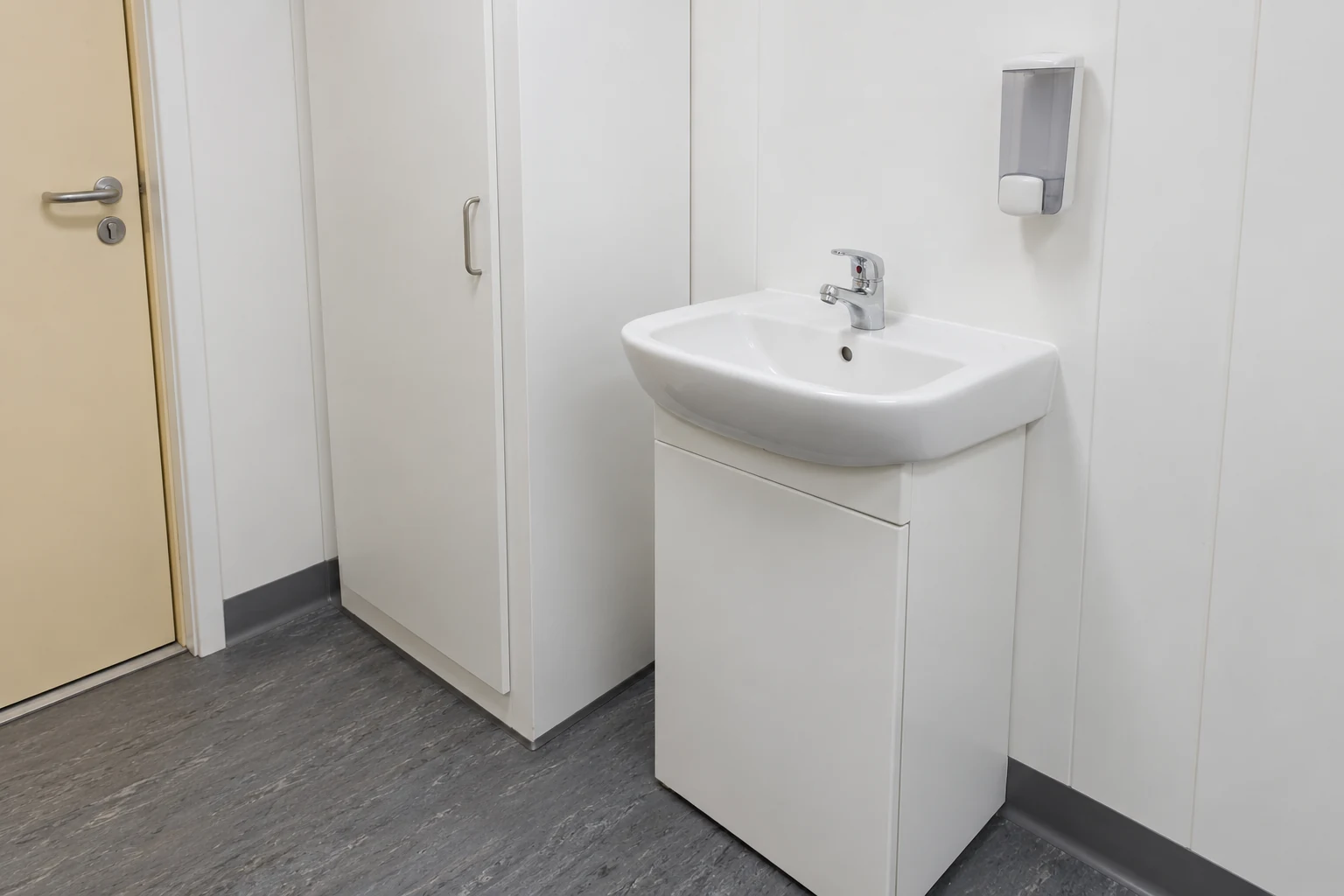
Identify the planned source and the party responsible for making it available. Ask the supplier for the requirements of the selected configuration, including any treatment, storage or connection conditions it actually specifies. The presence of a nearby water line does not prove that its usable supply matches the ordered fixtures. Record the proposed arrangement and the information that still needs a competent review.
Assess the intended operating pattern, including any shared demand with other facilities. If water is delivered or stored, the operator needs an agreed replenishment and unavailable-supply response. Do not choose a generic tank volume from another manufacturer’s brochure. The proper figure depends on the selected system and the project brief, neither of which is established by the building name.
Energy and discharge need their own agreements
Confirm the power source, relevant installation requirements and responsibility for connection and verification. Heating or other equipment must be identified in the actual order. A functioning light does not demonstrate that the agreed washing or shower service can operate as intended. Leave technical ratings to the selected equipment information and the qualified project team.
Then follow the discharge beyond the fixture. Identify whether the approved arrangement uses a sewer, a holding system or another specifically confirmed route. Name who provides it, who checks compatibility and who maintains it. For remote mining-camp accommodation projects, the absence of an established service network makes these dependencies especially important to resolve before delivery.
Keep the interface boundary visible when comparing offers. If one supplier includes the internal fixtures while another also includes selected external connections, those prices cover different work. List the remaining site tasks beside each option, including any review still needed. The comparison becomes useful when the buyer can see what must happen between equipment delivery and actual operation.
Compare the continuing work after installation
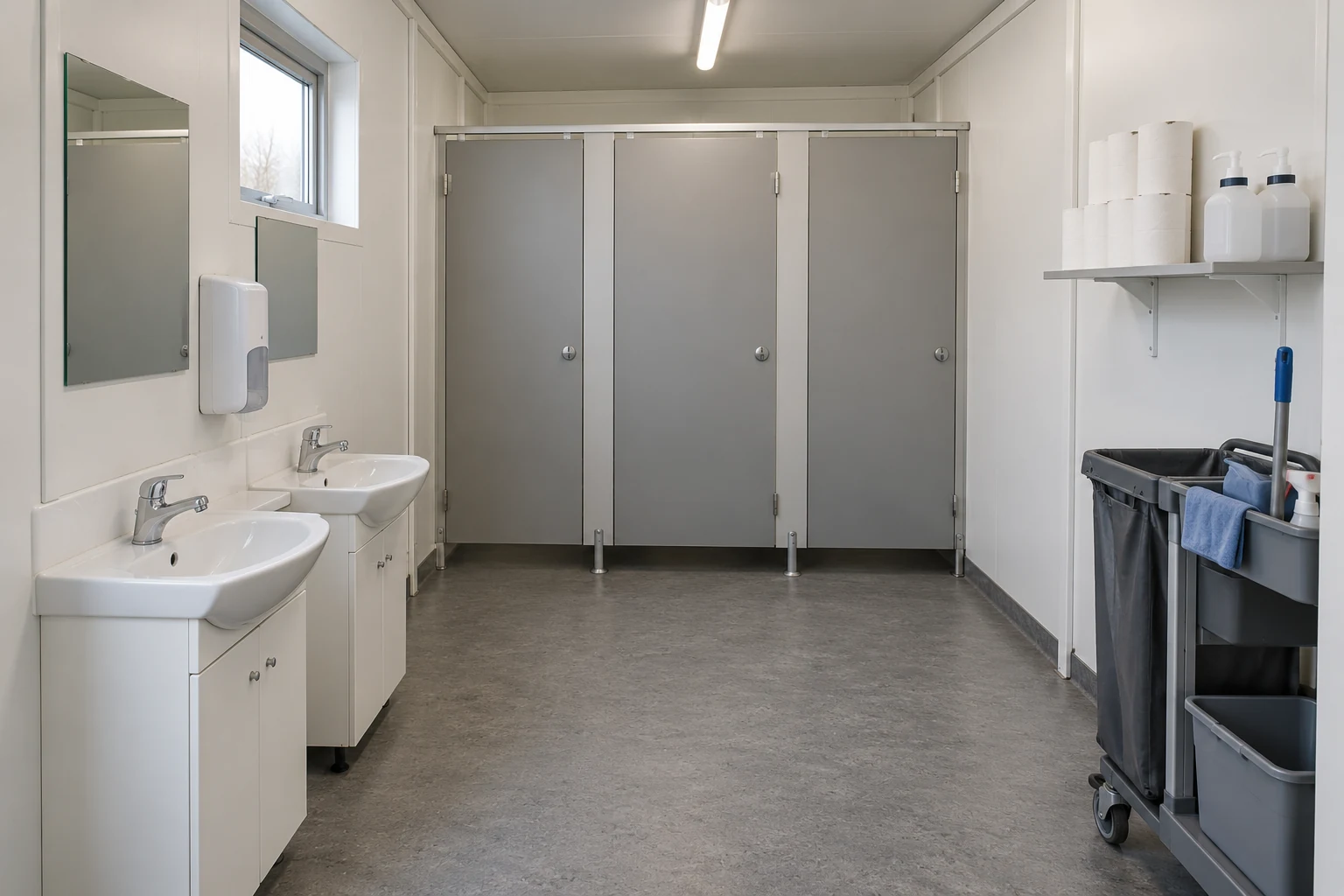
Put the two options on the same operational basis. Identify cleaning, consumable replenishment, waste removal, water supply and any equipment maintenance each needs. Confirm who performs the tasks and how an unavailable facility is reported. A combined block concentrates fixtures in a building; it does not make recurring service disappear.
Check what the price represents. Equipment supply, installation and an operating service may be separate purchases. A low equipment price can leave more site work unresolved, while a higher bundled offer may still exclude essential interfaces. Compare the inclusions against the same function brief. No verified general price or running-cost dataset supports a universal saving claim here.
For the portable sanitation options under consideration, request a responsibility schedule that can be used by the people operating the facility. Include the basis on which frequency and supplies will be reviewed if use changes. Avoid relying on a routine appointment to resolve every exceptional condition or on an assumption that the building supplier also supplies a local service contractor.
| Item to compare | What the quotation should identify | What the site must resolve |
|---|---|---|
| Delivered functions | Selected fixtures and included equipment | Which user tasks and applicable requirements they must serve |
| Water and energy | Selected-system requirements and connection scope | Confirmed source, responsible party and verification |
| Waste and discharge | Interfaces, exclusions and any contracted service | Accepted route, access and ongoing operation |
| Cleaning and supplies | Tasks included or expressly excluded | Named operator, reporting and replenishment arrangements |
| Later changes | Applicable relocation or modification scope | Retained provision, new interfaces and change responsibility |
| Acceptance | Required information and selected-function checks | Outstanding conditions and who authorises use |
Keep service access available alongside user access

The user route and the contractor’s route may be different. Inspect both. A convenient pedestrian position can be difficult for a collection vehicle or maintenance task to reach once the site is active. Review actual doors, gates, changes of level and restrictions with the proposed provider. A photograph can identify a constraint, but cannot prove an approved vehicle path or equipment reach.
Include the time of service. Access during quiet periods may differ from access during a delivery peak or shift change. Agree how the relevant space is kept available and what happens if the contractor cannot perform the task. Do not count a visit as complete simply because the vehicle arrived at the gate.
Where the sanitation area forms part of a construction-site office and welfare compound, coordinate the route with staff, visitors and other scheduled movements. The aim is a usable arrangement for the selected facility, not a universal distance or path-width rule. Record the access assumptions on which the service depends.
Choose an arrangement that remains usable as the site changes
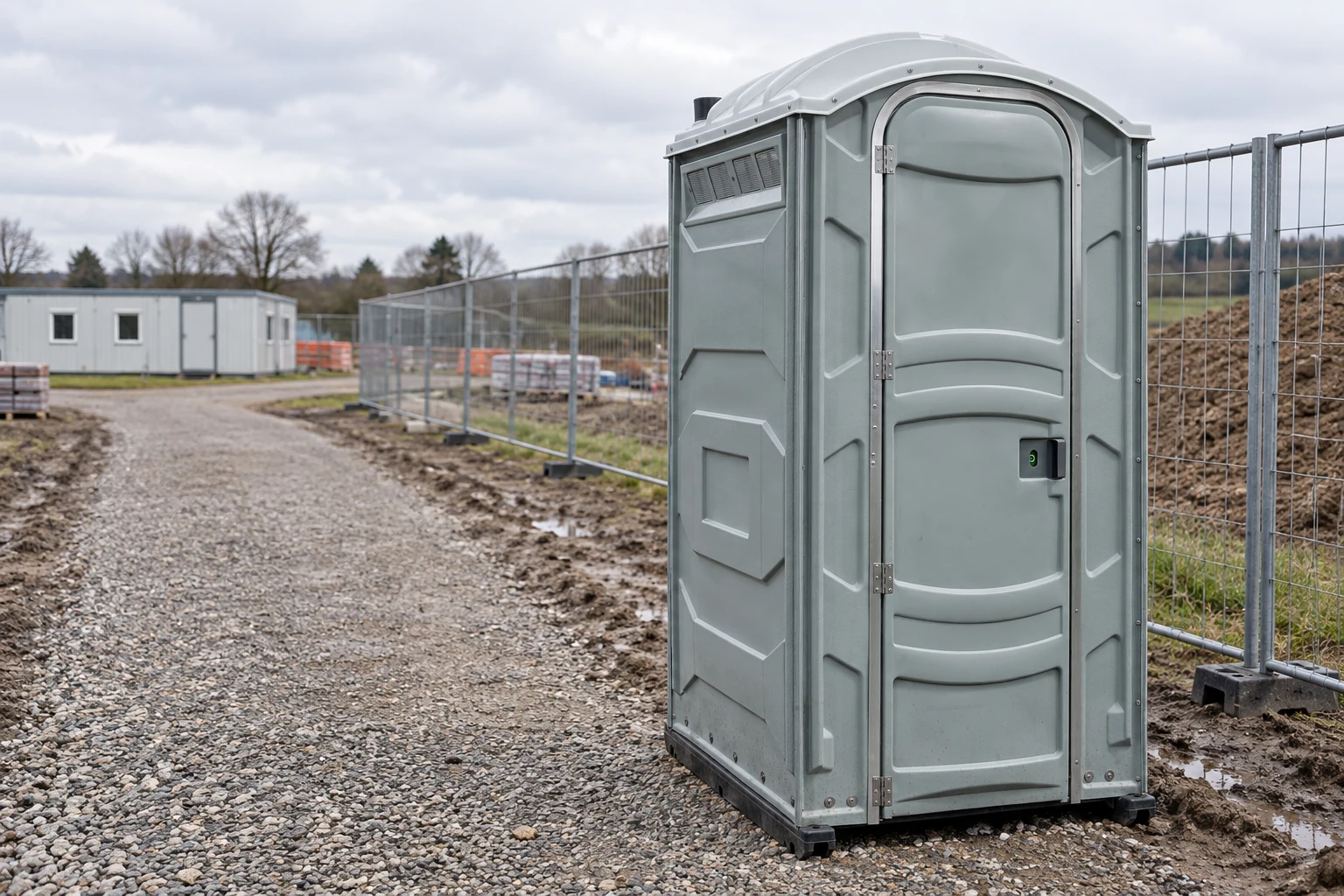
A long project can change work fronts, staffing and utilities several times. Compare what happens to each sanitation option at those changes. Separate cubicles may be easier to distribute, but their washing and service provisions must follow. A block may consolidate several functions, but a move involves its actual installation and service dependencies.
Review the next phase before the current provision is removed. Identify which users continue working, what facility stays available and when the replacement is ready for its intended functions. Do not infer a gap-free transition from a delivery date. The new supply, discharge, access and operating responsibilities need to be confirmed in the new location.
For example, a newly delivered block may still await an external connection while the existing cubicles remain the usable provision. Treat this as an explicitly planned transition rather than assuming the new purchase has already replaced the old facility. The sequence and retained service should be agreed by the project team; this is a planning illustration, not a claim about a PQSE project.
Make the change a decision, not an informal workaround
Assign a person to review the revised brief and coordinate the responsible parties. A changed route, increased use or lost water connection may alter the choice even when the building itself is unchanged. Record which assumptions no longer hold and what must be resolved before the new arrangement is accepted. This gives the operator a practical reason to revisit the purchase rather than repeat the original fixture count.
Accept the functions the site ordered
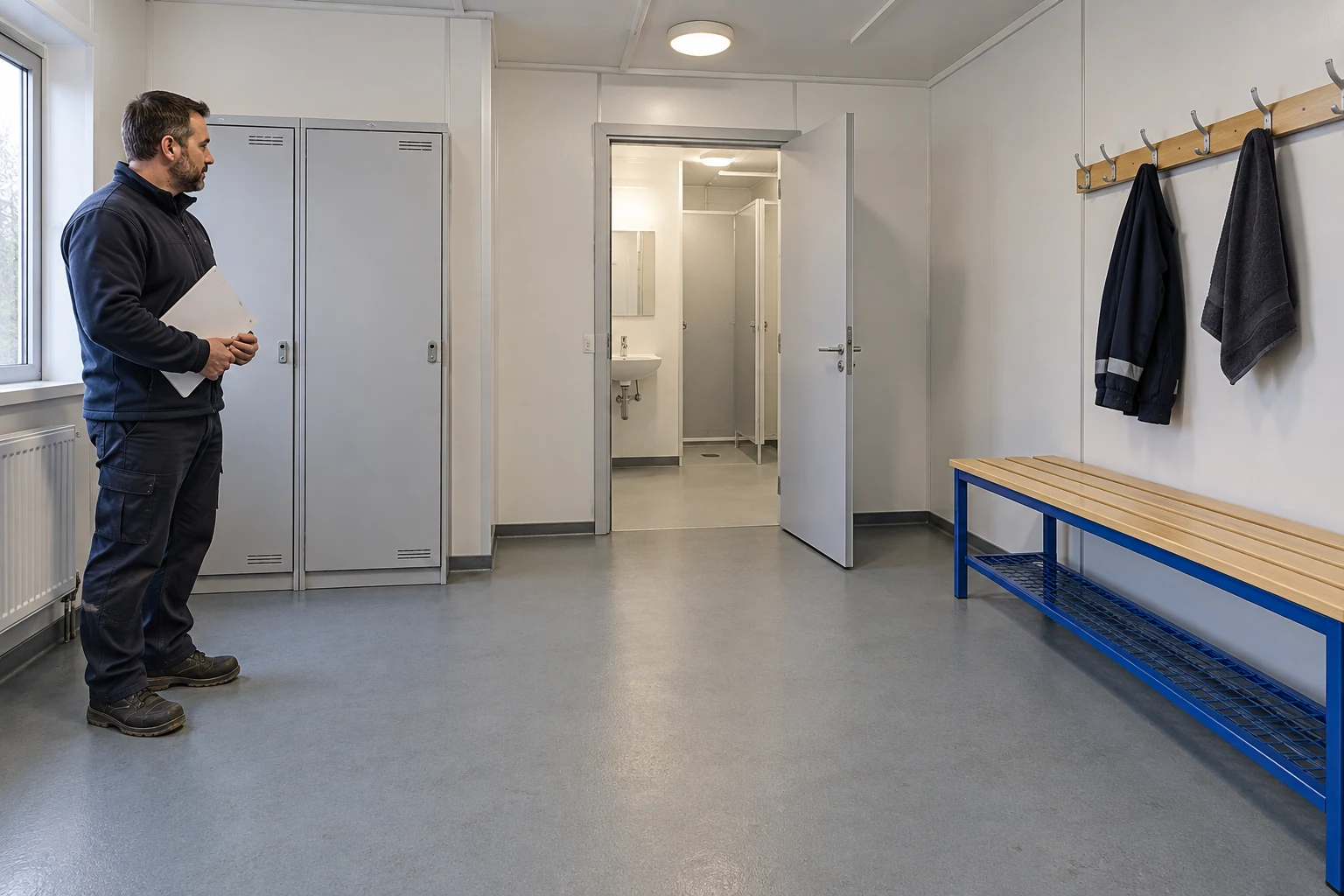
Walk through the installed facility against the agreed function schedule. Confirm the selected fixtures, intended use, usable supply, approved discharge arrangement and relevant operating information. Identify any outstanding condition by location and function. A delivered building should not be labelled fully ready when a required washing point or service interface remains unavailable.
Make the handover useful to the operator. Establish how faults are reported, who receives them and what action is authorised if a facility cannot be used. Separate a cosmetic observation from an issue affecting the intended function, while recording both appropriately. Any technical testing or adjustment must follow the selected system’s instructions and the responsible competent person’s requirements.
Check the delivered inclusion list against the order before resolving an apparent operating problem. A missing supply component, a separately contracted connection and an actual equipment fault can require different owners and actions. Record the observed condition clearly so the responsible party can respond. Avoid diagnosing the system from appearance or asking the operator to compensate for an unconfirmed interface.
For a purchasing discussion, provide the destination, work activities, workforce and shift pattern, planned locations, available services and any accommodation use. Ask PQSE to discuss a building and fixture arrangement against that brief. Keep local compliance, exposure assessment, utility verification and recurring service responsibility with the named qualified parties. The decision is then about a defined operating need rather than an attractive product label.
Questions that often change the buying decision
Can separate portable toilets be sufficient?
They may form part of a suitable arrangement when the required toilet use, washing, access, servicing and wider welfare are provided. Confirm the actual configuration and applicable project requirements. A standalone cubicle photograph or a general product description cannot establish that the whole site’s needs are met.
Does every construction site need a shower block?
Do not assume that. Establish the work-related trigger, destination requirements and any separate accommodation use. Where showers are required, specify the relevant users and functions before selecting a combined or separate unit. The conditional OSHA example is not a rule requiring showers for every construction workforce.
Does a combined block reduce the need for servicing?
The actual systems determine its continuing tasks. Cleaning, supplies, waste removal and maintenance still need an owner. Compare both options using the same scope, including what the site provides. Do not claim an operating-cost advantage without suitable data for the configurations and conditions being compared.
What must be confirmed when no sewer is available?
Agree the selected discharge arrangement, receiving route where relevant, system compatibility and service access with the responsible parties. Also confirm water and energy dependencies. A holding-system option should be specified for the actual facility rather than chosen from an unrelated supplier’s example or a generic tank-capacity assumption.
What information should accompany the request for a quotation?
Send the destination, work and washing needs, expected users and shifts, required fixtures, site-phase plan, available supplies and intended service responsibilities. State unresolved interfaces explicitly. Request the chosen configuration’s inclusions, exclusions and operating information so both the building offer and the site obligations can be reviewed.
Sources and limits
The linked HSE pages support their stated Great Britain construction context; the numerical chemical-toilet example cites the standard edition named by HSE. OSHA 1926.51 supports the conditional US federal construction shower example. These are distinct functions and jurisdictions. The operational comparison is editorial purchasing guidance, to be confirmed for the actual work, destination and selected equipment. Illustrative photographs establish no measured capacity, utility performance, compliance or PQSE project result.