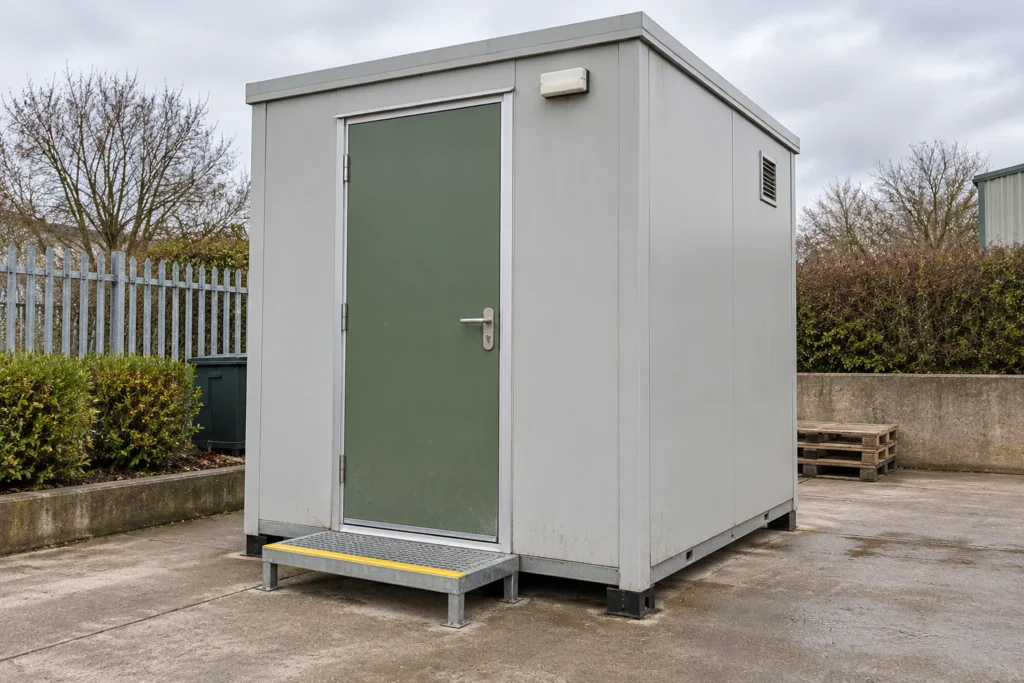
For a portable shower block used only occasionally, require a water-route record that matches the selected unit and its completed site connection. Link the outlets and relevant branches to stable identifiers, confirm access to the agreed service and monitoring points, and name the person who keeps the current records. These requirements help the buyer obtain a system that can be understood and managed after delivery. A sales floor plan and a heater display cannot answer those questions alone.
Consider a project that opens only part of a shower block between larger deployments. The operator needs to know which outlets belong to the quieter branches, where their checks are made and what changed when the block was reconnected. This is a planning example, not a reported PQSE installation. The purchasing question is whether the supplied information and installed access support that work; selecting treatment, maintenance or operational release remains a decision for the competent team responsible for the actual system.
Describe the expected pattern of use
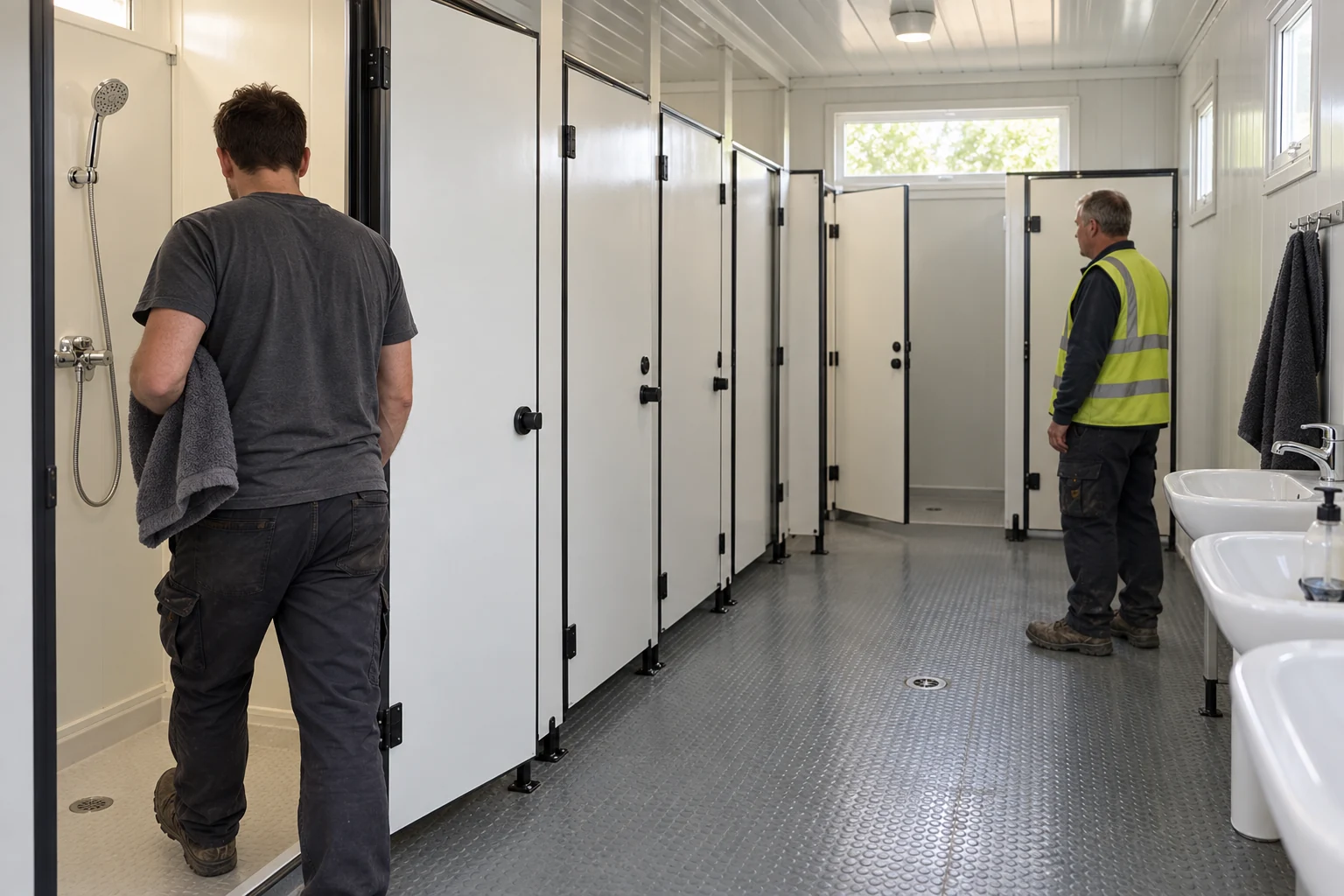
Occasional use can mean a completely idle block, a few regularly used bays or repeated moves between projects. Describe the pattern the operator expects rather than supplying only a maximum user count. The record and access requirements should follow the parts of the selected system that will need attention.
In a worker-camp operating brief, identify who uses the facilities between peak periods and who manages them when staffing falls. A unit may remain on site while the operating team changes. Write down which party will keep the usage information and contact the competent water-management lead. Do not leave that responsibility implied by the fact that someone has a key to the building.
The CDC's reduced-operation guidance explains that relevant periods depend on plumbing, water conditions and use patterns. For this purchase, describe foreseeable idle or partial-use states and ask how they will be represented in the records. An elapsed-time counter gives limited information if nobody knows which parts of the water route it refers to or what the agreed control scheme requires.
Keep the purchasing brief separate from a restart instruction. It should state the proposed supply arrangement, intended equipment and people responsible for management, with gaps marked for confirmation. The purpose is to make a later assessment possible using reliable configuration information. If the operating pattern is still uncertain, agree who will update the brief before use and what changes need another competent review.
Match the water-route record to the unit

Ask which document will describe the water route after the supplier's work and site connections are complete. A concept plan may show shower positions without explaining their supply branches or mixing arrangement. Agree a current route description and component schedule for the chosen order, with an owner for the final revision.
Separate the sales illustration, approved supply detail and record updated after installation. Apply an itemised supply-scope review to the documents as well as the hardware: ask which information comes with the building and which must be completed by the site installer. This reconciliation is a procurement recommendation; confirm the documents included in the selected order.
The record should let a reader follow the selected route from the incoming connection through any storage, heating and mixing equipment to the relevant outlets. Include any temporarily out-of-use parts. Avoid adding a generic tank or return loop because it appears in another model's diagram. Where the arrangement is still proposed, identify the unresolved component or interface and the party who will confirm it.
Include the unit identity, drawing revision and date so the operator can distinguish current information from a superseded sheet. Agree a readable format available where the block is managed, plus a way to update it. A sophisticated drawing is of little use if it describes different equipment or remains with an earlier contractor. The following table sets out document questions to negotiate for the selected order.
| Record or drawing | Question to resolve | Contributor to agree | Check that it matches |
|---|---|---|---|
| Current route and component schedule | What connects inlet, equipment, branches, mixing and outlets? | Supplier and site installer | Revision and identities match the installed arrangement |
| Site supply boundary | What completes the route upstream of the unit? | Buyer and site installer | Actual source and connection are recorded |
| Outlet and branch register | Which parts are regularly used, quiet or out of use? | Installer and operator | Outlet identifiers can be followed into the route record |
| Monitoring-point schedule | Where and on which water side is each check made? | Competent assessor and responsible operator | Access and represented section can be identified |
| Component service information | How is the fitted equipment maintained? | Supplier, manufacturer and competent maintainer | Instructions refer to the installed components |
| Configuration change record | What changed after delivery or movement? | Change approver and record owner | Affected route and point identities are updated |
Record the site supply connection

A supplier's drawing may end at the inlet of the selected portable shower unit. Ask who records the route that connects that inlet to the site's actual supply. If another contractor provides external pipework or equipment, identify that scope before ordering. The operator needs to understand the completed arrangement, even when its components were supplied by different parties and accepted under separate contracts.
Confirm the source and connection information with the site installer or supply owner. Mark what belongs to the supplier, what the installer completes and what remains the buyer's responsibility. Do not assume the same arrangement will be used at the next deployment. A connection photograph can help identify an interface, but it should accompany the route description and relevant installation information rather than standing in for them. Missing upstream information needs an owner and a completion date.
Keep incoming-supply evidence linked to the unit's current deployment record. A file that contains only factory paperwork may lose the context in which later readings were made. If the block moves, preserve the earlier record while identifying the new connection and the qualified review required for it. The buyer is arranging an understandable handover between parties; this does not establish water quality or authorise an unverified connection to be put into service.
Identify outlets and relevant branches
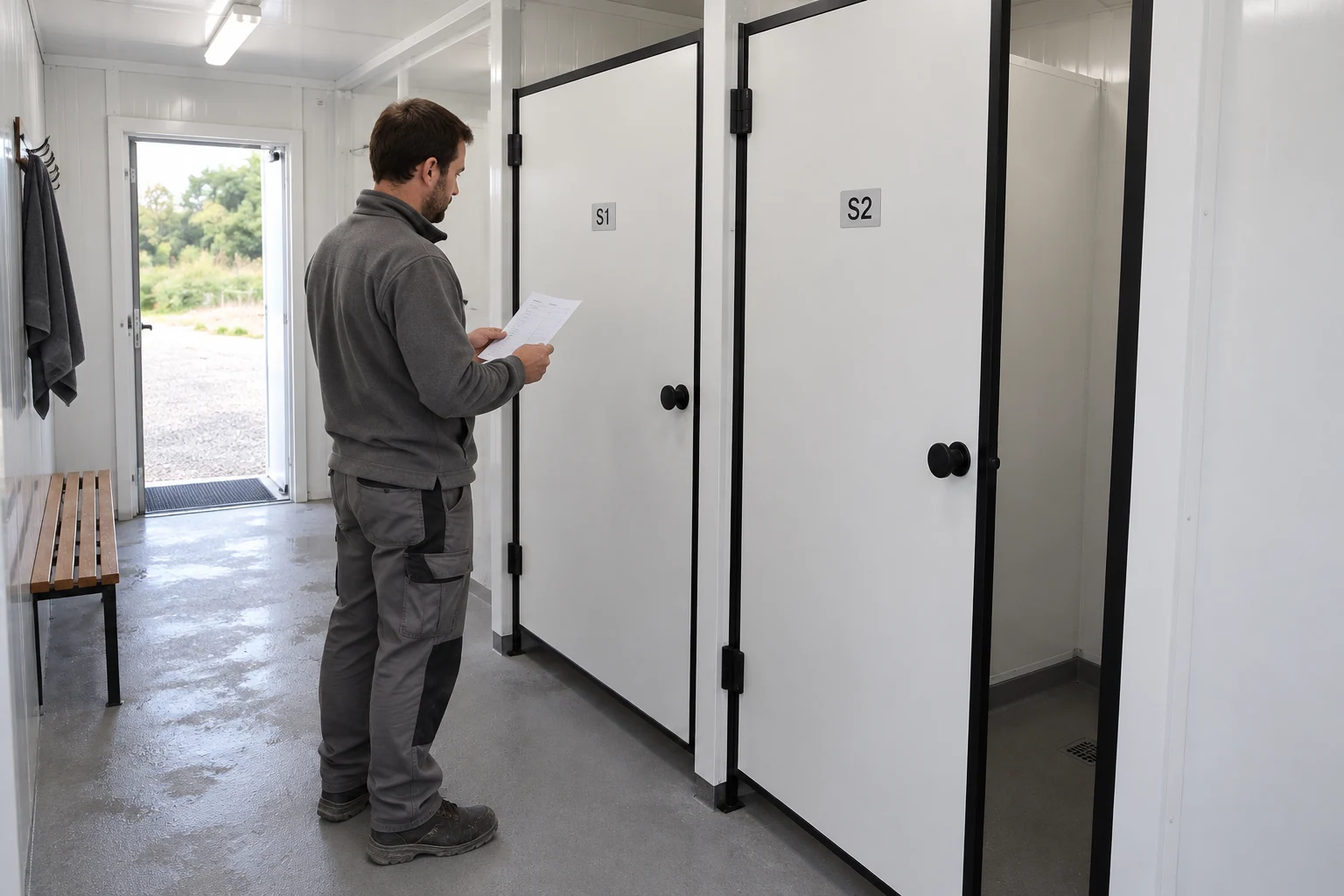
A bay number helps a cleaner locate a shower, but the water-management record also needs to connect that outlet to its supply route. Agree identifiers that remain understandable when an operator changes. Include relevant branches and standby components so a note about low use describes an identifiable part of the system.
Review the outlet schedule alongside the wider portable shower planning brief. Overall demand explains how the facility is intended to operate; the register explains which individual parts are involved. Ask the installer to reconcile the labels with the current route. A row marked 'shower' without a location or route reference cannot reliably distinguish one bay's history from another's after maintenance or relocation.
Keep the distinction between a visible label and the hydraulic arrangement. Two neighbouring bays may need different records if the selected design supplies them through different branches or mixing equipment. Treat that as a question to resolve from the actual drawings, not an assumption about a PQSE model. Show whether an outlet is in ordinary use, temporarily unavailable or awaiting a decision by the competent team.
Agree how replacement fittings and renamed bays will be recorded. Preserve the link between the former identifier, the new description and the affected route, rather than deleting the earlier history. The operator should be able to understand what an older entry referred to. Keep that history available when the block returns with a different operating team.
Verify service access in the finished installation
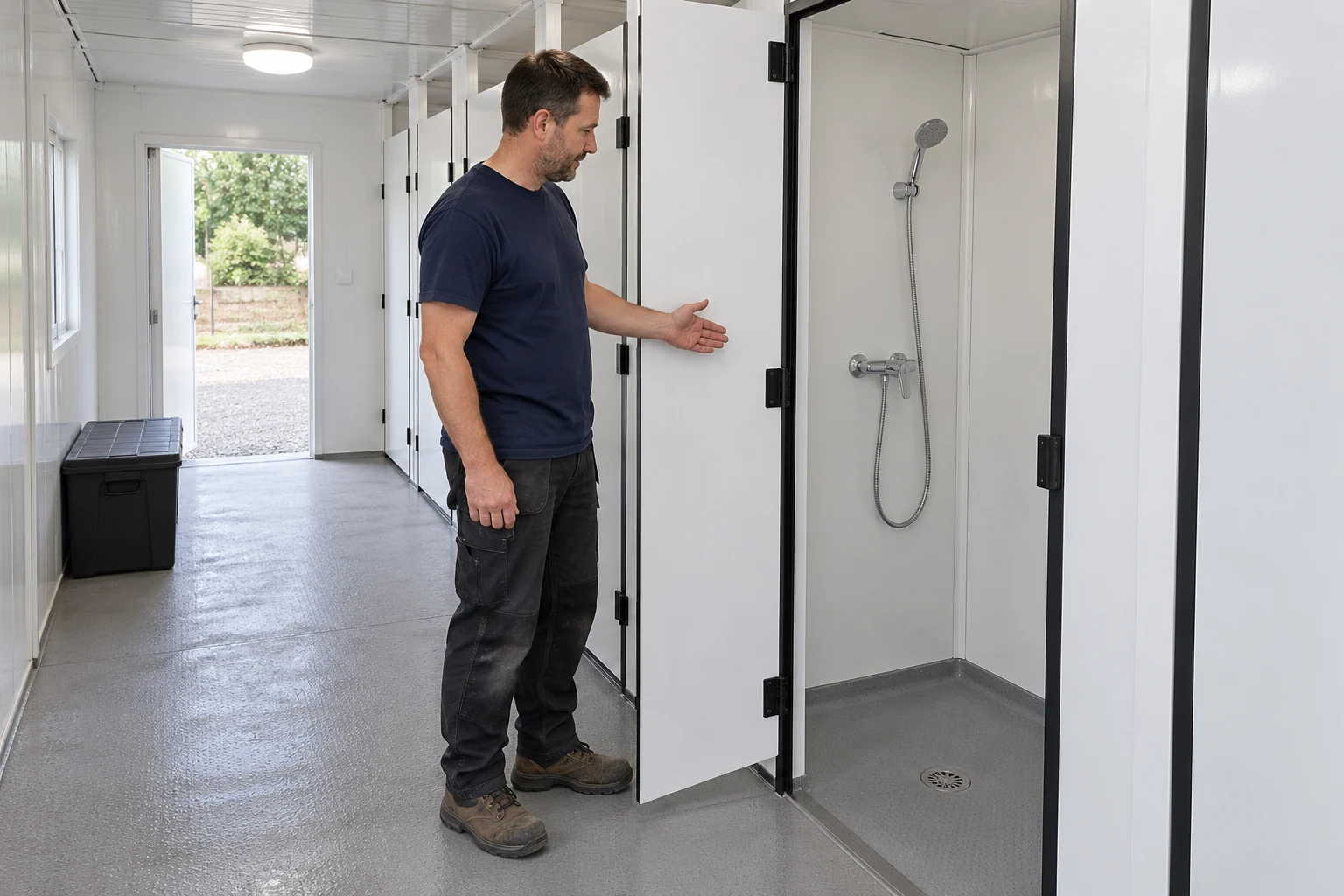
An access panel drawn beside a shower does not establish that the competent maintainer can reach the component they need. Review the finished arrangement, including adjacent buildings, stored items and fixed equipment. Ask what each opening serves and which manufacturer's instructions apply to the fitted component before agreeing the access provision.
HSG274 Part 2, paragraph 2.34, addresses maintenance access. Turn that guidance into a project check with the supplier and qualified maintainer. Identify the relevant valves, mixing equipment and inspection points in the selected arrangement. The buyer can ask for an access demonstration without directing an unqualified person to remove a panel or operate a valve.
Coordinate this with wet-area maintenance access. A door that opens in an empty factory space may be obstructed after installation or by everyday storage. Check the route to it and the position where the work will be performed. Use the selected component's requirements and the responsible maintainer's review; there is no useful universal clearance to invent for equipment that has not yet been confirmed.
Document any remaining access limitation before signing off the fit-out. It might require a change to the enclosure, neighbouring arrangement or agreed equipment position. Identify who makes and verifies that change. If a photograph is used in the record, connect it to the component and location it shows. An attractive image of a service area is insufficient if the relevant inspection or maintenance point is concealed elsewhere.
Locate checks along the water path
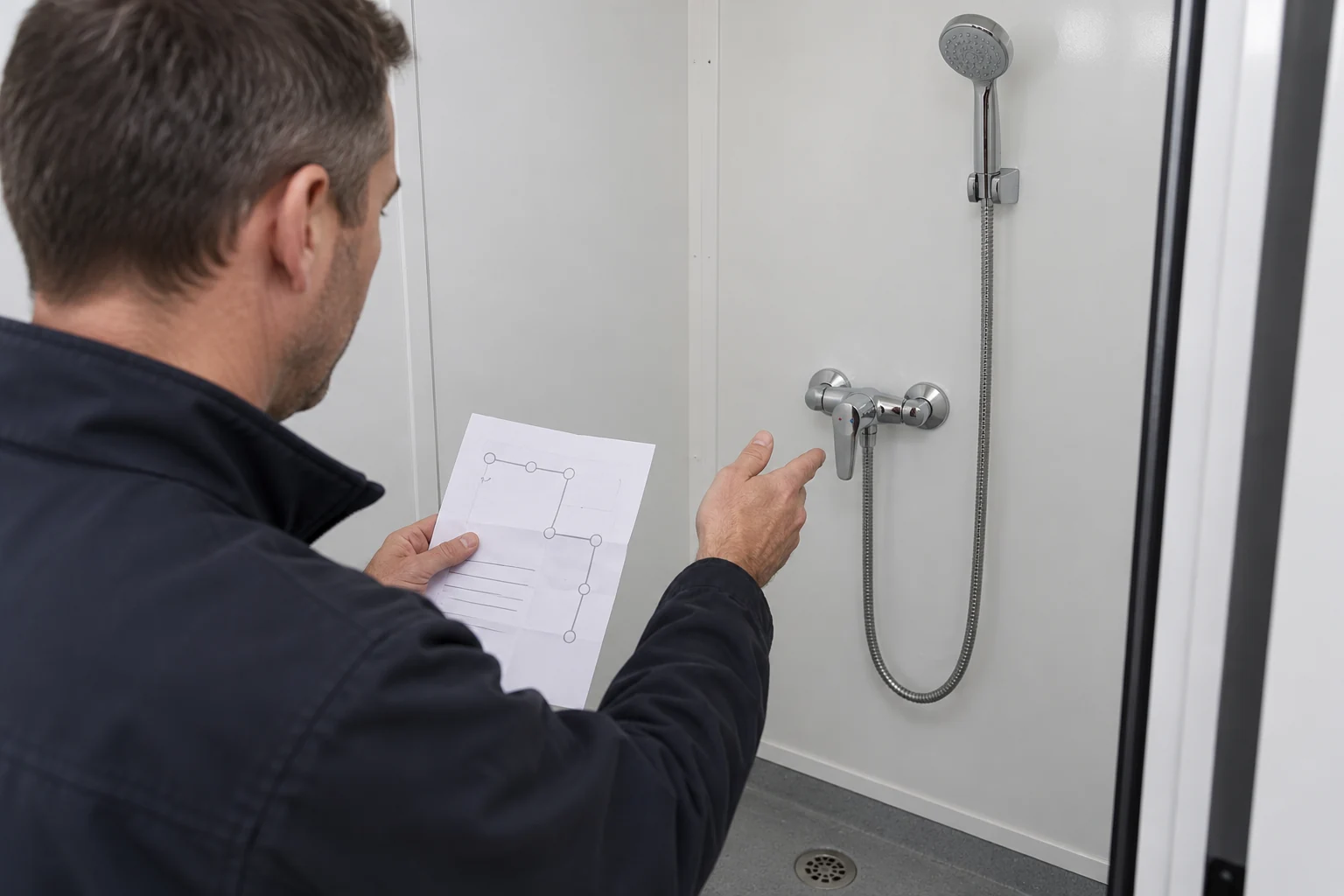
Ask the competent assessor which parts of the completed route each agreed monitoring point represents. Bay order alone does not establish sentinel positions. A point schedule should make the location and water side clear enough for the responsible person to find the intended check.
HSG274 selects sentinels by distribution arrangement and considers unrepresented sections. Keep that system-specific selection with the actual route record. A simple row of shower symbols cannot show whether the assessed points cover the relevant branches or what additional locations the competent team has selected.
For each agreed point, record its identifier, physical location, the section it represents and whether the check concerns cold supply, hot supply or blended water. Confirm how the competent person will reach and identify it in the installed block. A description such as 'near the showers' is too vague when several fittings or pipe sides are present. The record should resolve that uncertainty before readings accumulate.
Discuss any point that exists on the proposed drawing but cannot be reached in practice. The remedy and measurement method belong to the qualified team and selected equipment, with changes recorded by the responsible installer. Do not quietly substitute an accessible mixed-water outlet and continue using the old point description. That creates a new meaning for the readings while leaving the earlier record apparently unchanged.
Separate hot supply from blended shower water
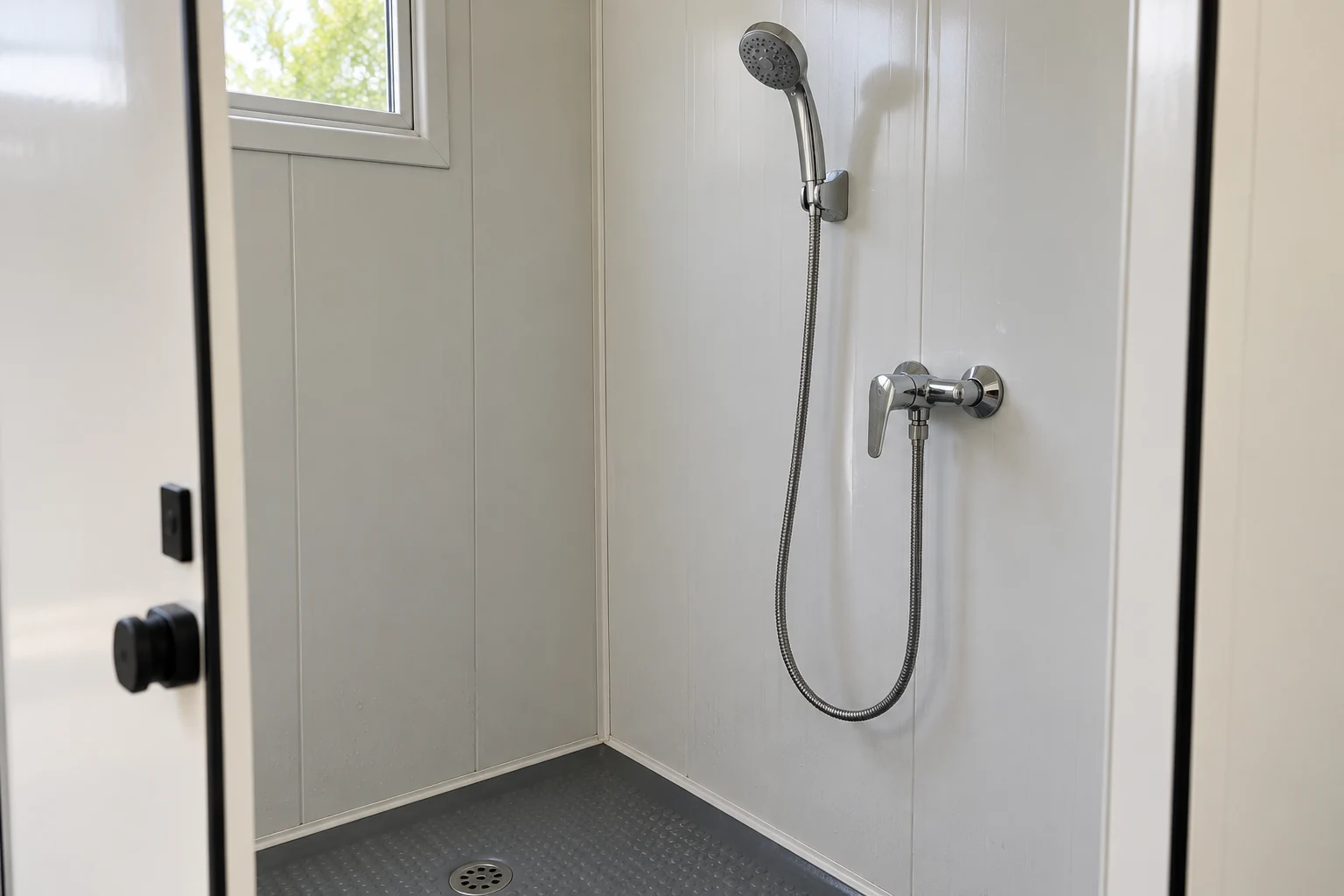
Every temperature entry needs a measurement object. A hot-water storage reading, a hot supply point and water delivered after mixing describe different parts of the arrangement. The reference values below are issuer- and context-specific guidance. They are not shower-user temperature settings, a PQSE specification or proof that blended water is safe for bathing. Confirm the anti-scald arrangement separately with the competent team, the actual users and the fitted equipment's instructions.
For thermostatic mixing valves (TMVs), HSE guidance places the hot supply check at the inlet. A showerhead reading cannot replace it. Agree separate descriptions for the relevant sides of the selected arrangement. This helps the operator understand a record without guessing whether a number came from storage, a supply pipe, a control display or the water reaching the user.
Ask who confirms the measurement locations and who verifies protection against scalding under the applicable requirements. Include the selected component information and the conditions of its inspection in the handover. A control label or a recorded hot-side reference does not demonstrate the complete mixing arrangement's behaviour. If the necessary evidence is missing, retain it as an unresolved item for competent review rather than interpreting a familiar number as an operating release.
| Issuer and context | Measurement object | Source reference | Meaning and boundary |
|---|---|---|---|
| HSG274 Part 2, GB temperature-control strategy | Stored hot water | At least 60°C | Storage reference; separate anti-scald protection is needed for the actual arrangement |
| HSG274 Part 2, general GB distribution guidance | Hot distribution at outlet | 50°C reached within one minute | Hot-side reference; healthcare context differs. Not blended bathing water |
| HSE, GB cold-outlet guidance | Assessed cold sentinel tap | Below 20°C after two minutes | Use the assessed location and control scheme; not a mixed-water reading |
| HSE, GB hot-water/TMV guidance | Hot inlet upstream of TMV | At least 50°C within one minute | Hot supply check; does not prescribe downstream shower temperature or prove anti-scald performance |
Make readings repeatable and attributable
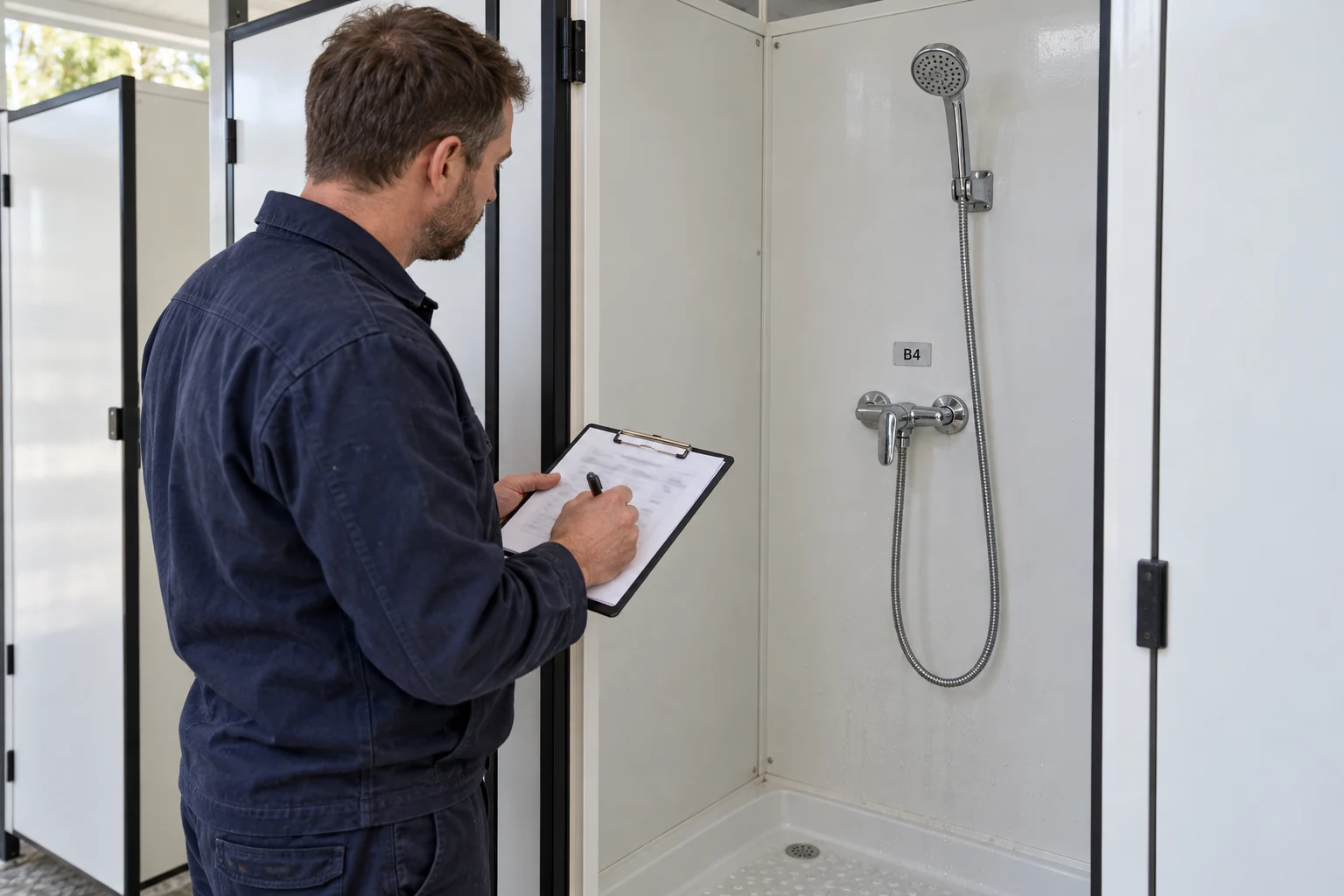
A record should let the next competent person repeat the agreed check. Agree the entry fields before monitoring begins. A number copied into a spreadsheet without its location or water side can become difficult to interpret, even when the person recording it acted carefully.
HSG274 paragraph 2.54 identifies the person, date and repeatable sample-location detail. Use those basic record requirements as a starting point. For the buyer's record, also agree how the point identifier, units, method and current configuration are captured. These additional fields are practical proposals to discuss with the competent team, not a claim that the guidance specifies a particular spreadsheet or application.
Retain conditions that the responsible assessor says affect interpretation. For an intermittently occupied block, this may include the recorded use state or a recent configuration change. Keep the procedure reference available rather than reducing it to a heading such as 'temperature checked'. The incoming operator should be able to identify what was done and which parts of the system the entry concerns without relying on an earlier employee's memory.
Name who receives unexpected results and records the required technical response. Keep the issue, action owner and competent review connected to the point and configuration that produced the observation; a familiar repeat number alone does not close the entry.
Keep actual low-use states visible in the records
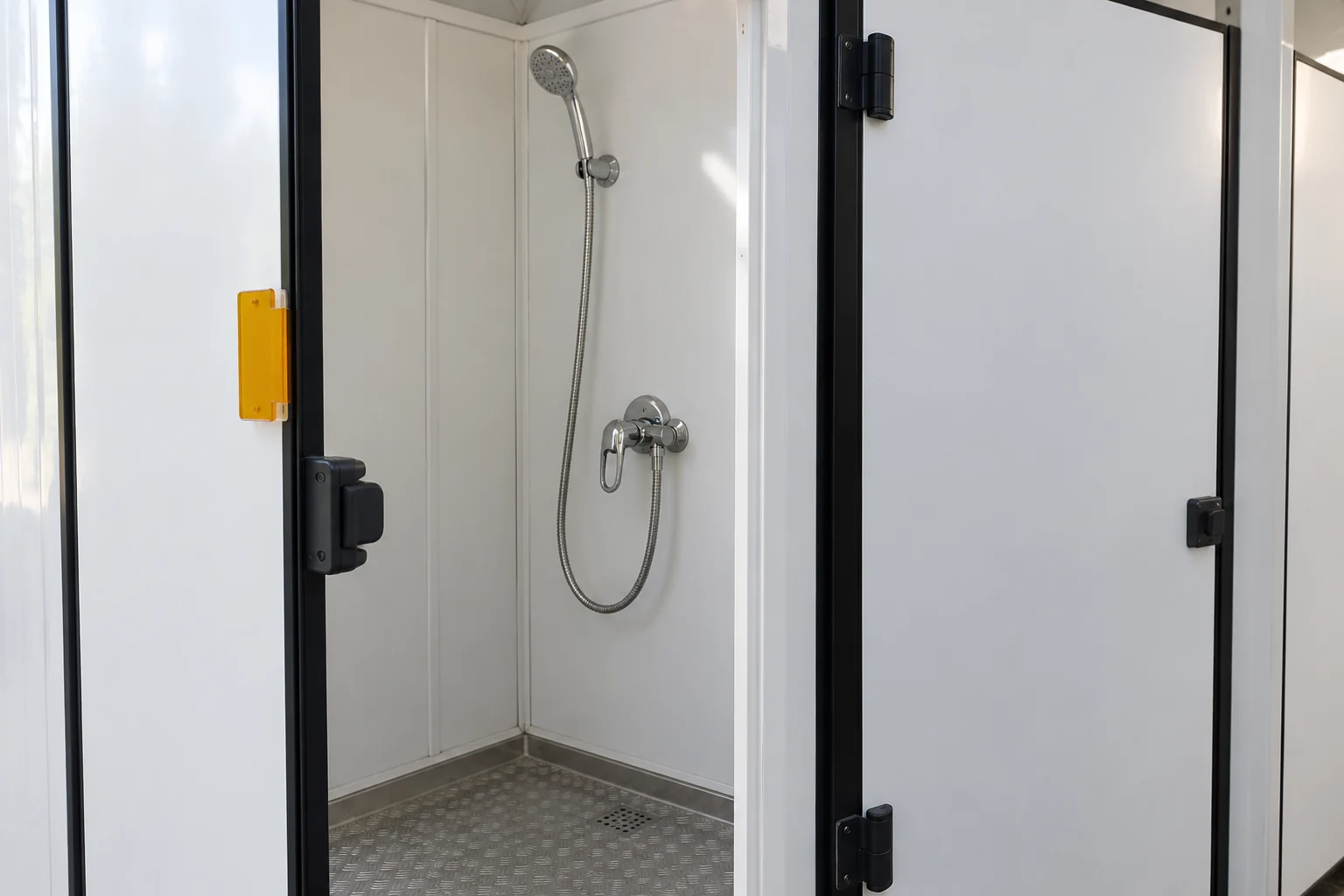
Record which identified outlets or components are quiet, unavailable or standing by, rather than marking the whole facility simply open or closed. The person managing the block needs a view of the affected parts. Agree who updates that state and who makes the technical decisions associated with the assessed control scheme.
A partial-use register can connect the operating brief to the current outlet schedule. Record what the operator knows and leave uncertain histories explicit. If a block arrives from another project without reliable use information, request the missing record and a decision from the responsible team. Do not silently fill the gap with the assumption that every bay was used because the facility remained available.
Existing cold-weather operating arrangements address seasonal operations. The extra purchasing requirement here is that the records identify the affected water path and remain available between deployments. A calendar interval alone cannot explain the selected system's condition. The agreed monitoring and maintenance scheme needs an owner who can relate its activities to the outlets and components actually present.
Keep records of decisions as well as the state labels. When an outlet's status changes, identify the relevant point, date and person responsible for the next review. Confirm how missing or overdue information reaches that person when staffing is reduced. This supports continuity of management; it does not provide a universal idle-period limit, a flushing sequence or permission to return an unassessed part of the system to use.
Record connection and component changes
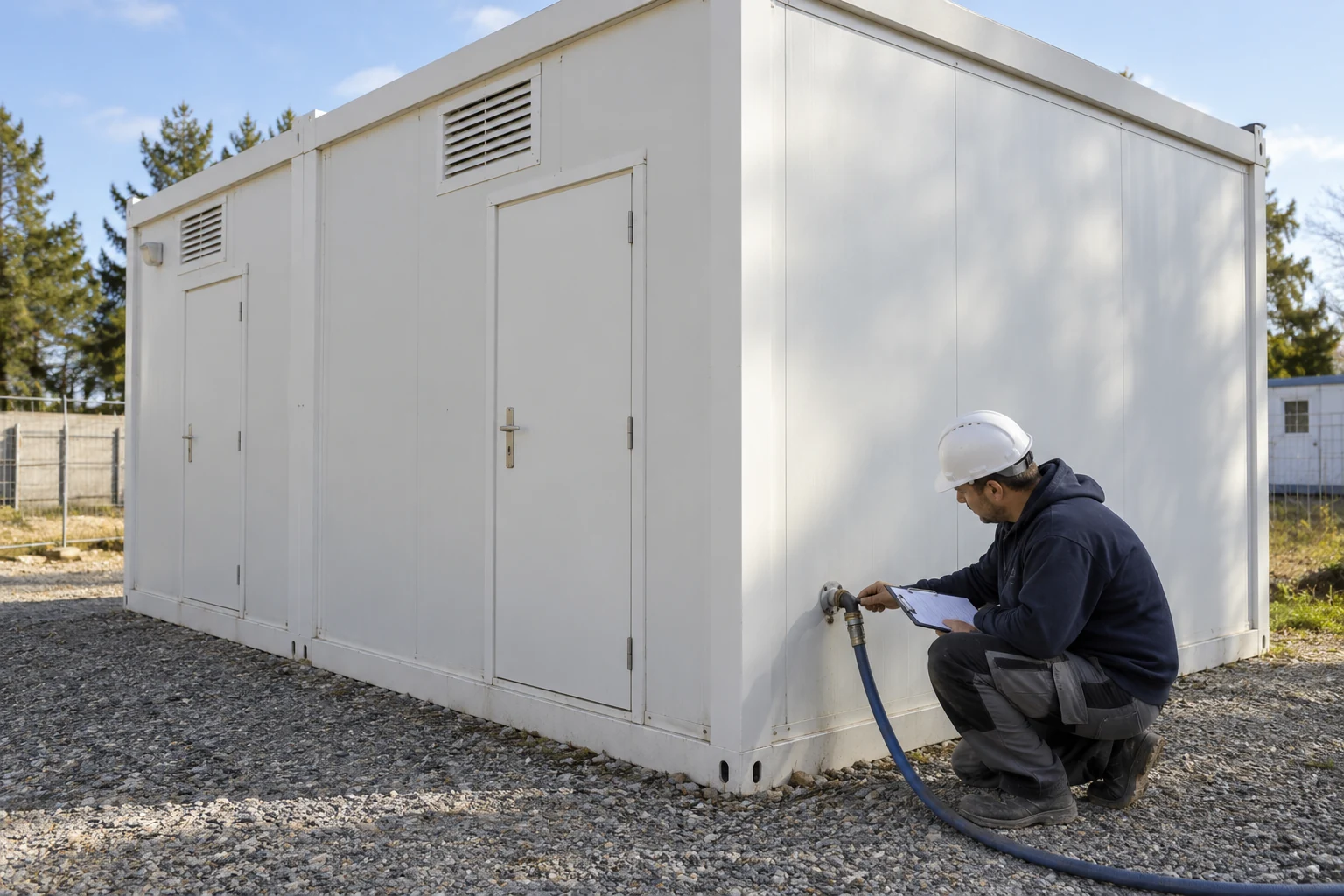
Movement, reconnection or a component substitution can leave the same visible bay labels referring to a changed arrangement. Require a record identifying what changed, who completed it and which route or monitoring descriptions were affected. Keep the older configuration distinguishable from the current one. Copying the previous document pack into a new project folder can preserve information, but it does not establish that the contents still describe the installed system.
Connect the amended record with the building-package quality records for the component supplied or replaced. Confirm the relevant manufacturer information and the installer responsible for updating the route. Ask the competent water-management lead which previous point descriptions and records remain applicable. A photograph of the new fitting helps identify it, but does not by itself show the complete affected path or resolve the technical implications of the change.
Agree revision control before the first deployment so it survives a change of contractor. State where the authoritative drawing is held and how the operator receives an amendment. Record any unresolved difference between the installed arrangement and its documents, with an action owner. The procurement goal is traceability through each change, not an assurance that a familiar bay name, replacement part or supplier document automatically carries the earlier assessment into a different installation.
Assign record custody and resolve missing evidence

The supplier, site installer, operator and competent water-management team may each contribute part of the evidence. Agree who maintains the authoritative set and how others obtain it between deployments. That person needs a way to request missing information and connect amendments with the records already held for the selected shower block.
Identify document custody in the purchasing agreement: current route, component information, point schedule, use states and change records. Separate items the supplier delivers from those completed or retained on site. Ask how the incoming operating team receives the current set when a contractor leaves. The arrangement should make responsibilities visible without claiming that the buyer receives a completed water-management programme as part of every building order.
The CDC's maintenance guidance calls for documented activities and responses to unplanned programme deviations. For this project, agree who receives such information and where the resulting decisions are kept. A service-provider report stored separately from the updated route may be difficult for the next operator to interpret. Link contributions through the unit and configuration they concern, while preserving their dates and responsible parties.
At handover, compare the agreed documents with the installed identities and demonstrated access. List missing or mismatched evidence with an owner and follow-up requirement. Keep document acceptance separate from the competent team's decision about operation: receipt of a tidy file does not prove water safety. A useful purchasing outcome is a current, understandable record set and practical access that let the responsible people carry out and record their work.
| Configuration or use condition | Evidence needed | Responsibility to agree | Question left open |
|---|---|---|---|
| Only some bays operate | Outlet identities and actual use state linked to branches | Operator records; competent team defines actions | Do agreed checks represent the quieter parts? |
| Standby or out-of-use section | Component identity and assessed scheme reference | Water-management lead and competent maintainer | Who owns the state change and review? |
| Service or monitoring point | Installed access demonstration and component instructions | Supplier/installer completes; competent maintainer verifies access | Can the intended point be reached and identified? |
| Movement or component substitution | Revision and affected route/point identities | Installer, change approver and record owner | Which earlier entries describe the same configuration? |
| Transfer to another operating team | Current route, states, logs and open items together | Buyer names custodian and incoming operator | Who obtains the records and closes missing evidence? |
Buyer questions
Does bay order establish sentinel positions?
Sentinels follow the distribution arrangement. Keep the competent assessor's selected points with the actual route record.
Does a mixed shower-water reading replace the hot-inlet record?
No. HSE's TMV hot-supply check concerns the inlet upstream of mixing; showerhead water describes a different point. Keep the records separate and verify anti-scald protection for the fitted equipment. A hot-side reference is not the user's shower setting.
Is receiving a complete document pack enough to confirm safe operation?
Compare the documents with the installed configuration and agreed access, then retain open items for the responsible team. Document receipt supports management but cannot establish water safety by itself. The operator also needs the applicable assessment, control scheme and competent decisions tied to the actual system and its use.
Sources and scope
- HSE: HSG274 Part 2 — hot and cold water systems. GB access, monitoring and records; the 2024 edition updated Part 1 only.
- HSE: Hot and cold water systems — things to consider. GB guidance identifying cold sentinel and TMV hot-inlet measurement objects; frequency and locations follow the applicable assessment and control scheme.
- CDC: Reopening Buildings Guidance, 6 February 2024. US reduced-operation context, documentation and equipment-management boundaries; no generic reopening procedure or bathing-temperature prescription is adopted here.
The photographs illustrate purchasing and record-management situations. They are not supplied-system drawings, actual monitoring results, completed assessments or product certification. Confirm the selected equipment and project requirements separately.