If a proposed modular garage includes work that requires a stationary vehicle engine to run, define that activity and its exhaust-control responsibilities before ordering the building. A parking enclosure, a large doorway and a separately purchased extractor do not establish that the combined facility is suitable for the work. The purchase needs an identified task, an appropriate project assessment, coordinated equipment and building interfaces, and evidence tied to the installed arrangement.
The practical difficulty is often a gap between otherwise detailed quotations. The building supplier describes the enclosure; an equipment supplier describes an extractor; the site contractor prices connections. Unless their assumptions are reconciled, the buyer may receive everything listed while the intended activity remains unresolved. Start with the overall garage use and equipment brief, then develop the narrower exhaust interface described here.
This is a procurement guide for buyers coordinating a proposed maintenance task. It supplies no fan sizing, duct diameter, carbon-monoxide operating threshold or permissible engine-running time. British workplace guidance, American prevention advice and one manufacturer example retain their separate scopes. Photographs illustrate questions to discuss; they do not show approved PQSE installations or measured control performance.
Put the engine-running task in the brief

Discuss the proposed job beside a stationary vehicle with its engine off. Identify why the engine would need to run, where the work would occur and who would be present. A vehicle photograph helps describe the task, but it cannot establish that the garage is ready for that activity.
A proposed activity needs a defined boundary
Separate regular vehicle parking from a specific test or maintenance process. Describe the vehicle configuration, fuel, intended working position, relevant equipment and expected attendance. Include whether another bay would be occupied. Record these as inputs for the responsible assessment, rather than translating a description such as occasional work into an assumed operating permission.
A useful brief also states what is outside the order. If the first purchase is a parking building while the work facility remains under review, retain that distinction in the proposal. The modular garage building discussion can then address an identifiable enclosure without silently including an unassessed process.
Ask whether the intended service really requires that combustion activity in this location. The answer belongs with the people defining the work and its controls. A preference for buying an extractor should not settle the earlier decision about the activity. Keep the resulting scope alongside the quotation so a different purchasing team cannot replace it with a generic workshop label.
| Proposed activity | Boundary to record |
|---|---|
| Vehicle storage | Parked condition and access tasks. |
| Engine-off bench work | Actual tools, materials and services. |
| Stationary engine-running work | Specific process awaiting appropriate assessment. |
| Portable combustion equipment | Separate equipment and proposed location. |
Keep the enclosure and the emission-control duty separate
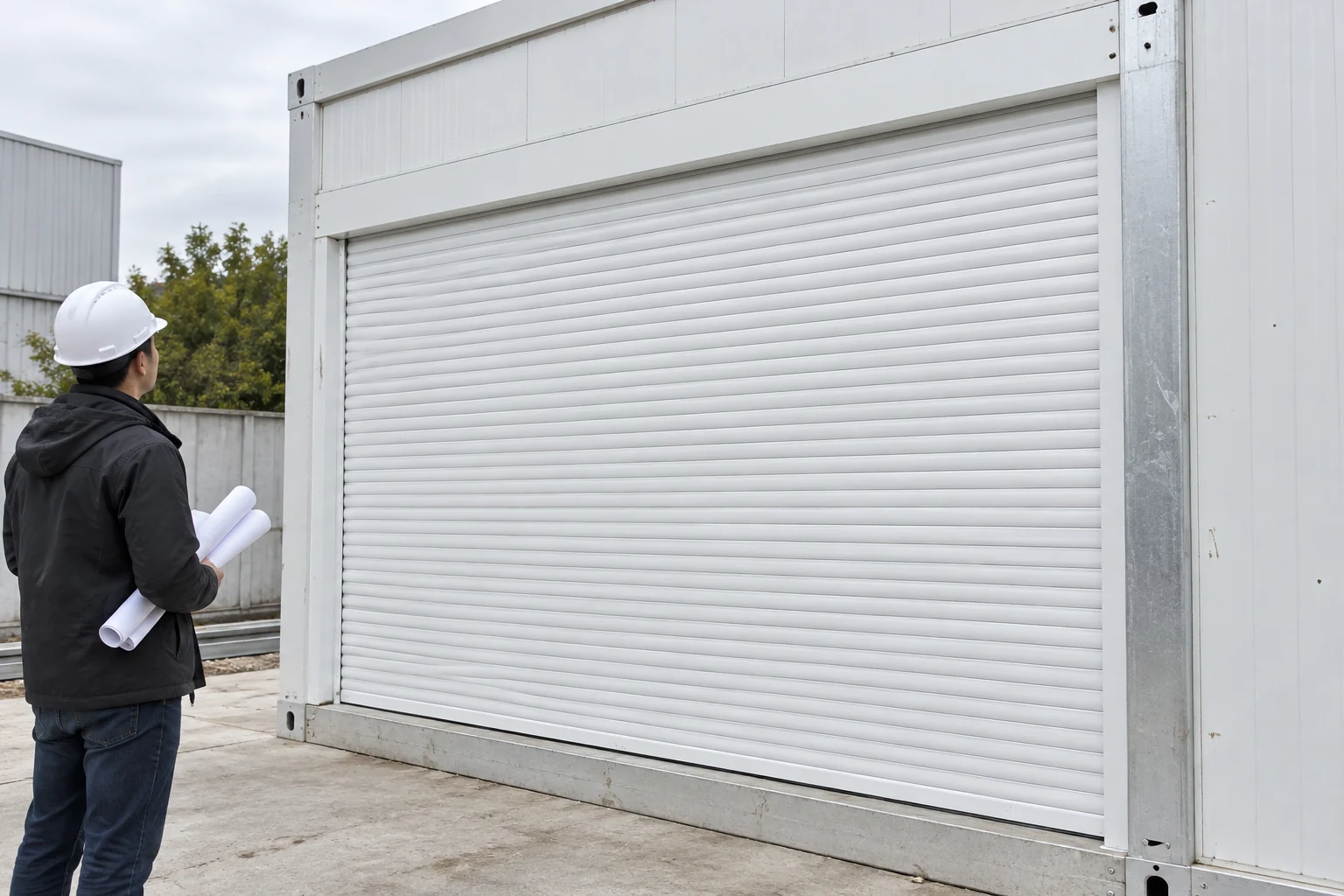
Review the proposed enclosure in its ordinary door condition, including periods when the vehicle opening would be closed. A roller door belongs to the building layout. Its presence does not identify an exhaust-control system, demonstrate a working air path or establish permission for an engine-running task inside the room.
The HSE vehicle-exhaust guidance calls for tailpipe scavenging during static running, an outdoor discharge that avoids exposing others or drawing fumes back, and sound flexible connections. It warns against relying on open garage access doors or catalytic converters. These are British workplace principles, not a declaration that a particular modular building has the necessary controls.
Household advice has a different setting. CDC's automobile guidance warns against running a car in a garage attached to a house even with the door open. Its separate detached-garage wording should not be converted into approval of a workplace process. Establish the actual residential or occupational context before selecting the applicable project advice.
Keep a moisture complaint out of this equipment decision unless it has its own assessed relationship to the work. The wet-vehicle moisture investigation addresses water sources and drying questions. A product selected for that problem is not thereby specified for emissions. Ask each bidder which duty its offer actually covers, and retain an explicit response when one system is proposed for several purposes.
Order an identified supply package
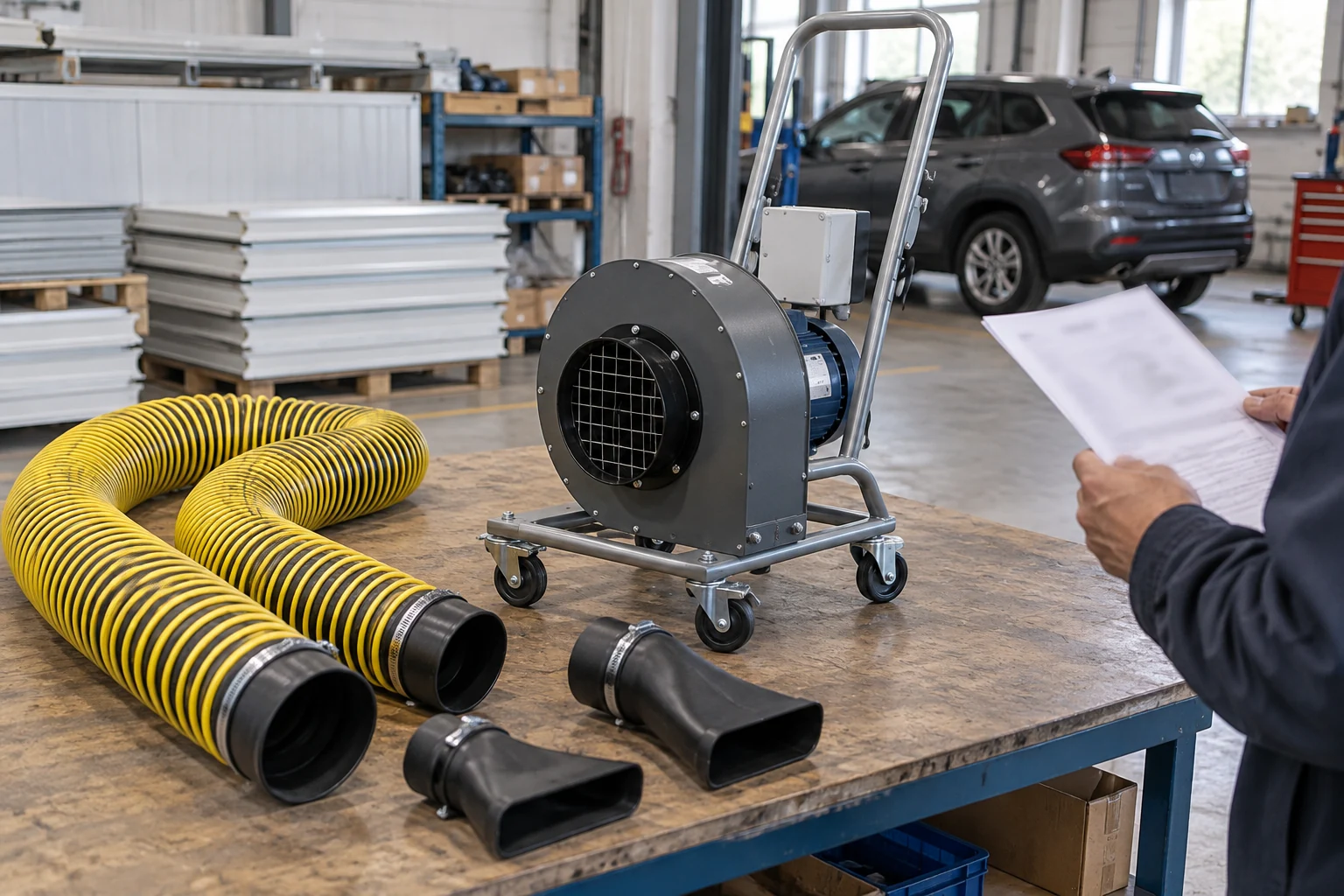
Set out the proposed equipment and its unconnected accessories while reviewing the offer. An extractor body, hose and attachment can be separately supplied items. The purchasing question is which exact components and documents belong to this order, not whether an assembled-looking product photograph appears to contain a complete working system.
One bounded example is the Nederman UK-linked Single Exhaust Extractor leaflet, dated August 2026. Its model table marks item 20814163 with a footnote stating that a fan is included and a starter is not. Item 20813563 carries a nozzle-included footnote; that statement alone does not establish its fan scope. Confirm the current item and quotation rather than borrowing another row's inclusions.
For the actual purchase, ask the vendor to return an itemised schedule with quantities, document revisions and exclusions. Distinguish a listed component from the installation needed to make it part of the facility. Where an accessory is optional, record the selection decision and its owner. An offer that waits for a later selection should remain visibly provisional at that interface.
Compare bids against that same schedule. A package name can hide a different division of supply even when two prices look comparable. Ask which items arrive together, which are procured locally and which decisions must precede building manufacture. The following record identifies coordination questions; it does not provide a design, a component selection or evidence that the proposed arrangement performs adequately.
| Interface | Document question | Scope to name |
|---|---|---|
| Supplied equipment | Which items and exclusions? | Equipment vendor. |
| Vehicle attachment | Which vehicle configuration? | Equipment assessment. |
| Building attachment | Which accepted detail? | Building and equipment teams. |
| Site connections | Which handoff drawing? | Responsible installer. |
| Completion evidence | Which unresolved items? | Buyer and assigned reviewers. |
Match the connection to the actual vehicle task
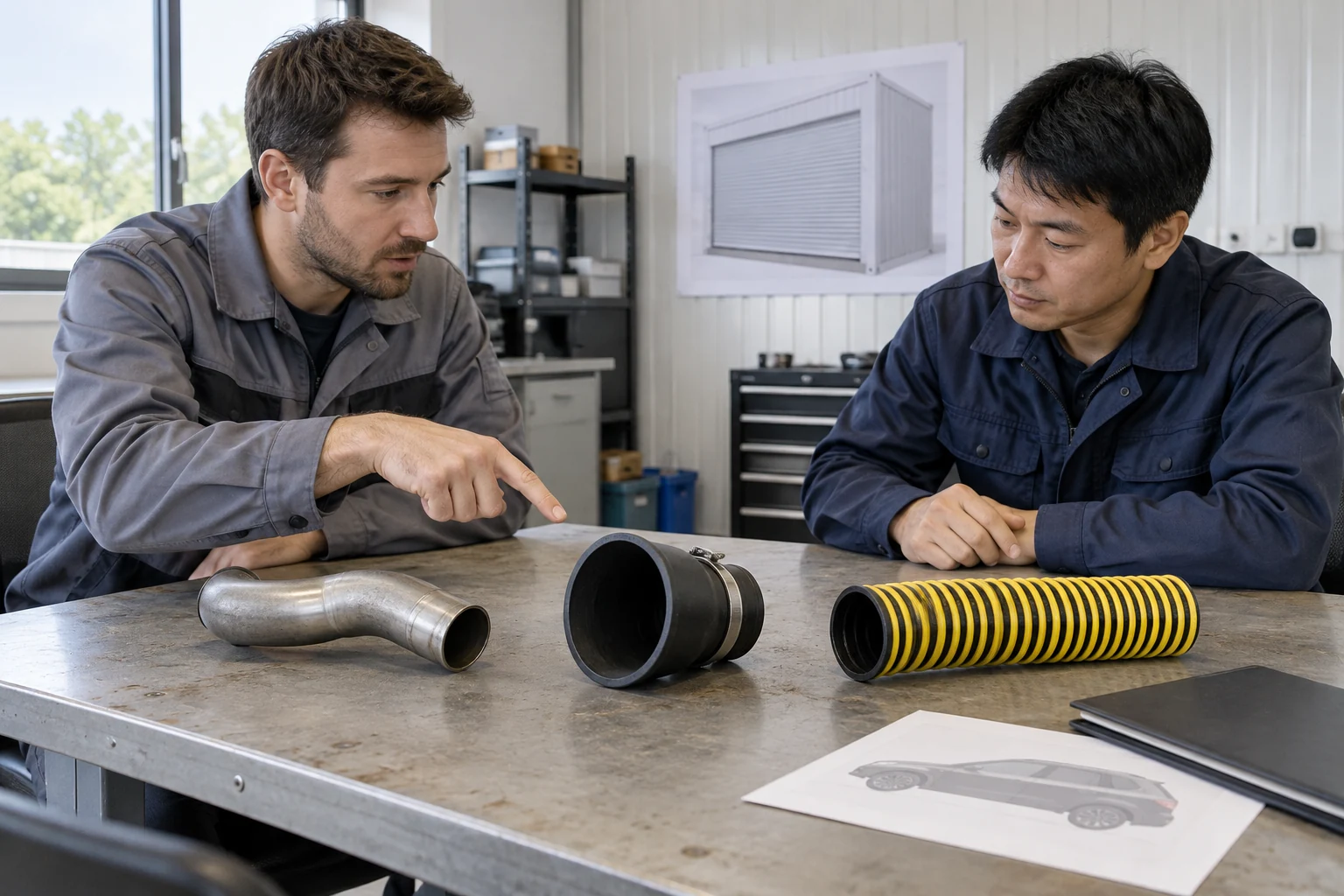
Compare separate cold, unconnected attachment samples with the vehicle information. Do not treat a visual resemblance as proof of compatibility. The selected equipment provider needs to identify the applicable connection and its limitations for the actual vehicle and task; this illustration is neither an installation step nor a working-system test.
Give the provider an accurate vehicle schedule instead of a fleet nickname. Explain whether the proposal concerns one known vehicle or a changing group. Identify modifications that affect the connection information and retain the source of the description. If a vehicle detail is unknown at quotation, mark it as unknown and request the decision needed to resolve the equipment selection.
The vehicle's parked position also matters to coordination. A proposed connection location should be shown with the task and surrounding fittings, rather than drawn on an isolated component sheet. The vehicle and installed-door clearance review addresses the separate geometric fit questions. Passing those checks does not confirm an exhaust attachment or the proposed process.
Ask what happens when the selected vehicle changes. A replacement with a different arrangement should be evaluated against the accepted equipment documents, rather than treated as equivalent because it occupies the same bay. Keep an unresolved compatibility decision with the order record. This avoids turning a convenient accessory photograph into a promise about an unspecified future fleet.
Resolve the building interfaces before fabrication
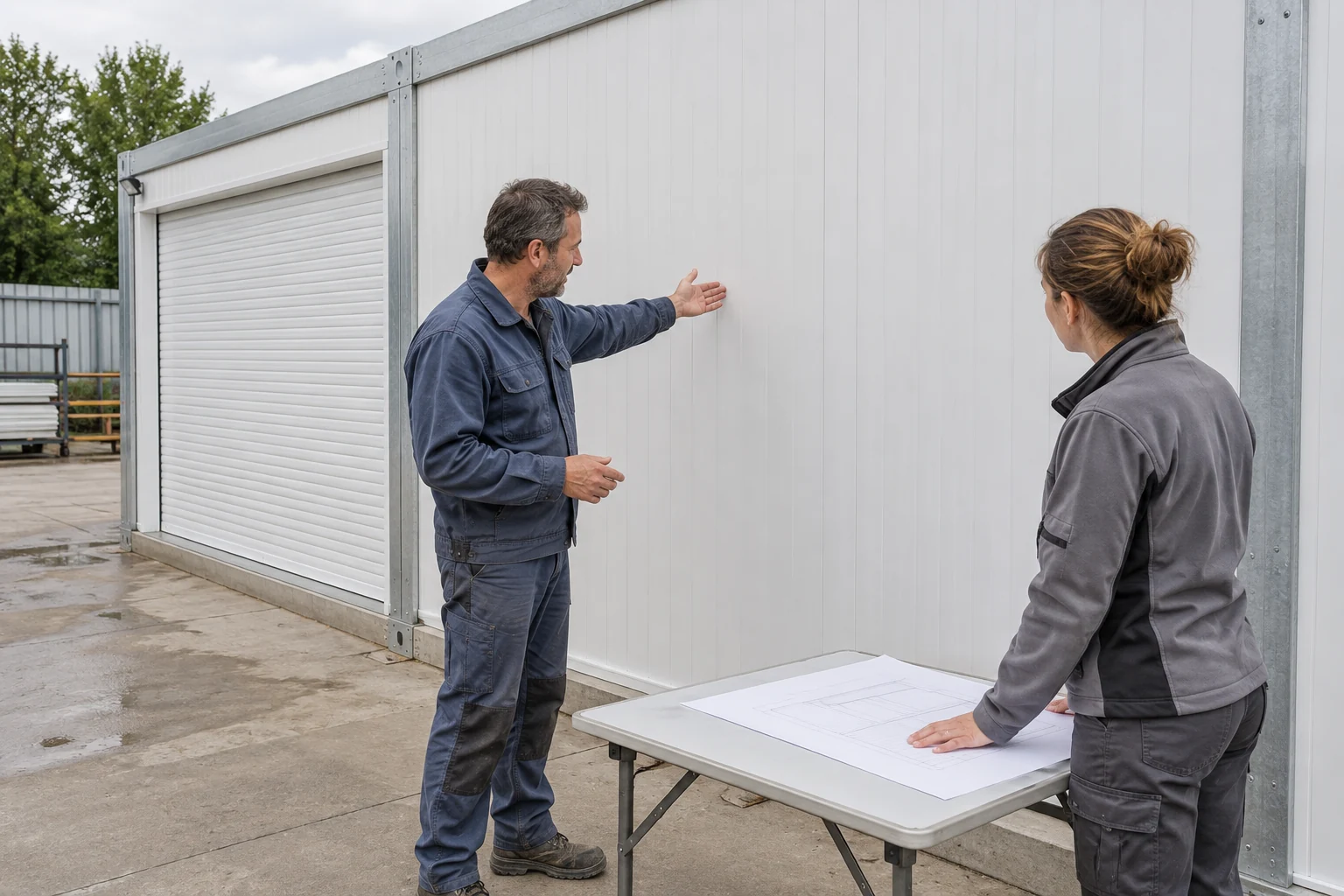
Review the exterior wall and an unexecuted interface sketch before any opening is made. The sketch identifies decisions for the responsible teams; it does not authorize a penetration or select an outlet. Keep the proposed equipment arrangement connected to the building information instead of leaving those details to an improvised site adjustment.
A wall opening is an interface decision
Ask the building and equipment teams to identify which accepted drawing governs supports, attachments and any proposed opening. An enclosure panel visible in a photograph provides no fixing-capacity evidence. Resolve the selected arrangement through the appropriate design information, including who supplies it and who checks that the delivered building matches it. Do not order a hole location from an illustrative image.
Use a coordinated building and site utility interface record to bring the relevant drawings together. The drawing register should identify the current revision used by each contractor. A builder pricing an earlier equipment position while an installer uses a newer one is a document conflict even if both parties have complete drawings within their own scope.
Replacement air and outdoor discharge are among the configuration elements identified in HSE's commissioning guidance. Have the responsible design resolve them for the actual process and surroundings. In the purchase brief, state who delivers that decision and where the accepted arrangement is recorded; an unlabelled opening is not an answer to either question.
Assign the control and electrical scope
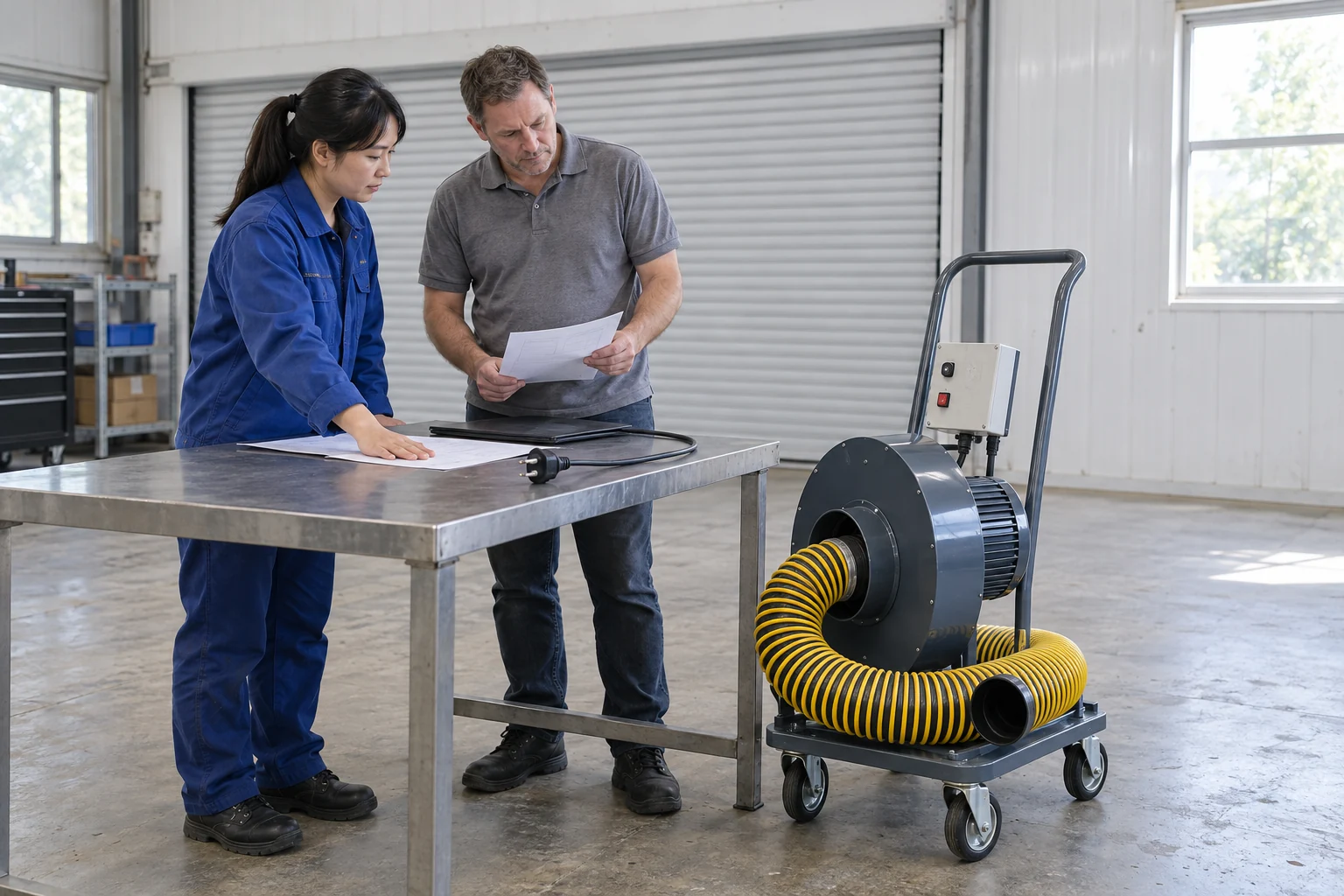
Review an unpowered unit and its applicable documents without opening electrical equipment. A control enclosure can illustrate a supply item, but its appearance does not explain the installed sequence or protective arrangements. Ask who specifies, installs and verifies the relevant controls, and who will receive the resulting instructions at handover.
Avoid combining power connection, equipment controls and operator decisions into one line marked electrical included. The quotation should identify the physical supply, the applicable equipment documents and the remaining installation responsibility. Record any proposed substitute against that information. A supplier's document for a different unit should not travel forward merely because its cover uses the same product-family name.
The buyer needs the sequence requirements in the responsible provider's documents, not a sequence invented during a quotation meeting. Ask how any required relationship between equipment and the proposed activity is defined and verified. Keep an unconfirmed operating arrangement open. This guide deliberately gives no wiring diagram, protective-device setting, control bypass or instruction for starting a vehicle.
Decide who receives a concern outside the purchasing team's normal hours. An equipment contact, site electrician and facility manager may have different responsibilities. Provide the operator with an applicable reporting route and document location rather than expecting them to choose among unsigned supplier emails. Responsibility should remain understandable when a person who never attended the design meetings takes the next shift.
Review the vehicle, hose and pedestrian paths together
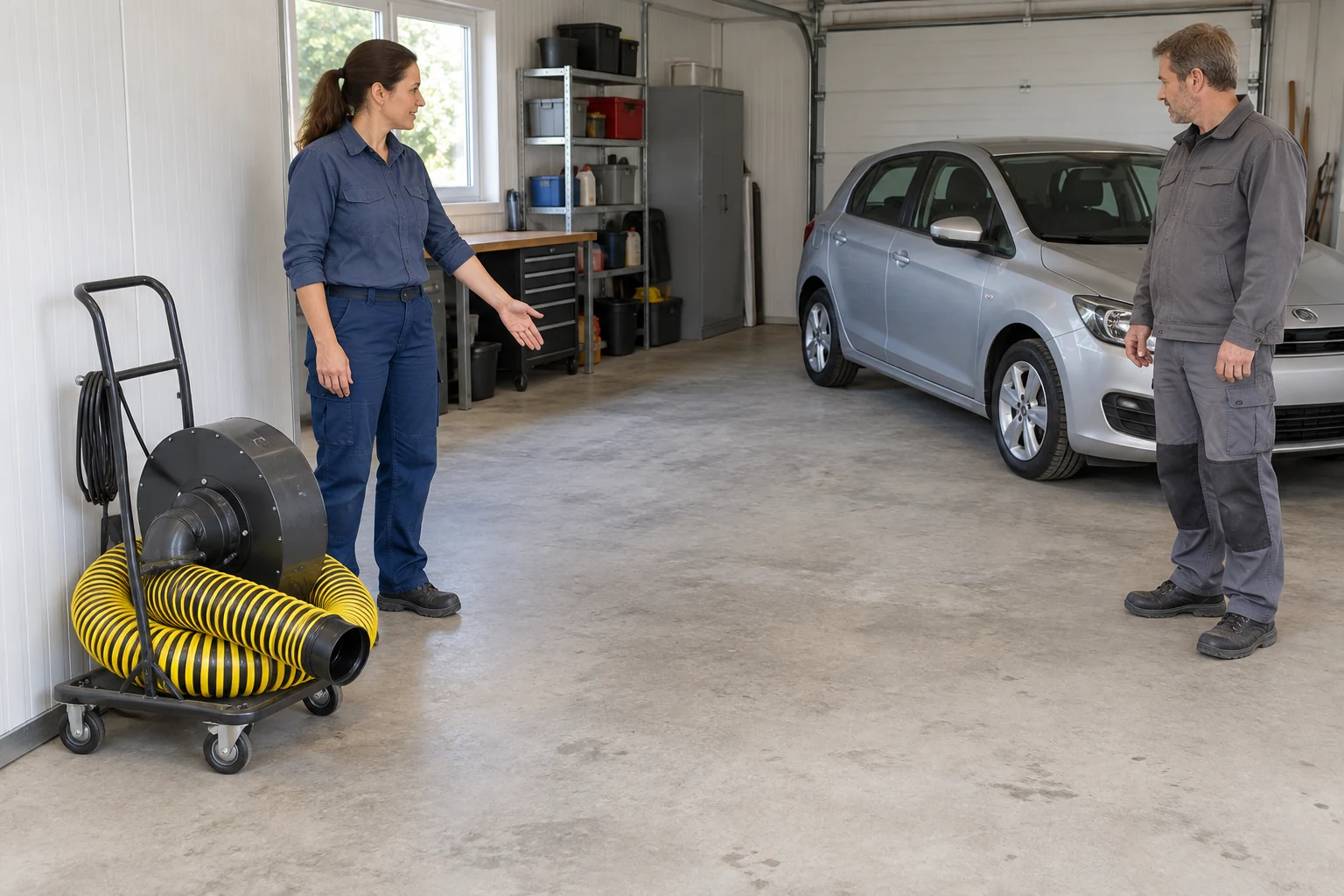
Discuss the intended equipment positions with the vehicle stationary and off. Show where people would approach, where unused equipment would be stored and which routes must remain available. This layout conversation identifies potential conflicts; it does not demonstrate an operating exhaust arrangement or replace the relevant project assessment.
Review the arrangement with the items that will actually occupy the bay. A workbench, cabinet or second parked vehicle can change access to a proposed equipment location. Ask the operator to describe how the task begins and ends, including the return of unused items. Keep the equipment provider involved where the layout affects the proposal instead of simply moving its symbols on a building plan.
Use different records for different questions. Vehicle-clearance evidence addresses fit; the process assessment addresses the proposed activity; the equipment documents address their identified configuration. None should become a substitute for the others. If a shared drawing reveals a conflict, identify which decision must be reopened and retain the response with the changed revision, rather than noting only that the layout was adjusted.
List other combustion sources independently. NIOSH's workplace guidance warns that CO can accumulate in partly enclosed places that appear ventilated and advises avoiding gasoline-powered tools indoors, considering suitable non-combustion alternatives. An equipment proposal for a vehicle therefore should not silently absorb a pressure washer, generator or other separate activity. This is US prevention advice, not a calculation for this garage.
Make faults and routine checking visible
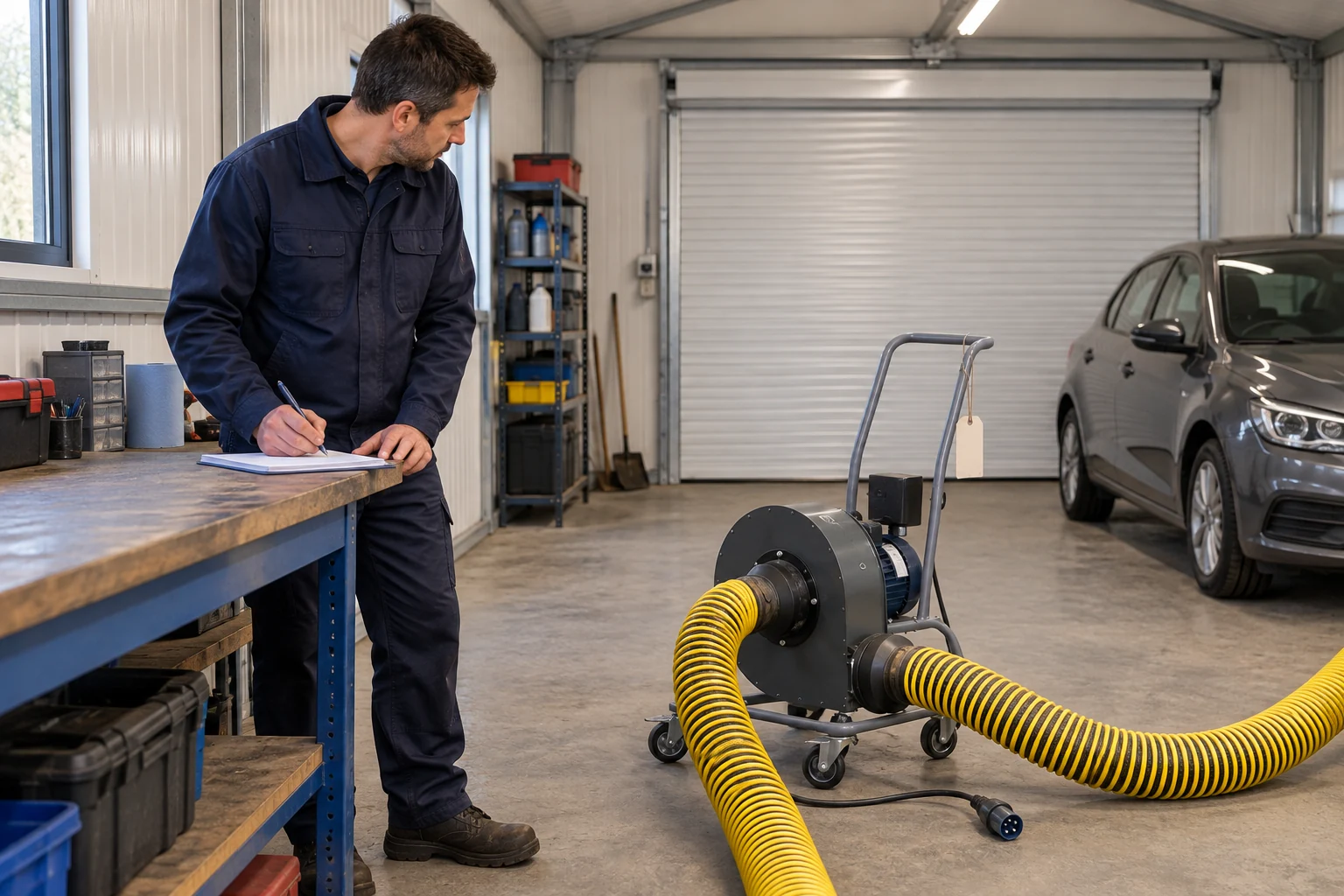
Keep an identified equipment concern with its recorded status and responsible contact. An isolated unit and an unreadable example tag illustrate administration only; they do not prove that a defect was repaired. The handover needs a way to carry an unresolved item into the next person's decision without suggesting routine use has resumed.
HSE's SR14 workplace sheet says faulty extraction requires stopping work until repaired. Its intervals below apply to the covered British workplace arrangements; they are not global periods or permission to ignore a discovered problem.
Give the record an equipment identity, location, observation and assigned response. Keep an allegation of a fault distinct from a verified technical finding. Someone may report an unfamiliar sound or damage they cannot characterise; the record should preserve that observation for the responsible review without inviting an operator to diagnose the equipment or decide the control is adequate.
Plan document continuity through staff changes. A note in an individual's phone can disappear from the facility's working record when that person leaves. Decide where the current unresolved-item list is held and who updates it after an actual response. Close the administrative item only against the applicable evidence, keeping a reference to it so another reviewer can understand the basis later.
| Record purpose | Period stated in the sheet |
|---|---|
| Working condition, leaks, wear and damage | Before each use or job. |
| Scavenger-duct damage | Daily. |
| Scavenger function | Weekly or more often. |
| Competent thorough examination and test | No more than 14 months apart. |
| Employer examination/test information | Retain for 5 years or longer. |
Specify what commissioning must demonstrate

Review the evidence request beside equipment that is off, rather than treating a running fan as the acceptance demonstration. Agree which installed configuration and process the records must address. The illustration shows a document discussion; no report, signature or outcome depicted here is evidence that a real facility has been commissioned.
Match the record to the installed process
HSE's LEV commissioning guidance calls for a report identifying the system, process, operating conditions, methods and results, with performance benchmarks for subsequent examination and maintenance. It also requires the employer to ensure the commissioner's competence and impartiality. The relevant evidence belongs to the actual arrangement; values from a different product example do not fill the gap.
Make that evidence scope part of the purchase before deciding that supply is complete. Ask which party arranges the competent work, which prerequisites it depends on and what happens if an issue remains unresolved. Specify where the accepted record will be retained. Paying for installation and paying for an appropriate process-specific verification may be different line items that need an explicit interface.
Distinguish building delivery from readiness for the proposed task. The modular-building installation sequence concerns the building's own assembly and site handoffs. A completed enclosure does not close an exhaust-equipment evidence question. Keep the two completion records intelligible so a delivery receipt cannot be mistaken for acceptance of work that was outside its scope.
Give operators the applicable instructions
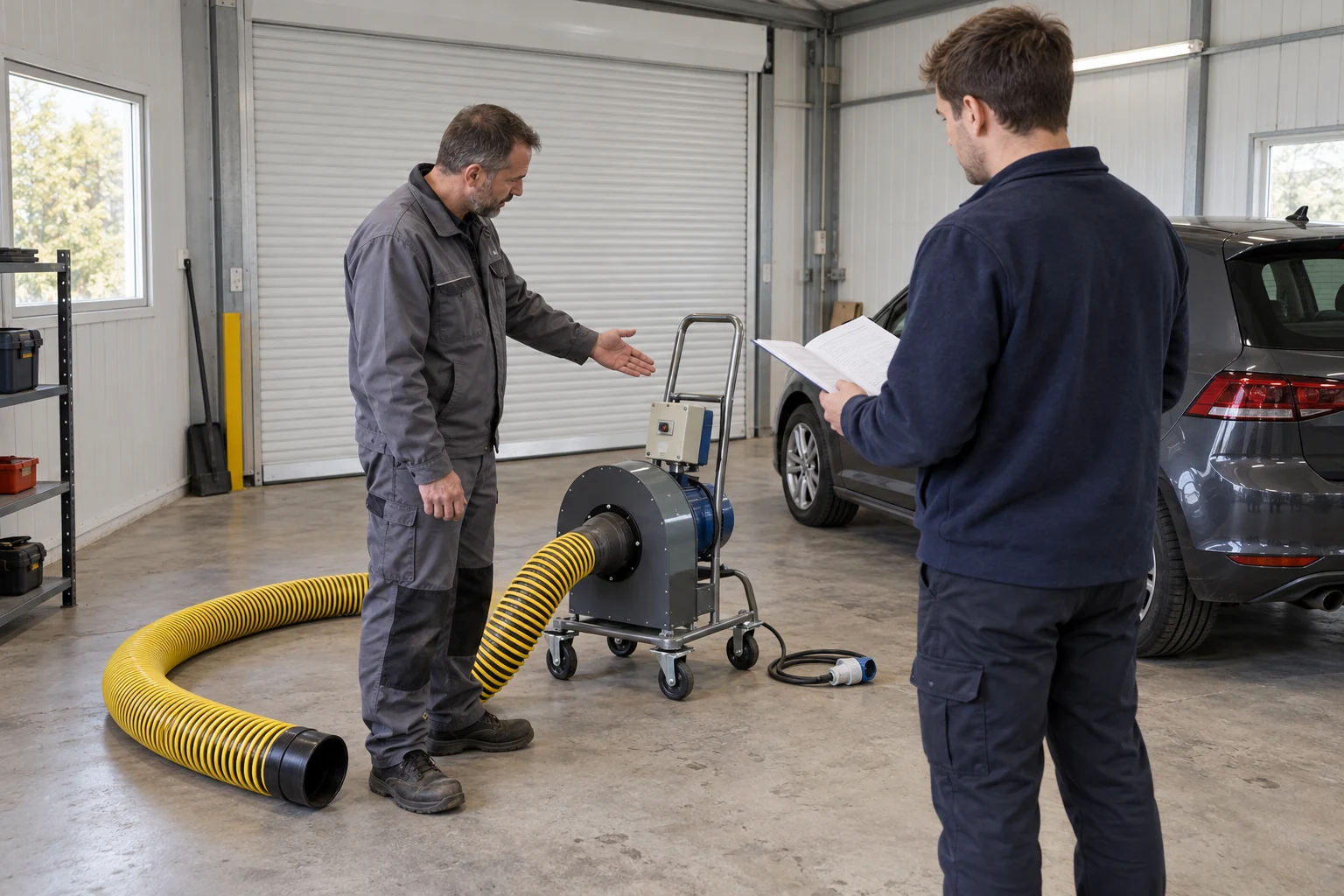
Use a stationary, unpowered arrangement to discuss where the applicable instructions will be kept and who will explain them. A demonstration photograph cannot show that anyone has been trained or that a process is authorized. The facility needs an actual handover suited to its selected equipment, users and assigned responsibilities.
SR14 covers training on using controls, checking their operation and responding to faults. Obtain the applicable instruction and supervision arrangements for the actual facility, rather than treating a document's presence as training.
Keep a readable connection between the instruction and the equipment it covers. Show the document title, revision and equipment identity in the handover index. If the unit or its arrangement changes, review whether the instruction remains applicable. A labelled folder may help locate a document, but it cannot establish its technical currency or the operator's understanding.
Include the people who inherit the arrangement after the project team leaves. Ask who handles onboarding, who can escalate an unresolved question and where changed instructions are recorded. Give maintenance and operating information their appropriate owners. Avoid assuming a commissioning document alone answers every ordinary shift question, or that a practical demonstration establishes every approval required for the work.
Carry open items into change and handover records
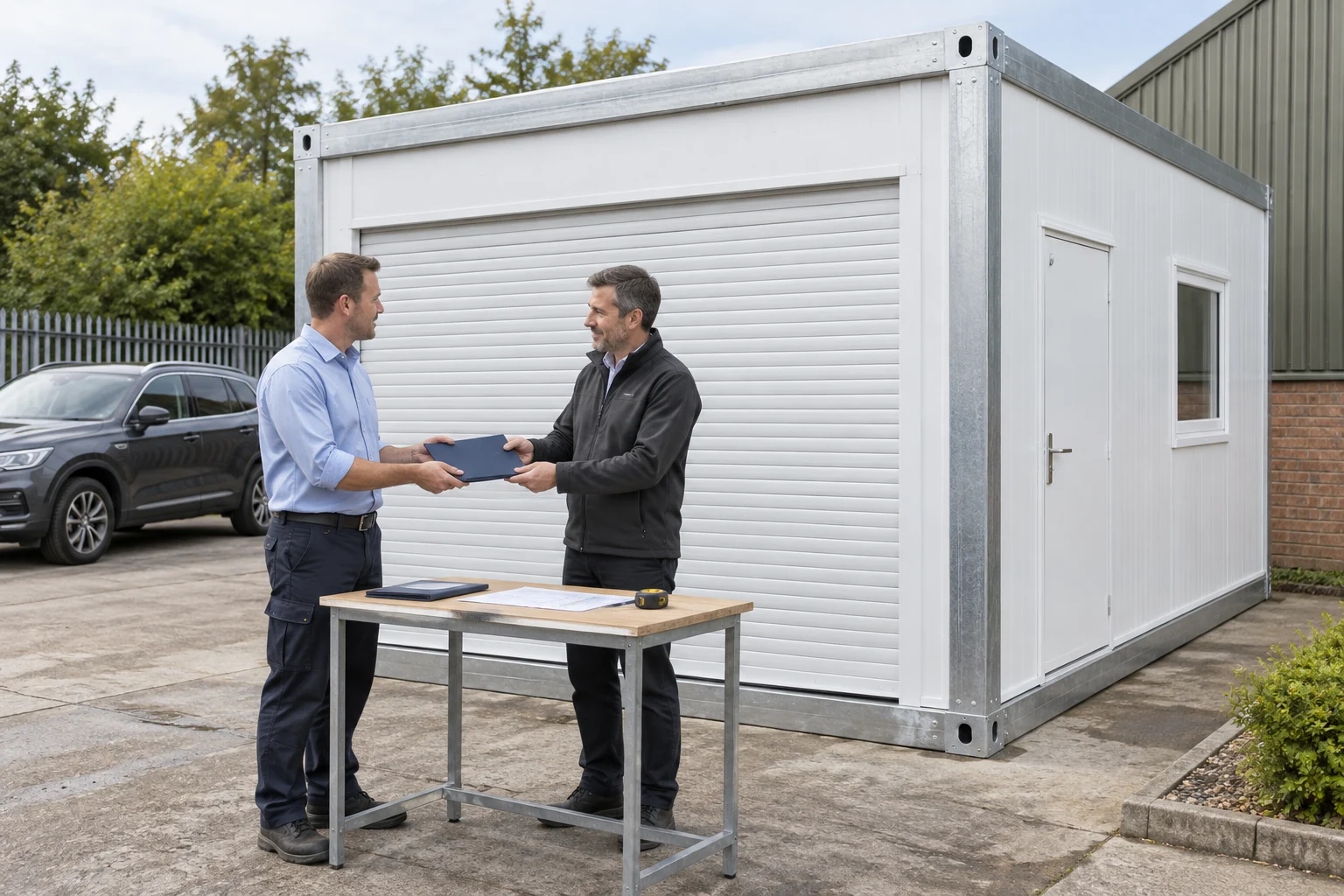
Finish the purchase review with the current order papers and a separate list of unresolved decisions. Keep the discussion distinct from a signed release or a completed technical assessment. The buyer should be able to see what has been supplied, what evidence belongs to it and which task-related question still has an owner.
Use the original task brief as the reference when comparing the final documents. Identify a changed vehicle, equipment item, building interface or intended activity explicitly. A revised invoice can describe new supply while leaving the earlier process assumptions untouched. Ask the responsible parties which affected decisions need reconsideration and record their replies with the current configuration, rather than preserving incompatible versions in parallel folders.
Destination permission remains a separate question from equipment receipt. The intended-use and local-approval guide explains why the destination and actual use must be established. The buyer should identify the applicable route and required professional involvement for this project. Neither an equipment product mark nor an attractive workshop photograph answers whether that building and activity have the necessary acceptance.
For a quotation enquiry, provide the location, proposed activity, known vehicle details, site information and identified equipment proposal. Mark missing information honestly and ask for an itemised building response against those assumptions. A useful offer shows its boundary clearly enough to coordinate the remaining work. It should leave the engine-running task open until its own applicable design, evidence and operating responsibilities have been resolved.
Buyer questions
Does an open garage door establish that engine-running work is acceptable?
No. An opening is one building feature, not evidence that the proposed process and its controls have been assessed. Retain the actual task and context in the brief. The responsible project assessment must address the applicable arrangement; this guide supplies no permissible engine-running time.
Can a building and extractor be ordered from separate suppliers?
The important purchasing question is who coordinates their interfaces. Identify each supplier's actual scope, outstanding decisions and document handoffs. Separate orders should still describe one consistent proposed configuration. An equipment delivery does not establish the building attachments, site connections or evidence that another party was expected to provide.
Are the inspection periods in the table a universal maintenance schedule?
No. The table distinguishes duties in British guidance. The actual facility needs applicable documents and destination requirements. A later examination date does not resolve a problem found today.
What information should accompany an exhaust-interface enquiry?
Send the destination, intended activity, vehicle information, current layout and equipment proposal. Identify the building, installation and operator responsibilities already assigned, plus unresolved assumptions. Ask for a response tied to those records; an illustration or package name cannot substitute for the missing configuration.
Sources and scope
- HSE vehicle-exhaust guidance. British workplace context; no project approval asserted.
- HSE SR14, March 2025. British vehicle-exhaust workplace guidance; checking and record scopes retained.
- HSE LEV commissioning guidance. British workplace evidence framework, not an actual commissioning report.
- CDC/NIOSH workplace CO guidance. US occupational prevention advice; numerical operating thresholds not reproduced.
- CDC household CO guidance. US household and attached-garage context.
- Nederman Single Exhaust Extractor leaflet, August 2026. Exact manufacturer supply example; not a retrieved installation manual or PQSE endorsement.
Prepared for PQSE House as an AI-assisted research and procurement guide. The photographs are independently created illustrations using genuine photographic structure references; they do not record PQSE installations, commissioning, training or performance tests. Project-specific engineering and operating decisions require their applicable competent assessment and records. No first-hand PQSE exhaust-control experience, human professional signoff or independent brand endorsement is asserted.