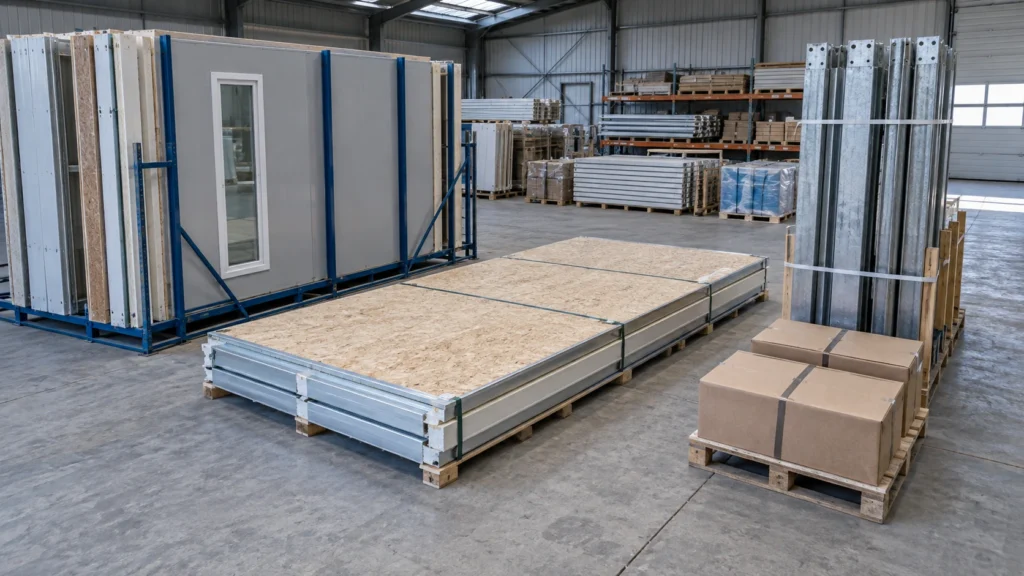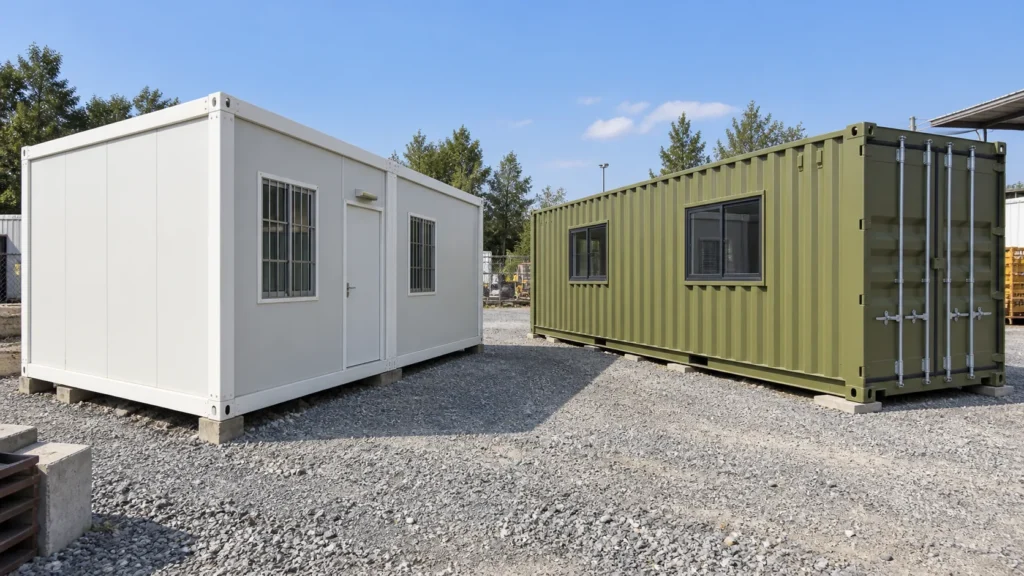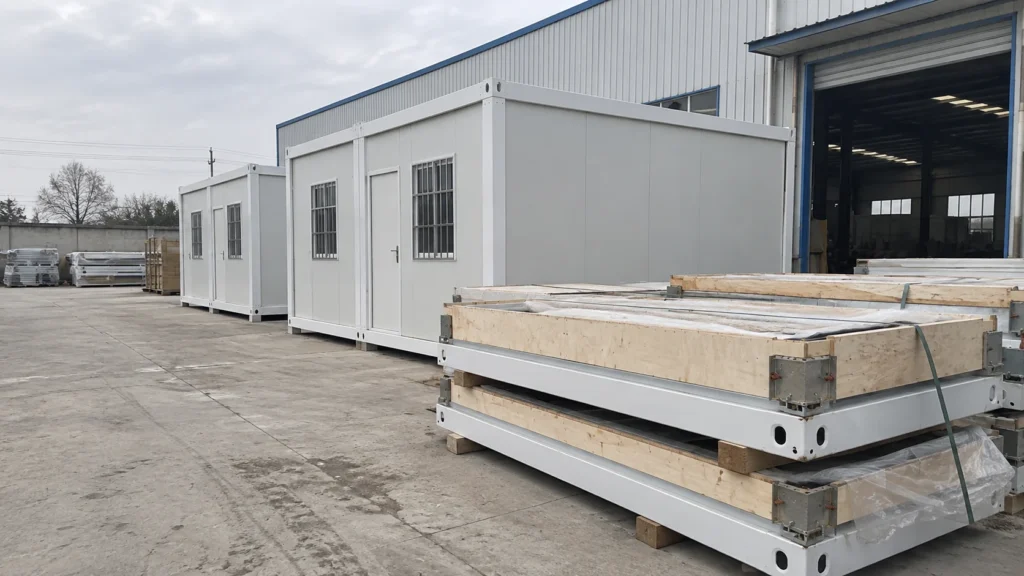
A manufacturer supplies the building system; a builder or installer carries out site work; a contractor coordinates the scope it agrees to deliver. If you already have a capable local construction team, compare factory supply packages. If you need someone to organize site completion, first identify who will take that coordinating role.
One company may cover several roles. Its proposal needs to name the work included, the work left to others and the person connecting the factory with the site. This matters for foundations, unloading, assembly and final service connections.
This guide focuses on buying purpose-built prefab container houses for offices, accommodation and project facilities. If your brief starts with a used freight container, first compare the two approaches in our prefab container house vs shipping container home guide.

What Do Manufacturers, Builders and Contractors Actually Do?
Company labels vary between markets. Use deliverables and evidence to establish the role being offered.
| Role | Work to discuss | Evidence to request | What the name alone does not confirm |
|---|---|---|---|
| Manufacturer | Product configuration, drawings, materials, fabrication, assembly and packing | Model-specific documents, production information and inspection arrangements | Local foundations, permits, installation labor or a completed building |
| Builder or installer | Site preparation, assembly, weatherproofing and coordination of local trades | Relevant work examples, installation scope and a site method proposal | Ownership of a factory or responsibility for every supplied component |
| Main or general contractor | Coordination of the work covered by its contract, including appointed suppliers and trades | A responsibility schedule, delivery program and defined handover requirements | That all manufacturing and site activities are performed by its own employees |
| Trading or sourcing company | Supplier selection, purchasing and export coordination within its agreed scope | Manufacturing source, product records and a clear communication route | Direct control of production or local construction services |
A trading company may add useful coordination; a factory may offer export support. For either route, identify the production source, approved specification and contact responsible for an issue.
Start with the finished result you are buying
Describe the rooms and facilities that must be available for use, then work backwards to the tasks required. A buyer purchasing components for an experienced local installer needs different support from a buyer expecting a coordinated site completion package. Both can buy the same product system while needing different commercial arrangements.
Ask each candidate to describe its deliverables in ordinary terms: drawings issued, materials supplied, assembly completed, documents handed over and site activities coordinated. A proposal becomes easier to compare when each promise has an observable output. General descriptions such as full service or complete support still need that breakdown.
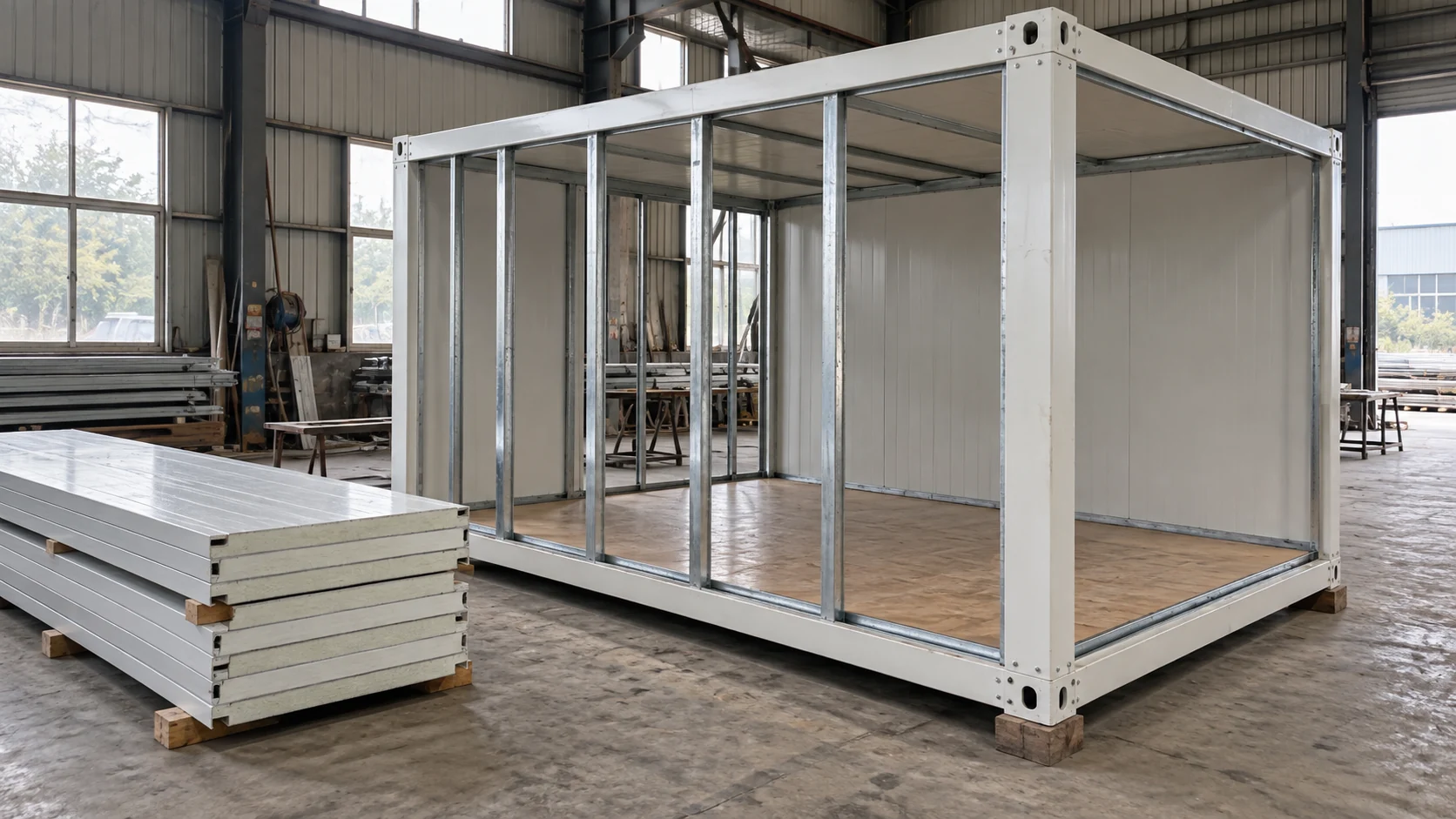
Keep manufacturing and site work connected
The building cannot be planned entirely in the factory and handed to the site team at the last moment. Access, foundations, service entry positions and the installation sequence affect the information the manufacturer needs.
The Modular Building Institute’s construction perspective emphasizes bringing the modular supplier into design coordination early. For a buyer, a practical way to apply this is to arrange a joint review of the layout and site interfaces before production is released.
Name the interfaces, not just the companies
An interface is where one party’s information or work must fit another’s. Typical examples include the frame and foundation, the internal service point and the external connection, or the final package and the receiver’s handling equipment. Assign someone to gather the inputs and close each interface question.
A named coordinator does not automatically become the designer or installer for every task. Record who prepares the information, who reviews its technical adequacy and who authorizes the resulting scope. This prevents a communication contact from being mistaken for the person responsible for engineering approval or site execution.

Which Supply Arrangement Fits Your Local Team?
Choose the arrangement around work you can actually manage locally. Your brief should state the finished rooms, destination, fit-out and responsibilities already covered by your team.
Match the arrangement to the gap in your project
| Your situation | Arrangement to compare | Question that determines whether it fits |
|---|---|---|
| You have local design, site works and installation resources | Manufacturer plus your local team | Who reviews the foundation and service interfaces with the factory before production? |
| You need site trades, equipment and handover coordinated | A contractor-led package | Which factory and specification are included, and exactly where does the contractor’s responsibility end? |
| You can deliver the site work but need purchasing or export coordination | A sourcing or export coordinator plus your local team | Who can approve a change, and how does a technical question reach the actual manufacturer? |
Clarify what “installation support” means: written guidance, a site supervisor or a crew carrying out the work. Each leaves different labor and equipment needs for you to arrange. Put excluded work into the container house cost worksheet before comparing prices.
Test local capability with a short project exercise
Walk through one room from delivery to use with your proposed local team. Establish who receives it, what assembly remains, which services must be connected and who records completion. The exercise often reveals a missing interface more clearly than a general question about construction experience.
If the local team cannot yet explain a stage, identify whether the gap is labor, equipment, design information or coordination. Ask candidates to address that specific gap in their proposals. Additional drawings may solve an information problem, but they do not provide an installation crew. A visiting supervisor may support the work while still leaving local labor and equipment to the buyer.

Check the Factory and the Product Evidence Separately
A factory review establishes who will make the order. Product review establishes what they will supply. Evaluate both: a convincing factory presentation cannot resolve an undefined model or material specification.
Confirm the production source
Ask for the manufacturing location, the legal entity on the proposal and the relationship between any associated companies. Match these details with the documents you receive. Differences are a reason to ask for an explanation; a group company or separate export entity should be identifiable.
If you arrange a factory visit or live video review, prepare a short route through material storage, fabrication, assembly, inspection and dispatch. Ask to see the type of system relevant to your order. A tour of unrelated products gives limited information about how your configuration will be produced.
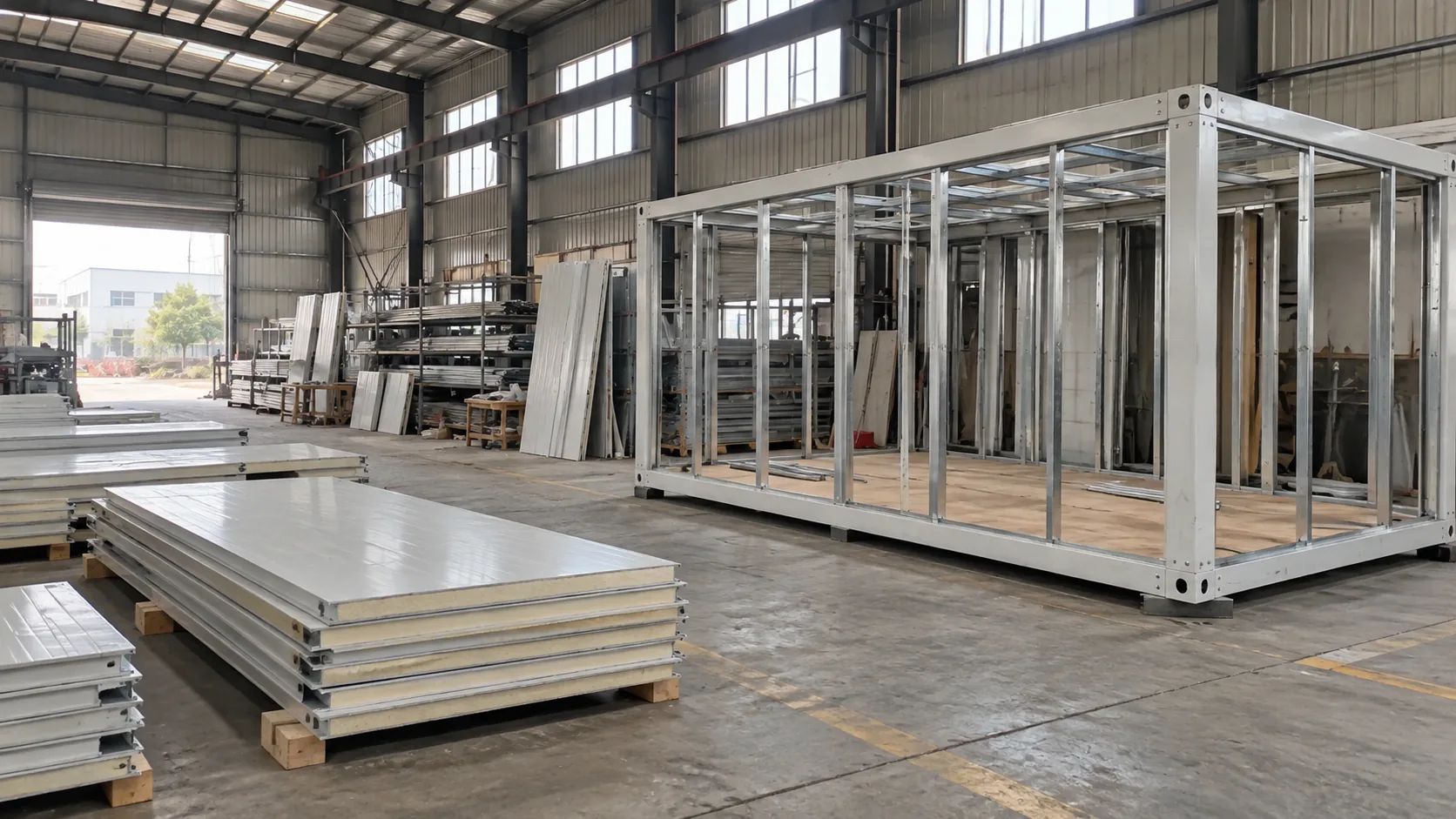
Make a factory review relevant to the order
Prepare questions around your proposed system before the visit or live review. Follow one relevant component through identification, fabrication, assembly and packing, and ask how the records remain connected to it. The purpose is to understand the process that could produce your order, not to judge the business by the size of the building in a photograph.
Keep a record of what was actually shown and what still needs a document. A live tour may clarify the production location or available work areas, while drawing coordination and material scope remain separate follow-up items. Do not treat the tour as approval of a specification you have not reviewed.

PQSE House’s factory and production overview is a starting point for discussing the manufacturing stages relevant to a proposed order. Use that discussion to identify the product information and checks your project needs.
Request a usable technical package
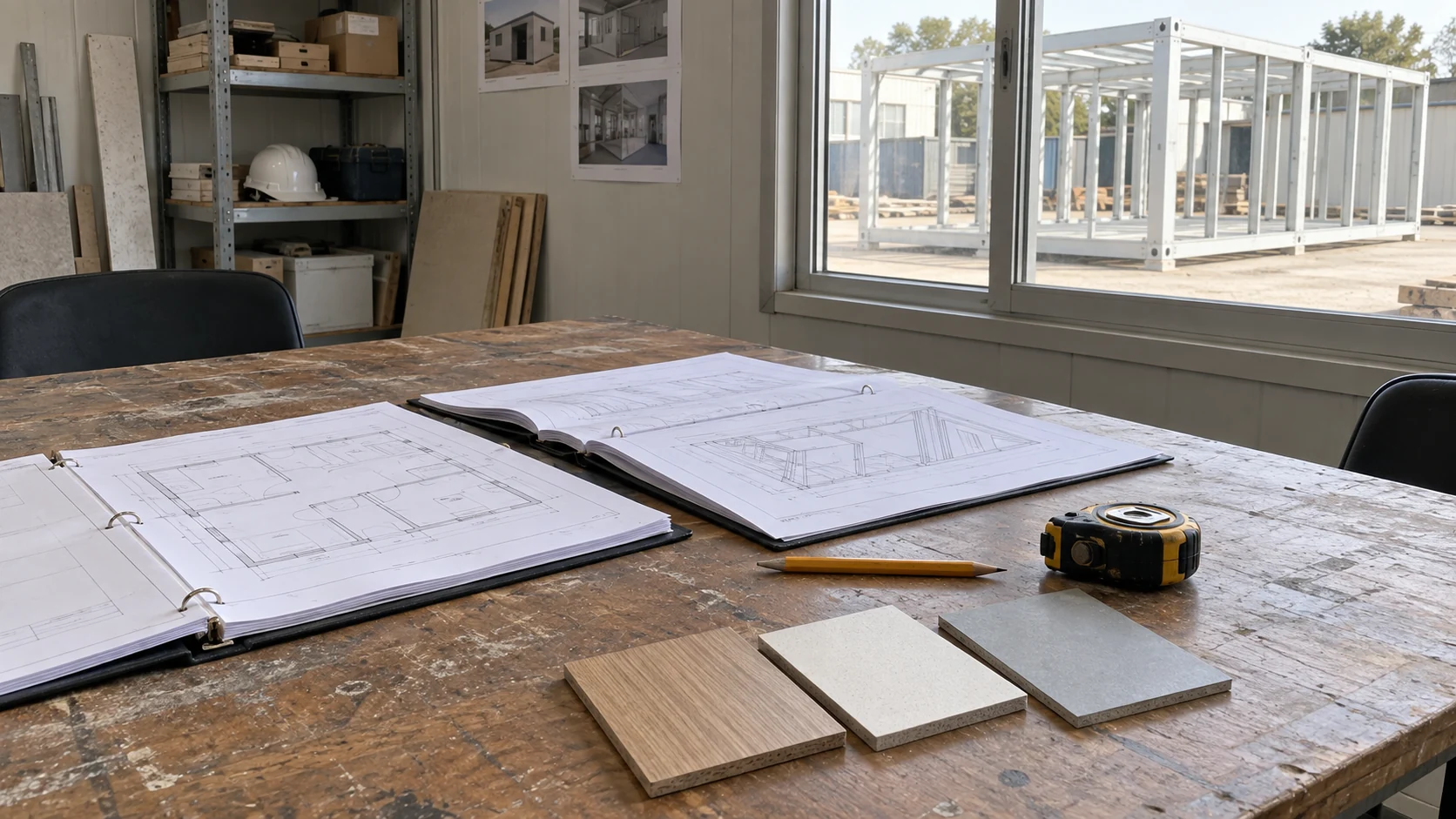
Request a coordinated model drawing, room layout, material schedule, openings, service provisions and packing form. Identify included items and separately selected options.
Check that revisions agree. If a later drawing changes the quoted wall build-up, resolve the difference before approval; collecting more unrelated files will not close it.
Check whether the technical files agree
A useful package has a clear relationship between the room layout, material schedule, service provisions and packing information. Start with one room reference and check that it can be followed across those files. Resolve missing references or conflicting revisions before asking for a final comparison price.
For example, a hypothetical room list may show a washroom while the material schedule describes an open office. Ask which description governs and request a coordinated revision. The problem is not solved by adding the two prices together or assuming the more detailed drawing is automatically included. The accepted scope needs an explicit answer.

Read certificates within their scope
Record the issuing body, named company, document number, scope and applicable product or material. Where verification is available, use the issuer’s own channel. Ask how the document relates to the exact configuration being proposed.
ISO’s guidance on conformity statements distinguishes certification of a management system from certification of a product. A management-system certificate therefore does not answer every question about the building’s materials, structural design or destination requirements.

For the order itself, use a separate container house quality control checklist. It helps turn general quality discussions into defined checkpoints and records.
Build a Responsibility Table Before Placing the Order
Every work package needs an owner and a completion record. Use actual company names and contacts: “supplier” is ambiguous when the factory, export coordinator and installer are separate businesses.
| Work package | Decision to settle | Record that closes the question |
|---|---|---|
| Layout and configuration | Who approves the room arrangement, openings and material choices? | Coordinated drawings and specification revision |
| Local design and approvals | Who checks the destination criteria and prepares any required submissions? | Named local reviewer and agreed document requirements |
| Foundations and service positions | Who designs and completes the site work using the agreed building interfaces? | Reviewed site drawings and readiness confirmation |
| Factory inspection | Who checks the order, what will be checked and who reviews the findings? | Inspection plan, results and correction status |
| Packing and transport | Who prepares the packages, books transport and manages each handover? | Packing list, loading information and delivery scope |
| Unloading and installation | Who provides equipment, labor, storage and site supervision? | Local handling and installation plan |
| Utilities and final checks | Who completes connections and records the applicable checks? | Service and handover records for the completed scope |
| Defects and replacement parts | Who receives an issue, assesses it and coordinates the response? | Agreed contact route and documented process |
Mark unresolved rows Not confirmed and send the table back with its referenced documents. For shared tasks, name both contributors and the person who confirms that their work fits together.

Use a responsibility review to expose omissions
Review the table with both the supplying and site parties. A row marked “by others” should name the other party or remain open until someone accepts it. For a shared activity, distinguish preparation, execution, review and handover rather than putting several company names into one cell.
The table below is an example of how to structure that discussion. It assigns questions, not contractual duties; replace the role labels with the people and scope agreed for the project.
| Interface | Input to obtain | Decision to record |
|---|---|---|
| Foundation and building | Current building interfaces and local site design | Who coordinates the two sets of information before site work? |
| Factory service and local connection | Positions, supplied scope and local service information | Who checks compatibility and confirms the remaining work? |
| Cargo and receiving equipment | Final package data and site handling proposal | Who confirms that the receiving plan uses the current cargo information? |
| Inspection and dispatch | Agreed results, open issues and packing status | Who accepts release of the specified scope? |
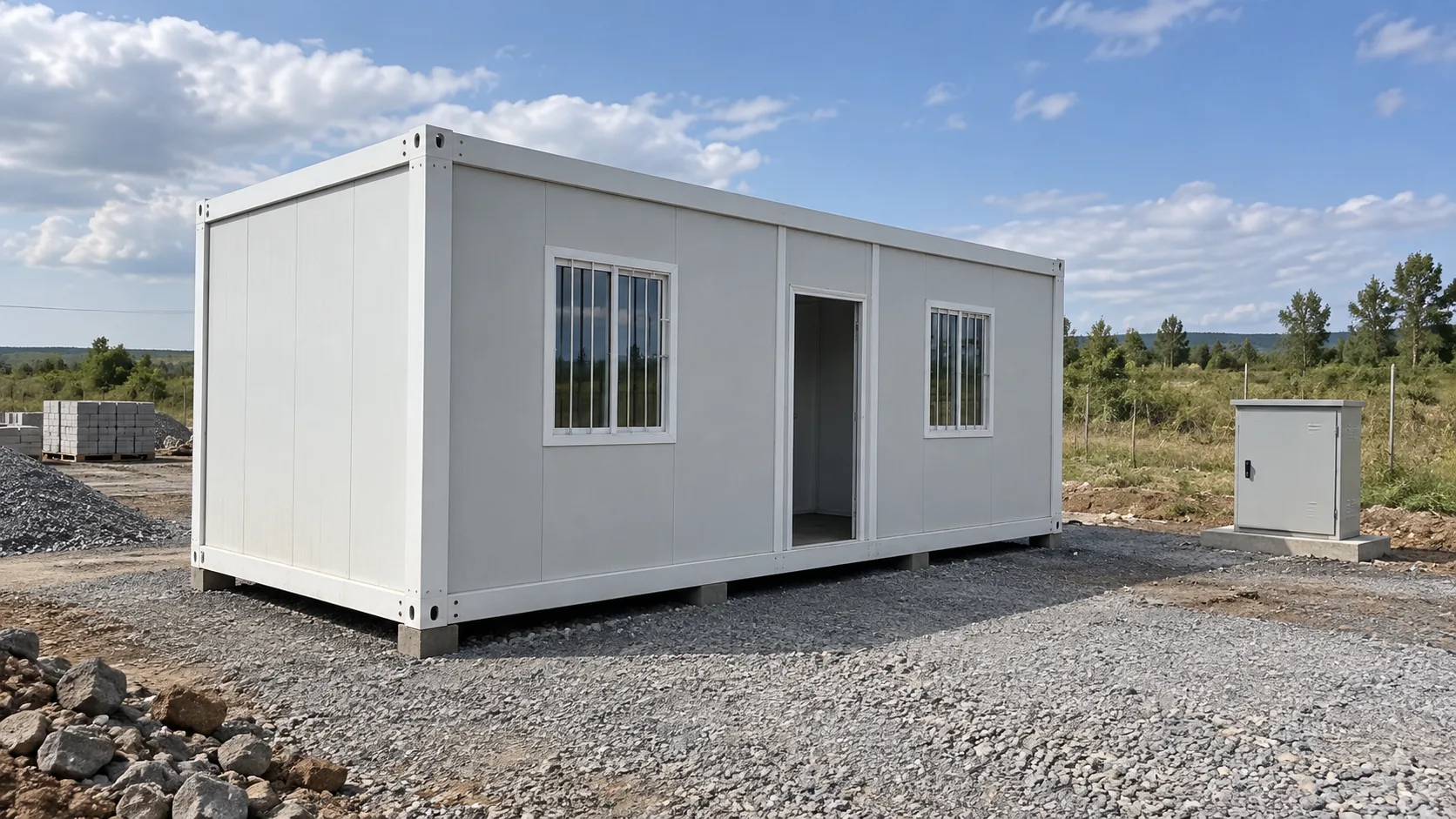
What Does a Useful Response to a Design Change Look Like?
A useful response explains the effect of the change and updates the affected documents. A quick “yes” leaves you unable to check what will be built.
For a hypothetical site office, suppose you move a door to another wall. The response should identify the revised opening, any affected frame or panel details, and any change to switches, wiring or site access. It should also state whether the price or delivery plan changes.
Have the relevant design and site teams review the change, then obtain one coordinated drawing and quotation revision. A named person should bring the answers together so the order does not rely on scattered chat messages.
Keep one route for decisions and revisions
Create a short change record containing the question, affected room, current drawing, requested adjustment and responsible reviewer. Ask the coordinator to collect the technical and commercial responses before issuing the accepted revision. Use a version reference that both the factory and local team can recognize.
Separate a question from an instruction to proceed. A discussion about moving a door is not the same as an approved production change. Confirm when the decision becomes part of the order and which earlier documents it replaces. This is especially useful when sales, design and installation contacts communicate through different channels.

Resolve gaps before selecting a supplier
Pause the comparison when a candidate cannot identify the actual manufacturer, leaves important exclusions unclear or supplies documents that cannot be connected to the proposed product. Ask for the missing evidence directly and record the response.
Avoid treating unanswered items as an automatic price advantage. An omitted installation package, an undefined panel specification or an unpriced delivery leg may only move the decision to a later stage, when fewer options remain.
Compare evidence readiness before comparing the headline price
Put each candidate through the same review: identity of the production source, definition of the product, coverage of site work and availability of supporting records. Mark whether each answer is documented, provisional or unanswered. This provides a visible basis for the next discussion without inventing a numerical quality score.
Give a candidate the chance to resolve an open item with relevant evidence. If an essential work package remains undefined, keep that limitation visible in the comparison. A cheaper figure with an incomplete scope is not directly comparable to a more complete proposal. Use the cost guide to identify what must be priced before making the commercial decision.

Questions Buyers Commonly Ask
Is buying directly from a manufacturer always cheaper?
The factory price covers its quoted scope. Direct purchase may also leave you coordinating transport, local installation and technical interfaces. Compare the complete project cost and the coordination work you can realistically manage. A lower product price alone does not establish the lower completed cost.
Can one company manufacture and install the building?
Yes, a company may offer both activities or coordinate subcontractors. Confirm the destination, included labor, supervision, equipment and handover scope for your order. Installation guidance, an on-site supervisor and a full installation service are different deliverables.
What should I prepare before requesting a factory discussion?
Bring the destination, intended use, room list, quantity, preferred layout and target schedule. Add the local services you already have in place and the responsibilities still needing an owner. This makes the discussion specific enough to produce a useful next step.
Prepare the handover and support route before delivery
Before dispatch, establish who will receive the drawings, packing information, installation guidance and inspection records. Give the local team a route for questions about an identified component or drawing revision. Keep the product references needed to discuss replacement parts with the final handover file.
For a later issue, record the affected unit, location, photograph and relevant document rather than sending an unlabelled image. Ask who reviews the report and coordinates the next action. Support terms depend on the actual agreement; the objective of this preparation is a usable communication and evidence trail, not an assumed warranty promise.
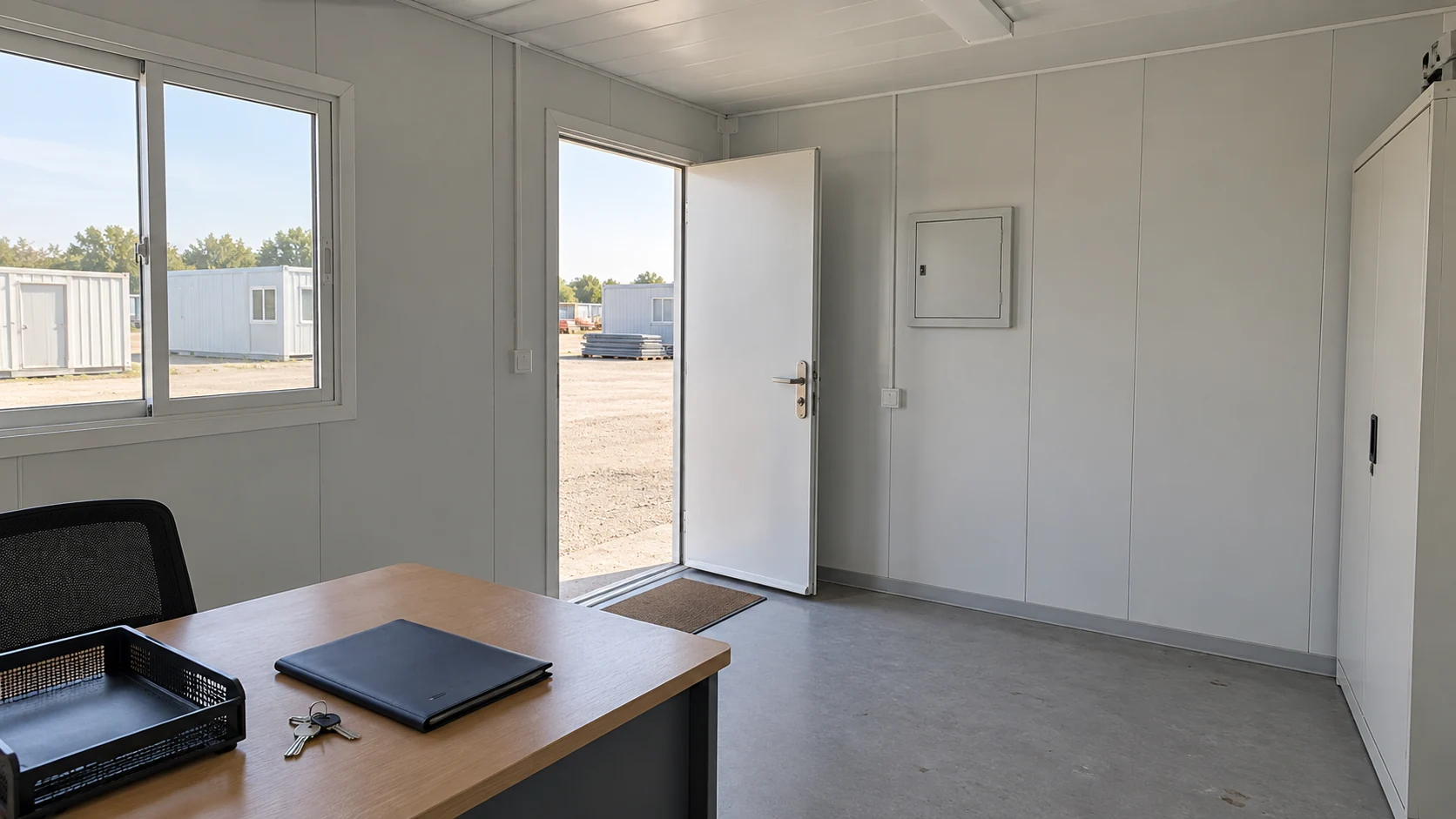
Put Your Project Scope in Front of the Right Team
Share your room requirements, destination and local construction arrangements with PQSE House. Use the discussion to establish the proposed building system, supporting documents and responsibilities still needing an owner.
Responsibility schedule — open the checklist
Copy these headings into your project brief. Add your own information and mark unresolved items for review.
| Record | Information to add |
|---|---|
| Factory supply | Named company, configuration and deliverables |
| Local completion | Site works, unloading, assembly and services owner |
| Coordination | Drawing review, change approval and contact route |
| Handover | Required evidence and party accepting each work package |