Consider a storage tent when you need a covered area for a defined period and the offered enclosure suits the goods. Consider an enclosed modular store when tools, parts and packaged supplies need an arranged room with specified doors, shelving and controlled access. The useful comparison is what each offer protects and includes, not simply its covered floor area.
PQSE’s prefab storage buildings and modular stores serve tools, spare parts and project supplies. This guide compares that type of store with a temporary tent proposal; it does not assume PQSE supplies tents or tent-hire services.
Establish what “storage tent” actually includes
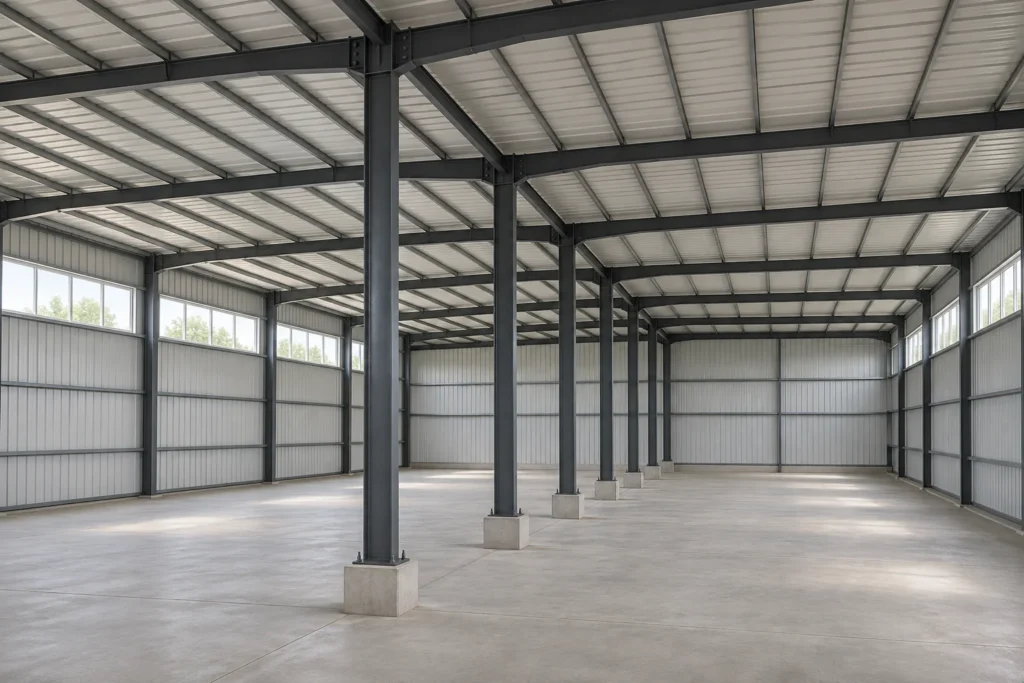
A roof-only shelter, a fabric enclosure and a tent with rigid wall panels are different offers. Some “container shelters” are roofs supported between freight containers. That arrangement is different again from an enclosed modular room. Ask for a drawing of the complete proposed system before comparing quotations.
Look beyond the roof photograph. Are sidewalls, end closures, access doors and a floor included? How will people enter, secure the contents and close the space at the end of the day? A low shell price leaves these questions unanswered.
For a modular proposal, compare the relevant Prefab K House or flat-pack building configuration. The product name alone does not establish the storage floor, opening or equipment package.
| What you are buying | Check in the tent offer | Check in the modular-store offer |
|---|---|---|
| Complete enclosure | Roof, sidewalls, end closures and the way each opening closes. | Wall and roof specification, doors, windows and their closures. |
| Usable floor | Existing surface or a separately specified floor and its supporting work. | Supplied floor, supports and suitability for the proposed goods and equipment. |
| Stock protection | Whether the offered system suits the goods’ exposure and access-control needs. | Whether the selected room, openings and any environmental provisions meet those needs. |
| Installation scope | Anchoring, surface preparation and assembly responsibilities for this site. | Supports or foundations, assembly or placement and service connections for this site. |
| Project end | Hire extension, dismantling, removal and any reinstatement charges. | Continued use, dismantling or a separately planned relocation of the selected building. |
Separate bulk cover from a parts room
List which goods can tolerate the proposed storage conditions and which cannot. Large packaged materials waiting for one project phase may need a different arrangement from small parts and tools collected repeatedly by staff. Split the stock into those groups before paying to enclose every item in the same way.
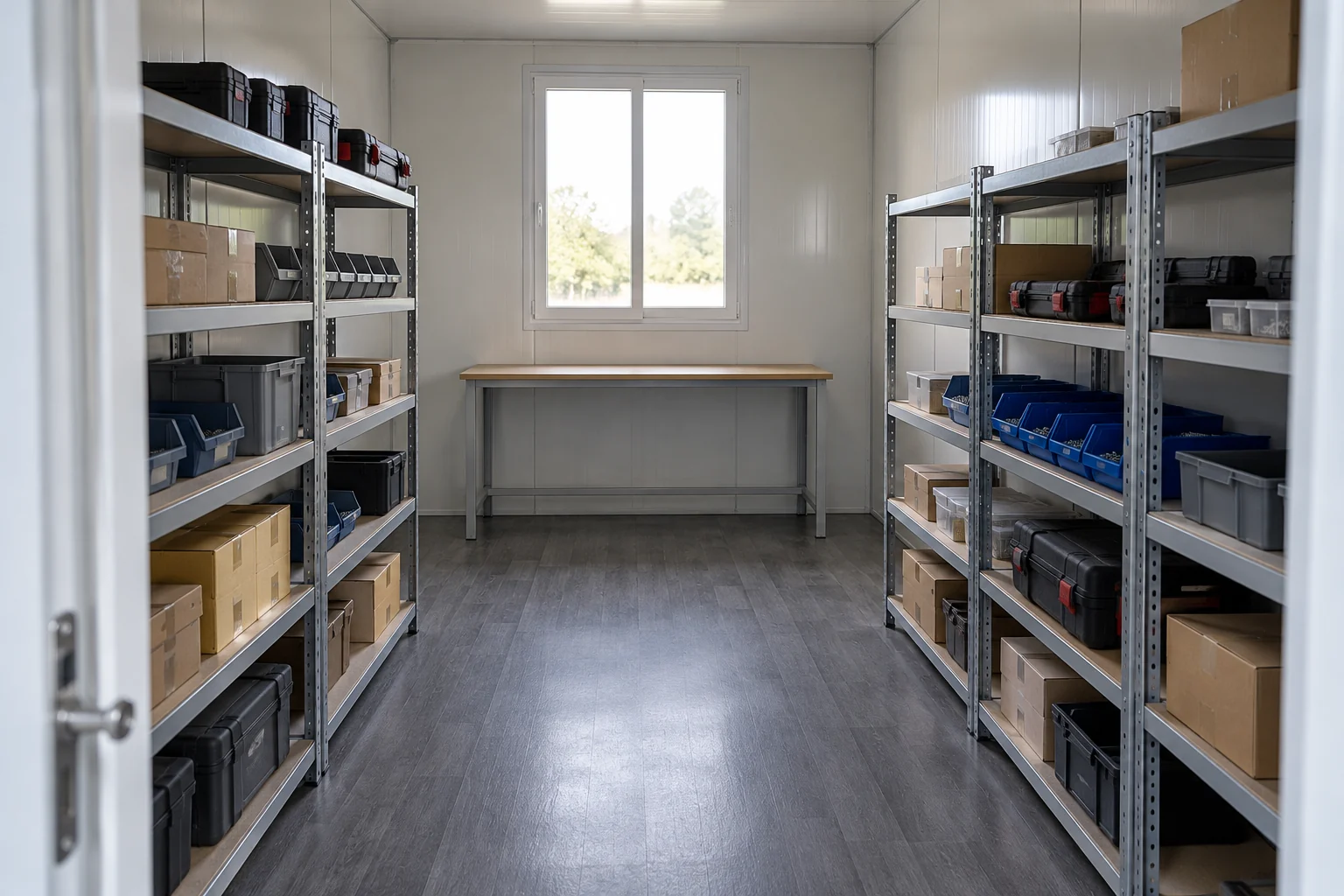
An enclosed parts room can be planned around shelves, tool cases and identified bins. Keep the collection aisle and the space used to open cases available when the shelves are occupied. Those working areas are part of the storage requirement, rather than spare capacity to fill later.
The UK HSE’s warehousing and storage leaflet identifies awkward handling layouts and obstructed routes as issues to address. Apply that planning principle to the actual goods; it does not establish a universal aisle dimension or approve a building. The warehouse planning guide develops the stock, load and moisture brief for a proposed store.
Compare the storage conditions, not just the wall material
Tell each supplier what must be protected: the goods, packaging, collection process and access outside working hours. Ask what their offered system provides and what additional work is needed. A closed building is not automatically a controlled-temperature store, and a fabric enclosure should not be assessed as if it were only a roof.
Check the actual door and locking arrangement rather than assuming a generic security rating. If contents require particular temperature or humidity conditions, put those requirements into the brief. Specialist goods may need another type of facility; do not treat an ordinary project store as an approved chemical, food or battery-storage installation.
Price the period of use and the site work
A short hire and a purchased building have different cost boundaries. Compare them over the period you expect to use the space, with a separate allowance for an extension or a changed project date. Include delivery, installation, required additions, upkeep and the eventual removal or continued-use plan.
Ask who provides the supporting surface, anchoring or foundations and the work around the entrance. Those decisions depend on the proposed system and site. The arrival-to-door access guide helps identify the route to discuss with the supplier and local team. Neither “temporary” nor “modular” makes site requirements disappear.
FAQ
Can a tent and a small modular store work together?
They can be considered for different stock groups: a covered area for suitable bulk goods and an enclosed room for tools or parts. Price the complete arrangement, including the movement between spaces. Check that the combined plan still provides the protection and access each group needs.
Is a modular store always more expensive?
There is no reliable answer without comparable offers. Hire duration, enclosure, floor, site work and required additions can change the result. Compare the same storage task and period; an empty-shell price does not show the full cost of an operating store.
Can a temporary store be installed without permission?
Do not assume so. Identify the requirements for the actual location, use, duration and proposed structure before committing. A supplier’s description of a building as temporary does not establish local permission.
Get the right storage proposal
Send PQSE the site location, intended duration, stock groups, typical packaged sizes and weights, handling method and access-control needs. Add a site sketch and any required storage conditions. That brief helps define whether a panel-built modular store is suitable and which floor, openings and supply scope should be quoted.
Source: HSE INDG412, used for qualitative storage-layout guidance. The format comparison is editorial procurement guidance; no universal price, security or structural-performance result is assumed.