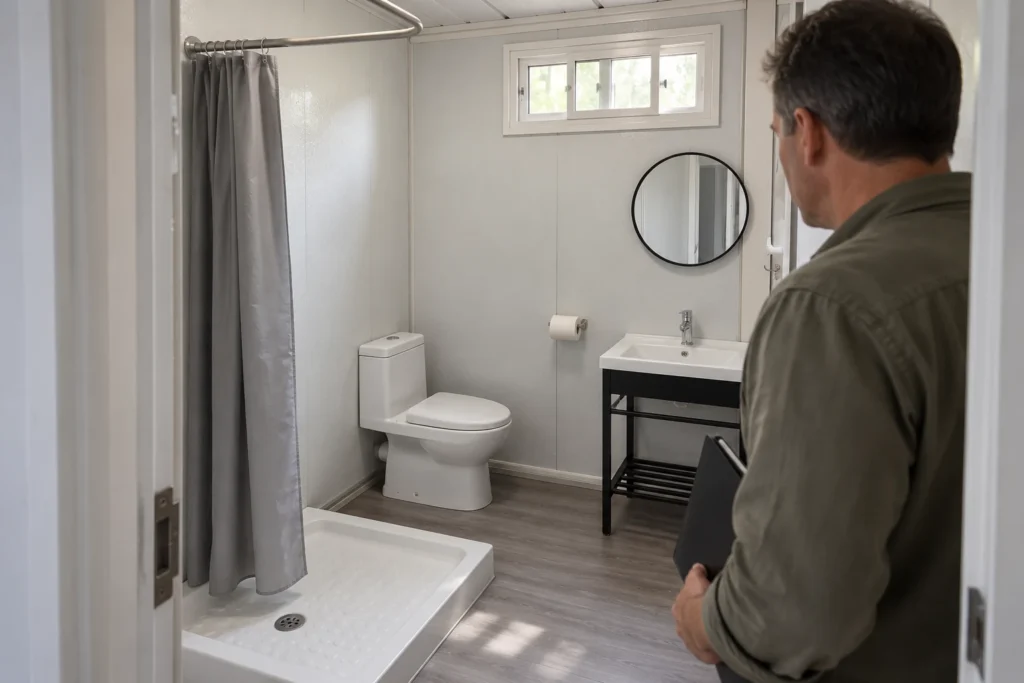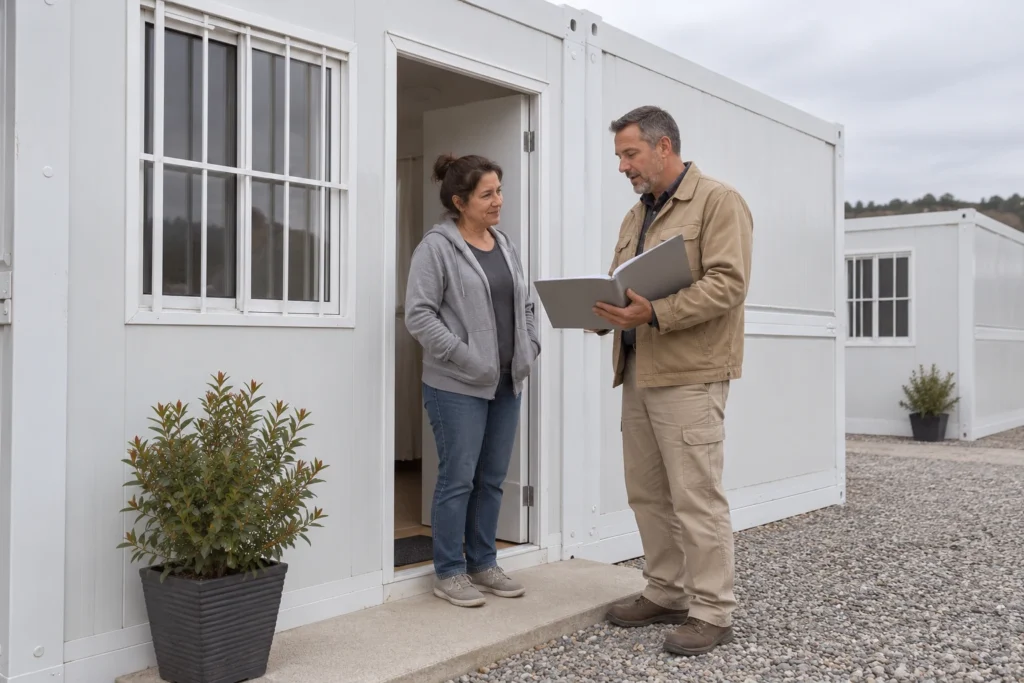
A folding container house may be quick to open once the site, equipment and crew are ready. That speed is a reason to make the receiving inspection more deliberate, not to skip it. A bent corner, unidentified restraint, damaged hinge or missing locking part can turn a planned setup into an improvised repair at the destination. The buyer should preserve evidence of the delivered condition before unloading, then separate transport exceptions from assembly questions and final handover defects.
This guide is for importers, contractors and project owners receiving folding modular buildings. It explains what to request before dispatch, what to record on arrival, where to stop before unfolding, and how to document the movement from folded shipment to accepted room. The exact lifting points, release order, temporary support and locking procedure belong to the chosen manufacturer’s approved instructions. Do not apply a competitor’s sequence or numeric setup time to a PQSE unit.
Establish one traceable unit before the truck arrives
Ask for the approved model and drawing revision, unit identifiers, folded and opened dimensions, package or loading plan, weight and handling information, accessory list and deployment instructions. Match them to the quotation and purchase order. A unit that arrives in a folded state can hide parts, so the buyer needs a way to distinguish what is inside the fold from a genuinely missing accessory.
The PQSE folding container house product page describes the product family and directs buyers to order-specific specifications. Use those documents as the receiving baseline. Confirm whether doors, windows, service fixtures, loose trim, anchorage, external steps and connection items are supplied within the folded body, separately packed, or assigned to local work. A photograph of a finished room is not a packing list.

Give each unit a visible code that survives transport and installation. The delivery team should be able to connect the code to its intended location, specification, accessory cartons and dispatch photos. If the load contains similar units with different electrical or room layouts, a single “10 units received” count is inadequate. A matching register prevents a wrong unit from being opened in a location where its services cannot connect.
Request the dispatch evidence in a useful form
The supplier’s dispatch pack can include overall photographs, protected corners, restraint points, package labels, loose-item count and the container or vehicle loading record. Ask for images that show unit identifiers and the relevant faces before loading, not only an attractive factory group shot. Agree how a shortage or transit damage claim will be reported, who should receive it and what evidence is required.
The container house loading and shipping guide explains the upstream freight documents. Receiving should close that loop. If a unit is transferred between vehicles or held at a port or depot, note the transfer chain and any recorded exception. The purpose is practical traceability; it is not to presume that every scratch occurred in transit or every later defect is the carrier’s responsibility.
Inspect the load while it is still secured
Before straps, covers or blocking are removed, take wide photographs of the vehicle and every unit position. Record the vehicle or container ID, seal condition if relevant, date, weather, unit labels, visible wrapping and signs of movement. Look for displaced restraints, crushed edge protection, punctures, wet packages, bent lifting brackets and contact between adjacent units. Keep personnel outside unsafe zones while the qualified team assesses the unloading method.
The receiving lead should compare the load with the dispatch record and note differences on the carrier document according to the agreed claims process. A note that simply says “damaged” is too vague. Identify the unit, face, corner, part and observable condition, with a photo that shows context and close detail. Do not speculate about the internal cause before the unit can be examined safely.
Separate four outcomes: no visible exception; visible package damage with internal condition unknown; confirmed component damage; and missing or unidentifiable package. Each requires a different next action. A torn outer wrap may justify closer inspection; a visibly distorted structural lifting point may require a hold before handling. A loose carton that cannot be traced to a unit should stay in a controlled area until identified.

Check the unloading plan against the actual vehicle
The handling equipment, ground and crew must suit the delivered configuration, not a generic marketing video. Confirm the load weight and approved lifting or forklift points from the current unit documents. Review the access route, ground support, overhead hazards and weather under the site’s rules. A folded unit may look low and stable on the truck while becoming difficult to handle during transfer. Do not cut a restraint until the unloading lead has established how the unit will remain controlled.
Competitor installation guides illustrate why manufacturer-specific instructions matter. The DXH folding-unit guide describes its own unloading and support sequence; those steps and quantities are specific to that system and cannot be imported into a PQSE job. The receiving checklist should ask for the approved PQSE handling sequence for the selected order. If it is missing, hold the operation rather than reconstructing it from a video of another product.
Count accessories before the deployment area gets busy
Once the unit is safely unloaded and stabilized, reconcile accessory cartons, support items, locks or pins, fasteners, trim, seal materials, service parts and documents against the order’s schedule. Some pieces may travel fixed inside the folded unit; count those when the approved sequence permits access. Record not yet accessible separately from missing. Keep hardware in a controlled tray or bag by unit ID, rather than pouring identical-looking fasteners into one communal box.
The container house kit inclusions guide helps buyers distinguish a building package from site completion. Here the narrower task is to match every supplied item to a unit and a step. Ask what is needed before safe opening, what is used after the shell is stable, and what belongs only to final fit-out. An accessory can be present but still be the wrong revision or size; identify it against the approved schedule.

If something is missing, photograph the opened package, inventory label and contents, then notify the agreed supplier contact. State whether the absence stops unloading, stops unfolding, or can be resolved before handover. Do not substitute a local bolt, pin, restraint or seal on a structural or weathering interface without written approval from the responsible designer or supplier. A small part can govern a large movement.
Examine the folded body before it moves
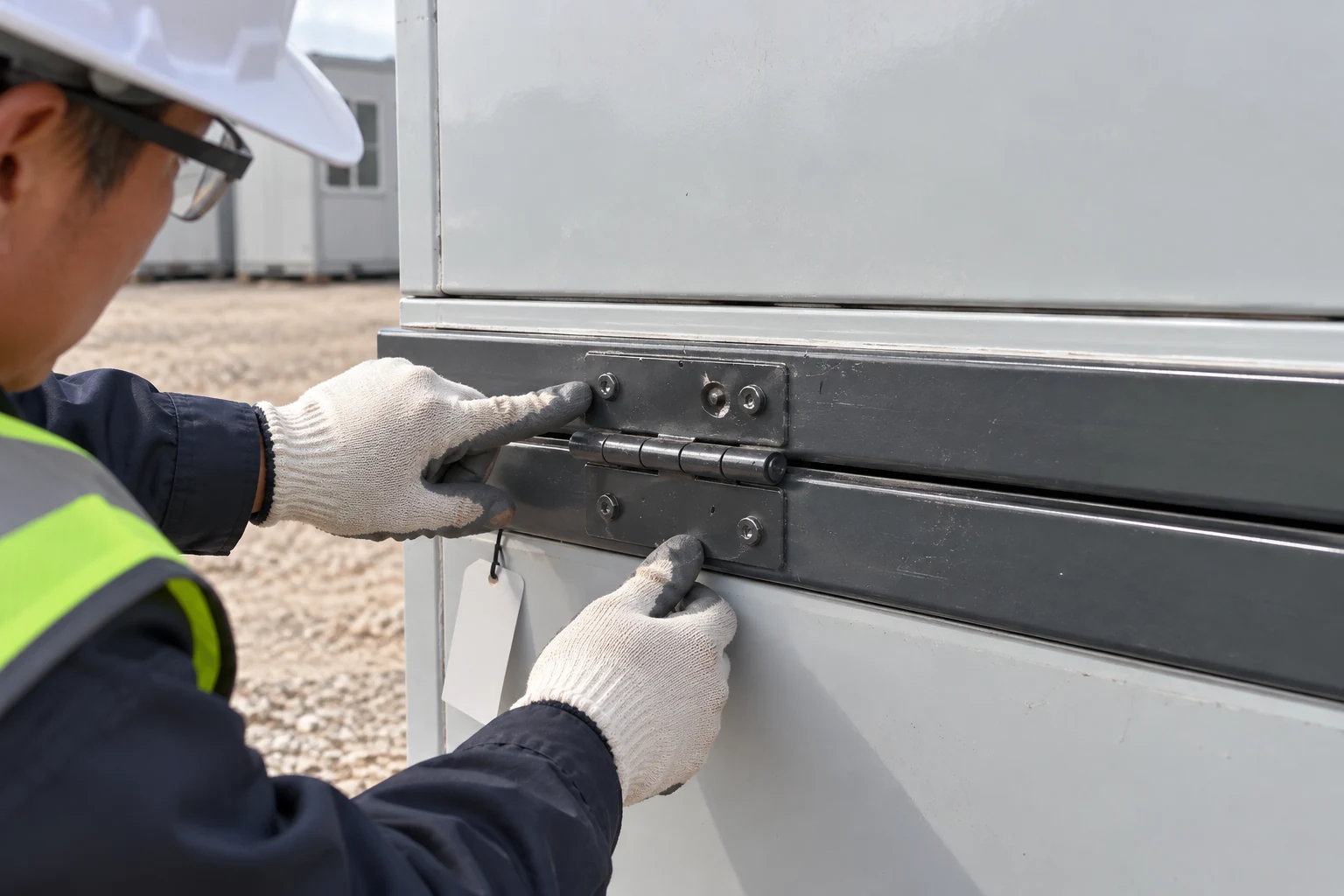
With the unit safely supported, inspect the accessible frame corners, roof edge, panel faces, hinge lines, lifting brackets, protective coatings and seals. Look for visible distortion, cracks, torn or compressed seals, loose fasteners, water staining and foreign objects in movement paths. Photograph the same locations on each unit when practical, so later comparisons are meaningful. Record whether the observed condition was visible on the truck or only after removing protection.
Do not force a panel that appears to bind. A hard stop can be caused by a transport restraint, misplaced accessory, frame distortion, out-of-level support or incorrect sequence. The crew should use the approved instructions to distinguish normal resistance from a fault. If the cause is unknown, isolate the unit and seek technical direction. The container house quality-control guide supports the wider principle of documented hold points rather than fixing an unexplained condition while it is hidden.
The hinge and locking area deserves a named check, because movement turns a condition issue into an operational problem. Verify accessible pins or locks, attachment points, support parts and mating surfaces against the manufacturer detail. A photograph cannot confirm internal integrity, but it can preserve evidence of an observed issue. The competent installer determines whether an inspection, repair or replacement is necessary before deployment.
Keep a separate issue register for each unit
Write the unit ID, location, date, inspector, symptom, photo reference, immediate control, responsible party and final disposition. Use categories such as cosmetic, serviceability, structural or unknown only when the qualified team agrees on their meaning. An item may move from “unknown” to “repair” after inspection; keep that history rather than overwriting the first observation.
Make the register available to the installer and the person accepting the building. Otherwise a receiving note may remain in a warehouse while the crew opens the unit at site. A defect that has been accepted for safe transport is not automatically accepted for occupation. The two decisions have different evidence requirements.
Treat unfolding as a controlled test, not a demonstration
The first opening after transport is an inspection opportunity. Confirm the prepared support, required clearance, lifting equipment, temporary stability, current instructions and exclusion zone. Then observe how the roof and wall sections move, where they align and whether specified locks fully engage. Stop if a component moves unexpectedly or a joint cannot reach its designed position without force.
The general container house installation guide covers site preparation, assembly and handover concepts. For a folding unit, the actual sequence must come from the order-specific manual. Some competitor systems use support rods, pulleys or particular sets of fasteners; those are not universal components. The receiver should verify that the listed handling pieces for the selected PQSE unit are available and in good condition before starting.
After the structure is stable, inspect geometry, roof and wall joints, anchors, doors, windows, weather seals and drainage. Record service rough-ins and any interior movement damage that was hidden while folded. A fast opening does not equal a completed building. Utilities, fit-out, tests and local approvals may remain. The site lead should distinguish the timestamp of “unit opened” from “unit accepted for use.”
Resolve damage without losing the evidence trail
Decide what can wait and what stops the move
The receiving lead can sort each exception by the next decision it affects. A torn outer cover with dry, undamaged components may require photographs and a closer check, but may not stop an approved unloading plan. A bent lifting attachment, unidentified release restraint, damaged hinge connection, unstable support or inaccessible locking part should stop the relevant movement until the competent installer or manufacturer confirms a safe course. A loose interior trim piece might be documented for later fit-out, provided it cannot fall into the movement path. The category should describe the specific operation on hold, not label the whole delivery as either “good” or “bad.”
Agree who can release each hold point and what evidence that person needs. The carrier can record delivery condition, but that does not make the driver responsible for approving a structural repair. The installer can report binding during opening, but a replacement detail may need manufacturer or engineer approval. The buyer should keep these roles visible in the exception register so a crew does not infer permission from silence. If site access or crane hire is expensive, an early hold may feel inconvenient; opening a suspect unit merely to preserve a schedule can erase useful evidence and create a larger safety and cost problem.
When the correction is complete, capture the before-and-after condition, the authorizing document, parts used and the repeat inspection. If a transport-damaged corner is straightened or a seal is replaced, check the adjacent joint and function rather than closing the record because the visible mark disappeared. A resolved exception has a named acceptance decision, not just a photograph of a repair.
When an issue appears, the first decision is whether the unit can be made safe and protected while the responsible party reviews it. Photograph the condition before adjustment. Record which documents define the intended detail and who authorizes any correction. If the item affects a structural connection, lifting point or weathering joint, avoid an informal repair that prevents later diagnosis.
Keep freight, supplier and installer questions distinct. For example, a crushed exterior corner seen before unloading may be a transport issue; a door that binds after placement could involve frame geometry or support levels; a leak during a site water test may involve sealing workmanship or a defective component. The record should show observations and work stages, not jump prematurely to blame. The contract and evidence then guide the commercial resolution.
Ask whether replacement parts can be shipped, whether a local approved repair is possible, and how a repaired unit will be re-inspected. Record the effect on opening date and any interim facility needed. Where several identical units are affected, test whether a common shipping or assembly detail is involved before repeating the same fix across the batch.
Hand over the room with movement records attached
Final acceptance should include the unit identity, approved configuration, receiving exceptions, opening record, completed connections, seal and drainage checks, service tests, defects list and local approvals where required. A photographed open room is not enough. The operator needs the instructions for safe future inspection, maintenance and eventual relocation.
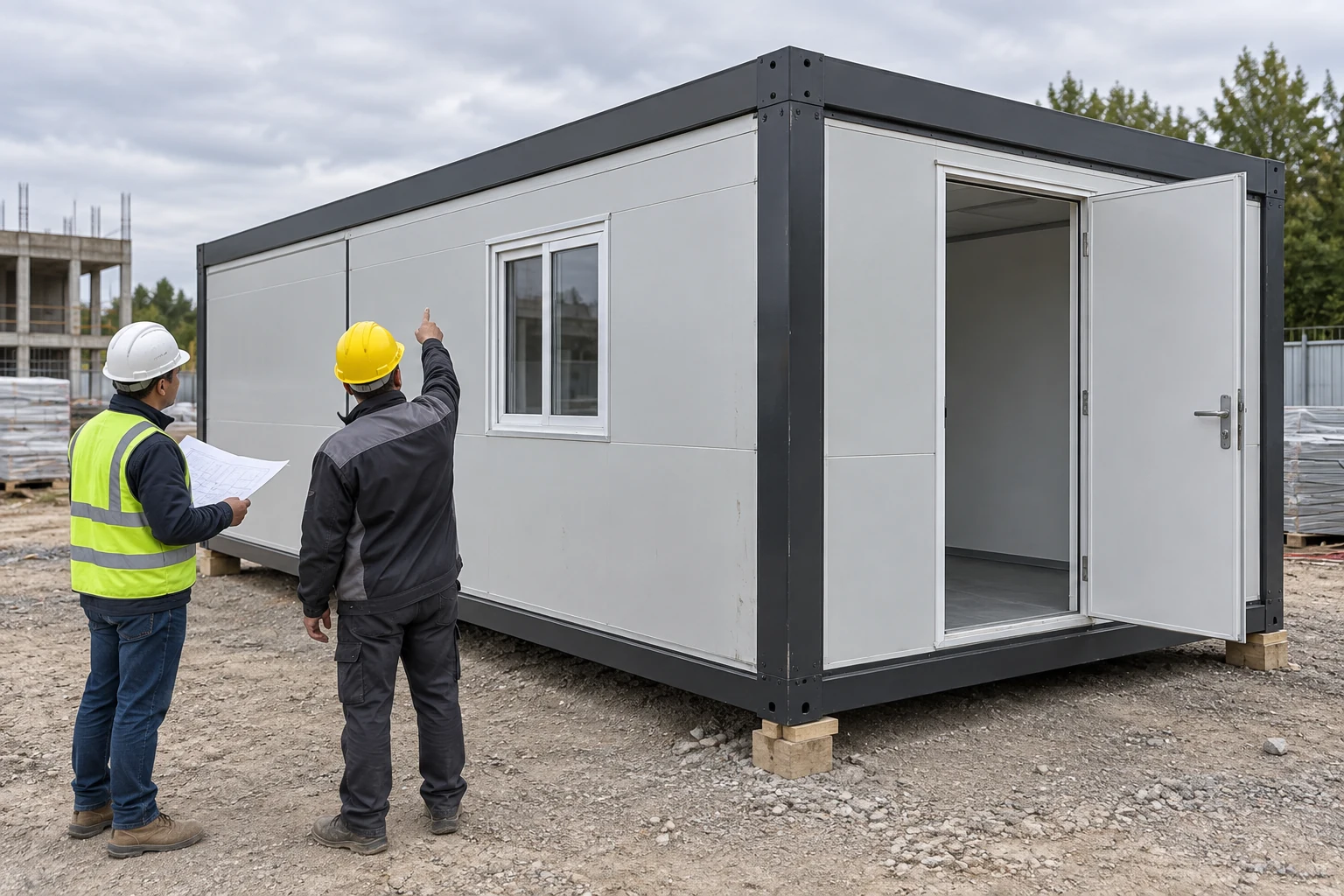
If the unit will move again, preserve the folded and opened drawings, restraint and handling information, part IDs, repairs and inspection photos. A later receiving team can then compare the asset to its own prior condition instead of treating it as a new unknown shipment. The container house permits and codes guide explains why a future destination still needs its own approval review; a prior site’s permission does not travel with the unit.

At the end of the delivery, ask a simple question: can a person who did not attend the unloading identify what arrived, what condition it was in, which parts were missing or replaced, and what was accepted? If the answer is yes, the movement record is useful. If not, improve the register before the fleet grows.
A receiving checklist that fits one page
Record order and unit IDs, drawings, carrier and vehicle, package count, restraint condition, visible damage, accessory count, hinge and lock observation, lifting equipment check, delivery exceptions, first-opening hold points, repair decisions and acceptance owner. Provide links to photographs rather than trying to place every image on the form. Keep the checklist short enough to use at the truck but detailed enough to direct a later claim or maintenance action.
For buyers considering a folding unit for a construction site office, the receiving process should also match the planned office layout and service connections. A compact shipment solves transport volume; it does not decide where the room will sit, how workers reach it or who tests its power. Treat the delivered building and the operating workplace as related but separate milestones.
If you are organizing a shipment, send PQSE the unit quantity, destination, site access and proposed handling team so the order documents can identify what must be checked before opening and what remains to complete at site.
Research and applicability notes
This guide uses PQSE’s published folding-house product information and cross-checks inspection themes against UMD’s buyer inspection guide, KUBO’s supplier document and deployment checklist, and DXH’s model-specific installation guide. Their numeric setup times, parts and procedures are specific to their systems, not PQSE specifications. Use the approved documents for the actual model and local site.