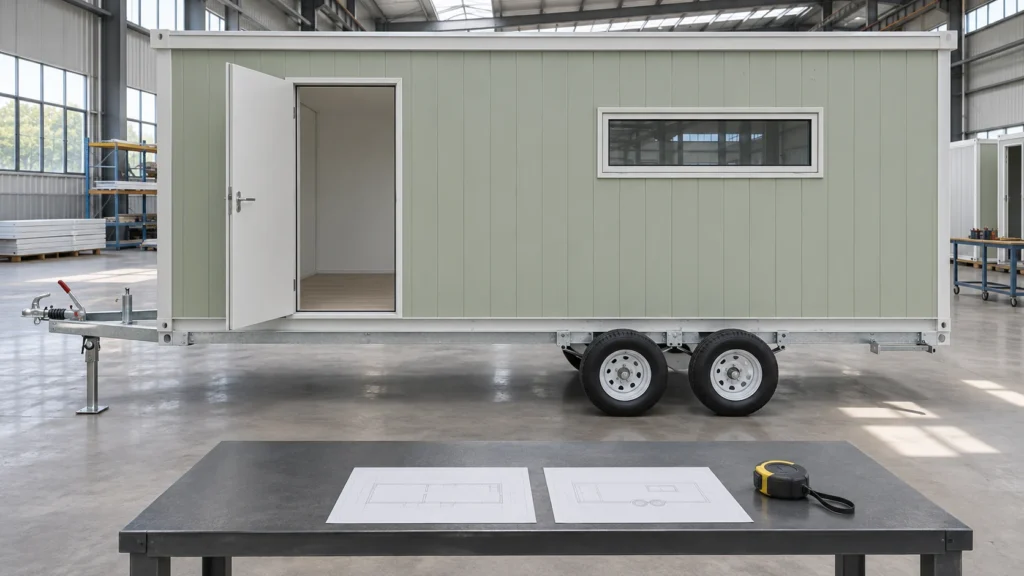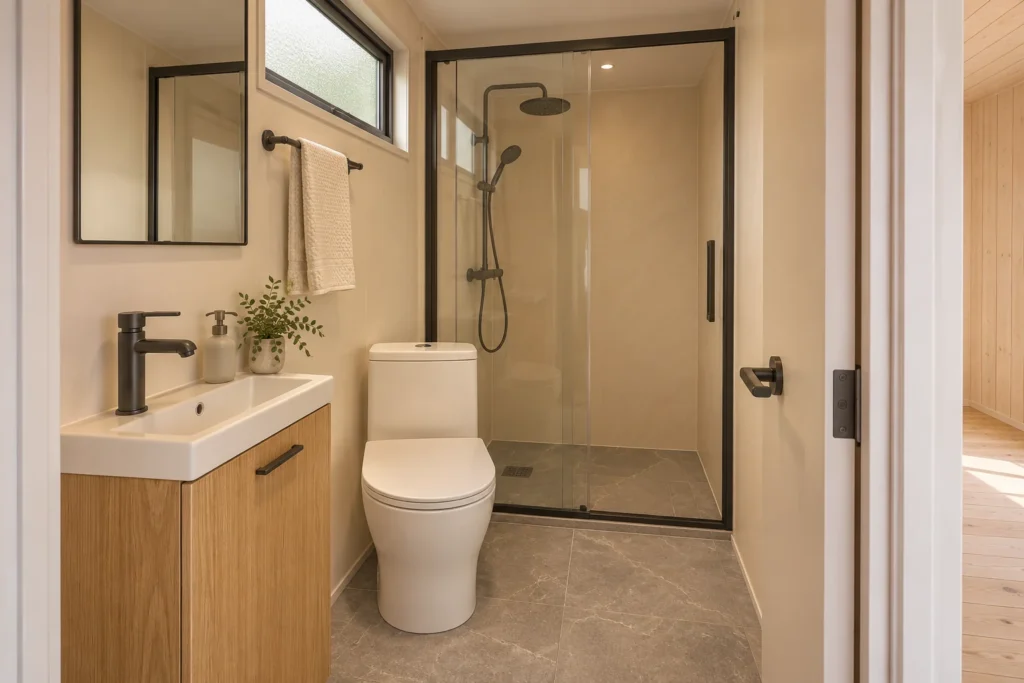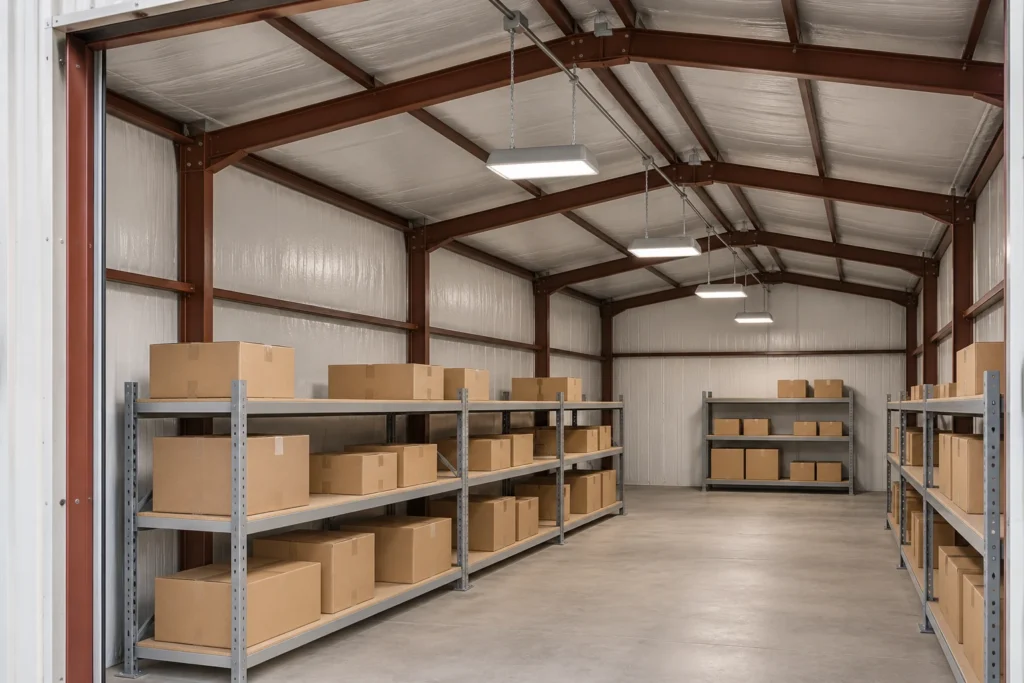
A wheeled tiny house or mobile cabin has no single, standardized lifespan in years because the enclosed cabin and the wheeled chassis age under completely different conditions. For site-office, camp, or commercial fleet buyers, a dry, structurally sound room can sit on seized brakes and weathered tires, while a solid steel trailer frame tells you nothing about hidden roof leaks or soft subflooring inside the wall cavity. Evaluating a unit before purchase requires separating the two systems, auditing what parts and documentation come with each, and reserving maintenance funds on two distinct tracks.
To assess whether a candidate wheeled unit fits your project timeline and relocation plan, check five procurement dimensions before placing an order or signing off on a used asset:
- Enclosure exposure and part replaceability: How roof seams, floor edges, and window openings handle local weather, and whether replacement components can be sourced locally.
- Stationary chassis degradation: What brakes, bearings, seals, and tires require after months or years of sitting stationary on site.
- Structural interface and service access: How the cabin attaches to the frame and whether site installation blocks underbody inspection.
- Road-readiness vs. visual condition: Whether documented load ratings and towing specs—not just visible wheels—confirm the unit can legally and safely move again.
- Split repair reserves: How ongoing building upkeep, running-gear servicing, and unresolved defects are separated in your operating budget.
Inspect Enclosure Durability and Spare-Part Continuity
The upper cabin behaves like a compact building envelope subjected to both static weather exposure and occasional transit vibration. Its useful service life depends less on broad material labels and more on how water is kept out of roof transitions, perimeter floor edges, and window or door penetrations—and how easily a local crew can repair those points years after delivery.
When inspecting an existing or fleet-transfer unit, request dated leak, resealing, and repair logs rather than relying on fresh interior paint. Persistent dampness, swollen trim, or soft spots along floor edges point to water intrusion that needs root-cause investigation before you agree on a price; replacing running gear is straightforward compared with diagnosing and rebuilding concealed moisture damage in the shell. The container house maintenance guide outlines what baseline condition and inspection records should capture.
For new-build procurement, a layout floor plan showing window or door dimensions is not enough to guarantee long-term maintainability. Opening sizes alone do not tell a local glazing or fabrication contractor which frame profile, gasket, or flashing detail fits the wall assembly. Ask the supplier for exact component descriptions or part drawings for exterior cladding, seals, doors, and hardware, and verify who in your operating area can supply and install compatible replacements. If your project specifies a container house on wheels, confirm that the cabin structure documentation and the chassis documentation match the exact same build configuration rather than generic catalog sheets.
Verify Running-Gear Serviceability and Site Access
Project buyers often assume that because a wheeled unit will stay parked on a pad for most of its operating life, the chassis undergoes almost no wear. In practice, prolonged stationary storage introduces its own maintenance liabilities: brake hardware can bind, seals dry out, tire sidewalls weather-check, and bearing grease degrades or absorbs moisture while sitting under constant static load.
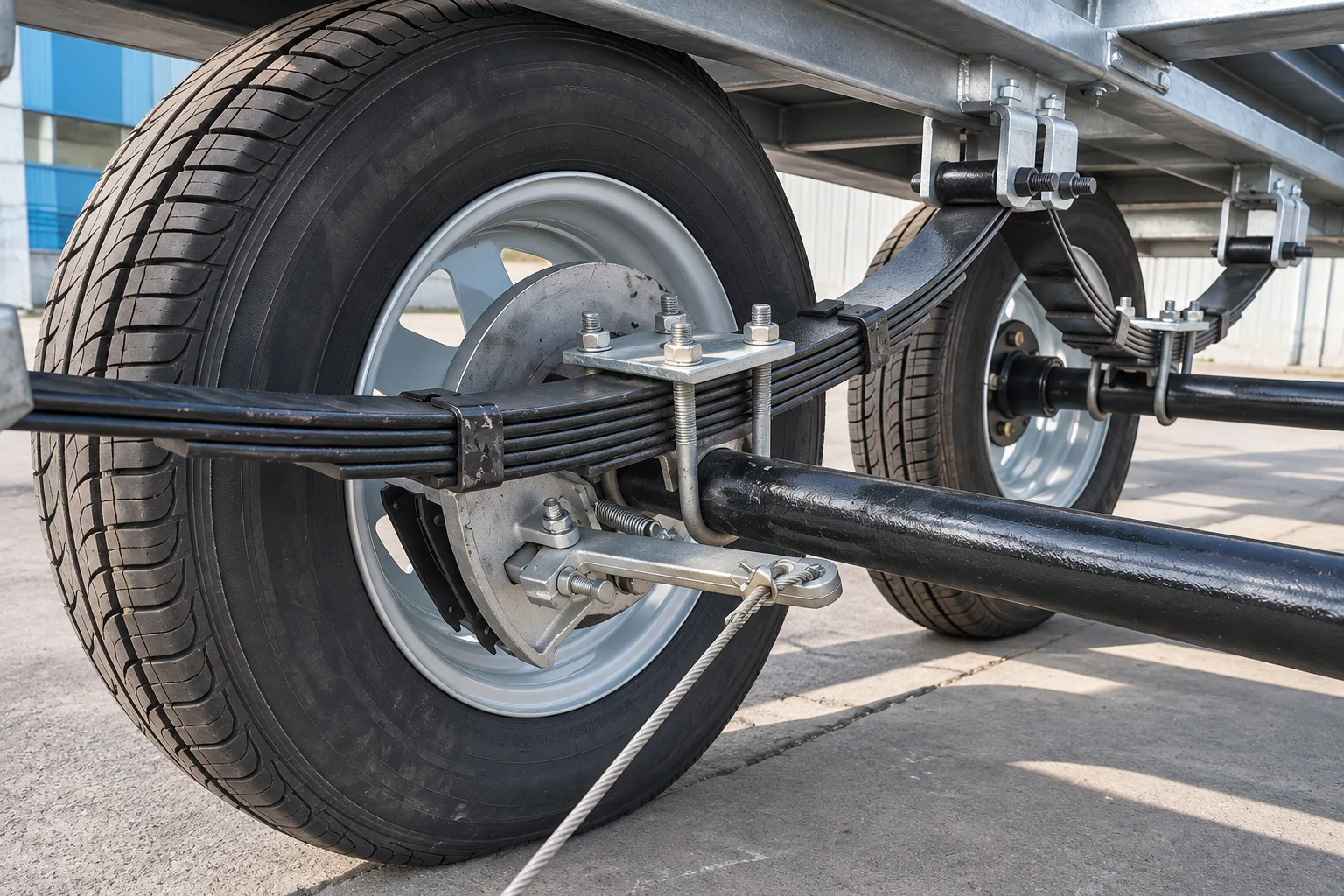
Component-maker documentation illustrates why stationary time does not eliminate inspection requirements. For example, the Dexter light-duty axle service manual (pages 81 and 83, applicable strictly to covered Dexter components) separates routine highway checks from an explicit inspection procedure after prolonged storage alongside checks for bearings, brakes, breakaway systems, wheels, and tires. Do not assume those intervals or procedures match the specific running gear under your unit—instead, require the exact component model numbers fitted to your chassis and obtain the matching manufacturer service manual before handover.
Even with full manuals, a chassis is only maintainable if a technician can physically reach it and verify its limits:
- Physical clearance on site: If the deployed cabin sits behind skirting or other site-built work, verify in advance which axle, brake, and frame inspection points remain accessible in place and which perimeter panels, steps, or utility lines must be dismantled before service or extraction.
- Load and configuration match: Any workshop or mobile mechanic inspecting the running gear needs the unit's actual loaded configuration alongside axle and hitch documentation—not an empty-shell estimate—to judge tire, bearing, and brake adequacy.
- Towability vs. site-only wheels: Having four tires under the frame only proves the unit was rolled onto the pad; it does not establish whether the specific unit can be towed on public roads under local weight, brake, lighting, and registration rules.
- Wheeled vs. skid-mounted tradeoff: If your site plan calls for permanent utility hookups and fixed perimeter enclosures with no realistic plan to tow the cabin again, compare whether a wheeled chassis adds recurring underbody maintenance overhead compared with a fixed-foundation or crane-lifted modular frame.
| Assessment Area | Pre-Purchase Evidence to Request | Key Operational & Budget Risk |
|---|---|---|
| Cabin shell, roof, and openings | Dated condition and leak-repair records (used); maintenance instructions plus part drawings/specs for compatible replacements (new). | Hidden moisture damage behind cladding or obsolete window/door profiles that local trades cannot match. |
| Cabin-to-chassis interface | Drawings or clear underbody photos showing how the room mounts to the frame and where tie-down or weld points sit. | Undiagnosed frame corrosion or structural deformation concealed beneath floor insulation or finishing layers. |
| Axles, brakes, bearings, and tires | Identifiable component models, manufacturer service manuals for those exact parts, past service logs, and confirmed local parts sources. | Seized brakes or unidentifiable hubs after long-term parking, delaying urgent site relocation. |
| On-site access and road compliance | Clearance plan showing what can be serviced in place, plus loaded-weight records and local transport/placement requirements. | Costly demolition of site-built decks or skirting just to inspect wheels, or units failing local towing compliance. |
Separate Cabin and Chassis Repair Reserves
Lumping a wheeled cabin into a single maintenance line obscures when costs actually hit and which trade is responsible for the work. As an illustrative planning exercise rather than a fixed lifecycle forecast, structure your multi-year operating reserve into three separate buckets: envelope and interior upkeep (sealants, roof coatings, door/window hardware, interior surfaces), chassis and running-gear servicing (tires, brake assemblies, wheel bearings, breakaway batteries, frame touch-up), and site-prep or access clearing required to reach the undercarriage.
Your procurement risk split also shifts depending on whether you buy used or order new:
- Used or transferred units: Commission an independent condition assessment before finalizing price, request line-item quotes for known repairs, and treat missing part identifications or uninvestigated moisture spots as unresolved financial exposure rather than minor cosmetic items.
- New-build orders: Confirm in writing who supplies the cabin structure versus the trailer chassis, whether both fall under one warranty or separate component warranties, and which party handles warranty claims if an interface issue spans both systems.
Frequently Asked Questions
Does having almost no road mileage mean the chassis will last longer?
Low road mileage only tells you the unit has not accumulated highway wear; it does not guarantee a trouble-free chassis. Stationary storage exposure, ground moisture, frame corrosion, calendar age of tires and seals, and missed service history all affect running-gear condition. Before towing any low-mileage unit that has sat on site, have a qualified technician inspect the bearings, brakes, tires, and hitch using the instructions for the specific components installed.
Can I change the chassis and keep the room?
Do not assume a cabin can simply be lifted onto a new trailer frame without engineering verification. Whether a swap is practical depends on how the cabin floor structure connects to the existing chassis, how loads transfer during lifting, and whether a matching replacement frame is available. Have the original builder or a qualified structural professional review the mounting drawings, lifting points, and handling plan before factoring a chassis swap into your asset plan.
Build Servicing Requirements into Your Purchase Brief
Before requesting final quotes or committing to a fleet build, assemble a clear site and operational brief covering your buyer-side parameters so the supplier can confirm matching documentation:
- Delivery and site environment: Final placement address, ground/drainage conditions, coastal or high-moisture exposure, and any site-built skirting or deck clearances.
- Relocation cadence: Whether the unit will sit permanently after delivery or move between job sites, plus local roadworthiness and stationary placement rules in your jurisdiction.
- Required handover package: Matching cabin and chassis configuration records, installed axle/brake model numbers, maintenance guides, and replacement-part specs your local trades can use years later.