To buy a custom tiny house on wheels without triggering surprise variation orders or delivery standstills, send every shortlisted factory the same site-and-use brief and ask for a written quote tied to one dated room-and-chassis drawing revision. Before you release a deposit for production, lock down in writing what the factory builds and supplies, what local contractors handle at the named destination, how transport and placement are priced, and what inspection records must arrive with the unit.
Selecting a supplier solely on the lowest base price or the earliest build slot leaves gaps between factory fabrication and site readiness—especially when the cabin manufacturer and the local utility or civil contractor are separate businesses. Putting a standardized written RFQ checklist in front of every bidder forces comparable, auditable answers before you sign.
Define Use, Movement Plan, and Named Destination First
A factory quote is only as accurate as the operating brief behind it. Before asking for pricing, give every supplier the same written summary covering three operational inputs:
- Intended commercial or project use: State whether the unit will operate as workforce lodging, short-term rental accommodation, a site office, or residential housing. Floor load expectations, egress layout, and utility sizing depend on daily occupancy and turnover.
- Movement profile: Specify whether the cabin will remain stationary after one placement, relocate periodically across private property, or travel over public roads. Chassis spec, running gear, and tie-down details change based on how often and how far the unit moves.
- Named delivery destination and site constraints: Provide the physical site address—not just a city or region—along with approach-road photos, gate widths, turning clearances, ground slope, and known water, wastewater, and electrical service points.
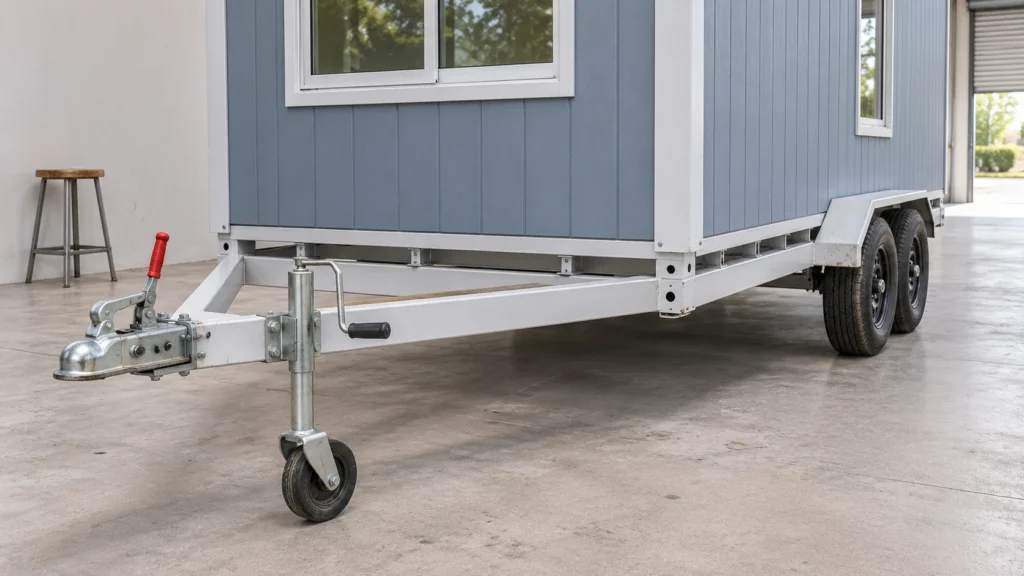
Use this permit questions guide early to map out which zoning, placement, or occupancy approvals must be settled locally before production starts. If public-road transit is part of your deployment plan, verify what the seller's towing offer actually covers in writing rather than assuming an axle assembly shown in marketing photos meets local towing or permit rules.
Verify Supplier Track Record Against Your Operating Model
Before comparing line-item prices, ask each shortlisted manufacturer for documented delivery examples matching your project conditions. A builder accustomed to single private-lot cabins may not align with multi-unit site logistics or commercial rental durability. Ask bidders to confirm prior deliveries with comparable unit counts, climate exposure, local approval regimes, and commercial structures (direct purchase, fleet rental, or turnkey site package).
Carry One Document Package Into the Order
When procuring a container house on wheels, treat marketing spec sheets as background only and tie the purchase order to one dated room-and-chassis drawing set paired with a line-by-line bill of inclusions. Separate factory fabrication from local site execution in parallel columns so neither side assumes the other is handling unloading, blocking, or utility tie-ins. Use a ready-for-use cost worksheet to estimate any site preparation, craneage, or hookup tasks left outside the manufacturer's base price.
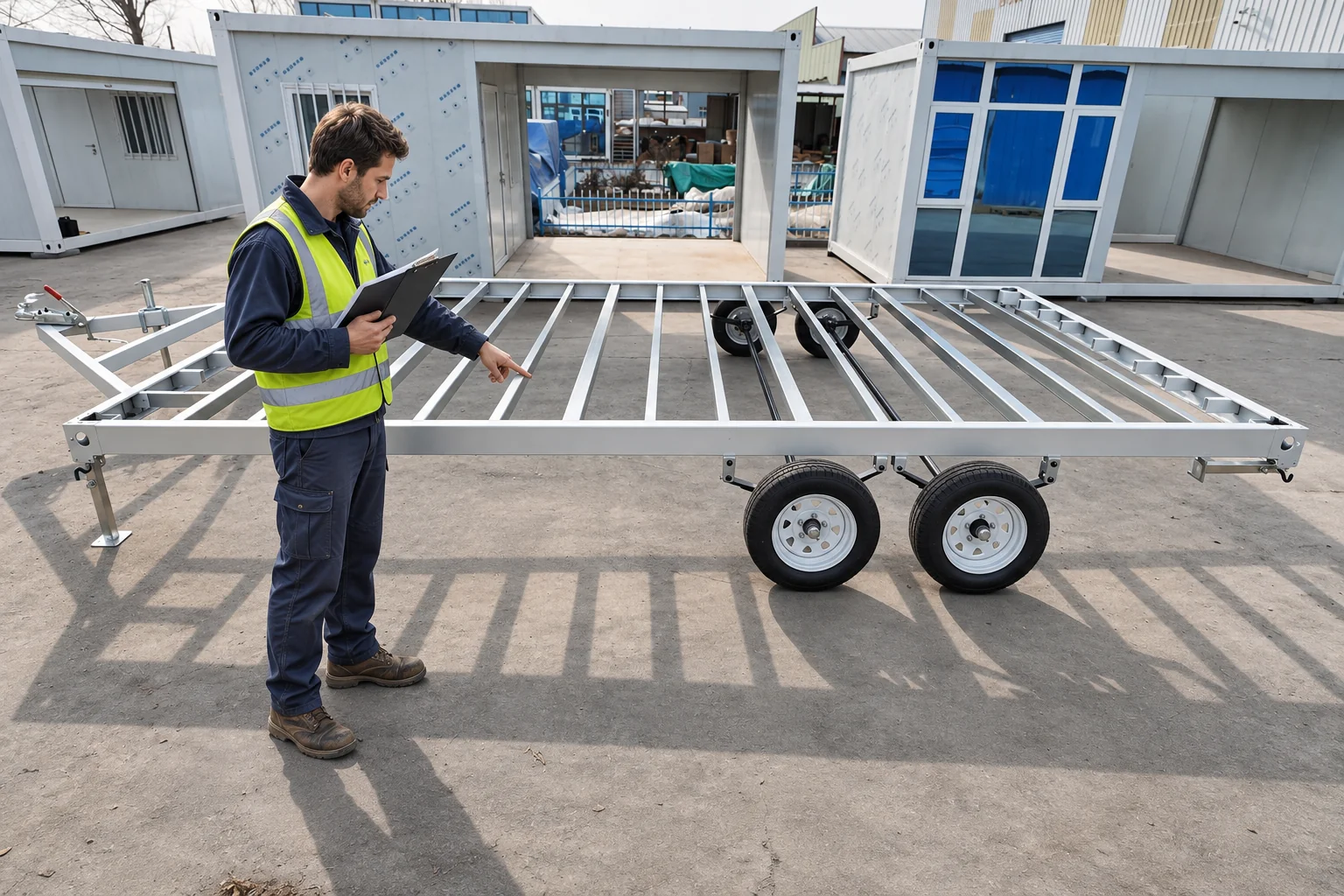
Published buyer guides from individual builders such as B&B Tiny Houses and Mustard Seed Tiny Homes illustrate how manufacturers break site review, quoting, design, production, and handover into distinct steps. Those sequences reflect company-specific workflows rather than universal contract or payment terms, so lock your order milestones directly to your own supplier's written commitments.
Standardize Written RFQ Questions Across All Bidders
To prevent vague exclusions such as "site prep by buyer" from hiding unbudgeted costs, require every shortlisted supplier to answer the same written prompts on their formal quote:
- Price inclusions, allowances, and substitutions: Which appliances, plumbing fixtures, cabinetry, insulation specs, and hitch components are included in the unit price? Are any finishes budgeted as capped allowances, what material substitutions are permitted without written buyer approval, and which options change the contract price?
- Drawings, approvals, and buyer freeze dates: Who prepares dated or stamped drawings if local reviewers require them, who gathers site survey data, who submits local permit applications, and who pays for drawing revisions if a plan reviewer requests changes? State the exact calendar date by which the buyer must lock layout and finish choices to hold the delivery schedule.
- Transport terms, named point, and site handoff: Break out separate pricing lines for unit build, mainline haulage or towing, route surveys or special movement permits, site unloading, final leveling, and utility connections. If trade terms are referenced, state the exact rule version and named handover address, plus who carries transit insurance and absorbs waiting or detention fees if site access is delayed.
Stage-by-Stage Approvals and Handover Records
| Order Stage | Documents and Proof Required Before Advancing | Primary Owner to Confirm |
|---|---|---|
| Request comparable quotes | Named destination address, intended use, movement plan, known utility setup, and written answers to the supplier RFQ checklist with pending decisions flagged. | Buyer procurement lead |
| Authorize production | Dated room-and-chassis drawing revision, itemized inclusions and exclusions, allowance caps, approval-revision fee ownership, and split transport/site responsibilities. | Buyer and factory seller |
| Release for dispatch | Agreed pre-dispatch inspection records, equipment or chassis nameplates, packing list for loose items, confirmed delivery condition, and site-crew readiness sign-off. | Factory QA and site receiver |
| Receive and accept unit | Delivery checklist matched to the order revision, timestamped photos of any transit damage or omissions, and a separate punch list naming who resolves each remaining site item. | Site contractor and buyer |
Key Procurement Tradeoffs Before Signing
Two commercial choices shape your risk profile before production starts:
- Frozen standard spec vs. late layout customization: Freezing drawings early protects build slots and avoids engineering rework fees, at the cost of less flexibility once site contractors begin rough-ins. Keeping options open late shifts cost and schedule risk back onto the buyer unless capped in writing.
- Single-vendor delivery-and-set vs. split factory and local contracts: Assigning haulage, unloading, and placement to the factory simplifies single-point accountability for transit damage, though local contractors often price site grading, crane hire, and utility tie-ins more competitively—provided the buyer actively manages the handoff boundary.
Control Revisions and Pre-Dispatch Proof Before Shipment
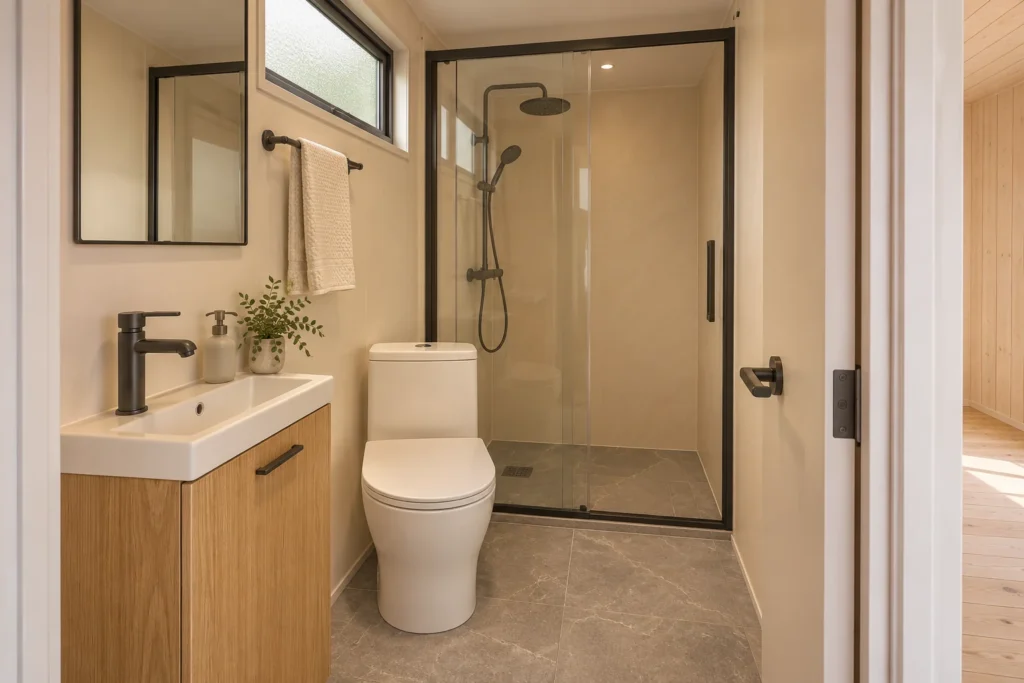
Whenever a shower enclosure, entry door, window opening, or storage cabinet shifts position after quoting, require an updated drawing revision and a revised list of supplied items before work continues on that section. Verify whether plumbing rough-ins, electrical load paths, or the loaded cabin configuration changed enough to affect trailer balance, towing gear, or utility stub-ups at the destination.
Forward every approved revision immediately to local contractors pricing foundations, pads, or hookups so field work does not follow outdated dimensions. Archive superseded drawing versions with their issue dates so procurement, factory QA, and site teams can audit what changed and who approved the cost or schedule impact.
Before releasing final pre-shipment payment, confirm in writing what compliance and inspection proof accompanies the cabin—such as third-party inspection records (where contracted), chassis or equipment nameplates, factory function test logs, and the exact warranty start date and defect-response boundary between factory workmanship and third-party site installation.
Frequently Asked Questions
Can I get a quote before choosing a site?
Yes, suppliers can issue an indicative quote based on stated assumptions, as long as site-dependent lines remain clearly flagged as provisional until you name a destination and utility layout. For example, specifying fixed water hookups rather than tanks changes the factory plumbing layout, exterior connection hardware, and site-prep brief compared with onboard tank storage. Treat early pricing as budgetary only for haulage, permitting, and site hookups.
What should I check at delivery?
Inspect the cabin and verify all loose-shipped parts against your approved order revision and packing list before the transport or crane crew leaves the site. Record any visible damage, missing hardware, or incomplete factory work with timestamped photos under the reporting steps written into your contract. Log unfinished local tasks—such as anchoring, skirting, or final power and water tie-ins—on a separate site checklist so factory warranty items and local contractor work stay distinct.
What compliance and warranty terms should be settled before signing?
Require bidders to state in writing which third-party inspection records, equipment nameplates, and local approval documents are supplied before dispatch, and who covers re-inspection or drawing changes if local officials request modifications. Pair that with clear post-delivery terms stating how transit damage claims are filed, how long factory workmanship defects remain covered, and which maintenance failures fall outside warranty.
Send a Complete Brief for an Itemized Quote
To receive comparable, contract-ready proposals, assemble one brief listing your named destination address, unit quantity, intended operational use, movement plan, utility hookup requirements, and preferred interior layout. Request dated room-and-chassis drawings alongside a split quote showing factory inclusions, transport terms, and local site tasks as separate lines. when you are ready to review your project brief, drawing scope, and delivery boundaries before production.