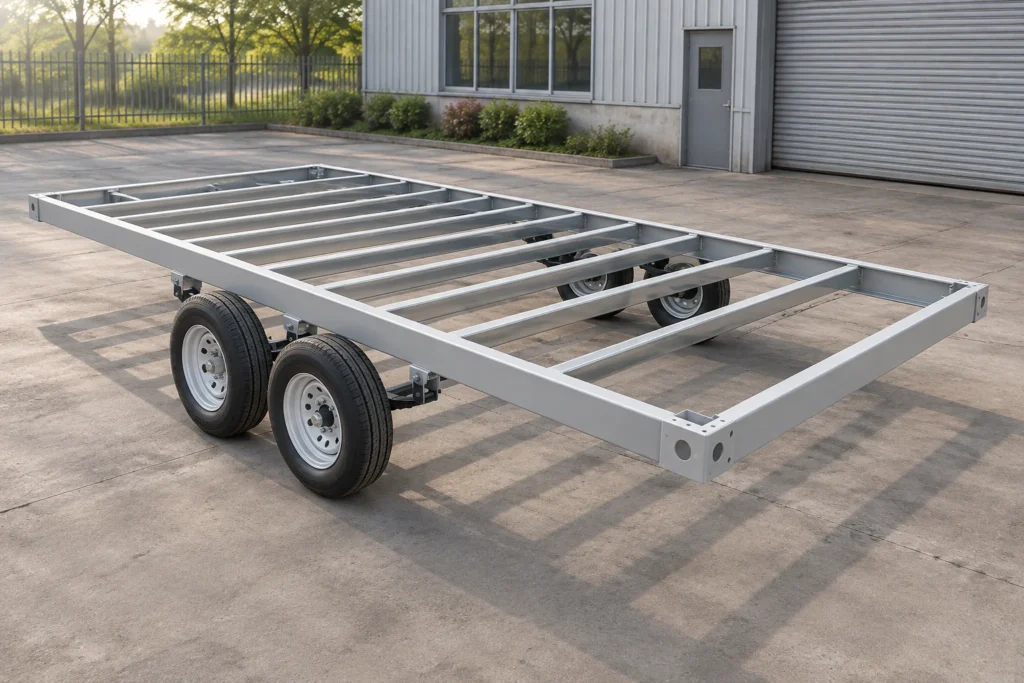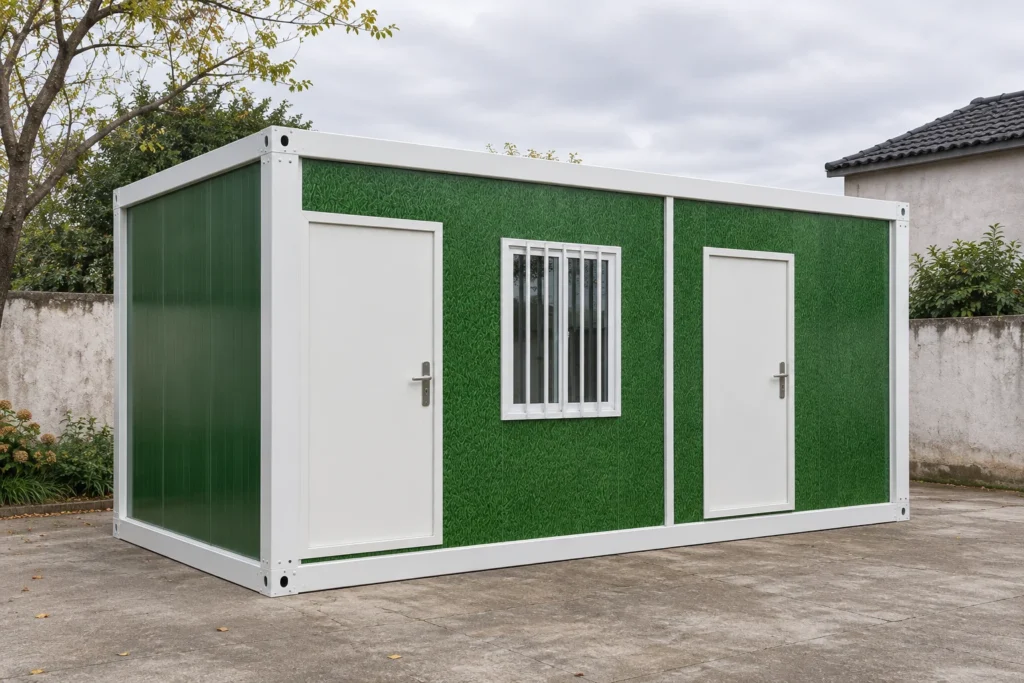
Choose a direct water connection when the site can provide a suitable, reliable supply. Consider stored fresh water when that supply is unavailable or intermittent—and plan how the tank will be refilled. In either case, decide where wastewater goes separately. A freshwater tank does not collect what leaves the shower or toilet.
The wheels do not choose the plumbing. PQSE's container house on wheels can be discussed around the intended room use and selected services; a bathroom or wheeled chassis should not be treated as proof that tanks, pumps and independent services are included.
Choose the fresh-water supply first
A direct connection uses an external pressurized supply. It avoids routine tank refilling while that source is available, but still needs a suitable connection and a plan for interruptions and seasonal conditions.
A stored-water arrangement holds fresh water for later use. It normally adds a tank, a means of filling it and a suitable pump to serve the fixtures. Those components need space, access and power where required. Storage changes the operating routine: someone must obtain water, refill the tank and maintain the selected system.
Jayco explains these two supply modes in its RV water-system guide. Its RV equipment is an example of the distinction, not a specification for a PQSE cabin. For the actual project, agree the equipment against the available source and the intended fixtures.
Choose the wastewater arrangement separately
Water coming in and water going out are different purchase decisions. A site might provide a water tap but no suitable drain connection. That does not make it a fully serviced plot.
In RV terminology, gray water commonly means wastewater from sinks and showers; black water means toilet waste. Jayco distinguishes those from the fresh-water tank. Your cabin's toilet type and proposed drainage arrangement must be established before deciding what storage is needed. Do not assume every wheeled cabin requires—or includes—the same three-tank package.

Where a suitable site drain is available, the connection still needs to suit the receiving system. Without one, a proposal involving wastewater holding must include a workable collection and emptying arrangement. A tank stores waste; it does not remove the need for an appropriate disposal destination. Have the local service provider confirm the proposed arrangement rather than assuming discharge onto the plot is acceptable.
Match the package to the plot
| Services available | Fresh-water approach to compare | Wastewater question |
|---|---|---|
| Reliable supply and a suitable drain | Direct supply, without adding storage simply because the cabin has wheels | Can the selected fixtures connect to that receiving system? |
| Reliable supply, no suitable drain | Direct supply may still work | What collection capacity, emptying method and service access are needed? |
| No continuous supply, suitable drain | Stored fresh water with a defined refill source and suitable delivery system | Does the drain serve the selected bathroom and kitchen arrangement? |
| Neither continuous supply nor a suitable drain | Stored fresh water plus a realistic refill routine | Plan wastewater holding and servicing independently; include both in the operating budget |
These are arrangements to evaluate, not a list of standard PQSE packages. Use the modular-building utility guide to allocate the factory and site connection responsibilities once the operating choice is clear.
Compare the recurring work as well as the equipment
Direct supply shifts attention toward the external connection and its reliability. Tank supply adds replenishment and system maintenance. Wastewater storage adds another service cycle, which may become the limiting factor even when fresh water remains available.
Tumbleweed's cold-weather water article contrasts filling internal storage with maintaining an exposed direct hookup. Its examples concern Tumbleweed homes, but illustrate why neither arrangement can be selected from a tank label alone. Discuss the actual climate and periods when the cabin will be unoccupied. A tank or perimeter skirt is not, by itself, a freeze-protection guarantee.
Keep power in the comparison too. A pump and hot-water equipment need their own supply; stored water does not establish electrical independence. The off-grid services discussion explains that distinction for another cabin type. If tanks are proposed on the unit, include their stated liquid condition in the wheeled-cabin weight review.
FAQ
How many days will a tank last?
That depends on usable capacity and actual demand from occupants, fixtures and cleaning. Fresh-water availability and wastewater holding capacity can run out at different times. A quoted tank volume alone cannot establish an operating interval.
Can a cabin use both direct supply and a tank?
Some purpose-designed systems support both. Do not assume that adding a tank creates that capability. Ask whether the proposed plumbing arrangement supports the required modes and what equipment is included.
Which arrangement costs less?
Compare the installed scope and recurring services for the actual plot. Connection work, storage equipment, refill arrangements and wastewater collection can change the comparison. There is no single lower-cost choice for every site.
Send the available services with your enquiry
Tell PQSE the destination, quantity, occupants, bathroom and kitchen requirements, and whether the plot provides continuous water and a suitable drain. If either is missing, describe the available refill or collection service. That gives us a useful starting point for discussing the room layout and water-service scope together.