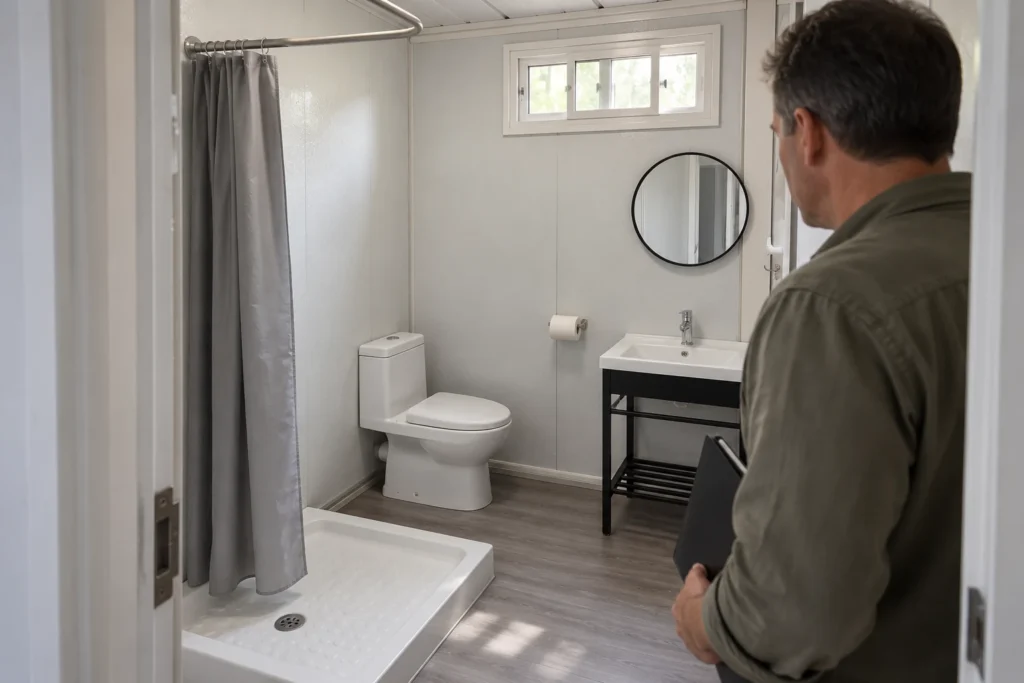
A useful mining camp spare-parts plan starts with the installed asset and the service it supports, rather than a supplier’s general list of recommended extras. Identify the equipment, confirm the replacement or kit for its production version, decide where it should be held, and name the people responsible for diagnosis, receiving, repair and return to use. A box at the camp cannot establish compatibility or restore a service by itself.
This distinction matters when accommodation is remote and several facilities share essential services. A room fault may affect one occupant; a problem in shared washing, catering or utility equipment can affect a much larger operating area. For mining camp accommodation, the procurement question is therefore broader than which spare parts can travel with the building. It includes what will happen between the first report and a verified, usable facility.
The framework below separates those decisions. It uses manufacturer guidance and named external camp-service examples, while leaving actual stock quantities, equipment selections and response commitments to the project records. None of the examples establishes a PQSE component specification, repair contract or guaranteed restoration time.
Define the service at risk before listing spare parts
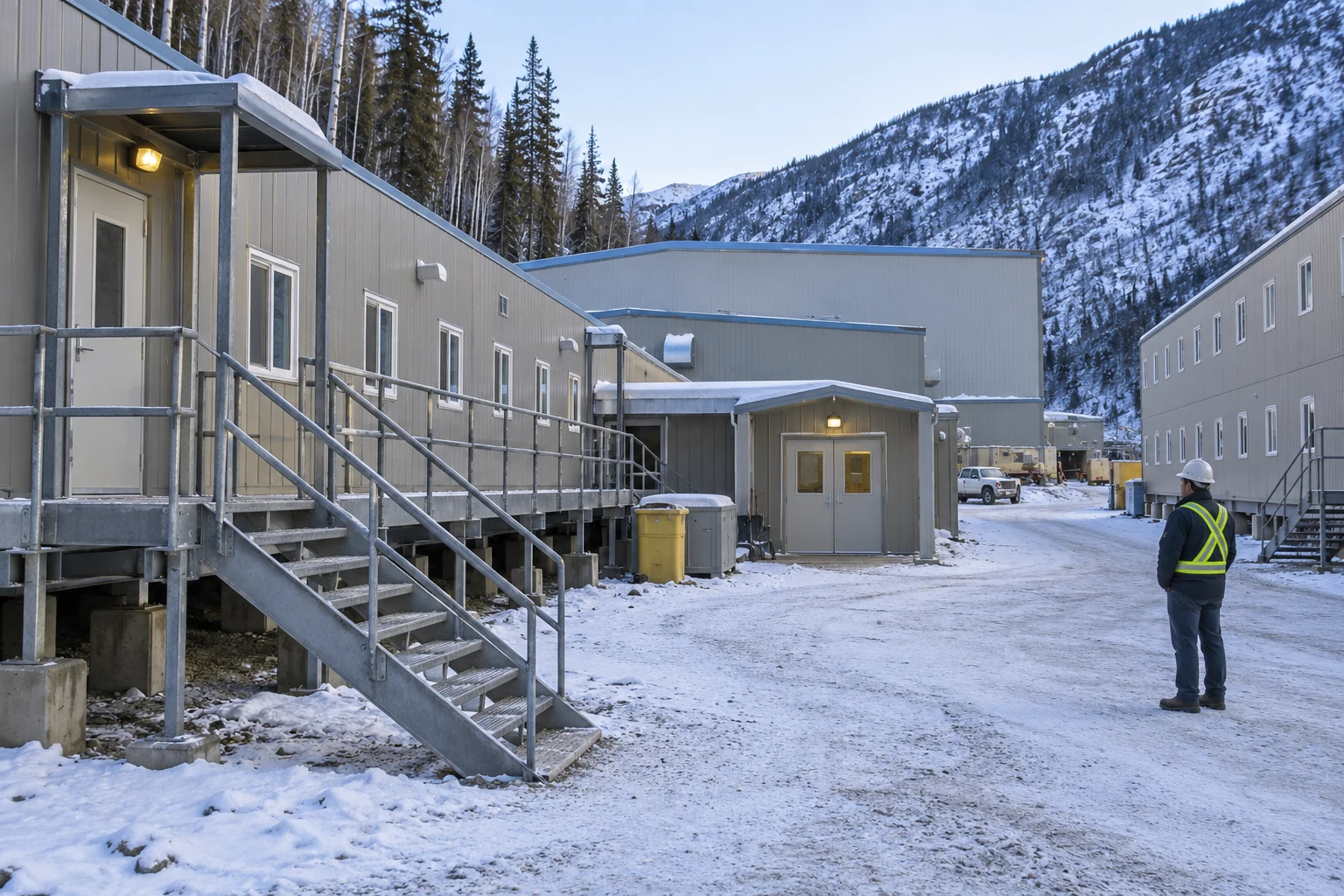
Begin with functions people need during an ordinary shift cycle: a usable sleeping room, washing and toilet facilities, food service, suitable indoor conditions, and the access needed to operate them. Associate each function with an actual area and responsible operator. This makes a proposed spare meaningful: it is being held to support a defined service, rather than because it appears inexpensive or convenient to ship.
Worker camp room and shared-facility planning should also distinguish independently usable areas from functions that depend on common equipment. A spare for an individual fixture and a spare for shared equipment have different consequences when unavailable. Record any confirmed alternative facility, its availability and who decides whether it may be used. Do not treat a spare room or an untested alternative as automatic replacement capacity.
Identify the accommodation boundary
WorkSafe Western Australia’s employer-provided accommodation guidance includes safe premises and everyday facilities within the employer’s defined accommodation responsibilities. That jurisdiction-specific scope helps explain why maintenance cannot stop at a bed count. For another location, establish the applicable duties locally. The purchasing brief still needs to state which services the building supplier, camp operator, utilities contractor and equipment maintainer actually control.
Consider when the affected function is needed, as well as how many people normally use it. A spare shower elsewhere might be unavailable to the relevant shift, or depend on the same interrupted supply. A vacant room may lack the agreed arrangement for its intended occupant. These are questions to resolve from actual operations, not assumptions about this camp. Ask the operator to confirm the usable alternative and its dependencies before making it part of the contingency plan.
Record an observation without turning it into a diagnosis

A useful report says where the problem was observed, what the user experienced, when it was noticed and what service is currently unavailable. A photograph can show visible damage or an external label. It cannot identify every internal cause. For example, a complaint about inadequate washing service does not establish that a particular pump, heater or valve needs replacement.
Keep the reported symptom separate from the diagnosis entered by the competent person assigned to assess it. Otherwise, a purchase order can acquire apparent certainty simply by repeating the occupant’s first guess. The record should show unresolved questions, the current permitted use of the affected area and the next decision owner. This avoids asking a storekeeper to select technical remedies from incomplete descriptions.
The following table is a reporting aid, not an instruction to inspect or repair equipment. Its distinctions help a buyer ask for the evidence needed before a replacement item is approved.
| Affected function | Useful reported evidence | Still unresolved | Decision to assign |
|---|---|---|---|
| Sleeping-room access or enclosure | Room location and visible defect | Exact hardware and extent of damage | Permitted room use and assessment owner |
| Washing or toilet service | Fixture location, observed availability and user impact | Fixture, supply, heating or drainage cause | Assessment and a confirmed alternative, if available |
| Catering support | Affected appliance and service state | Equipment diagnosis and food-service implications | Restrictions determined by the catering operator |
| Shared power or indoor conditions | Affected area and observed symptom | System boundary and cause | Competent assessment and access controls |
Match the physical asset to its current record

The register needs a connection between the physical item, its camp location and the identity used to order replacements. Preserve the manufacturer’s fields as recorded; distinguish a product number from a serial number, model description or local asset tag. An external photograph should be readable enough for the authorized confirmer to compare with the relevant documentation, without requiring untrained staff to open equipment.
Grundfos illustrates why identity is model-specific. Its nameplate guide describes eight digits following P/N for an illustrated MAGNA3 example, and the first eight digits after A in the Model field for an illustrated CR example. These are bounded manufacturer examples, not a rule for every pump. The photographed equipment used as a reference for this article is a different model and is not evidence of an installed PQSE system.
Separate the building family from the installed equipment
A procurement description such as flat pack container houses identifies a building approach, not every appliance or fitting supplied with it. Similarly, prefab K house accommodation requires its own confirmed supply and component records. Record the actual delivered configuration rather than assuming that a category name defines a universal replacement package.
Confirm the production version and complete replacement scope

Correct product identity is the beginning of compatibility checking. Grundfos’s spare-parts guide also uses production information to find the relevant list and connects components with available kits and service documentation. That approach matters when a manufacturer changes a design while keeping a familiar product-family name. Ask the responsible technical party to confirm the actual version and required kit before purchasing.
The order should distinguish a single component, a complete kit and any additional items that the selected repair requires. Retain the confirmation and document revision with the asset record. If a substitute is proposed, identify who is authorized to assess it and whether its use changes the installed arrangement. A sales description of a similar-looking part is not sufficient approval.
A quotation should make uncertainty visible. If the supplier needs a clearer label photograph or production detail before confirming the kit, keep the request open for that evidence. Do not turn an indicative option into an approved item by removing the qualification from the purchase order. Ask for a written response that connects the quoted item with the supplied identity and states any unresolved conditions. This provides a traceable decision without suggesting that an email replaces the required technical assessment.
Carry authorized changes into the register
When a detachable container house configuration is changed, transferred or combined with other facilities, check whether the affected component records still describe what is installed. The building’s ability to be assembled from components does not make another family’s hardware interchangeable. Keep approved modifications and replacement decisions linked to the specific unit instead of leaving them only in an old purchase email.
| Record layer | Evidence to retain | Confirmation required | Limit |
|---|---|---|---|
| Camp location and asset | Local tag, room or service location, current configuration | Physical item matches the register | A room number is not an OEM product identity |
| Manufacturer identity | Label photograph and relevant fields | Use the actual model’s identification method | Illustrated Grundfos MAGNA3: eight digits after P/N; CR: first eight after A in Model. These patterns are not universal |
| Production version and kit | Production information, parts-list revision and kit contents | List and complete scope match the actual version | Similar appearance does not establish compatibility |
| Installed interfaces and changes | Relevant specification and authorized modification records | Technical confirmation of any proposed substitute | A matching identifier does not authorize modification |
Check what else the replacement decision affects

A parts request can cross several service boundaries. A combined portable bathroom facility includes different user functions, and a reported problem may involve equipment outside the room itself. Dedicated portable shower units likewise need a confirmed supply, heating and drainage arrangement. Do not select a fixture spare as a substitute for establishing which function has failed.
Catering offers another useful distinction. The appliance may belong to one supplier while food-service decisions belong to the operator. ATCO’s camp-services page groups catering, housekeeping, building maintenance and water or wastewater operations under separate service descriptions. It is an external commercial example of scope, rather than proof that those responsibilities are included in a PQSE building purchase.
Ask what must be assessed before the affected service continues, what adjacent equipment may be involved, and who controls the necessary access. Include any operational restrictions in the work record. A faster shipment should not conceal an unresolved interface or transfer a safety decision to the person placing the order.
Choose where to hold the part and how to replenish it
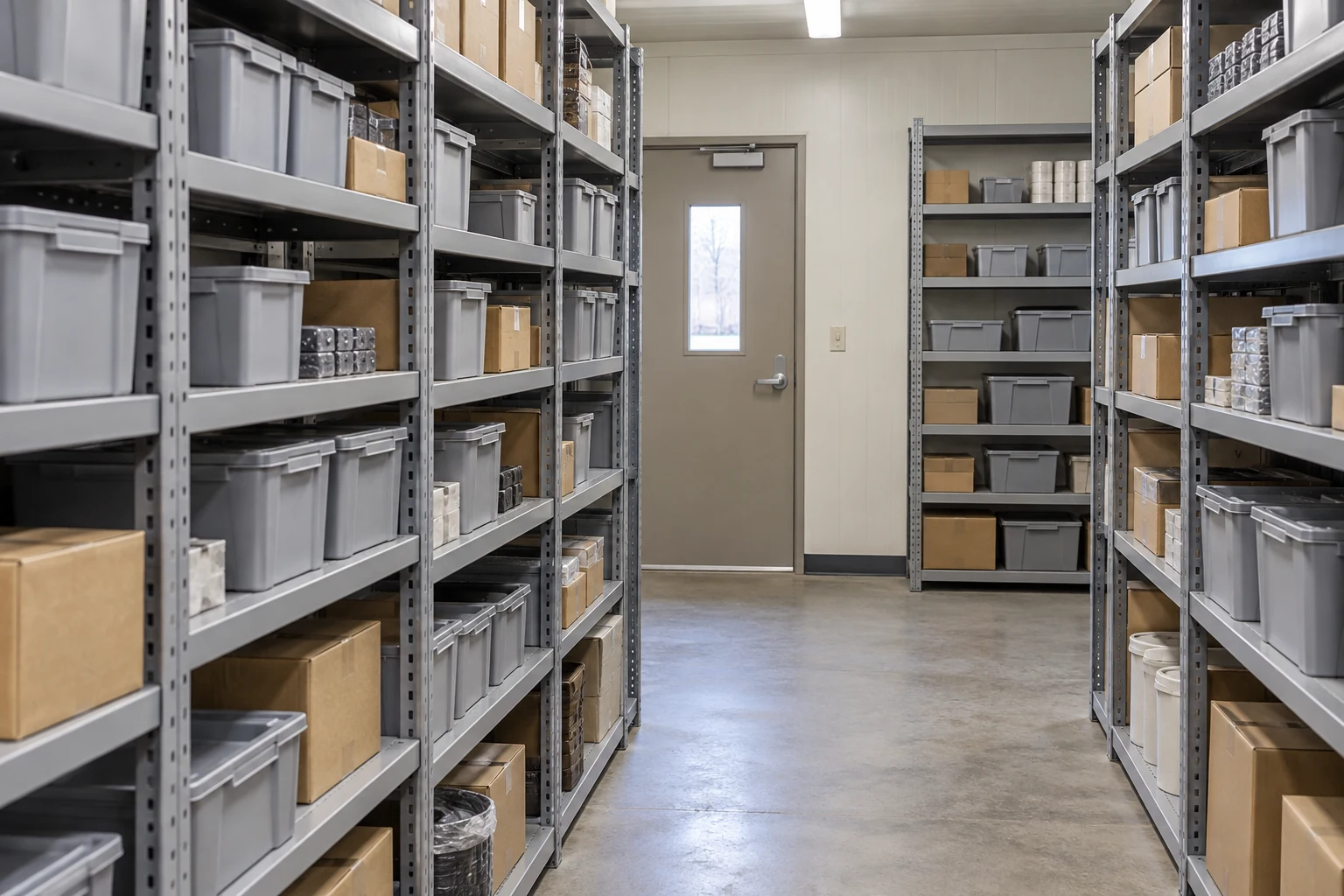
There is no defensible universal stock percentage for a camp whose equipment, use history and supply routes are unknown. Separate recurring consumables, selected camp-held spares, supplier-held items and purchases that should wait for diagnosis. For each route, record why it is appropriate, the information still needed and the consequence if the item is unavailable.
Local holding can shorten one part of the supply chain, but it introduces preservation, expiry, security and identification requirements. The historical Western Australian Village Mechanical audit guide, approved on 26 June 2017, addresses appropriate storage and designated locations. Here it is used only as a planning prompt; its old legislative references do not establish current compliance or a storage capacity for this project.
Ask for availability evidence rather than a catalogue promise
A listed item, a reserved item and a dispatched item are different states. Confirm the terms of any reservation, its release process, transport arrangements and who receives it at camp. ATCO’s historical Pogo Mine profile explicitly separates procurement and transportation from receiving, off-loading, storage and maintenance. Its described 2022–2025 service period supplies an external example of those distinctions, not a current delivery guarantee.
Break the proposed route into the stages the actual parties control. The supplier may confirm dispatch, while another party arranges onward transport and the camp controls final receiving access. Ask what evidence supports each commitment, who communicates a changed arrival and what happens when a handover cannot proceed. If the route or supplier changes, update the relevant contact, reservation and acceptance records. An old delivery experience does not establish the current route or justify a fixed lead time for another item.
| Route | Possible reason to choose it | Confirmation required | Remaining limitation |
|---|---|---|---|
| Planned consumable replenishment | Known recurring demand for a compatible item | Use history, preservation and replenishment route | Occupancy or configuration changes can change demand |
| Camp-held spare | Service consequence warrants local holding | Matched item, storage and competent repair arrangement | Stock alone cannot diagnose or restore a service |
| Supplier-held or reserved item | Confirmed commercial availability and transport route | Reservation, release, freight and receiving terms | A listing is not a reservation or arrival commitment |
| Diagnosis-first purchase | Fault cause or part identity remains uncertain | Competent assessment and approval route | Buying guessed parts can leave the cause unresolved |
| Superseded or obsolete component | The original supply is no longer suitable or available | Manufacturer-supported replacement and change assessment | A newer item may require a different kit or arrangement |
Separate arrival from acceptance into usable stock

The receiving record should connect the package with the approved request, actual asset and intended storage location. Confirm identity, visible condition and completeness using the agreed purchasing documents. If a kit contains several items, a delivery note saying that one package arrived does not establish that the required repair scope is complete.
Keep a damaged, unidentified or disputed item visibly separate in the records from accepted stock. Assign someone to resolve the discrepancy with the supplier. A replacement package should not become available for installation simply because it is physically on the same shelf as accepted items. Similarly, an unused returned part needs its condition and identity confirmed before it is treated as available again.
The distinction is particularly useful during phased camp growth. A part delivered for a new unit may resemble one used elsewhere but belong to another production version. Record its intended asset or confirmed compatibility group instead of allowing appearance and proximity to decide where it is used.
In an illustrative split delivery, the replacement component could arrive while another required kit item remains outstanding. Record what was accepted and what is missing, rather than marking the entire request complete. Ask the assigned maintainer whether the incomplete supply prevents the planned work; the receiver should not make that technical decision. This also prevents a later shipment from being mistaken for an unrelated spare and helps the purchasing party investigate the remaining supply without duplicating the accepted order.
Assign repair ownership independently of procurement

The purchase approver, storekeeper and competent maintainer may be different people. State who diagnoses the fault, confirms the replacement, performs the authorized work and determines the checks needed afterward. Ask whether the selected service arrangement includes tools, documentation, access and coordination with other contractors. The provision of a spare does not answer these questions.
Cummins’s maintenance guidance refers users to the specific manual, operating environment and service records. Its advice also distinguishes more demanding conditions, rather than prescribing one interval for all equipment. Apply the relevant manufacturer’s instructions to the actual installed asset. Do not transfer an example from one generator to unrelated camp equipment or claim a universal schedule.
Keep technical safety procedures with the responsible party
WorkSafe Victoria’s isolation guidance explains that emergency stops and information tags do not by themselves establish effective isolation. Qualified responsibilities, verification and coordinated work are essential within the applicable arrangements. This article provides purchasing and record questions; it does not supply an isolation method. Site-specific technical work must remain with the competent, authorized people and current procedures required for that work.
Keep the work status visible through each handover

A single status such as “parts received” is insufficient when several teams share a job. Record the current stage, named owner, unresolved issue and next authorized decision. The operator needs to know whether a facility is unavailable, restricted, awaiting a part, being worked on or released. These descriptions should correspond to the actual work record rather than informal assumptions.
Administrative work in a container office workspace can support a shared record, but the room itself does not provide a maintenance-management system. Agree how records will remain accessible to the relevant shifts and contractors. WorkSafe Victoria specifically discusses coordinated handover when work cannot be completed within a shift; use the applicable site arrangements instead of inventing a universal handover procedure.
Distinguish partial completion from a complete service
For an illustrative multi-room job, one accepted kit and one completed room do not make every affected room ready. Track the scope and permitted state for each unit, while identifying any shared dependency. This is a planning example, not a reported PQSE project. It prevents a batch-level note from erasing an unresolved fault or suggesting that all occupants may return.
| Recorded stage | Owner to identify | Evidence required | Must not be mistaken for |
|---|---|---|---|
| Report and current controls | Camp operator and service owner | Location, symptom and current permitted use | Confirmed technical diagnosis |
| Matched and authorized purchase | Technical confirmer and purchase approver | Identity, version, scope and approved supply route | Complete material availability at camp |
| Delivered and accepted | Receiving or store owner | Condition, identity, completeness and location | Installation completed |
| Assigned work completed | Competent maintainer | Work scope, required records and unresolved issues | Facility released to occupants |
| Service checked and released | Named operational release authority | Applicable function checks and permitted state | Universal warranty or restoration-time guarantee |
Verify the service before calling the job complete

Define completion in the service scope before a fault occurs. The applicable checks depend on the equipment, work performed and site requirements. Record who determines those checks, who completes them and who authorizes the affected facility’s return to its permitted use. A photograph of closed equipment or a clean room is not evidence that these requirements were satisfied.
Where a repair affects adjacent functions, identify what remains restricted after the local work is complete. An operational release record should make that distinction clear. Avoid recording only that the replacement was fitted, because that statement can be true while another necessary service or outstanding assessment prevents use of the facility.
If restoration is delayed, maintain a documented interim arrangement only where the responsible operator has confirmed its suitability. Record its limits and review owner. Do not present an improvised workaround or an untested spare facility as equivalent to the original service.
Update the register after consumption, change or repeated faults

Close the inventory record as well as the maintenance record. Identify what was consumed, what remains accepted and available, what needs replenishment, and whether the replacement changed the asset’s configuration. Preserve the evidence that justified the purchase. This allows a later buyer to distinguish a repeat order from a new compatibility decision.
Repeated requests deserve review rather than automatic increases in stock. Check whether the same confirmed component is failing, whether reports concern different causes, or whether incomplete kits and records are producing duplicate orders. The available evidence should guide the responsible technical and procurement teams; without verified data, neither a trend nor an optimal quantity can be asserted.
A stock summary should therefore distinguish accepted available items from reservations, items awaiting identification, damaged packages and returns needing assessment. Combining those states into one total can suggest availability that does not exist for the next job. Record who checks the summary and when a relevant change triggers review. These categories support a purchasing decision; they do not provide a universal inventory formula or establish that every retained item will remain suitable throughout the camp’s operating life.
Turn unresolved inputs into a procurement brief
Before requesting a project-specific spare-parts proposal, provide the intended camp functions, actual equipment and configuration records, location, available service arrangements, storage conditions and known supply-route constraints. Ask the supplier to state what is included, what requires another party and which inputs remain unconfirmed. Confirm quantities and commitments through that review rather than importing another camp’s stock policy.
Questions to settle before approving the parts plan
Can one standard kit cover the whole camp?
Only where the responsible parties have confirmed the installed configurations and the kit’s actual coverage. A common building appearance or equipment-family name does not prove compatibility. Identify exclusions, production versions and any consumables or additional items required for the selected work. Keep the confirmation with the asset record.
Does local stock guarantee a fast repair?
No. It addresses one availability condition. Diagnosis, completeness, storage condition, competent work, access and operational checks can still determine restoration. Ask for project-specific responsibilities and realistic commitments supported by the actual supply and service arrangement. This article provides no universal repair-time or stock-quantity benchmark.
What should happen to unused or obsolete stock?
Keep its identity and condition visible, confirm whether it remains suitable for any current asset, and assign the decision about return, continued holding or disposal through the applicable arrangements. Do not quietly substitute it for a confirmed replacement because it fits in the available space or has a similar description.
Sources and scope
Government guidance is jurisdiction-specific. The 2017 mechanical audit is historical planning context, not a current legal-compliance checklist. ATCO materials describe external services and a historical project; they are not PQSE cases. Manufacturer examples apply to the products identified by their sources. Illustrative photographs do not supply test, compatibility or performance evidence.
- WorkSafe WA: employer-provided accommodation and duty of care.
- Grundfos: finding a product number on a pump nameplate.
- Grundfos: finding the correct pump spare parts.
- Cummins: generator maintenance guidance.
- Village Mechanical audit guide, approved 26 June 2017.
- WorkSafe Victoria: isolation, de-energising, lockout and tagout guidance.
- ATCO Frontec: camp-service scope.
- ATCO Frontec: Pogo Mine Camp profile, published 2024; service period 2022–2025.