Accept Wi-Fi for prefab K-house accommodation against the places residents will use it, the tasks they need to complete and the conditions in which those tasks occur. A successful check beside reception does not close a bedroom complaint. Agree the furnished-room locations, normal door positions, shared-space activities, representative devices and occupied review period before signing the network handover. Keep the building package, network installation and ongoing service responsibilities visible so an unresolved connection does not become an argument about who supplied the walls.
For a camp operator, connectivity is part of life between shifts: contacting family from a bedroom, using a shared room, receiving practical site information and asking for help when access fails. Those uses deserve a brief of their own. This guide explains how to make that brief and its acceptance records useful. It does not prescribe access-point quantities, radio settings, a speed per resident or an attenuation value for a K-house panel. The network team must establish the design and numerical criteria for the actual equipment, building and destination.
Put the resident's normal position on the plan
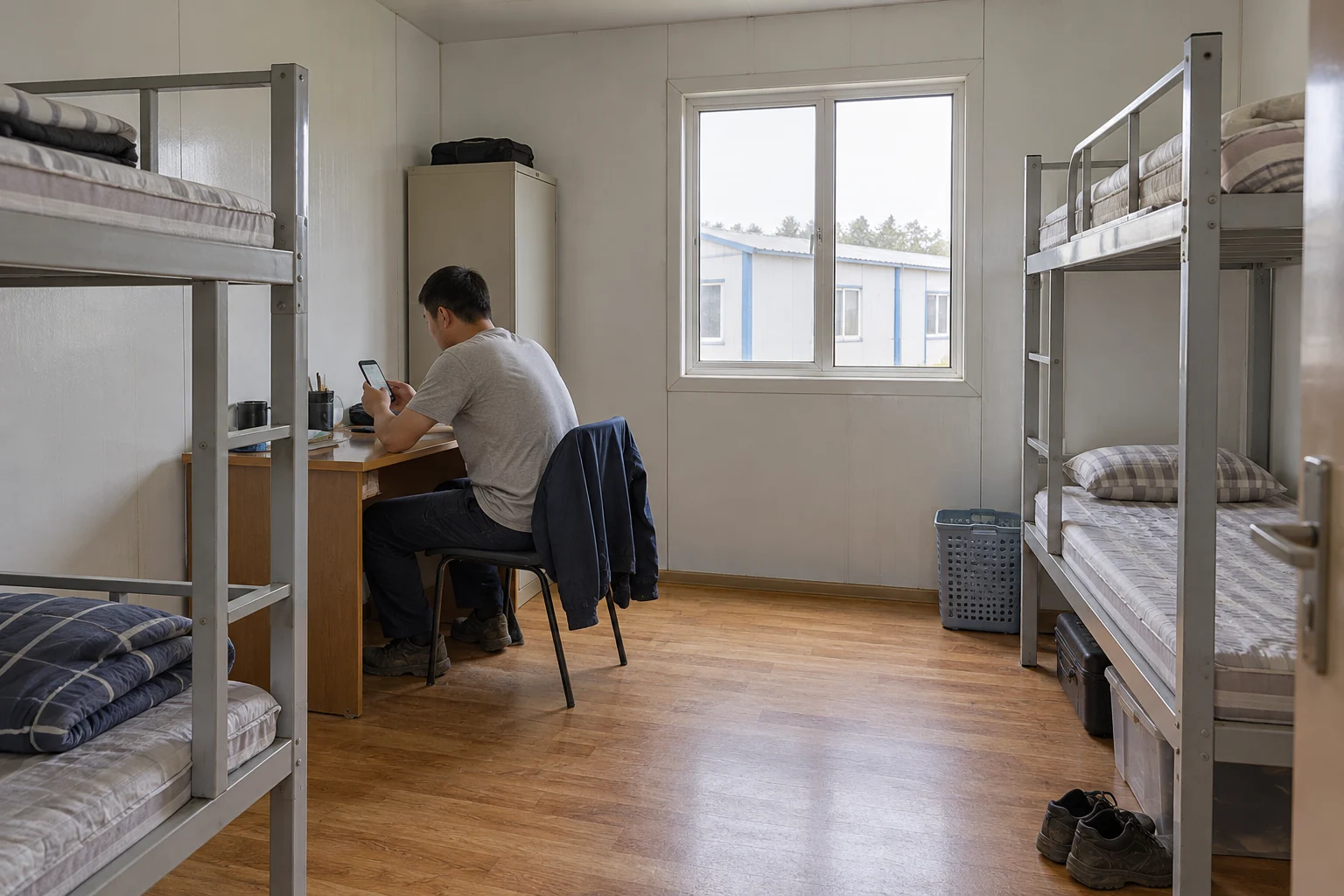
Walk into the proposed bedroom and identify where a resident would normally sit with a phone or laptop. A desk, bed position and closed door create a more useful acceptance location than a convenient standing point beside the entrance. In a shared room, ask which places will be used at the same time. Do not move everyone into the corridor simply because the connection is easier to demonstrate there.
Start with the selected K-house building and room arrangement. Give the network provider the room schedule and furnished plan, rather than an exterior photograph alone. Distinguish a private bedroom, shared bunk room and recreation space. A room label should carry its intended use, occupied phase and resident access conditions; otherwise a test map can show a completed block without explaining what was actually checked inside it.
Ask the operator to describe a normal return from work. Some residents may go directly to their rooms while others remain in a shared area. The purpose is to choose meaningful conditions, not to assume that every device is active continuously. Connect this discussion with the worker-camp rooms and shared facilities brief so the networking enquiry follows the same population and opening plan as the accommodation order.
Keep provision and entitlement separate. If connectivity is offered only in a common room, state that limit clearly before residents arrive; do not describe it as bedroom service. If bedrooms are included, record their test locations and the procedure for rooms temporarily unavailable during inspection. An exclusion should be a conscious operating decision with a reason and owner, rather than an unmarked gap discovered after people move in.
Repeated room blocks still need a site-specific review
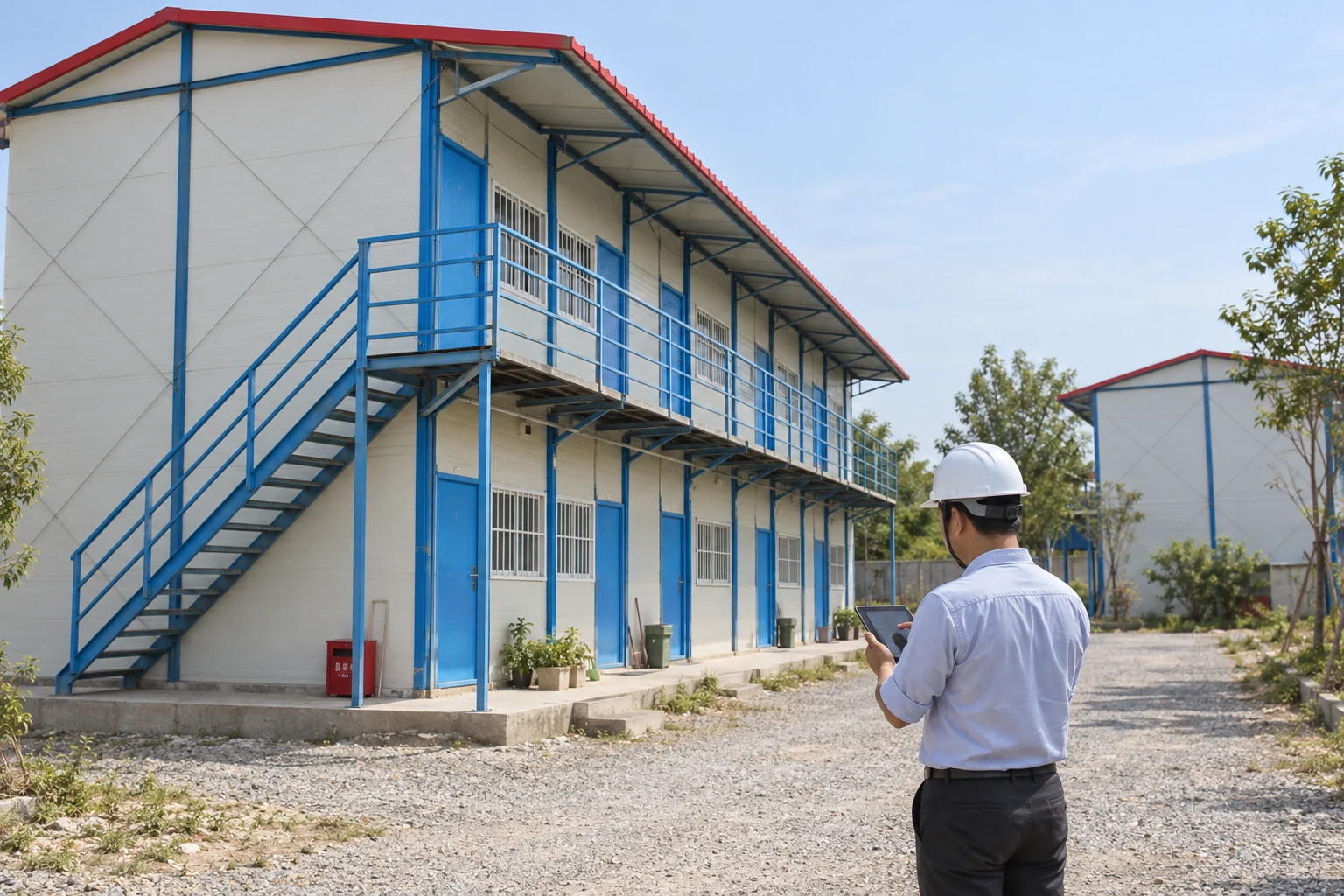
Rows of similar rooms can make a camp look like a straightforward repeat order. Before extending a network arrangement, ask the survey team to check what is actually repeated: internal partitions, furniture, equipment positions, routes between blocks and the connection back to the wider service. Keep photographs and location references with those observations. A matching facade is useful identification, but it is not an acceptance record for the rooms behind it.
Give each test location an address
Cisco's 2017 Dorm Deployment Guide calls for agreed measurable success criteria and physical review, and warns that radio behavior can differ between apparently similar buildings. It also treats resident rooms and common areas as different coverage tasks. These planning principles are useful here; its older access-point models, example data rates and client counts are not specifications for a present-day PQSE camp.
Use a building, floor and room identifier that the camp staff already recognize. Add the position being checked, the device used and the drawing revision. A record described only as the far room becomes difficult to interpret after a block is extended or renumbered. Where a location is deliberately outside the offered service area, mark it that way instead of leaving the reader to guess whether the survey missed it.
The guide to translating K bays into usable rooms separates the planning grid from the furnished room. Apply that distinction to the network brief: a regular bay does not tell the installer where a bed, desk or partition will finish. Freeze the room reference used for acceptance, and ask how a subsequent furniture or partition change will trigger a review of the affected locations.
| Location or activity | Condition to describe | Evidence to retain | Boundary to state |
|---|---|---|---|
| Bedroom use | Named furnished position and normal door state | Room identifier and selected device | Corridor evidence alone does not cover this position |
| Shared-room use | Activities and expected overlap in the occupied phase | Time, location and agreed observation | Resident count is an input, not a performance result |
| Between spaces | A route only if continuous use is required | Start, destination and observed interruption | Do not promise connection outside the agreed service area |
| Later block | Actual room arrangement and service connection | Block-specific comparison and open items | An earlier block is a reference, not automatic acceptance |
Check the room, not only the corridor heat map

Arrange room access with the operator before the survey team arrives. The room should reflect its intended furnished condition, and the resident's privacy and rest schedule should remain part of the visit plan. Identify the observation point before anyone records a result. A technician standing inside a doorway, with the door held open for convenience, may be checking a different condition from the one agreed for ordinary bedroom use.
Cisco's site-survey guidance, updated in 2023, says survey paths should include rooms where coverage is required and checks should account for closed doors and the client adapter used. It distinguishes predictive, passive and active surveys. A predicted map can assist planning, but it is not the same evidence as a client communicating through the installed arrangement.
Ask the report to identify the rooms visited and the conditions not yet represented. If a bed position was inaccessible, or the network used temporary equipment while permanent installation remained incomplete, preserve that qualification beside the result. The buyer can then agree the outstanding review without forcing the installer to label a provisional demonstration as final acceptance. The same discipline helps operators explain why a later complaint needs another visit.
Room visits need practical permission, not merely an entry on a survey schedule. Decide who arranges access, who accompanies the technician and how a missed appointment is rebooked. Avoid collecting personal material from residents' screens as evidence. The useful record concerns the permitted task, device type, location and observation; private conversations, account contents and passwords do not belong in a general handover folder.
Follow the empty-site test with an occupied-use review

A shared room may be almost empty during the contractor's visit and busy after a shift returns. Show that operating pattern in the acceptance plan. Ask which activities residents expect to perform there and whether bedroom service is being used at the same time. Describe the planned observation period without staging an artificial crowd for a photograph. The operator needs an agreed follow-up that reflects the camp, not just a tidy first demonstration.
Cisco's 2026 throughput and monitoring guide explains that Wi-Fi uses a shared medium and an empty-site test can differ from typical occupied experience. It also distinguishes application use from a peak-transfer test. For this procurement review, use both appropriately scoped evidence and actual task observations; neither a connection rate shown on a device nor one transfer result describes every resident's experience.
Name the occupied review as a handover action with a date or trigger, responsible party and closure condition. If move-in will be gradual, state which population and buildings the first review represents. An initial check can remain useful without claiming to cover an unoccupied expansion. Keep open items visible so the next group of arrivals is not used as an accidental experiment with no support route.
The shift-rest and shared-facility planning guide helps align the visit with actual resident routines. Do not conduct a noisy test in a sleeping block merely because it is convenient for the installation team. Ask the operator to choose a permitted observation period and a way to gather recurring reports from residents who work a different shift. Their usage may fall outside reception's busiest hours.
Describe the symptom before blaming the building

When a resident reports a poor connection, begin with what happened and where. Was the device unable to join, did a task stop partway through, or was a particular application slow? Ask whether the observation concerns one room, several locations or one personal device. This makes the report easier to route. It also avoids turning every complaint into a demand for another access point before the network team has investigated it.
Ofcom's broadband and Wi-Fi help, updated in August 2026, notes that a slow Wi-Fi test does not automatically identify a fault in the broadband line. The router, device, distance, walls and interference can affect the result, and day or time can matter. This UK consumer guidance supports careful fault description; its domestic equipment suggestions and consumer remedies are not adopted as a camp specification.
Use comparisons that the responsible network team can interpret. A complaint from one bedroom should be tied to that room and an agreed task, rather than merged into a general statement that the entire camp is offline. When the team repeats an observation, retain what stayed constant and what changed. If a different device or account was used, state that difference rather than treating the new result as an exact reproduction.
Keep a short complaint route available to residents. It should collect enough context for investigation without demanding technical expertise or private account details. Offer a way to report the time, location, device category and task affected. A staff member can help complete that record when language or access makes the process difficult. Do not close the ticket simply because the resident stopped asking; require the responsible team to record what was checked and the disposition.
| Reported symptom | Comparison to request from the network team | What it does not prove |
|---|---|---|
| One device has difficulty in one room | Repeat the agreed task with the location and device identified | The wall material is not established as the cause |
| Several residents report a busy-period problem | Compare the defined occupied condition with the baseline | Headcount alone is not a capacity measurement |
| A task stops on a walking route | Observe that task on the route included in the brief | A stationary test does not cover the entire journey |
| The broader service is suspected | Arrange a separate check of the relevant network section | An internet test alone does not isolate the wireless link |
Treat walking routes as a separate promise
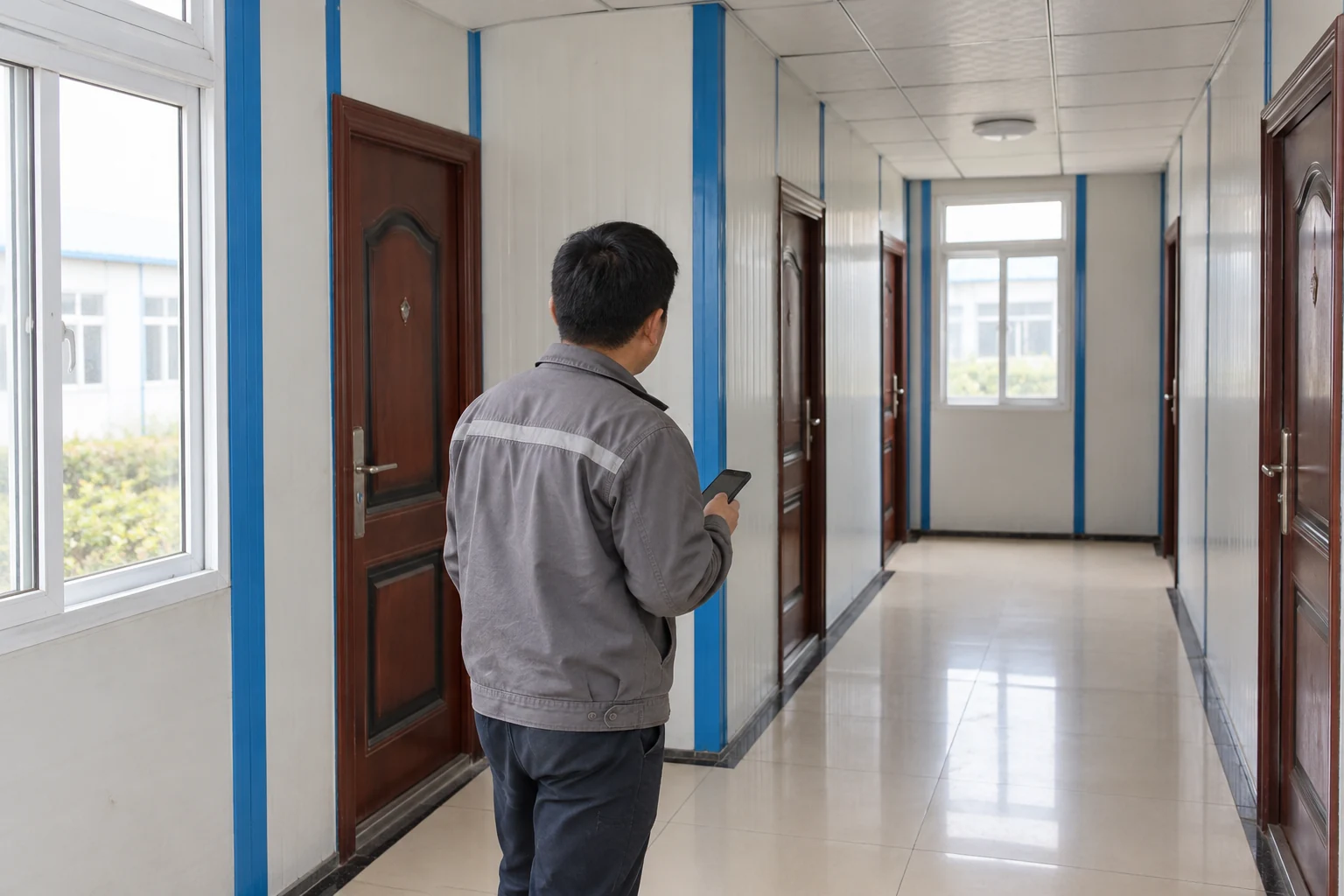
A resident may leave a bedroom during a call and continue toward a common room. Decide whether the offered service is expected to support that movement, or only use at defined locations. Put the agreed route on the plan before testing it. A corridor, stair approach and space between buildings should not silently enter the service promise because they appear between two areas that have already been checked.
The Cisco survey guidance distinguishes an active test fixed to one access point from a method allowing the client to roam between access points. Ask the network team which method answers the agreed moving-use question. A report should identify that method without turning this buyer guide into instructions for changing live radio settings.
Make the task and its endpoints explicit. An application used while seated answers a different procurement question from the same activity continued along a named route. Describe what constitutes an interruption for the chosen task and who will interpret it. The operator and provider should agree those criteria before a demonstration, rather than argue afterward about whether a momentary change was acceptable. No universal interruption limit is assumed here.
Separate continuity of an ordinary resident service from emergency or safety communications. A recreational Wi-Fi package should not acquire a critical-service claim through wording in a quotation. If an operation requires essential communications, its responsible team must define the appropriate system, evidence and fallback separately. This article does not assess those requirements. The residential route can still be checked within its modest, clearly stated scope.
Make resident access distinct from staff access
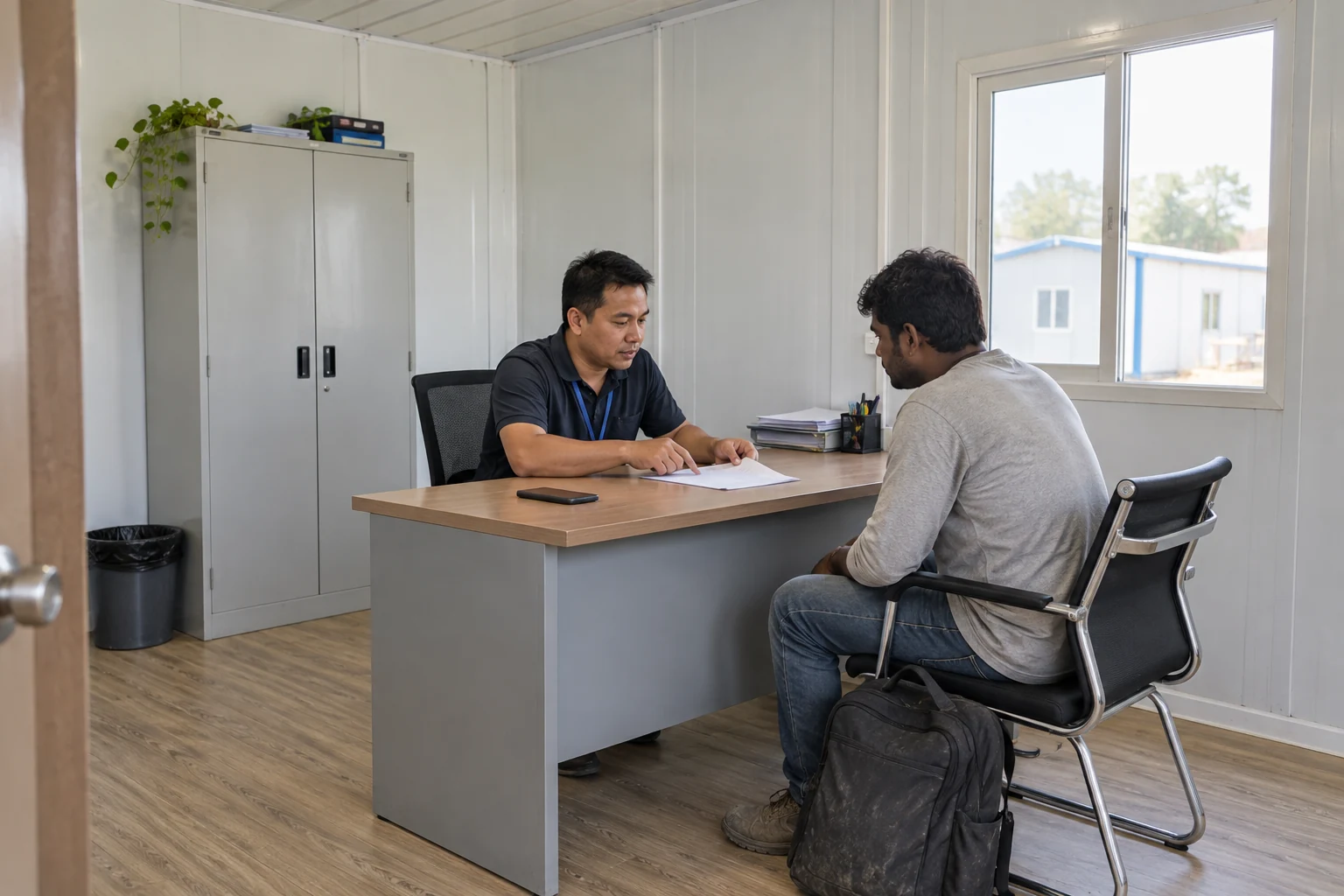
At arrival, a resident needs to know which service is available, how to obtain permitted access and where to ask for help. The person explaining this should not have to share an administrator account to solve an ordinary joining problem. Decide which instructions belong at reception and which information remains with authorized support staff. Keep the explanation usable for the workforce while leaving confidential credentials out of public notices and general room records.
NIST's 2012 WLAN security guidance recommends separating different security profiles, such as external and internal use, and limiting necessary internal access. It also treats configuration maintenance as an ongoing responsibility. These architectural principles support a clear resident-versus-staff brief; they do not certify a camp network, prescribe current security algorithms or determine the project's privacy obligations. If a resident needs a shared function, identify it rather than silently opening wider staff resources.
Ask the network operator to explain the intended access relationships in ordinary terms. Which service is for personal resident use? Which is for staff functions? Does a visiting contractor receive access, and who may authorize it? The responsible IT and data-policy teams should document and verify the selected arrangement; a different network name alone is not acceptance evidence.
Include arrivals, departures and room changes in the operating plan. A resident leaving the camp should not leave an unresolved access record that nobody owns. Decide who receives roster changes and who implements the relevant account or access action under the selected policy. Do not place personal account details in the building supplier's general documentation. A clear responsibility boundary allows the accommodation team to provide the right room information without becoming the network administrator.
Give the operator records that support the next fault
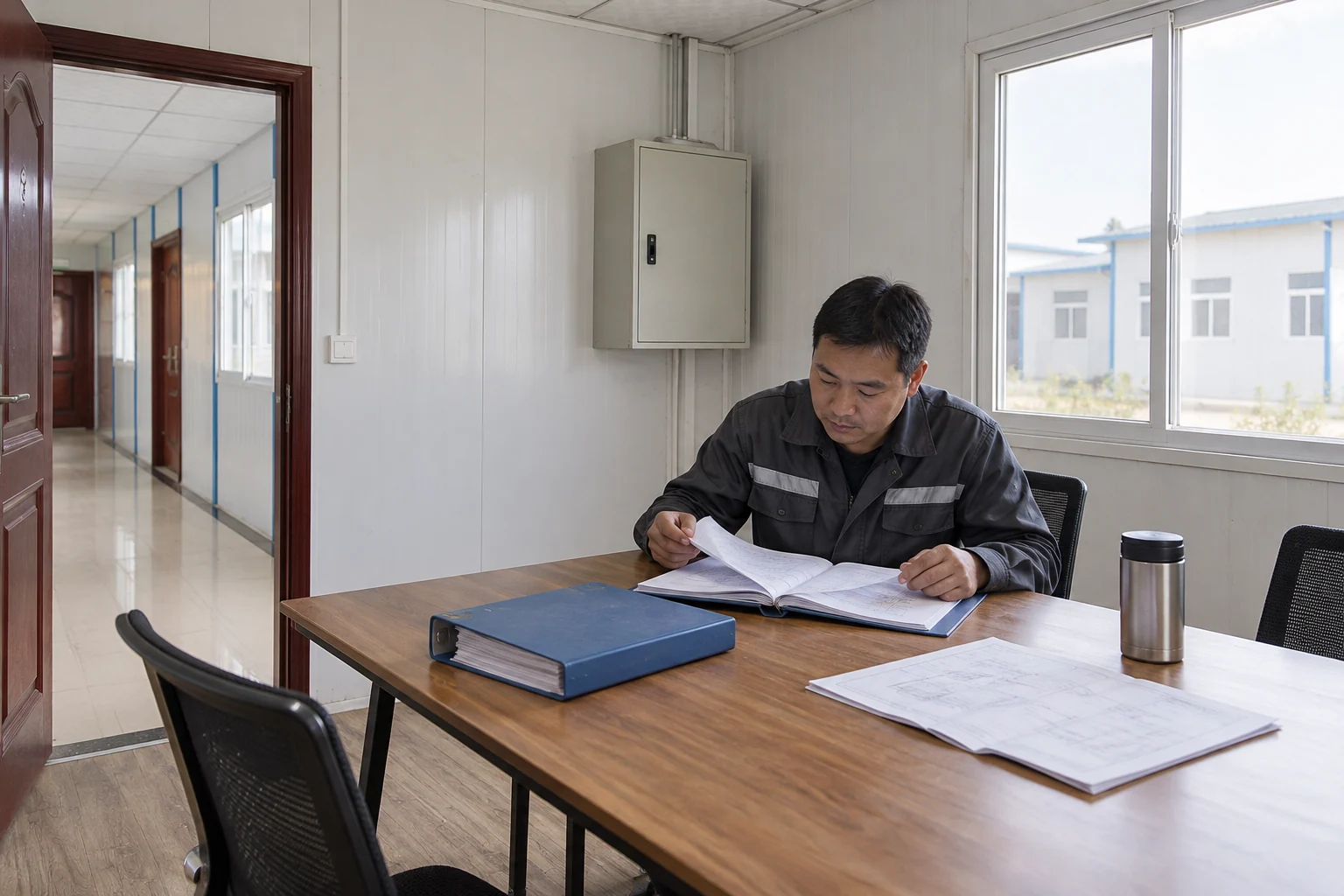
Before the installation team leaves, ask the camp operator to find the service contact and the record for a particular room. The exercise should work without depending on the technician's personal phone or memory. Show where approved records are held and which staff can retrieve them. A collection of equipment boxes and a successful first login leave an incomplete handover if the next person cannot identify the service or its responsible owner.
Keep the support route usable after reception closes
An operator-facing handover should distinguish the building information from restricted network administration records. Room identifiers, agreed service areas, equipment locations and unresolved actions can support coordination. Administrative credentials and security settings belong in the approved controlled system, with access defined by the responsible organization. Decide who updates each record and how a replacement staff member obtains authorized access; do not depend on forwarding a departing technician's message history.
The utility-route and ownership planning guide provides a framework for coordinating physical interfaces. Use it when cable entries, equipment power or routes across building boundaries need agreement. The network contract then needs its own commissioning and operating deliverables. Do not infer that a data route included in a building drawing also includes the external service subscription, network configuration and resident support.
Ask what happens outside the normal administration shift. A resident might be able to report a fault while the person holding the service account is unavailable. Identify the authorized escalation route, the information staff should collect and how an unresolved report moves to the next shift. The operating team can choose a proportionate arrangement; the guide does not promise uninterrupted support or a repair deadline that the contractor has not agreed.
| Record | Owner to name | Event that needs an update |
|---|---|---|
| Room locations and accepted service area | Camp operator and commissioning lead | Renumbered rooms, altered layout or a newly occupied block |
| Survey and acceptance evidence | Network commissioning party | Agreed correction or repeat validation |
| Controlled administration information | Authorized network operator | Changed personnel, equipment or approved settings |
| Resident access instructions and reporting route | Camp administration | Arrival procedure or support arrangement changes |
| Open issues and exclusions | Accepting owner | Correction, revised scope or documented closure |
Revisit the affected scope when the camp changes
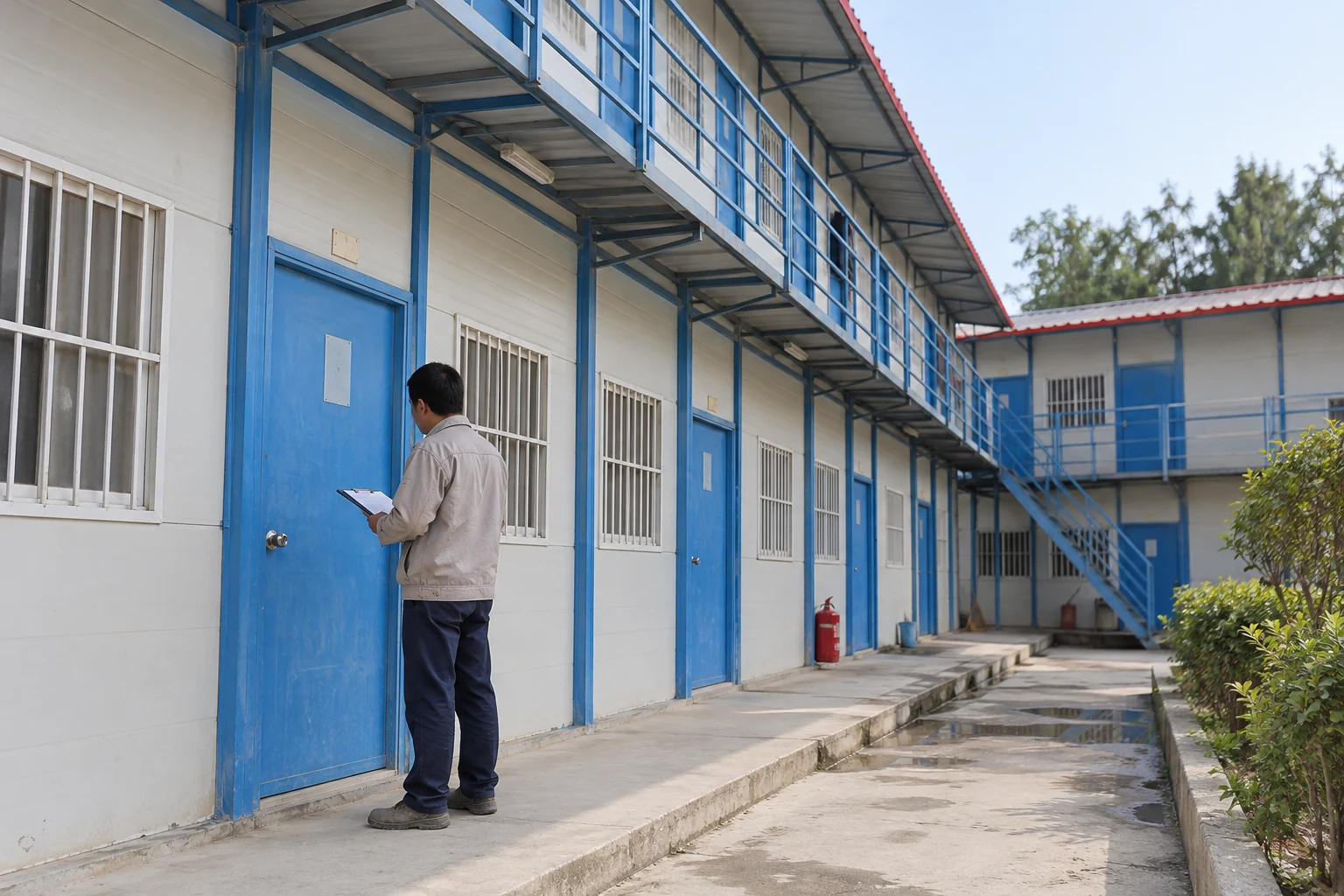
An added accommodation block should arrive with an updated service plan rather than inherit the acceptance label from its neighbor. Mark which rooms are opening and which connecting work is complete. If people will occupy the new rooms before every planned facility is ready, state the temporary arrangement and its limitations. Keep that decision visible to the operator so a staged opening does not quietly expand the original service promise.
Expansion is not the only change worth recording. A room may be rearranged, a common space may serve a different group, or the opening roster may develop into a different return-from-shift pattern. Ask the network owner to decide which agreed observations need repeating. The reason for the review should be specific to the change; this is more useful than ordering the entire camp retested without identifying what has become uncertain.
For remote workforces, the mining-camp roster and service brief connects room allocation, shared facilities and staged growth. Keep residential connectivity in that operating discussion without claiming that a camp building itself guarantees internet availability. The buyer should confirm the actual service arrangements and support resources for the destination, including what can be offered while a fault remains unresolved.
Carry both passed and open locations into the revised register. If the operator changes a room number, retain a cross-reference so older reports remain interpretable. When a correction is completed, identify which condition was checked again and who accepted the result. Do not replace the previous record with a clean map that hides the history; future staff need to understand why a location was revisited and what the current offer covers.
Compare quotations against the resident service brief

Place the accommodation plan and proposed networking scope on the same review table, then ask each bidder to mark its own responsibilities. Include the acceptance locations, occupied review and records requested, not just the list of hardware. A supplier can offer a limited package honestly when the boundary is explicit. The difficulty comes when a buyer reads a short inclusion label as a complete resident service and support commitment.
The camp occupancy and daily-support checklist helps assemble the resident population, room mix and phases. Attach the approved version of that brief to the networking enquiry. Give bidders the same proposed service area and operating assumptions so differences in their offers are visible. Where information remains provisional, identify who will confirm it and before which purchasing decision.
Compare installation work, acceptance evidence and continuing operation as separate obligations. Ask whether the proposed price includes the relevant survey, site configuration, corrective visit, occupied review and final records. Identify the accepting owner and any exclusions. A proposal with a narrower scope may suit a capable local operator, but the omitted work should remain an assigned task in the project rather than disappear from the comparison.
At closure, the operator should be able to answer where resident service is accepted, under which conditions, which limitations remain and who responds to the next report. Keep the conclusion proportional to the evidence: an agreed room and task checked on a stated occasion is an observation, not a guarantee for every personal device and future population. Use that honest boundary to obtain a practical handover, then retain the records needed for the occupied review and subsequent changes.
Buyer questions
Can one test beside reception accept all bedroom Wi-Fi?
It should not close a room-based acceptance plan by itself. Ask which locations the offer covers and which were actually checked in their agreed condition. If bedrooms are included, retain bedroom-specific evidence or an identified outstanding review. A reception demonstration can remain part of the record, but the accepting owner should not let it erase unvisited rooms or exclusions.
Must every block use the same access-point arrangement?
The responsible network team should choose and verify the arrangement for the actual site. Buyers can ask how repeated rooms, shared spaces, devices and later phases were considered without prescribing a count from a generic article. If a proposal relies on an earlier block, request the comparison that justifies repeating it and the evidence for accepting the new occupied locations.
Does a separate resident network name establish staff-network protection?
A label alone is not the evidence the buyer needs. Ask the authorized network team to explain the intended access relationships and demonstrate the selected policy within its agreed scope. Keep administration rights and confidential records with authorized owners. This guide does not audit security controls or determine legal privacy compliance; those decisions require the responsible IT, data-policy and local project teams.
What should PQSE receive with the accommodation enquiry?
Send the destination, resident population by phase, room-sharing plan, furnished layouts, shift routine and intended common spaces. Describe where connectivity is required and identify the network provider if one is appointed. Ask which physical routes or equipment provisions belong in the selected building package, and retain external service, acceptance and ongoing support as explicit responsibilities rather than assumed building inclusions.
Sources and scope
- Cisco — Dorm Deployment Guide. 17 May 2017; dorm planning principles, not current hardware sizing or a PQSE performance test.
- Cisco — Site Survey Guidelines for WLAN Deployment. 14 November 2023 update; room paths, survey methods and device scope, with model-specific settings excluded.
- Cisco — Wi-Fi Throughput Testing and Monitoring. 8 July 2026 update; occupied baseline and test interpretation, without adopting example rates.
- Ofcom — Broadband and Wi-Fi Help. 25 August 2026 update; UK consumer fault-description guidance, not camp service rights or guarantees.
- NIST — SP 800-153, Guidelines for Securing WLANs. February 2012; scoped security-architecture and ownership principles, not current algorithms or certification.
PQSE House prepared this research-based procurement guide with AI-assisted drafting. The suggested records and scenarios are editorial planning examples; photographs are explanatory illustrations, not evidence of a tested PQSE network or resident experience. Primary guidance retains its stated date and scope. No project measurements, customer testimony or human specialist approval are claimed. Actual network design, acceptance criteria and operating policy require the responsible project teams.