Order a camp mattress against an identified bed, an identified support arrangement and the selected mattress maker’s requirements. A label such as single describes too little to authorize the purchase. Ask what the dimensions refer to, which components the order includes and whether the documented pairing covers the actual products. Keep unanswered questions attached to the affected quantity instead of assuming that one successful-looking combination represents the entire camp.
For a new worker accommodation project, this means connecting the furniture schedule to an orderable bed-and-mattress combination. For replacements, it means finding the installed group before choosing stock. This research guide concerns ordinary adult single-level beds. Its retail examples explain purchasing distinctions; they are not proposed PQSE specifications or camp product recommendations. The guide does not assess structural capacity, bunk beds, medical suitability, fire compliance or permission to put a room into service.
Begin with the beds that will receive this mattress

An accommodation schedule may list the required number of beds without identifying every component. Before requesting mattresses, divide that total by the bed and support combinations actually proposed. A separately purchased base belongs in that description. The resulting groups give the buyer something specific to order, rather than a room count that conceals several different furniture arrangements.
Create the grouping around the decision being made. In a new block, the frame may still be a proposed item with a drawing or supplier reference. In an existing block, use the furniture that is actually present. An old purchase description can help locate the product, but it should not override a later replacement that the operator can identify. Unreconciled beds remain a separate enquiry group. Where one supplier offers a complete pair, request the component references within that pair. A combined price should not make the underlying items disappear from the information retained by the operator.
The August 2009 IFC/EBRD workers’ accommodation guidance discusses appropriately sized beds, an individual bed for each worker, and mattress and bedding provision. It supplies useful accommodation context. It is historical guidance for its stated project setting, not proof that a particular furniture purchase meets destination requirements.
A furniture schedule should therefore describe what each quantity represents. Distinguish a complete furnished place from a bare frame or mattress-only line. The wider worker-camp accommodation planning checklist can organize the overall project brief. Within that brief, retain the smaller furniture groups so that an allowance for beds does not become an unsupported promise about the mattresses supplied.
Read the dimension’s name before comparing its number
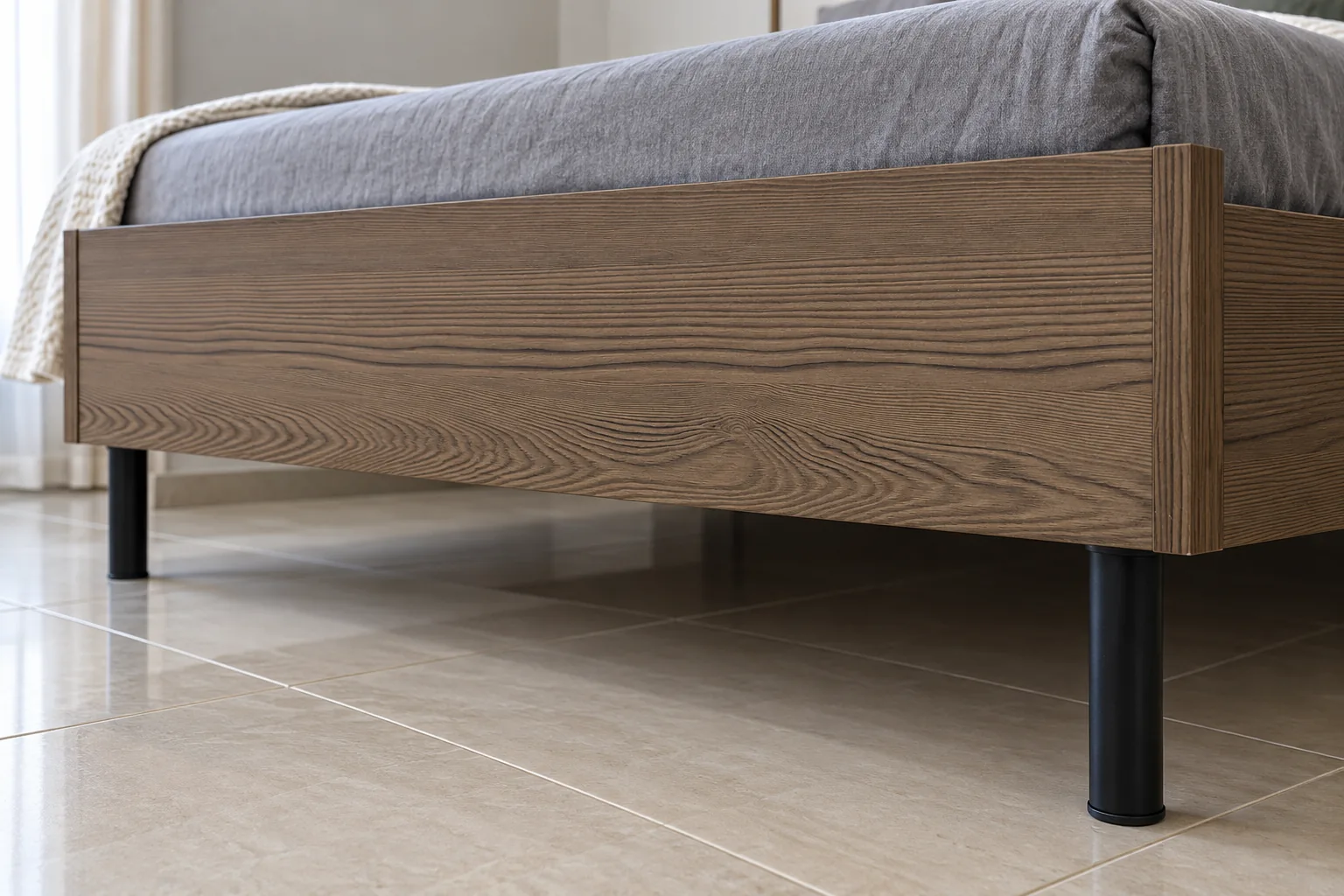
A mattress dimension and an assembled bed dimension answer different questions. Both may appear on the same supplier page, and both can be correct. Keep the supplier’s description beside each value when transferring it into the enquiry. Removing that description can make a careful transcription misleading, even when every digit and unit has been copied correctly.
IKEA UK’s NEIDEN article 203.952.51 lists a frame 195 cm long and 96 cm wide, separately from a mattress 190 cm long and 90 cm wide. Its slatted base, mattress and bedlinen are sold separately. These published fields describe that selected retail article, not a PQSE product or a measured camp bed.
The table preserves those distinctions instead of presenting the two rectangles as rival size options. The frame’s outside dimensions cannot be subtracted from the mattress dimensions to establish its internal fitting area or an acceptable gap. A proposed mattress for another bed needs that bed’s own information. Nor does the presence of a mattress dimension make the mattress part of a frame-only quotation.
A copied screenshot should retain the product identity and the field labels, with a dated source reference in the buying file. If a supplier sends only a number, ask whether it describes the mattress, an internal fitting area, the assembled frame or its packaging. This is a question about the meaning of the offer. There is no value in comparing two numbers until that meaning is established.
| Field | Supplier information | What it establishes |
|---|---|---|
| Assembled frame | Length 195 cm; width 96 cm | Outside size only |
| Listed mattress | Length 190 cm; width 90 cm | Mattress size for this article |
| Supply | Slatted base, mattress and bedlinen sold separately | Separate purchase scope |
Agree what the measurement will describe
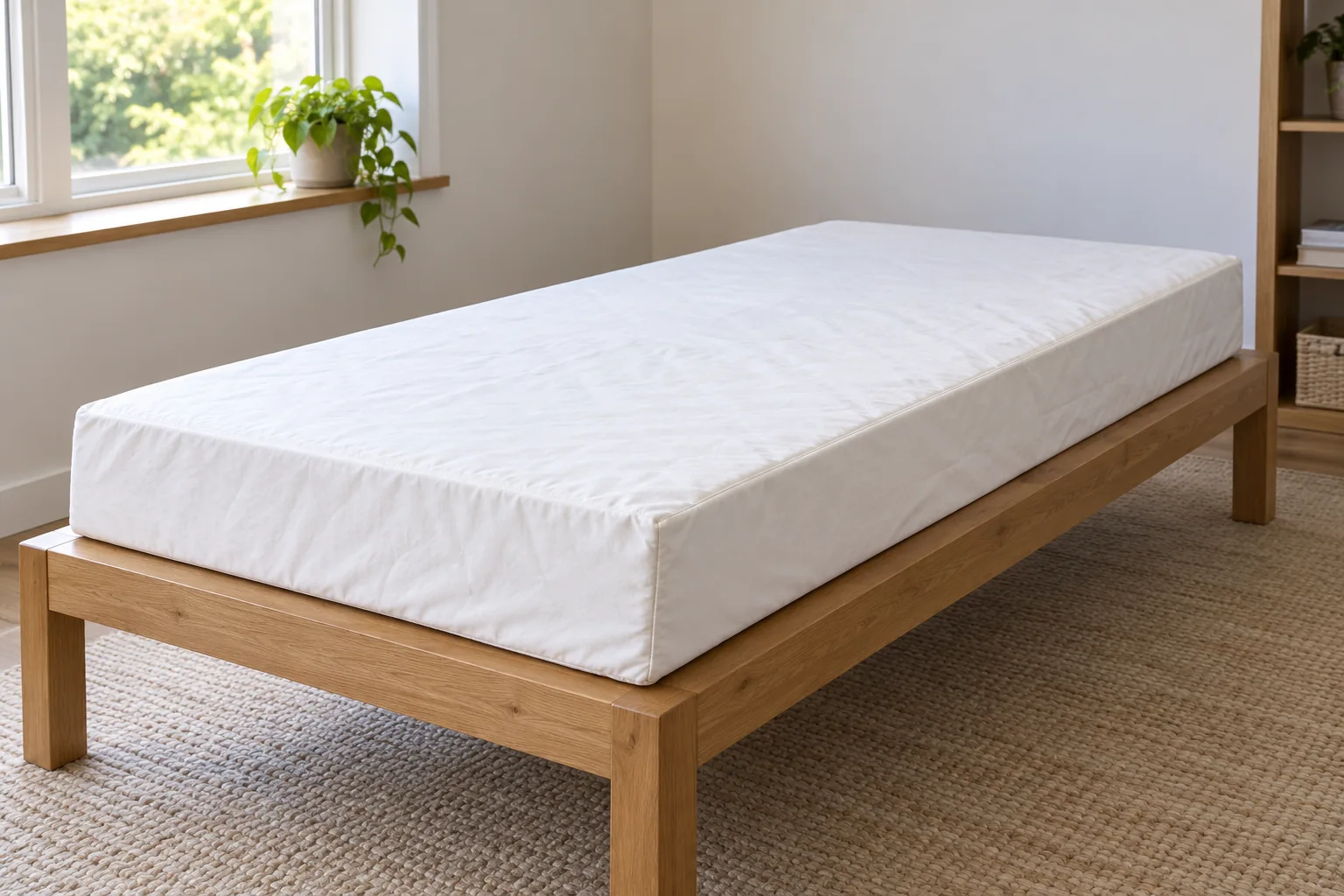
A useful measurement record lets another person understand the object and the condition observed. Identify the bed or mattress, the dimension being recorded and the units used. Agree the relevant supplier’s method before comparing a local observation with a product description. A bare figure sent through a messaging app leaves too much of that context behind.
Keep the fitting area separate from the room footprint
Bed Advice UK, the National Bed Federation’s consumer arm, advises checking actual dimensions in the same measurement system rather than relying on names. For a mattress inside a bedstead, it identifies the internal dimensions as relevant. That does not provide a universal clearance allowance or turn a photograph into a dimensional check.
For an existing bed, ask the responsible person to show which surfaces or endpoints their observation concerns. For the offered mattress, obtain the corresponding dimension description and any product-specific conditions from its maker. Where documents and local observations use different definitions, leave the comparison open. Re-labelling one value to resemble the other would conceal the problem instead of explaining it.
Record the item’s condition when that matters to the supplier’s answer. A packaged product, an unpacked product awaiting the maker’s stated preparation, and an item presented in its intended arrangement should not silently share one observation. Do not invent a recovery time or squeeze a textile edge to make an order value appear correct. Ask the maker what condition its description assumes.
The frame’s overall footprint also belongs in the furnished room layout. It describes a different part of the proposal from the mattress fitting area. Preserve both entries for their respective users; this guide does not convert either into a circulation threshold, a room occupancy allowance or a basis for moving fixed room components.
A size match still leaves the support question
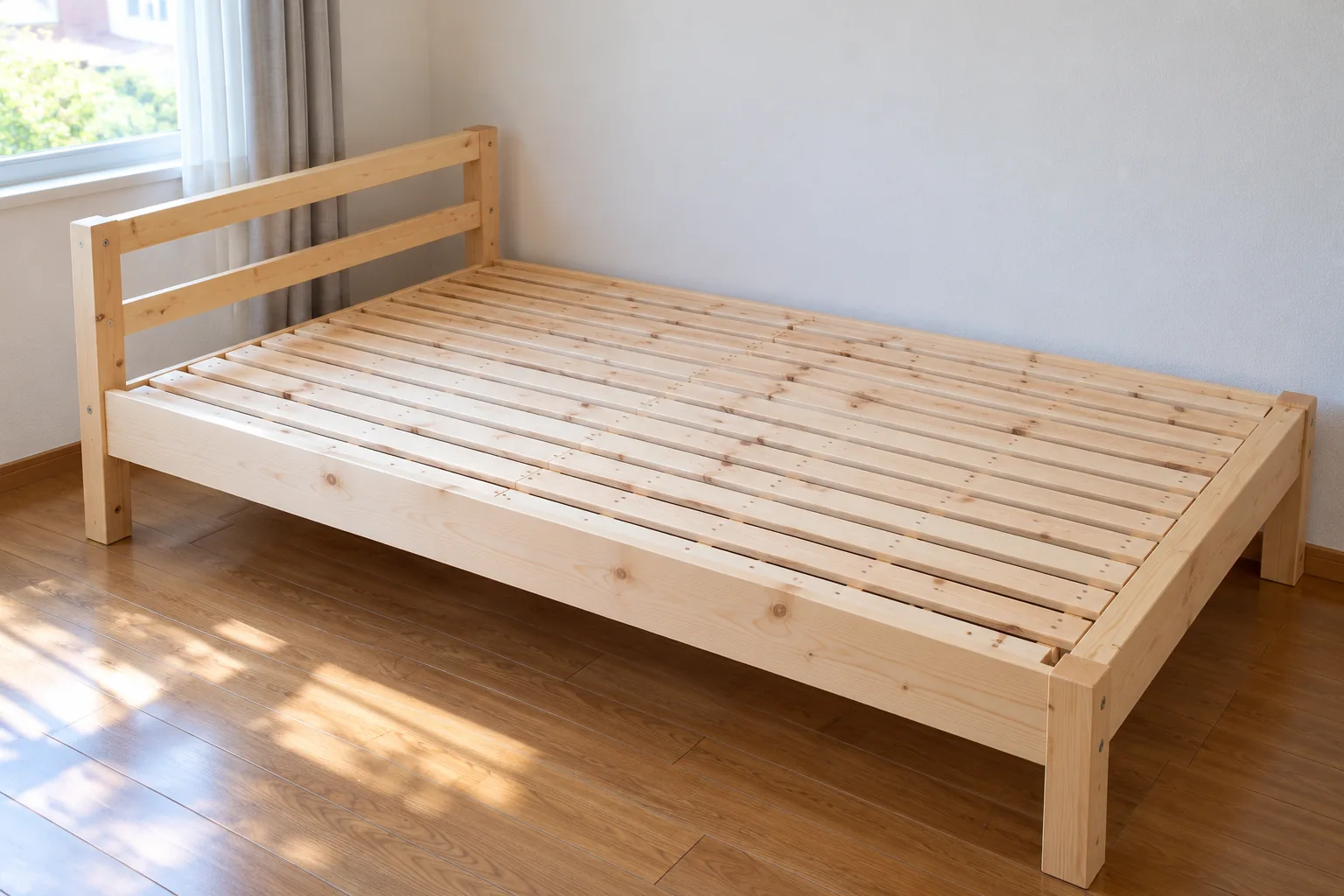
An order needs to identify what will support the mattress as well as the mattress itself. Frame, base and mattress descriptions can come from different sellers. Put those descriptions together before the buying decision. A mattress that occupies the intended rectangle has answered a dimensional question; it has not supplied the missing maker information about the proposed support arrangement.
The NBF FAQ says that the variety of slatted bases prevents one spacing and width recommendation from covering all options. It directs buyers to the chosen mattress manufacturer’s recommendations. Retain that product-specific approach. A generic slat rule found in another product’s instructions cannot settle an unidentified camp mattress order.
Tempur-Pedic’s US support article illustrates manufacturer-specific conditions: its support choices affect its warranty, and it does not recommend plywood as a general solution. Those statements belong to that brand. They are neither instructions to alter another bed nor warranty terms for a PQSE-supplied mattress.
Request the applicable support document for the offered mattress, together with the exact base being offered or retained. If the supplier’s response assumes a different base, identify the difference before agreeing to the offer. The purchasing team can resolve who supplies the missing component without attempting to redesign it. A local improvisation should never be smuggled into the order as an unpriced assumption.
Separate evidence of a proposed combination from an observation that two items have been placed together. The former should identify the applicable products and conditions; the latter records appearance at a particular moment. Neither a room photograph nor a persuasive catalogue layout supplies unseen support information. Keep any load assessment or alteration outside this guide and with the responsible project professionals.
Give each missing answer a named owner
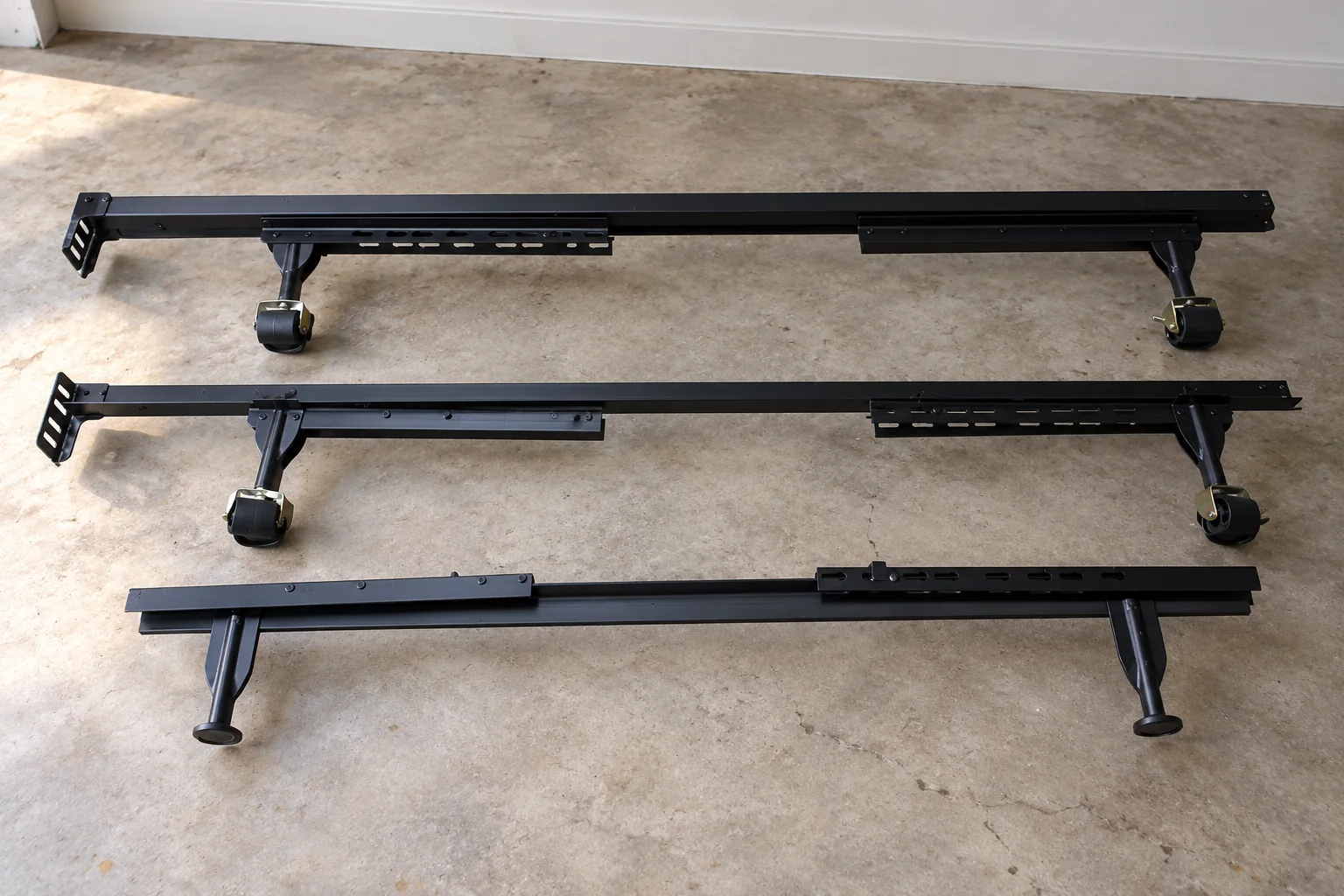
Splitting a furniture package across suppliers can leave everyone answering only their own part. Prevent that gap by naming who will provide the mattress information, who will identify the retained bed and who will reconcile the proposed combination. The buyer needs a closed purchasing question, rather than a folder of documents that no one has compared with the actual order.
The owner is a person or role that can obtain the relevant answer, not automatically the person holding the measuring tape. A site coordinator may identify the installed frame while the mattress supplier explains its product conditions. The purchasing lead can then record whether those inputs refer to the same proposal. This division keeps observations distinct from the supplier’s product statements.
The following table is a suggested enquiry structure, not an inspection standard. Use it to keep the unanswered item visible. A field can be marked unavailable without inventing a substitute value. What matters commercially is that the buyer knows which quantity is affected and what answer is needed before it can be treated as an agreed pairing.
Set the scope alongside the evidence. The guide to container-house kit inclusions explains why named package boundaries matter. For beds, ask whether the offer includes the frame, its specified base, mattress, protector and linen, naming the offered items rather than treating a photograph of a made bed as a contents list.
| Question to resolve | Evidence to retain | Who should supply or reconcile it |
|---|---|---|
| Which installed bed group receives the order? | Identified frame/base records and the affected quantity | Operator identifies; purchasing reconciles against the order |
| What do the offered dimensions describe? | Maker’s field labels, units and product reference | Relevant product supplier clarifies the description |
| Does the support information cover this proposal? | Selected mattress requirements and identified base information | Suppliers provide scope; purchasing records unresolved differences |
| What comes in the quoted package? | Named frame/base/mattress/textile line items and exclusions | Bidder states supply; purchasing compares equal scope |
Keep ordinary bedding tasks in the conversation
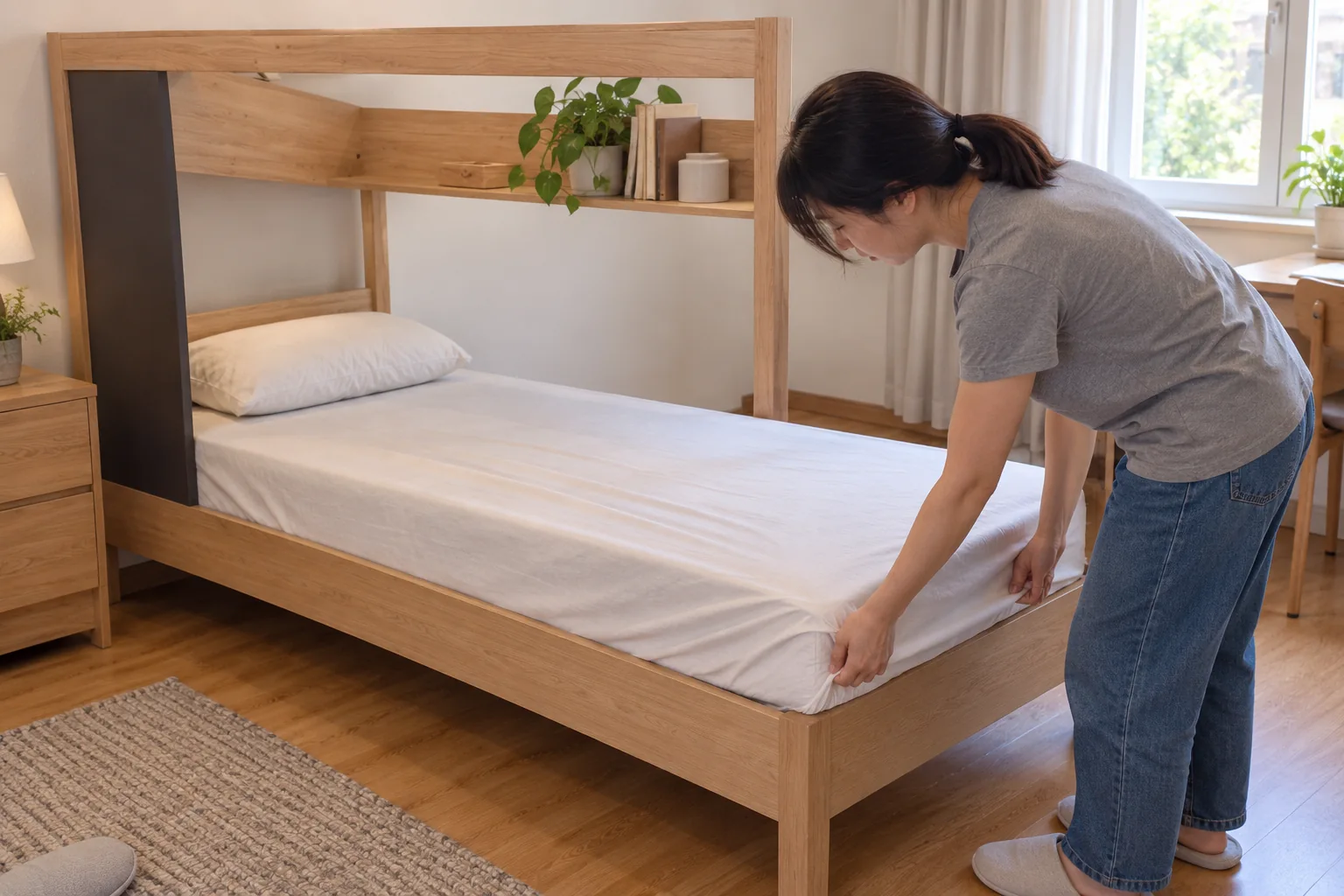
A mattress purchase also reaches the people who make and service the bed. Include the intended protector and linen references in the discussion, with any questions about the proposed arrangement recorded separately. This is an opportunity to describe the everyday task clearly. It does not turn a linen fit observation into approval of the frame, mattress support or room layout.
Ask the operator to explain which items will be retained and which will change. A fitted sheet description, for example, should belong to the planned mattress rather than an earlier purchasing list. Preserve the supplier’s actual textile sizing information instead of assuming that a shared size name covers every depth or construction. An unanswered textile question need not be disguised as a mattress defect.
The person preparing the bed may notice that the proposal differs from the current routine. Record the task and the particular combination involved, then send that question to the party able to address it. Avoid explaining a difficult task by inventing a permitted gap, stretching rule or mattress alteration. A practical observation is useful precisely because it remains connected to the observed item.
When replacement linen is sourced separately, connect its purchasing record to the mattress group. The camp laundry and drying-room planning guide covers the broader service. Here the narrower objective is to ensure that its textile list describes the beds being supplied, without prescribing laundering treatments, health outcomes or a new accommodation operating procedure.
Compare offers after resolving their supply boundaries
Two offers described as single mattresses may differ in product identity, stated dimensions and what the seller assumes about the base. Place those differences beside the price before choosing between them. A cheaper line can be a different proposition rather than a saving on the same purchase. The comparison should make that difference easy to see and discuss.
The IKEA UK size guide lists Standard Single 90 × 190 cm, Small Double 120 × 190 cm and Standard Double 135 × 190 cm, and distinguishes UK from European sizing. These are named market examples. They do not define a global camp standard or establish that another seller’s single has the same dimensions.
In the bid comparison, keep the offered maker, article reference and named dimensions together. Add the support arrangement assumed by that bidder and the included accessories. An alternative product can remain a useful option, but it should appear as an alternative requiring its own comparison. Do not erase its identity simply to keep every offer on one undifferentiated mattress line.
If the bidder proposes a later substitution, reopen the affected comparisons before treating it as equivalent. A supply delay or discontinued item can justify considering another product; it cannot establish that the new product has inherited the original pairing. The useful response is to identify what changed and obtain the missing corresponding evidence. Retain the original decision as history, not as approval for a different item.
Make the sample answer a defined question
A sample review is most useful when its question is agreed in advance. Identify the frame, base, mattress and ordinary bedding presented, then state what the participants are observing. This keeps a demonstration from becoming a broad promise. It also makes a later change easier to recognize when the delivered order no longer represents the combination that was shown.
Record the combination, not a general pass
For a purchasing review, the question may concern whether the supplier has presented the named items and whether the documents describe that same proposal. Any practical observation should be recorded in plain terms, with the item identity and remaining question. Do not describe such a review as structural testing, a comfort trial or professional approval when none of those activities took place.
A single sample cannot establish every unverified combination in a mixed furniture order. Choose what needs separate consideration from the real differences in the proposal, rather than inventing a universal sample size. If one phase retains a different base, the evidence for the first phase does not silently answer the second. Keep the unresolved group visible even if its room photographs look similar.
Use the container-house quality-control guide to connect the furniture description with the wider handover records. For this purchase, preserve the agreed component references, relevant correspondence and sample identity. A photograph can help locate the sample; its visible appearance alone cannot prove dimensions, support suitability, durability or any unseen product performance.
Keep replacement groups distinct when the camp changes

Later replacements are easier to specify when the original purchase leaves more than a generic mattress count. Link each installed group to its documented frame, base and mattress references. The record should allow a future buyer to find the relevant combination without assuming that the latest delivery replaced every bed or that every room followed the same procurement history.
Choose a grouping that remains understandable to the operator. It might follow an identified furniture batch, building phase or documented component change. A location can help find the bed, but it is not a permanent substitute for the component information: furniture can move while a room number stays the same. Record a confirmed move or replacement against the affected group.
The cases below separate a repeated item from a proposed new combination. They are editorial examples for purchasing conversations, not a claim about any existing PQSE camp. Their purpose is to prevent a stock description from hiding an unresolved decision. No row assigns an acceptable tolerance, modifies a bed or authorizes a room for occupancy.
Hold uncertain stock apart in the buying description until the relevant group has been identified. This need not mean inventing a sophisticated inventory system. A clear supplier reference, the installed group and the recorded answer can be enough to explain why one replacement was ordered. Preserve that reasoning when an item is discontinued so the next buyer can see what still needs to be resolved.
| Situation | What the buyer already knows | Question still requiring an answer |
|---|---|---|
| Same identified mattress ordered for the same recorded bed/base group | Earlier pairing and actual component references are available | Is the offered item still that same product and supply scope? |
| A discontinued mattress is replaced by another range | Original group remains identified | What evidence covers the newly proposed mattress with the retained support? |
| A room contains an undocumented later bed | Location is known; original schedule may be outdated | Which frame/base is actually present before a mattress is allocated? |
| One delivery serves several different furniture groups | A total quantity is known | Which confirmed combination and quantity belongs to each group? |
Leave an order the next buyer can understand
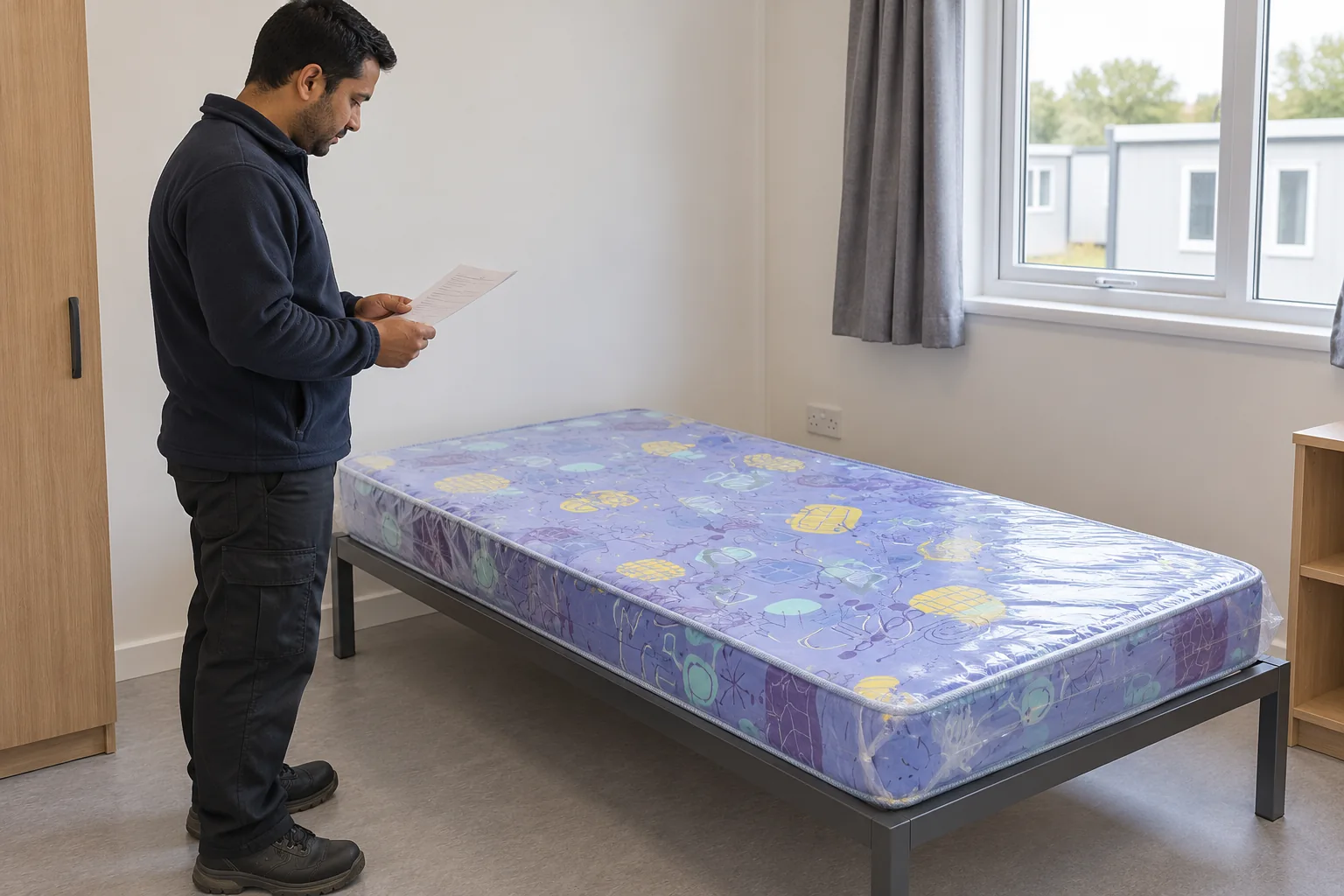
Finish the enquiry with an order description that preserves the decision, including its limits. Name the mattress and the bed/base group, specify the included items and retain the applicable supplier answer. That record should explain why the purchase can proceed for this group. It should also reveal which other beds, substitutions or conditions were never covered by the decision.
An unanswered field should stay unanswered
Before releasing the commercial order, reconcile its quantity with the groups actually resolved. If a portion remains uncertain, describe that portion separately instead of treating the whole total as equivalent. The buyer can then decide how to seek the outstanding information without rewriting the known items. This preserves progress while preventing a general purchase label from concealing unfinished work.
At receipt, compare the delivered identities and stated contents with that description. An unexpected range name, different base reference or missing textile item is a concrete discrepancy to refer to the seller. Record what arrived and the response obtained. Do not make the discrepancy disappear by changing the original record to match the delivery or by asserting that a similar appearance proves equivalence.
The final handover should let the operator recover the same information for a future enquiry. Preserve the relevant supplier documents in a usable location, associate them with the affected furniture groups and make the responsible contact clear. The result is a repeatable purchasing decision with visible boundaries. It remains a procurement record, not a substitute for project-specific technical review, testing or the operator’s separate responsibilities.
Buyer questions
Can a mattress be ordered using only the word single?
Use the identified mattress, receiving bed and base, with their specific supplier information.
Can the bed’s outside dimensions establish its internal fitting area?
No. Obtain the actual bed’s relevant fitting dimensions; no allowance is inferred here.
Does this guide recommend one slat spacing for all camp mattresses?
No. The chosen mattress maker’s requirements apply to its identified product and proposed base.
Do the retail examples describe PQSE’s supplied mattresses?
No. They illustrate how supplier fields and market names differ. A specific PQSE furniture offer requires its own confirmed component references and scope.
Sources and scope
- Bed Advice UK: FAQs. NBF consumer guidance on dimension identity and selected-mattress base compatibility; no universal allowance.
- IKEA UK: Mattress size guide. UK market names and metric sizes; no global or camp recommendation.
- IKEA UK: NEIDEN 203.952.51. Selected article’s separately labelled frame/mattress dimensions and excluded items.
- Tempur-Pedic US: What base/foundation can I use to support my mattress?. Brand-specific support and warranty example; no transfer to other mattresses.
- IFC/EBRD: Workers’ accommodation: processes and standards. August 2009 guidance, especially printed page 13; historical project context, not destination compliance.
- Image reference: bed-frame components, FASTILY. The disassembled-rail illustration is an AI reconstruction adapted from FASTILY’s photograph, under CC BY-SA 4.0. The resulting rail illustration is offered under that same licence; the scene was newly reconstructed and does not show the original site. No endorsement is implied.
- Image reference: slatted bed, Yu Morita. The bare wooden slatted-bed illustration is an AI reconstruction adapted from Yu Morita’s photograph, under CC BY-SA 2.0. The resulting slatted-bed illustration is offered under that same licence; its newly reconstructed scene is not a measurement or a tested assembly. No endorsement is implied.
- Image reference: single bed, Peachyeung316. The sheet-corner illustration is an AI reconstruction adapted from Peachyeung316’s photograph, under CC BY-SA 4.0. The resulting sheet-corner illustration is offered under that same licence; its person, bedding and surrounding scene were newly reconstructed. No endorsement is implied.
This is a research-led purchasing guide prepared for PQSE House using the linked original guidance and manufacturer information. It reports no mattress tests, PQSE furniture specifications, field experience or human engineering review. All newly made photographs are explanatory illustrations based on corresponding genuine visual references; they do not document a PQSE project or prove product fit. The source list identifies credited photographic adaptations and their licences.