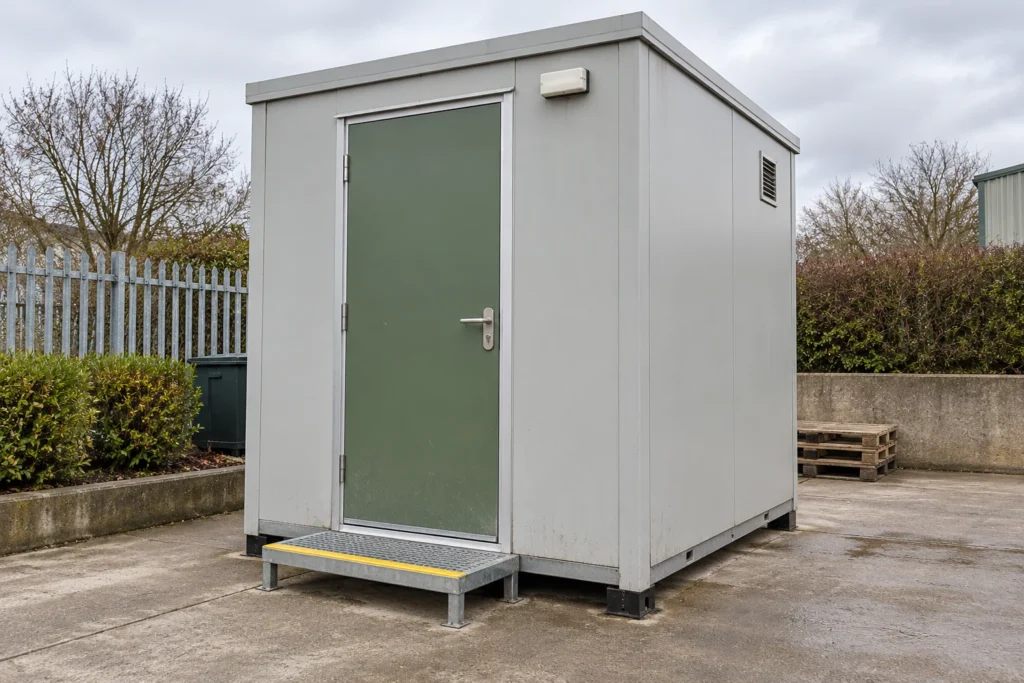
Before allocating a vacant detachable container house, establish its current condition, investigate unresolved dampness and obtain an appropriate response and follow-up record. A cleaned room, available key or scheduled arrival does not by itself settle a moisture concern. Keep the allocation decision separate from the decision to inspect or carry out work, and identify who can authorize each step.
This guide concerns a purpose-built room that remains installed at the same site after a period without occupants. It is for the buyer or operator trying to bring that room back into use, perhaps before the next workforce rotation. The practical question is what the team knows today, what remains uncertain and what evidence the responsible decision-maker needs. Dismantling, relocating a building and diagnosing a particular leak require different work. The approach below organizes a reopening brief; it does not certify a room or prescribe mold removal.
Identify the room and the return you are planning

Begin with the room that will actually receive people. Connect its site position, door identifier and current layout to the proposed return date and use. A photograph of a similar room or a generic building description is too loose a starting point when several installed units have different histories and different unresolved items.
The CDC guidance on reopening buildings calls for assessing mold and excess moisture before occupants return after a prolonged shutdown. It says the relevant period for mold varies with the building, season and weather. Its US guidance supports taking the vacancy seriously; it does not supply a universal number of vacant days that approves or rejects a room.
Record the proposed activity as carefully as the location. Returning a former sleeping room to the same use is a different brief from turning a storage room into accommodation. Identify the person who owns the allocation roster and the person who owns building condition. They may be the same individual on a small site, but the responsibilities should still be explicit. The condition record must reach the allocation decision before a key is issued.
The detachable container house product information can help the procurement team identify the building family being discussed. For an installed room, also obtain its actual order, assembly and alteration records. This article does not assume a standard lining, panel core, service package or repair detail. Keep an unidentified component visible as a question instead of assigning a specification from a brochure that may cover a different configuration.
Record what is visible without turning it into a diagnosis
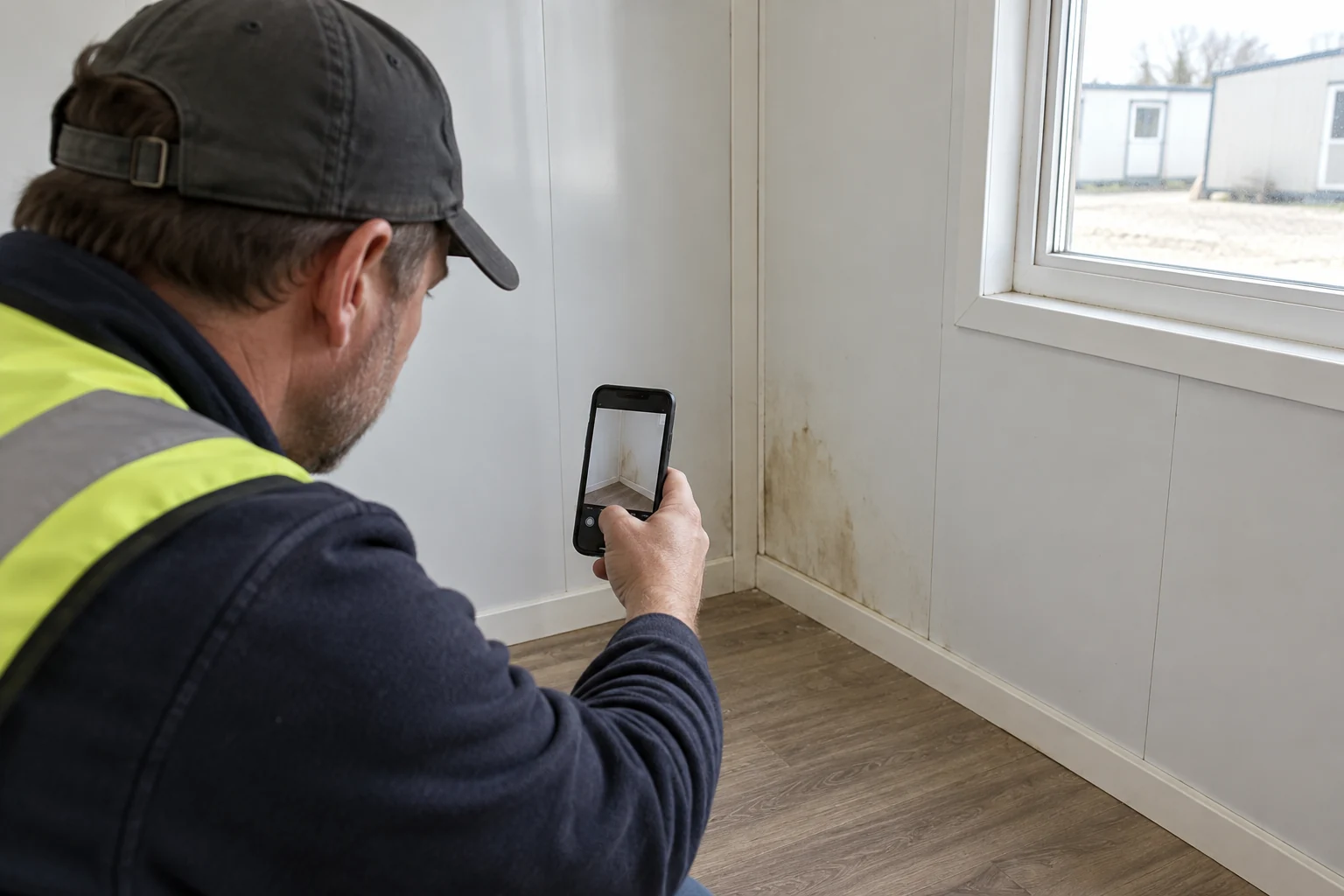
A small mark on a wall needs a location and a description before it needs a confident explanation. Record what the authorized observer can see, what was inaccessible and the conditions of that observation. Keep suspected growth, a stain, visible wetness and a confirmed cause distinguishable in the file rather than reducing them all to a damp-room label.
NIOSH explains that mold color does not establish how dangerous it is. Avoid assigning a hazard class from a dark patch in a photograph. The photograph can locate a concern for an appropriate investigator; it cannot identify everything behind a lining or establish the health implications for a particular occupant.
For each image, retain the room identifier, date and a way to find the same location again. Include a wider view when a close view alone could be mistaken for another corner. Describe any limitation that matters: an item covered the lower wall, the room was not entered or an earlier picture has no reliable date. These are useful differences in evidence quality. They should not disappear when the file is condensed into a maintenance request.
Do not write a repair specification from the first picture. Where a technical moisture investigation is needed, the guide to separating moisture symptoms and possible sources offers a related investigation discussion for flat-pack buildings. The installed detachable room still needs its own configuration and professional assessment. Here the priority is to preserve an honest observation for that work and prevent an untested explanation from becoming the reopening decision.
Recover the history that the empty room cannot tell you

Vacancy history is often split between the person who last used the room, the maintenance team and whoever held the keys. Put those accounts alongside the records rather than merging them into a confident story. Distinguish a dated observation from a recollection, and mark gaps that an investigation may need to resolve.
Start with the last occupied date if it is known, the reason the room became vacant and who managed it afterward. Add previous reports, work orders and the scope of any intervening work. A note saying that someone dealt with a leak leaves several questions open: which room, which location, what work and what follow-up? Contact the responsible party for the underlying record before relying on the note as proof that today's condition has been resolved.
An invoice, photograph and verbal account answer different questions. Keep the invoice for the commercial scope, the photograph for its visible condition and the account for what the speaker actually remembers. If they conflict, present the conflict to the investigator instead of choosing the most reassuring version. A procurement team can request missing records without claiming it already knows whether the earlier contractor's work was technically adequate.
The container house maintenance record guide is relevant when assembling the room's inspection and repair history. Routine upkeep and reopening serve different decisions. A completed routine task may supply useful background, while the current vacancy-related concern remains open. Use the following editorial record to expose those differences; it is not an official inspection form or a substitute for the applicable building records.
| Record received | What it can establish | Question to resolve |
|---|---|---|
| Dated room photograph | Visible condition in an identified view | Was the same location assessed afterward? |
| Work order or invoice | The recorded scope and commercial party | What completion or follow-up evidence exists? |
| Occupant or caretaker account | What that person reported or remembers | Which details have a reliable date and location? |
| No record available | A documented information gap | Who will obtain evidence or assess the uncertainty? |
Use a consistent observation language across rooms
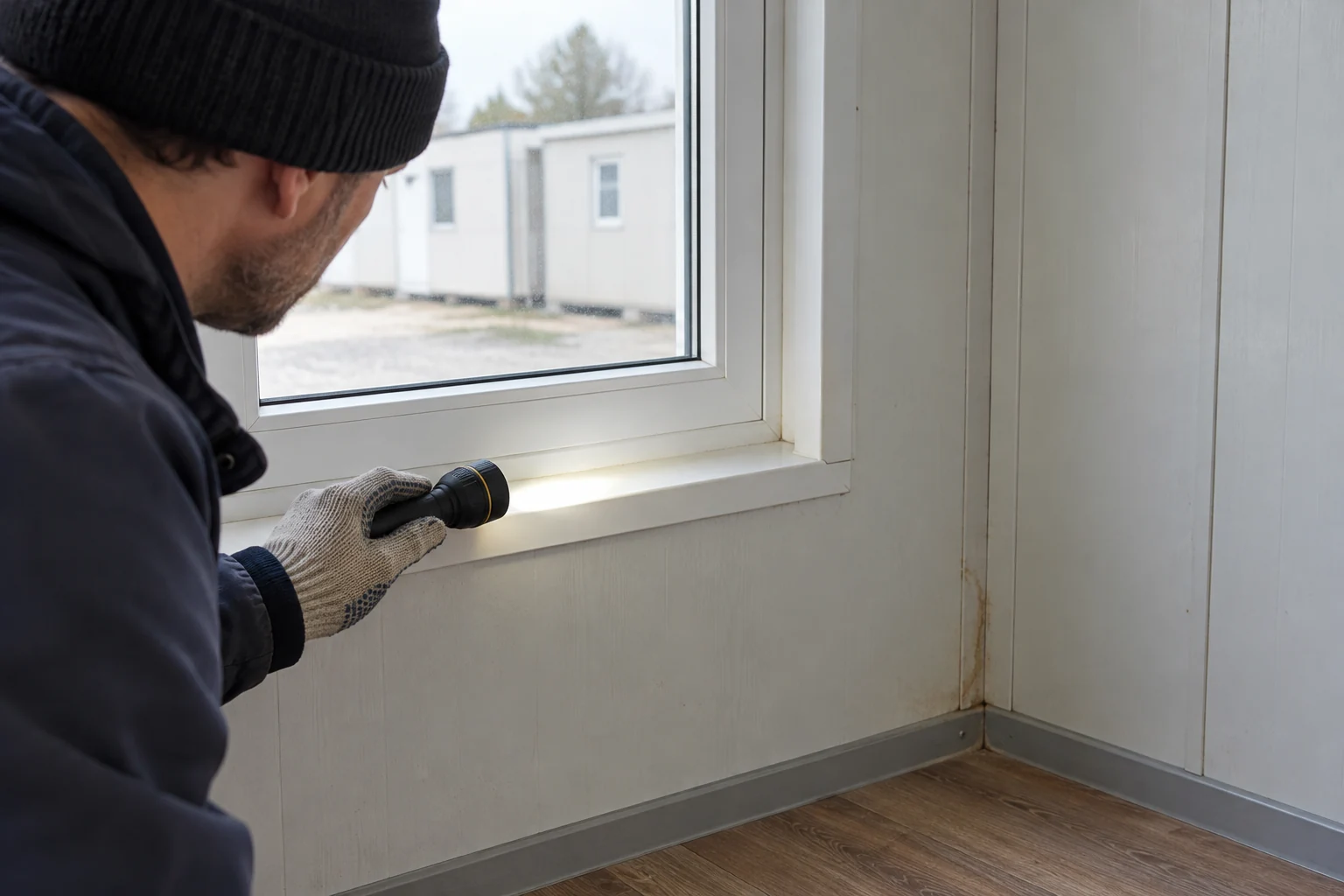
When different people describe different rooms, a shared vocabulary helps the next reviewer understand the record. Specify the location and observation before adding an overall label. A windowsill entry should remain distinguishable from a wall entry, and an area that was not assessed should remain distinguishable from an assessed area with nothing reported.
The NIOSH Dampness and Mold Assessment Tool for General Buildings separates damage or stains, visible mold and wet or damp observations. Its odor entries use the codes summarized below. These are subjective descriptions, not measured exposure, health limits or room-release criteria. Use the complete document for its actual assessment instructions; this short table is only a vocabulary reference.
For the operator's record, keep the observer's wording available alongside any category. A change from one description to another may reflect a different view or observer, so the investigator needs the context as well as the label. Never send a prospective resident into a questioned room simply to judge its smell. Arrangements for assessment belong to the people responsible for access and investigation, with any necessary professional advice.
A structured record can also contain an honest unknown. If the first report cannot distinguish staining from suspected growth, retain that uncertainty and assign the question rather than silently upgrading the observation to a diagnosis. The purpose is to improve the handover between people. It is not to let an office spreadsheet replace the qualified assessment, response or approval that the actual condition and location require.
| Code | Odor descriptor in the source |
|---|---|
| 0 | None |
| 1 | Mild |
| 2 | Moderate |
| 3 | Strong |
Ask what a sampling proposal would actually decide
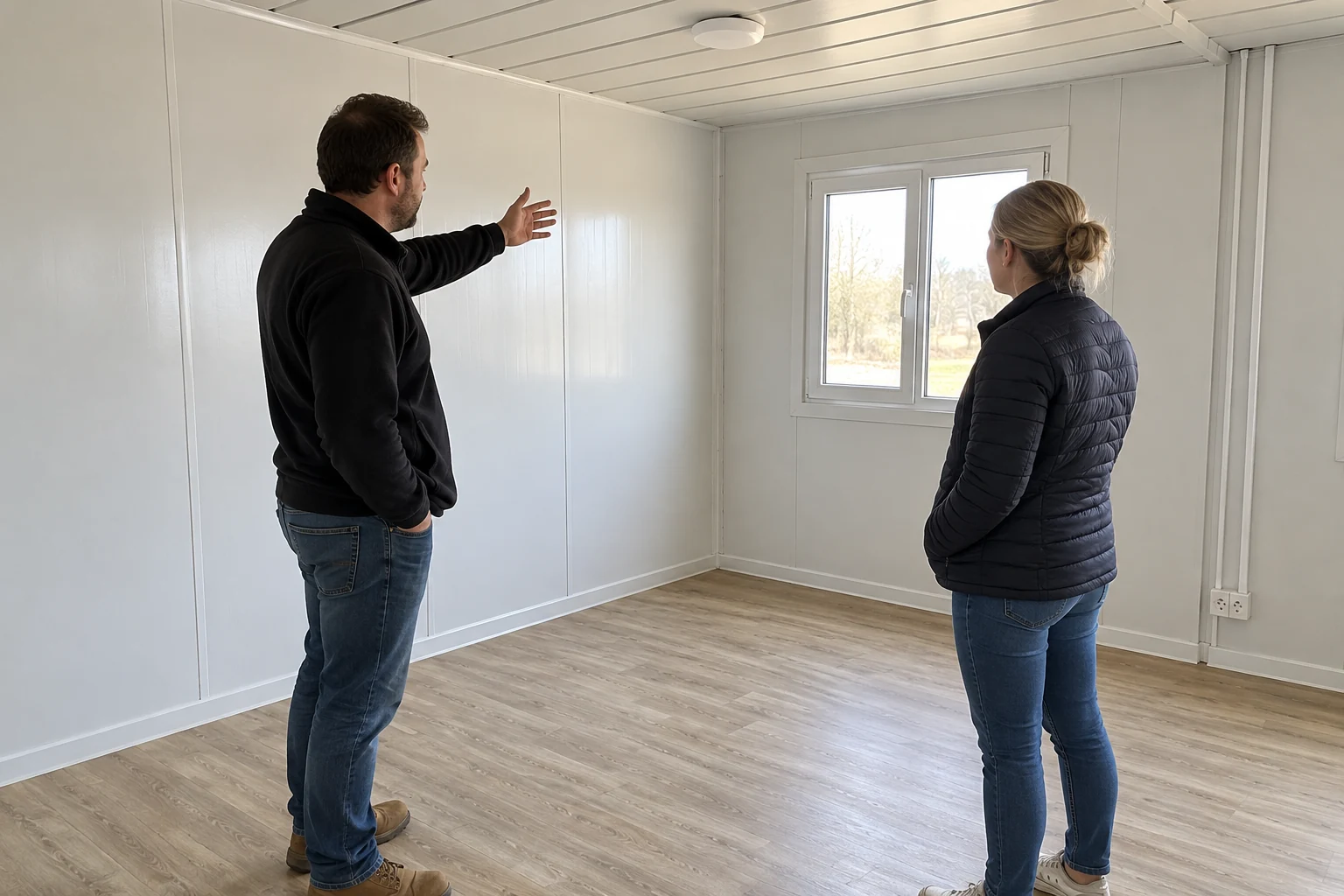
If someone proposes a test, ask which unresolved question it addresses and who will interpret the result. Request the scope before commissioning the work. A report is useful only within that scope; the allocation team needs to know what it covers, what it excludes and which decisions still require other evidence.
NIOSH does not recommend routine mold air sampling for building air-quality evaluations. It notes the absence of health-based indoor-air mold standards and limitations of short-term results, including negative findings. A short sampling report should therefore not be turned into a declaration that the room is healthy or suitable for every occupant.
The EPA explanation of mold sampling says sampling is usually unnecessary where growth is visible and cannot demonstrate compliance with nonexistent federal mold limits. It also identifies specialized purposes for sampling and the need for experienced professionals. That is a reason to define the question, not a blanket instruction to reject every professionally justified investigation.
Keep the commissioning decision and the use decision separate in correspondence. The person authorized to order an investigation may not have authority to allocate the room. Ask the reviewer to explain what further actions or information are needed in plain language. Where a finding is limited to one location or method, retain that limitation in the summary that reaches the operator. Do not replace it with an unqualified pass label for scheduling convenience.
Authorize an investigation before authorizing an alteration
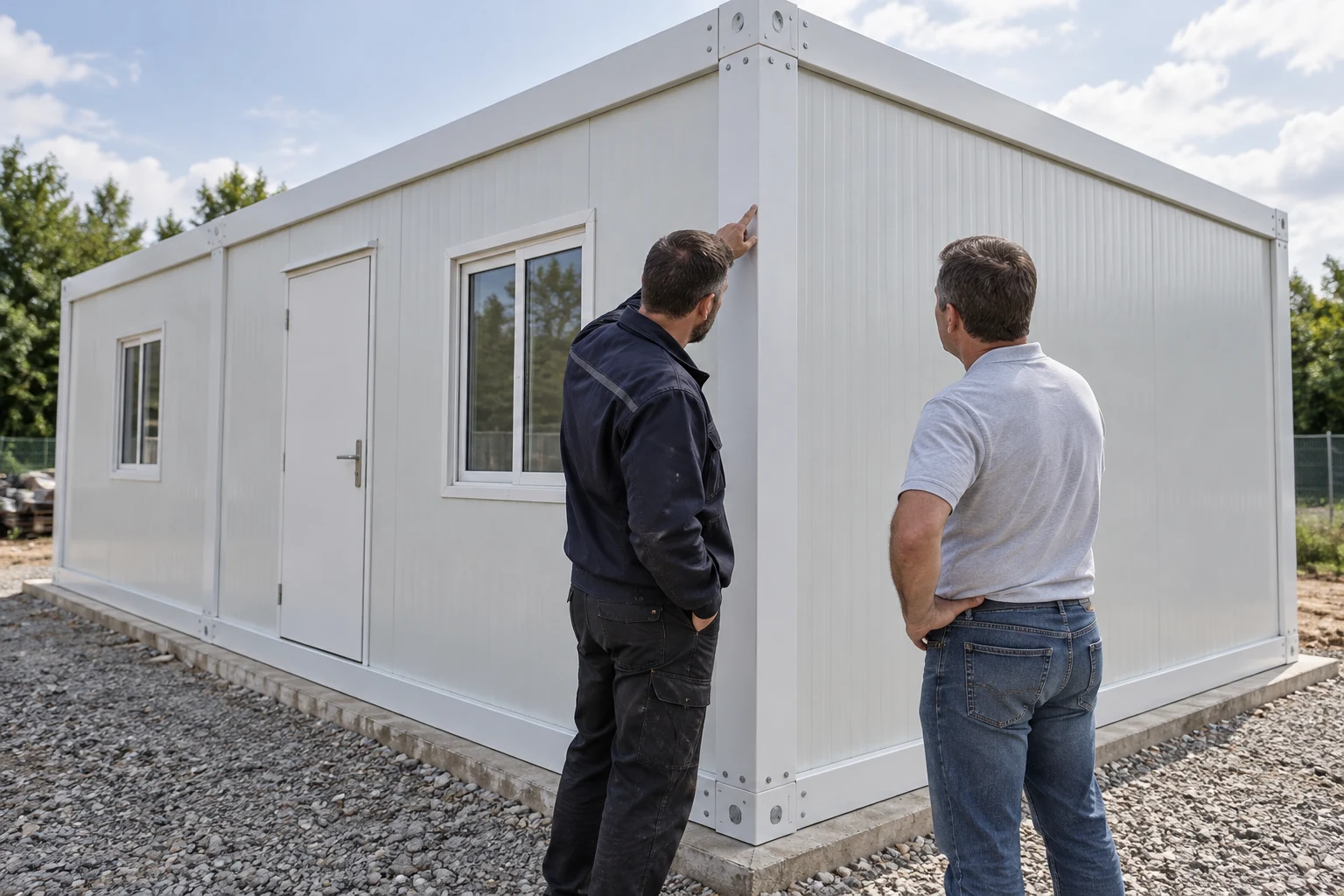
A request to investigate and permission to change the building are different instructions. Clarify who may access the room, what the proposed work includes and which further decisions need approval. The owner should understand the consequences of the scope before a contractor treats a broad instruction to fix dampness as permission for unspecified alterations.
EPA cautions that investigating suspected hidden mold can disturb affected material and warrants experienced professional judgment. This guide does not instruct readers to open linings, remove finishes or perform remediation. The appropriate investigator must decide the methods and protections for the actual condition, building and people involved.
For a proposed investigation, ask for the locations, access needed, work boundary and expected deliverable. Agree how the contractor will identify a newly discovered issue and seek a further decision. Put commercial assumptions in the request as well: who can approve additional work, which exclusions remain and who receives the finding. A small site can keep this record short, but the short record should still identify the people and the decision being authorized.
Use the quality-control guide's discussion of traceable checks and unresolved items when organizing the evidence handover. The reopening file needs to connect an actual room and finding to the relevant scope and result. That connection allows a reviewer to examine the particular conclusion instead of assuming that a contractor's attendance or a large collection of unlabelled images establishes completion.
| Decision | Person or party to name | Evidence to retain |
|---|---|---|
| Provide access for assessment | Owner's access coordinator | Room, permitted visit and known restrictions |
| Commission investigation | Authorized client and appropriate investigator | Question, methods, limits and deliverable |
| Approve proposed work | Owner and relevant professional or contractual reviewer | Accepted scope and unresolved exclusions |
| Consider allocation | Operator's designated decision-maker | Applicable completion evidence and remaining conditions |
Close the reported condition, not just the work order
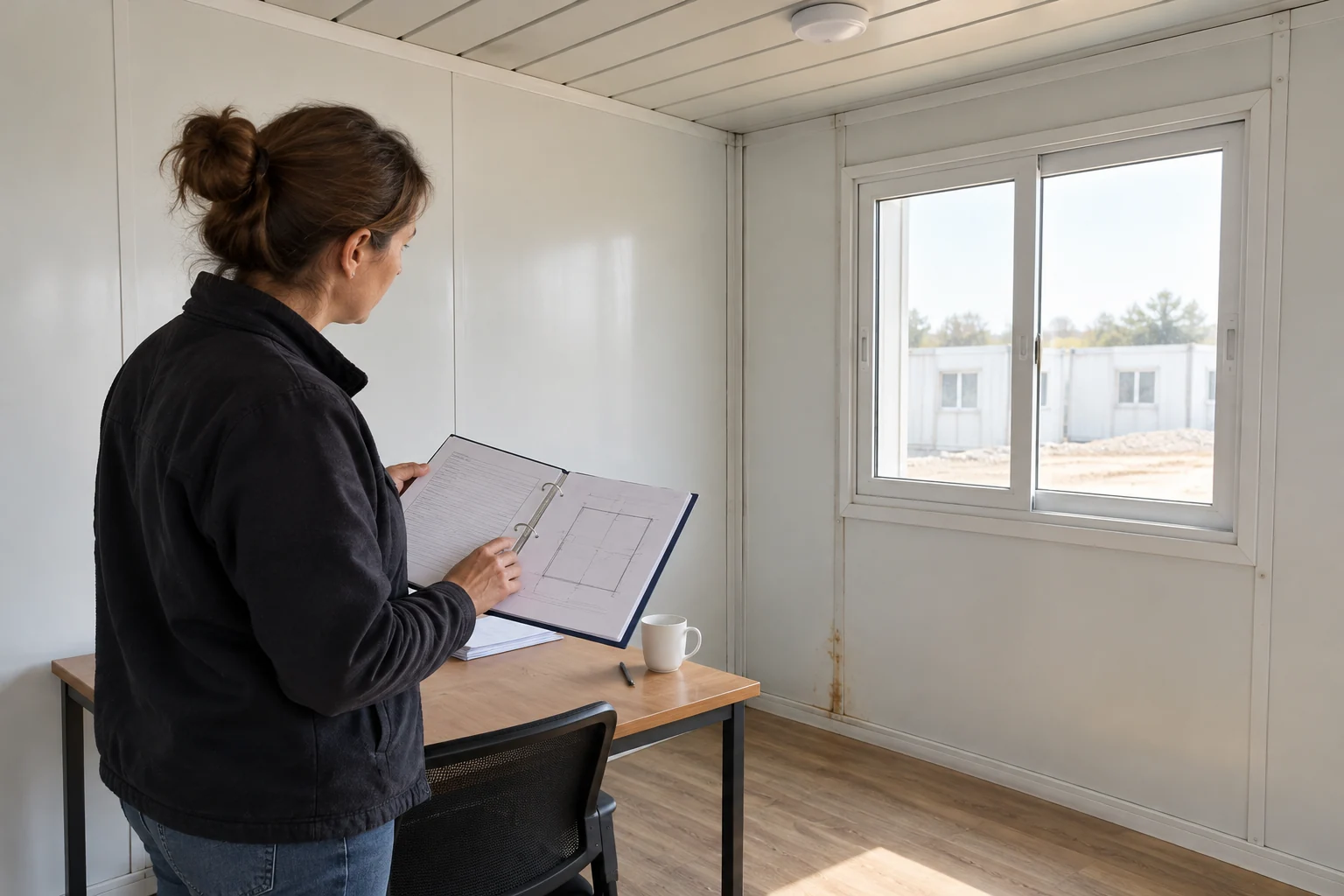
A work order can be administratively closed while the reopening question is still unanswered. Ask what the completion statement covers and how the relevant result was checked. Keep the original finding available so the next reviewer can understand why the work was requested and whether the evidence addresses that same concern.
NIOSH warns that painting water-damaged or moldy surfaces is inappropriate remediation. It recommends records of underlying problems, actions and follow-up monitoring. Cosmetic appearance should not replace that evidence. The appropriate professional's response and follow-up plan must cover the actual finding; this article offers no cleaning method or universal acceptance test.
Ask for a readable account of what was found, what was done and what remains limited or uncertain. Identify the person supplying that account and the date it applies to. When a result depends on stated conditions, keep those conditions with the conclusion. An operator comparing records later should not have to infer whether a photograph documents preparation, completed work or a separate observation made before the response began.
Agree how an unresolved issue stays visible after the contractor leaves. A promised return visit is different from a visit that occurred; a requested document is different from a document reviewed. If an item remains open, name the next action and its owner in the allocation file. Treat the reopening date as a planning dependency to be updated against the evidence, rather than allowing the date to quietly change the meaning of incomplete work.
Keep room condition and service readiness as separate checks
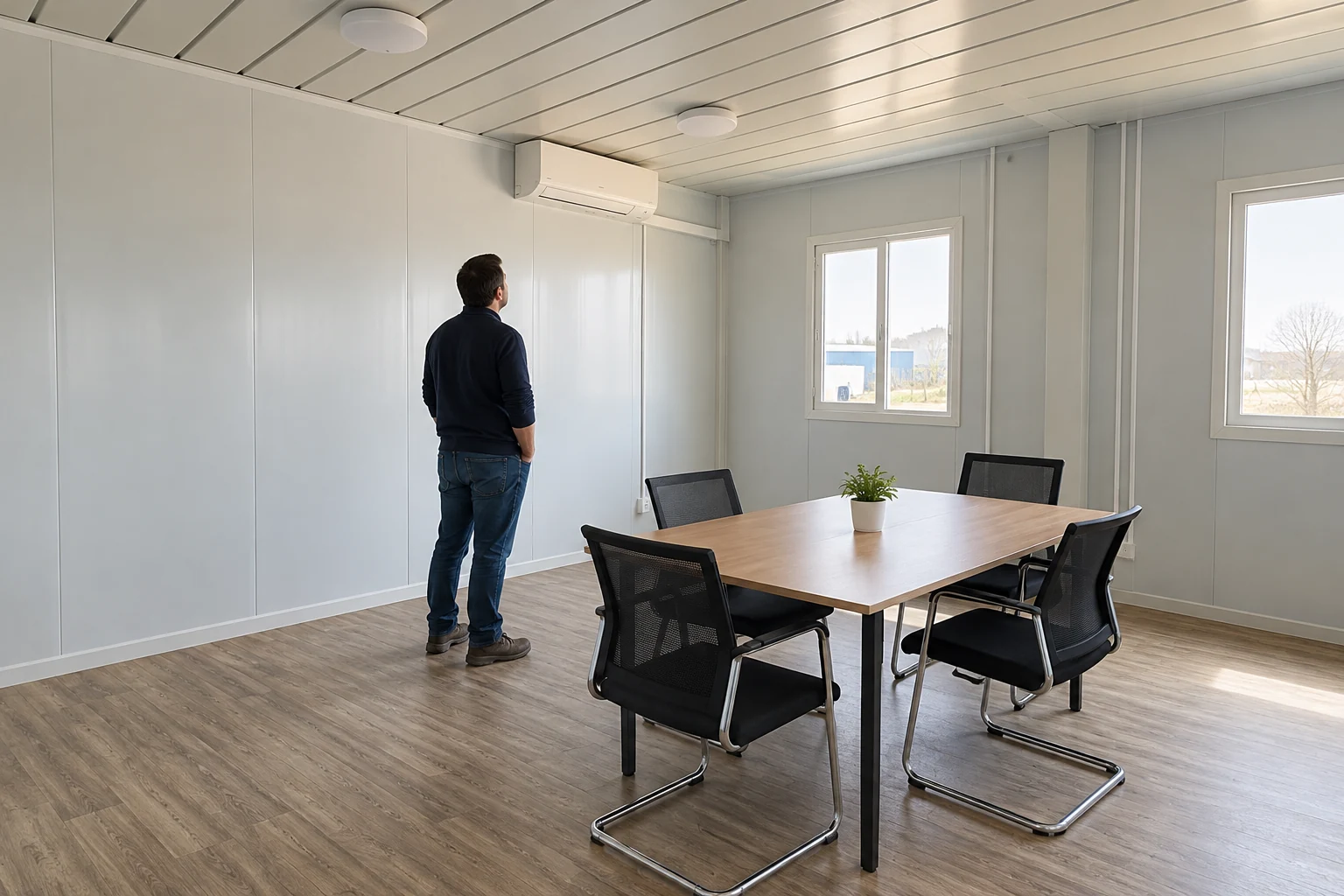
The reopening record should distinguish the room's condition from the status of its installed services. Identify which systems were unused, who is responsible for them and what evidence is required for their return. A visible service component does not establish that it has been assessed, maintained or accepted for the proposed use.
List the actual service arrangements without prescribing a generic restart sequence. A room with a washroom, a room connected to shared facilities and a room with no local water service have different briefs. Obtain the appropriate equipment and system instructions, and refer the return-to-service questions to the responsible competent parties. This guide does not provide water-system, electrical or HVAC restart settings, times or procedures.
The modular building utility-interface guide helps distinguish the supplied room package from site connections and external services. For reopening, connect the current installed arrangement with the parties who maintain it. An old quotation may explain the original supply scope but may not describe a later site alteration. Ask for the updated arrangement where that difference affects the service evidence needed before use.
Keep service access part of the handover conversation. Ask the team to identify components and records that the next operator must be able to find, rather than arranging furniture first and discovering afterward that a service visit needs a different layout. Record pending service tasks alongside their owner. Completing a room-condition review should not automatically mark unrelated service tasks complete, and completing those tasks should not silently close the unresolved room-condition concern.
Make the allocation decision visible to the people issuing keys

The key desk or allocation roster needs a current instruction that identifies the room and the decision-maker. It should not require staff to interpret an investigation report at the moment someone arrives. Distinguish a room awaiting a decision from a room authorized for its stated use, and keep any relevant conditions with that authorization.
Before changing the proposed use, consult the appropriate local advisers and authority about applicable requirements. The container house permits and intended-use discussion helps frame those questions. A maintenance record, product document and authorization to use a room have different subjects. This article cannot decide which local permissions apply or establish that an earlier approval covers a new activity or altered configuration.
Choose a status description that staff can act on without adding an unsupported technical claim. For example, an internal record can say awaiting the owner's reopening decision, with an identified pending review. If use is authorized, keep the recorded basis, date and any applicable conditions available to the responsible operator. These are proposed administrative labels, not statutory categories, and they should fit the site's actual process.
Plan how changed information reaches the roster. If another concern is reported before arrival, who can stop the allocation, arrange an alternative and inform the person expecting the room? That coordination avoids asking reception staff to choose between an old roster and a newer unresolved report. The operator should settle the instruction through its responsible process. The blog supplies a way to make that responsibility visible, not a technical decision about a particular room.
Send a reopening brief that exposes the missing answers
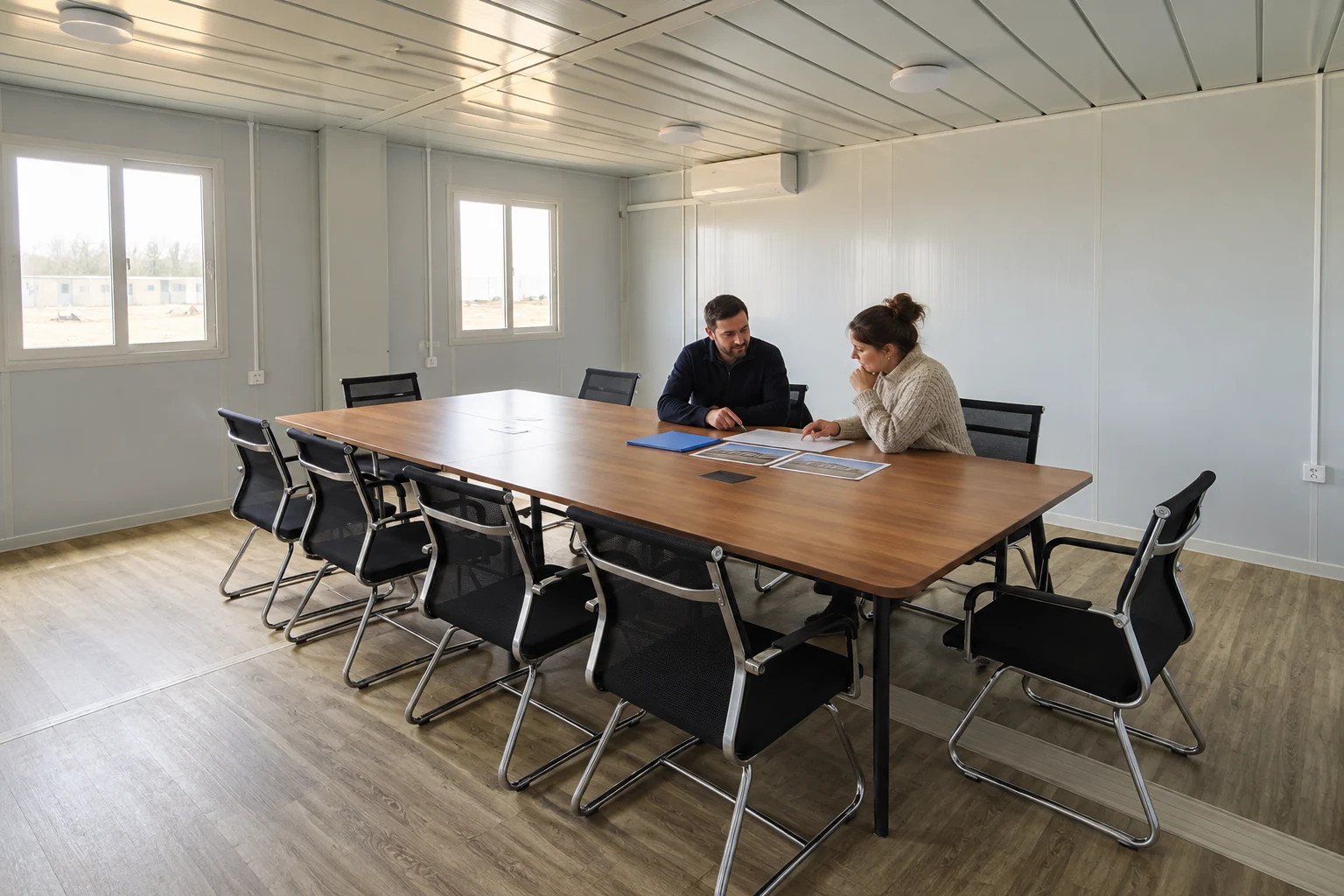
A useful reopening brief gives the recipient enough information to define their role. Attach the identified room's current condition and available history, explain the planned return and show unresolved questions. Ask for a response to those questions rather than a broad assurance that container houses are easy to maintain or that the room will be ready by a requested date.
For a contractor or professional adviser, describe the question you need answered, the access arrangements and the information already available. Ask what additional evidence they need and what their proposed deliverable can establish. For a supplier, identify the original order and component information being requested. Do not assume that a sales response can supply a site-specific assessment, medical advice or local authorization outside the respondent's actual role and agreed scope.
For accommodation, include the intended resident use and the supporting facilities expected to be available. The worker camp accommodation planning information is relevant when a returning bedroom belongs to a wider camp. A room-allocation decision should reach the team managing that accommodation plan. Keep the discussion tied to the particular room and services rather than treating the number of vacant bedrooms as immediately usable capacity.
Finally, ask who will assemble the current evidence and communicate the reopening decision. Retain the questions that remain unanswered; do not delete them to make the handover file look complete. A concise brief can acknowledge that the room is still awaiting investigation or follow-up. That is more useful to the next person than an attractive photograph with no dated finding, no responsible party and no explanation of what the photograph is meant to establish.
Buyer questions
Does a vacancy of a certain length automatically require the same response?
Do not use a guessed duration as the room's decision rule. Establish the actual history, current observations and proposed use, then obtain the assessment and response appropriate to the situation. This guide does not define a universal vacancy interval or inspection schedule for detachable buildings.
Can a photograph settle whether the room can be allocated?
A photograph can identify a view and help locate a question. The allocation decision still needs the relevant current evidence, responsible interpretation and applicable conditions. Keep the photograph's date and limitations visible. Avoid presenting an illustrative blog image or an undated picture as the actual room's completion record.
Who should receive a report before the next group arrives?
Identify the owner of building-condition work and the owner of room allocation. Route the report through the site's process so both have the information they need. The key issuer needs an actionable current instruction, while the investigator needs the original observation and its context. Assign the next action rather than leaving the report in an unmonitored message thread.
What can the building supplier contribute to a reopening brief?
The supplier may be able to identify the original ordered components and provide applicable product or assembly information within its actual scope. Request that information for the identified unit. Site investigation, remediation, service reinstatement and any required local use decision need their own appropriate parties; do not infer those responsibilities from who supplied the room.
Sources and scope
- CDC — Reopening Buildings Guidance. US guidance dated February 6, 2024; the mold assessment and planned-response discussion is used here, not its system restart procedures.
- NIOSH — Mold, Testing, and Remediation. Updated February 25, 2025; scoped explanation of sampling limits, inappropriate cosmetic remediation and action records.
- EPA — Is Sampling/Testing for Mold Necessary?. Updated September 8, 2026; US sampling limitations and caution about investigating suspected hidden mold.
- NIOSH — Dampness and Mold Assessment Tool for General Buildings. December 2018, publication 2019-115; printed pages 5–12. The table uses subjective odor vocabulary from page 9.
PQSE House prepared this AI-assisted research guide from the cited originals. The responsibility records are editorial tools, not regulatory forms. Photographs are newly created illustrations informed by real reference images; they are not records of this reopening event. US source guidance does not determine another location's obligations. No site inspection, professional human review, medical clearance or PQSE project outcome is claimed.