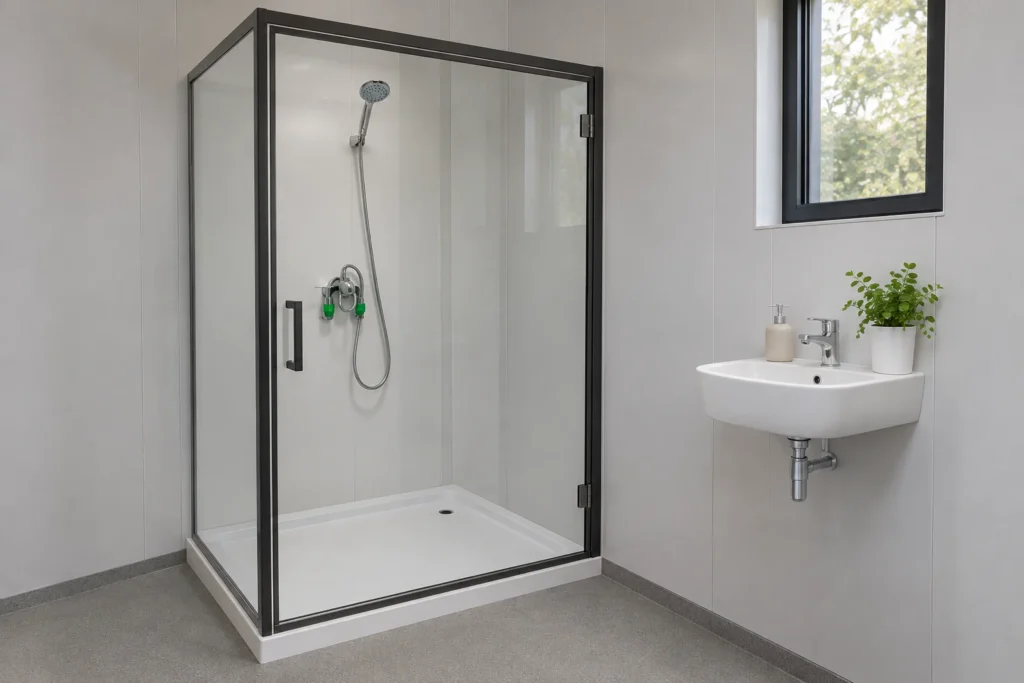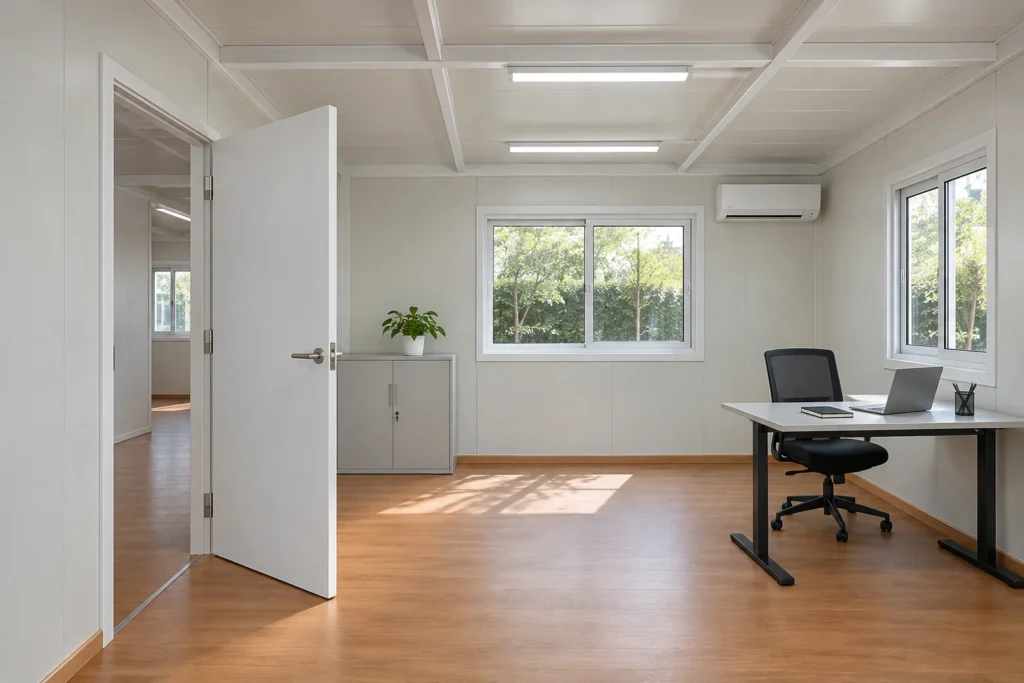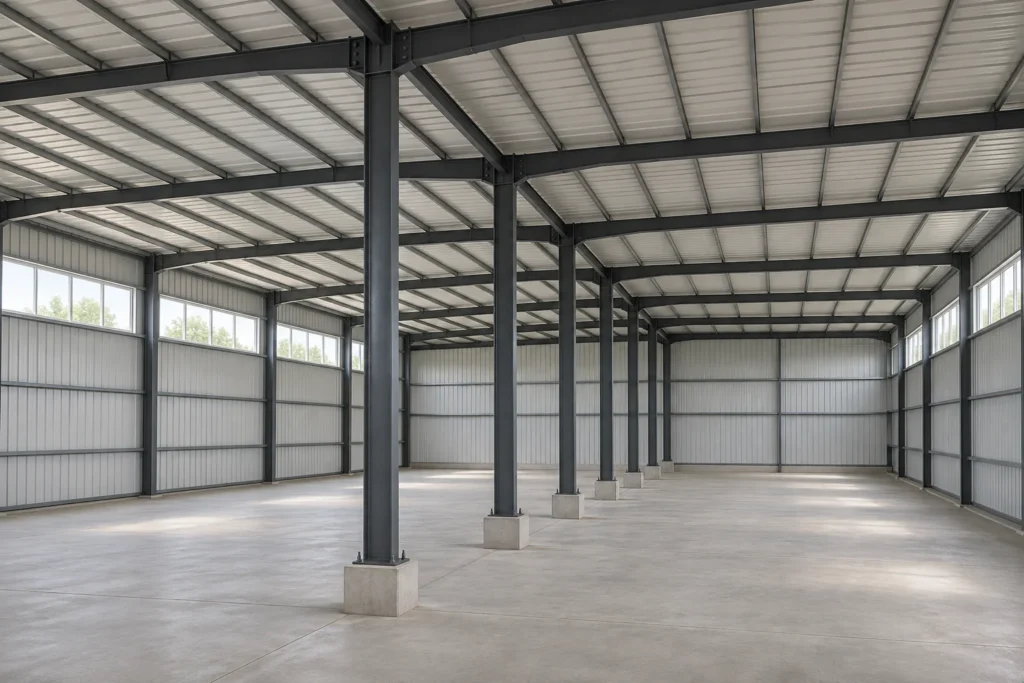
A prefab warehouse does not need the same insulation package in every situation. Start with what the goods must tolerate, how long people work inside and whether the space will be heated or cooled. A simple ambient store and a regularly occupied packing room are different buying briefs, even when their external dimensions match.
This guide concerns small stores for tools, spare parts and ordinary project supplies within PQSE's prefab storage building offering. Refrigerated rooms, hazardous goods and other specialist storage need a separately assessed facility.
Decide what the store must protect
Write down the storage conditions supplied by the owner or manufacturer of the goods. Include packaging, expected storage duration and any stated temperature or humidity limits. "Keep it dry" needs to become a usable requirement: protection from rain, control of indoor moisture, or a defined storage environment are different tasks.
Also describe the work. A person collecting a tool briefly uses the room differently from a team checking deliveries and packing orders throughout a shift. Include normal door-opening routines and any wet goods entering the space. These inputs help define the enclosure and services before a panel package is priced.
The warehouse planning guide covers stock flow, loads and usable positions. For insulation selection, keep those physical requirements and the environmental brief together.
Use the storage routine to set the brief
| Your intended use | Establish before choosing the enclosure | Implication for the quotation |
|---|---|---|
| Weather-tolerant tools or parts with brief collection visits | Confirm actual goods restrictions and exposure | Compare a defined ambient-store proposal; do not assume either maximum insulation or no insulation |
| Cartons or equipment with specified storage limits | State the limits, dwell time and monitoring needs | Review the enclosure and any conditioning as a coordinated package |
| Regular receiving, checking or packing work | Describe occupied hours, activities and door use | Include working conditions and the relevant services in the building brief |
| A store with a continuously occupied administration desk | Decide whether the office needs a separate room | Compare the office and stock-area requirements separately |
The decision is the environment you need to provide, followed by the building and service package that can provide it. An insulation upgrade should have a stated purpose; selecting only by thickness leaves that purpose unresolved.
Keep insulation and occupied rooms distinct
The US Department of Energy's insulation overview explains that common insulation materials slow heat flow, and that installation, air sealing and moisture control need to work together. Its home-building guidance supports that basic mechanism, rather than a warehouse specification. Insulation does not by itself produce cooling, remove moisture or establish a controlled storage condition.
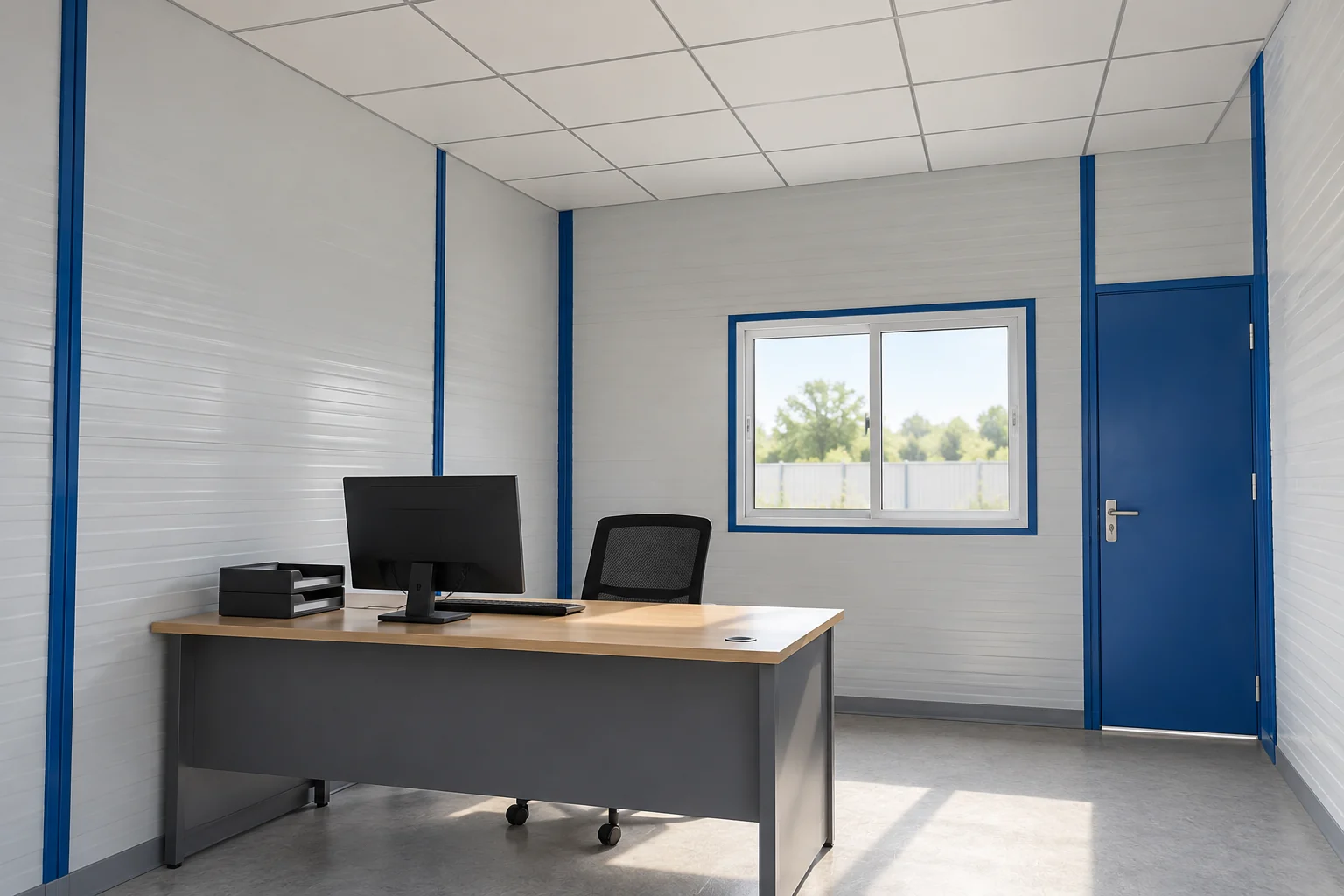
A separate container office can give stock administrators their own working room. Compare that room's enclosure and services with the stock area's needs. This can be more useful than assuming every part of the facility must operate under the same conditions; the final arrangement still needs project review.
PQSE's storage options include panel-built and flat-pack arrangements. Review the actual flat-pack building package or K-house enclosure proposed for the store. Match roof, walls, openings and junctions to that system instead of transferring an insulation claim from another building.
Compare complete scope and responsibility as well: enclosure materials, installation, agreed air and moisture details, doors, ventilation and any required heating, cooling or monitoring. A cheaper building price may exclude work included in the other proposal. Local requirements and goods-specific conditions must be resolved for the actual site.
FAQ
Can insulation cool the store without air conditioning?
Insulation slows heat transfer; it is not a source of cooling. What indoor conditions result also depends on climate, solar exposure, openings, internal activity and the chosen ventilation or conditioning arrangement.
Can I add insulation after the store opens?
Treat a later upgrade as a planned alteration. Existing linings, services, shelves and roof details may affect access and the suitable method. Ask for the retrofit scope before assuming it will be a simple material addition.
Is insulating the roof alone enough?
That depends on the required environment and complete building. Roof, walls, doors, windows and their connections contribute to the enclosure. Request a proposal for the intended thermal boundary instead of assuming one insulated surface answers the whole brief.
Get a proposal around the goods and working day
Send PQSE House the stock list, packaged sizes and weights, storage duration and any documented environmental limits. Add the destination, room layout, occupied hours, typical door use and target schedule. State whether a separate office or active conditioning is required, and which work your local team will provide. These details support a useful storage-building quotation.