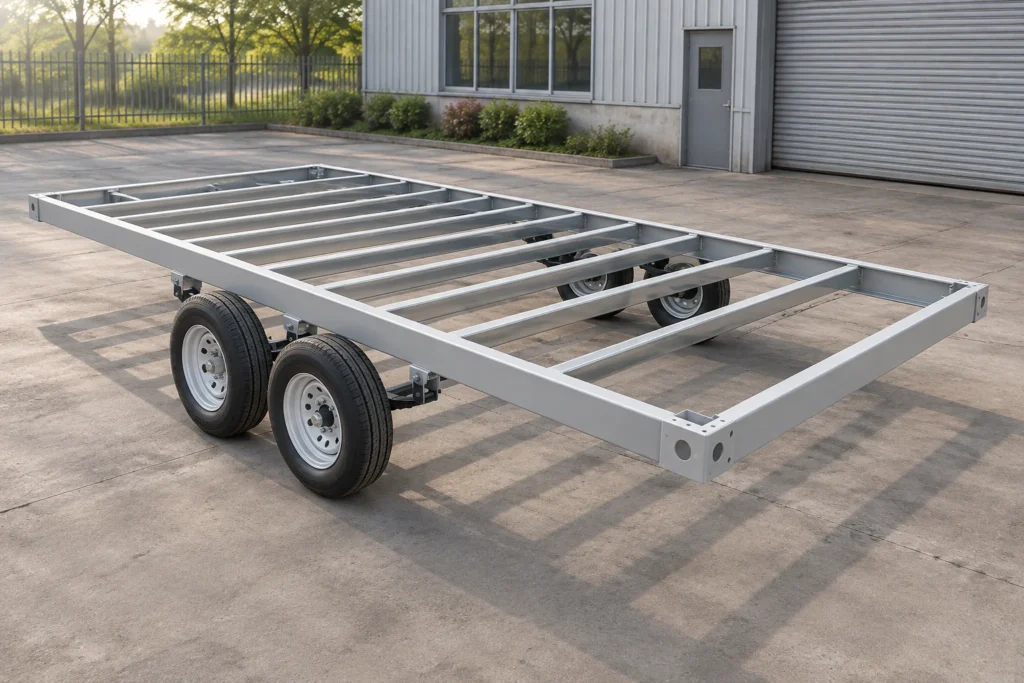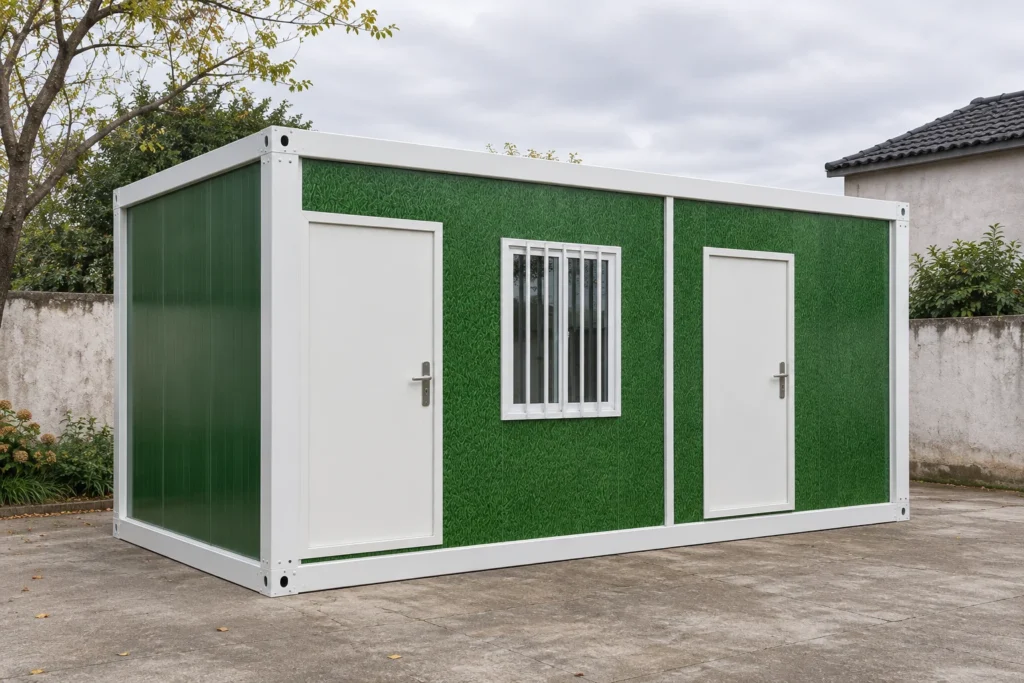
Choose a tiny house electric water heater by matching the available electrical supply to the hot water you actually need. A compact wall-mounted unit may save floor space while demanding substantial power. Start with the shower, coldest incoming water and electrical headroom—not the smallest box that fits a cupboard.
For a container house on wheels, settle this choice alongside the room layout and destination services. A building offered with a bathroom does not by itself establish which heater, circuit or site connection is included.
Check the supply before choosing a heater
Find out the voltage, phase and capacity available at the parked home. Then have the responsible electrician assess the heater together with cooking, space heating and other loads that may operate at the same time. The incoming connection rating is not a spare allowance reserved for hot water.
For a sense of scale, the US manufacturer's Tempra technical data, revision June 2025, lists these examples:
| Manufacturer model | Supply in this example | Rated input | Current draw shown |
|---|---|---|---|
| Tempra 12 Trend/Plus | 240 V | 12 kW | 50 A |
| Tempra 24 Trend/Plus | 240 V | 24 kW | 2 × 50 A |
The second entry describes two 50 A draws, not a 50 A appliance overall. These are named product examples, not recommendations for your home or PQSE package specifications. The same manufacturer's table lists different outputs at 208 V. Do not carry the 240 V figures into a different supply arrangement.
This is why fitting the unit into a small bathroom is only one part of selection. If the available supply cannot support the required heater alongside the other loads, a smaller casing will not solve the problem. Review a different hot-water arrangement or the feasibility of a supply upgrade before ordering. The building utility planning guide helps separate cabin work from site-side connections.
Size around the shower and winter inlet water
For tankless equipment, list the fixtures that must run together and the flow each requires. Compare the coldest expected inlet temperature with the required outlet temperature. The Georgia Attorney General's tankless sizing guidance explains this combination of peak demand and temperature rise.
A model that supplies enough warm water under one inlet condition may not meet the same flow under colder conditions. Ask for the manufacturer's output at your stated conditions, rather than accepting a general number of bathrooms or an “unlimited hot water” label.
With stored hot water, review usable stored capacity, recovery and the gaps between showers. Our storage-versus-tankless guide explains that tradeoff separately. Here the key question is whether the selected electric system fits both the available power and your actual pattern of use.
Keep sink duty separate from shower duty

A handwashing sink and a shower can need different equipment. Stiebel Eltron describes its Mini point-of-use range around single-sink applications. That does not establish a whole-home shower supply. Check the actual model's intended duty before assuming one small appliance can serve every fixture.
Reserve installation and service space for the selected equipment, not a generic rectangle on the plan. Keep access to required controls and connections practical. Confirm how a tank can be drained and removed, where applicable, without dismantling unrelated room fittings.
For the water source itself, distinguish permanent hookups from onboard tanks. A heater does not provide the source, pumping or wastewater arrangement. For projects using several portable shower units, aggregate demand also needs its own assessment; one home's selection cannot simply be multiplied without reviewing the system.
FAQ
Can a 120 V heater run a tiny-house shower?
The voltage alone does not answer that. Some 120 V appliances are intended for small sink loads. Establish the specific model's hot-water output or stored capacity, recovery and electrical requirements for the intended shower use.
Is electric tankless always the best choice for a tiny home?
It can save storage space, but the electrical demand may decide the choice. A storage arrangement may fit a different supply and use pattern. Compare complete installed requirements, not just appliance size or purchase price.
Should I choose the heater before the cabin layout?
Develop them together. Equipment dimensions, service access, fixture positions and the destination supply can affect the layout. Confirm the model before freezing the cabinet and services drawings.
Send a useful hot-water brief
Send PQSE the destination, available power details, room plan, expected occupants and fixtures that need hot water together. State who supplies and installs the heater and who completes the site connection. Ask which equipment and services are included in the specific building offer, with remaining work clearly assigned.