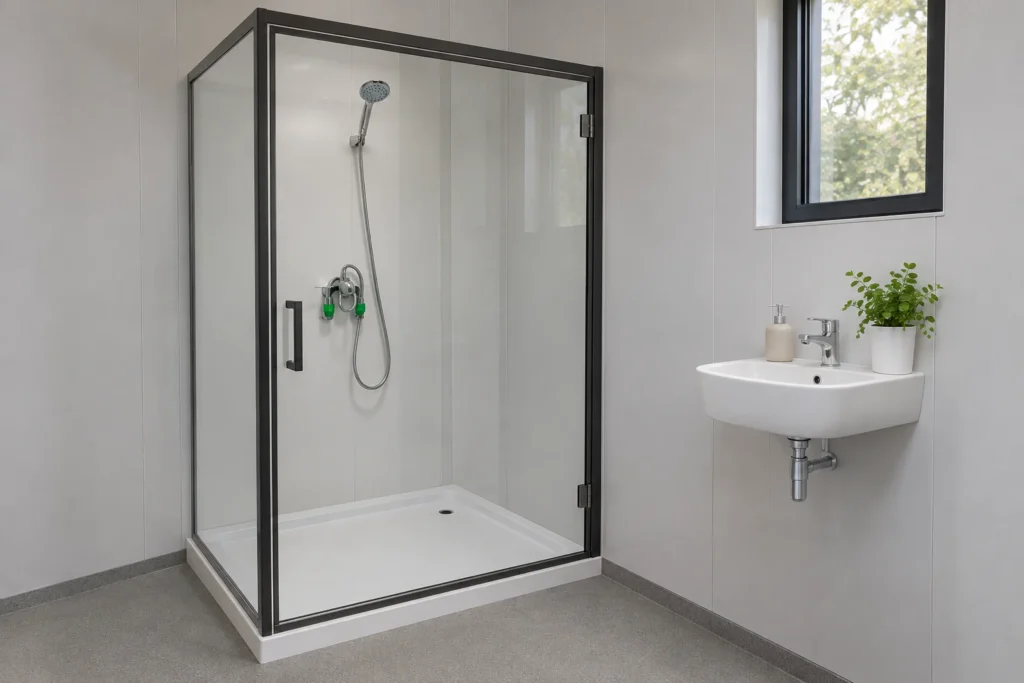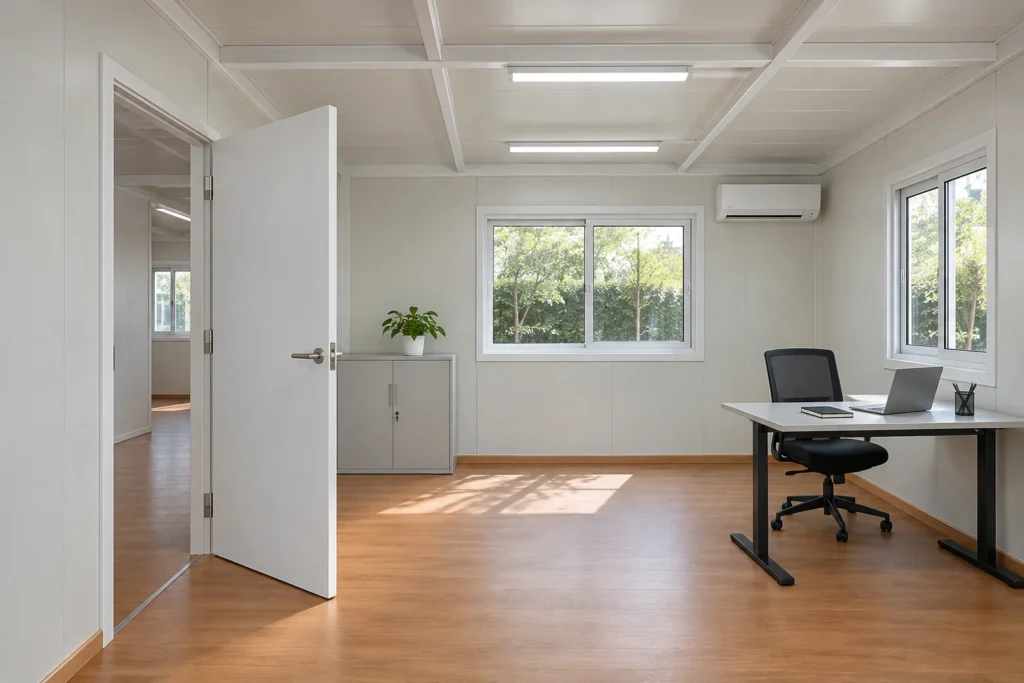
Buy a new portable classroom when the school needs a layout or specification that an available used unit cannot reasonably provide. Consider a used classroom when a particular building fits the brief and its condition, refurbishment work and relocation costs are clear. Compare the two as ready-to-teach packages: the cheaper building to collect is not necessarily the cheaper classroom to open.
First, define what “used” includes
A used classroom sold as it stands differs from one supplied after an agreed refurbishment. New flooring and paint can improve presentation while leaving the roof, services and underlying condition unchanged. Ask which components are retained, repaired or replaced, and what is excluded from the price.
For a new offer, distinguish an existing stock building from a classroom made to your agreed specification. A stock unit can also need alterations. The useful comparison is between two identified offers, rather than a generic promise that everything new is bespoke or everything used is immediately available.
| Buying question | Used or refurbished classroom | New classroom package |
|---|---|---|
| What building is being offered? | Identify the actual unit, previous use and current condition. | Identify the stock unit or proposed building specification. |
| Will the teaching layout work? | Check existing openings, room proportions and retained services against the furniture plan. | Resolve the furniture plan and service positions before the design is fixed. |
| What work remains? | Separate repairs, refurbishment, relocation and installation. | Separate manufacture, transport, assembly and site connections. |
| What does the price cover? | Include the cost of making this particular unit suitable for the school. | Include the agreed fit-out and destination work, not just the building shell. |
| What support follows delivery? | Obtain the written warranty scope for the unit and refurbishment work. | Obtain the written warranty scope for the supplied building and equipment. |
Check the room before accepting the saving
Start with a classroom brief and furnished layout. Show the teaching position, actual desks, storage, door swings and equipment. A used unit with an awkward entrance or too little storage can create recurring compromises; a new unit can have the same problem if its specification was never tested against lessons.

The window positions and furniture arrangement should support the way the room will be used. Decide which openings and fixed services can stay, which must move and where teaching resources will live. Moving an outlet is a different scope from altering a structural opening or extending the building.
If two teaching rooms will sit side by side, include their relationship in the comparison. The paired-classroom acoustic brief explains why an isolated panel rating does not describe the completed room pair. Neither “new” nor “refurbished” establishes the listening conditions teachers will receive.
Look beyond paint and flooring
For a used unit, arrange an appropriate condition inspection before committing. Ask for evidence of past water entry, the condition of the roof and floor, and the service history of retained heating and ventilation equipment. Make the repair scope specific enough to distinguish a cosmetic refresh from replacement of worn components.
The US EPA’s portable-classroom guidance identifies outdoor-air provision, ventilation noise, water entry and maintenance as important considerations. It also discusses specification and commissioning for new rooms. These topics belong in both buying routes; the guidance does not make a particular new or used unit suitable for your school.
Request the operating information for the actual equipment and agree who checks it after installation. Our classroom ventilation handover guide helps separate normal operation, maintenance and issues requiring specialist attention. Destination-specific building and education requirements still need local review.
Compare the opening date and completed cost
“Available now” can mean ready for collection, rather than ready for students. A used building may still require repairs, transport and reconnection. A new building may be in stock or require manufacture. Put each offer against the same sequence: building ready, site ready, delivered, installed, connected and accepted for use.
On a live school site, delivery access and separation from pupils can affect that sequence. Plan the installation on an operating campus before treating an advertised availability date as the opening date.
Compare building, refurbishment or fit-out, transport, lifting or assembly, foundations and site preparation, service connections and the local review process. Identify who prices each item. Keep uncertain work visible as an allowance to resolve; do not hide it inside a supposedly complete comparison.
FAQ
Is a used portable classroom always cheaper?
It may have a lower acquisition price. Whether it costs less to open depends on its condition, alterations, relocation and the site work required. Compare the total scope before deciding that the initial saving will remain.
Does “refurbished” mean everything has been replaced?
No. Ask for the supplier’s itemised refurbishment scope and written warranty. Retained components, excluded repairs and any work required after delivery should be identifiable.
Can a new modular classroom be designed around our school?
PQSE’s modular classroom options include standalone rooms, paired classrooms and larger arrangements. Share the teaching brief, location, room quantities and required opening date so the proposed layout and supply scope can be discussed. Local approvals and site responsibilities need to be established for the actual project.
Make the shortlist specific
Keep a used option on the shortlist when its actual condition and adaptation work support the school brief. Choose a new route when it offers a better fit at an acceptable completed cost and programme. Send the same brief to both suppliers: destination, intended teaching use, room quantities, furniture plan, existing site services and target opening date.
Source: US EPA, “Maintain Portable Classrooms,” updated January 13, 2026; qualitative specification and maintenance considerations. The comparison table and buying recommendations are editorial guidance, not a condition assessment of an offered building.