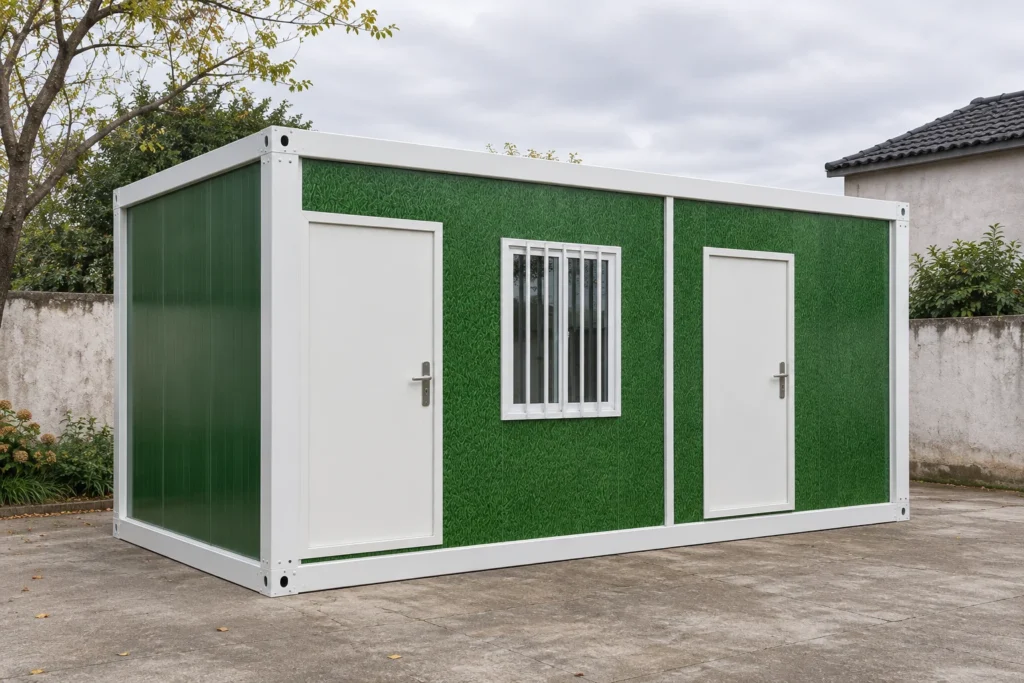
Review modular clinic registration privacy by following the information exchanged at the counter, rather than judging the room from its partition count. Ask what another person can hear, what a screen or sheet reveals and where a conversation can continue privately. The physical arrangement and the operator's registration process need to work together; neither an attractive reception desk nor a written policy demonstrates that relationship on its own.
For a modular clinic building enquiry, describe the nonclinical registration tasks alongside the intended counter, waiting seats and staff workspace. Identify the operator responsible for deciding which information is needed, who may receive it and when another setting is appropriate. A building supplier cannot determine those choices from a room label marked reception.
This research guide uses bounded US HHS guidance and NHS building-design material to explain the questions. It does not certify HIPAA compliance, prescribe registration fields or design sound insulation. It concerns administrative exchanges, not clinical assessment or treatment. The new photographs are illustrative reconstructions, with no actual patient information or claim of a tested PQSE clinic.
Begin with the first exchange at reception

Describe an ordinary arrival in the words the operator expects staff and visitors to use. Identify what must be communicated at that point and what can wait for another exchange. Then place a bystander in the scene. The purpose is to discover which information reaches that person while the registration task proceeds, rather than assume a welcoming counter is automatically a private one.
Keep the exercise specific to registration. It might involve reporting an arrival, checking an appointment reference or asking how to continue an administrative enquiry. The operator should supply the actual tasks and approved process. Do not add a public request for medical details merely to make the scenario realistic, or infer that every arrival needs the same exchange because the counter has one workstation.
Ask where a person pauses before speaking and what tells them that staff are ready. If the next visitor stands immediately beside an ongoing exchange, the room and the process may be working from different assumptions. Describe the observation to the responsible operator and design team. This guide sets no stand-back distance or rule about what every clinic must announce.
The wider clinic planning guide addresses rooms, routes and service interfaces. Here the unit of review is one information exchange. A clinic can have the right rooms on its schedule yet leave this exchange unclear. Keep the registration task visible when furniture, seating or staffing assumptions change, rather than treat it as a detail to settle after the counter is installed.
Separate an operator's information decisions from a building offer

Before choosing a counter accessory, identify the information problem it is intended to address. A visible sheet, an audible conversation and a screen facing the queue are different situations. Give the operator the decision about the authorised exchange, and give the design team its physical consequences. A supplier's optional screen cannot settle the underlying question of what should be asked or displayed there.
Keep the source contexts below separate. The three HHS pages concern the US HIPAA Privacy Rule and covered entities; they are not worldwide registration instructions. The NHS document is 2013 building-design guidance in its own context, rather than a HIPAA interpretation. Neither source establishes the applicable decision for a particular proposed clinic, its operator or its destination.
Ask the operator to distinguish the public exchange from any later private one. That decision gives the building discussion something concrete to support: a position for the first conversation, a staff work area and an available alternative when needed. It should not become a requirement for the building supplier to invent an identification policy or decide which personal details a service must collect.
Use the building-package and clinical-readiness boundary to keep those responsibilities intelligible. A reception counter can be physically complete while the operator's process remains unresolved. Conversely, an approved process can still require a different fitted arrangement. State which decisions are outstanding so acceptance of a delivered furniture item does not silently close an operating question.
| Identified source | Limited subject | No conclusion supplied for this project |
|---|---|---|
| US HHS sign-in FAQ | Appropriately limited sign-in and name calling | An approved registration form or global permission |
| US HHS incidental-disclosure guidance | Safeguards around permitted primary exchanges | Permission to disregard an inappropriate disclosure |
| US HHS structural-retrofit FAQ | Limits of a blanket retrofit requirement | Approval of a specific desk, barrier or room |
| NHS HBN 11-01, 2013 | Public-zone design and private unplanned discussion | A universal room count, distance or compliance result |
Read the sign-in surface from the next person's position

Review a proposed sign-in sheet or equivalent surface as the next visitor would encounter it. Use fictional material to show what remains visible before, during and after an entry. A blank demonstration can miss the problem if the ordinary process accumulates information on the same surface. The operator should decide the permitted content and safeguards; the layout review should make the actual exposure understandable.
The HHS sign-in FAQ permits appropriately limited sign-in sheets and calling names for covered entities, with reasonable safeguards and the minimum-necessary standard where appropriate. It says a sign-in sheet should not show unnecessary medical information, such as the problem bringing someone to the physician. That is a bounded US example, not a form or permission this guide supplies to every clinic.
The following original review matrix separates the information surface from the operator's decision. It is not a clinical form or a list of mandatory fields. For each applicable surface, describe what another person could actually receive and how the intended process deals with it. Leave a field or display unresolved when its purpose has not been agreed; do not fill it with invented patient details to complete a demonstration.
Include the return of a pen, clipboard, card or paper if the proposed process uses one. Where does the person put it, and what information faces the next visitor while they wait? An accessory can change hands without clearing the information left on it. Review the transition as part of the exchange rather than evaluating the empty countertop and the completed form as unrelated objects.
| Surface or exchange | Bystander question | Decision for the operator's authorised process |
|---|---|---|
| Public speech | What words reach another visitor? | What belongs here and what moves elsewhere? |
| Sign-in surface | What remains visible to the next user? | Which information and handling are authorised? |
| Staff screen | What is visible from ordinary public positions? | Which display and working arrangement suit the task? |
| Paper and printing | Where does information wait between people? | Who receives it and where does it go next? |
| Telephone | Who can hear the staff side of the call? | Where should that conversation continue? |
| Private follow-up | Can the alternative place actually be used? | Who arranges access and handles an interruption? |
Review the screen from public positions, not only the staff chair

Put the proposed monitor in the staff's actual working position, with the counter and visitor positions represented. Review it from the entrance, the next person's position and relevant waiting seats using fictional content. A screen that is convenient from the chair may face an unintended audience elsewhere. The question is what that audience can receive during the real task, not whether the desk looks tidy.
Include ordinary movements that change the view: a staff member turns the screen to explain something, a visitor moves to receive a paper or somebody pauses at a nearby doorway. Identify which of those movements belongs to the operator's intended process. A review of a fixed display angle should not be reported as covering every later way that the screen might be used.
The HHS structural-retrofit FAQ does not impose the listed blanket structural changes to eliminate all overhearing risk. It still calls for appropriate safeguards and review of practices. This does not approve a particular counter, glass screen or proposed room, and it is not a conclusion that the clinic needs no physical change.
Bring the selected monitor, furniture and staff activity into the fitted-room layout review. If a privacy accessory is proposed, ask what situation it addresses and how the actual working arrangement will be reviewed. Its product name should not replace the operator's decision about displayed information. No screen filter, glazing specification or acoustic performance value is selected by this guide.
Follow paper after the first counter exchange

Follow the paper through the transition after a visitor has finished speaking. A form may wait for a staff member, emerge from a printer or sit beside an item being returned. Review those pauses using fictional paperwork and the intended staff positions. The counter can appear clear during a photograph while the ordinary process leaves information elsewhere within public view for the next person.
Identify the destination of each paper the process actually uses. The point is not to add more trays or cupboards automatically, but to understand who is expected to receive the item and what happens until that person is ready. A tray labelled for staff does not establish that it is outside public view, or explain how a paper reaches the appropriate recipient. Include the moment when staff leave that position for another task. Ask what remains on the surface and who is expected to deal with it, rather than assuming that a nearby colleague understands an unfinished paper transfer.
Review printing and returning items in the same exercise. Ask where the operator expects printed material to emerge, who collects it and which nearby activity can interrupt that step. Use closed folders or fictional material for the demonstration. Do not collect photographs of actual patient documents as proof that a sightline or paper-transfer problem exists.
Use the actual inclusion schedule to identify whether the counter, cabinet, printer position or other fittings are supplied. Keep furniture provision separate from the operator's information-handling responsibility. A new storage fitting should answer an identified transition in the process, rather than become a decorative substitute for deciding where the paper goes after registration.
Include the staff side of a telephone conversation

A handset can keep the caller's voice from the room while leaving the staff member's reply audible. Include that reply when reviewing reception rather than treating a phone as a private channel by definition. Consider what happens if a call begins during an in-person registration, who is waiting and where an exchange can continue when the public position is not appropriate for its content.
The HHS incidental-disclosure guidance concerns certain secondary disclosures arising from otherwise permissible exchanges, with reasonable safeguards and minimum necessary where applicable. It does not excuse an impermissible primary disclosure or missing required safeguards. It also notes that minimum necessary does not apply to provider-to-provider treatment disclosures; that different clinical setting should not be collapsed into this registration discussion.
Ask the operator to describe the nonclinical telephone work intended at this position. A call about an appointment and an enquiry that requires another staff member may create different handovers. The review should show how staff recognise when the public position no longer suits the exchange and whom they contact. This guide does not supply a call script or decide what a particular caller is entitled to receive.
Keep the conversation and the equipment location connected. Moving the handset without considering the person speaking may leave the same exposure, while moving the entire workstation can affect the counter and waiting arrangement. Where a revised position requires services, bring it into the building and communications interface review. A spare outlet does not establish a workable information exchange.
Keep a private follow-up place available when the need is unplanned

Identify the place the operator intends to use when a registration exchange needs to continue away from the public position. Then ask how it becomes available at that moment. A room can appear on a drawing yet be occupied, locked or used for another task. The alternative needs an operating arrangement that staff can use without improvising a new destination in front of waiting visitors.
An available location needs more than a door symbol
NHS HBN 11-01 (2013), paragraph 6.9, describes nearby interview space for private, unplanned discussion, kept free of sessional activity. This is NHS design guidance, not universal clinic law; the 2021 upload path is not a revision date.
Use that distinction to question the actual proposal. Does the alternative depend on a scheduled room becoming free, on a particular employee having a key or on another activity ending? The operator and appropriate project team should resolve the intended arrangement. Do not assume an empty clinical room is available for this purpose or that a closed door alone demonstrates the required privacy.
Describe the transition from the counter without reproducing the private discussion itself. Staff need to know whom to contact, what to do while the place is unavailable and how the public registration function continues. Keep that decision consistent with the operator's actual responsibilities. The building brief should support the agreed arrangement rather than invent a treatment-room allocation or an emergency response procedure.
Treat a waiting seat as another observation point

Review reception from the seats and ordinary waiting positions that people will actually use. A chair shown as a small rectangle can face a monitor, a paper-handling position or an ongoing counter exchange. Describe what a person can see or understand from there using the operator's authorised review method. Counting chairs does not establish the confidentiality of the registration arrangement for those positions in use.
Paragraph 6.15 relates waiting seating to counter confidentiality, mentioning surrounding space or glazed screens. It supplies no universal distance or approved glass product. These are project questions, not a performance claim for this building.
Include ordinary reasons for people to change position: accompanying another adult, approaching staff with a question or waiting for a paper to be returned. The operator should explain which uses the proposed area is meant to support. Do not infer a person's condition or authority from the presence of a companion; the appropriate communication process belongs to the operator, not the photograph or seating plan.
A proposed adjustment should return to the whole registration exchange. Moving a chair might improve one view while putting the next visitor closer to another conversation. Describe the changed position and repeat the relevant review rather than calling the room private because one sightline has improved. No waiting capacity, acoustic threshold or minimum distance is derived from this illustrative exercise.
Rehearse an interrupted registration with fictional information
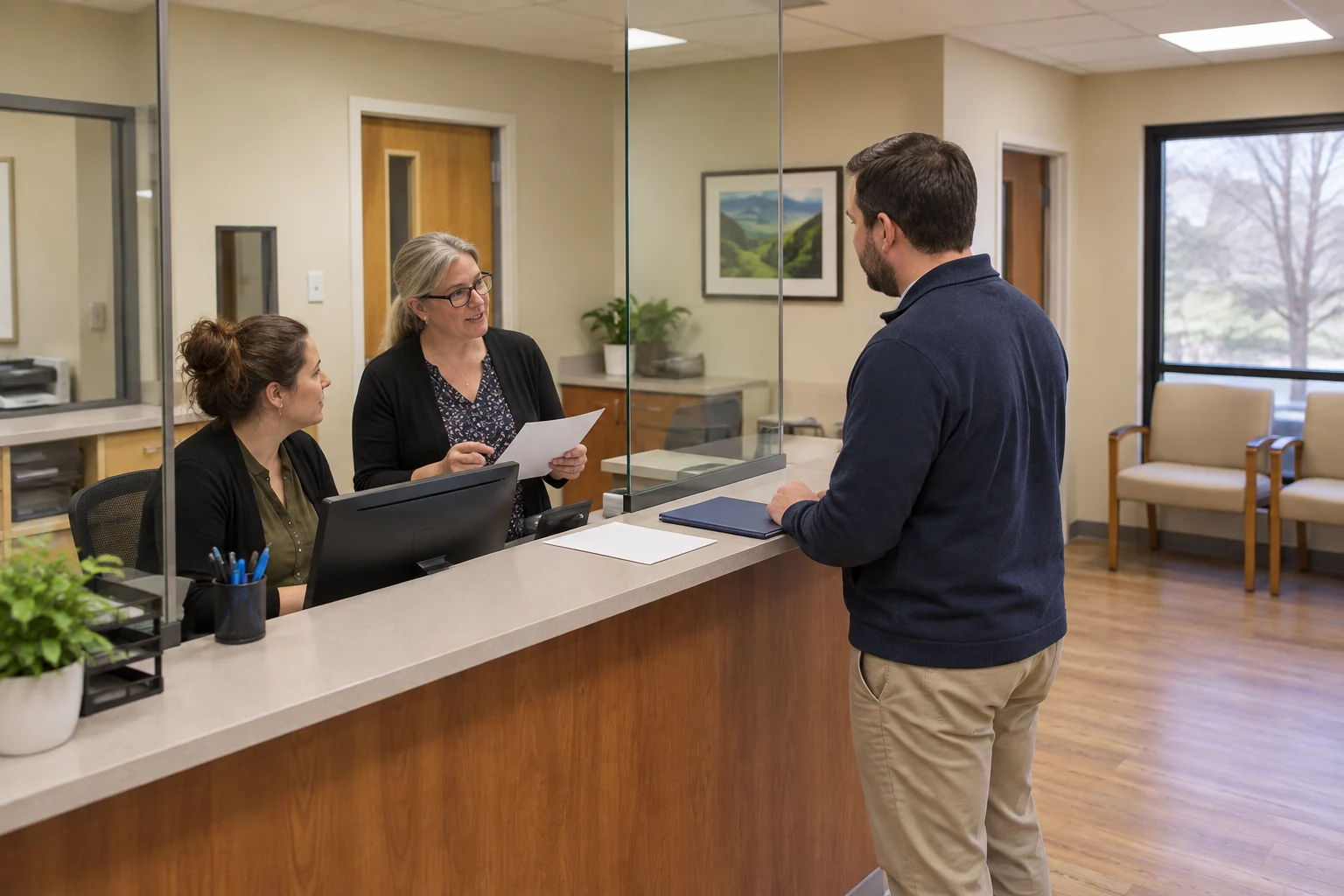
A quiet demonstration with one staff member and an empty counter can omit the moment when information is exposed. Review an interruption agreed by the operator, using fictional content and consenting participants. The aim is to observe the transition between tasks without using real patient details as test material. This is a proposed review exercise, not evidence that a clinic has passed a privacy assessment.
The situations below are original editorial prompts, not prescribed clinical scenarios or an inspection standard. Select only those relevant to the intended registration process. Identify which role receives a question that the demonstration cannot resolve. A layout observation may belong with the furniture discussion, while a question about requested information or permitted disclosure belongs with the operator's appropriate responsible person.
Keep the resulting note specific to the observed exchange. Describe the position, task and unresolved question rather than copying fictional names into a permanent record. A photograph of an empty counter does not demonstrate how staff respond during an interruption. Likewise, completing a rehearsal does not establish staff training, legal compliance or the performance of a room under every later operating condition.
Include a staff handover if the registration task can outlast one person's shift or availability. Ask the operator what the next person needs to continue the administrative response and how that information reaches them. Without that connection, a visitor may be asked to repeat an exchange in the same public position because nobody knows which step remains unfinished. Review this possibility with fictional material; do not create a new patient-information procedure from the rehearsal alone.
| Fictional review situation | Observation to discuss | Question that may remain open |
|---|---|---|
| Next visitor approaches during an exchange | Where the two parties pause and speak | How the public interaction should continue |
| A paper prints while staff answer a call | Where the paper waits and who can see it | Who receives it and when |
| Private follow-up place is unavailable | What staff and visitor do next | The operator's agreed alternative |
| A staff change occurs before an enquiry ends | What task information passes to the next person | Who owns the unfinished response |
Keep the operating brief with the fitted reception arrangement
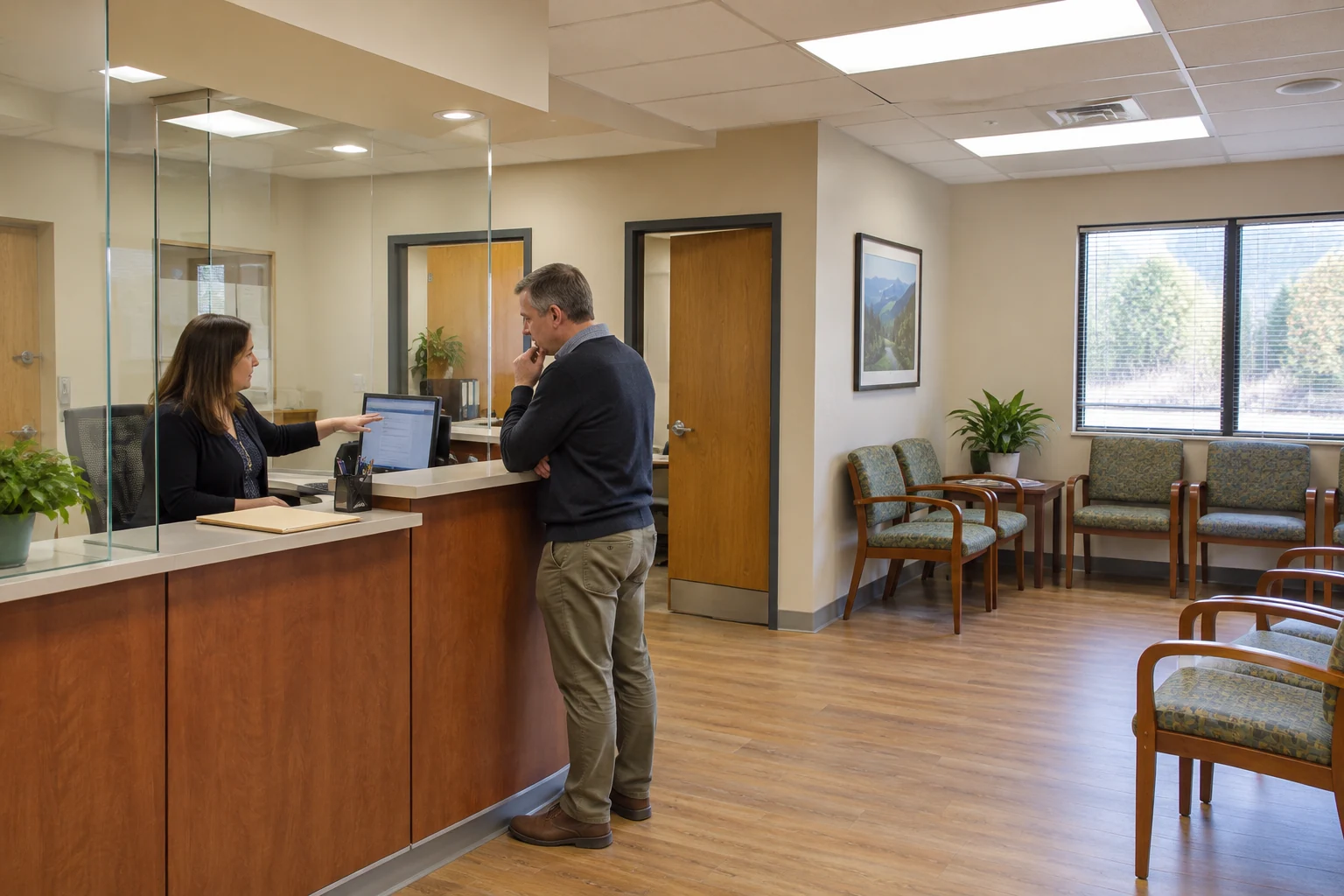
Keep the agreed registration tasks beside the fitted reception proposal so a later change can be reviewed against its purpose. A new monitor, printer, chair position or staffing arrangement can alter who receives information without changing the room name. The operator and building team need a clear account of what the arrangement was intended to support and which questions remained unresolved when it was agreed.
Describe the changed exchange before ordering a new fitting
Use the controlled customisation process when a physical change affects the building proposal. Identify the revised arrangement and its related operating assumption. Do not preserve an earlier review as proof of a different screen position or new counter task. The question is which affected exchange needs reconsideration, rather than whether the replacement furniture looks similar in a brochure.
For an enquiry, provide the destination, intended service, available site information and the nonclinical registration activities the operator expects. Show proposed public and staff positions, relevant equipment and the intended private follow-up arrangement. Mark information that has not been decided. Ask for an itemised physical response so the supplier's offer can be coordinated with the operator's remaining decisions.
At handover, distinguish the delivered arrangement from the operating process and any required project approvals. Retain the unresolved matters with their appropriate response route. A useful reception proposal lets the responsible people explain what happens to information from the first public exchange to its next authorised destination, without assuming that the building itself decides who should see or hear it.
Sources and scope
- HHS sign-in and name-calling FAQ. US covered-entity context; appropriately limited information and safeguards. Content review displayed as December 2022.
- HHS incidental-disclosure guidance. US Privacy Rule context and applicable exceptions; content review displayed as July 2013.
- HHS structural-retrofit FAQ. US safeguard discussion, not a particular room approval. Content review displayed as December 2022.
- NHS HBN 11-01, 2013. Primary/community-care building-design guidance; paragraphs 6.9 and 6.15, printed pages 22–23.
Prepared for PQSE House as an AI-assisted research and purchasing guide. No first-hand clinic registration case, privacy test, legal opinion, human professional signoff or independent brand endorsement is asserted. New photographs are illustrations using genuine architectural references, not records of patients or proof that a proposed layout protects confidential information.